What a Professional Toilet Check List Covers
A professional toilet check list reflects what experienced commercial cleaners evaluate during a service visit. It starts with the bowl, then covers the spots people touch and the problems surface cleaning alone cannot fix:
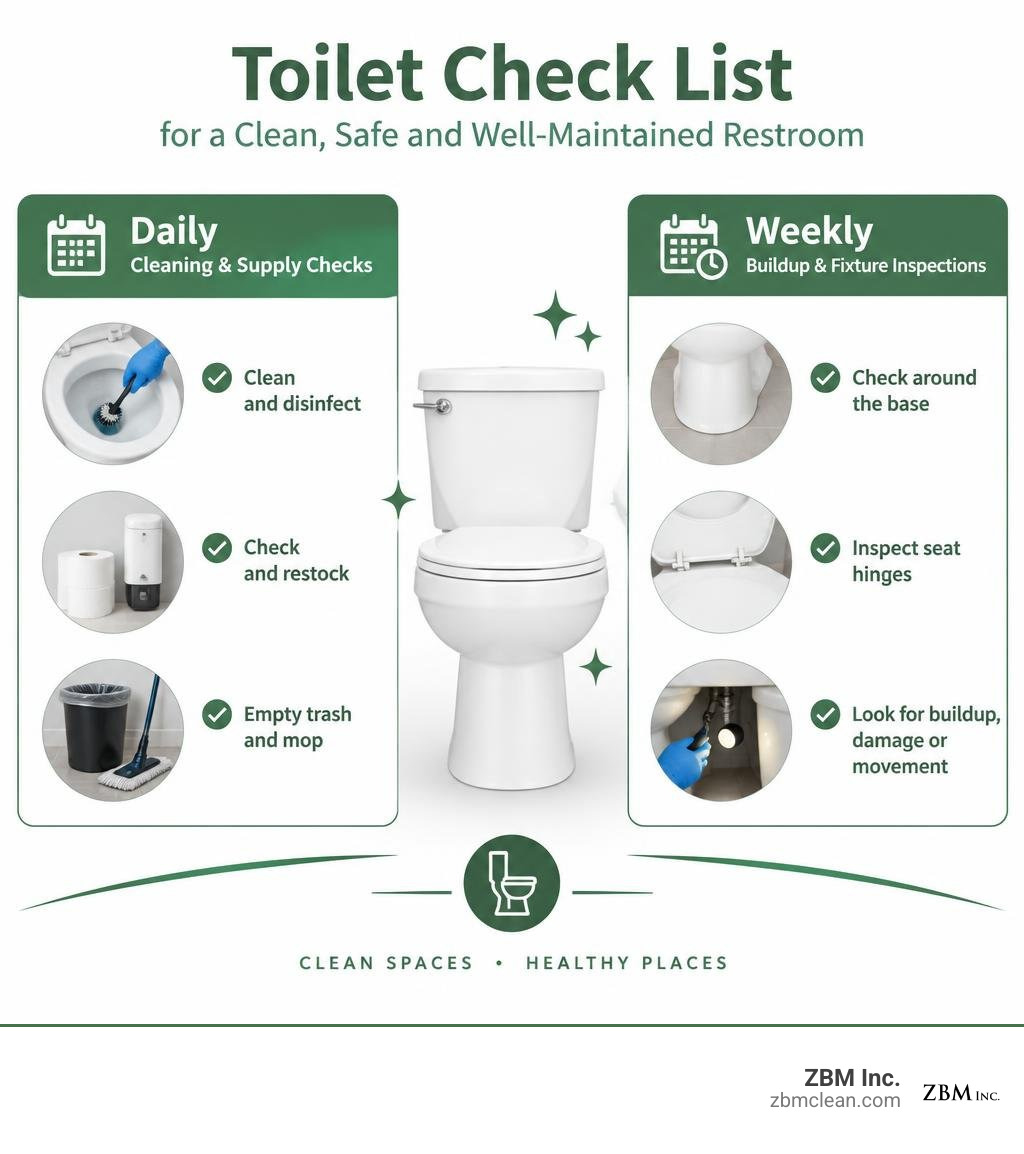
- Sanitize high-touch surfaces: The seat, lid, flush handle, stall latch, and faucet handles require EPA-registered disinfectants applied with the correct dwell time.
- Verify supplies and function: A professional service checks that toilets flush properly, looks for leaks or clogs, and confirms toilet paper, soap, and paper towels are stocked.
- Inspect for hidden issues: Around the base, seat hinges, and hard-to-reach areas, trained technicians look for buildup, damage, loose fixtures, or movement that signals a developing problem.
In a busy public restroom, these checks need to happen throughout the day, not just during a single nightly cleaning. That is why many businesses rely on scheduled professional service rather than asking staff to manage restroom sanitation on top of their regular duties.
I’m Terry Zastrow, owner of ZBM Inc., an IICRC-certified firm with about 30 years of building maintenance experience. That work informs this toilet check list and the guidance that follows.
Quick toilet check list terms:
- bathroom cleaning checklist
- bathroom maintenance checklist
- bathroom hygiene checklist
Restroom hygiene standards directly drive public perception and operational success. Industry research shows that 60% of Americans are likely to spend more at businesses with clean, well-maintained bathrooms. Conversely, 68% of people report having exceptionally unpleasant experiences in public facilities. Unflushed fixtures (90%), foul odors (89%), overflowing trash (88%), and littered paper on the floor (80%) top the list of customer complaints. Without rigorous cleaning frequencies and systematic audits, bathrooms rapidly become hotspots for severe bacterial cross-contamination.
What a Comprehensive Commercial and Residential Toilet Check List Includes
Maintaining pristine facilities requires understanding what true commercial-grade sanitation entails. In high-traffic environments across Dodge County, Jefferson County, and Southeastern WI, standard surface wiping is simply not enough.
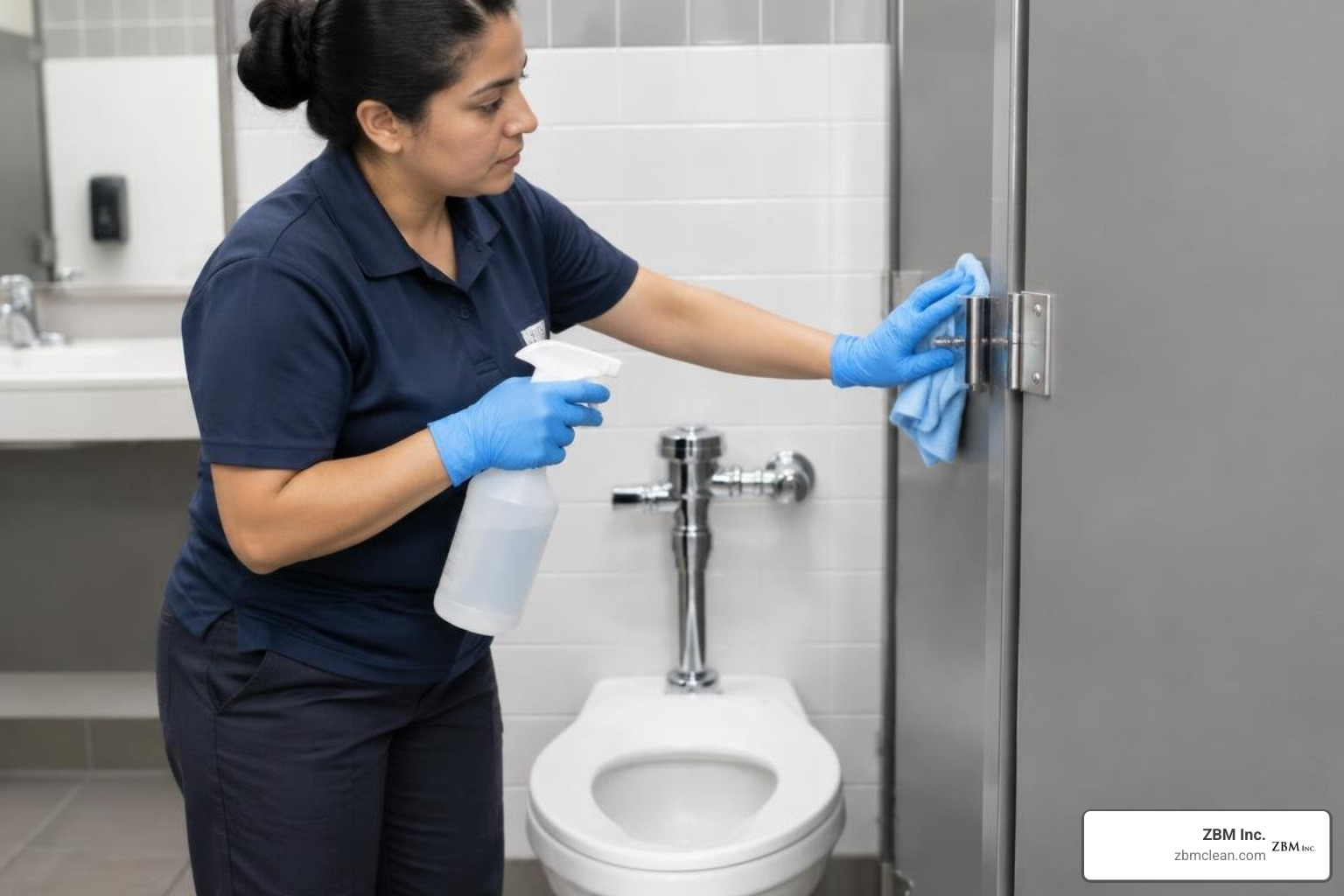
High-touch surfaces such as flush valves, stall latches, and faucet handles harbor massive pathogen colonies. Preventing cross-contamination demands color-coded microfiber systems, hospital-grade EPA-registered disinfectants, and strict adherence to chemical dwell times—often requiring wet contact for five to ten minutes. Reviewing expert commercial restroom cleaning tips helps facility managers evaluate whether their current sanitation team meets professional industry benchmarks.
What Professional Service Covers on a Daily and Weekly Basis
A complete toilet check list divides facility care into clear tiers. Handling these procedures without commercial equipment often proves exhausting and inefficient for in-house staff, which is why many property managers contract professional cleaning teams.
| Frequency | Area / Fixture | What a Professional Service Evaluates |
|---|---|---|
| Hourly / Shift | High-Touch Points & Supplies | Spot-check bowls, sanitize flush levers, refill hand soap, and restock toilet paper. |
| Daily | Bowls, Urinals, Sinks & Floors | Scrub interior bowls, sanitize seats and hinges, empty sanitary bins, and mop floors. |
| Weekly | Baseboards, Partitions & Traps | Detail baseboards, sanitize stall doors, descale hard water rings, and polish chrome. |
| Monthly / Deep | Grout, Ventilation & Vents | Extract deep tile soil, eradicate microbial biofilms, and descale flush plumbing. |
A structured daily restroom maintenance checklist helps keep operations consistent. In high-volume venues, an hourly bathroom cleaning checklist ensures paper towels, water puddles, and soap dispensers remain properly managed all day long.
Why Deep Cleaning and Sanitization Requires Professional Equipment
Over time, everyday surface cleaning fails to address stubborn limescale, mineral rings, and uric acid crystal buildup in porous grout and under porcelain rims.
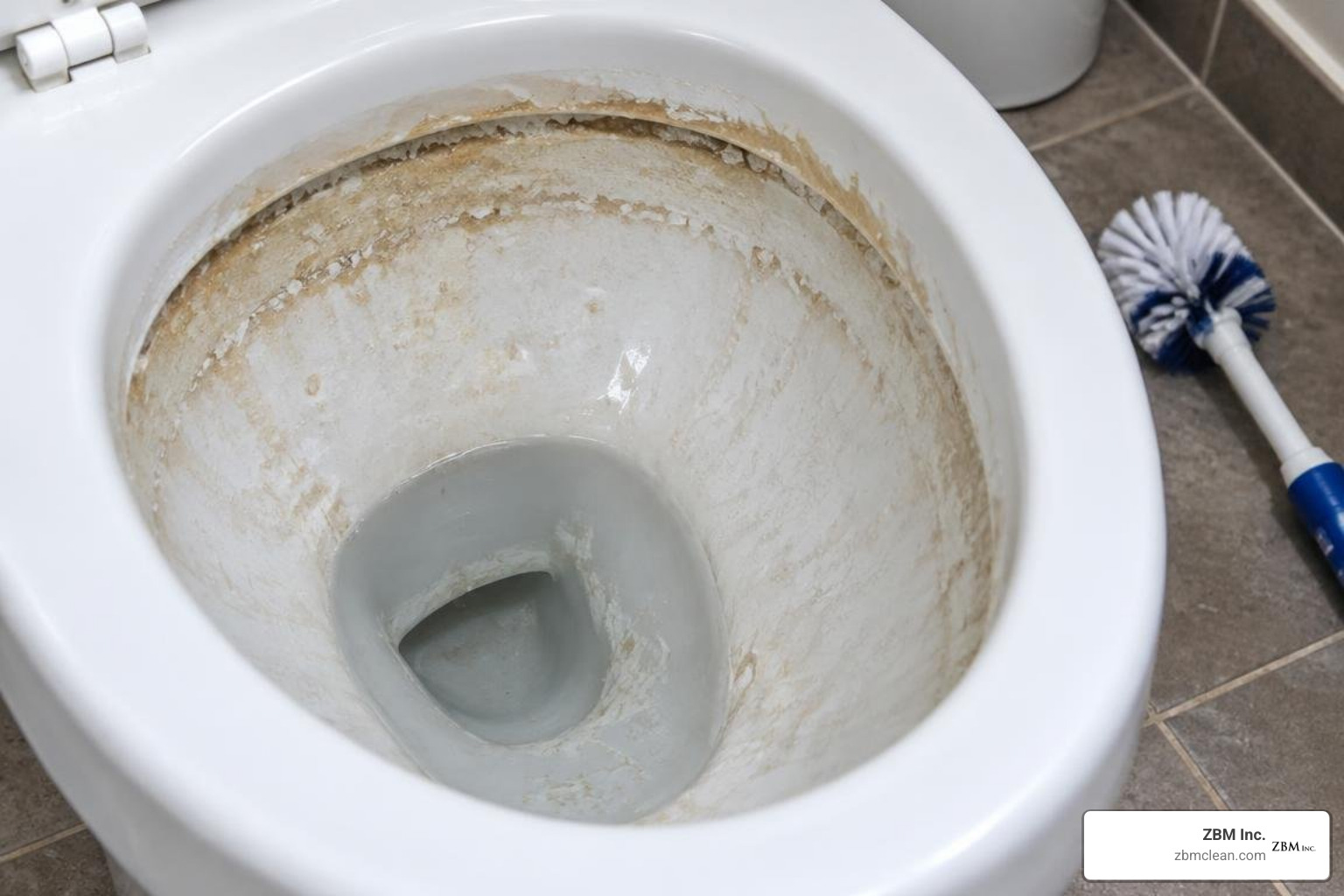
Without industrial extraction machinery, stubborn biofilms generate persistent, embarrassing odors that standard store-bought mops only spread around. Deep sanitization requires specialized restorative descalers, partition washing, and high-level exhaust vent extraction. When facilities face heavy soil accumulation, the ultimate bathroom cleaning checklist reveals why hiring experienced, equipped professionals delivers sanitary outcomes that DIY efforts cannot match.
How Digital Toilet Check Lists Improve Accountability
Traditional paper logs pinned to stall doors often become illegible or damaged. Worse, paper check sheets in moist environments can become contamination hazards themselves.
Modern facilities maintain quality control by transitioning to cloud-based digital auditing tools. These systems provide time-stamped inspections, GPS verification, photo documentation, and automatic maintenance ticket routing. Aligning your internal audits with established restroom quality control standards and a verified restroom sanitation checklist gives building owners complete visibility into hygiene compliance.
Restroom Audits, Plumbing Maintenance, and Professional Care
A comprehensive restroom audit must evaluate functional plumbing mechanics, structural integrity, and safety compliance alongside basic surface cleanliness.
Slow leaks at the shut-off valve or beneath the porcelain base often go unnoticed until flooring rots or subfloor mold develops. A thorough home plumbing inspection checklist helps identify early warning signs before minor moisture issues become structural disasters.
What Professionals Inspect: Plumbing Mechanics, Fixture Stability, and Code Clearances
Evaluating bathroom structural integrity requires checking for base rocking, deteriorating wax rings, worn flappers, and failing fill valves. A running toilet can silently waste over 200 gallons of water daily.
Professional inspectors also verify compliance with building codes such as the 2024 International Residential Code (IRC). These standards require a minimum of 21 inches of clear space in front of the toilet, 15 inches from the fixture centerline to side walls, and at least 30 inches center-to-center between adjacent plumbing fixtures. Safety audits must also confirm dedicated 20-amp circuits, functioning GFCI outlets placed away from tub zones, accessible shut-off valves, and operational emergency pull cords in accessible stalls, as outlined in bathroom safety inspection standards and professional toilet and bathroom installation verification protocols.
Recognizing Leaks, Odor Problems, and When to Call Certified Professionals
Minor symptoms like phantom refills (where a tank randomly fills without being used) or gurgling drains indicate internal valve failures or venting blockages. A simple food coloring dye test in the tank will reveal flapper seepage if color migrates into the bowl without flushing.
However, attempting complex repairs or biohazard scrubbing without professional equipment carries serious risks. Overtightening closet bolts can crack porcelain bowls, while faulty wax ring replacements risk hidden sewage leaks inside wall cavities. When faced with persistent sewer gas odors, structural mold contamination, or heavy commercial cleaning demands, partnering with certified experts is the most reliable choice.
At ZBM Inc., we are a licensed, bonded, insured, and family-owned team of certified specialists headquartered in Watertown, WI. We deliver dependable commercial, residential, biohazard, and specialty cleaning across Jefferson County, Dodge County, Minocqua, Lake Mills, and the wider Northwoods and Southeastern Wisconsin areas. Explore our expert bathroom cleaning checklists and maintenance solutions to keep your property safe, pristine, and inviting year-round.