When Your Bathroom Floods: What to Do Right Now
Disaster recovery bathroom cleanup is the process of safely removing water, drying affected materials, sanitizing contaminated surfaces, and restoring your bathroom after a flood event.
Here’s what to do immediately:
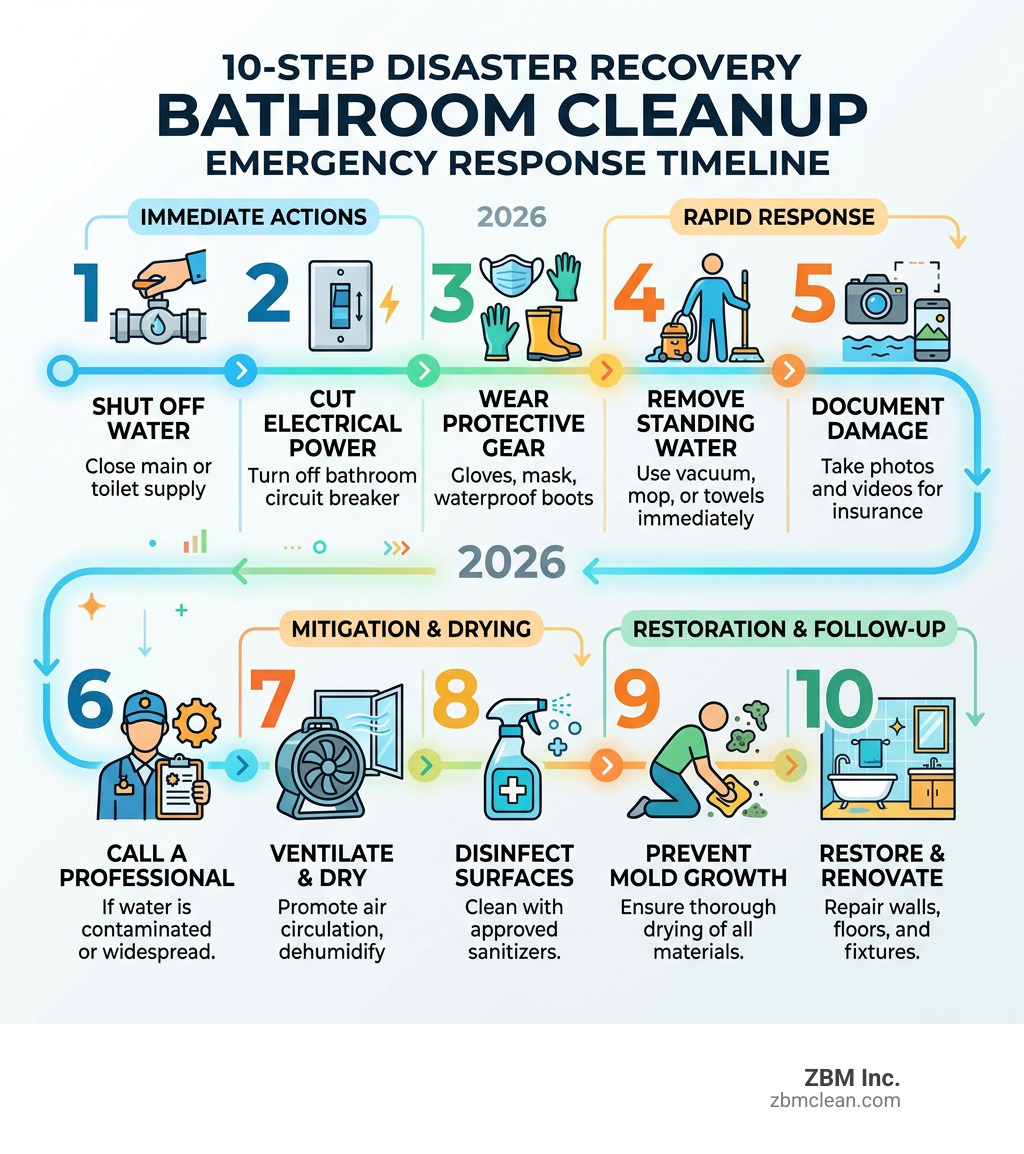
- Shut off the water supply at the toilet valve or main shutoff
- Cut power to the affected area at the breaker box
- Put on protective gear — gloves, waterproof boots, and a mask
- Remove standing water with towels, a mop, or a wet/dry vacuum
- Document everything with photos and video for your insurance claim
- Call a professional if water is contaminated, spreading, or has been sitting for more than 24 hours
A bathroom flood can happen without warning. A toilet overflows. A pipe bursts behind the wall. A drain backs up during a heavy rain. One moment everything is fine — the next, water is spreading across your floor and seeping into places you can’t even see.
The damage isn’t just cosmetic. Mold can begin growing within 24 to 48 hours. Water migrates under flooring and behind walls in minutes. What looks like a simple cleanup can quietly become a structural problem or a health hazard.
And if the source is a sewer backup or toilet overflow? The risks go up significantly — contaminated water requires a completely different response than a clean pipe break.
The good news: over 90% of water damage is preventable, and even when disaster does strike, fast and informed action makes a major difference in outcomes and costs.
Immediate Steps for Disaster Recovery Bathroom Cleanup
When you walk into a bathroom and find yourself ankle-deep in water, the instinct is to start mopping. But before you grab a single towel, we need to talk about safety. Water and electricity are a lethal combination. If the water has reached the level of electrical outlets or if you see submerged power strips, do not enter the room.
The first step in any disaster recovery bathroom cleanup is to mitigate electrocution risks. Head straight to your breaker box and shut off power to the bathroom. Once the area is electrically safe, your next mission is to stop the “bleeding.”
Water Supply Isolation and Power Shut-off
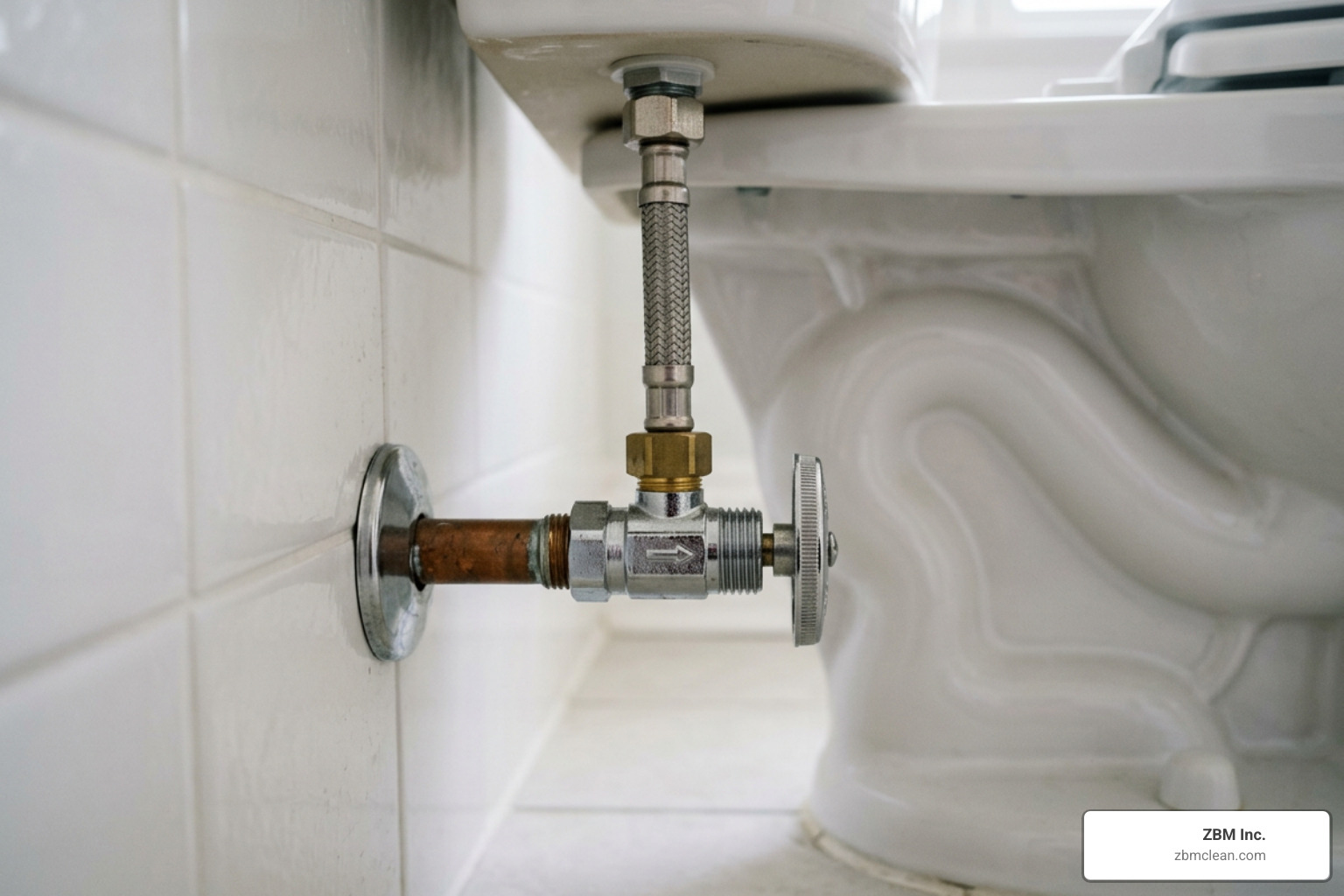
If the flood is coming from a toilet or sink, look for the local shut-off valve—usually a silver handle located behind the fixture. Turn it clockwise until it stops. If the pipe has burst inside the wall or the local valve is stuck, you must go to the main water shut-off for your home. In Southeastern Wisconsin, this is typically located in the basement or near the water meter.
Standing Water Removal
Once the flow has stopped, time is your greatest enemy. While homeowners can often remove about 60-70% of standing water using household mops and wet/dry vacuums, professional-grade equipment is designed to extract upwards of 95%. However, getting that initial bulk of water out helps prevent it from seeping deeper into the subfloor.
If you are dealing with a significant flood, you might wonder if you can handle it alone. There are many benefits of hiring a professional for disaster recovery, especially when it comes to specialized equipment that “sees” moisture hidden behind your beautiful tile work.
Assessing Water Categories in Disaster Recovery Bathroom Cleanup
Not all water is created equal. In the restoration industry, we categorize water to determine the level of PPE (Personal Protective Equipment) and sanitization required.
- Category 1 (Clean Water): This comes from a broken supply line or a bathtub overflow. It is generally safe to handle initially, but if left for 24-48 hours, it can degrade into Category 2.
- Category 2: This water contains significant contamination, such as discharge from a dishwasher, washing machine, or a toilet overflow containing only urine. It can cause sickness if consumed or touched.
- Category 3 (Black Water): This is the “big bad” of bathroom disasters. It includes sewage, rising floodwaters from rivers, or seawater. This water contains pathogenic, toxigenic, or other harmful agents like E. coli and Salmonella.
If you are facing a Category 3 situation, the cleanup is no longer a DIY project—it’s a biohazard. You can find more info about biohazard cleaning services here, but the short version is: stay out and call the pros.
Containing the Spread and Documenting Damage
While waiting for a team like ZBM Inc. to arrive, use heavy towels or “snakes” to block bathroom transitions. You want to prevent the water from reaching hallway carpets or hardwood floors, which are much harder to salvage than tile.
Before you start the heavy cleaning, take out your phone. Take high-resolution photos and videos of the standing water, the source of the leak, and any damaged vanity cabinets or baseboards. Your insurance adjuster will need this “proof of loss” to process your claim accurately. Move any dry items—like rugs, wastebaskets, or towels—out of the splash zone immediately.
Professional Restoration: Extraction and Drying
This is where the “science” of disaster recovery bathroom cleanup begins. At ZBM Inc., we don’t just “dry” a room; we manage the environment.
High-Volume Extraction and Detection
Professional restoration involves more than just a shop vac. We use truck-mounted extraction units that pull water from deep within the floor. To ensure we haven’t missed anything, we use:
- Moisture Probes: To check the saturation levels of subfloors and drywall.
- Thermal Imaging: Infrared cameras that detect temperature differences, showing us exactly where water is hiding behind a wall without us having to tear the wall down.
Understanding what disaster restoration services cover is vital for homeowners. It’s not just about the water you see; it’s about the moisture you can’t see.
Sanitization and Mold Prevention in Disaster Recovery Bathroom Cleanup
Did you know that mold spores can develop in as little as 24 to 48 hours? This is why we operate on a strict timeline. Following Environmental Protection Agency mold guidelines, we apply EPA-approved antimicrobials to prevent fungal growth. In cases of contaminated water, we also use HEPA air scrubbers to remove airborne pathogens and odors.
The Salvage List: What Stays and What Goes?
- Non-Porous (Tile, Metal, Plastic): Generally salvageable after thorough disinfection.
- Semi-Porous (Hardwood, Grout): Often salvageable if dried quickly and professionally.
- Porous (Carpet Padding, Drywall, Insulation): Usually non-salvageable if they have come into contact with Category 2 or 3 water.
Structural Drying and Material Replacement
One of the most common issues in a bathroom flood is “wicking.” Drywall is like a sponge; if the floor has two inches of water, the moisture can travel 18-24 inches up the wall. If it reaches that height, the drywall usually needs to be cut out and replaced.
The professional drying process typically takes between 3 to 5 days. During this time, industrial air movers and desiccant dehumidifiers run 24/7. We monitor the moisture levels daily to ensure the environment is returning to its “dry standard.”
Navigating Insurance and Documentation
Insurance can be the most stressful part of a disaster. Most standard homeowner policies cover “sudden and accidental” water damage, like a pipe burst. However, “sewer backup” is often a separate endorsement that you must add to your policy.
| Coverage Type | Standard Homeowners | Sewer Backup Endorsement |
|---|---|---|
| Burst Pipe | Covered | Covered |
| Toilet Overflow (Clean) | Covered | Covered |
| Main Sewer Line Backup | Often Excluded | Covered |
| Mold Remediation | Limited Coverage | Varies by Policy |
When filing a claim, provide the photos you took during the “10-minute response” phase. We recommend choosing trauma clean up companies that are experienced in working with adjusters. At ZBM Inc., we provide detailed estimates and documentation that help bridge the gap between you and your insurance company.
Long-Term Prevention and Maintenance
They say an ounce of prevention is worth a pound of cure, but in plumbing, an ounce of prevention is worth about $4,500 in restoration costs.
Proactive Steps for a Dry Bathroom
Over 90% of water damage is preventable. Here is our checklist for keeping your bathroom “on the brink” of being perfect, rather than on the brink of disaster:
- Install Smart Sensors: Modern leak detectors can alert your phone the second they sense moisture under a vanity.
- Replace Toilet Parts: Don’t wait for a leak. Replace flappers and fill valves every 5 years.
- Test Shut-off Valves: Twice a year, turn your valves off and on to ensure they haven’t seized up due to hard water deposits (a common issue in Watertown and Dodge County!).
- Monitor Water Pressure: High water pressure (above 80 psi) can stress your pipes and lead to sudden bursts.
For business owners, keeping up with commercial restroom cleaning tips is equally important, as high-traffic bathrooms are even more prone to catastrophic overflows.
Frequently Asked Questions about Bathroom Floods
How long does it take to dry a bathroom professionally?
While every case is unique, the standard professional drying timeline is 3 to 5 days. This can be influenced by the humidity in Southeastern Wisconsin and the density of the materials involved. For example, a bathroom with heavy stone tile and a concrete subfloor may take longer to release moisture than one with linoleum.
Can I save my carpet after a toilet overflow?
If the overflow was Category 1 (clean water) and you called us within 24 hours, we can often save the carpet—though the padding almost always needs to be replaced. However, if it was Category 3 (sewage), the carpet and padding are a total loss. Trying to clean sewage-soaked carpet is one of the big restroom cleaning mistakes that can lead to long-term health issues.
What is the average cost of bathroom flood restoration?
The average cost to fix a flooded bathroom typically ranges from $1,100 to $4,500. This price varies based on whether we are dealing with a simple dry-out or a full-scale sewage remediation and structural repair.
Conclusion
A flooded bathroom feels like the end of the world, but with the right team, it’s just a temporary setback. At ZBM Inc., we’ve spent years helping our neighbors in Watertown, Dodge County, and throughout Southeastern Wisconsin recover from the unthinkable.
We are a family-owned, licensed, bonded, and insured team of certified professionals. Whether you are dealing with a minor leak or a major biohazard event, we have the industrial equipment and the expertise to bring your bathroom back from the brink.
Don’t wait for the mold to set in. If you’re facing a disaster, reach out to our Professional Commercial Cleaning Services team today, and let’s get your home back to normal.