Why a Bathroom Maintenance Checklist Keeps Costly Problems Away
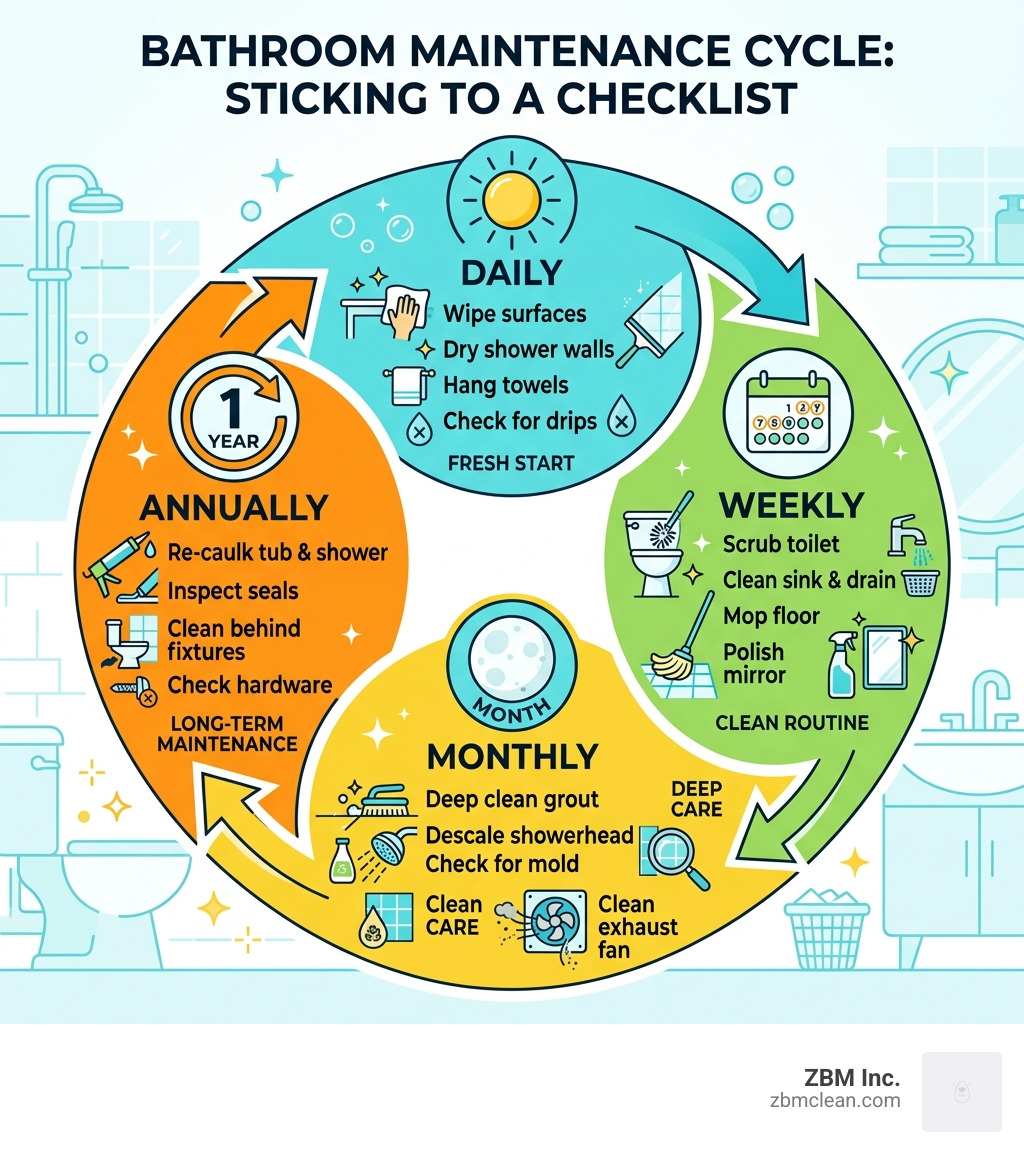
A bathroom maintenance checklist is the simplest way to stay ahead of grime, leaks, mold, and fixture failures before they turn into expensive repairs. Here is a quick overview of what a complete checklist covers:
Bathroom Maintenance Checklist at a Glance:
| Frequency | Key Tasks |
|---|---|
| Daily | Wipe surfaces, dry shower walls, hang towels, check for drips |
| Weekly | Scrub toilet, clean sink and drain, mop floor, polish mirror |
| Monthly | Deep clean grout, descale showerhead, check for mold, clean exhaust fan |
| Annually | Re-caulk tub and shower, inspect seals, clean behind fixtures, check hardware |
Bathrooms take a beating every single day. Between humidity, soap scum, hard water, and constant foot traffic, they are one of the fastest rooms in any building to deteriorate — if they are not maintained regularly.
As one industry insight puts it, lack of maintenance is the number one culprit behind common bathroom repairs like regrouting, caulking, and replacing water-damaged drywall. A little routine care goes a long way.
I’m Terry Zastrow, owner of ZBM Inc., a certified cleaning and restoration firm with nearly 30 years of experience maintaining commercial and residential spaces — including building and applying a bathroom maintenance checklist that meets professional and code-compliant standards. In the sections below, I’ll walk you through everything you need to keep your bathrooms clean, safe, and fully functional.
Essential Daily and Weekly Bathroom Maintenance Checklist
Consistency is the enemy of grime. When we think about bathroom upkeep, it’s easy to get overwhelmed by the idea of scrubbing grout for hours. However, if you break your bathroom maintenance checklist into small, bite-sized daily and weekly habits, the “deep clean” becomes significantly easier.
Daily Habits for a Hygienic Space
The goal of daily maintenance isn’t a deep scrub; it’s moisture and residue management. Because bathrooms are damp, they are the perfect breeding ground for bacteria and fungi.
- Wipe Down Surfaces: Spend sixty seconds wiping toothpaste residue and water spots off the counters and faucets. A quick pass with a microfiber cloth prevents mineral buildup that eventually requires harsh chemicals to remove.
- Moisture Removal: Use a squeegee on glass shower doors and tiled walls after the last shower of the morning. This single habit can reduce your heavy scrubbing time by up to 70% by preventing soap scum and hard water spots from ever forming.
- Manage Towels: Hang damp towels and bath mats immediately. If they stay bunched up on the floor, they trap moisture against the flooring and develop that “musty” smell. In high-traffic bathrooms or during cold/flu season, we recommend changing hand towels daily to prevent germ transmission.
- Check for Drips: A quick glance under the sink or behind the toilet for “mystery puddles” can save you from a massive floor repair later.
Weekly Bathroom Maintenance Checklist Tasks
Weekly tasks focus on sanitization. According to The Complete Bathroom Cleaning Checklist, you’d be surprised how much scum and gunk can build up in just seven days.
- Toilet Sanitization: Scrub the bowl with a dedicated cleaner. Don’t forget the exterior—work from the top (tank) down to the base. If you have “little boy spray” issues around the base, a paste of baking soda and water left to sit for a few minutes can neutralize odors effectively.
- Floor Mopping: Sweep or vacuum first to get rid of hair and lint (which bathrooms collect in surprising amounts). Then, mop with a disinfecting solution, starting from the farthest corner and working toward the door.
- Mirror Polishing: Use a streak-free glass cleaner and a lint-free cloth. Pro tip: wipe in a “Z” pattern to ensure you don’t leave residue behind.
- Trash Removal: Empty the bin weekly, even if it isn’t full, to prevent odors and bacteria growth.
- Shower and Tub Scrub: Use a non-abrasive cleaner to tackle the “shampoo shelf” or caddy where slime tends to accumulate.
Monthly Deep Cleaning and Preventative Inspections
Once a month, your bathroom maintenance checklist should shift toward the “hidden” areas that affect the long-term health of your home or office.
- Grout Scrubbing: Even with daily squeegeeing, grout can harbor mildew. Use a stiff brush and a hydrogen-peroxide-based cleaner. For most bathrooms in Southeastern WI, a thorough scrub every 1 to 3 months is sufficient if the room is well-ventilated.
- Exhaust Fan Dusting: If your mirrors are fogging up faster than usual, your fan is likely choked with dust. Vacuum the intake panel and wipe the blades.
- Showerhead Descaling: Mineral deposits from our Wisconsin hard water can clog the tiny holes in your showerhead, leading to weak water pressure.
Maintaining Fixtures and Hardware
- Faucet Aerators: Unscrew the small screen at the tip of your faucet and rinse out any grit or sediment.
- Cabinet Interiors: Wipe down the inside of vanity drawers and cabinets. It’s amazing how much leaked hairspray or spilled soap can accumulate in a month.
- Drain Stoppers: Pull out the sink stopper and remove the hair and “gunk” that clings to the mechanism. This prevents slow drains and foul odors.
- Hardware Tightening: Check towel bars, toilet paper holders, and cabinet knobs. A quick turn of a screwdriver prevents them from stripping the drywall or wood over time.
Seasonal Bathroom Maintenance Checklist for Longevity
Every few months (or at least once a year), perform a “structural” check.
- Caulking Integrity: Inspect the bead of caulk around the tub, shower, and backsplash. If it’s peeling, cracked, or has black spots that won’t scrub off, it’s time to scrape it out and re-apply. Water seeping behind a tub can rot the subfloor before you ever see a leak on the ceiling below.
- Grout Sealing: If you have natural stone or traditional tile, applying a sealer once a year helps prevent stains and water absorption.
- Medicine Cabinet Audit: Toss expired medications and old beauty tools. Ensure you dispose of medications safely—don’t just flush them into the Watertown water system.
Comparing Natural vs. Chemical Cleaners
| Cleaner Type | Best For | Pros | Cons |
|---|---|---|---|
| Vinegar (50/50 mix) | Glass, Chrome, Descaling | Eco-friendly, cheap, dissolves minerals | Acidic; can damage marble/granite |
| Baking Soda | Scrubbing sinks, Odors | Non-toxic, mild abrasive | Requires rinsing to avoid white film |
| Hydrogen Peroxide | Grout, Mold | Kills spores, whitens without bleach fumes | Can bleach some colored fabrics |
| Commercial Disinfectant | Toilets, High-touch handles | Kills 99.9% of germs quickly | Harsh fumes; requires ventilation |
Technical Safety: Electrical, Plumbing, and Code Compliance
Whether you are in Jefferson County or Minocqua, bathroom safety is governed by specific codes, like the International Residential Code (IRC). A professional bathroom maintenance checklist must include these safety checks.
- GFCI Outlets: All bathroom receptacles must be Ground Fault Circuit Interrupter (GFCI) protected. These are the outlets with “Test” and “Reset” buttons. They are designed to trip and cut power if they detect a short circuit (like a hair dryer falling into a sink). Test them monthly by pressing the “Test” button—the “Reset” should pop out.
- Hot Water Temperature: The 2024 IRC defines hot water as greater than 120°F (49°C). However, for safety, water heaters should generally be set so the water at the tap doesn’t exceed 120°F to prevent scalding, especially in homes with children or seniors.
- Electrical Placement: Receptacles should be at least 3 feet (914 mm) from the edge of the tub or shower zone. Never use extension cords in the bathroom.
Clearance and Accessibility Standards
If you are remodeling or inspecting a facility, keep these standard clearances from the Bathroom Maintenance Checklist in mind:
- Toilet Clearance: There should be a minimum of 21 inches of clear space in front of the toilet and 15 inches from the centerline to any sidewall.
- Ceiling Height: The minimum ceiling height for bathrooms is 6 feet, 8 inches.
- Safety Glazing: Any window within 60 inches (vertically or horizontally) of a tub or shower must have safety glass (tempered glass) to prevent injury if someone slips and falls against it.
Ventilation and Mold Prevention
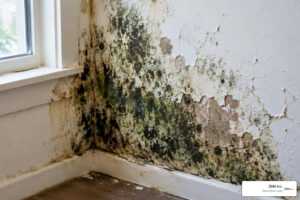
Poor ventilation is the #1 cause of peeling paint and black mold on bathroom ceilings.
- Outdoor Discharge: Bathroom exhaust fans must discharge to the outdoors. They should never vent into an attic, crawlspace, or soffit, as this just moves the moisture problem to a different part of your home.
- Run Time: We recommend running the fan during your shower and for at least 20 minutes afterward to fully clear the humidity.
- Window Safety: If your bathroom relies on a window for ventilation, it must have at least 1.5 square feet of openable space.
Troubleshooting Common Bathroom Problems
Sometimes, even with a great bathroom maintenance checklist, things go wrong. Knowing how to spot the “early warning signs” can save you thousands.
Detecting Hidden Water Damage
- Phantom Flushing: If you hear your toilet “hiss” or flush on its own when no one is using it, the flapper in the tank is likely leaking water into the bowl. It’s a $5 fix that saves hundreds on your water bill.
- Weak Flush: This is often caused by clogged rim jets (the little holes under the toilet rim). Clean them with a small wire or a stiff brush and vinegar.
- Soft Spots: If the floor feels “spongy” near the toilet or tub, stop using the bathroom immediately. This usually indicates the subfloor is rotting due to a failed wax ring or a slow leak.
- Wall Stains & Peeling Paint: These are classic signs of either a leak inside the wall or excessive humidity. If you see “bubbles” in your paint, there is likely water trapped behind it.
When to Call for Professional Help
While DIY maintenance is great, some things require a pro:
- Major Leaks: If water is actively dripping through a ceiling or a pipe has burst.
- Electrical Issues: If a GFCI won’t reset or you smell “burning” near an outlet.
- Structural Damage: If you find mold that covers an area larger than 10 square feet, or if floors are sagging.
- Biohazards: For specialized situations, More info about commercial cleaning services can provide the deep-level sanitization required for health and safety compliance.
Frequently Asked Questions about Bathroom Upkeep
How often should I replace bathroom caulking and grout?
Caulking typically lasts 1 to 5 years depending on the quality of the product and the humidity in the room. You should replace it as soon as you see it pulling away from the surface or if black mold begins to grow behind the clear or white bead. Grout, if sealed properly, can last decades, but may need “refreshing” or regrouting if it becomes cracked or falls out.
What is the safest temperature for bathroom hot water?
To prevent both bacteria growth (like Legionella) and scalding, most experts recommend setting your water heater to 140°F but using a mixing valve to ensure the water coming out of your bathroom faucet is no hotter than 120°F.
How do I test if my bathroom exhaust fan is working properly?
The easiest way is the “tissue test.” Turn the fan on and hold a single square of toilet paper or a tissue up to the intake grille. If the fan’s suction is strong enough to hold the tissue in place against the grille, it is moving air. If the tissue falls, your fan or ductwork is likely clogged or the motor is failing.
Conclusion
A clean bathroom is about more than just aesthetics; it’s about protecting your health and your property investment. By following a consistent bathroom maintenance checklist, you ensure that small issues like a worn flapper or a dusty fan don’t escalate into structural disasters.
At ZBM Inc., we’ve spent decades serving the Watertown, Lake Mills, and wider Southeastern WI communities. We know that maintaining a “professional” level of clean takes time and expertise. Whether you need a one-time deep clean or ongoing support for a commercial facility, our licensed and bonded team is here to help.
For those who want to ensure their home stays in peak condition without the weekend “elbow grease,” you can find More info about residential cleaning services on our website. Let us help you keep your bathroom—and your peace of mind—from going down the drain.