Why HomeAdvisor Dryer Vent Cleaning Data Should Guide Your Next Service Decision
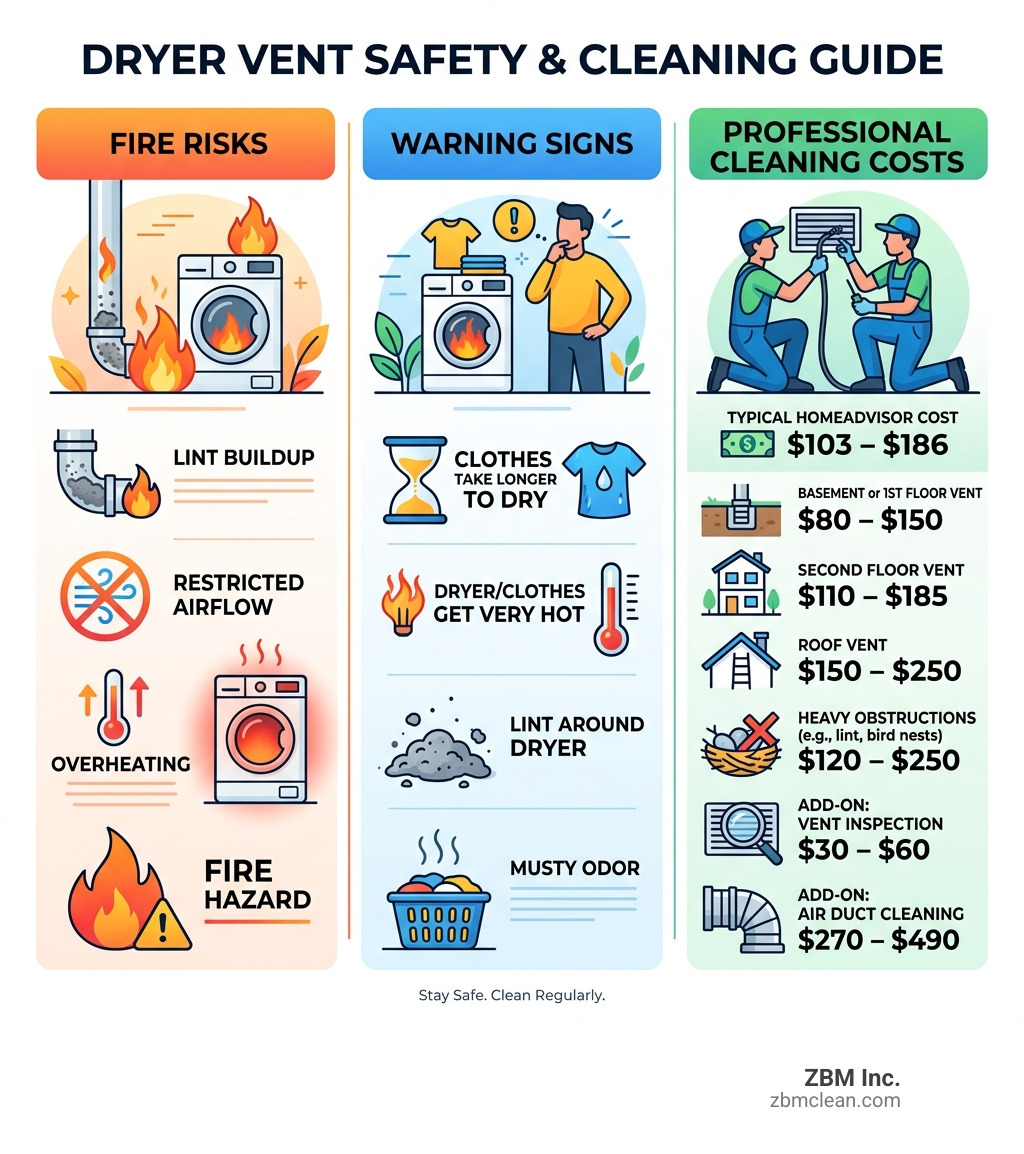
Home Advisor dryer vent cleaning cost data — drawn from over 10,000 real customer surveys — shows most homeowners pay between $103 and $186, with an average of $145.
Here’s a quick snapshot of what to expect:
| Situation | Typical Cost |
|---|---|
| Basement or first-floor vent | $80 – $150 |
| Second-floor vent | $110 – $185 |
| Roof vent | $150 – $250 |
| Heavy obstructions (lint, bird nests) | $120 – $250 |
| Add-on: Air duct cleaning | $270 – $490 |
| Add-on: Vent inspection | $30 – $60 |
Those numbers matter — because a clogged dryer vent isn’t just an appliance problem. The U.S. Fire Administration links thousands of residential fires every year to lint buildup in dryer vents. And yet, 60% of homeowners have never cleaned their dryer vent at all.
For commercial property managers, the stakes are even higher. Multiple tenants running dryers daily means lint accumulates fast — and the consequences of neglect range from sky-high energy bills to serious fire liability.
This guide breaks down exactly what professional dryer vent cleaning costs, what drives those prices up or down, and how to find a qualified pro in your area.
I’m Terry Zastrow, owner of ZBM, Inc. — an IICRC-certified firm with nearly 30 years of experience in building maintenance and specialized cleaning services, including the kind of preventive work that keeps dryer vent hazards from becoming costly emergencies. Understanding home advisor dryer vent cleaning benchmarks is something I help property managers navigate every day, so you’ll get straight answers here — no guesswork.
Basic home advisor dryer vent cleaning glossary:
Understanding Dryer Vent Cleaning Costs
When we look at the latest home advisor dryer vent cleaning data for April 2026, the national average sits comfortably at $145. However, “average” doesn’t always tell the whole story for homeowners in Watertown or Jefferson County. Prices can dip as low as $75 for a simple, straight-through-the-wall job or climb to $335 for complex systems that require specialized ladders or roof safety gear.
The variation in pricing is largely determined by how much time a technician needs to spend on-site. Professional labor rates for ductwork specialists play a major role, but the physical configuration of your home is the primary driver. If we can walk up to the vent on the first floor and clear it in 30 minutes, your bill will reflect that simplicity. If we have to scale a roof in the Northwoods during a breezy afternoon, the risk and equipment involved naturally increase the price.
Cost Breakdown by Vent Location
Location is everything. The further the lint has to travel—and the harder it is for us to reach the exit point—the more you should budget for the service.
- Basement and First-Floor Access ($80–$150): These are the most straightforward jobs. Since the vent is easily accessible from the ground level, tools can be deployed quickly, and the “run” (the length of the pipe) is usually short.
- Second-Floor Vents ($110–$185): When a laundry room is located on the second floor, the exterior vent is often high off the ground. This requires taller ladders and additional safety precautions, which adds to the labor time.
- Roof-Mounted Exits ($150–$250): Cleaning a roof vent is a two-person job in many cases. Technicians must navigate shingles and steep pitches to clear the termination cap, which is a common spot for bird nests and heavy lint clogs to form.
Additional Service Add-ons
While we are at your home in Southeast Wisconsin, many homeowners find it cost-effective to bundle services.
- Air Duct Cleaning ($270–$490): If your dryer vent is full of lint, there is a high probability your HVAC ducts are also harboring dust and allergens. Bundling these can often lead to a lower per-service rate.
- Professional Vent Inspection ($30–$60): Sometimes you don’t need a full cleaning, but a camera inspection to check for cracks, disconnected joints, or mold.
- Disinfectant Fogging ($50–$100): If a bird or rodent has made a home in your vent, we use an EPA-approved disinfectant to ensure your indoor air quality isn’t compromised by bacteria.
- Lint Alert Monitoring ($170–$250): We can install sensors that monitor back-pressure in your line, alerting you the moment airflow drops below safe levels.
Factors That Influence Professional Service Pricing
Beyond just where the vent “exits” the house, several technical factors influence the final quote for home advisor dryer vent cleaning. We often see homeowners surprised by how much the internal “plumbing” of their ventilation system matters.
Impact of Duct Material on Labor
The material used in your walls dictates how we clean.
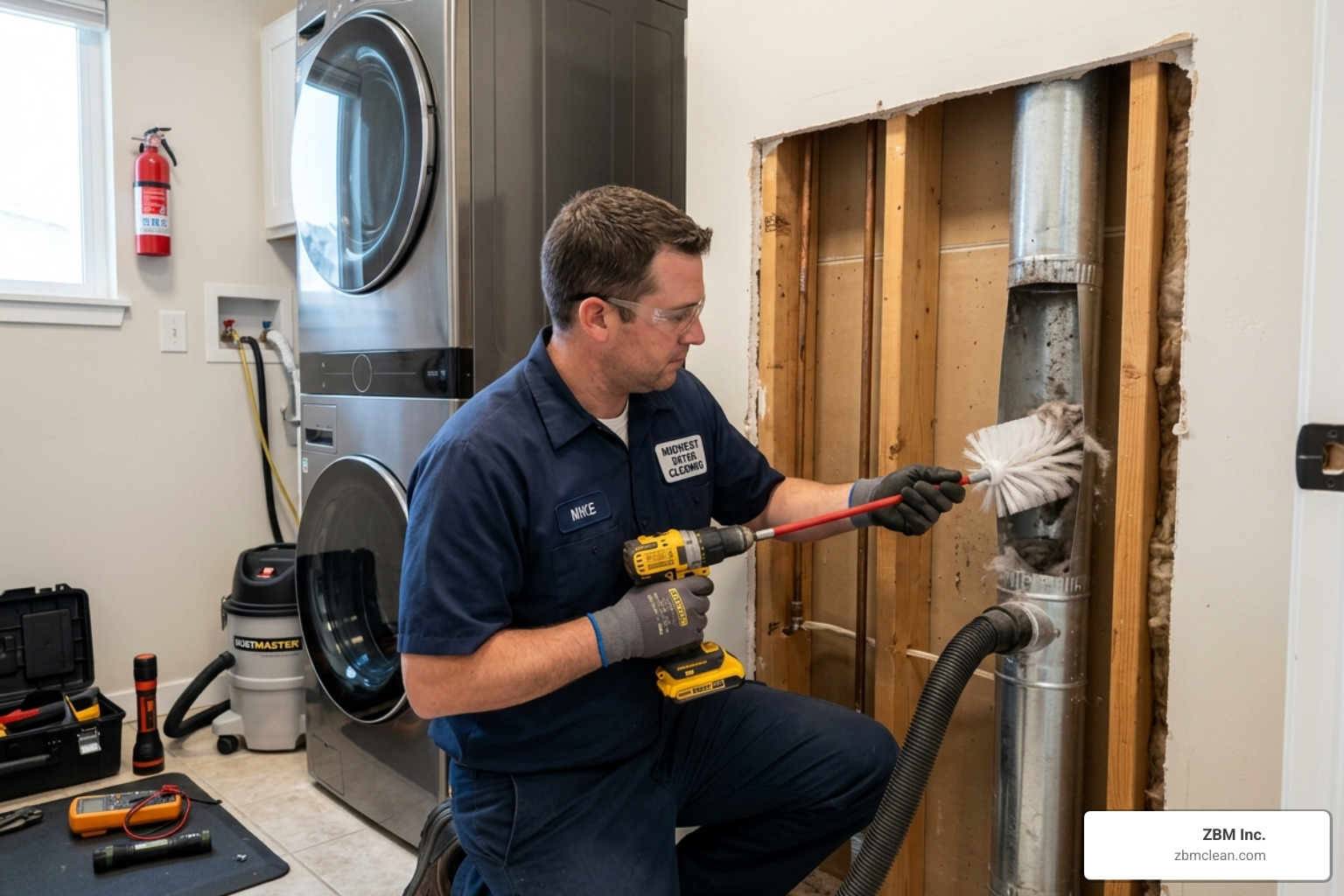
- Rigid Metal Pipe: This is the gold standard. It has a smooth interior that allows lint to slide through easily. Because it’s sturdy, we can use high-powered rotary brushes without fear of puncturing the line. These are often the fastest and most affordable to clean.
- Flexible Plastic or Foil: These are “lint traps” by design. Every ridge in the accordion-style tubing catches debris. These materials are fragile; if we aren’t careful, a brush can rip the foil, leading to a hidden leak behind your drywall. Cleaning these takes more time and a gentler touch.
Handling Severe Blockages and Repairs
If your dryer has been neglected for over three years (which, according to research, applies to about 25% of homeowners), we aren’t just dealing with “dust.” We are dealing with “obstructions.”
- Animal Nesting and Compacted Lint ($120–$250): When lint becomes wet and then dries, it turns into a concrete-like substance. Add a bird’s nest into the mix, and we have a major blockage. Clearing these requires specialized “snake” tools and more labor.
- Duct Replacement and Rerouting ($80–$1,000): If your vent was installed improperly—for example, if it vents into an attic or crawlspace—it breaches local building codes and creates a massive mold risk. We may need to reroute the entire line to an exterior wall to ensure safety and compliance.
Professional vs. DIY: Why Specialized Tools Matter
It is tempting to grab a $20 kit from a big-box store, but there’s a reason pros exist. At ZBM Inc., we use industrial-grade equipment that a standard homeowner simply doesn’t have in the garage. This includes high-velocity HEPA vacuums and reverse-spinning rotary brushes that can navigate 90-degree turns without getting stuck.
In our guide to apartment dryer safety, we emphasize that professional cleaning goes deeper than the pipe. A true pro opens the dryer cabinet itself to clean the motor and blower wheel—areas where 30% of dryer fires actually start.
The Risks of DIY Cleaning Kits
We have seen many “DIY saves” turn into expensive repairs.
- Pushed Clogs: Without a high-powered vacuum to pull the lint out, DIY brushes often just push the lint into a tight corner, creating a “plug” that is harder to remove.
- Duct Damage: Plastic DIY rods are notorious for snapping off inside the wall. Now, instead of a $145 cleaning, you’re looking at cutting into the drywall to retrieve the broken tool.
- Leaf Blower Risks: Some “life hacks” suggest using a leaf blower. Do not do this. A leaf blower can provide too much pressure, causing flexible ducts to burst or disconnecting joints hidden behind your walls, venting hot, moist air directly into your home’s structure.
Benefits of Expert Inspection
When we perform a home advisor dryer vent cleaning service, we aren’t just looking for lint. We check for:
- Airflow Velocity: We use anemometers to measure exactly how much air is escaping.
- Proper Connections: We replace dangerous plastic zip ties or screws (which catch lint) with professional-grade aluminum foil tape.
- Pest Prevention: We ensure your exterior cap has a functional damper that keeps Dodge County critters from moving in.
Recognizing Warning Signs and Fire Hazards
How do you know it’s time to call us? Your dryer is usually trying to tell you something. If you ignore these signs, you aren’t just wasting electricity—you’re sitting on a fire hazard. The NFPA reports that hundreds of fires start every year because of simple lint neglect.
Watch for these “Red Flags”:
- Long Drying Times: If a load of towels takes two or three cycles to dry, your vent is likely 50% or more clogged.
- The “Hot” Smell: A burning odor or a musty scent while the dryer is running is a sign that lint is scorching or trapped moisture is growing mold.
- Excessive Heat: If the top of the dryer or your clothes feel “blistering” hot to the touch, the thermal fuse is likely about to blow.
- Stuck Vent Flap: Walk outside while the dryer is running. If the flap on the wall isn’t fluttering or opening, no air is getting out.
How Often to Schedule Professional Dryer Vent Cleaning
For most households in Watertown and the surrounding Southeast Wisconsin area, once a year is the industry standard. However, your specific habits might require more frequent visits:
- Large Families (Daily Loads): If you’re doing 10+ loads a week, consider a cleaning every 6 months.
- Pet Owners: Dog and cat hair travels through the lint trap and into the vent, where it acts like “kindling” for a fire. We recommend every 6 months for heavy shedders.
- Commercial Properties: Salons, pet groomers, and apartment complexes should stick to a quarterly schedule due to the sheer volume of debris.
Find top rated dryer vent cleaning pros in your area
Finding Experts for Dryer Vent Cleaning
When searching for home advisor dryer vent cleaning pros, don’t just look for the lowest price. You want someone who understands the local building codes in Jefferson County.
- Verify Credentials: Ensure the company is licensed, bonded, and insured.
- Read Reviews: Look for mentions of “thoroughness” and “cleanliness.” A good pro shouldn’t leave a mess in your laundry room.
- Get a Detailed Quote: Avoid “flat rates” over the phone that sound too good to be true. A reputable company will ask about your vent’s location (roof vs. wall) before giving a final price.
Frequently Asked Questions
Is professional dryer vent cleaning worth the investment?
Absolutely. Beyond the obvious safety benefits, it is a massive money-saver. An inefficient dryer can add up to $25 per month to your energy bill. By spending $145 once a year, you can save roughly $300 in electricity. Furthermore, you’ll extend the life of your appliance by years, avoiding a $1,000 replacement cost.
What happens if my dryer vent is not properly connected?
This is a recipe for disaster. An unconnected vent pumps gallons of water (in the form of steam) into your wall cavities or attic. This leads to rapid mold growth, wood rot, and compromised indoor air quality. It also breaches Wisconsin building codes, which can complicate home inspections if you ever try to sell your property.
Can a clogged vent damage my dryer?
Yes. When air can’t escape, the dryer’s internal temperature skyrockets. This puts immense strain on the heating element and the motor. The most common result is a blown thermal fuse (an average $180 repair) or a burnt-out motor. In many cases, homeowners think their dryer is “broken” and buy a new one, only to realize the new machine doesn’t work either because the vent is still clogged!
Conclusion
At ZBM Inc., we believe that a clean home is a safe home. Whether you are in Watertown, Lake Mills, or anywhere across Southeastern WI and the Northwoods, maintaining your dryer ventilation shouldn’t be an afterthought. We are a family-owned, licensed, bonded, and insured team of certified professionals dedicated to providing the high-quality service you deserve.
Don’t wait for a burning smell to take action. Use the home advisor dryer vent cleaning benchmarks to budget for your maintenance, and then give us a call to get the job done right. We’re here to ensure your dryer runs efficiently, your energy bills stay low, and most importantly, your family stays safe.
Visit us at https://www.zbmclean.com/ to schedule your inspection today!