Office Deep Cleaning Checklist: Where to Start
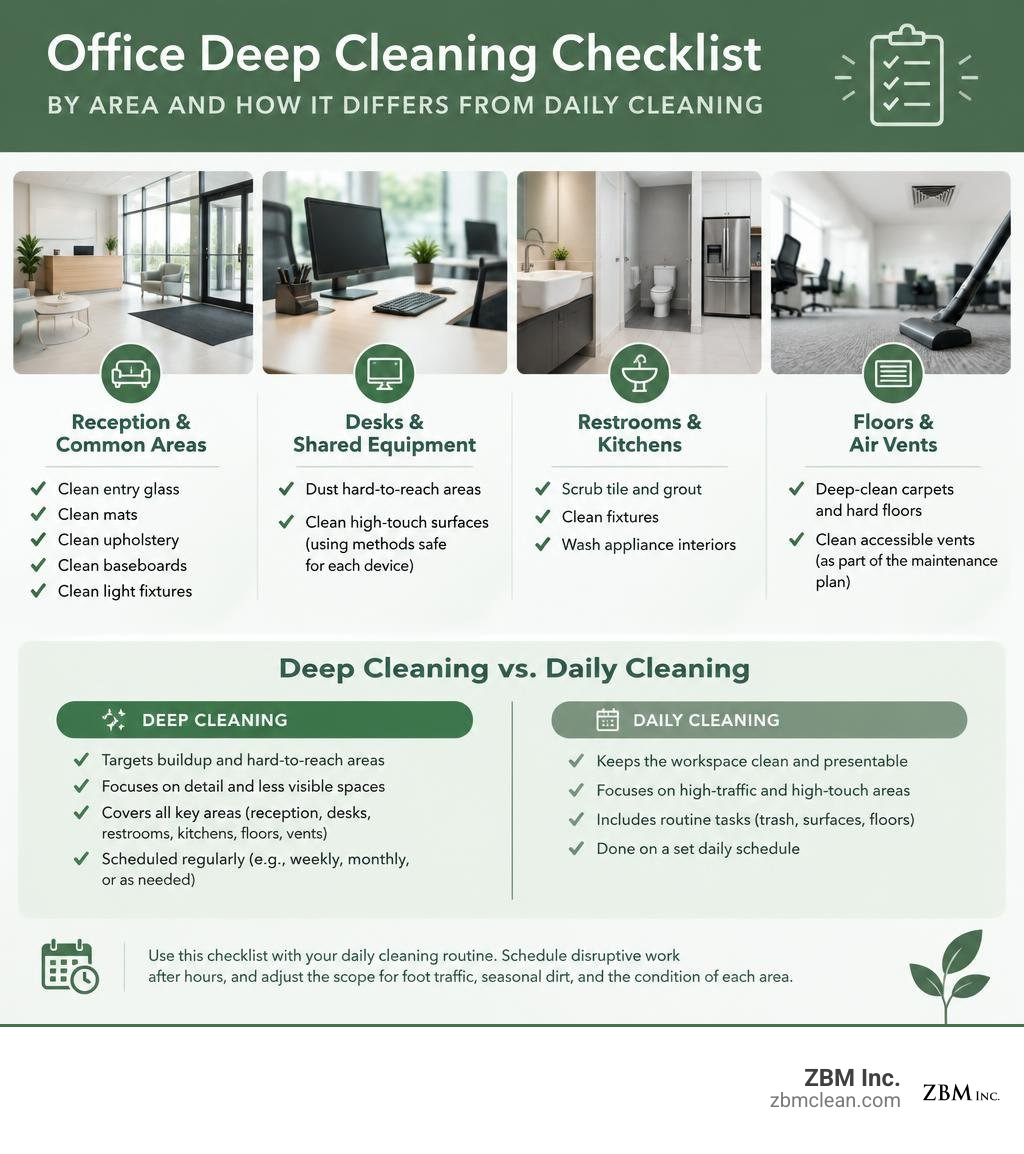
An office deep cleaning checklist should cover the spaces and buildup that routine cleaning can miss. When evaluating a commercial cleaning provider, look for a scope that includes:
- Reception and common areas: Entry glass, mats, upholstery, baseboards, and light fixtures.
- Desks and shared equipment: Hard-to-reach areas and high-touch surfaces, using methods safe for each device.
- Restrooms and kitchens: Tile and grout, fixtures, and appliance interiors.
- Floors and air vents: Deep-cleaned carpets and hard floors, plus accessible vents as part of the maintenance plan.
A professional provider should use this list alongside daily cleaning, not in place of it. Noisy or disruptive work should be scheduled after hours, and the scope should be adjusted for foot traffic, seasonal dirt, and the condition of each area.
I’m Terry Zastrow, owner of ZBM Inc., an IICRC-certified firm with about 30 years of experience serving public and private facilities. My technician training and field experience shape this office deep cleaning checklist and the room-by-room standards that follow.
Office deep cleaning checklist terms you need:
- office cleaning checklist
- daily cleaning checklist for office
- office cleaning schedule
The Complete Office Deep Cleaning Checklist by Zone
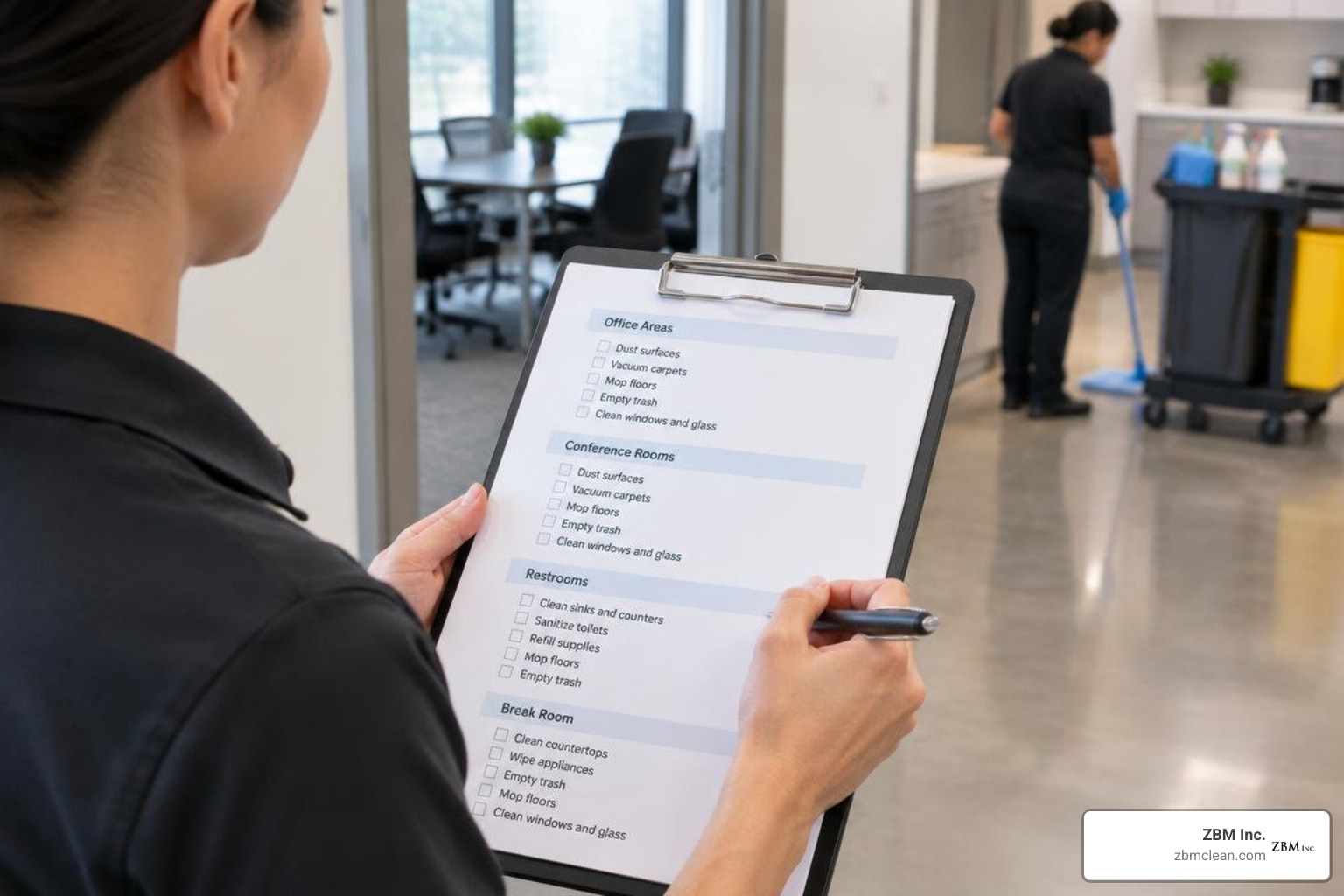
Maintaining a truly sanitary workspace requires looking past daily surface sweeps. Over time, dust, allergens, and grime build up in neglected crevices, high-touch points, and porous surfaces. Trying to tackle these embedded issues in-house often drains valuable staff time and fails to eliminate deep-seated soil without specialized commercial gear.
Working with a vetted partner ensures your facility receives systematic treatment across every department. Understanding the core components of your complete commercial office cleaning checklist helps facility managers evaluate service standards and maintain high indoor quality.
Reception and Common Area Office Deep Cleaning Checklist
Your lobby and reception area shape every visitor’s first impression. A clean, fresh entryway signals excellence, whereas stained furniture and dusty trim suggest neglect. A qualified commercial cleaning provider should address:
- Walk-off Mats and Entryway Glass: Deep extraction of commercial entrance mats to remove ground-in salt, mud, and grit; streak-free washing of full-height glass doors and sidelights.
- Seating and Upholstery: Hot-water extraction on fabric chairs, coupled with leather and vinyl conditioning to lift oils and soil.
- Architectural Features: Hand-wiping baseboards, crown molding, doorframes, and acoustic wall panels.
- High-Dusting: Vacuuming ceiling fans, pendant lighting, high ledges, and decorative artwork using static-dissipative tools and extension poles.
Attempting to scrub entryway upholstery or detail high fixtures with standard store-bought tools can damage delicate fabrics or leave unsightly streaks. Experienced technicians use specialized equipment to deliver uniform, lasting results.
Workstation, Cubicle, and Technology Protocols
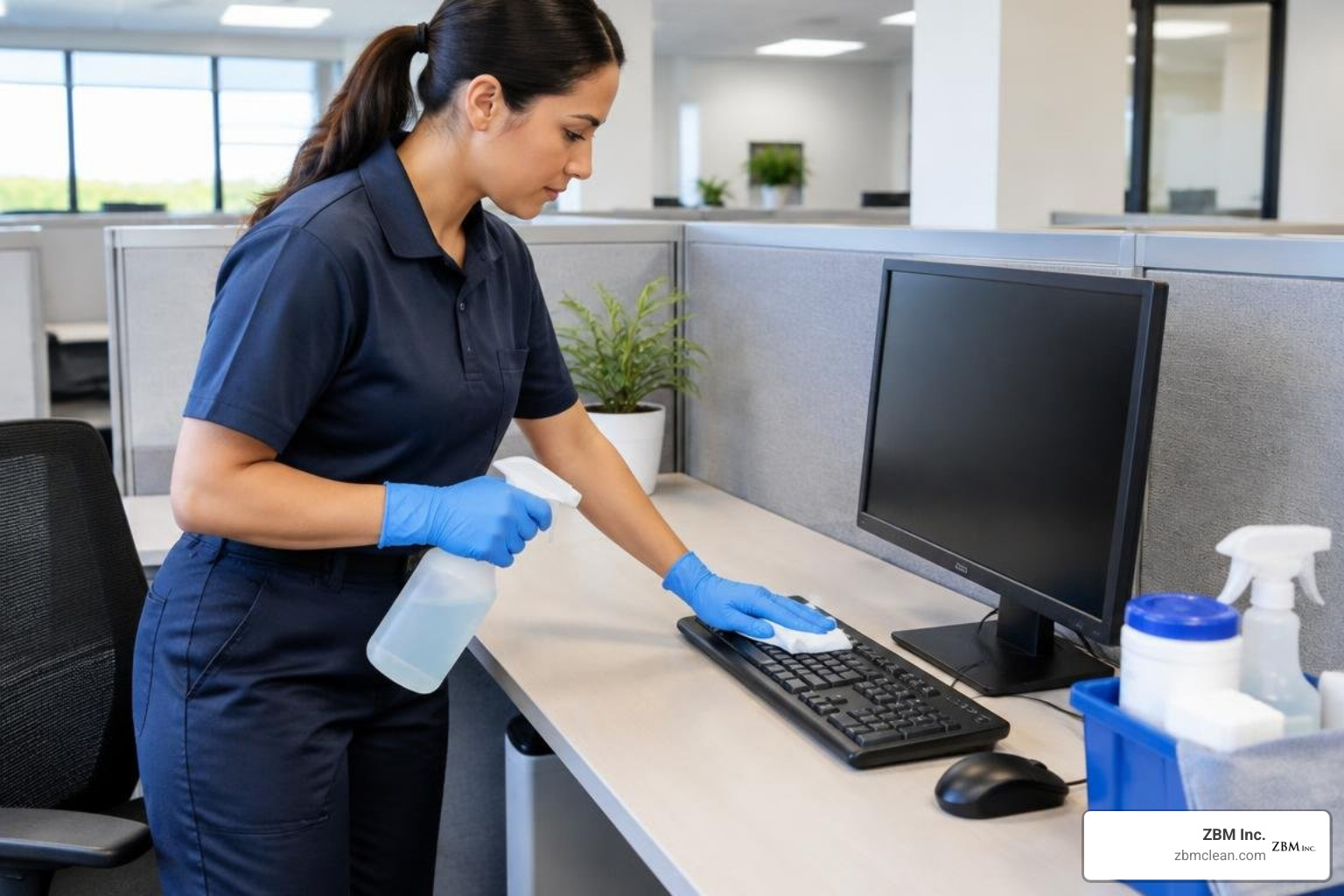
Desks and cubicles harbor surprising amounts of biological residue and dust. When reviewing corporate office cleaning checklist: 5 things you can’t forget, technology and personal workspaces consistently require precise, careful handling. A professional scope should include:
- Technology Sanitization: Disinfecting keyboards, computer mice, desk phones, and monitors using manufacturer-safe, non-corrosive electronic wipes.
- Cable and Infrastructure Management: Dusting cable trays, power strips, and under-desk cord organizers where debris collects.
- Fabric Partitions and Seating: Deep vacuuming and steam extraction of cubicle dividers and adjustable task chairs to remove skin cells, pollen, and dust mites.
- Air Circulation Points: Vacuuming supply vents, clearing return air grilles, and wiping down diffusers to prevent dust circulation.
Because sensitive electronics can short-circuit or corrode when exposed to generic household sprays, partnering with trained commercial cleaners protects expensive assets while maintaining strict hygiene.
Restroom and Office Kitchen Deep Cleaning Checklist
Breakrooms and restrooms see heavy daily use and demand rigorous sanitation to stop bacterial growth and unpleasant odors.
Reviewing your office kitchen deep clean checklist alongside complete office sanitation checklist and tips for a healthy facility ensures that hygiene standards remain uncompromising across all shared food and hygiene zones. A certified provider should cover:
- Grout and Tile Restoration: High-pressure steam washing and chemical descaling of tile floors and walls to eliminate uric acid salts and stubborn grime.
- Plumbing Fixtures: Mineral deposit removal, descaling, and hospital-grade disinfection of faucets, flushometers, sinks, and urinals.
- Kitchen Appliances: Deep interior decontamination of refrigerators, degreasing microwave interiors and exhaust vents, and sanitizing ice machine chutes.
- Storage and Countertops: Sanitizing inside breakroom cabinets, pantry shelving, backsplash tiles, and under-sink containment areas.
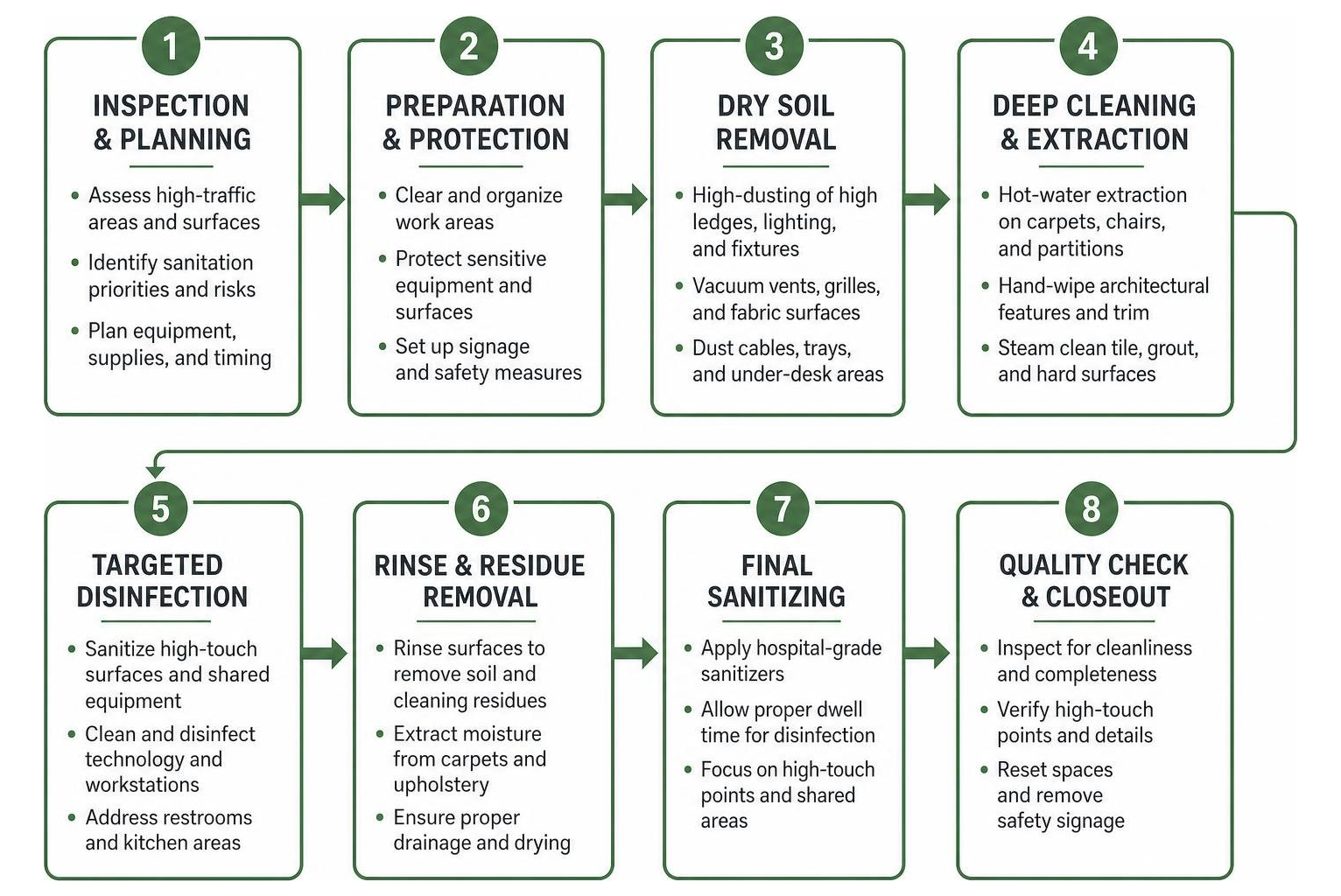
DIY efforts in restrooms and kitchens frequently miss hidden bacteria beneath fixtures or fail to reach the proper dwell time required for full disinfection. Certified technicians apply industrial sanitizers that break down grease and bacteria at their source.
Execution Strategy and Preventive Maintenance
Executing deep sanitation without disrupting business operations requires structured planning. Noisy machinery like carpet extractors or floor buffers during standard business hours disrupts phone calls and meetings. Establishing an organized maintenance strategy ensures operations run smoothly while prolonging the life of your physical assets.
Deep Cleaning vs. Routine Maintenance Schedule
Routine cleaning manages surface-level trash, sweeping, and basic disinfection. In contrast, deep cleaning restores surfaces, purges allergens, and protects equipment longevity. Finding the right balance is straightforward when you know how to set up a stress-free office cleaning schedule.
| Cleaning Frequency | Routine Maintenance Tasks | Deep Cleaning Scope |
|---|---|---|
| Daily | Empty trash/recycling, wipe counters, spot mop spills, restock paper goods | Dwell-time disinfection on high-contact touchpoints |
| Monthly | Dust baseboards, polish mirrors, deep sweep corners | Refrigerator cleanouts, window washing, scrubbing high-traffic entry tile |
| Quarterly / Bi-Annual | Inspect walk-off mats, wipe supply vents | Hot-water carpet extraction, hard floor strip and wax, HVAC diffuser detailing |
Relying solely on in-house staff for heavy quarterly tasks can lead to uneven results, workplace fatigue, or potential safety hazards from improper chemical use. Professional providers integrate these frequencies into a seamless schedule executed entirely after hours.
Equipment, PPE, and Custom Facility Planning
Effective deep cleaning demands commercial-grade tools that far exceed consumer appliances. A professional team arrives equipped with:
- HEPA-Filtered Vacuums: True HEPA systems trap fine particulate matter down to 0.3 microns, protecting indoor air quality.
- Color-Coded Microfiber Systems: Distinct cleaning tools for restrooms, kitchens, and common areas to prevent cross-contamination.
- Personal Protective Equipment (PPE): Nitrile gloves, splash goggles, and proper footwear to safely handle concentrated solutions.
- Specialized Machinery: Rotary floor machines, auto-scrubbers, and commercial extractors that pull grime from deep within carpet piles.
Interestingly, industry surveys show that 46.42 percent of facility managers surveyed do not consider outsourcing cleaning and janitorial services an option, often because they assume managing in-house staff provides greater control. However, in-house teams rarely have access to commercial-grade restoration machinery or advanced safety training.
Investing in a customized service scope allows leadership to protect flooring, improve air quality, and extend equipment lifespans without purchasing costly equipment or managing extra staff. For reliable support across Dodge County, Jefferson County, Watertown, and Southeastern Wisconsin, discover how our certified team delivers customized results through commercial cleaning services in Dodge and Jefferson County, WI. Reach out to us at ZBM Inc. to schedule a comprehensive walk-through and build a customized deep cleaning schedule for your workspace.