
Why Apartment Dryer Vent Cleaning Is a Safety Issue You Can’t Ignore
Apartment dryer vent cleaning should happen at least once a year — more often if your building has high dryer usage, multiple tenants sharing units, or pets.
Here’s what property managers need to know at a glance:
- Clean frequency: Every 6-12 months, depending on usage
- Who’s responsible: Typically the landlord or property manager for the ductwork; tenants handle the lint trap
- Biggest risk: Lint buildup is highly flammable — nearly 15,000 apartment and condo fires per year are linked to clogged dryer vents
- Key warning signs: Clothes taking longer to dry, burning smells, a hot dryer exterior, or spiking energy bills
- DIY vs. professional: DIY works for simple setups; multi-unit buildings with long or shared duct runs need a certified professional
As a property manager, you’re juggling a lot. Dryer vents probably aren’t top of mind — until something goes wrong.
The problem is that lint builds up quietly inside ductwork where you can’t see it. It’s dry, lightweight, and catches fire easily. One spark is all it takes.
In a multi-family building, that risk doesn’t stay in one unit. It spreads.
The good news? This is one of the most preventable fire hazards in any apartment community. Regular maintenance keeps residents safe, reduces energy waste, and protects your property from damage that can cost more than $10,000 per incident.
This guide covers everything you need to know — from spotting the warning signs to understanding who’s responsible, and when to call in a professional.
The Hidden Dangers of Clogged Apartment Dryer Vents
When we talk about apartment dryer vent cleaning, we aren’t just talking about tidying up. We are talking about life safety. In a confined multi-family environment, a single neglected vent can jeopardize dozens of families.
Fire Risks and Statistics
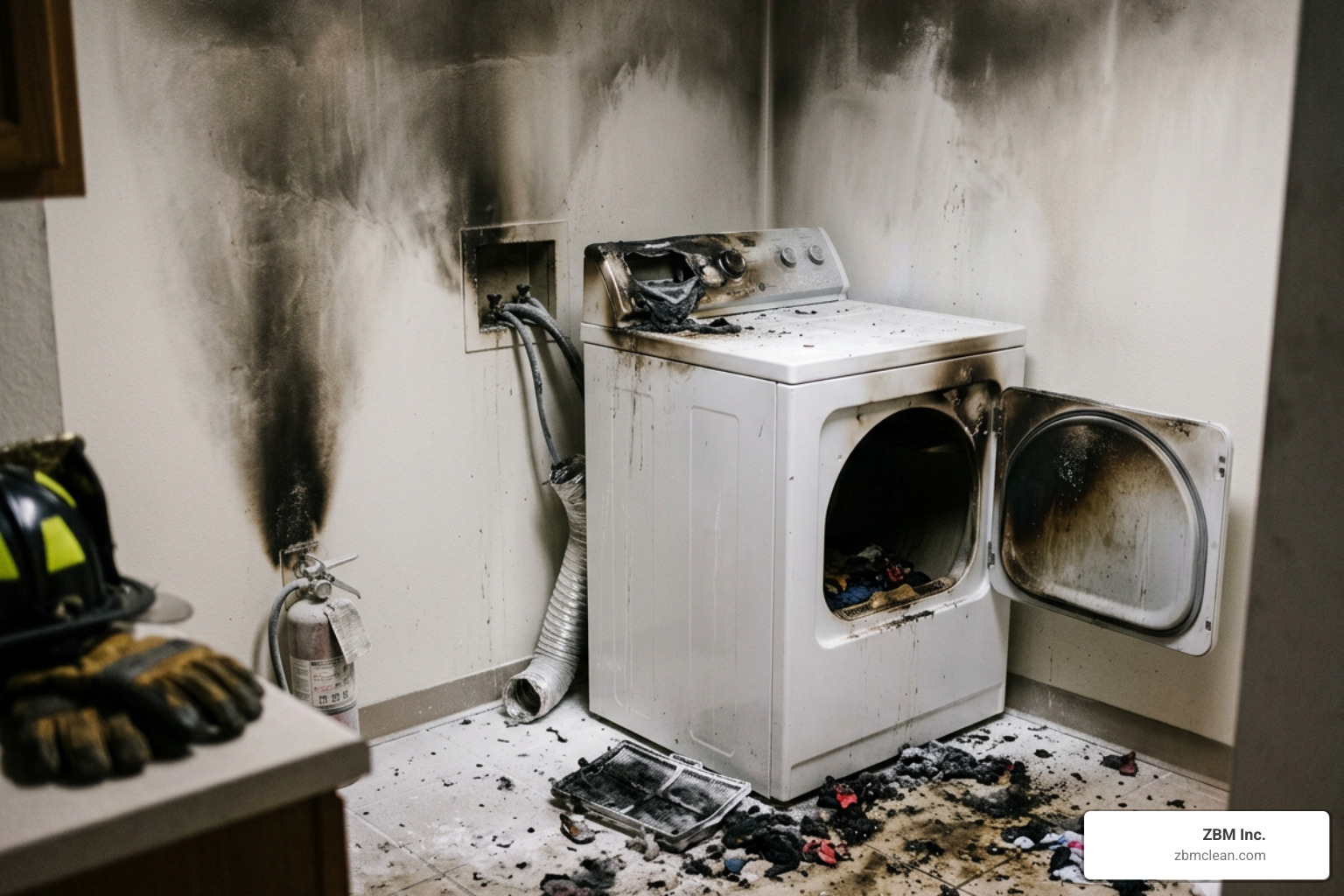
The statistics are sobering. According to the National Fire Protection Association, nearly 17,000 home clothes dryer fires are reported annually. In multi-family residences like those we service in Watertown and Lake Mills, WI, clogged exhaust vents are responsible for as many as 15,000 fires. Lint is essentially the perfect tinder; it is highly flammable and can be ignited by a single spark or the extreme heat of an overworked dryer motor.
Carbon Monoxide and Health Hazards
For apartments equipped with gas dryers, the stakes are even higher. A clogged vent prevents the safe exhaust of combustion byproducts. This can lead to a buildup of carbon monoxide—a colorless, odorless, and potentially lethal gas—inside the living space. Furthermore, blocked vents trap moisture, creating a breeding ground for mold and bacteria within the walls of the building.
Property Damage and Efficiency
A dryer fire isn’t just a safety crisis; it’s a financial one. Fires originating in dryer vents cause property damage averaging over $10,000 per incident. Even without a fire, restricted airflow forces the dryer to work harder, increasing energy usage by up to 30%. In a large complex in Southeastern WI, that inefficiency adds up to thousands of dollars in wasted utility costs for residents and management.
Recognizing the Signs You Need Apartment Dryer Vent Cleaning
How do you know if a vent is reaching a critical state? We recommend watching for these “red flags”:
- Longer Drying Times: If a load of towels that used to take 45 minutes now takes two cycles, lint is likely blocking the exit.
- Burning Smell: If you smell something singed while the dryer is running, shut it off immediately.
- Hot Exterior: The dryer or the clothes should never be painfully hot to the touch.
- Excessive Lint: Finding lint behind the dryer or around the door seal suggests the air has nowhere else to go.
- No Lint on Screen: Paradoxically, if the lint trap is sparkling clean after a load, it often means the lint has bypassed the trap and is clogging the internal ductwork.
Responsibility and Frequency: Who Cleans What and When?
One of the most common questions we hear in Dodge and Jefferson County is: “Who is actually supposed to do this?” The answer usually lies in the fine print of the lease agreement, but general industry standards apply.
Tenant vs. Landlord Duties
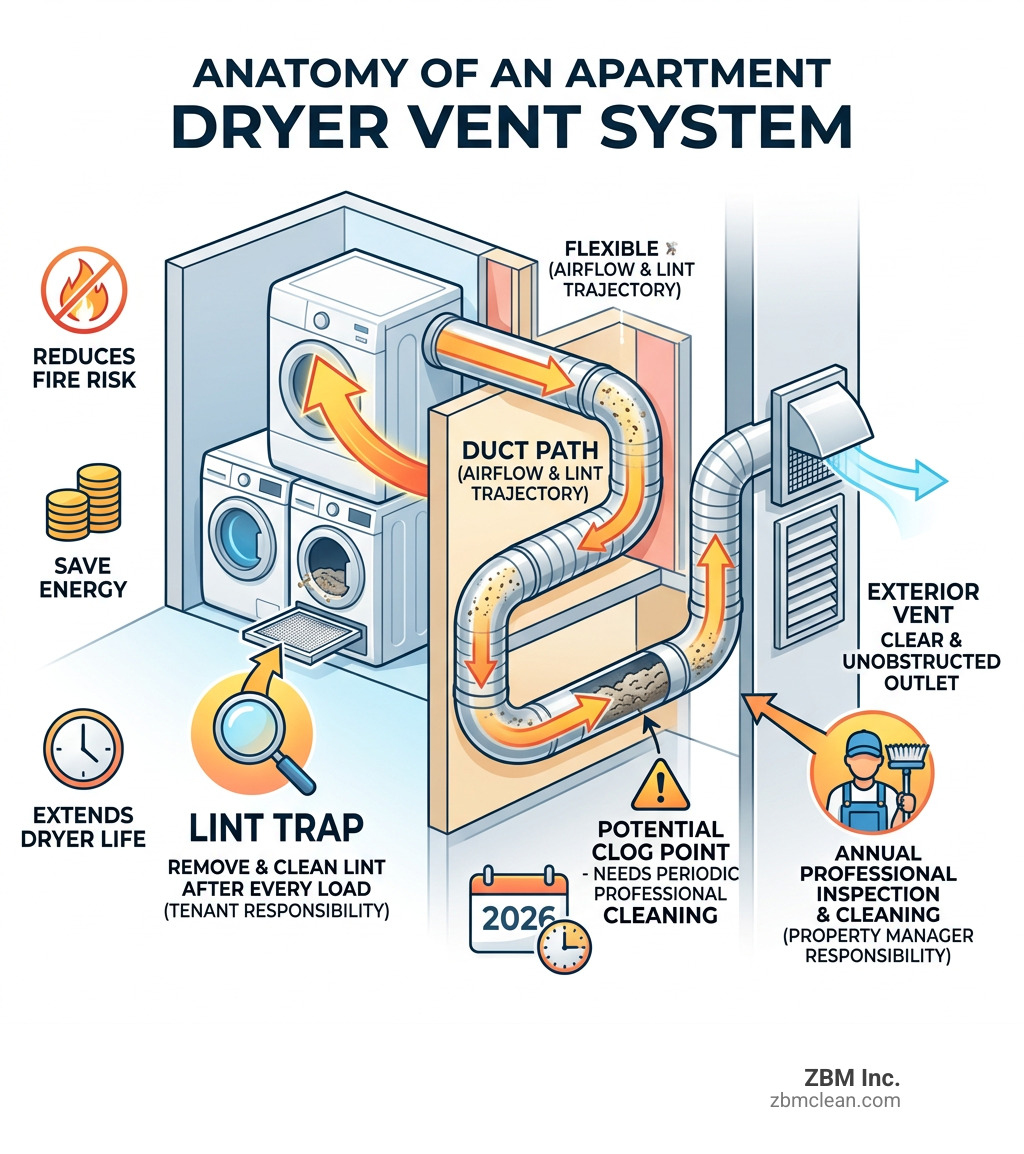
Generally, the responsibility is split. The tenant is responsible for daily maintenance—cleaning the lint screen before every load and keeping the area around the dryer clear of flammable materials. The landlord or property manager is typically responsible for the “structural” venting—the ductwork that runs through the walls to the exterior of the building.
| Task | Responsible Party | Frequency |
|---|---|---|
| Clean Lint Screen | Tenant | Every Load |
| Clear Area Behind Dryer | Tenant | Monthly |
| Inspect Vent Hose | Landlord/Tenant | Every 6 Months |
| Professional Duct Cleaning | Landlord | Annually |
| Exterior Vent Guard Check | Landlord | Annually |
Safety Codes and Shared Liability
In multi-unit buildings, poor ventilation in one unit can affect the “stack” or shared ventilation system of the entire building. Property managers must ensure compliance with local Wisconsin fire codes. Neglecting this maintenance can lead to shared liability if a fire occurs and it is proven that the venting system was not properly maintained.
How Often Should You Schedule Apartment Dryer Vent Cleaning?
While once a year is the gold standard, some situations require more frequent attention. We suggest a six-month interval for:
- High-Usage Units: Large families or units with multiple roommates.
- Pet Owners: Pet hair travels easily into the vent system and creates “mats” that trap lint faster.
- Long Duct Runs: The further the air has to travel to reach the outside, the more likely lint is to settle in the pipe.
Following NADCA safety standards ensures that the cleaning is thorough enough to remove the “hidden” lint that standard vacuums miss.
DIY vs. Professional Apartment Dryer Vent Cleaning
Can a resident clean their own vent? In a simple, first-floor apartment with a vent that goes straight through the wall, a DIY approach can work. However, most modern apartments in Southeastern WI have complex ductwork that requires more than a household vacuum.
The Limits of DIY
A standard vacuum often lacks the “reach” or suction power to clear a 20-foot vertical duct. Furthermore, using the wrong tools can actually pack the lint tighter or, worse, puncture the flexible foil venting often found behind appliances. Professional teams use specialized equipment, including high-powered truck-mounted vacuums and HEPA filters, to ensure that dust and allergens aren’t just blown back into the apartment.
Step-by-Step Guide to DIY Apartment Dryer Vent Cleaning
If you are a tenant in a unit with a short, accessible vent, here is how to safely perform a basic cleaning:
- Unplug the Unit: Safety first. Disconnect the power. If it’s a gas dryer, turn off the gas valve.
- Move the Dryer: Carefully pull the unit away from the wall. Be careful not to kink the vent hose.
- Disconnect the Hose: Use a screwdriver to loosen the clamps. This is often where the most significant lint “clogs” live.
- Vacuum the Lint: Use a vacuum cleaner with a hose attachment to reach into the back of the dryer and the beginning of the wall duct.
- Use a Brush: If you have a dryer cleaning kit, feed the rotating brush into the duct while spinning it with a drill.
- Reassemble and Test: Reattach the hose with metal foil tape (avoid screws, as they catch lint!). Run the dryer on an “air dry” cycle for 15 minutes to blow out any loosened debris.
Unique Challenges in Multi-Unit Buildings
Cleaning a vent in a single-family home in Watertown is straightforward. Cleaning a vent in a three-story apartment complex in Minocqua is a different story.
Vertical Stacks and Long Runs
Many apartment buildings utilize vertical stacks where multiple dryers vent into a common shaft, or long horizontal runs that travel through floor joists. These systems often require “booster fans” to help move the air. If these fans fail or become clogged, the entire system can back up, creating a massive fire risk for the whole building.
Exterior Access and Pests
In many high-rise or multi-story buildings, the exterior vent is located 30 feet up a brick wall. This makes it impossible for a tenant to check if the vent flap is stuck or if a bird has built a nest inside. We strongly recommend that property managers install a guard or vent guard over these openings to prevent critters from entering while still allowing lint to escape.
Frequently Asked Questions about Apartment Dryer Vents
Can I clean my own dryer vent in a high-rise?
Generally, no. In high-rise buildings, the venting systems are often integrated into the building’s mechanical structure. Attempting to clean these yourself can damage common property or push lint into a neighbor’s vent. Most building managements require professional, insured contractors to handle this to ensure liability is covered.
Does the landlord have to pay for dryer vent cleaning?
In most jurisdictions within Southeastern WI, the landlord is responsible for maintaining the “habitability” and safety of the unit, which includes fire-safe venting. If you notice your dryer is overheating, submit a maintenance request. If the landlord refuses, you can cite local fire codes or the potential for carbon monoxide poisoning as a reason for urgent action.
What is the best tool for cleaning apartment vents?
For the DIYer, a dryer cleaning kit with flexible rods is essential. For professionals, we use high-velocity compressed air tools and industrial-strength shop vacs to ensure no lint is left behind.
Conclusion: Partnering with ZBM Inc. for a Safer Home
At ZBM Inc., we understand that “lint happens.” But we also know that it doesn’t have to be a disaster. Whether you are a property manager overseeing a 200-unit complex in Watertown, WI, or a resident in the Northwoods looking to keep your utility bills down, regular apartment dryer vent cleaning is the single most effective way to prevent fires and improve efficiency.
As a licensed, bonded, and insured family-owned business, our certified professionals take the guesswork out of maintenance. We don’t just “vacuum”—we inspect the entire system for safety, from the back of the appliance to the roof termination.
Don’t wait for a burning smell to take action. Protect your residents, your property, and your peace of mind. For more info about our cleaning services, contact us today and let’s make your building a safer place to live.