When Fire Strikes: What You Need to Know About Fire Damage Cleanup Services
Fire damage cleanup services are professional restoration solutions that help property owners recover after a fire — covering everything from emergency securing and debris removal to smoke odor elimination and full reconstruction.
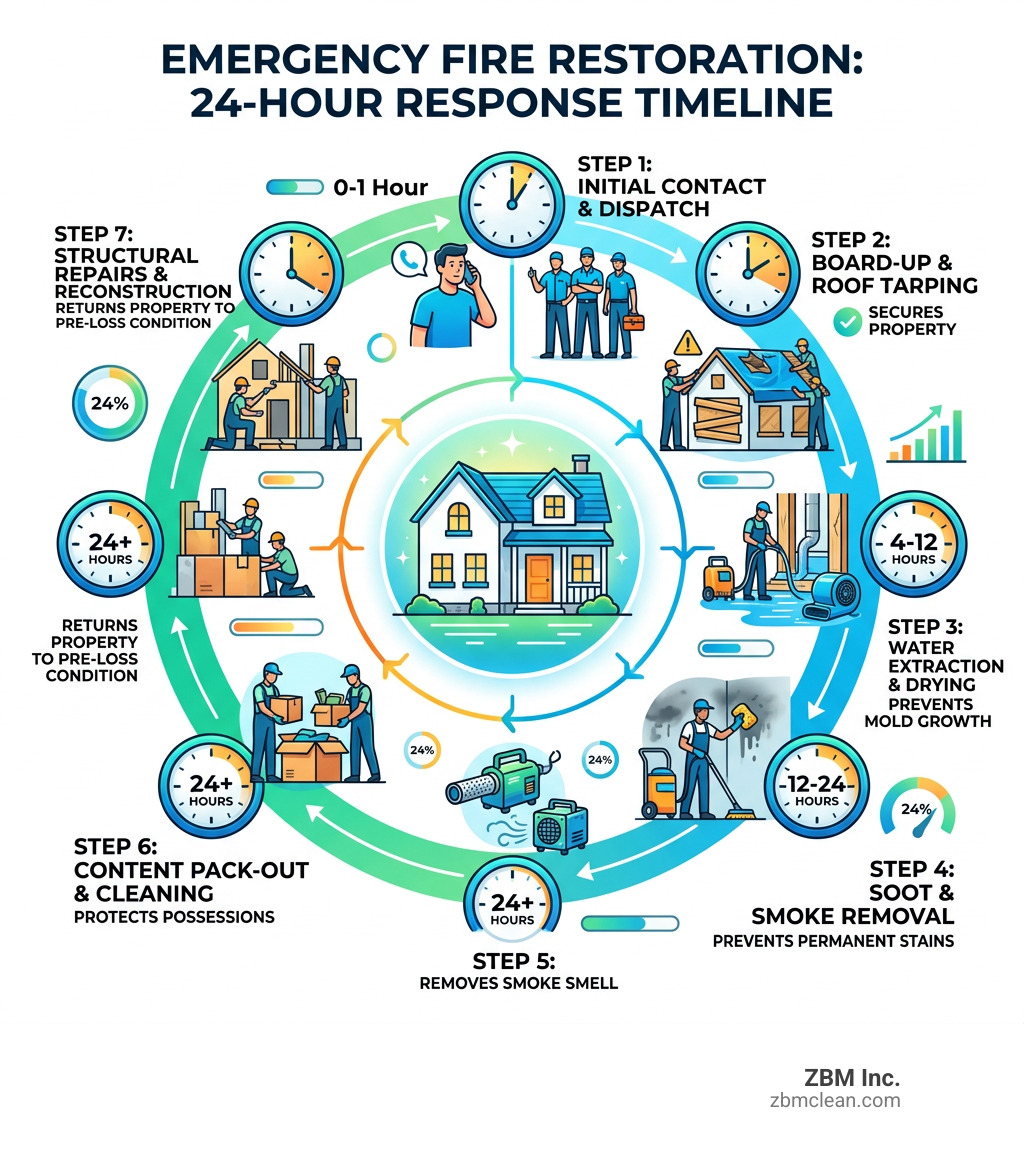
Here’s what professional fire damage cleanup typically includes:
- Emergency board-up and roof tarping — securing the property immediately
- Water extraction and drying — addressing water left behind by firefighting efforts
- Soot and smoke removal — cleaning all affected surfaces, contents, and air ducts
- Odor elimination — using thermal fogging, ozone treatment, or hydroxyl generators
- Content pack-out and cleaning — restoring or safely disposing of belongings
- Structural repairs and reconstruction — returning the property to pre-loss condition
- Insurance documentation support — helping coordinate claims with your adjuster
A fire can feel like it happens in minutes — and in many ways, it does. But the damage doesn’t stop when the flames go out.
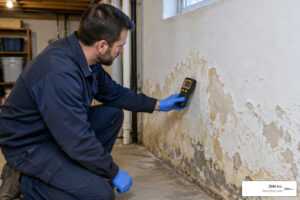
Smoke and soot continue to corrode surfaces long after a fire is extinguished. Water from firefighting soaks into walls, floors, and furniture. Mold can begin forming within just 24 to 48 hours. For a commercial property manager in Watertown, WI, that timeline puts real pressure on every decision you make in those first hours.
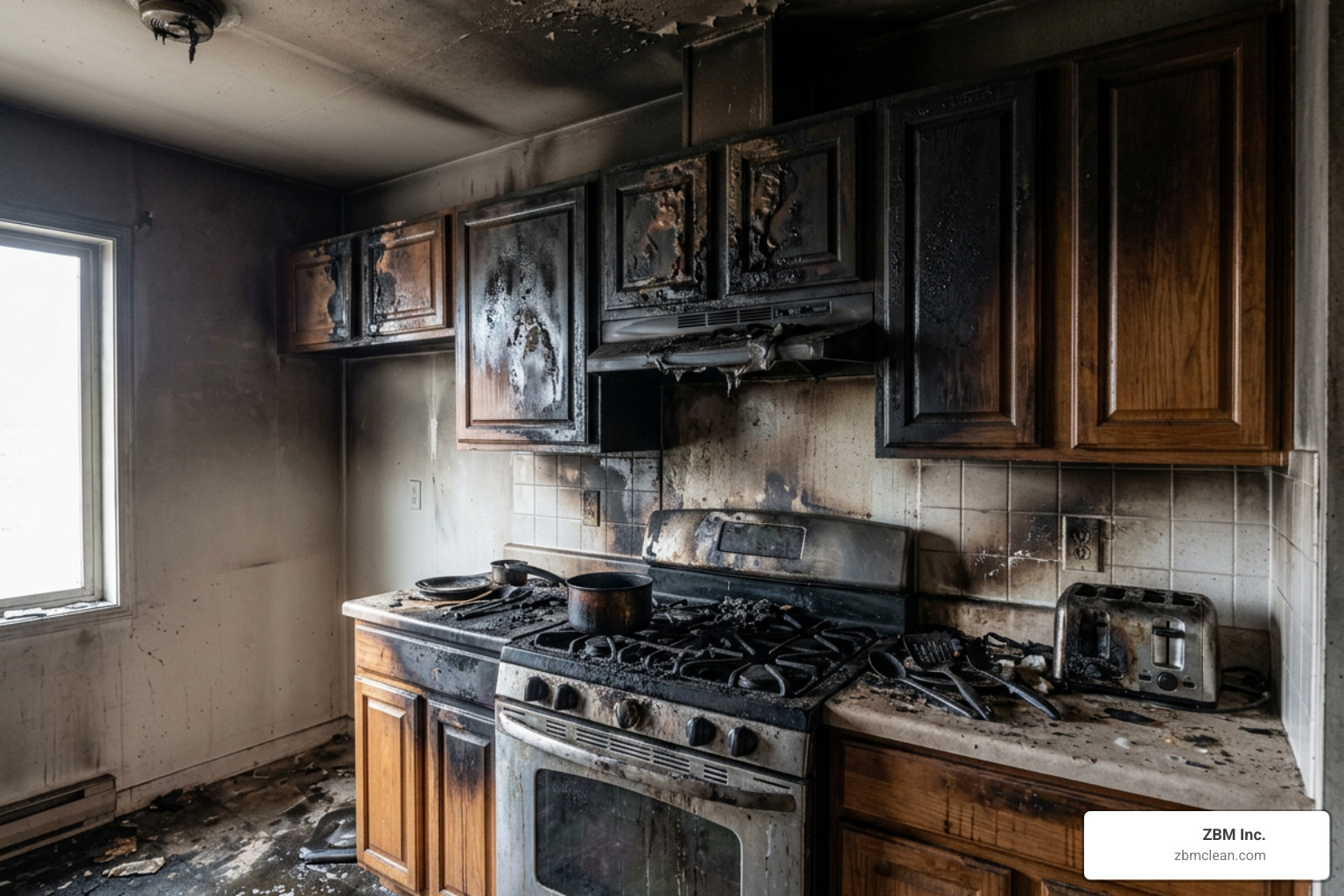
Whether it’s a kitchen grease fire in a break room or smoke damage spreading through an HVAC system into every corner of your building, the scale of the problem is almost always bigger than it first appears. Hidden damage — inside walls, above ceilings, and deep in ductwork — is what catches most property owners off guard.
This guide breaks down exactly what happens during professional fire restoration, why timing matters so much, and how to protect your property, your people, and your budget through the entire process.
Common Causes and Industry-Specific Fire Risks
Understanding how fires start is the first step in managing the aftermath. In our experience serving Southeast Wisconsin, from Lake Mills to the Northwoods, we see a wide variety of triggers. While every fire is unique, the National Fire Protection Association (NFPA) highlights several recurring culprits.
Cooking remains the leading cause of home fires, but heating equipment is a close second. In fact, cause one-third of all winter house fires according to the NFPA, with space heaters being particularly high-risk. When the Wisconsin winter hits Dodge and Jefferson Counties, the reliance on these devices skyrockets, and unfortunately, so do the service calls for fire damage cleanup services.
Other common causes include:
- Electrical Wiring: Faulty outlets or outdated wiring systems in older Watertown homes.
- Arson: Intentionally set fires that often involve accelerants, complicating the cleanup.
- Exposure Fires: These are fires that start outside the structure—perhaps a neighbor’s shed or a nearby brush fire—and spread. Interestingly, exposure fires led to the highest average property loss in 2018.
If you are dealing with the aftermath of a residential incident, you can find More info about home cleaning services to help you navigate the initial mess.
Residential vs. Commercial Vulnerabilities
The risks change depending on the type of property. Residential properties often struggle with heating equipment and space heaters. In contrast, commercial properties face industry-specific hazards.
- Offices: Overloaded power strips and aging electronics are common culprits.
- Restaurants: Grease buildup in hoods and ducts can turn a small stovetop flare-up into a structural disaster.
- Healthcare: These facilities require strict adherence to safety codes, as evacuation is often more difficult.
- Industrial: Warehouses and factories must deal with chemical storage and heavy machinery that can spark under pressure.
Why Professional Fire Damage Cleanup Services Are Essential
It is tempting to grab a bucket of soapy water and start scrubbing, but fire damage is deceptive. The heat of a fire opens the “pores” of building materials, pulling smoke and soot deep inside. As the air cools, those pores close, trapping the toxins.
Professional fire damage cleanup services are necessary because:
- Structural Integrity: We assess whether the floor joists or roof trusses are safe before anyone enters.
- Toxic Soot: Soot is acidic. If left alone, it will permanently pit metals and yellow your plastics within hours.
- Hidden Damage: Smoke travels through plumbing “chases” and HVAC ducts, depositing soot in rooms the fire never touched.
- Business Continuity: For our commercial clients in Southeastern WI, we focus on getting the doors back open quickly to minimize lost revenue.
| Feature | DIY Cleanup | Professional Restoration |
|---|---|---|
| Safety | High risk of toxin inhalation | Full PPE and HEPA filtration |
| Odor | Usually masked by perfume | Removed at a molecular level |
| Equipment | Household vacuums (spread soot) | Industrial air scrubbers & extractors |
| Insurance | Hard to document for claims | Detailed inventory & photo logs |
| Speed | Slow and physically exhausting | 24/7 rapid response teams |
The Professional Fire Damage Cleanup Services Process
Once the fire department clears the scene, the “Golden Hours” begin. This is the 24-to-48-hour window where we can salvage the most items before acidic soot causes permanent etching.
Key Steps in Restoration
The process begins with an inspection and damage assessment. We don’t just look at the char; we test the smoke type and check for water damage from the fire hoses.
Next comes site securing. This involves an emergency board-up of broken windows and roof tarping to keep out the Wisconsin elements (and curious wildlife). We then move into water extraction and structural drying. The thousands of gallons used to put out the fire are just as damaging as the flames.
For those looking for immediate tips on what to do while waiting for us to arrive, check out More info about fire cleaning tips.
Our team also handles:
- Debris Removal: Clearing out unsalvageable materials like burnt drywall and insulation.
- Content Cleaning: Many items can be saved if treated correctly.
- Pack-Out Services: We carefully inventory and move your belongings to a secure, climate-controlled facility for specialized cleaning while the building is being repaired.
Minimizing Business Downtime
For businesses in Watertown or Minocqua, every hour closed is money lost. We use pre-loss planning to understand your building’s layout before disaster strikes. When it does, we employ phased repairs, isolating the damaged areas so you can potentially keep other sections of the business running.
Our technicians hold IICRC certifications and follow strict OSHA compliance standards to ensure the job is done safely and correctly the first time.
Science of Smoke, Soot, and Odor Removal
Smoke isn’t just a smell; it’s a collection of microscopic solid, liquid, and gas particles. These particles are often smaller than 2.5 microns, meaning they can easily be inhaled deep into the lungs. This is why we use industrial air scrubbers and HEPA filtration to clear the air.
If you’re interested in the different classifications of cleanup, you can find More info about fire cleaning categories.
Types of Smoke and Soot Damage
Not all smoke is created equal. The cleanup method depends entirely on what burned:
- Wet Smoke: Results from low-heat, smoldering fires (like rubber or plastic). It’s sticky, smeary, and has a pungent odor.
- Dry Smoke: Results from high-fast-burning fires (like wood or paper). It’s powdery and easier to vacuum, though it still stains.
- Protein Residue: Virtually invisible but has an incredibly foul smell. This usually happens when meat or poultry burns in a kitchen.
- Synthetic Soot: Comes from burning electronics or carpets and requires specialized chemical sponges to lift.
Advanced Deodorization Techniques
To truly get rid of the “campfire” smell, we have to neutralize the odor at the molecular level. We use several advanced methods:
- Thermal Fogging: We use a fogger to recreate the fire’s conditions, sending a deodorizing mist into the same cracks and crevices the smoke reached.
- Hydroxyl Generators: These use UV light to create atmospheric hydroxyls that break down odor molecules. They are safe to use while people are in the building.
- Ozone Treatment: A powerful oxidant that “eats” odor molecules. This requires the building to be empty for 24-48 hours.
- Vapor Modification: Uses aromatic compounds to neutralize odors without the need for a fogger.
Safety, Costs, and Insurance Coordination
The cost of fire damage cleanup services can vary wildly based on the scope of the damage. A small kitchen fire might cost a few thousand dollars, while a whole-home restoration can reach six figures.
How Much Do Fire Damage Cleanup Services Cost?
Several factors influence the final bill:
- Damage Scope: How many rooms were affected?
- Material Replacement: Are we cleaning the drywall or replacing it?
- Labor Intensity: Soot removal is incredibly labor-intensive, often requiring hand-cleaning of every stud and joist.
- Salvage Evaluation: Sometimes it is cheaper to replace an item than to spend hours trying to restore it.
Navigating Insurance Claims
This is where many property owners feel the most stress. We act as your advocate. We provide the documentation, loss inventory, and photo logs that insurance adjusters need to move your claim forward. By following Scientific research on IICRC standards, we ensure that the restoration meets industry-recognized benchmarks, which helps in claim acceleration and policy compliance.
Frequently Asked Questions about Fire Damage Cleanup Services
How long does the restoration process typically take?
A minor smoke cleanup might take 3 to 7 days. However, if there is structural damage requiring reconstruction, the timeline can stretch from several weeks to several months. Commercial projects often move faster because we can deploy larger crews to meet tight deadlines.
Is it safe to stay in my home after a fire?
Generally, no. Even if the fire was small, the airborne toxins and soot particles are hazardous. Furthermore, structural hazards like weakened floorboards or electrical risks from melted insulation may not be immediately visible. We recommend waiting for professional clearance before moving back in.
What should I do immediately after the fire is out?
First, wait for authority approval from the fire marshal before entering. Then, contact your insurance company and a professional restoration team like us. Shut off your utilities if it’s safe to do so, and document the damage with photos from a distance. Avoid DIY cleaning, as using the wrong chemicals can actually “set” the soot and make it permanent.
Conclusion
Recovering from a fire is a marathon, not a sprint. From the initial shock of the flames to the meticulous removal of every last soot particle, the process requires patience, expertise, and the right equipment.
At ZBM Inc., we take pride in being a family-owned, licensed, and insured partner for our neighbors in Watertown, Lake Mills, and across Southeast Wisconsin. We understand that we aren’t just cleaning buildings; we are restoring lives and livelihoods. Whether you need help with a residential kitchen fire or a major commercial loss, our certified professionals are here to provide peace of mind and expert results.
If you are facing a situation that involves more than just fire—such as a trauma scene or biohazard—don’t hesitate to Contact our crime scene cleanup company for specialized assistance. We are here for you 24/7.