Why Rust Stains on Concrete Are Harder to Remove Than You Think
Rust stain removal concrete is one of the most common — and frustrating — cleaning challenges for commercial property managers. Here’s what actually works:
Quick Answer: How to Remove Rust Stains from Concrete
- Light stains — Apply undiluted white vinegar or lemon juice, let sit 10 minutes, scrub with a stiff nylon brush, rinse thoroughly
- Moderate stains — Use a commercial oxalic acid-based cleaner, apply per label, let dwell up to 10 minutes, scrub and rinse
- Heavy or deep stains — Apply a trisodium phosphate (TSP) solution or a diluted muriatic acid mix, scrub within 5 minutes, pressure wash off with a 15-degree nozzle
- Stubborn or recurring stains — Call a certified cleaning professional
Rust stains don’t just sit on top of concrete — they sink into it. Concrete is porous, which means iron particles from metal furniture, fertilizer, tools, leaking gutters, or even your sprinkler system can work their way deep into the surface. Once they oxidize, you’re left with orange or brown marks that plain scrubbing and soap simply won’t touch.
The good news? With the right products and technique, most rust stains can be fully removed — even stubborn ones that have been there for months.
I’m Terry Zastrow, owner of ZBM Inc., a certified cleaning and restoration firm with approximately 30 years of hands-on experience in commercial surface care, including rust stain removal concrete on exterior and interior surfaces for municipalities, housing authorities, and private clients. In this guide, I’ll walk you through exactly what works — from household remedies to heavy-duty chemical treatments — so you can restore your concrete surfaces with confidence.

Understanding the Causes of Concrete Discoloration
To effectively tackle rust stain removal concrete, we first need to understand where these eyesores come from. In our experience serving Watertown, WI, and the surrounding Jefferson County areas, we’ve found that concrete rarely “rusts” on its own. Instead, it acts like a giant sponge, soaking up metallic runoff from external sources.

Common culprits include:
- Metal Furniture and Tools: Those classic wrought-iron chairs or a stray shovel left out in a spring rainstorm are prime suspects. As the metal oxidizes, the rain carries iron oxide directly into the concrete pores.
- Fertilizers and Ironite: This is a big one for homeowners in Southeast Wisconsin. Many lawn fertilizers contain iron. If pellets stray onto your driveway or sidewalk and get wet, they leave tiny, stubborn orange dots everywhere.
- Irrigation Systems and Well Water: If your sprinklers use untreated well water, the high iron content can cause a gradual orange tint to creep across your walkways over time.
- Leaking Gutters: Rusted gutters or downspouts can drip concentrated metallic water onto the same spot for years, creating deep, vertical “weeping” stains.
- Internal Rebar: Sometimes the problem comes from within. If the steel reinforcement bars (rebar) inside the concrete were placed too close to the surface or if the concrete has deep cracks, moisture can reach the steel. This causes it to rust and push the discoloration outward to the surface.
- Battery Acid: While not technically rust, leaks from golf carts or vehicle batteries can create a “burn” that looks remarkably similar to rust but requires a different chemical approach.
According to How to Remove Rust Stains from Concrete – Concrete Network, identifying the source is the first step toward a permanent fix. If you don’t stop the iron from reaching the surface, you’ll be cleaning the same spot again by the time 2027 rolls around.
Effective Methods for rust stain removal concrete
When it comes to cleaning, we always recommend a “tiered” approach. You wouldn’t use a sledgehammer to hang a picture frame, and you shouldn’t start with heavy acids for a minor tea-colored stain.
Comparison Table: Cleaning Solutions
| Method | Best For | Dwell Time | Safety Level |
|---|---|---|---|
| Lemon Juice | Very light/new stains | 10 Minutes | Very Safe |
| White Vinegar | Minor to moderate stains | 10-20 Minutes | Safe |
| Oxalic Acid | Professional-grade/Stubborn | 5-10 Minutes | Wear PPE |
| TSP (Trisodium Phosphate) | Greasy/Heavy rust | 15-20 Minutes | High Caution |
| Muriatic Acid | Extreme/Industrial cases | < 5 Minutes | Professional Use Only |
The “dwell time”—how long the cleaner sits on the surface—is critical. If it dries too fast, it won’t pull the rust out of the pores. If it sits too long (especially with acids), it can etch or “eat” the concrete, leaving a permanent white spot or exposing the aggregate (the stones inside the mix).
Household Remedies for rust stain removal concrete
If you’re dealing with a fresh stain from a garden tool or a patio chair, you might already have the solution in your pantry.
- Lemon Juice: The citric acid in lemon juice is surprisingly effective at breaking down iron oxide. Squeeze undiluted juice onto the stain, let it sit for 10 minutes, and scrub.
- White Vinegar: This is slightly stronger than lemon juice. For best results, pour it on and don’t be afraid to let it dwell for up to 20 minutes before scrubbing with a stiff nylon brush.
- Baking Soda Paste: Mixing baking soda with lemon juice creates a fizzy paste that adds a bit of mechanical abrasion to the chemical cleaning.
- Potato and Dish Soap: This is an old-school trick! Potatoes contain oxalic acid. Dipping a halved potato in dish soap and using it as a “scrubber” can help lift minor surface rust.
While these are non-toxic and great for DIYers, they often struggle with deep-set stains or large areas like entire driveways in the Northwoods.
Commercial Chemicals for rust stain removal concrete
When household items fail, we move to commercial-grade chemistry. Most high-end rust removers you’ll find in stores like those in Lake Mills or Dodge County rely on specific acids:
- Oxalic Acid: This is the “gold standard” for concrete rust. It’s found in products like Goof Off RustAid (which boasts a 4.5-star rating) and specialized powders. It reacts with the iron to make it water-soluble so it can be rinsed away.
- Trisodium Phosphate (TSP): We use this when the rust is mixed with dirt or oil. It’s a heavy-duty degreaser that helps “unlock” the pores of the concrete.
- Hydrochloric/Muriatic Acid: This is the “nuclear option.” It effectively strips the top layer of concrete. However, it is dangerous to handle and can turn your concrete blue or green if used incorrectly. We rarely recommend this for DIY use.
Step-by-Step Guide to Restoring Your Surfaces
Ready to get to work? Follow this professional process we use at ZBM Inc. to ensure a clean finish without damaging your property.
1. Surface Preparation
Start by sweeping away all loose dirt, leaves, and debris. If the area is oily, wash it first with a basic dish soap solution. You want the rust remover to hit the stain, not a layer of dust.
2. Pre-Wetting
If you are using a commercial acid, lightly mist the surrounding concrete with water. This prevents the cleaner from soaking into “clean” areas and causing uneven spotting.
3. Application and Dwell Time
Apply your chosen cleaner. If it’s a vertical surface (like a retaining wall in Minocqua), look for a gel-based formula that won’t just run off. Let it sit for the recommended time (usually 10-15 minutes). Do not let it dry! Keep a spray bottle of water handy to keep the area damp if you’re working in the sun.
4. The Scrub
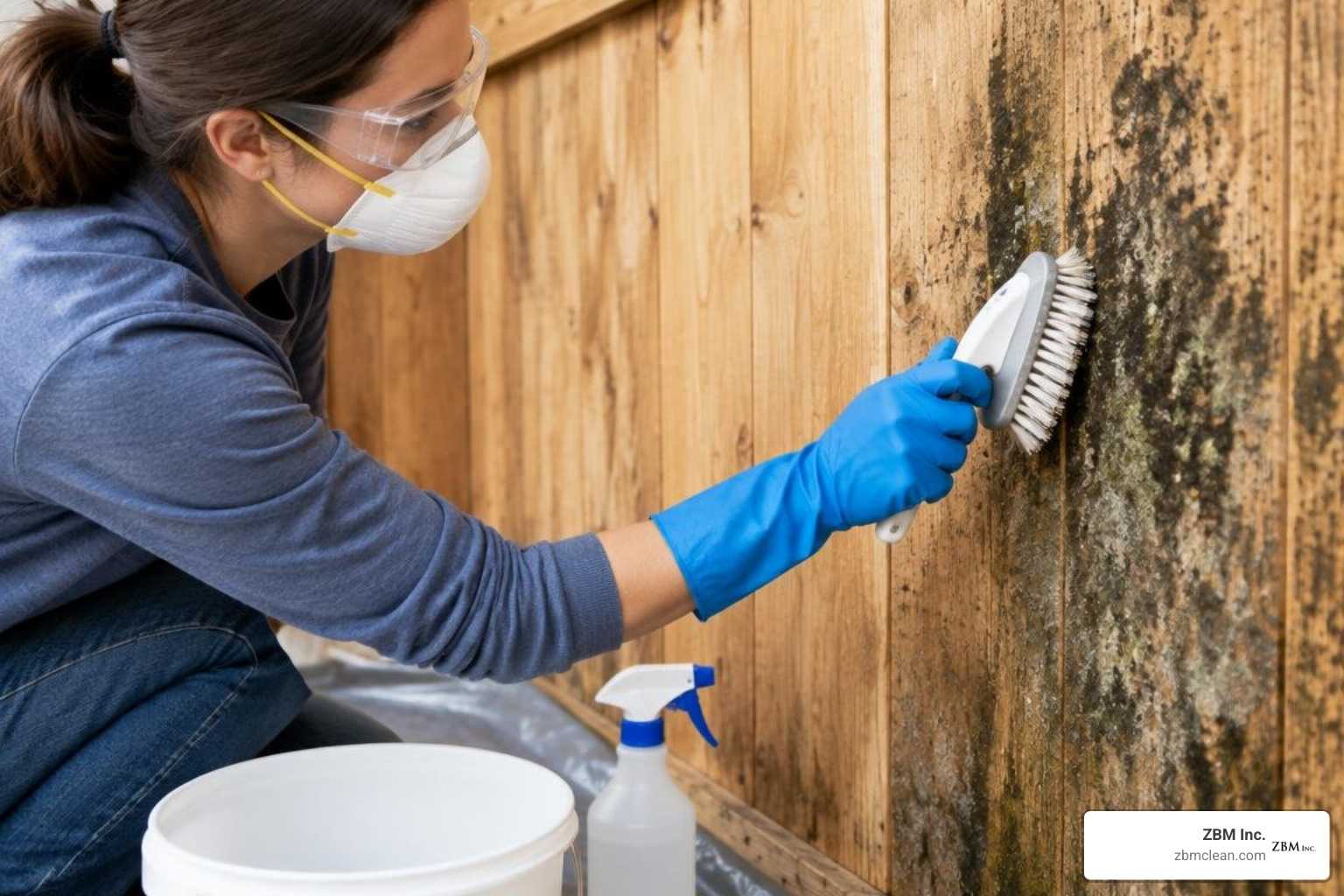
Use a stiff-bristled nylon brush. Scrub in circular patterns, but also go back and forth and side to side. Because concrete pores are irregular, changing your scrubbing direction ensures you hit every nook and cranny.
5. Rinsing and Pressure Washing
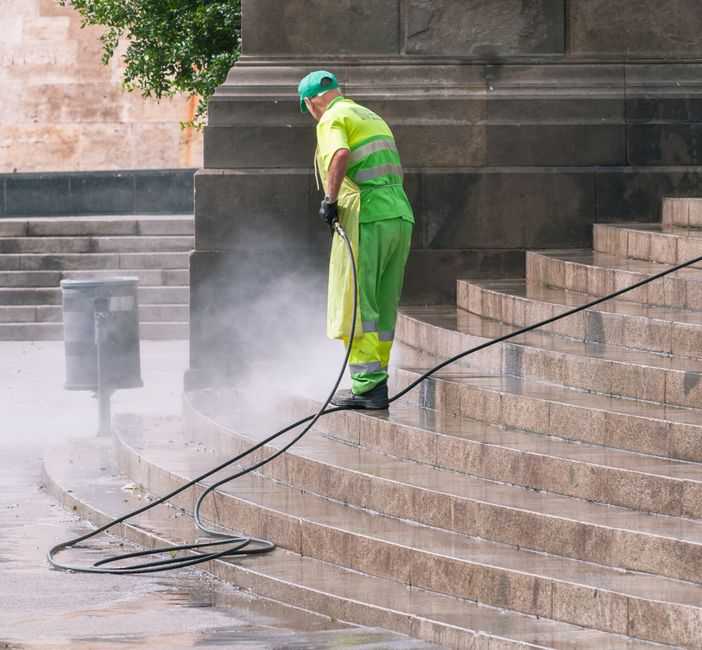
Rinse with a garden hose or, for better results, a pressure washer.
- Pro Tip: Use a 15-degree nozzle (usually the yellow one).
- Warning: Never use a “0-degree” (red) nozzle or a turbo nozzle too close to the surface, as you can literally carve lines into the concrete.
Safety Precautions and Surface Protection
Cleaning concrete involves chemicals and high-pressure water, both of which require respect.
- Personal Protective Equipment (PPE): Always wear nitrile gloves and safety goggles. If you’re using stronger acids like muriatic acid, a respirator is a must to avoid inhaling toxic fumes.
- Protect Your Greenery: Acids that kill rust will also kill your prize-winning Wisconsin hostas. Before you start, soak the surrounding grass and plants with plain water. This dilutes any runoff that reaches the soil. For heavy chemical use, cover plants with a plastic tarp.
- Avoid Wire Brushes: This is a common mistake! Steel wire brushes can snap off tiny metal bristles into the concrete. These will rust within weeks, leaving you with a hundred new stains. Stick to stiff nylon or synthetic bristles.
- Ventilation: If you are working in a garage or basement in Watertown, ensure all doors and windows are open.
Long-Term Prevention and Maintenance Strategies
Once you’ve achieved that perfect “clean,” you don’t want to repeat the process every year. Prevention is significantly cheaper than restoration.
- Apply a Concrete Sealer: This is the single most important step. A high-quality silane/siloxane sealer creates a hydrophobic barrier. Instead of soaking in, water and rust particles will bead up on the surface. We recommend re-sealing every 2 to 3 years.
- Crack Repair: Keep an eye on cracks. If water gets into a crack and hits the internal rebar, you’ll get “rust heaving,” which can actually break the concrete apart. Use a high-quality concrete caulk or filler as soon as you spot a gap.
- Furniture Mats: Use plastic or rubber “feet” on metal patio furniture. You can also use outdoor rugs with non-metallic backings.
- Immediate Cleanup: If you spill fertilizer, sweep it up immediately. Don’t wait for the next rain to wash it away.
- Gutter Maintenance: Check your gutters every fall. Ensuring they flow freely prevents the “waterfall effect” that leads to concentrated staining.
For a full list of exterior care, check out our complete facility exterior maintenance checklist.
Frequently Asked Questions about Concrete Cleaning
Can I use bleach for rust stain removal concrete?
No. We strongly advise against this. Bleach is an oxidizer—the same process that creates rust. While it might brighten the concrete temporarily, it can actually “lock” the rust stain in or make it darker. Stick to acid-based cleaners for rust.
How long does it take to remove deep rust stains?
For DIY methods, expect to spend 1 to 2 hours including dwell time and scrubbing. For professional-grade restoration on deep stains, it may require two applications with 20-minute dwell times. If you’re working with a powder concentrate, remember it loses half its power 4 hours after mixing!
Will rust removal damage my lawn or plants?
It can if you aren’t careful. Most commercial rust removers are acidic. However, if you pre-soak the soil with water and rinse the area thoroughly afterward, the acid is usually neutralized enough to be harmless. For the eco-conscious, look for “biodegradable” or “phosphate-free” labels.
Conclusion
Restoring the curb appeal of your property doesn’t have to be an impossible task. Whether you’re dealing with a few fertilizer spots on a sidewalk in Lake Mills or major industrial rust in a Watertown warehouse, the key is using the right chemistry and a bit of “elbow grease.”
At ZBM Inc., we’ve spent three decades perfecting the art of the “Concrete Clean.” As a family-owned, licensed, and bonded business, we take pride in helping our neighbors across Southeastern Wisconsin keep their properties pristine. If you’ve tried the DIY route and those stains just won’t budge, or if you have a large commercial space that needs professional attention, we’re here to help.
Don’t let rust stains diminish your property’s value. Our certified professionals use industrial-strength, surface-safe solutions that go beyond what you can find at the local hardware store.
Ready to see your concrete look like new again? Schedule a professional exterior cleaning with ZBM Inc. today and let us handle the heavy lifting!