Why Facility Exterior Cleaning Is Essential for Every Commercial Property
Facility exterior cleaning is the regular process of removing dirt, algae, mold, grime, and debris from the outside surfaces of commercial, government, and multi-unit buildings — including walls, windows, roofs, sidewalks, gutters, and more.
Here’s a quick summary of what you need to know:
| Surface | Recommended Cleaning Frequency |
|---|---|
| Exterior windows | Quarterly (every 3 months) |
| Interior windows | Monthly or every 2 months |
| Sidewalks and walkways | 3–4 times per year |
| Building siding | Once per year |
| Roofs | Once per year (plus after storms) |
| Gutters | Twice per year (spring and fall) |
| High-traffic areas | Every 3–6 months |
Your building’s exterior is often the first thing tenants, visitors, clients, and regulators notice. A clean facade signals professionalism and care. A dirty one — streaked windows, algae-stained siding, grimy sidewalks — quietly tells a different story.
And beyond appearances, regular exterior cleaning protects your investment. Grime, mold, and organic buildup don’t just look bad — they work their way into surface materials over time, causing cracks, corrosion, and premature failure that cost far more to repair than to prevent.
For busy facility managers juggling multiple maintenance priorities, it’s easy for exterior upkeep to fall behind. But the cost of neglect adds up fast.
I’m Terry Zastrow, owner of ZBM, Inc., a certified IICRC firm with nearly 30 years of experience delivering facility exterior cleaning and maintenance services to government agencies, municipalities, housing authorities, and commercial clients. In the sections ahead, I’ll walk you through everything you need to know to keep your property clean, protected, and operating at its best.
What Facility Exterior Cleaning Includes
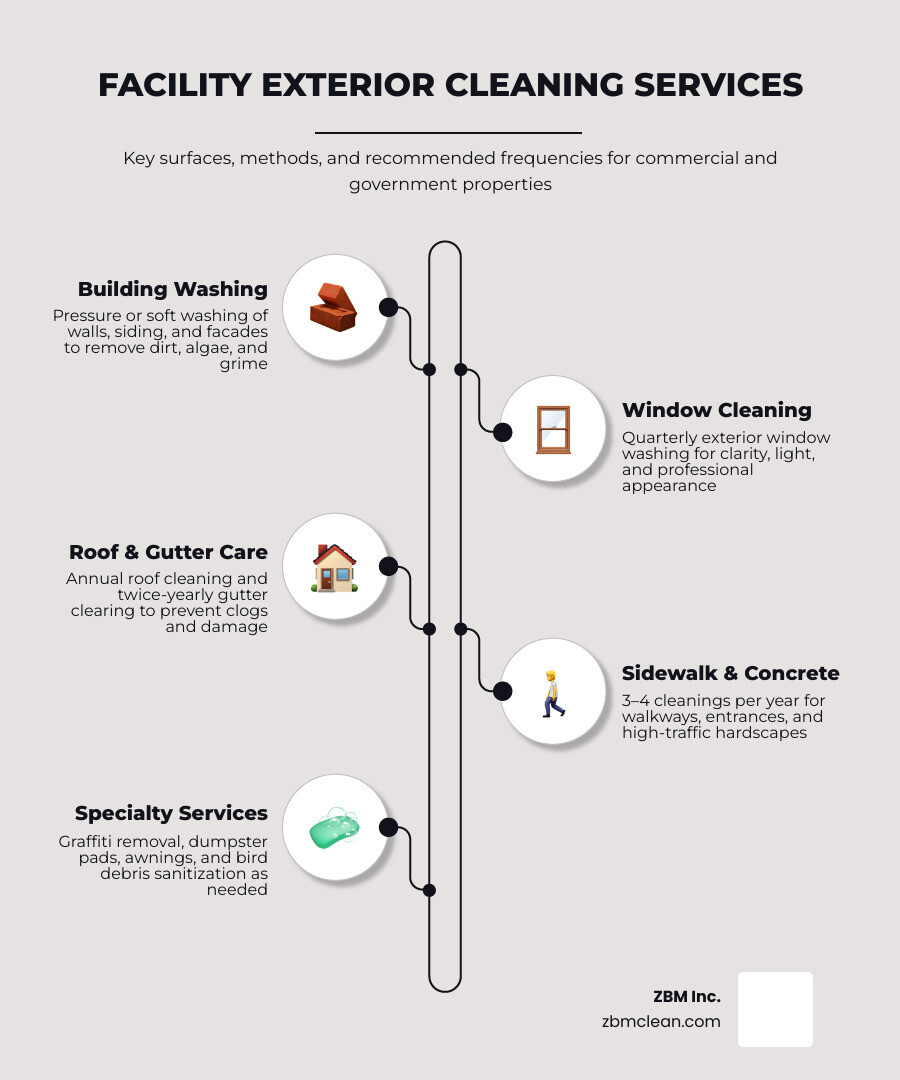
When we talk about facility exterior cleaning, we aren’t just talking about a quick spray with a garden hose. For a commercial or government property, this is a comprehensive suite of services designed to address every square inch of the building’s envelope and the surrounding hardscapes. It involves specialized chemistry, industrial-grade equipment, and techniques tailored to specific materials.

The Most Common Services for Commercial and Government Facilities
In Southeastern Wisconsin, our buildings face a lot—from humid summers that invite algae to harsh winters that leave behind layers of salt. A complete exterior plan typically includes:
- Building Washing: Removing atmospheric pollution, bird droppings, and organic growth from the facade.
- Window Cleaning: This includes frames, sills, and tracks. While exterior glass is often done quarterly, high-visibility entrances may need attention monthly.
- Roof and Gutter Cleaning: Vital for preventing water damage and ice damming.
- Surface Cleaning: This covers sidewalks, parking lots, loading docks, and dumpster pads.
- Specialized Sanitization: High-touch areas or waste management zones often require deep sanitization to meet health standards.
Pressure Washing vs Soft Washing in Facility Exterior Cleaning
One of the most common questions we get at ZBM Inc. is whether we’re going to “blast” the building. The answer depends entirely on the surface. Understanding the difference between these two methods is key to protecting your property.
| Feature | Pressure Washing | Soft Washing |
|---|---|---|
| Pressure Level | High (2,000 – 4,000 PSI) | Low (similar to a garden hose) |
| Primary Force | Kinetic energy (force of water) | Specialized cleaning solutions |
| Best For | Concrete, brick, stone, parking lots | Siding, roofs, EIFS, wood, stucco |
| Risk | Can etch surfaces or blow out seals | Very low risk to delicate materials |
For a concrete loading dock with grease stains, we use high-pressure hot water (up to 200° F) to dissolve the grime. However, for a government office with EIFS (synthetic stucco) or painted siding, we use soft washing. This method relies on eco-friendly solutions to kill mold and algae at the root without risking damage to the building’s “skin.”
Surfaces That Need Specialized Care
Certain areas of your facility require more than a standard wash.
- Solar Panels: Dust and bird debris can significantly reduce energy ROI.
- Awnings: Fabric or metal awnings require gentle cleaning to remove mildew without stripping protective coatings.
- Rubber Membrane Roofs: These need specific detergents that won’t degrade the membrane.
- Dumpster Pads: These are “hot zones” for bacteria and pests, requiring heavy-duty degreasing and sanitization.
How Often to Schedule Facility Exterior Cleaning
Timing is everything. If you wait until the building looks visibly “green” with algae, the damage may already be starting. In areas like Watertown or Lake Mills, WI, our seasonal shifts dictate a lot of the maintenance rhythm.
Recommended Cleaning Frequency by Surface
To keep your facility in “Grand Opening” condition, we recommend following a consistent Complete Facility Exterior Maintenance Checklist.
- Windows: Exterior glass should be serviced quarterly. If you have a retail storefront or a high-traffic government lobby, interior glass often needs monthly attention.
- Sidewalks and Entrances: Because of salt in the winter and gum/soda spills in the summer, these should be pressure washed 3–4 times per year.
- Roofs: An annual inspection and cleaning are standard. This prevents moss and lichens from eating into shingles or membrane surfaces.
- Gutters: Twice a year is the minimum—once in the spring to clear winter debris and once in the late fall after the leaves have dropped.
Seasonal Triggers That Change Your Cleaning Schedule
In Wisconsin, we have specific “triggers” that should prompt a call to your cleaning provider:
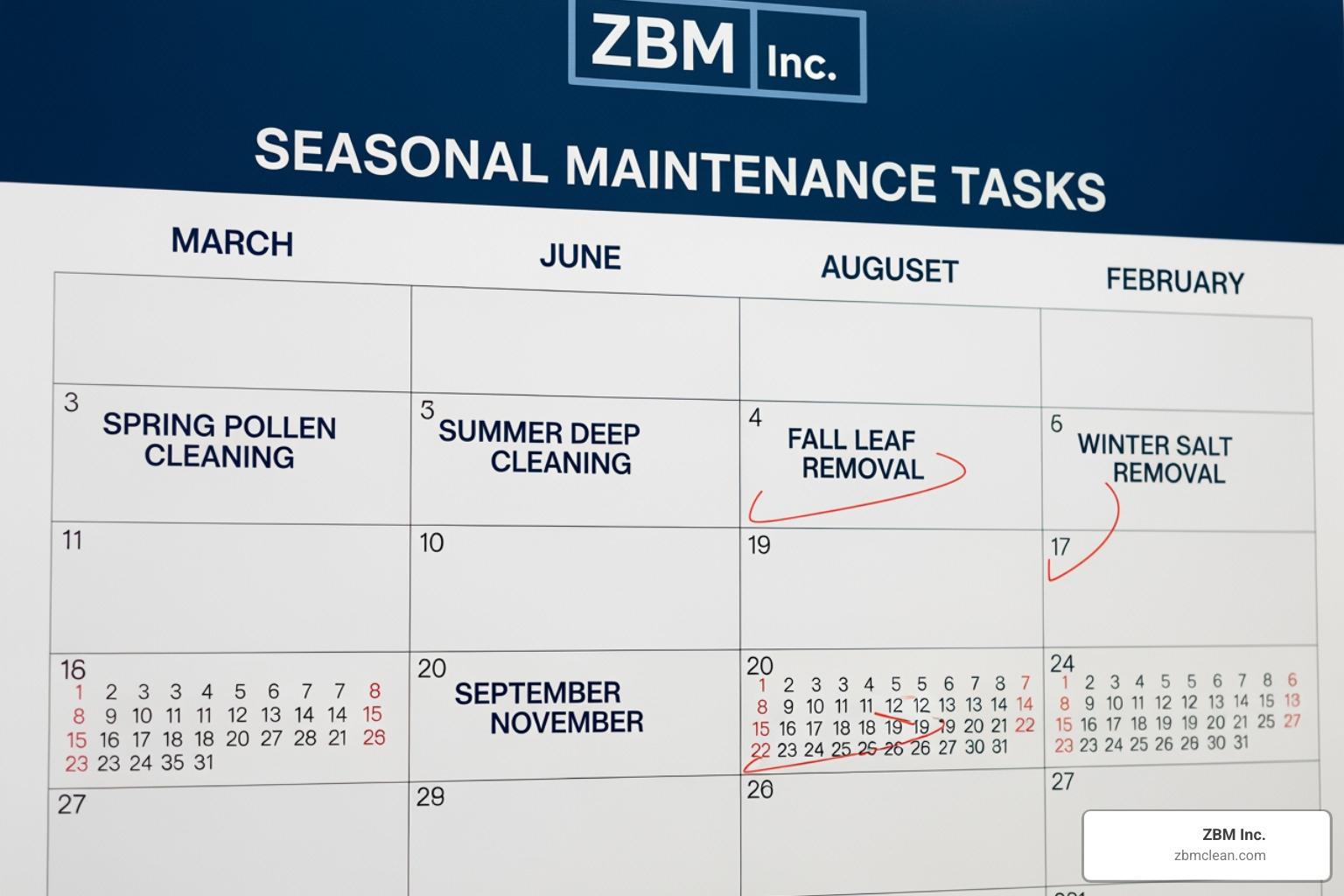
- Spring Pollen: After the spring bloom, a yellow film often coats windows and siding. This is the perfect time for a full building wash.
- Winter Salt: Once the threat of snow has passed, it is critical to wash the salt off your sidewalks and parking structures to prevent concrete corrosion.
- Storm Response: High winds can clog gutters with branches and debris, leading to water runoff issues.
How to Build a Practical Exterior Maintenance Calendar
Don’t wait for a tenant to complain. Start by taking an inventory of your assets. Map out your site and identify “high-impact” zones (like main entrances) versus “utility” zones (like rear loading docks). You can find more tips on Commercial Property Fall Maintenance Tips to help structure your year.
Why Professional Facility Exterior Cleaning Pays Off
It’s easy to look at facility exterior cleaning as an expense, but savvy facility managers see it as an investment in asset preservation. In fact, when you consider that commercial land and buildings in some regions are valued at millions of dollars, spending a fraction of that on maintenance is common sense.
Protecting Building Materials and Avoiding Costly Damage
Regular cleaning prevents mold and grime from causing tiny fissures in your building materials. Over time, these fissures turn into cracks, allowing water to penetrate the structure. For example, a clogged gutter isn’t just a nuisance; it can cause significant water damage, ice damming in the winter, and even damage to your landscaping. By removing harmful debris, you extend the lifespan of your siding, roof, and pavement.
Energy Efficiency, Daylight, and Indoor Comfort
Did you know that dirty windows can actually increase your heating costs? Layers of grime block natural sunlight, forcing your HVAC system and lighting to work harder. Additionally, dark, dirty roofs absorb more solar heat than clean ones, driving up cooling costs during our humid Wisconsin summers. Professional cleaning keeps your surfaces reflective and your glass clear, improving the occupant experience and your bottom line.
Pest Prevention, Slip Reduction, and Public Safety
Pests love grime. Spider webs, bird nests, and organic debris provide the perfect habitat for infestations. Furthermore, algae and moss on sidewalks become incredibly slippery when wet, creating a major liability for slip-and-fall accidents. Regular pressure washing keeps these surfaces safe and slip-resistant for staff and visitors.
Sustainability Benefits Facility Managers Should Know
Professional facility exterior cleaning is often more eco-friendly than DIY methods. While a person with a garden hose might waste thousands of gallons of water, professional pressure washing utilizes significantly less water due to the high-efficiency equipment. In many cases, a typical building can be cleaned using less than 100 gallons of water. At ZBM Inc., we also prioritize biodegradable, non-toxic cleaning products to protect your local environment.
Safety, Access, and Minimal Disruption on Active Sites
Cleaning a government courthouse or a busy medical office requires more than just technical skill; it requires logistics. You can’t have hoses running across an active emergency exit or loud equipment disrupting a city council meeting.
How Contractors Work Safely Around Staff, Visitors, and Tenants
A professional crew will always demarcate work areas using cones, tape, and signage. We often phase our work to ensure that at least one entrance is always clear and safe for foot traffic. For many of our clients in Watertown and Southeastern WI, we schedule services during off-peak hours or weekends to ensure minimal disruption. You can explore more about these standards in our Category: Facility Maintenance section.
Equipment Used for High-Rise and Hard-to-Reach Cleaning
How do we reach the fourth floor of a municipal building or the high windows of a corporate headquarters?
- Water-Fed Poles: These allow us to clean windows up to 60 feet high from the safety of the ground using RO/DI (Reverse Osmosis/Deionized) water for a spot-free finish.
- Aerial Lifts: For very high or complex architectures, we use boom lifts.
- Drone Soft Washing: In May 2026, drone technology has become a game-changer, allowing us to apply cleaning solutions to high-rise facades without the need for expensive scaffolding.
Quality Control and Documentation for Regulated Facilities
For government and industrial clients, “taking our word for it” isn’t enough. We provide photo validation—before and after shots—to prove the work was completed to standard. This is especially important for multi-site portfolios where the facility manager might not be on-site at every location.
How to Choose the Right Facility Exterior Cleaning Provider
Not all cleaning companies are created equal. When you are responsible for a multi-million dollar facility, you need a partner, not just a “guy with a power washer.”
Credentials and Risk Protections to Verify
Before signing any agreement, ensure your provider is:
- Licensed, Bonded, and Insured: This protects you from liability if an accident occurs on-site.
- Certified: Look for IICRC certification or similar industry credentials.
- Experienced with Your Building Type: Cleaning a warehouse is very different from cleaning a historic courthouse.
Check out our guide on choosing a Building Maintenance Company for a deeper dive into these requirements.
Questions to Ask Before Signing a Service Agreement
- What is your plan for wastewater reclamation?
- Do you provide a specific scope of work for each visit?
- How do you handle emergency requests, like graffiti removal?
- Can you provide references from other government or commercial facilities?
Signs You Need a Long-Term Maintenance Partner, Not One-Off Cleaning
If you find yourself constantly reacting to “green” walls or clogged gutters, it’s time for a recurring plan. A long-term partner like ZBM Inc. helps you forecast your budget, prevents “surprise” repairs, and ensures your property always looks its best. We understand the specific needs of Southeastern Wisconsin and the Northwoods, providing a local touch with professional-grade results.
Frequently Asked Questions About Facility Exterior Cleaning
What services are usually included in facility exterior cleaning?
A standard package usually includes building facade washing (soft wash), exterior window cleaning, gutter clearing, and pressure washing of sidewalks and entryways. Specialized services like graffiti removal or roof moss treatment can be added as needed.
How often should commercial windows, roofs, siding, and sidewalks be cleaned?
As a rule of thumb: windows quarterly, sidewalks 3–4 times a year, and siding/roofs annually. However, if your building is near a heavy industrial zone or a lot of trees, you may need to increase that frequency.
Is professional exterior cleaning safe for busy government and commercial properties?
Yes, provided the company uses proper safety protocols. This includes using low-pressure soft washing for delicate surfaces, scheduling work during low-traffic hours, and using pedestrian barriers to keep the public safe.
Conclusion
Maintaining a pristine facility is a year-round job. From the spring pollen in Watertown to the winter salt in Minocqua, your building’s exterior is under constant assault from the elements. By implementing a proactive facility exterior cleaning strategy, you aren’t just improving your curb appeal—you’re protecting your structural integrity, improving energy efficiency, and ensuring a safe environment for everyone who walks through your doors.
Ready to get your property back to “Grand Opening” condition? Start by reviewing our Complete Facility Exterior Maintenance Checklist or check out this Building exterior cleaning overview for more industry insights. Don’t wait for the grime to take hold—schedule your seasonal maintenance today and keep your facility shining.