The 5 Types of Toxic Mold: What Property Managers Need to Know
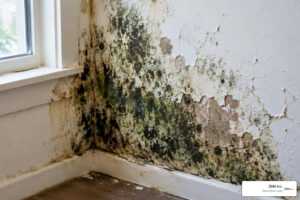
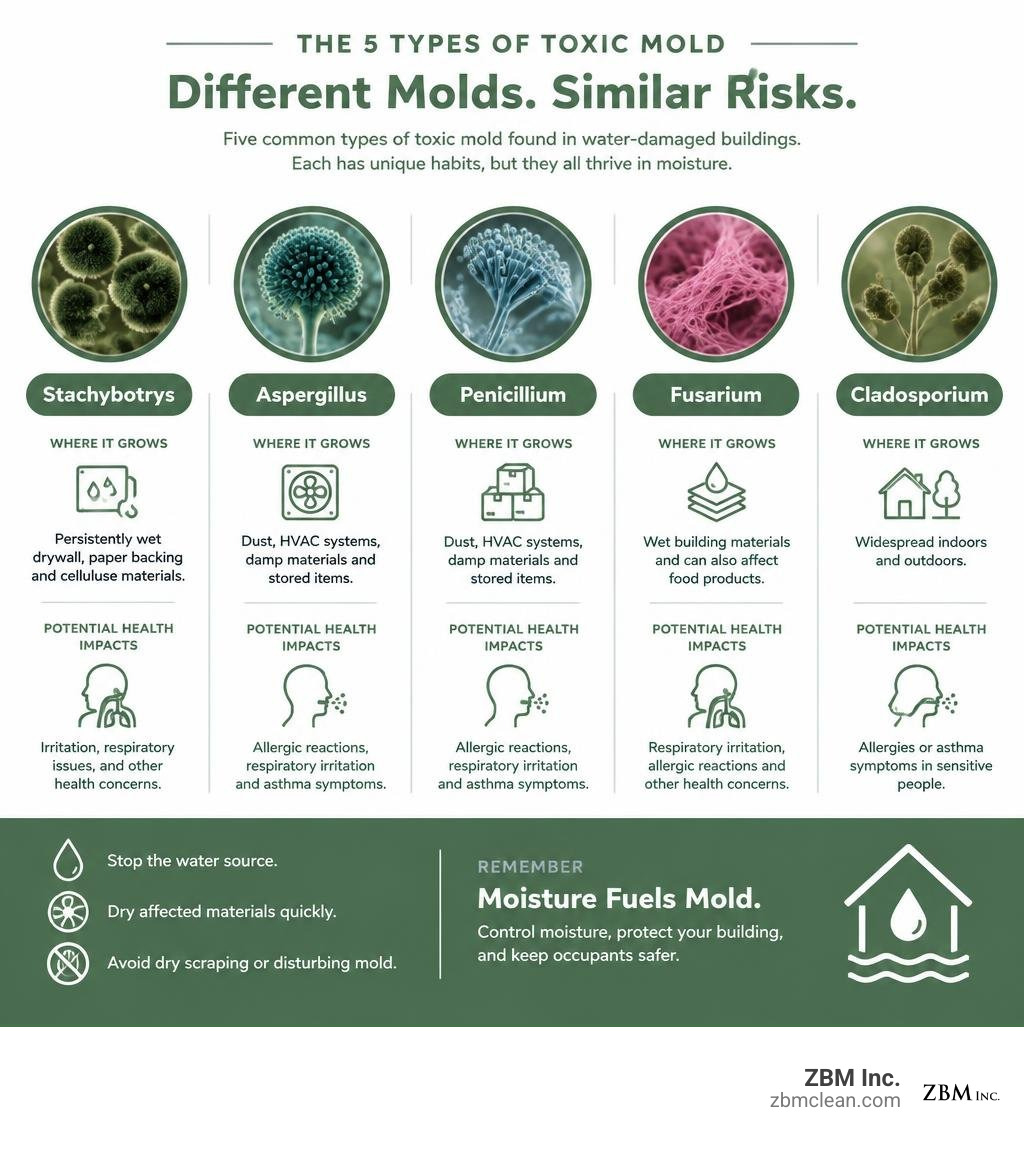
The 5 types of toxic mold most often discussed in water-damaged buildings are Stachybotrys, Aspergillus, Penicillium, Fusarium, and Cladosporium. These molds differ in the conditions they favor and the risks they may pose, but all point to the same urgent building issue: excess moisture.
- Stachybotrys often grows on persistently wet drywall, paper backing, and other cellulose materials.
- Aspergillus and Penicillium can spread through dust, HVAC systems, damp materials, and stored items.
- Fusarium may grow in wet building materials and can also affect food products.
- Cladosporium is widespread indoors and outdoors and can trigger allergies or asthma symptoms in sensitive people.
The phrase “toxic mold” can be misleading. Mold itself is not poisonous, and color cannot confirm a species or health risk. Some molds can produce mycotoxins under the right moisture and material conditions, while many mold-related health effects are allergic irritation or asthma flare-ups. Either way, visible growth, a musty odor, or recurring water damage deserves prompt action.
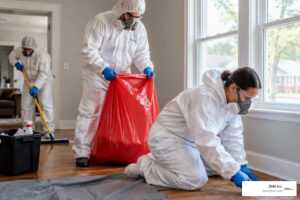
For commercial properties, the first priority is simple: stop the water source, dry affected materials quickly, and avoid dry scraping or disturbing mold. Large areas, porous materials, HVAC involvement, or occupant symptoms call for trained remediation with containment and proper protective equipment.
I am Terry Zastrow, owner of ZBM Inc., an IICRC-certified firm with roughly 30 years of operational experience in specialized cleaning, disaster recovery, and biohazard work. That field experience helps our team address the 5 types of toxic mold with practical moisture control, safe cleanup methods, and attention to the conditions that let mold return.
Understanding the 5 Types of Toxic Mold and Their Health Impacts
When property owners encounter indoor fungal growth, they often group every dark spot under a single label. In reality, indoor fungal ecology is diverse. While scientists have identified over 100,000 mold species, only specific toxigenic molds produce secondary metabolites known as mycotoxins. These chemical compounds form under particular moisture and nutrient conditions, creating distinct health risks alongside common allergens.
To understand why simple surface wiping fails, we must evaluate how these organisms behave indoors:
- Stachybotrys chartarum: Often called “black mold,” this slow-growing organism requires relative humidity above 90% for 48 to 72 hours. It thrives on cellulose-dense materials like drywall paper and subflooring, generating potent trichothecene mycotoxins such as satratoxin H.
- Aspergillus: Found widely indoors and outdoors, water-damaged settings often harbor species like Aspergillus flavus and Aspergillus ochraceus, which produce aflatoxins and ochratoxins. Because Aspergillus spores are small (2 to 10 microns), they easily bypass upper respiratory filters.
- Penicillium: Known for rapid colonization, Penicillium produces airborne spores that travel readily through ventilation systems. Certain species produce mycotoxins like citrinin and ochratoxin A, flourishing on wallpaper, decaying fabrics, and damp insulation.
- Fusarium: Requiring high moisture levels, Fusarium thrives even at cooler temperatures, such as chilled storage or damp basements. It produces trichothecenes, zearalenone, and fumonisins, capable of causing ocular, skin, and nail infections.
- Cladosporium: While primarily allergenic, colonizing surfaces like window sills, duct board, and bathroom framing, heavy exposure to Cladosporium can trigger severe asthma reactions and chronic respiratory inflammation.
| Mold Genus | Primary Moisture Threshold | Common Indoor Substrates | Key Health Risks & Mycotoxins |
|---|---|---|---|
| Stachybotrys | Very High (>90% RH, persistent wetness) | Drywall paper, ceiling tiles, wood framing | Satratoxins; severe airway inflammation, chronic fatigue |
| Aspergillus | Moderate to High (70–85% RH) | Insulation, HVAC filters, dust, drywall | Aflatoxins, Ochratoxin A; aspergillosis, lung irritation |
| Penicillium | Moderate (60–80% RH) | Carpeting, wallpaper, fabrics, stored goods | Ochratoxin A, Citrinin; severe allergic rhinitis, asthma triggers |
| Fusarium | Very High (standing water/high saturation) | Saturated carpets, humidifiers, cold spaces | Fumonisins, T-2 toxin; keratitis, onychomycosis, sinusitis |
| Cladosporium | Low to Moderate (50–70% RH) | HVAC registers, window framing, plywood | High allergenic load; chronic bronchitis, skin and eye irritation |
How the 5 Types of Toxic Mold Colonize Porous Materials
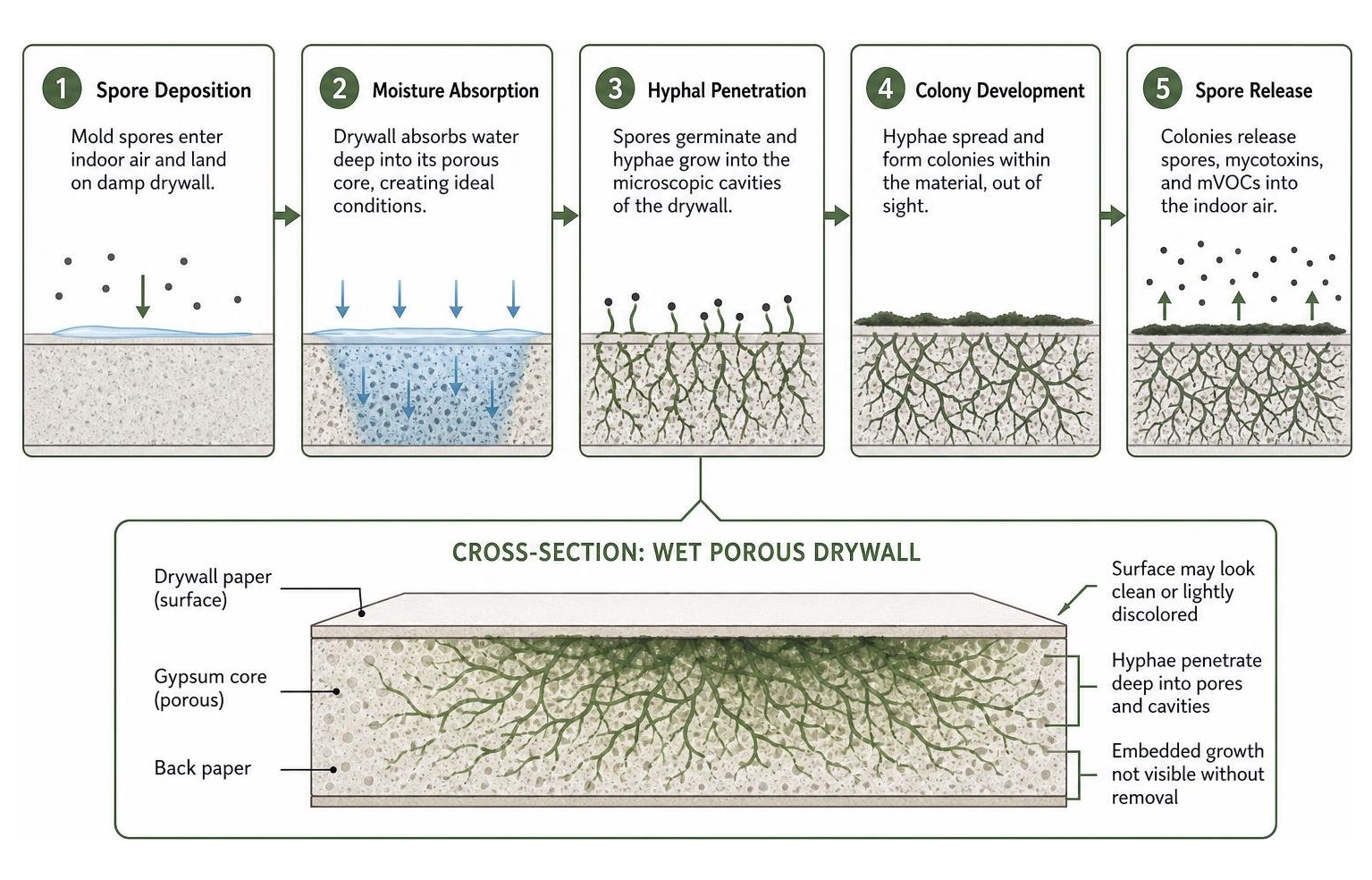
Microscopic mold spores enter buildings through doors, windows, clothing, and air intakes. These spores remain dormant until landing on an organic food source with elevated moisture (water activity exceeding 0.95).
Porous building materials—such as unsealed drywall, oriented strand board (OSB), acoustic tiles, and carpet padding—absorb water deeply. Mold hyphae (root structures) grow directly into these cavities. While Cladosporium establishes quickly, slow growers like Stachybotrys take hold when moisture lingers for several days. Once embedded, colonies release spores, microbial volatile organic compounds (mVOCs), and mycotoxins through structural assemblies. Finding this hidden growth often requires understanding how mold conceals itself within interior wall cavities.
Health Symptoms Linked to Mycotoxin Inhalation
Roughly 20% to 30% of the population carries heightened susceptibility to mold allergens, reacting with rhinitis, sneezing, and watery eyes. However, sustained exposure to mycotoxin-producing colonies presents broader physiological concerns.
Mycotoxins are lipophilic compounds that readily cross cellular membranes. Inhaling aerosolized fungal fragments allows these toxins to enter the bloodstream and respiratory tract, potentially provoking multi-system inflammatory responses:
- Persistent burning in the throat, nasal passages, and sinuses
- Unexplained cognitive impairment and “brain fog”
- Chronic fatigue that does not improve with rest
- Frequent headaches or light sensitivity
- Chest tightness, wheezing, and aggravated asthma episodes
- Opportunistic infections in immunocompromised individuals
When these symptoms arise exclusively inside a particular property and dissipate when occupants leave, the building requires professional moisture and mold assessment.
5 Hazardous Habits That Feed Indoor Mold Infestations
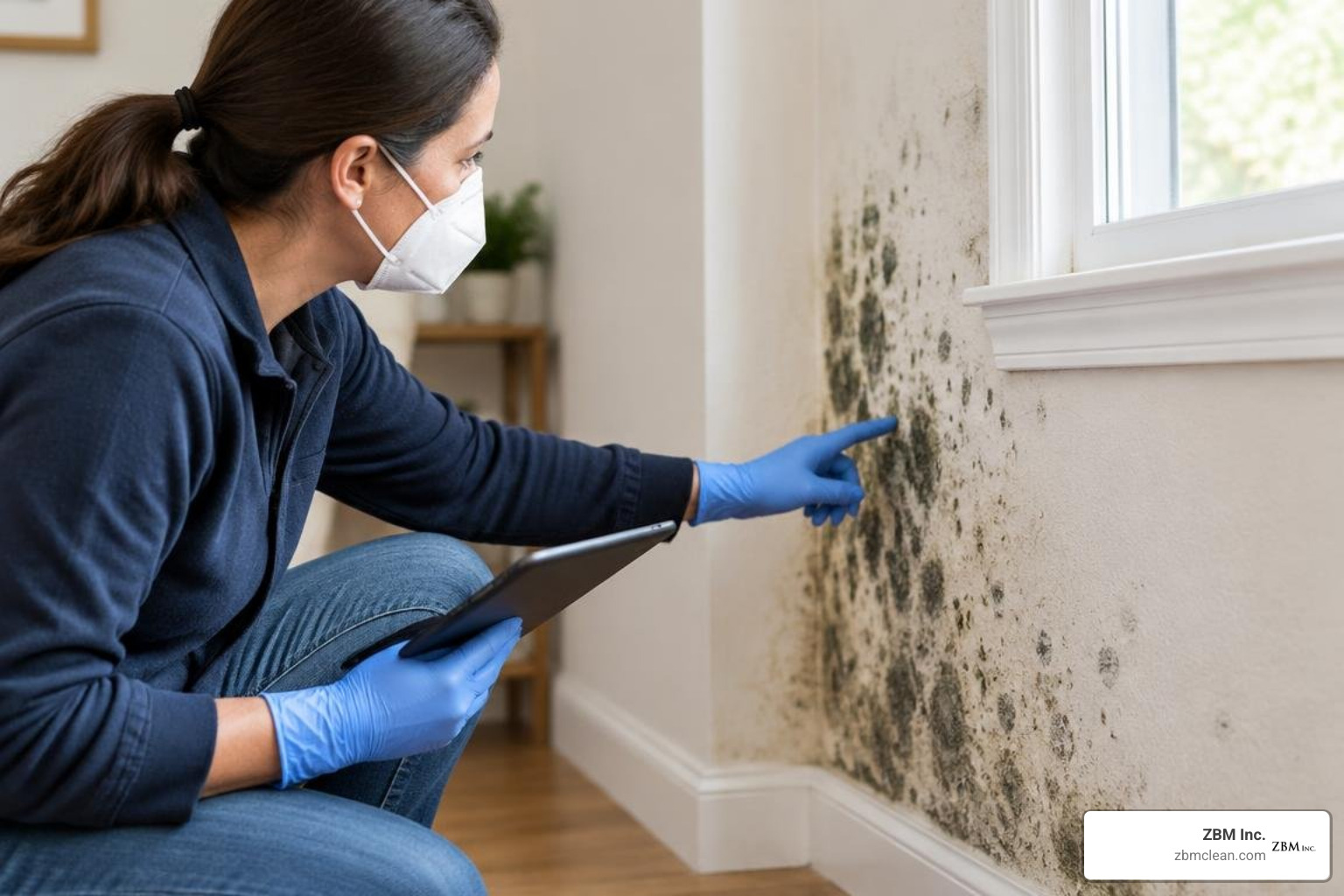
Many property managers inadvertently worsen mold problems by relying on outdated cleaning habits or underestimating fungal growth rates. Here are five hazardous habits commonly encountered in the field.
Habit 1: Ignoring Minor Plumbing Leaks and High Indoor Humidity
A dripping breakroom P-trap, a hairline foundation seep, or relative humidity lingering at 65% during humid Wisconsin summers creates prime conditions for fungal growth. Mold spores germinate within 24 to 48 hours of water contact.
When indoor humidity exceeds 50%, cool surfaces like exterior drywall, concrete slabs, and ductwork experience micro-condensation. This moisture enables Penicillium and Aspergillus to colonize dust layers on structural framing. Ignoring minor leaks allows moisture to migrate underneath subfloors and baseboards, creating hidden mold reservoirs that remain unseen until flooring buckles.
Habit 2: Applying Bleach to Porous Building Materials
Reaching for household bleach is a common mistake when confronting dark mold patches. While sodium hypochlorite sanitizes non-porous surfaces like tile and porcelain, it performs poorly on porous substrates like drywall, unsealed wood studs, and grout.
Bleach has high surface tension, preventing chlorine molecules from penetrating deep into porous materials where mold hyphae reside. The chlorine evaporates quickly from the surface, leaving behind residual water that feeds the root system. Within days, the mold often returns stronger. Eliminating infestations permanently requires addressing root structures and underlying moisture.
Habit 3: Scraping or Wiping Dry Mold Without Containment
Scrubbing a dry patch of mold with a brush or rag is exceptionally hazardous. Scraping dry mold instantly aerosolizes millions of microscopic spores, hyphal fragments, and mycotoxins into the breathing zone.
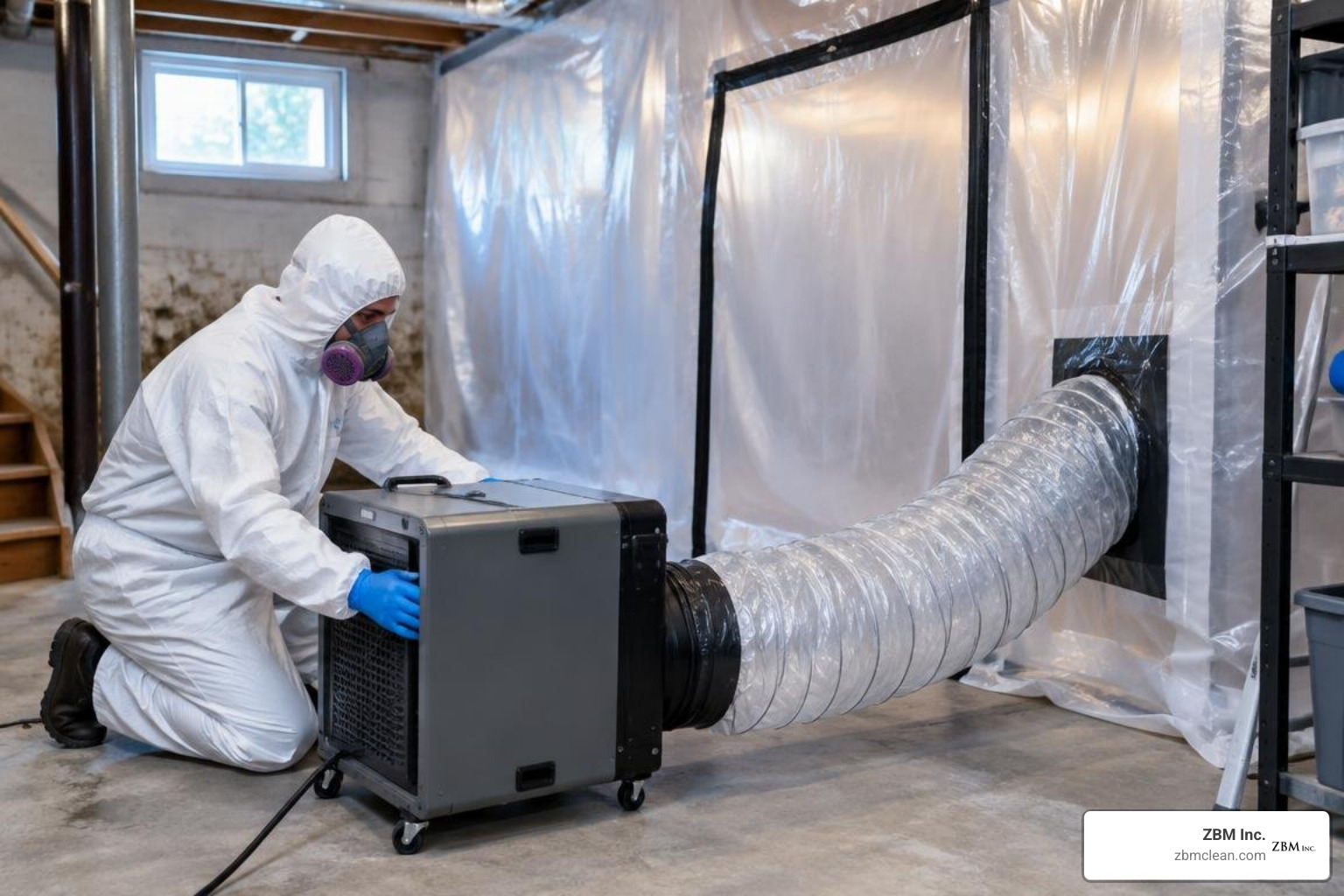
Without physical containment barriers (such as 6-mil poly sheeting) and negative air machines with certified HEPA filtration, standard airflow distributes these spores across entire floors, cross-contaminating clean offices, inventory rooms, and living spaces.
Habit 4: Neglecting HVAC Air Ducts and Filtration Systems
HVAC systems distribute air throughout the entire structure. When condensation pans clog, evaporator coils become fouled, or ductwork experiences high internal humidity, the system becomes an active mold incubator.
Species like Cladosporium and Aspergillus thrive inside fiberglass duct liners and register grilles. Once colonized, every blower cycle circulates toxigenic particulates into occupied spaces. Routine filter changes alone cannot resolve established duct colonization, requiring specialized mechanical cleaning and decontamination.
Habit 5: Delaying Professional Remediation for Large Infestations
Attempting in-house cleanup or postponing remediation to avoid operational downtime risks severe structural damage and liability. Fungal colonies covering more than 10 contiguous square feet require formal containment engineering under industry standards.
Delayed remediation allows hyphae to consume structural cellulose in joists, wall studs, and subfloors, compromising structural integrity. Professional remediators follow IICRC S520 standards, deploying commercial desiccant dehumidifiers, air scrubbers, antimicrobial agents, and controlled demolition techniques to eliminate contamination safely.
Why Breaking Bad Moisture Habits Requires Professional Remediation
Attempting to manage fungal contamination in-house with standard maintenance routines often leads to recurring outbreaks and compounded structural damage. DIY mold cleanup and surface wiping are exceptionally time-consuming and difficult to execute safely without industrial containment and commercial-grade drying equipment. When maintenance teams attempt to clean or dry saturated materials themselves, they frequently leave deep root structures (hyphae) intact inside wall cavities, subfloors, and insulation, failing to resolve the underlying problem.
To break the cycle of recurring contamination, property managers should prioritize hiring a qualified, certified remediation partner. Here is what to evaluate when selecting the right restoration specialist for your commercial or residential property:
- Industry Certification and Standards Compliance: Ensure the contractor holds formal IICRC certifications in water damage restoration and mold remediation (such as compliance with the IICRC S520 standard). Certified firms follow strict containment protocols that prevent cross-contamination.
- Advanced Diagnostics and Moisture Detection: Reliable professionals do not guess where moisture is hiding. They utilize non-invasive moisture meters, thermal imaging technology, and hygrometers to identify hidden dampness behind structural assemblies.
- Full-Scale Containment and Air Filtration: Look for teams that establish physical barriers (such as 6-mil poly containment) and deploy HEPA-filtered negative air machines to prevent aerosolized spores and mycotoxins from migrating into clean zones.
- Root-Cause Remediation Over Surface Wiping: A reputable contractor will address the structural moisture source and safely remove unsalvageable porous substrates rather than simply applying superficial cleaning agents.
- Rapid Emergency Response: Because mold spores can germinate within 24 to 48 hours of water intrusion, choosing a local, responsive provider across Watertown, Jefferson County, and Dodge County is essential. For ongoing moisture defense, property managers can also explore professional mold abatement services.
Professional Protocols for Controlling the 5 Types of Toxic Mold
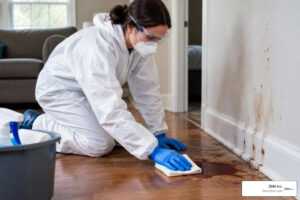
Safeguarding indoor air quality requires rigorous adherence to professional source containment. Rather than risking occupant exposure through uncontained maintenance attempts, certified cleaning crews follow controlled wet-wiping protocols combined with continuous HEPA air filtration and rapid extraction. Applying specialized botanical or quaternary antimicrobials under engineering controls ensures that toxigenic spores are encapsulated and neutralized rather than scattered into adjacent building zones.
Frequently Asked Questions About Toxic Mold
How do I know if the mold in my home is toxic?
You cannot determine whether a mold colony produces dangerous mycotoxins solely by its color, texture, or visual appearance. While Stachybotrys chartarum is commonly dark greenish-black, many completely benign molds also appear black, while toxigenic Aspergillus or Penicillium species can appear green, white, yellow, or blue-gray. Definitive identification requires professional sampling—such as tape-lift surface sampling or calibrated air-spore traps analyzed by an accredited environmental microbiology laboratory.
Can toxic mold grow back after being cleaned?
Yes, mold will return if two conditions are not met: complete removal of the fungal root structure (hyphae) and total elimination of the underlying moisture source. If you wipe down a surface but leave behind elevated humidity above 55%, leaking pipes, or damp insulation inside the wall cavity, dormant spores will reactivate and recolonize the area within days. Long-term prevention requires drying the substrate to its baseline moisture content and addressing building envelope flaws.
When should I hire a professional instead of attempting DIY mold removal?
DIY mold cleanup is hazardous, time-consuming, and rarely successful when dealing with hidden or porous growth. Without industrial equipment like negative-pressure air scrubbers, commercial HEPA vacuums, and proper personal protective equipment (PPE), DIY efforts often aerosolize spores and spread contamination throughout the property. You should immediately bring in a professional remediation team if:
- The mold covers an area greater than 10 square feet (roughly a 3-foot by 3-foot section).
- Mold is present inside HVAC ductwork, air handlers, or furnace plenums.
- The contamination originates from sewage backflow or category 3 black water.
- Occupants are experiencing chronic respiratory or unexplained systemic health symptoms.
- The mold is growing on structural framing, subflooring, or inside wall assemblies.
Conclusion
Understanding the 5 types of toxic mold—Stachybotrys, Aspergillus, Penicillium, Fusarium, and Cladosporium—highlights a fundamental truth of facility management: mold is always a symptom of an unmanaged moisture problem. Treating fungal outbreaks with superficial home remedies or delaying cleanup only increases the risk of structural decay and occupant illness.
At ZBM Inc., our family-owned, licensed, bonded, and insured team brings decades of certified field experience to commercial and residential properties across Watertown, Jefferson County, Dodge County, and Southeast Wisconsin. Whether you are dealing with a sudden pipe burst or suspect hidden fungal contamination behind your walls, we deploy certified containment, advanced air scrubbing, and structural drying to return your property to a safe, healthy baseline.
When mold threatens your indoor air quality and building safety, don’t leave recovery to chance. Contact our team today for certified biohazard and toxic mold cleanup and experience the peace of mind that comes with true remediation expertise.
Medical References
Kuhn DM, Ghannoum MA. “Indoor mold, toxigenic fungi, and Stachybotrys chartarum: infectious disease perspective..” Clinical microbiology reviews, 2003. PMCID PMC145304.