When You Need Flood Cleanup Companies Near Me: What You Should Know First
Finding reliable flood cleanup companies near me fast can mean the difference between a quick recovery and weeks of costly repairs. Here’s a quick overview of what to look for:
How to find the right flood cleanup company near you:
- Check for IICRC certification — technicians should meet industry standards for water extraction, drying, and mold prevention
- Confirm 24/7 availability — floods don’t wait; your cleanup company shouldn’t either
- Look for fast response times — the best companies arrive within 60 minutes
- Verify insurance coordination — a good company works directly with your adjuster
- Read local reviews — BBB ratings and Google reviews reveal real service quality
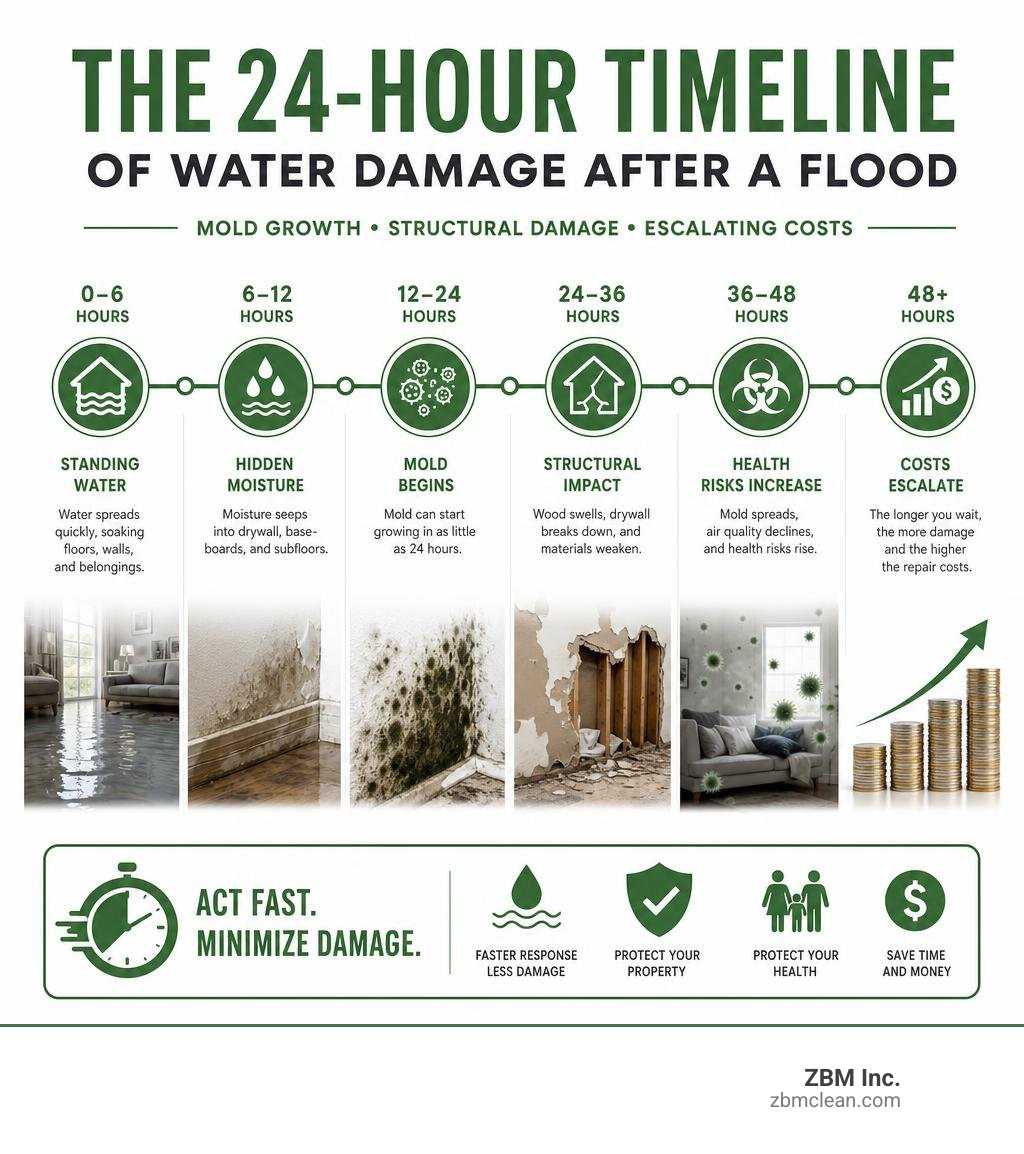
Floodwater moves fast. Within 24 to 48 hours, mold can begin growing inside walls, under floors, and in hidden cavities you can’t see. Standing water also creates electrical hazards and weakens structural materials like drywall and hardwood. The longer cleanup waits, the worse — and more expensive — the damage gets.
This guide walks you through exactly what to look for before you hire, so you can act quickly and make a smart choice.
I’m Terry Zastrow, owner of ZBM, Inc. — an IICRC-certified firm with approximately 30 years of experience in disaster recovery, including flood cleanup services for commercial properties, housing authorities, and municipalities across Wisconsin. As one of the flood cleanup companies near me that local property managers and agencies rely on, ZBM, Inc. brings certified technicians, rigorous safety training, and a proven process to every job.
What Services Do Flood Cleanup Companies Near Me Typically Offer?
When water invades your property, simple vacuuming isn’t enough. Professional flood cleanup companies provide a highly technical, multi-stage recovery process designed to protect your structure and your health.
If you are wondering what do disaster restoration services cover, the short answer is: everything from the initial extraction of standing water to the final sanitizing and rebuilding phases.
Emergency Water Extraction and Dehumidification
The absolute first priority during any flood event is removing standing water. Professional teams deploy heavy-duty truck-mounted extraction units and industrial submersible pumps to clear thousands of gallons of water in a fraction of the time a standard wet/dry vacuum would take.
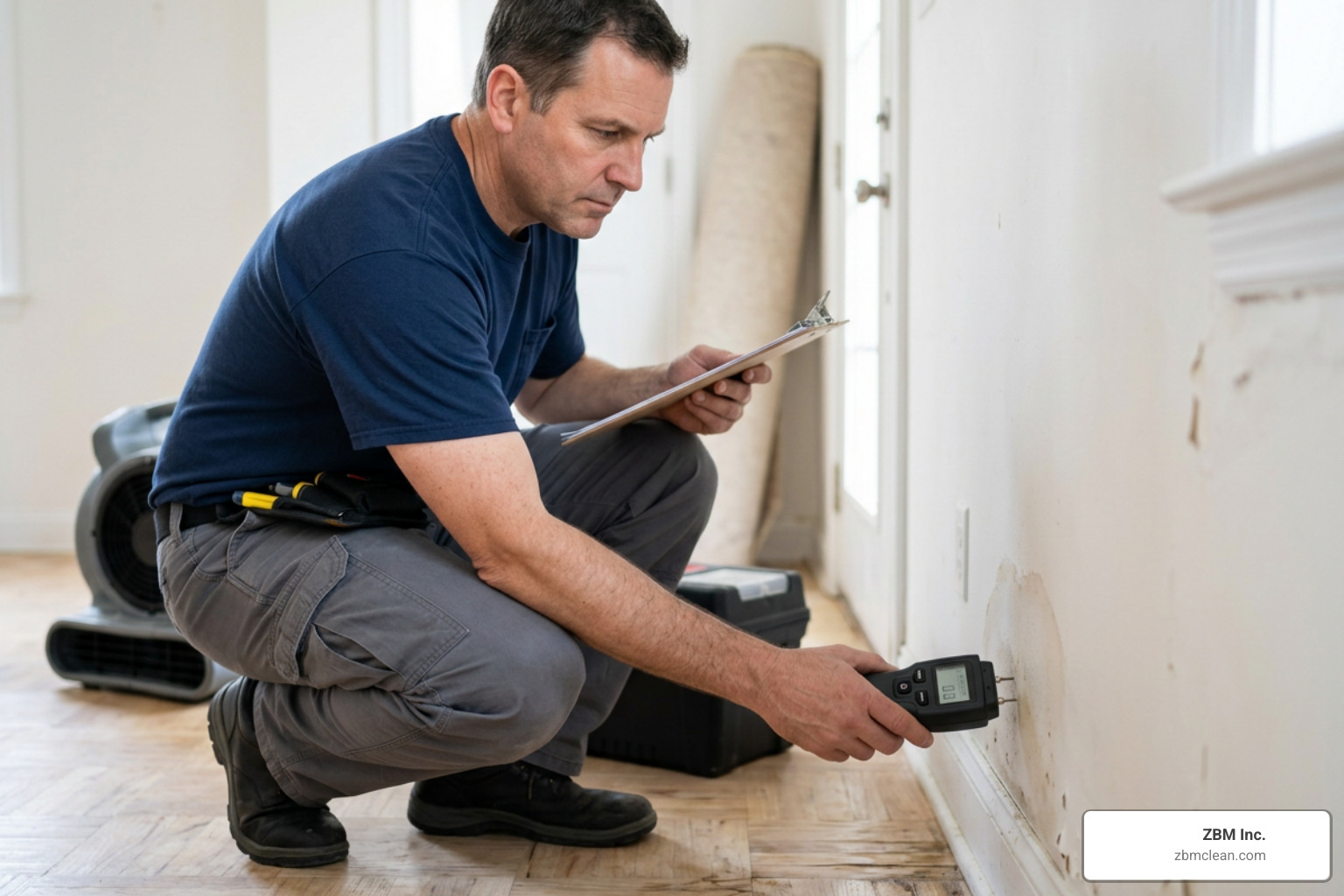
Once the standing water is gone, the real challenge begins: extracting the moisture trapped inside your walls, subfloors, and structural framing. Professionals use commercial air movers and industrial-grade LGR (Low Grain Refrigerant) dehumidifiers to pull moisture out of the air and dry out building materials. Throughout this process, technicians use advanced moisture meters and thermal imaging cameras to track drying progress, ensuring no hidden pockets of water remain. Following these structured steps is vital, as outlined in our guide on 5 steps to cleaning up the water from your home.
Mold Remediation and Odor Control
Where there is water, mold is never far behind. If standing water isn’t dried completely within 24 to 48 hours, dormant mold spores will activate and begin colonizing. This is why you need a professional disaster cleaner after the unthinkable happens; professionals don’t just dry the area, they actively prevent microbial growth.
To keep your air safe and clean, restoration teams apply EPA-approved, industrial-strength antimicrobial treatments to all affected surfaces. They also run HEPA air scrubbers to capture airborne spores, dust, and contaminants. Finally, advanced deodorization equipment—such as hydroxyl generators or ozone machines—is used to permanently neutralize musty odors rather than simply masking them.
Key Credentials of Reputable Flood Cleanup Companies
When searching for flood cleanup companies near me, you should never hire the first company that pops up without verifying their credentials. Because water damage can compromise the structural integrity of your home, working with uncertified or uninsured workers can lead to massive liabilities and secondary damage.
Finding Certified Flood Cleanup Companies Near Me
The gold standard for the restoration industry is the Institute of Inspection, Cleaning and Restoration Certification (IICRC). A reputable company should be an IICRC Certified Firm, and their technicians should hold individual certifications in Water Damage Restoration (WRT) and Applied Structural Drying (ASD).
These certifications ensure the team follows the IICRC S500 standard—a rigorous, science-based set of professional guidelines for water damage restoration. Understanding the benefits of hiring a professional for disaster recovery starts with knowing that certified pros use psychrometric science to dry your home efficiently, preventing long-term structural failures. For more details on what these credentials mean, check out our guide on disaster recovery and cleaning professional certifications.
Local Experience and BBB Accreditation
A national franchise might have a recognizable logo, but local experience is invaluable. Local restoration companies understand regional structural designs, local building codes, and common regional weather patterns—such as the lake-effect storms and frozen pipes common in Southeast Wisconsin and the Northwoods.
Always look for a company with:
- An active A+ rating from the Better Business Bureau (BBB)
- Strong local roots, such as being a family-owned business
- Full licensing, bonding, and comprehensive liability insurance
- Positive reviews from real neighbors in your immediate community
What To Expect During the Restoration Process
The restoration process is highly systematic. It is generally split into two distinct phases: Mitigation (stopping the damage and drying the structure) and Reconstruction (repairing and rebuilding the damaged areas).
Understanding how disaster recovery services help you rebuild and restore can help ease the stress of an active disaster.
| Phase | Key Objectives | Equipment Used | Timeframe |
|---|---|---|---|
| Mitigation | Stop water source, extract standing water, prevent mold, dry structural elements | Submersible pumps, LGR dehumidifiers, air movers, moisture meters | 3 to 5 Days |
| Reconstruction | Replace ruined drywall, reinstall flooring, paint, restore structural integrity | Carpentry tools, drywall lifts, standard construction equipment | Variable (Days to Weeks) |
Step-by-Step Flood Cleanup and Drying
Once the team arrives, they will immediately map the moisture levels using thermal imaging and moisture probes. This allows them to see behind drywall and beneath flooring without invasive demolition.
Once the drying equipment is placed, the technicians don’t just walk away. They perform daily monitoring, taking dry logs and adjusting the placement of air movers based on psychrometric charts. This careful monitoring ensures that materials like hardwood and subflooring dry at a safe, controlled rate, preventing warping and cracking. For homeowners looking to understand the mechanics of this process, we have compiled essential home water damage restoration tips to guide you.
Working with Insurance Providers
Navigating an insurance claim after a flood can feel like a second disaster. A professional flood cleanup company will act as your advocate. They document everything from the moment they step onto your property, capturing high-resolution photos and video evidence of the standing water, saturated materials, and affected contents.
By utilizing industry-standard estimating software like Xactimate, professional restoration companies can provide your insurance adjuster with clear, itemized documentation. This direct-billing capability ensures your claim is processed smoothly, letting you focus on getting your life back to normal. If you’ve just experienced a loss, review our immediate checklist on what to do immediately after a disaster damages your property.
How to Choose the Best Flood Cleanup Company
With so many options appearing when you search for flood cleanup companies near me, making a final choice can feel overwhelming. However, focusing on response time, local presence, and customer service will quickly narrow down the field. disaster restoration companies help restore life by bringing order to chaos, so choose a team that communicates clearly and treats your property with respect.
Evaluating Emergency Response Times of Flood Cleanup Companies Near Me
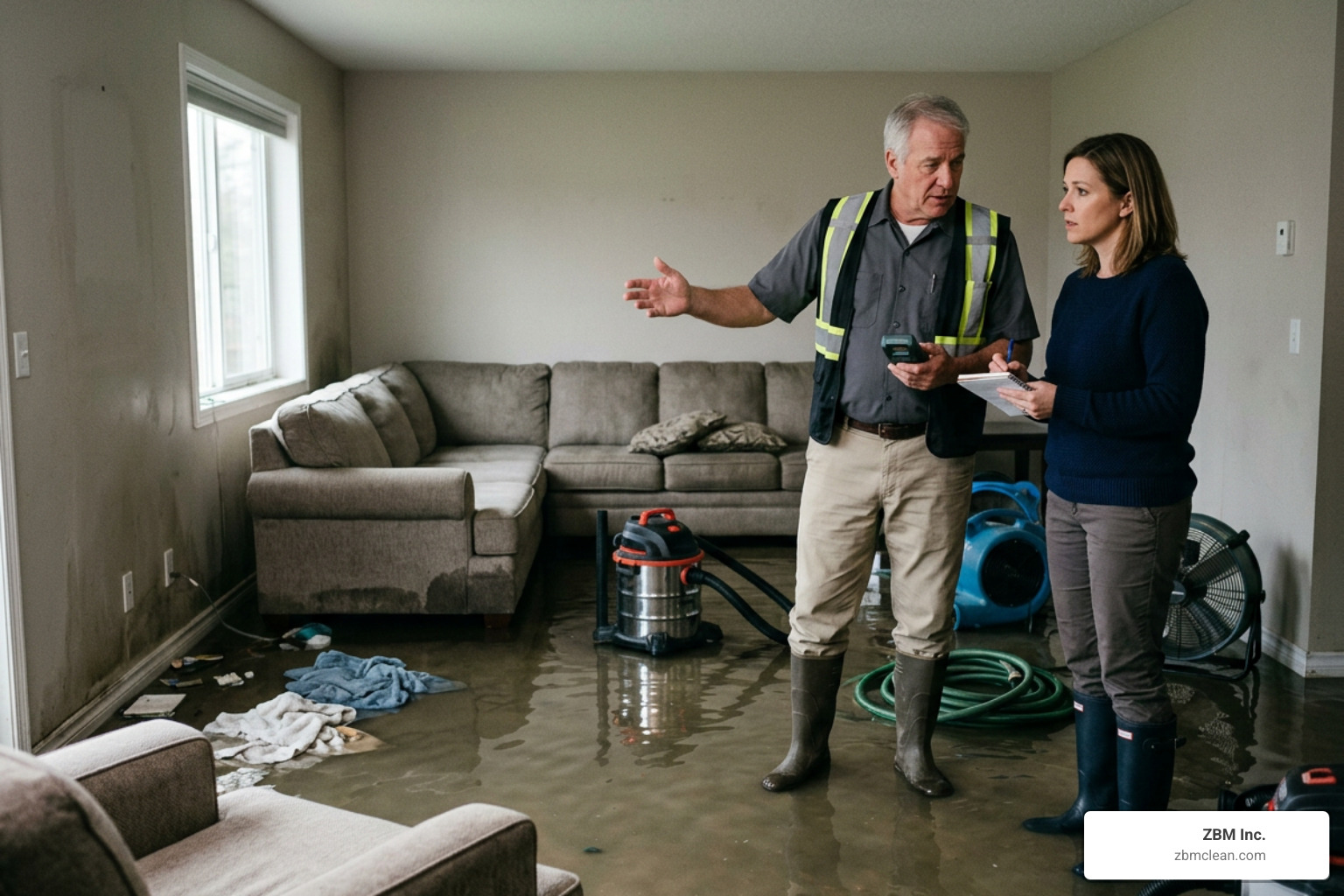
When it comes to water damage, speed is everything. A delay of even a few hours can turn a simple water extraction job into a massive mold remediation project.
The best local flood cleanup companies offer 24/7 emergency dispatch and guarantee an on-site arrival time of 60 minutes or less. Getting professional emergency disaster recovery after damage strikes ensures that structural drying begins before the water has a chance to permanently weaken your subfloors or foundation.
Comparing Local vs. National Restoration Providers
While national franchise networks have large marketing budgets, local, family-owned restoration companies often provide a superior level of care. With a local provider, you are not just a claim number on a corporate spreadsheet; you are a neighbor. Local teams are highly accountable to their local reputation and typically offer consistent, same-crew continuity from the initial extraction through the final rebuild.
Before hiring any restoration provider, ask them these key questions:
- Are your technicians individually certified by the IICRC?
- Do you offer direct billing to my insurance company?
- Can you provide a detailed, written estimate before starting any non-emergency work?
- How often will you monitor the drying equipment while it is running in my home?
- Are you licensed, bonded, and insured to operate in Wisconsin?
Frequently Asked Questions About Flood Cleanup
How much does professional flood cleanup cost?
The cost of professional flood cleanup depends on several factors, including the square footage of the affected area, how long the water has been standing, and the category of the water.
Water is classified into three categories:
- Category 1 (Clean Water): Water from a broken supply line or clean sink overflow.
- Category 2 (Gray Water): Water with some contamination, such as washing machine or dishwasher discharge.
- Category 3 (Black Water): Highly contaminated water containing sewage, silt, or chemical runoff.
Category 3 water requires specialized personal protective equipment (PPE) and extensive sanitization, which increases the cost. Fortunately, most sudden and accidental water damage is covered by standard homeowners insurance, meaning you may only be responsible for your deductible. For a deeper look at managing these costs and processes, see our water damage cleaning guide for homeowners.
Can I handle flood cleanup as a DIY project?
While it may be tempting to try to save money by handling the cleanup yourself, DIY flood cleanup is highly risky. Standard household vacuums and fans do not have the power to extract deep moisture from structural framing or subfloors, which almost guarantees future mold growth.
Furthermore, standing floodwater can contain hidden electrical hazards and dangerous pathogens, especially if it involves sewage or outdoor runoff. To protect your property and your health, it is always best to leave the cleanup to certified professionals. You can learn more about protecting your home’s structure in our guide on ways to protect your homes floors from water.
How quickly does mold start growing after a flood?
Under ideal conditions—which include high humidity and warm temperatures—mold spores can germinate and begin colonizing within 24 to 48 hours of water exposure. Once mold takes hold, it can rapidly spread through drywall, carpeting, and wooden framing, causing structural decay and serious respiratory issues for the building’s occupants. This is why rapid extraction and immediate dehumidification are so critical.
Conclusion
When water damages your home or business, you don’t have time to waste. Choosing the right partner among the local flood cleanup companies near me will protect your property from structural damage, prevent mold growth, and give you peace of mind during a stressful time.
At ZBM, Inc., we provide professional, certified, and compassionate disaster recovery services across Dodge County, Jefferson County, Watertown, Lake Mills, Southeast Wisconsin, and the Northwoods. As a licensed, bonded, and family-owned business with decades of local experience, we are dedicated to helping our neighbors rebuild and restore their lives.
If you are facing water or flood damage, don’t wait for the damage to spread. Contact us today at Disaster Restoration Services in Dodge & Jefferson County, WI to get our certified professionals on the job immediately.