What to Look for in a Professional Bathroom Sanitation Program
A clean, safe restroom requires a rigorous commercial sanitation program rather than informal in-house wiping. When evaluating commercial cleaning contractors, facilities managers use a comprehensive bathroom sanitation checklist to verify that disinfection standards, fixture maintenance, and air quality protocols meet strict health regulations. Attempting to manage facility restrooms internally often drains valuable staff hours and leaves deep bio-soils, dangerous bacteria, and moisture damage unaddressed.
Certified commercial cleaning teams deliver structured service tiers:
- Service-round monitoring: Ensuring continuous supply availability, spill containment, and frequent sanitization of high-contact hardware.
- Daily germicidal disinfection: Utilizing EPA-registered hospital-grade disinfectants with full manufacturer label contact times on touchpoints, commodes, and vanity fixtures.
- Scheduled deep extraction: Deploying specialized floor scrubbers, grout extractors, and descaling solutions to prevent permanent uric salt and limescale damage.
I’m Terry Zastrow, owner of ZBM Inc., an IICRC-certified firm with about 30 years of building maintenance experience. Understanding the criteria of a professional bathroom sanitation checklist helps property owners evaluate contractor accountability, protect building assets, and maintain pristine facilities.
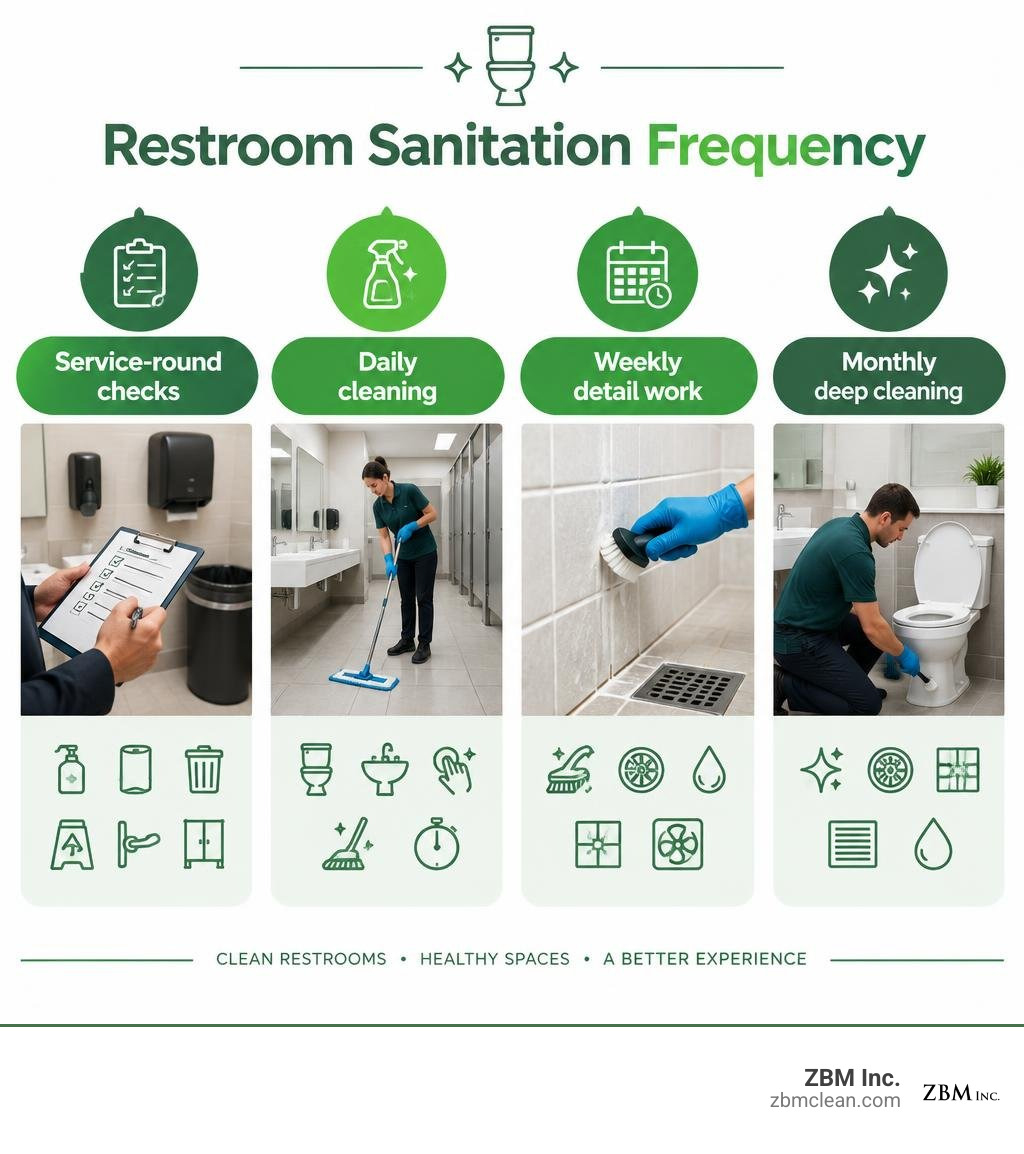
Key areas to review when selecting a sanitation provider include their bathroom hygiene checklist standards and their preventive bathroom maintenance checklist capabilities.
Evaluating Commercial Restroom Cleaning Standards by Service Frequency
Maintaining commercial and multi-user restrooms requires balancing daily surface decontamination with periodic restorative care. High-traffic environments, such as corporate facilities, medical clinics, and retail centers across Southeast Wisconsin, require dynamic service intervals to eliminate pathogens and protect structural materials.

Attempting to handle commercial restroom sanitation in-house without industrial extraction machinery or commercial chemistry frequently leads to superficial cleaning rather than true disinfection. Internal staff members lack the time and training to remove stubborn bio-soils, resulting in foul odors, damaged fixtures, and cross-contamination hazards.
When hiring an outside provider, facility managers review service scopes across structured frequency tiers:
| Frequency | Target Fixture Zones | Professional Scope of Work | Regulatory & Facility Goal |
|---|---|---|---|
| Hourly / Service Rounds | Touchpoints, dispensers, floor surfaces, waste receptacles | Replenishment, continuous hazard mitigation, spot disinfection | Slip-and-fall prevention, consistent user supplies |
| Daily Disinfection | Commodes, urinals, vanity basins, faucets, mirrors, floor surfaces | Hospital-grade germicide application, complete waste removal | Broad-spectrum pathogen control, bio-load reduction |
| Weekly Detailing | Grout lines, stall partitions, baseboards, floor drains | Descaling, hardware polishing, targeted uric acid neutralization | Odor eradication, fixture deterioration prevention |
| Monthly Restorative | Exhaust vents, upper walls, deep grout extraction, mechanical seals | High-pressure chemical extraction, ventilation cleaning | Mold abatement, compliance and long-term asset protection |
Assessing Daily and Hourly Sanitation Capabilities
High-touch surfaces in busy restrooms harbor rapid bacterial colonies when left unmaintained. Professional cleaning contracts should clearly specify high-frequency service rounds alongside comprehensive daily sanitization protocols.
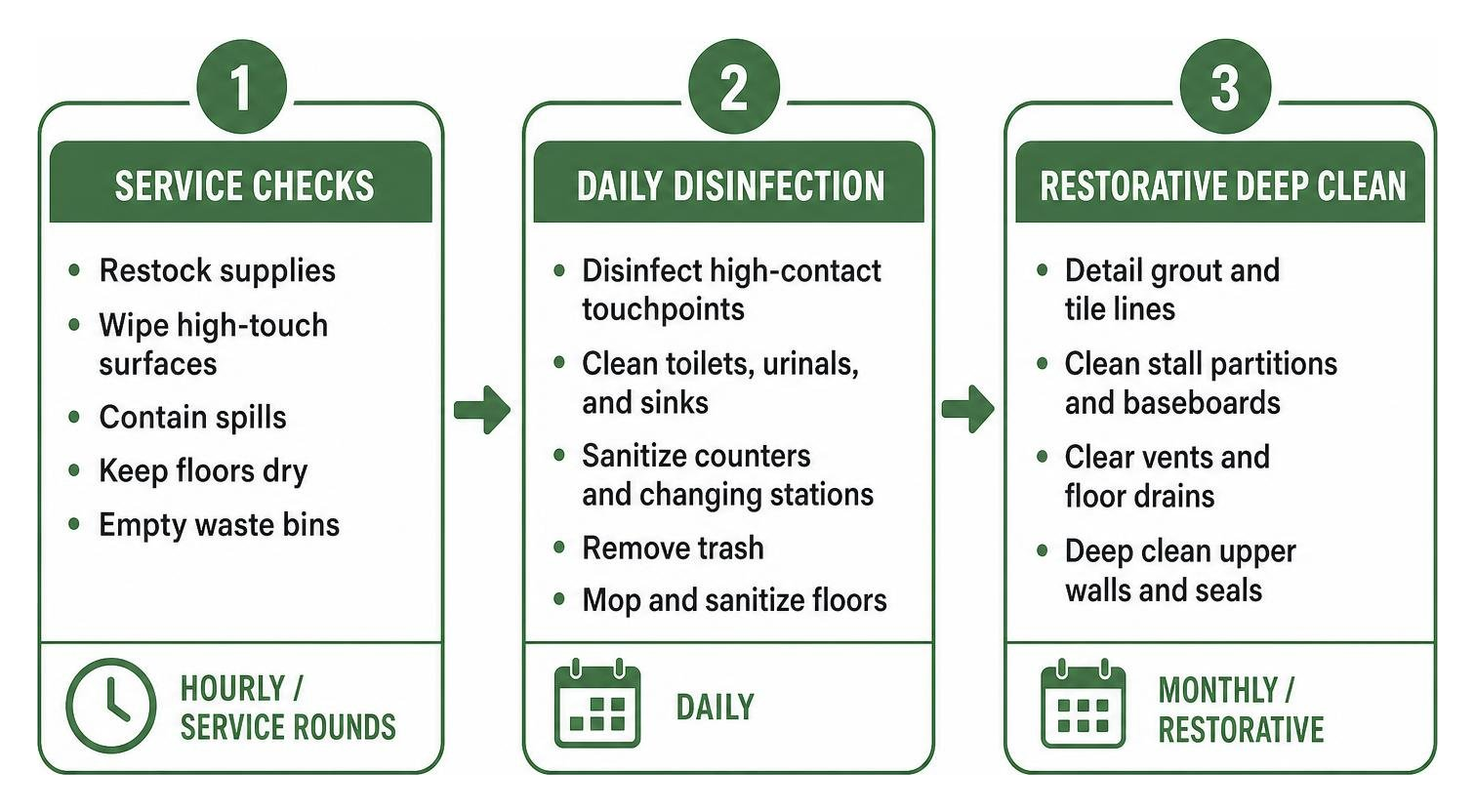
Key proficiencies to verify in a contractor’s standard service plan include:
- Touchpoint Decontamination: Routine disinfection of entry hardware, stall latches, flush mechanisms, faucet controls, and dispenser handles.
- EPA-Registered Disinfection: Application of broad-spectrum germicides across all porcelain, vanity tops, and baby changing stations.
- Hazard and Waste Management: Timely removal of sanitary bins and trash, coupled with floor drying protocols to eliminate slip risks.
Facility managers verify these standards by reviewing a prospective vendor’s hourly restroom sanitation procedures and comparing them against benchmarks like the Restroom Sanitation Checklist: 8 Essential Tasks – Facility Management Insights.
The Importance of Professional Deep-Cleaning Equipment and Methods
While daily surface care keeps restrooms presentable, long-term hygiene depends on industrial restorative methods. Over time, uric acid salts penetrate deep into porous grout lines, mineral deposits choke plumbing aerators, and humidity triggers mold inside exhaust systems.
Handling these issues without commercial extraction gear can permanently damage porcelain, strip protective tile sealers, and fail to remediate deep microbial growth. Property owners across Jefferson County WI and Dodge County WI protect their investments by selecting contractors skilled in weekly company restroom cleaning as well as advanced restroom deep cleaning techniques delivered by certified specialists.
Ensuring Restroom Safety, Compliance, and Contractor Accountability
OSHA, ADA, and Health Code Compliance Standards
Commercial restroom management carries legal, safety, and accessibility requirements. Under OSHA 29 CFR 1910.141, businesses must provide sanitary, fully operational facilities equipped with running water and adequate hygiene supplies. Penalties for serious OSHA sanitation violations can reach up to $16,550 per incident.
Furthermore, maintaining compliance with the Americans with Disabilities Act (ADA) requires strict diligence. With thousands of accessibility lawsuits filed annually, commercial facilities must ensure grab bars remain sturdy, wheelchair turning paths remain clear, and dispenser heights adhere to ADA regulations.
Professional cleaning partners follow verified restroom safety guidelines and incorporate quality control metrics such as those found in the Bathroom Quality Inspection Checklist (India): Stage-Wise ITP with Hold Points & Tolerances.
Chemical Dwell Time, Safety Protocols, and Professional Training
A critical risk of amateur or in-house cleaning is the improper application of chemical disinfectants. Antimicrobial solutions require specific wet contact dwell times—often between 3 and 10 minutes—to neutralize harmful pathogens.
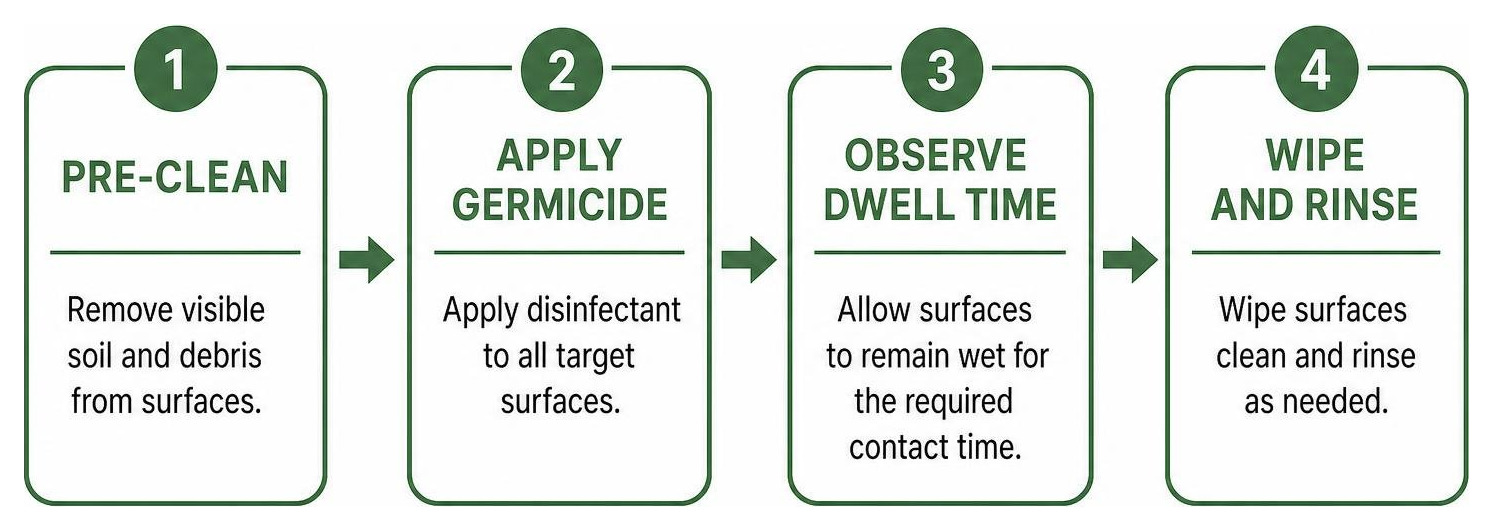
Reputable commercial cleaning firms ensure sanitation through strict technical protocols:
- Dwell Time Adherence: Allowing broad-spectrum germicides to remain visibly wet for the full duration specified by the manufacturer.
- Color-Coded Cross-Contamination Prevention: Utilizing dedicated color-coded microfiber tools for urinals, sinks, and common surfaces to prevent germ transfer.
- Trained SDS and PPE Handling: Ensuring technicians safely mix chemicals and apply appropriate personal protective equipment to avoid hazardous fumes or surface corrosion.
Untrained staff often make big restroom cleaning mistakes, such as mixing incompatible chemicals or damaging expensive stone surfaces, making a certified commercial service the safer choice.
Digital Auditing, Quality Control, and Partnering with Certified Experts
A professional cleaning company backs its work with documented quality control systems, digital inspection sign-offs, and clear issue escalation procedures.
As an IICRC-certified, licensed, bonded, and insured family-owned firm based in Watertown, WI, ZBM Inc. delivers commercial cleaning and sanitization solutions across Southeastern Wisconsin and the Northwoods. Our certified specialists manage routine office sanitation, specialized biohazard decontamination, and deep restorative cleaning.
Building managers can explore comprehensive bathroom cleaning checklists to evaluate standard operating procedures and contact ZBM Inc. to ensure high-level cleanliness, regulatory compliance, and peace of mind.