
Why Acting Fast on Mold Is Critical for Your Property
Professional mold remediation experts are trained specialists who safely identify, contain, and remove mold from homes and commercial properties — before it spreads, damages structures, or harms the people inside.
If you manage a commercial property, here’s what you need to know right away:
- Mold can spread in as little as 48-72 hours after moisture exposure
- Small patches under 10 square feet may be manageable with DIY cleaning
- Anything larger, recurring, or hidden requires a certified professional
- Costs typically run around $200 per square foot, depending on severity and scope
- IICRC-certified companies follow industry-standard protocols for safe, effective removal
- 24/7 emergency services are available from most reputable remediation firms
Mold is not just an eyesore. It eats through drywall, wood, and insulation. It triggers respiratory problems, allergies, and in serious cases, neurological effects. For a busy property manager, a mold problem left unchecked can mean tenant complaints, health liability, and costly structural repairs.
One family didn’t realize hidden mold was causing their ongoing health issues until a professional inspection traced it to the walls. That’s how quietly mold operates — and why knowing when to call in the experts matters.
This guide covers everything: the remediation process, equipment, costs, how to choose a qualified company, and how to keep mold from coming back.
Understanding Mold Growth and Health Risks
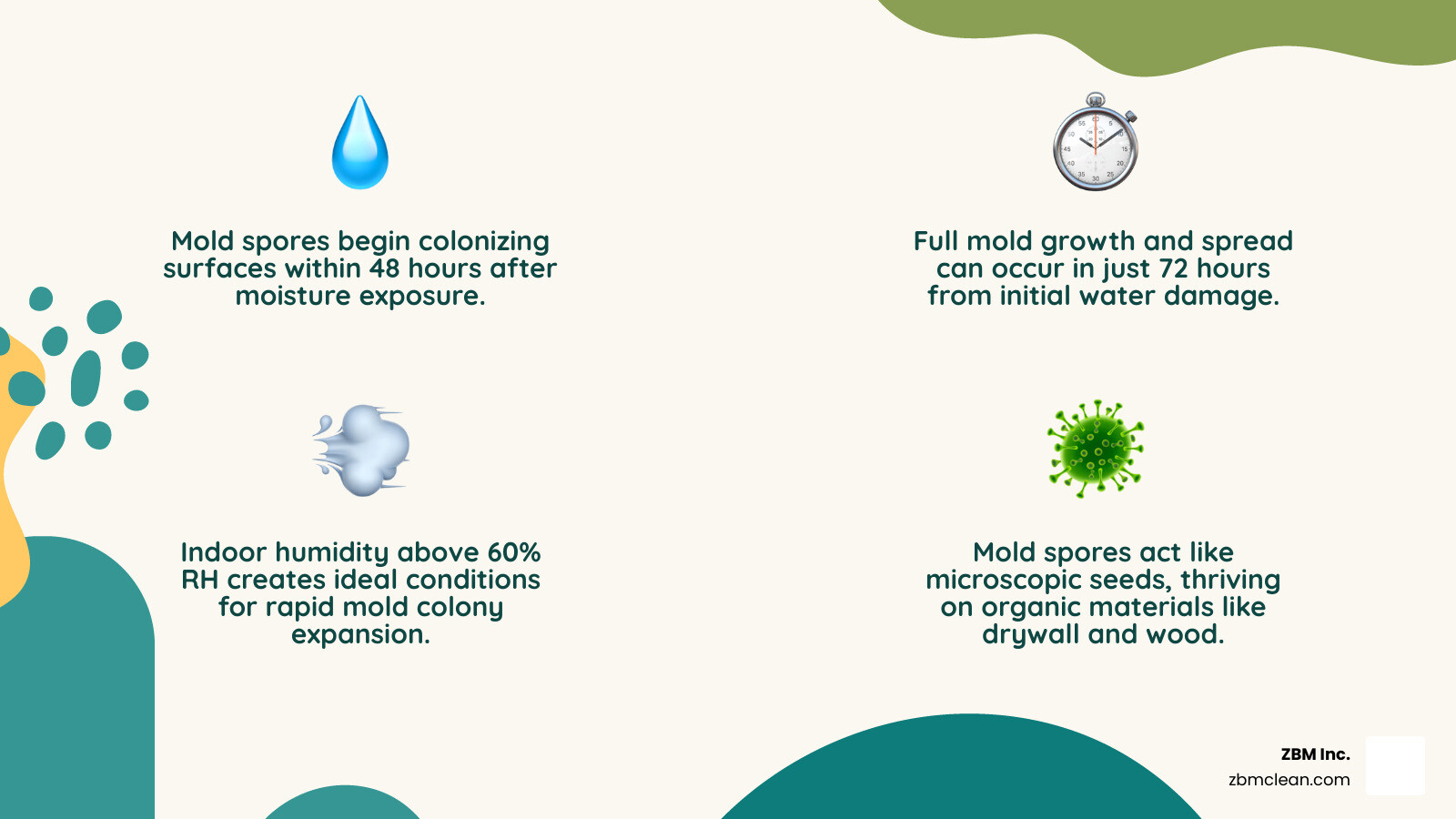
To understand why we take mold so seriously at ZBM Inc., you first have to understand how mold “thinks.” Mold spores are like microscopic seeds constantly floating in the air—both indoors and out. They are harmless until they find the “Goldilocks” conditions: a food source (like your drywall or wooden studs) and moisture.
The 48-hour window is the industry’s golden rule. Once water damage occurs—whether from a burst pipe in Watertown or a humid summer day in the Northwoods—mold can begin to colonize in as little as two days. Research shows that indoor humidity levels exceeding 60% Relative Humidity (RH) create the ideal breeding ground for these colonies to explode.
The risks aren’t just structural; they are biological. Mold produces allergens and irritants that can lead to persistent sneezing, red eyes, and skin rashes. In more severe cases involving certain species, exposure can lead to neurological effects or chronic respiratory issues. This is especially dangerous for children, the elderly, or those with compromised immune systems. For a deeper dive into the specific dangers, you can read about the 5 types of toxic mold and why you need biohazard cleanup.
Identifying Common Mold Triggers
In our experience serving Southeastern WI, we’ve found that mold rarely shows up without an invitation. The most common “invitations” include:
- Leaking Pipes: Even a tiny pinhole leak behind a kitchen cabinet can feed a massive mold colony over several months.
- Roof Damage: Missing shingles or clogged gutters allow water to seep into the attic, often going unnoticed until the ceiling starts to smell musty.
- High Humidity: Basements in Dodge and Jefferson Counties are notorious for high humidity. Without a proper dehumidifier, the air itself can feed mold growth on cardboard boxes and furniture.
- Poor Ventilation: Bathrooms without exhaust fans or kitchens with heavy steam are hotspots for surface mold.
- Condensation: In the winter, the temperature difference between the cold outside and your warm home can cause moisture to bead on windowsills and metal frames.
The Step-by-Step Process Used by Professional Mold Remediation Experts
When you call in professional mold remediation experts, you aren’t just hiring someone with a bucket and a sponge. You are hiring a team that follows a scientific, multi-step protocol to ensure the mold is gone and stays gone.
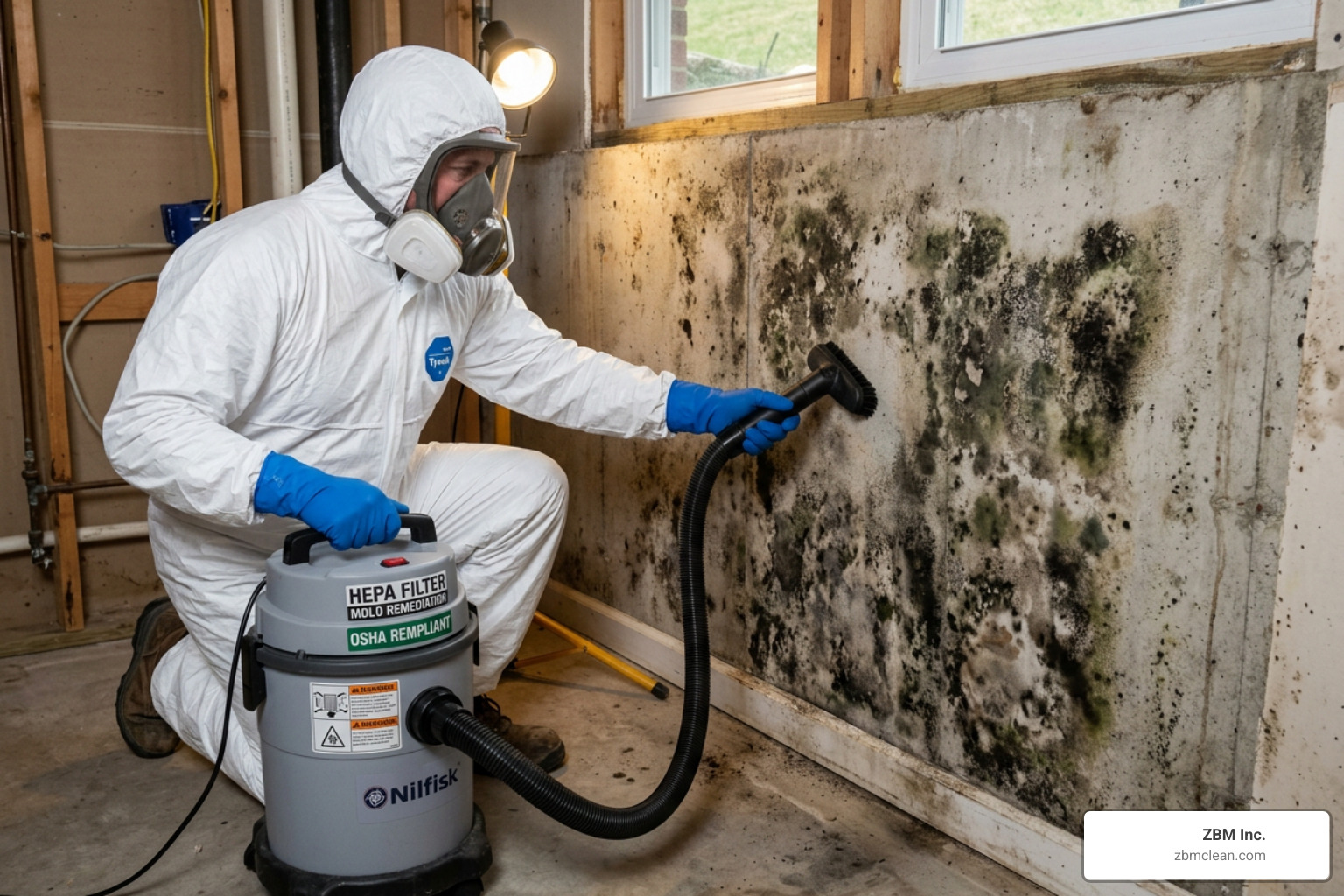
The process begins with an Emergency Contact and Assessment. At ZBM Inc., we know that time is your enemy. We respond quickly to inspect the property, using moisture meters and thermal imaging to find “hidden” water behind walls. Once we understand the scope, we move into the actual cleanup. If you’re curious about the specifics of the arrival, check out our guide on biohazard cleanup services and what to expect.
Containment and Air Filtration
This is the most critical step that DIYers often skip. If you simply scrub mold, you kick millions of spores into the air, where they travel through your HVAC system to the rest of the building.
Professional mold remediation experts use containment strategies to prevent this “cross-contamination.” This involves:
- Physical Barriers: Using heavy-duty plastic sheeting to seal off the affected room.
- Negative Air Pressure: Using industrial fans to create a vacuum effect. This ensures that when the door to the work area is opened, air flows into the contaminated space, not out of it.
- Air Scrubbers: These machines use HEPA (High-Efficiency Particulate Air) filtration to capture 99.97% of spores from the air, literally “scrubbing” the atmosphere clean.
Removal and Restoration
Once contained, the physical removal begins. Non-porous surfaces (like metal or tile) can often be cleaned and disinfected. However, porous materials like drywall, insulation, and carpeting are usually “discarded” because mold roots itself deep inside the fibers.
After removal, we apply EPA-registered antimicrobial treatments to the remaining structural studs to kill any lingering spores. Finally, the restoration phase begins. This could be as simple as a new coat of paint or as involved as hanging new drywall and installing new flooring to get your property back to—or better than—its original condition.
Advanced Equipment and Eco-Friendly Techniques
The “expert” part of professional mold remediation experts comes from the tools they carry. We don’t guess; we measure.
- Moisture Meters: These tell us exactly how “wet” a wall is, even if it feels dry to the touch.
- Thermal Imaging: Infrared cameras help us spot cold spots in walls, which usually indicate hidden moisture or leaks.
- HEPA Vacuums: Unlike a standard shop-vac, which might just exhaust spores back out the back, HEPA vacuums trap the tiniest particles.
We also prioritize eco-friendly or green remediation whenever possible. Many modern antimicrobial treatments are plant-based and botanical, meaning they are tough on mold but safer for your family and pets. Using these non-toxic chemicals helps maintain high indoor air quality throughout the process. Understanding how environmental mitigation protects property and health is a core part of our mission in Watertown and beyond.
Benefits of Green Remediation
Choosing a “green” approach isn’t just about being nice to the planet; it’s about the health of the occupants. Traditional harsh chemicals can leave behind “off-gassing” odors that irritate the lungs. Botanical disinfectants (often derived from thyme oil) provide a powerful kill rate for mold and bacteria without the toxic footprint. This is especially beneficial for commercial spaces like offices or daycares where people return to work immediately after the job is done.
Deciding Between DIY and Professional Services
We get asked this a lot: “Can’t I just use some bleach?” The short answer is: usually, no. While a small patch of mildew on a shower tile is a DIY job, structural mold is a different beast.
| Feature | DIY Cleaning | Professional Remediation |
|---|---|---|
| Area Size | Under 10 square feet | Over 10 square feet |
| Equipment | Household gloves/mask | Full PPE, HEPA Scrubbers, Negative Air |
| Method | Surface scrubbing | Containment, Root removal, Air filtration |
| Effectiveness | Temporary (often regrows) | Permanent (addresses root cause) |
| Safety | High risk of spore spread | Controlled and contained |
For more on why safety protocols are non-negotiable, see our article on bio-hazard remediation and ensuring safety after contamination.
When to Hire Professional Mold Remediation Experts
You should put down the scrub brush and call us if:
- The mold is “toxic”: If you suspect black mold (Stachybotrys chartarum), do not touch it.
- It’s hidden: If you smell mold but can’t see it, it’s likely inside your walls or under the floorboards.
- Extensive damage: If the mold covers more than a 3×3 foot area.
- HVAC Contamination: If you see mold growing on your air vents, your entire duct system may be spreading spores.
- Vulnerable Residents: If anyone in the home has asthma, allergies, or a weak immune system.
Common Mold Removal Myths
One of the biggest myths is that bleach kills mold. In reality, bleach is mostly water. When you spray it on a porous surface like wood, the chlorine stays on top while the water soaks in—actually feeding the mold roots. Furthermore, mixing bleach with other cleaners can create chlorine or chloramine gas, which is highly toxic.
Another myth is that you can just paint over mold. This is like putting a band-aid on a broken leg. The mold will eventually eat through the paint or continue to rot the wall underneath. While vinegar and borax are better than bleach for small DIY spots, they still don’t replace the industrial-strength approach needed for a major infestation.
Costs, Insurance, and Company Selection
Let’s talk numbers. We know that cost is a major factor for homeowners in Lake Mills and business owners in Minocqua.
A general rule of thumb for mold removal is roughly $200 per square foot. A small, contained job might cost around $400, while a major basement remediation with structural repairs could exceed $3,000.
Several factors influence the price:
- Accessibility: Is the mold in an easy-to-reach wall or a cramped crawlspace?
- Material Replacement: Does the drywall need to be replaced, or just cleaned?
- Source Repair: You must fix the leak that caused the mold, or it will just come back.
How to Vet Professional Mold Remediation Experts
Don’t just hire the first person with a van. Look for these credentials:
- IICRC Certification: This is the “gold standard” in the restoration industry. It ensures the technicians are trained in the latest safety and cleaning protocols.
- Licensed, Bonded, and Insured: This protects you if something goes wrong during the job.
- Local Expertise: A company that knows the climate of Southeastern WI understands our specific humidity and basement issues.
- 24/7 Emergency Response: Mold doesn’t wait for Monday morning.
Handling Insurance and Commercial Needs
For commercial properties, mold can mean lost revenue and business downtime. Professional mold remediation experts help by documenting everything—taking photos, moisture readings, and providing detailed reports for your insurance adjuster. Many insurance policies cover mold if it resulted from a “sudden and accidental” water discharge (like a pipe burst), but they may deny claims caused by long-term neglect (like a roof you haven’t fixed in ten years). We work closely with adjusters to make the claims process as smooth as possible.
Frequently Asked Questions about Mold Remediation
How long does the remediation process take?
Most residential mold remediation jobs take between 1 to 5 days. This depends on the size of the area and how much drying time is required for the structural elements.
Is it safe to stay in the house during mold removal?
In many cases, yes, as long as the area is properly contained with plastic barriers and negative air pressure. However, if the mold is in a main living area or the HVAC system, we might recommend staying elsewhere for a night or two, especially for those with respiratory issues.
Does insurance always cover mold damage?
Not always. As mentioned, it usually depends on the source of the moisture. If the mold is from a flood (which requires separate flood insurance) or lack of maintenance, it might not be covered. Always check your specific policy.
Conclusion and Prevention Strategies
Once the professional mold remediation experts have left and your home is clean, the goal is to keep it that way. Prevention is all about moisture control.
- Maintain Humidity: Keep your indoor humidity between 30-50%. Use a dehumidifier in the basement and exhaust fans in the bathroom.
- Fix Leaks Immediately: Don’t wait. If you see a water spot on the ceiling, find the source today.
- Improve Airflow: Keep furniture slightly away from external walls to allow air to circulate.
- Regular Inspections: Check your attic and crawlspace once or twice a year for any signs of dampness.
At ZBM Inc., we are a family-owned business proud to serve Watertown, WI, and the surrounding Northwoods and Southeastern WI areas. We are licensed, bonded, and insured, providing full-service commercial and residential cleaning, from biohazard cleanup to disaster recovery.
If you suspect a mold problem, don’t wait for it to spread. Reach out to the experts who care about your health and your property. More info about toxic mold services is just a click away. Let us help you breathe easier today.