When Every Minute Counts: Finding Water Damage Restoration Companies Near Me
Finding reliable water damage restoration companies near me fast can be the difference between a manageable repair bill and a full structural rebuild. Here’s what you need to know right now:
How to find a water damage restoration company near you:
- Search for IICRC-certified firms in your area
- Confirm they offer 24/7 emergency response
- Verify they are licensed, bonded, and insured
- Check BBB ratings and third-party reviews
- Confirm they coordinate directly with your insurance provider
- Ask if they handle both mitigation and reconstruction
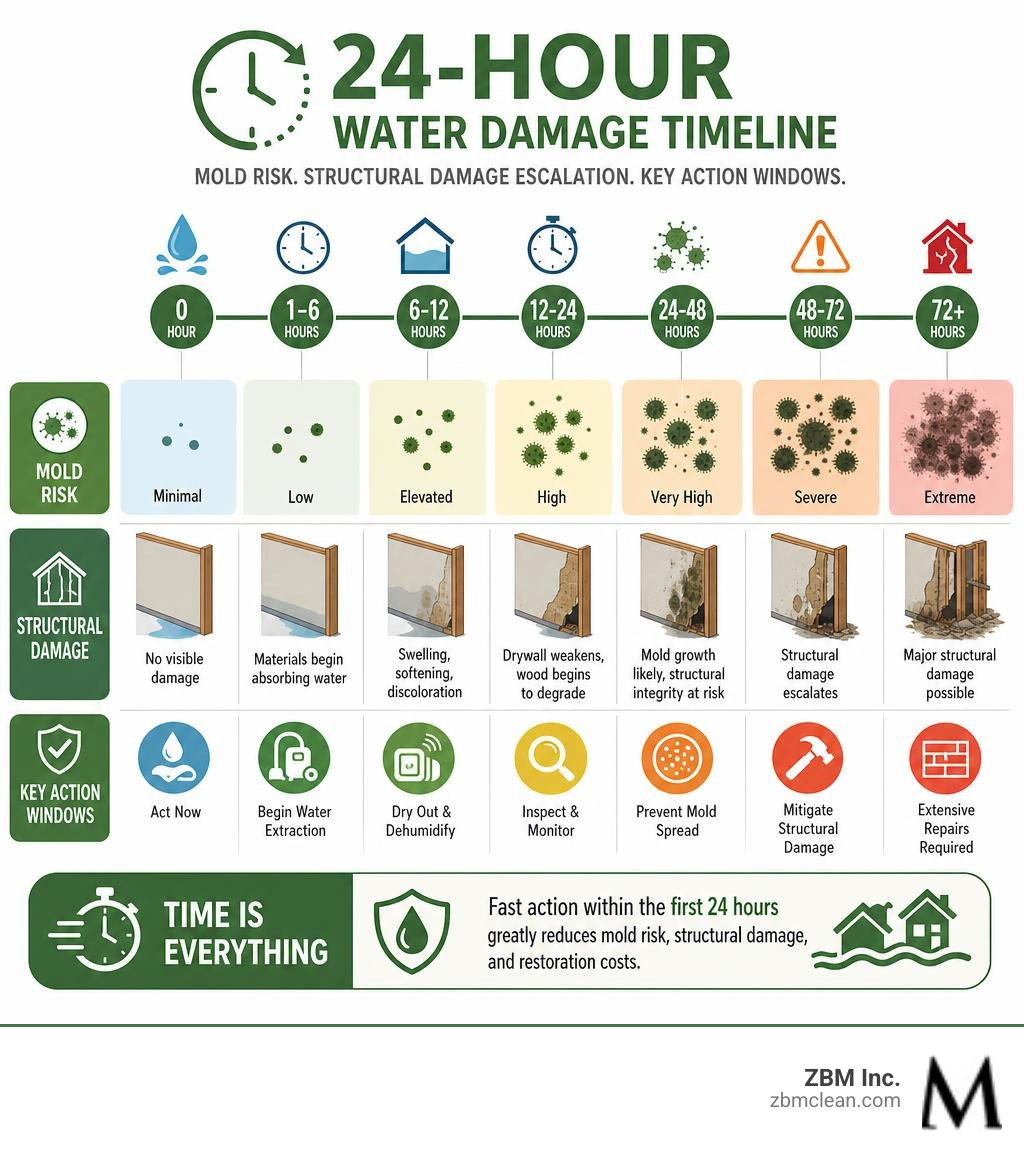
Water spreads fast. Saturated drywall weakens within hours. Mold can begin growing in as little as 24 to 48 hours after water intrudes into a structure. For a commercial property manager in Watertown, WI — already juggling tenants, maintenance schedules, and compliance requirements — a burst pipe or flooded basement can quickly spiral into a crisis that disrupts operations for weeks.
The good news: a qualified local restoration company can stop the damage in its tracks, handle your insurance documentation, and get your property back to normal — if you act quickly.
I’m Terry Zastrow, owner of ZBM, Inc., an IICRC-certified firm with approximately 30 years of experience providing disaster recovery and restoration services to property managers, municipalities, and private-sector clients — including helping clients navigate water damage restoration companies near me searches to find qualified, certified help fast. In the sections below, I’ll walk you through everything you need to know to protect your property and make the right call.
Simple water damage restoration companies near me glossary:
Understanding Water Damage: Categories, Risks, and the Need for Speed
When water invades your property, it does not just sit there. It actively migrates, soaking into porous materials like drywall, wooden framing, carpet padding, and subflooring. This process triggers a race against time.
Water mitigation—the immediate process of stopping water inflow, removing standing water, and drying the structure—must begin immediately. If you delay, you face two massive threats: progressive structural damage and rapid mold growth.

| Water Category | Contamination Level | Common Sources | Cleanup Complexity |
|---|---|---|---|
| Category 1 (Clean Water) | Sanitary source; no immediate health risk. | Broken supply lines, tub overflows, melting snow. | Low; focus is on rapid extraction and drying. |
| Category 2 (Gray Water) | Contains chemical, biological, or physical contaminants. | Dishwasher discharge, washing machine overflow, sump pump failure. | Moderate; requires thorough sanitization of surfaces. |
| Category 3 (Black Water) | Highly unsanitary; contains pathogens and toxins. | Sewage backup, rising floodwaters from rivers/streams. | High; requires specialized biohazard cleanup protocols. |
Why You Need Professional Water Damage Restoration Companies Near Me Immediately
It is tempting to look at a wet basement and think, “I have a wet/dry vac and a couple of box fans. I can handle this myself.” However, DIY attempts often cost more in the long run.
Clean water can start producing mold spores in under 24 hours. Once mold spores take root, they spread rapidly through the air and behind wall cavities, creating serious health risks for building occupants—especially children, seniors, and those with respiratory issues.
Furthermore, household fans only dry the surface. Moisture remains trapped inside wall cavities and under flooring, weakening structural wood and rusting metal fasteners. Professional restoration companies use thermal imaging and moisture meters to find this hidden water, ensuring the building is dried completely to certified standards. For more hands-on advice on keeping your property safe, check out our Home water damage restoration tips.
The Three Categories of Water Damage and How They Affect Cleanup
The category of water dictates the entire cleanup process.
- Category 1 (Clean Water): This water comes from a clean source, like a burst water supply pipe. While it is the easiest to clean, it quickly degrades into Category 2 or 3 if left standing for more than 24 hours.
- Category 2 (Gray Water): This water contains some level of contamination and can cause discomfort or sickness if consumed. Think of soapy water from a washing machine or dishwater.
- Category 3 (Black Water): This is highly contaminated water that contains disease-causing pathogens, bacteria, and toxins. A sewage backup or rising outdoor floodwater falls into this category. Cleaning Category 3 water requires specialized biohazard cleanup gear, professional sanitizers, and the removal of contaminated porous materials.
If you are dealing with contaminated water in Dodge or Jefferson County, you should immediately contact a professional team equipped for the task. You can learn more about local options by visiting our page on Disaster restoration services dodge jefferson county wi.
The Step-by-Step Professional Water Damage Restoration Process
When a professional crew arrives at your home or business, they follow a highly structured, scientific drying process. This ensures that every drop of moisture is accounted for and that the structural integrity of your property is preserved.

Phase 1: Emergency Contact, Assessment, and Water Extraction
The restoration process begins the moment you call. Because water damage is progressive, reputable companies maintain 24/7 emergency hotlines.
Once technicians arrive on-site, they perform a comprehensive assessment. They do not just look at what is visibly wet; they use thermal imaging cameras (FLIR) and specialized moisture meters to map out the migration of water behind drywall, under hardwood floors, and inside crawlspaces.
Once the boundaries of the damage are established, the physical water extraction begins. Crews use truck-mounted water extraction units and heavy-duty submersible pumps to remove standing water quickly. This is the most critical step in the mitigation phase, as extracting liquid water is hundreds of times faster and more efficient than trying to evaporate it with dehumidifiers. If you want to understand what you can safely do while waiting for a crew to arrive, consult our Water damage cleaning guide for homeowners.
Phase 2: Drying, Dehumidification, and Structural Rebuilding
After standing water is removed, the property may look dry, but the structural materials are still saturated.
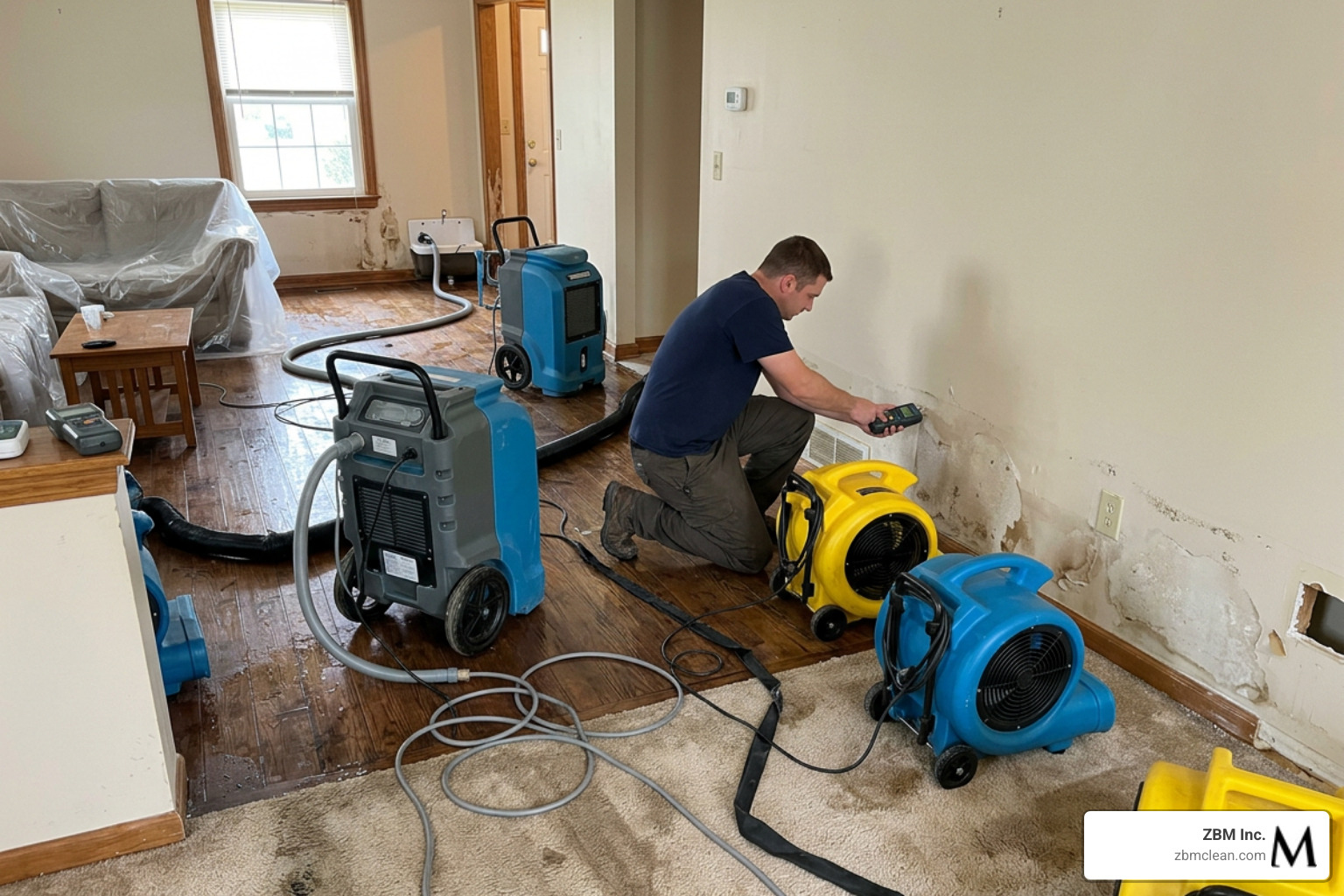
Crews will place commercial-grade Low-Grain Refrigerant (LGR) dehumidifiers and high-velocity air movers throughout the affected areas. The air movers draw moisture out of the walls and floors, while the dehumidifiers pull that moisture out of the air, preventing secondary mold growth.
Once the drying phase is complete—typically taking 3 to 5 days—the reconstruction phase begins. This involves replacing permanently damaged drywall, repairing buckled flooring, and painting. By working with a full-service provider that handles both the dry-out and the reconstruction, you avoid the headache of managing multiple contractors. For professional assistance with this entire process, check out our Disaster restoration services dodge jefferson county wi page.
How to Choose the Best Water Damage Restoration Companies Near Me
When searching for water damage restoration companies near me, it is easy to feel overwhelmed by the sheer number of results. However, not all restoration companies are created equal. Making the wrong choice can lead to prolonged delays, poor workmanship, and unresolved mold issues.
Vetting Water Damage Restoration Companies Near Me for Credentials
To protect your property investment, look for the following qualifications before signing a contract:
- IICRC Certification: The Institute of Inspection Cleaning and Restoration Certification (IICRC) sets the global standards for the restoration industry. Ensure the company is an IICRC-certified firm.
- WRT and ASD Certifications: Individual technicians should hold specific certifications, such as Water Damage Restoration Technician (WRT) and Applied Structural Drying (ASD).
- Licensed, Bonded, and Insured: This protects you from liability in case of accidents or property damage during the restoration process.
- Local Presence: Choose a company with a physical office in your region (such as Watertown, WI, Lake Mills, WI, or Minocqua, WI) to ensure a rapid emergency response time.
For a deeper dive into choosing the right contractor, check out The homeowners guide to vetting disaster clean up companies.
Navigating Homeowners Insurance and Restoration Costs
One of the most stressful parts of dealing with property damage is managing the insurance claim. Fortunately, professional restoration companies handle this regularly.
The average cost of a water damage restoration project typically ranges from $2,000 to $5,000, while the average cost of simply removing standing water was approximately $3,300 in 2022.
Standard homeowners insurance policies generally cover water damage if it is “sudden and accidental”—such as a burst pipe or a washing machine line failure. However, gradual damage caused by unresolved leaks or poor maintenance is typically excluded.
To ensure a smooth claims process, your restoration provider should document the loss thoroughly with photos, moisture logs, and detailed estimates, coordinating directly with your insurance adjuster. To find out more about what to look for before hiring a team to help with your claim, read our guide on Flood cleanup companies near me what to look for before you hire.
Preventing Water Damage in Your Home or Business
While we are always ready to help you recover from a disaster, we would much rather help you prevent one in the first place. Regular property maintenance is the best defense against water damage.
- Test Your Sump Pump: Sump pump failure is a leading cause of basement flooding, especially during heavy spring rains in Southeast Wisconsin. Test your pump at least twice a year and consider installing a battery-powered backup system.
- Insulate Exposed Pipes: Wisconsin winters are notoriously harsh. Insulate pipes in unheated crawlspaces, attics, and exterior walls to prevent them from freezing and bursting.
- Maintain Humidity Control: Keep interior humidity levels between 45% and 50% to prevent condensation and mold growth.
- Inspect Appliances regularly: Check the supply hoses on your washing machine, dishwasher, and refrigerator ice maker for signs of cracking or wear.
For commercial property managers looking to safeguard their facilities, we have compiled a dedicated list of Commercial water damage restoration tips.
Frequently Asked Questions About Water Damage Restoration
We hear many of the same questions from stressed property owners. Here are some quick, straightforward answers to help you make informed decisions.
What should I do immediately after discovering water damage?
Your first priority is safety.
- Ensure Safety: Avoid entering rooms with standing water if the electricity is still on. Turn off the power at the breaker panel if it is safe to do so.
- Stop the Source: If the water is coming from a burst pipe or appliance, turn off the main water shutoff valve immediately.
- Document Everything: Take clear photos and videos of the standing water and damaged belongings for insurance purposes.
- Call a Professional: Contact a certified restoration company immediately to start the extraction process.
For a comprehensive step-by-step checklist, read our guide on What to do immediately after a disaster damages your property.
How long does the water damage restoration process typically take?
The timeline depends on the severity of the damage, but a typical residential project in Wisconsin follows this general schedule:
- Drying and Dehumidification: 3 to 5 days.
- Reconstruction and Repairs: 1 to 2 weeks, depending on the availability of replacement materials and the extent of drywall or flooring damage.
For a detailed breakdown of what to expect during a large-scale recovery, consult our Disaster restoration guide 2026.
How much does professional water damage restoration cost?
As mentioned, average costs range from $2,000 to $5,000, depending on the category of water, the affected square footage, and how long the water sat before mitigation began. Attempting a DIY cleanup to save money often leads to hidden mold, which can cost tens of thousands of dollars to remediate later.
Conclusion
When water strikes your home or business, you do not have time to waste. You need a trusted, local partner who understands the unique challenges of properties in Watertown, Lake Mills, Dodge County, Jefferson County, and throughout Southeastern Wisconsin.
At ZBM Inc., we are a family-owned, licensed, bonded, and insured team of certified professionals. We provide full-service disaster recovery, commercial cleaning, biohazard cleanup, and hoarding cleanup. We do not just dry out your property; we handle the entire reconstruction process and work directly with your insurance company to make the recovery as seamless as possible.
If you are facing a water emergency or want to prepare a disaster response plan for your property, do not wait. Contact us today or explore our Disaster restoration services dodge jefferson county wi to learn how we can help you restore your property and your peace of mind.