Common Causes of Emergency Water Damage Watertown
In our experience serving Watertown, WI, and the surrounding areas like Lake Mills and Dodge County, water damage rarely has a single “season.” While the triggers change, the threat remains constant. Understanding what causes emergency water damage Watertown is the first step in prevention and rapid response.
The most frequent culprits we encounter include:
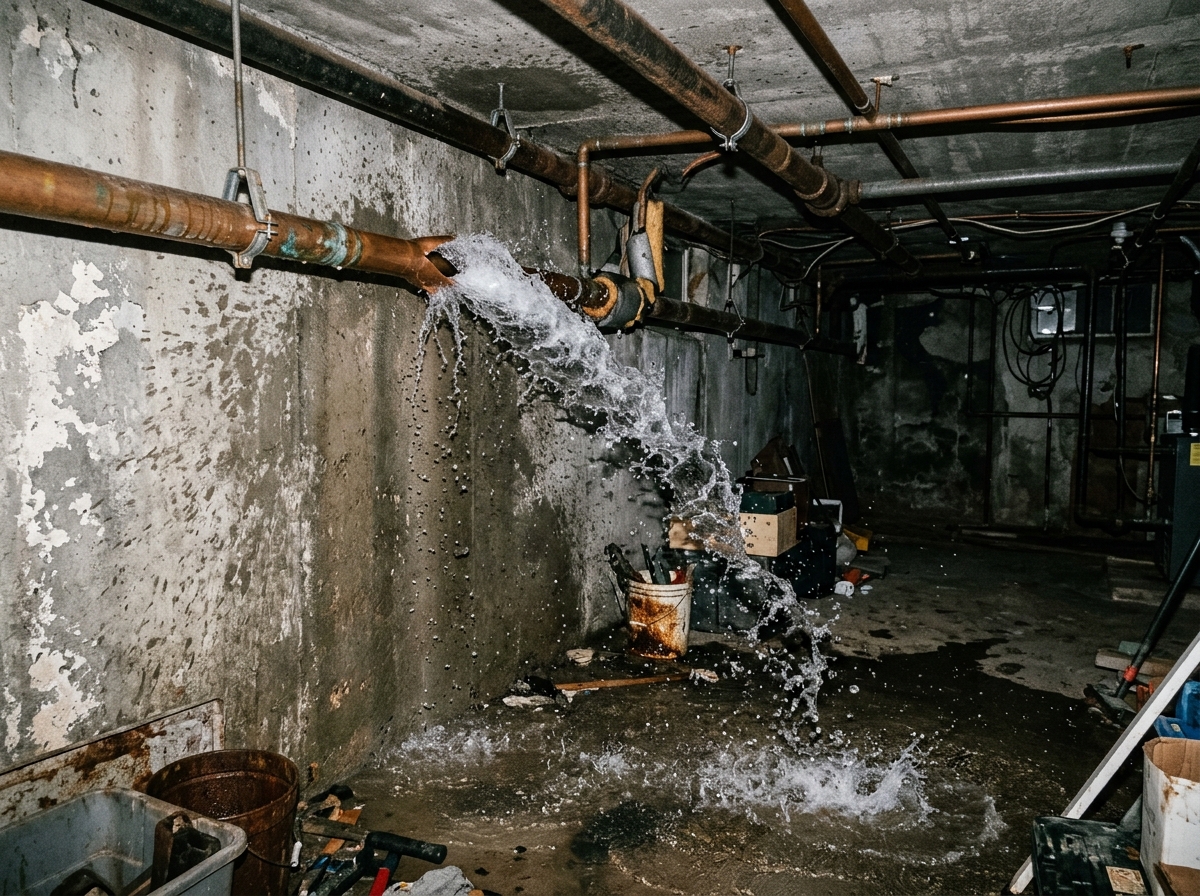
- Frozen and Burst Pipes: Wisconsin winters are legendary for their brutality. When temperatures plunge, uninsulated pipes in crawl spaces or outer walls can freeze. As the ice expands, the pressure causes the metal or PVC to rupture. Once the thaw begins, gallons of water release into the home in minutes.
- Sump Pump Malfunction: Many homes in the Watertown area rely on sump pumps to keep groundwater out of basements. During heavy rainstorms or rapid snowmelt, these pumps can fail due to mechanical breakdown or power outages, leading to instant basement flooding.
- Appliance Failures: Dishwashers, washing machines, and water heaters have a finite lifespan. A ruptured supply line on a second-floor laundry room can migrate through floorboards and ceilings, damaging multiple levels of a property.
- River Flooding and Surface Water: Properties near the Rock River or in low-lying areas of Jefferson County are susceptible to rising water levels during the spring thaw or following intense summer downpours.
To help you understand the severity of the situation, we categorize water into three types based on contamination levels:
| Category | Description | Common Sources | Risk Level |
|---|---|---|---|
| Category 1 (Clean) | Water from a clean source; poses no immediate threat if processed quickly. | Broken supply lines, tub overflows (no suds), falling rainwater. | Low (if dried within 24 hours) |
| Category 2 (Gray) | Contains significant contamination; may cause discomfort or illness if consumed. | Dishwasher or washing machine discharge, toilet overflow (urine only). | Moderate |
| Category 3 (Black) | Grossly unsanitary; contains pathogenic agents, bacteria, and viruses. | Sewage backups, river flooding, standing water with microbial growth. | High / Biohazard |
How Local Weather Triggers Emergency Water Damage Watertown
The geography of Southeastern Wisconsin plays a major role in property risks. Our “freeze-thaw” cycles are particularly damaging. In the winter, ice dams form when heat escapes through the roof, melting snow that then refreezes at the gutters. This creates a reservoir of water that backs up under shingles and into your attic.
When spring arrives, the “Spring Thaw” combined with heavy rainfall often oversaturates the ground. Since the soil is still partially frozen, it cannot absorb the moisture, sending it directly against your foundation or into your basement. You can learn more about the Watertown community and its history to understand how the local landscape influences drainage and infrastructure.
Residential vs. Commercial Water Risks
While a homeowner might worry about a finished basement, commercial property managers face different stakes.
- High-Rise and Multi-Unit Leaks: In apartment complexes, a leak on the top floor can affect a dozen units below, requiring massive coordination for extraction and drying.
- Warehouse and Retail: Large open spans often have flat roofs prone to pooling and leaks. Furthermore, commercial water damage often involves high-value inventory or sensitive electronic data that requires specialized commercial water damage restoration tips to salvage.
- Aging Infrastructure: Many of Watertown’s historic downtown buildings feature older plumbing that is more prone to pinhole leaks and catastrophic failure than modern builds.
Immediate Steps and Professional Response Times
When you discover standing water, the clock is your biggest enemy. Professional restoration companies typically aim for a 60-minute arrival time because the first hour is the “Golden Hour” of mitigation.
At ZBM Inc., we emphasize that your safety comes first. Never enter a flooded room if the electricity is still on, as water and outlets are a lethal combination. If it is safe to do so, locate your main water shut-off valve—usually located near the water meter—and turn it clockwise to stop the flow.
For a detailed walkthrough, check out our guide on 5 steps to cleaning up water from your home.
Essential Actions for Emergency Water Damage Watertown Homeowners
If you are waiting for our team to arrive, there are a few things you can do to mitigate the loss:
- Stop the Flow: If the source is a burst pipe, shut off the main. If it’s a localized appliance leak, shut off the valve behind the unit.
- Document the Scene: Take clear photos and videos of the standing water and the damaged items. This is vital for your insurance claim.
- Lift Furniture: Place aluminum foil or wood blocks under furniture legs to prevent “wicking,” where water travels up the wood and stains your carpet.
- Remove Area Rugs: Pick up wet rugs and move them to a garage or driveway to prevent them from bleeding dye into the permanent flooring.
If you are dealing specifically with a plumbing failure, see these 6 tips for cleaning up after a burst pipe.
The Restoration Process: Extraction, Drying, and Remediation
Professional restoration is a science, not just a cleanup job. It requires IICRC (Institute of Inspection, Cleaning and Restoration Certification) standards to ensure your home is actually dry, not just “dry to the touch.”

Advanced Equipment and Technology
We don’t just use fans. We use a “closed-loop” drying system that involves:
- Submersible Pumps: For heavy flooding (over 2 inches), these pumps move thousands of gallons per hour.
- LGR (Low Grain Refrigerant) Dehumidifiers: These are high-powered units that pull moisture out of the air even in cool, damp environments like Wisconsin basements.
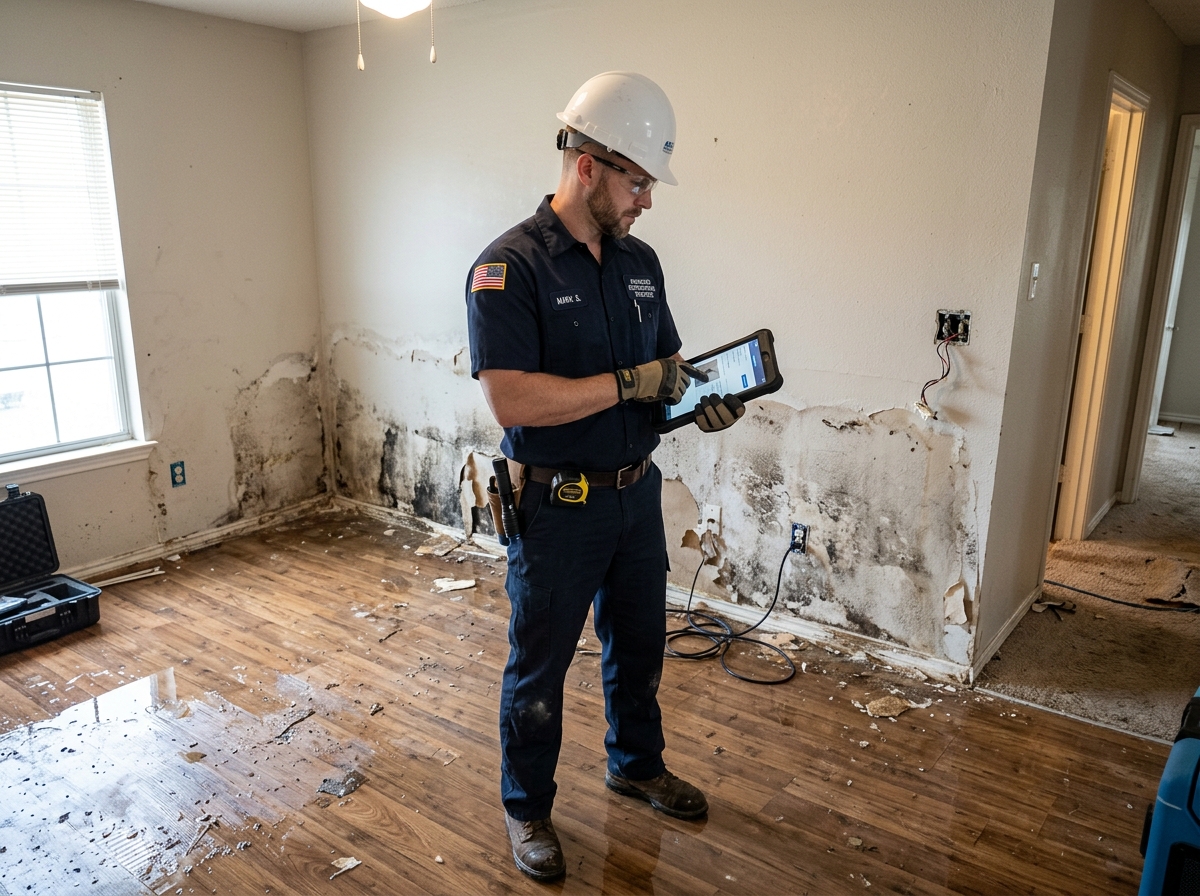
- Infrared Cameras and Moisture Meters: Water hides behind baseboards and under cabinets. Thermal imaging allows us to see “cold spots” that indicate moisture without tearing down your walls.
- HEPA Air Scrubbers: These remove airborne spores and particles, ensuring the air you breathe during the process is clean.
For more details on the professional approach, refer to our water damage cleaning guide for homeowners.
Content and Structural Recovery
Our goal is always “restore over replace.”
- Hardwood Floors: Using specialized floor mats and vacuum systems, we can often draw moisture out of the wood to prevent “cupping” or “buckling.”
- Drywall: If the water was clean and caught early, we may be able to dry the wall in place. If it was Category 3 water, the drywall must be removed at least 12 inches above the water line.
- Pack-Out Services: If the damage is extensive, we carefully inventory, pack, and move your belongings to a climate-controlled facility for cleaning and storage while your home is being repaired.
Health Risks and Specialized Cleanup Challenges
Ignoring water damage is a recipe for health problems. Mold doesn’t need weeks to grow; it only needs 24 to 48 hours of moisture and a food source (like the paper on your drywall).
Handling Sewage Backups and Biohazards
A sewage backup is a medical emergency for your home. “Black water” contains salmonella, E. coli, and various viruses. DIY cleanup is never recommended for Category 3 water. Professional remediation involves:
- Full PPE (Personal Protective Equipment) including suits and respirators.
- Biocide and antimicrobial applications to kill pathogens.
- Safe disposal of “porous” materials like carpet and padding that cannot be fully sanitized.
If you’re dealing with a winter-related plumbing disaster, learn more about frozen pipe cleanup in WI. You can also find local context and neighborhood info through local Watertown area insights.
Mold Prevention and Remediation
Mold causes respiratory issues, headaches, and can exacerbate asthma. During the drying process, we apply EPA-registered antimicrobials to prevent spores from taking root. If mold is already present, we establish “containment”—using plastic sheeting and negative air pressure—to ensure spores don’t spread to the rest of your house during the cleanup.
Navigating Costs and Insurance Claims in Watertown
One of the most stressful parts of emergency water damage Watertown is the financial aspect. Nationally, water damage repairs can range from $450 to $7,000, with an average around $3,000. In the Watertown and Boston areas, professional cleanup costs typically range from $3.75 to $7.00 per square foot.
Understanding Restoration Pricing
The cost is determined by:
- The Category of Water: Black water is significantly more expensive to clean than clean water due to the required safety protocols.
- The Class of Damage: This refers to the evaporation rate (how much of the room is wet). A flooded basement (Class 4) costs more than a small leak in a bathroom (Class 1).
- Reconstruction: Mitigation (drying) is one cost; reconstruction (putting back the carpet and drywall) is another.
We recommend working with a company that offers direct insurance billing. This means we work directly with your adjuster, providing the thermal images and moisture logs they need to approve your claim quickly. For business owners, check out these home water damage restoration tips for better preparation.
Frequently Asked Questions about Watertown Restoration
How long does the drying and restoration process usually take?
The drying phase typically takes 3 to 5 days. If reconstruction is required (replacing flooring or drywall), the total project can take anywhere from one to three weeks depending on the availability of materials.
Does standard homeowners insurance cover sewage backup in Watertown?
Not always. Many standard policies require a specific “Sewer Backup Rider.” We recommend reviewing your policy annually to ensure you are covered for sump pump failure and sewage issues, as these are common in Jefferson and Dodge Counties.
What are the primary health risks of delayed water extraction?
Beyond mold, standing water can become a breeding ground for bacteria and insects. Structurally, water-saturated wood loses its load-bearing capacity, which can lead to sagging floors or collapsed ceilings.
Conclusion
When you are facing emergency water damage Watertown, you don’t just need a cleaning crew — you need experts who understand the local climate, the local architecture, and the science of drying.
ZBM Inc. is a family-owned, licensed, bonded, and insured team of certified professionals. We’ve spent decades helping our neighbors in Watertown, WI, Lake Mills, and across Southeastern Wisconsin recover from the unthinkable. From the initial extraction to the final coat of paint, we are here to make your property whole again.
If you’re standing in water right now, don’t wait for the mold to start. Contact ZBM Inc. for Emergency Water Damage Restoration immediately. We are ready to respond 24/7 to protect your home or business.