
An Office Cleaning Schedule Template You Can Use Today
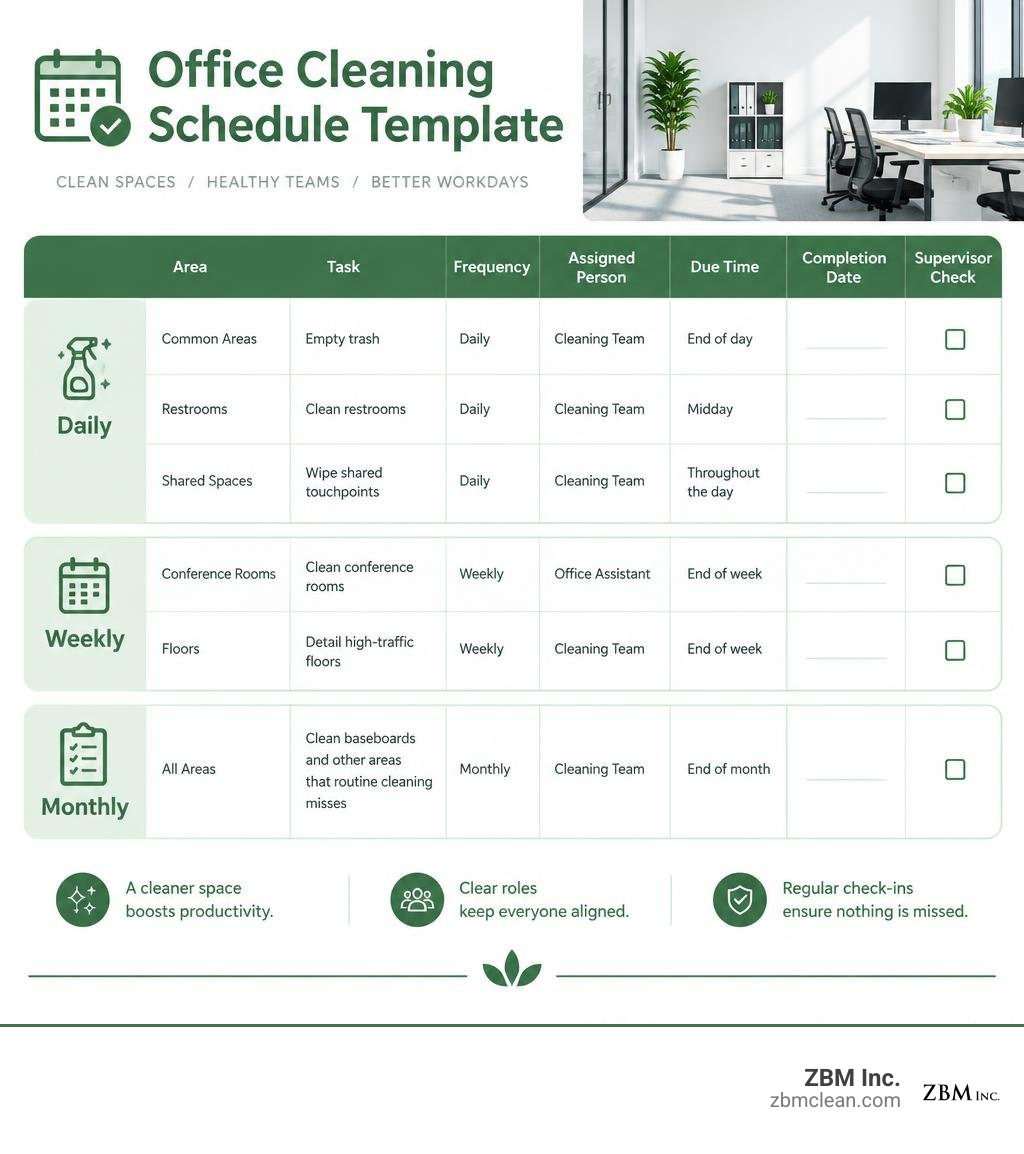
A well-designed office cleaning schedule template helps facility managers evaluate commercial cleaning providers and verify that contracted work is actually being completed. The most useful templates include columns for area, task, frequency, assigned technician, due time, completion date, and supervisor verification. When reviewing a cleaning company’s proposed schedule, look for these elements:
- Daily: Empty trash, clean restrooms, and disinfect shared touchpoints.
- Weekly: Sanitize conference rooms and detail high-traffic floors.
- Monthly: Address baseboards and other areas that routine cleaning misses.
A schedule works best when a professional provider assigns clear ownership for every task and documents what was done, what was missed, and what needs follow-up. Rather than building and managing this system internally, many businesses rely on a certified commercial cleaning company to supply the schedule, perform the work, and verify the results.
I’m Terry Zastrow, owner of certified ZBM Inc., with nearly 30 years of experience serving public and private facilities. I’ll show you what to look for in an office cleaning schedule template and how a professional provider can put it to work for your facility.
Terms related to office cleaning schedule template:
- office cleaning schedule
- daily cleaning checklist for office
- office cleaning checklist
Core Elements of an Effective Office Cleaning Schedule Template
Maintaining a pristine work environment requires more than good intentions. A functional schedule acts as the operational backbone for workplace health, safety, and productivity. Without a structured plan, tasks get overlooked, germs spread across shared spaces, and employee morale drops.
When evaluating a commercial cleaning provider, look for a schedule that includes clear accountability columns:
- Specific Area & Fixture: Explicitly identify the zone (e.g., Breakroom Refrigerator, Boardroom Table).
- Task Description & Standard: Outline the exact expectation, including required chemical contact times.
- Designated Frequency: Define how often the task occurs (daily, weekly, monthly, or quarterly).
- Assigned Technician / Provider: Name the exact party responsible for execution.
- Completion Timestamp & Sign-Off: Provide a physical or digital initial box for accountability.
- Supervisory Quality Verification: Reserve space for inspections to verify that standards are achieved.
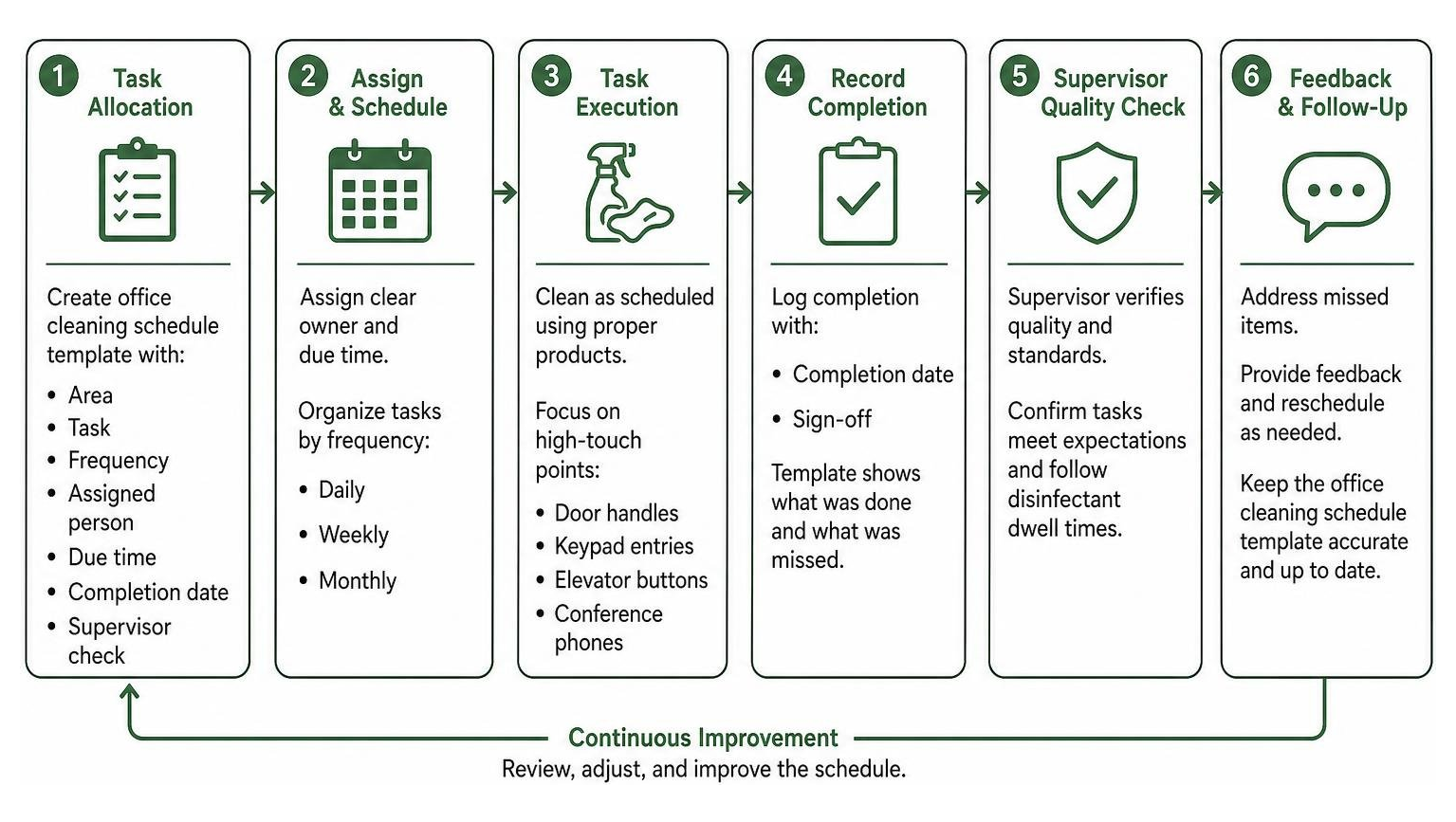
High-touch points require special attention. Items such as door handles, keypad entries, elevator buttons, and conference phones harbor substantial bacterial loads. According to official COVID-19 cleaning guidelines for workplaces, high-touch surfaces should be disinfected at least twice daily during periods of elevated community viral transmission. Meeting these standards requires understanding disinfectant dwell times—the duration a product must remain visibly wet on a surface to kill target pathogens.
Managing this level of rigor in-house is exceptionally time-consuming. When internal teams attempt to juggle complex chemical dilutions and strict dwell-time protocols alongside their core business duties, critical sanitation steps are often missed. Partnering with a professional commercial cleaning service ensures these technical standards are consistently met without burdening your administrative staff.
Structuring Daily, Weekly, and Monthly Tasks in Your Office Cleaning Schedule Template
Organizing duties by cadence prevents staff burnout and avoids facility degradation. Routine daily sanitization keeps pathogens at bay, while weekly and monthly rotations tackle accumulated grime and deep structural maintenance. A professional provider’s schedule should clearly separate these frequencies.
| Frequency | Target Areas & Tasks | Key Focus & Standards |
|---|---|---|
| Daily | Restrooms, kitchenettes, waste bins, entry handles, lobby counters | Emptying trash, restocking paper goods, sanitizing high-touch surfaces, sweeping and mopping hard floors. |
| Weekly | Conference rooms, interior glass, keyboards, breakroom appliances, edge vacuuming | Sanitizing boardroom tables, removing smudges from glass doors, detailing high-traffic floor lanes. |
| Monthly | Baseboards, high-reach HVAC vents, upholstery, deep tile scrubbing, light fixtures | Dusting return grilles, extracting spots from fabric chairs, machine-scrubbing restroom grout. |
| Quarterly / Bi-Annual | Exterior windows, wall-to-wall carpet extraction, hard floor strip & wax | Deep restorative care utilizing industrial truck-mounts and rotary floor machines. |
While daily trash removal and surface wiping can keep an office presentable, deep hygiene demands specialized skills. Complex maintenance—such as hot-water carpet extraction, high-level vent sanitization, and hard-floor restoration—cannot be properly resolved with standard household supplies. Attempting to handle these heavy tasks in-house often leads to carpet mold, damaged subflooring, or scratched finishes. Reviewing a complete commercial office cleaning checklist reveals the breadth of commercial machinery required, which is why facilities rely on professional crews for an office deep cleaning checklist.
Selecting the Right File Formats for Your Office Cleaning Schedule Template
Selecting the proper format determines how easily your team can review and verify the work a cleaning provider performs.
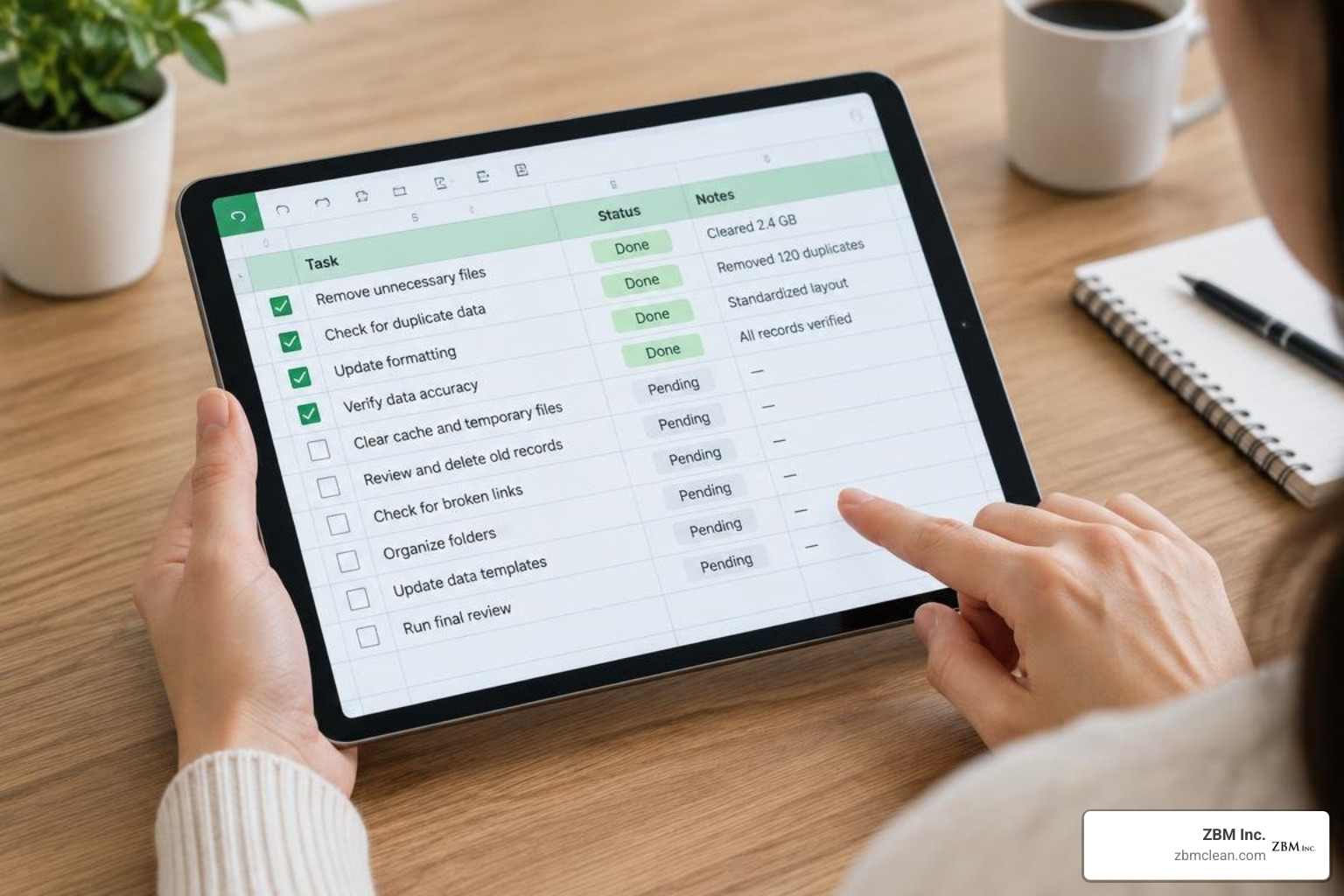
- Cloud Spreadsheets (Google Sheets / Microsoft Excel): Ideal for facility managers overseeing multiple shifts or buildings. Real-time updates, conditional formatting (flagging overdue items in red), and live dashboards provide instant oversight over completion rates.
- Printable PDF Checklists: Best suited for mounting directly on the back of supply closet doors, janitorial carts, or inside commercial restroom stalls. Laminated sheets allow cleaners to use dry-erase markers for real-time sign-offs.
- Word Document Forms: Helpful when reviewing initial service contracts or adapting service-level agreements before a provider transfers them into operational tools.
No matter which format you choose, simplicity is critical. Incorporating automated status metrics (e.g., Open, In Progress, Completed, Overdue) ensures facility directors can evaluate hygiene standards at a glance.
Customizing Task Allocations for Different Office Layouts
A boilerplate schedule rarely fits every business model. Cleanliness requirements vary dramatically based on square footage, visitor volume, and industry-specific compliance demands. A qualified commercial cleaning company should tailor its schedule to your specific layout.
- Small Professional Suites (Law Offices, Accounting Agencies): These spaces typically feature dedicated desks and moderate foot traffic. Focus heavily on private office dusting, client-facing meeting rooms, and nightly restroom sanitization.
- Corporate Headquarters & Multi-Floor Facilities: Large layouts require zoned scheduling. Staggering high-traffic corridor cleaning, managing dedicated breakrooms on every floor, and coordinating central lobby maintenance prevent disruptions to daily operations.
- Modern Co-Working Hubs: Shared hot-desks and rotating phone booths demand frequent touchpoint turnaround. Hot-desks require sanitization between users, along with continuous attention to shared espresso bars and high-density soft seating.
To keep these distinct layouts running efficiently, facilities often refer to standardized facility maintenance schedules to establish accurate labor-hour benchmarks for each zone.
Implementing and Monitoring Your Workplace Cleaning Plan
Rolling out a new cleaning schedule requires clear operational processes. Distribute the finalized document to all facility stakeholders, verify that all safety data sheets (SDS) are updated in custodial closets, and ensure cleaning chemical inventories are properly stocked.
When organizations manage sanitation internally, supply shortages and inconsistent cleaning methods frequently derail the schedule. Certified providers eliminate this administrative headache by supplying commercial-grade neutral cleaners, hospital-grade disinfectants, microfiber color-coded systems, and HEPA-filtered vacuum units. If your team struggles to balance operational duties with facility upkeep, bringing in certified experts to manage your routine office sanitization guarantees consistent, verified results. We provide dedicated commercial cleaning services across Dodge and Jefferson County to ensure facilities remain compliant and safe year-round.
Assigning Roles, Tracking Completion, and Supervisory Oversight
A schedule only works if someone is accountable for every line item. When working with a professional cleaning company, establish clear governance by defining specific roles:
- Building Occupiers / Office Admins: Establish environmental expectations, approve schedule budgets, and report emerging facility issues.
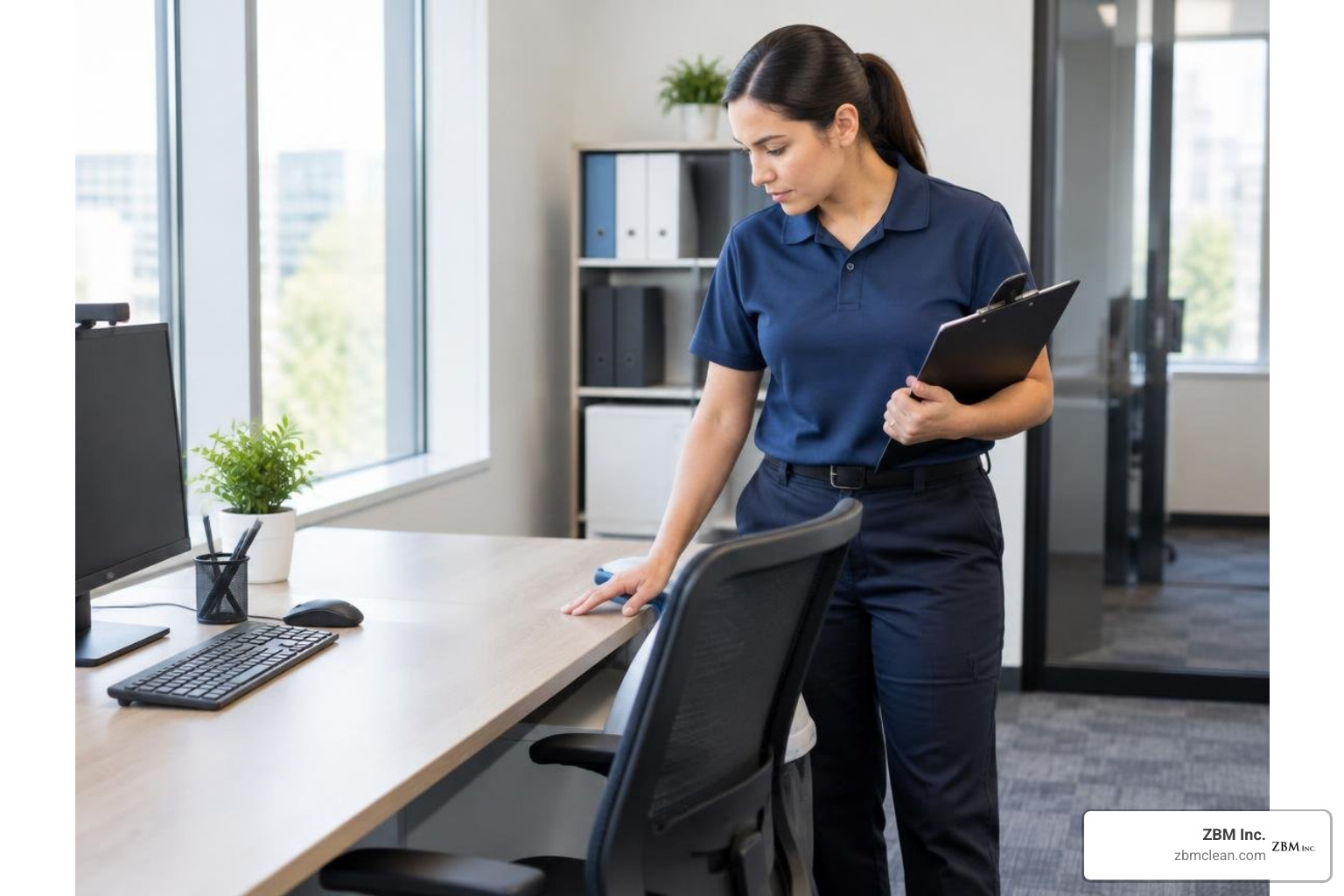
- Cleaning Technicians: Execute daily, weekly, and monthly tasks precisely according to documented chemical contact protocols. Technicians sign off on each specific row upon completion.
- Quality Supervisors: Perform scheduled and unannounced quality audits. Supervisors inspect physical cleanliness, verify supply replenishment, review sign-off sheets, and sign off as the final authority.
Supervisory inspection adds essential oversight. Having a certified supervisor review high-touch surfaces with ATP bioluminescence meters or blacklight tracking ensures that areas are truly hygienic, rather than just appearing tidy on the surface.
Avoiding Common Pitfalls in Workplace Sanitation Management
When building or updating your maintenance schedule, avoid these common management mistakes:
- Using Vague Task Descriptions: Generic phrases like “clean conference room” lead to corner-cutting. Use explicit directives such as “disinfect conference table with neutral virucide (10-minute dwell time), vacuum under seating, and empty waste bin.”
- Underestimating Task Durations: Rushing leads to cross-contamination. Allocating only 3 minutes to clean a heavily trafficked commercial restroom guarantees poor sanitation.
- Ignoring Hidden Harborages: Routine schedules often ignore high-risk zones. Keep an eye on commonly overlooked office cleaning tasks, such as sanitizing refrigerator door gaskets, dislodging dust from under desk cable organizers, and descaling water cooler dispensers.
- Failing to Adjust for Seasonal Demands: Winter weather brings road salt, slush, and elevated viral loads into office entryways. Update your schedule quarterly to account for wet weather floor care and increased flu season touchpoint sanitizing.
By pairing a structured schedule template with experienced, certified professionals, your facility can maintain pristine, healthy, and inviting spaces every day of the year.