Why Your Office Needs a Daily Cleaning Checklist Right Now
A daily cleaning checklist for office spaces is the simplest way to keep your workplace healthy, presentable, and running smoothly. Here’s what a solid daily checklist covers:
| Area | Key Daily Tasks |
|---|---|
| Workstations & Desks | Wipe surfaces, sanitize phones, keyboards, and mice |
| Restrooms | Disinfect toilets and sinks, restock soap and paper towels |
| Break Room / Kitchen | Wipe counters and appliances, empty trash, mop floors |
| Reception & Entryways | Disinfect door handles, clean glass, vacuum or mop floors |
| Trash & Floors | Replace bin liners, vacuum carpets, sweep and mop hard floors |
| High-Touch Surfaces | Sanitize light switches, elevator buttons, and shared equipment |
The numbers are hard to ignore. The average office desk harbors 400 times more bacteria than a toilet seat. Flu viruses can survive on hard surfaces for 24 to 48 hours. Without a consistent daily routine, germs spread fast through shared spaces — and productivity pays the price.
Research backs this up: 94% of workers report feeling more productive in a clean workspace, and 77% say they produce higher quality work in clean environments. A messy, grimy office isn’t just unpleasant — it’s a real business problem.
I’m Terry Zastrow, owner of ZBM Inc., a certified IICRC firm with approximately 30 years of experience developing and executing daily cleaning checklists for office environments across commercial and municipal properties. That hands-on experience is the foundation of everything in this guide.
Why a Daily Cleaning Checklist for Office Spaces is Essential
In our decades of serving Southeast Wisconsin, we’ve seen how a lack of routine can quickly turn a professional office into a breeding ground for illness. A daily cleaning checklist for office maintenance isn’t just about aesthetics; it’s about risk management. When you consider that 94% of employees feel more productive in a clean environment, the return on investment for a simple checklist becomes clear.
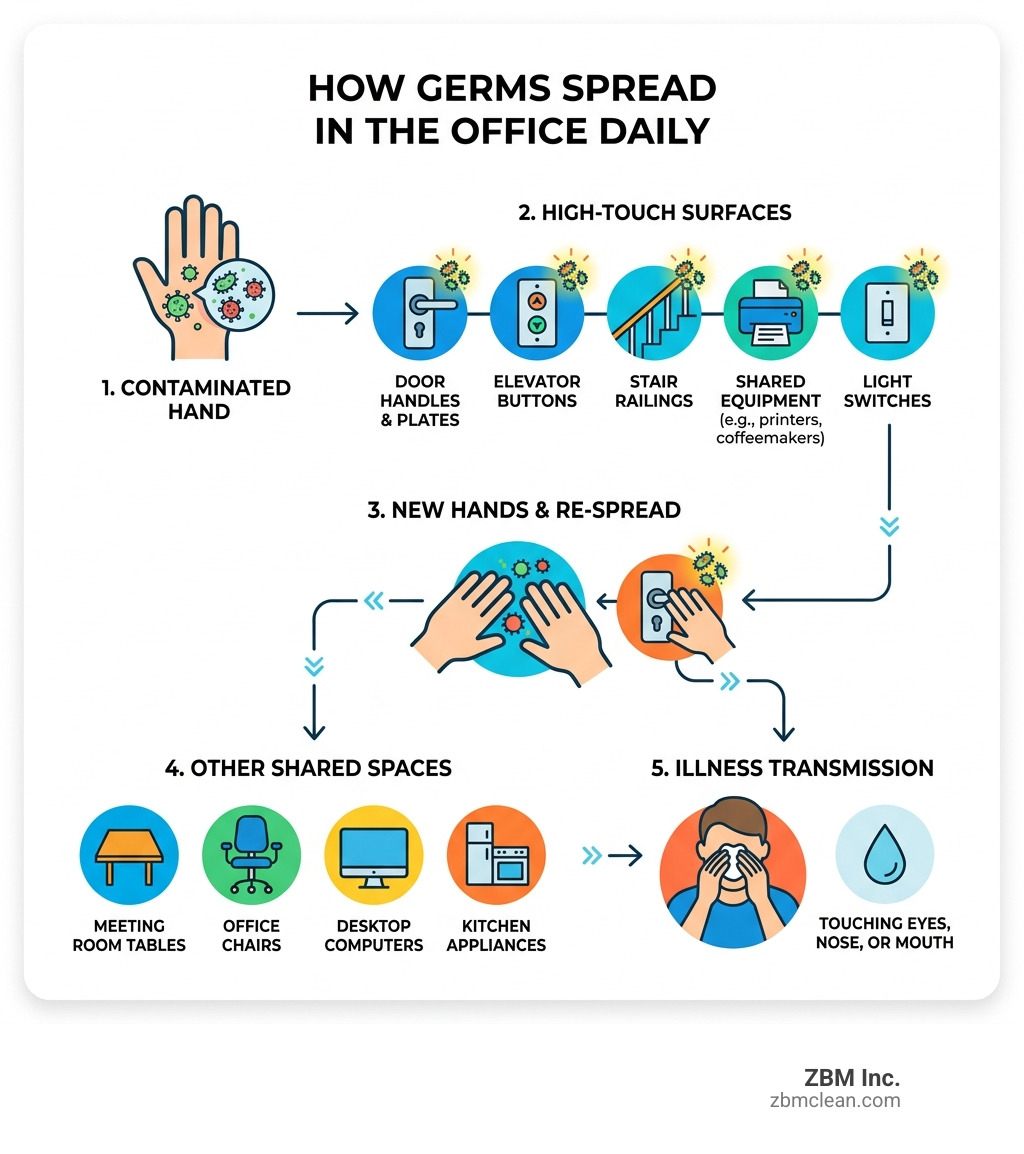
Bacteria and viruses don’t take days off. Because flu viruses can linger on hard surfaces for up to two days, a missed Tuesday cleaning could mean a half-empty office by Friday. By following 10 Germ Free Office Cleaning Tips For Businesses, we can create a defensive barrier that keeps your team healthy and focused.
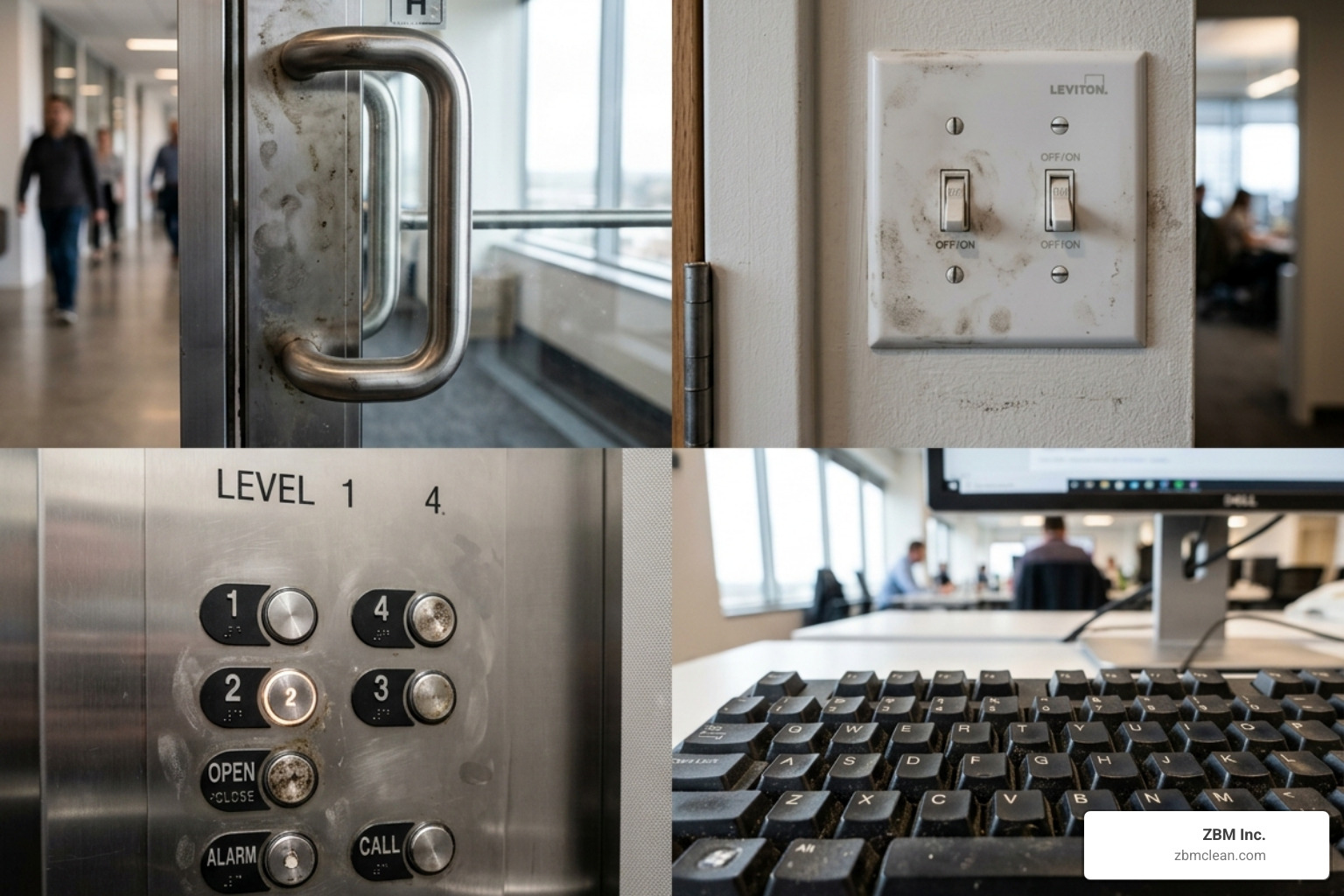
Identifying Top Germ Hotspots
Most people think the restroom is the “dirtiest” place in the office, but scientific research often suggests otherwise. According to Scientific research on surface pathogens, the real culprits are the items we touch hundreds of times a day without thinking.
- Keyboards and Mice: These are the primary offenders, often harboring crumbs and skin cells that feed bacterial growth.
- Doorknobs and Push Plates: Every person entering or leaving a room deposits a new layer of microbes here.
- Elevator Buttons: In multi-story buildings in Watertown or Lake Mills, these are touched by almost everyone, making them high-traffic “germ hubs.”
- Light Switches: Often overlooked during quick wipe-downs, these are handled by multiple staff members daily.
Impact on Employee Health and Quality of Work
A clean office does more than prevent the sniffles. It sets a standard for excellence. When 77% of workers say they produce higher quality work in a clean environment, you realize that dust on a monitor or a sticky breakroom table is a direct distraction from their core tasks.
Furthermore, poor air quality caused by dust buildup can lead to fatigue and headaches. Learning How To Keep Your Office Germ Free ensures that your company culture remains vibrant. Employees who see their workspace being cared for daily feel more valued, which directly boosts morale and retention.
Cleaning vs. Sanitizing vs. Disinfecting: The Daily Protocol
One of the most common mistakes we see in Watertown offices is using these three terms interchangeably. To follow a daily cleaning checklist for office standards effectively in 2026, you must understand the difference.
| Action | What it Does | When to Use Daily |
|---|---|---|
| Cleaning | Removes visible dirt, dust, and debris using soap and water. | First step for all surfaces; floors, windows, and desks. |
| Sanitizing | Reduces the number of bacteria to a safe level (usually 99.9%). | Food contact surfaces in the break room and kitchen. |
| Disinfecting | Kills 99.999% of germs, including viruses and fungi. | High-touch points, restrooms, and during flu season. |
Using the right Complete Office Sanitation Checklist And Tips For A Healthy Facility ensures you aren’t just moving dirt around, but actually making the space safer.
Essential Cleaning Supplies for 2026
To get the job done right, your cleaning closet needs more than just a generic spray bottle. We recommend a professional-grade kit:
- Color-Coded Microfiber Cloths: Use red for restrooms, green for kitchens, and blue for general desk areas to prevent cross-contamination. Microfiber is superior to cotton because its tiny fibers trap significantly more microbes.
- EPA-Registered Disinfectants: Ensure your products are rated to kill the specific pathogens you’re targeting.
- Alcohol-Based Wipes: Essential for sensitive electronics like monitors and tablets.
- HEPA Filter Vacuums: These trap 99.97% of particles, ensuring dust doesn’t just get blown back into the office air.
- PPE (Personal Protective Equipment): Gloves and masks protect the person doing the cleaning from harsh chemicals and germs.
For a deeper dive into modern tools, check out How To Keep Your Office Germ Free With Cleaning Checklist.
Application of Daily Disinfection Standards
Disinfecting isn’t a “spray and wipe” instant process. Most disinfectants require “dwell time” (or contact time) to actually kill viruses. If the label says 5 minutes, the surface must stay wet for that full duration. In high-traffic zones, we prioritize surface compatibility — ensuring that the chemicals used won’t damage expensive mahogany desks or specialized equipment.
The Ultimate Daily Cleaning Checklist for Office Areas
Implementing a daily cleaning checklist for office success requires a systematic approach. Whether you are in Dodge County or the Northwoods, consistency is your best friend. We recommend using a Standardized maintenance guide to ensure no corner is left untouched.

Essential Tasks for a daily cleaning checklist for office Workstations
Workstations are personal bubbles, but they are also germ factories. Every daily routine should include:
- Surface Wipe-down: Clear the desk of clutter and wipe with a damp microfiber cloth.
- Monitor Care: Use a dry microfiber or specialized electronic wipe to remove fingerprints and dust.
- Phone and Peripheral Sanitization: Disinfect the handset, keypad, mouse, and keyboard.
- Chair Maintenance: Wipe down armrests and adjustment levers.
For more expert advice, see these Tips From The Pros 5 Ways To Keep Your Office Clean.
Restroom and Break Room Hygiene Standards
These are the two highest-risk areas in any building. In the restroom, we don’t just “clean”; we sanitize and disinfect. This includes scrubbing toilets (inside and out), polishing sinks to remove mineral buildup, and ensuring all mirrors are streak-free.
In the break room, food debris is the enemy. It attracts pests and grows mold. Daily tasks must include:
- Wiping down the microwave (inside and out).
- Cleaning the coffee station and sink.
- Sanitizing refrigerator handles.
- Wiping all tables and chairs.
Refer to our specialized Restroom Sanitation Checklist for a 20-step breakdown of bathroom care.
Managing Trash and Floors in Your daily cleaning checklist for office Maintenance
Did you know there are over 420,000 different types of bacteria living on the average shoe? This is why floor maintenance is a non-negotiable daily task.
- Trash Management: Empty all bins daily. Never just “top off” a bag; replace the liner to prevent odors and leaks.
- Vacuuming: Focus on high-traffic entryways and the areas under desks where dust bunnies congregate.
- Mopping: Use a disinfectant solution on hard floors in the kitchen and restrooms.
For more details on floor care, see Office Cleaning Services 10 Useful Office Cleaning Tips From The Pros.
Implementing and Managing Your Daily Office Cleaning Schedule
A checklist is only useful if it’s followed. In our experience with businesses throughout Southeastern WI, the most successful companies use a “rotating matrix.” This assigns specific roles to different team members or cleaning staff to ensure accountability and prevent burnout.
Scheduling to Minimize Operational Disruption
No one wants a vacuum running during a high-stakes sales call. We recommend two main windows for daily cleaning:
- After-Hours: This is the “heavy lift” window. Vacuuming, mopping, and deep restroom scrubbing should happen when the office is empty.
- Midday Touch-ups: A quick 15-minute “patrol” at lunch to restock restroom supplies and wipe down the break room after the lunch rush.
By following a Comprehensive task list, you can ensure these windows are used efficiently.
Integrating Daily Tasks with Deep Cleaning Cycles
Daily cleaning keeps the “wolves at bay,” but it doesn’t replace the need for periodic deep cleans. We suggest a 4-8 week cycle for tasks like:
- Cleaning HVAC vents to improve air quality.
- Deep carpet extraction.
- Window washing (interior and exterior).
- Defrosting and deep-cleaning the communal refrigerator.
Don’t forget the kitchen! Use Your Office Kitchen Deep Clean Checklist to stay ahead of the grime.
Frequently Asked Questions about Office Hygiene
What are the most common mistakes in daily office cleaning?
The biggest mistake is “visual cleaning”—only cleaning what looks dirty. Bacteria are invisible! Other errors include:
- Reusing cloths: Moving germs from the bathroom to the kitchen.
- Ignoring trash bins: Not cleaning the actual bin, just replacing the bag.
- Skipping high-touch points: Forgetting the light switches and thermostat.
Make sure to avoid these Corporate Office Cleaning Checklist 5 Things You Cant Forget.
How do I ensure staff accountability for the checklist?
We recommend a three-pronged approach:
- Digital Logs: Use a tablet or app where cleaners must “check off” tasks in real-time.
- Photo Evidence: For critical areas like restrooms, require a quick photo upload of the finished space.
- Signature Fields: A physical sign-in sheet in the janitor’s closet or on the back of the restroom door provides a paper trail for quality audits.
Should I outsource or use in-house staff for daily cleaning?
Statistics show that 46.42% of facility managers prefer to keep cleaning in-house. However, outsourcing to a professional service like ZBM Inc. provides several advantages:
- Professional Equipment: We use industrial-grade HEPA vacuums and electrostatic sprayers that most offices don’t own.
- Training: Our staff is trained in IICRC standards and biohazard protocols.
- Reliability: You don’t have to worry about the “cleaning person” calling in sick; we always have a team ready.
Conclusion
A clean office is a productive office. By implementing a daily cleaning checklist for office maintenance, you are investing in your team’s health, your company’s image, and your bottom line. Whether you are managing a small office in Watertown or a large facility in Jefferson County, the principles remain the same: be consistent, use the right tools, and never skip the high-touch spots.
At ZBM Inc., we take the stress out of office maintenance. As a licensed, bonded, and insured family-owned business, we’ve spent three decades perfecting the art of the clean workspace. From daily janitorial services to disaster recovery and biohazard cleanup, we have the expertise to handle any challenge.
Contact ZBM Inc. for Professional Commercial Cleaning Services today to see how we can help your business shine. Let us do the dirty work so you can focus on what you do best!