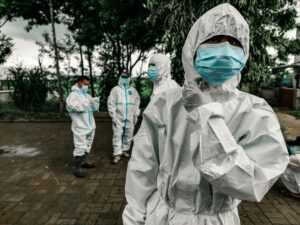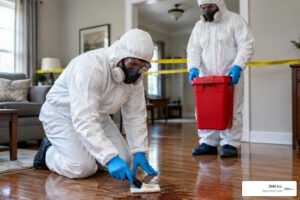
Medical Waste Cleanup Watertown: The Safe First Step
Medical waste cleanup Watertown requires more than putting bags or sharps containers in the regular trash. Untreated medical waste is not accepted at the Watertown Regional Landfill, so businesses and property managers should separate the material, secure the area, and use a qualified service for handling, transport, treatment, and documentation.
Proper medical waste management relies on clear professional standards:
- Sharps Management: Containment of needles, lancets, and blades in rigid, puncture-resistant containers.
- Biohazardous Waste Isolation: Separation of blood-contaminated items and regulated materials from routine solid waste.
- Pharmaceutical Handling: Disposal of medications and controlled substances through authorized collection channels rather than flushing or trash disposal.
- Specialized Spill Response: Immediate site containment and engagement of licensed biohazard cleanup professionals for spills, trauma scenes, or infectious hazards.
- Landfill Compliance: Strict adherence to municipal regulations prohibiting untreated biohazard disposal at the Watertown Regional Landfill.
Improper disposal can expose staff, tenants, waste workers, and the public to injury or contamination. It can also create environmental concerns and leave a property owner or facility responsible for cleanup costs, penalties, and documentation gaps.
I am Terry Zastrow, owner of ZBM Inc., with roughly 30 years of experience supporting public agencies, municipalities, housing providers, and commercial clients with specialized cleaning and remediation work. Our IICRC-certified team completes ongoing OSHA and HAZWOPER training, bringing a safety-first approach to medical waste cleanup Watertown and the steps that follow.
Medical waste cleanup Watertown terminology:
Regulations and Guidelines for Medical Waste Cleanup Watertown
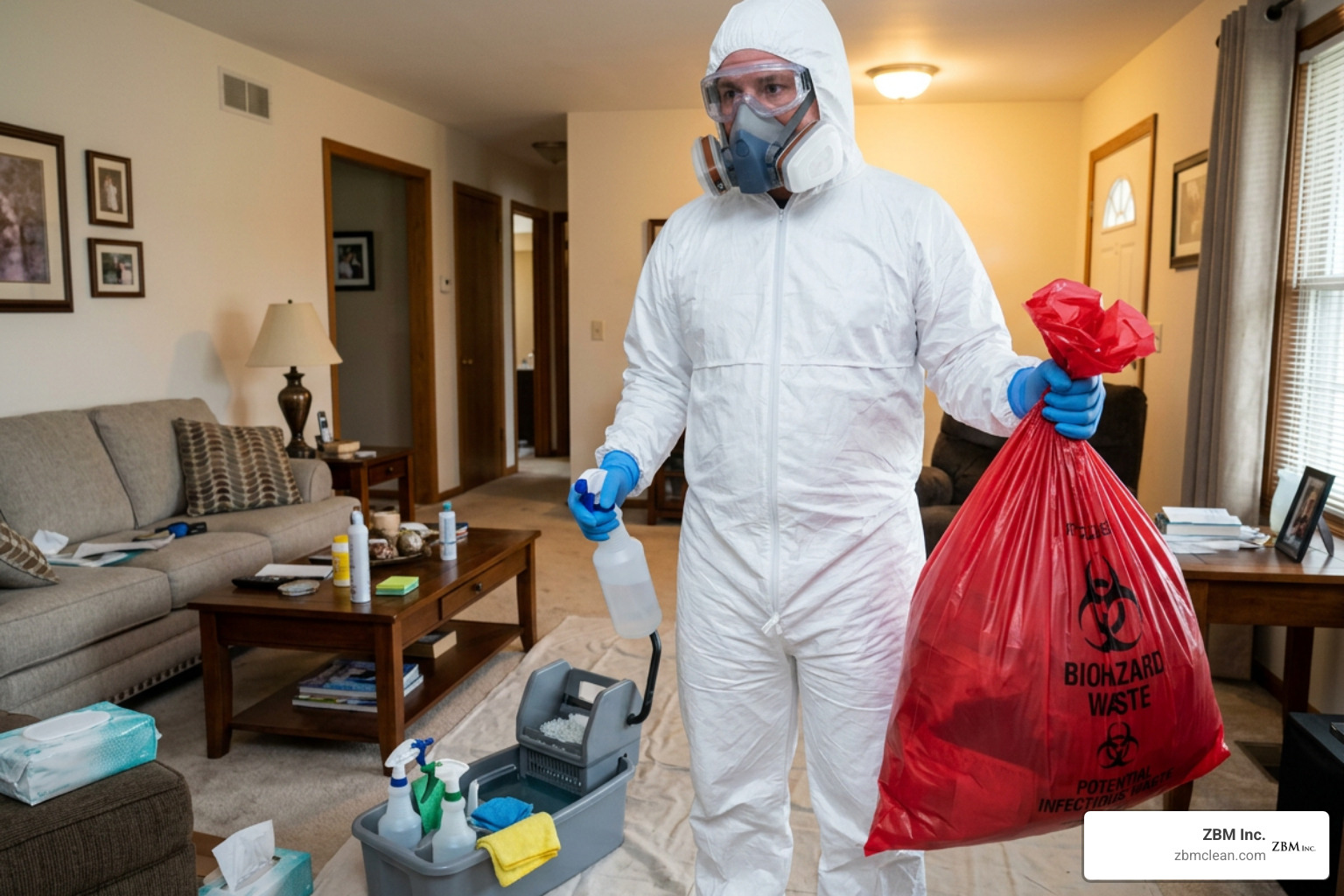
Navigating healthcare safety laws and biohazard protocols can feel like solving a puzzle where the instructions are written in legalese. However, when it comes to medical waste cleanup Watertown, local regulations are clear: biohazardous waste must be handled, transported, and remediated in accordance with strict state and federal mandates.
In Southeastern Wisconsin, medical waste standards are enforced by several regulatory bodies:
- OSHA (Occupational Safety and Health Administration): Enforces the Bloodborne Pathogens Standard (29 CFR 1910.1030), requiring certified Personal Protective Equipment (PPE), exposure control plans, and specialized handling of infectious items.
- Wisconsin DNR (Department of Natural Resources): Maintains the Wisconsin DNR Health Waste Guidelines, dictating how infectious waste must be treated, contained, and tracked across Dodge and Jefferson Counties.
- DOT (Department of Transportation): Governs the highway transport of biohazardous and regulated medical waste, requiring hazardous material packaging and manifests.
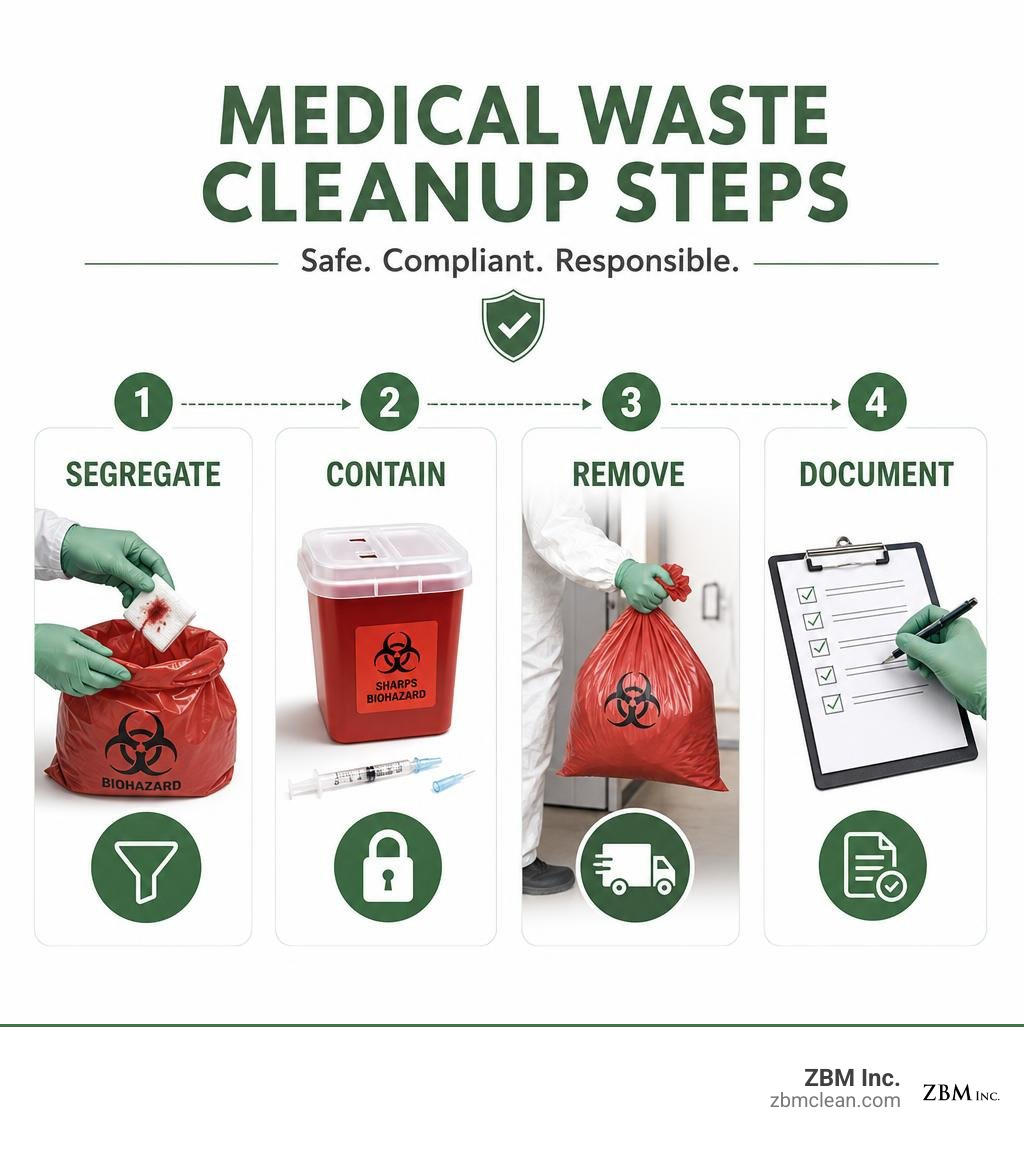
To ensure compliance across every step of the process, professional cleanup services follow a structured workflow.
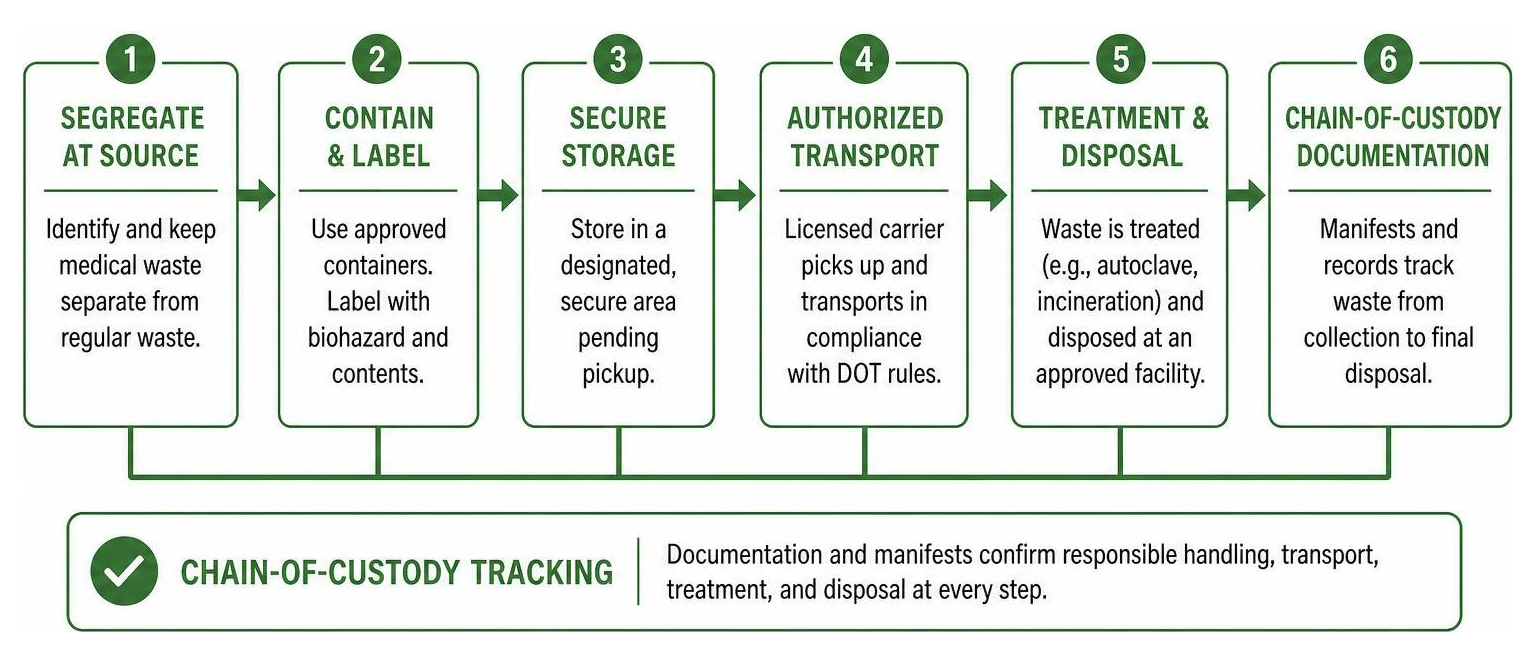
Every step of this workflow relies on meticulous chain-of-custody documentation. When regulated waste is collected, processed, and destroyed, manifests are generated to prove that no hazardous items entered the wrong waste streams.
Municipal Restrictions and the Watertown Landfill Policy
Municipal waste services in Watertown are designed for standard household and commercial solid waste—not untreated biohazards or infectious items. The Watertown Regional Landfill strictly prohibits untreated medical waste from entering standard landfill cells.
At local scale stations, inspection procedures are actively enforced. Attendants inspect incoming commercial and residential loads to screen out prohibited materials. If untreated biohazards or liquid medical wastes are detected in a load, the consequences are swift:
- Mandatory load rejection at the scale house.
- Double tipping fees or heavy financial penalties.
- Cleanup assessments requiring the haulers or property owners to safely remediate contaminated drop zones at their own expense.
- Potential legal liability under municipal solid waste ordinances.
Because public waste channels are legally protected from hazardous biological materials, commercial facilities and residential property managers must rely on certified, licensed partners for proper waste removal.
Sharps and Pharmaceutical Waste Disposal Procedures
Sharps—including syringes, lancets, scalpels, and IV needles—represent one of the most immediate physical hazards in medical waste cleanup Watertown. A single loose needle in a trash liner can cause a severe needle-stick injury to a custodial worker or municipal waste handler.
To keep the community safe, specific rules govern these waste items:
- Sharps Containers: Rigid, puncture-resistant, leak-proof containers must be used at all times. They must feature biohazard labeling and be sealed tightly when three-quarters full.
- Pharmaceutical Waste: Unused medications, liquids, and controlled substances should never be flushed into municipal water systems, where they can contaminate local watersheds in Dodge and Jefferson Counties.
- Community Drop-Off Options: For household prescription disposal, residents can utilize the secure City of Watertown Drug Drop Off Box located at the local police department.
- County Hazardous Waste Programs: Both Dodge County and Jefferson County sponsor Clean Sweep hazardous waste collection events annually to help residents safely offload unwanted chemicals and home healthcare supplies.
For healthcare practices, dental clinics, and commercial facilities, residential drop boxes are off-limits. Commercial entities must partner with professional waste contractors who provide certified destruction certificates.
Standards for Compliant Biohazard Waste Remediation

Executing biohazard waste remediation in a clinical setting, commercial property, or residential facility requires a methodical strategy. When biohazardous materials—such as blood, body fluids, or infectious tissue—contaminate a site, the objective is complete decontamination and zero cross-contamination.
Professional remediation teams set up strict isolation controls prior to beginning cleanup work. Containment barriers made of heavy-duty plastic sheeting and negative pressure air scrubbers prevent airborne pathogens or aerosolized contaminants from escaping into adjacent rooms or HVAC ductwork.
Point-of-Origin Waste Segregation for Medical Waste Cleanup Watertown
Effective remediation depends on accurate waste sorting right at the point of origin. Mixing standard garbage with biohazardous waste exponentially increases handling costs and environmental risks.
| Waste Category | Color/Container Identification | Approved Items | Prohibited Items |
|---|---|---|---|
| Regulated Biohazard | Red Bags / Biohazard Containers | Blood-soaked gauze, saturated dressings, gloves, IV tubing | Loose sharps, non-infectious trash, chemical solvents |
| Sharps Waste | Puncture-Resistant Red/Yellow Boxes | Syringes, needles, scalpels, glass vials, lancets | Saturated bandages, paper towels, loose liquid waste |
| Pathological Waste | Saturated Red Container (Labeled Pathological) | Human tissue, anatomical parts, biopsy samples | General trash, untagged chemical waste |
| Trace Chemotherapy | Yellow Rigid Containers | Empty chemo vials, gowns, gloves used in administration | Unused bulk chemo drugs, general biohazards |
By enforcing strict point-of-use isolation, certified teams safeguard clinic staff and ensure that all materials are routed to proper incineration or autoclaving systems. You can read more info about biohazardous waste to understand how different hazardous materials are classified.
Professional Biohazard Cleaning and Disinfection Protocols
Cleaning a biohazard scene involves far more than wiping down visible soils. Microscopic bacteria, viruses, and bloodborne pathogens can survive on porous and non-porous surfaces for days or weeks if not properly remediated.
Professional biohazard cleanup adheres to rigorous standards established by the Institute of Inspection, Cleaning and Restoration Certification (IICRC):
- Initial Surface Washing: Professional technicians remove bulk biological matter using heavy-duty, EPA-registered detergents.
- Disinfection Application: Certified specialists apply hospital-grade, broad-spectrum disinfectants proven effective against Hepatitis B and C, HIV, MRSA, and Norovirus.
- Dwell Time Verification: Teams ensure disinfectants remain wet on surfaces for the exact chemical contact time required by EPA guidelines.
- Verification Testing: Remediation experts utilize Adenosine Triphosphate (ATP) swab testing to measure residual organic material and scientifically confirm zero biological residue.
- Personal Protective Equipment (PPE): Qualified personnel utilize full-body Tyvek suits, double nitrile gloves, eye protection, and PAPR/N95 respirators throughout the service.
For a detailed breakdown of these deep-cleaning procedures, explore our biohazard cleaning services overview page.
Private Options, Cost Factors, and Liability Protection
When evaluating options for medical waste cleanup Watertown, facility managers must weigh municipal drop-off restrictions against certified private services. Municipal landfills simply cannot handle infectious materials, placing the responsibility on private entities to maintain compliance.
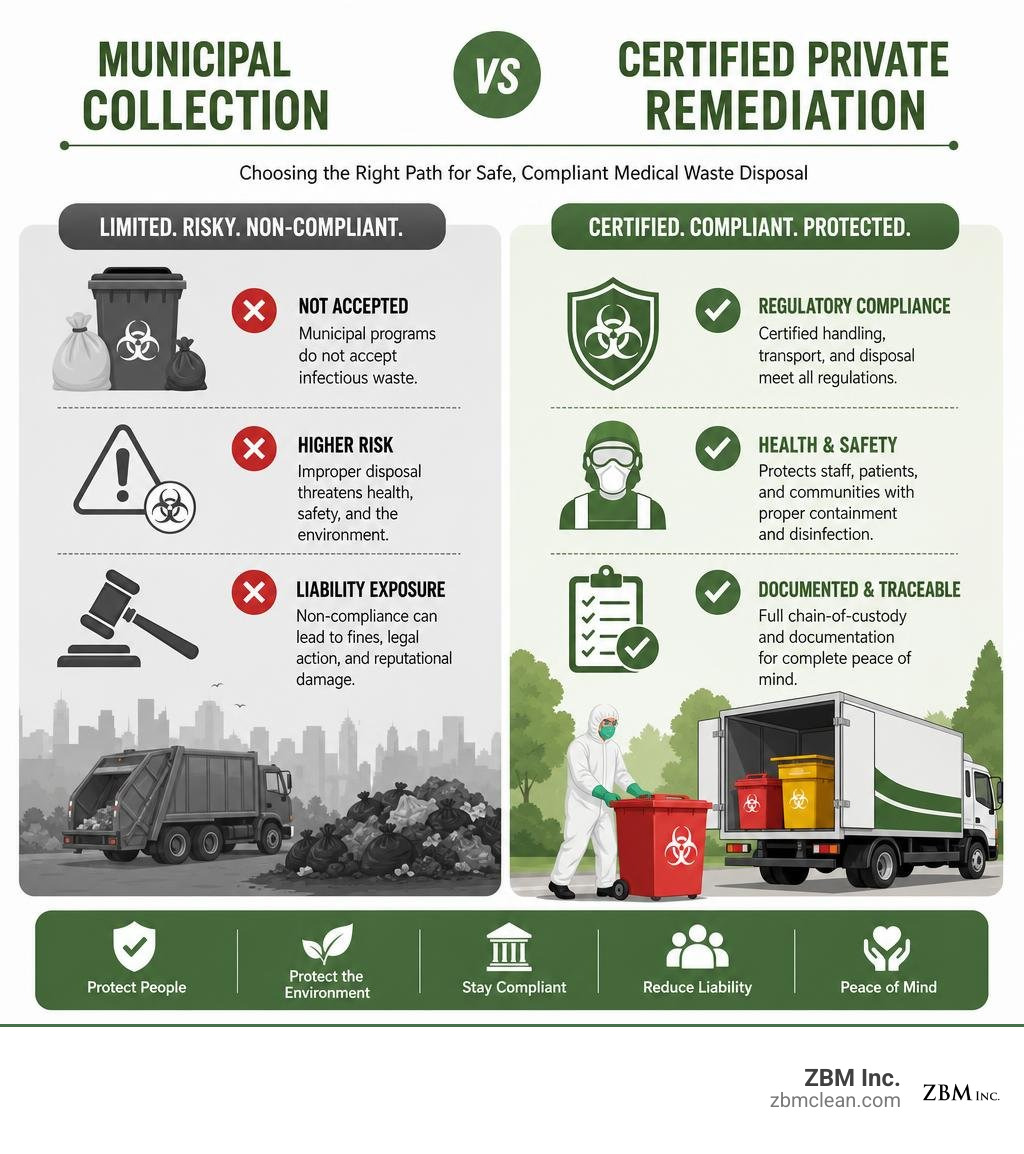
Choosing a licensed cleanup partner shields property owners from civil exposure, regulatory fines, and public health liabilities.
Choosing Professional Services for Medical Waste Cleanup Watertown
Partnering with an experienced biohazard remediation firm gives healthcare providers, commercial property managers, and families total peace of mind. Private service options offer key benefits:
- Scheduled and On-Demand Services: Flexible collection frequencies tailored to facility generation rates—daily, weekly, monthly, or emergency call-outs.
- Mail-Back Systems: Convenient, compliant mail-back sharps containers for smaller dental or veterinary offices.
- Certificates of Destruction: Documented proof that medical waste was legally processed, treated, and destroyed, satisfying all state audit requirements.
- Audit Preparedness: Complete chain-of-custody tracking that protects your facility during OSHA or DNR compliance reviews.
When local facilities face biohazard spills or complex cleanup challenges, consulting a local Watertown biohazard remediation guide helps clarify local obligations and best practices.
Cost Drivers and Facility Compliance Considerations
The overall investment in professional medical waste handling depends on several operational variables:
- Pickup Frequency Tiers: Regular weekly or monthly schedules offer lower per-visit rates than unscheduled emergency call-outs.
- Volume and Container Sizing: Total waste weight and the number of specialized biohazard boxes, red bags, or wall-mounted sharps units utilized.
- Integrated Compliance Services: Many facilities bundle biohazard removal with annual staff Bloodborne Pathogen training and HIPAA-compliant document shredding to simplify vendor management.
Investing in certified waste management protects a facility’s reputation, maintains insurance policy compliance, and avoids catastrophic regulatory fines.
Biohazard Remediation for Crime Scenes, Accidents, and Outbreaks
Beyond routine clinical waste pickup, unexpected biohazard emergencies demand immediate, specialized attention. Crime scenes, traumatic industrial accidents, unattended deaths, and severe viral outbreaks present extreme physical and biological hazards that regular maintenance crews are neither trained nor equipped to handle.
In traumatic situations, blood borne pathogens can penetrate carpet padding, subflooring, drywall, and HVAC systems. Attempting to clean these scenes without professional equipment often spreads contamination deeper into the structure, creating foul odors and ongoing health risks.
When emergency events happen in Southeastern Wisconsin, property owners rely on emergency biohazard responders:
- 24/7 Rapid Response: Emergency teams dispatch quickly across Dodge, Jefferson, and surrounding counties to stabilize trauma scenes.
- Deep Structural Remediation: Removal of contaminated building materials, subfloor sanitization, and thermal fogging for complete odor destruction.
- Outbreak Decontamination: Electrostatic disinfectant spraying and air scrubbing during infectious disease outbreaks in commercial buildings or care facilities.
If your property requires expert restoration after a critical incident, reach out to our team for professional biohazard remediation in Watertown.
Frequently Asked Questions About Watertown Medical Waste
What waste is strictly prohibited at the Watertown Landfill?
Untreated medical waste, loose needles, pathological specimens, liquid blood products, and regulated infectious waste are strictly forbidden at the Watertown Regional Landfill. Scale house attendants conduct random and routine inspections. Dumping prohibited biohazards results in immediate load rejections, severe fines, double tipping charges, and mandatory cleanup fees assessed to the responsible party.
How should Watertown residents properly dispose of household sharps?
Watertown residents should place household needles, lancets, and syringes into puncture-resistant, rigid containers (such as heavy-duty plastic laundry detergent bottles with secure caps) or dedicated sharps boxes. Sealed containers can be taken to authorized local collection stations or designated county Clean Sweep drop-off events across Dodge and Jefferson Counties. Household sharps should never be thrown loose into residential recycling or garbage bins.
What are the risks of improper medical waste handling?
Improper medical waste handling creates severe health, legal, and environmental consequences. Sharps thrown into general trash can cause puncture injuries and transmit bloodborne infections to waste workers. Improperly disposed pharmaceuticals can leach into local waterways, risking environmental damage. Additionally, facilities face thousands of dollars in OSHA penalties, DNR citations, potential civil lawsuits, and severe reputational damage.
Conclusion
Managing regulated waste safely requires exact compliance, professional equipment, and a dedicated safety culture. Whether you operate a medical clinic, manage residential units, or oversee a commercial facility, keeping biohazardous materials out of standard landfills is both a legal mandate and a civic duty.
When searching for the best company to handle your specialized sanitation needs, look for local expertise, proper licensing, and full compliance certifications. At ZBM Inc., we are proud to serve Watertown, Dodge County, Jefferson County, and surrounding communities in Southeastern Wisconsin. As a family-owned, licensed, bonded, and insured team with decades of experience, our certified professionals bring compassionate, reliable service to every job—day or night, including holiday collection support and 24/7 emergency dispatch.
Ready to secure safe, reliable, and compliant cleaning solutions for your property? Explore our complete guide to selecting certified cleanup companies or contact ZBM Inc. today to discuss how we can keep your environment clean, safe, and fully protected!