Restaurant Cleaning Starts With a Clear Plan
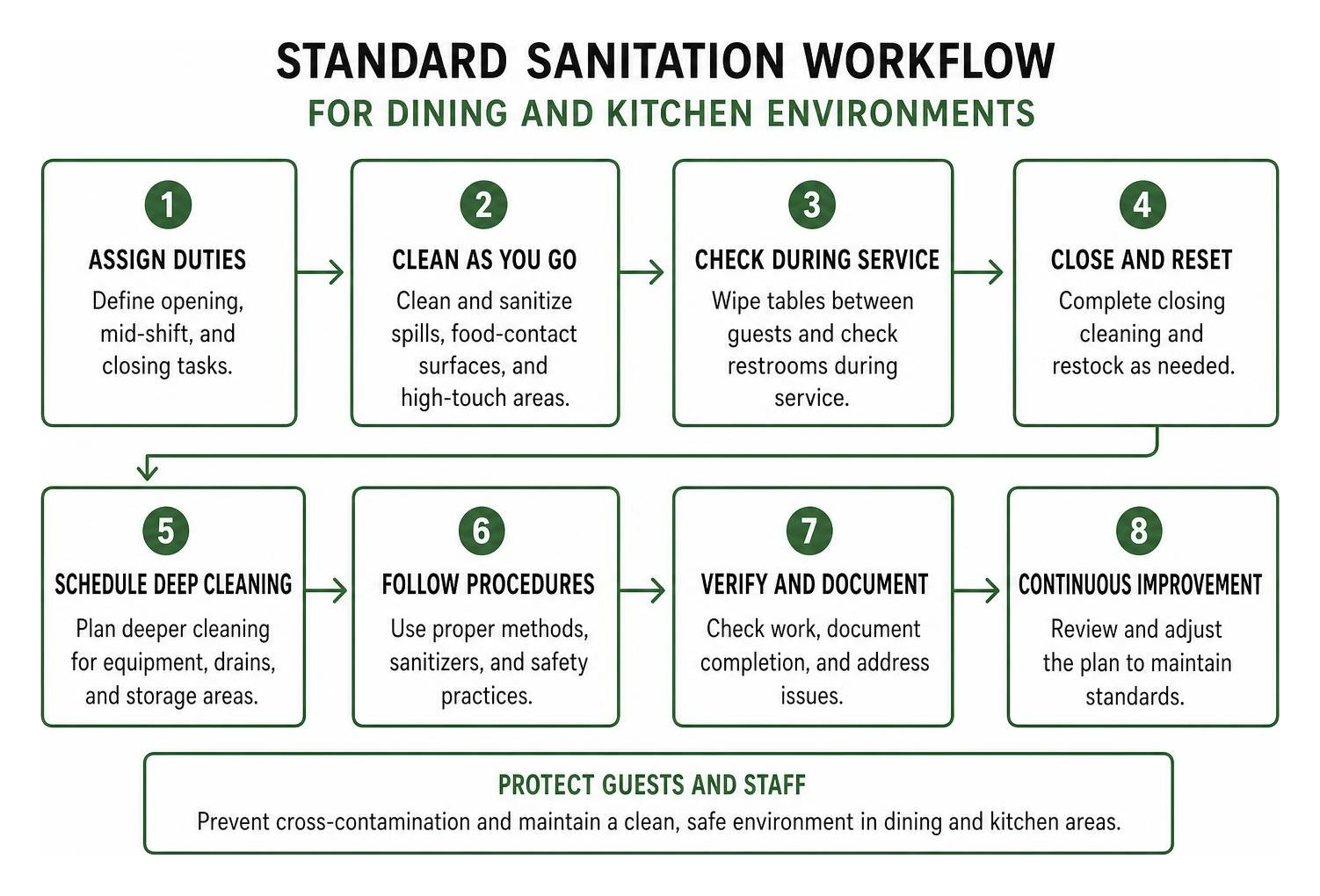
A professional restaurant cleaning program protects food safety, customer trust, and health code compliance. Rather than leaving sanitation to chance, experienced commercial cleaners establish clear protocols for food-contact surfaces, dining areas, restrooms, and high-risk kitchen equipment. They also define who performs each task, how it should be done, and who verifies the work.
This structured approach covers both the kitchen and the spaces guests see. It includes routine service visits, scheduled deep cleaning for equipment and drains, and documented quality checks that keep a facility inspection-ready. According to the FDA Food Code, establishments must maintain food-contact surfaces in a clean and sanitary condition to prevent contamination.
I’m Terry Zastrow, owner of IICRC-certified ZBM Inc., with nearly 30 years of experience leading specialized cleaning work. I’ll use that experience to walk through what professional restaurant cleaning services provide and how to choose the right contractor for your facility.
Standards and Procedures for Comprehensive Restaurant Cleaning
Operating an exceptional eatery requires strict adherence to sanitation standards, personal hygiene, and safety codes. Preventing cross-contamination is non-negotiable under the FDA Food Code and OSHA hazard communication requirements. Professional restaurant cleaning services are trained to meet these standards, using commercial-grade sanitizers and following documented protocols for every food-contact surface.
Hazardous cleaning chemicals must be handled and stored properly, with safety data sheets readily available. Balancing these rigorous rules while keeping up with the rapid pace of daily orders can be daunting for any team, which is why many operators rely on certified commercial cleaners who already maintain compliance systems.
Front-of-House and Back-of-House Restaurant Cleaning Requirements
Sanitation demands differ significantly between dining rooms and food preparation zones. Front-of-house (FOH) areas require constant attention to high-touch dining surfaces, menus, POS terminals, and guest amenities. A dirty dining table or neglected restroom immediately ruins an appetite, which is why professional services that include commercial restroom cleaning tips are essential to preserve customer trust.
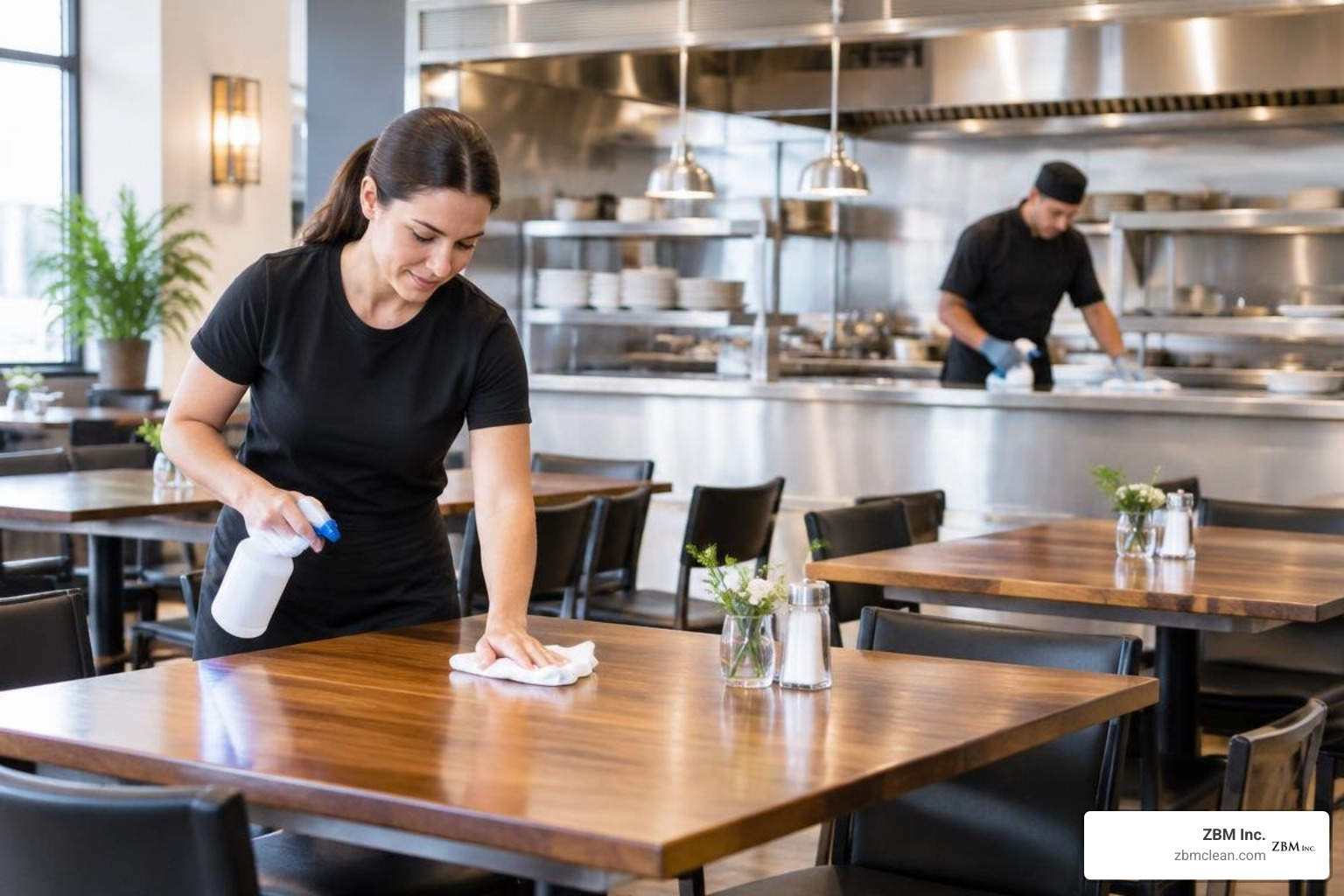
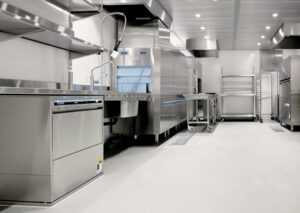
Back-of-house (BOH) zones, on the other hand, face relentless grease, food debris, and high moisture across cook lines and dishwashing stations. Heavy kitchen foot traffic and grease splatters make routine floor maintenance challenging, often requiring a specialized commercial floor cleaning service to handle embedded grime.
Furthermore, sanitation demands vary by establishment type:
- Fine Dining: Demands pristine dining room aesthetics, polished fixtures, and immaculate customer areas.
- Fast Casual: Requires rapid table turnover sanitization, continuous beverage station upkeep, and frequent trash clearing.
- Buffets: Entails intensive sneeze-guard polishing, strict hot/cold holding area sanitation, and constant utensil rotation.
| Area | Primary Focus | Key Tasks & Touchpoints |
|---|---|---|
| Front-of-House | Guest presentation, hygiene, comfort | Tables, chairs, POS terminals, entry doors, menus, guest restrooms |
| Back-of-House | Food safety, degreasing, cross-contamination prevention | Prep benches, cutting boards, cooking lines, dish pits, cool rooms |
Protocols for High-Risk Kitchen Equipment and Sanitization
High-risk commercial equipment requires deep, thorough sanitation to prevent fires and foodborne illness. Grease accumulation in exhaust hood filters is a severe fire hazard. Professional restaurant cleaning services handle regular fryer boil-outs, walk-in cooler care, and ice machine cleaning with industrial-grade equipment and certified methods.

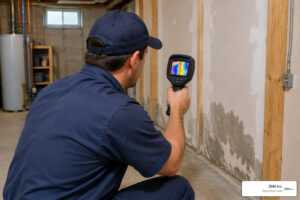
Neglecting heavy kitchen equipment can lead to severe health hazards. Ice machines frequently harbor unseen mold or biofilm, while grease traps and exhaust systems can quickly become major safety violations. Attempting to tackle heavy grease buildup or deep appliance sanitation without industrial-grade degreasers and certified extraction tools is exhausting and often leaves hazardous residue behind. True sanitation requires thoroughly addressing the hidden grime behind the line, which is why certified professionals are the safer choice.
Preventing Health Code Violations and Pest Infiltration
Health inspections evaluate strict sanitation standards. The most common violations include:
- Improper cold-food storage temperatures (failing to keep perishables at or below 40°F).
- Inadequate equipment and food-contact surface sanitation.
- Insufficient handwashing practices and lack of stocked wash stations.
- Improper storage or disposal of harmful chemicals near food supplies.
Neglected floor drains and accumulated grease invite pests, such as fruit flies, drain flies, and rodents. A professional commercial kitchen cleaning schedule checklist helps operators identify overlooked areas before inspectors arrive, and certified cleaning teams can address those areas with the right equipment and documentation.
Implementing Scheduled Deep Cleans and Commercial Sanitization Protocols
Maintaining day-to-day operations while handling thorough sanitation is a difficult balancing act. Line cooks and servers are focused on guest service, food preparation, and quick shift handoffs. Expecting kitchen staff to perform heavy-duty deep cleans after an exhausting shift leads to burnout and missed tasks.
Partnering with certified experts for scheduled deep cleans ensures all regulatory standards are met without overloading your kitchen crew. For dining establishments in Southeast Wisconsin, professional commercial cleaning services in Dodge and Jefferson County, WI, provide the specialized equipment and certified care required for total facility hygiene.
Structured Daily, Weekly, and Monthly Restaurant Cleaning Schedules
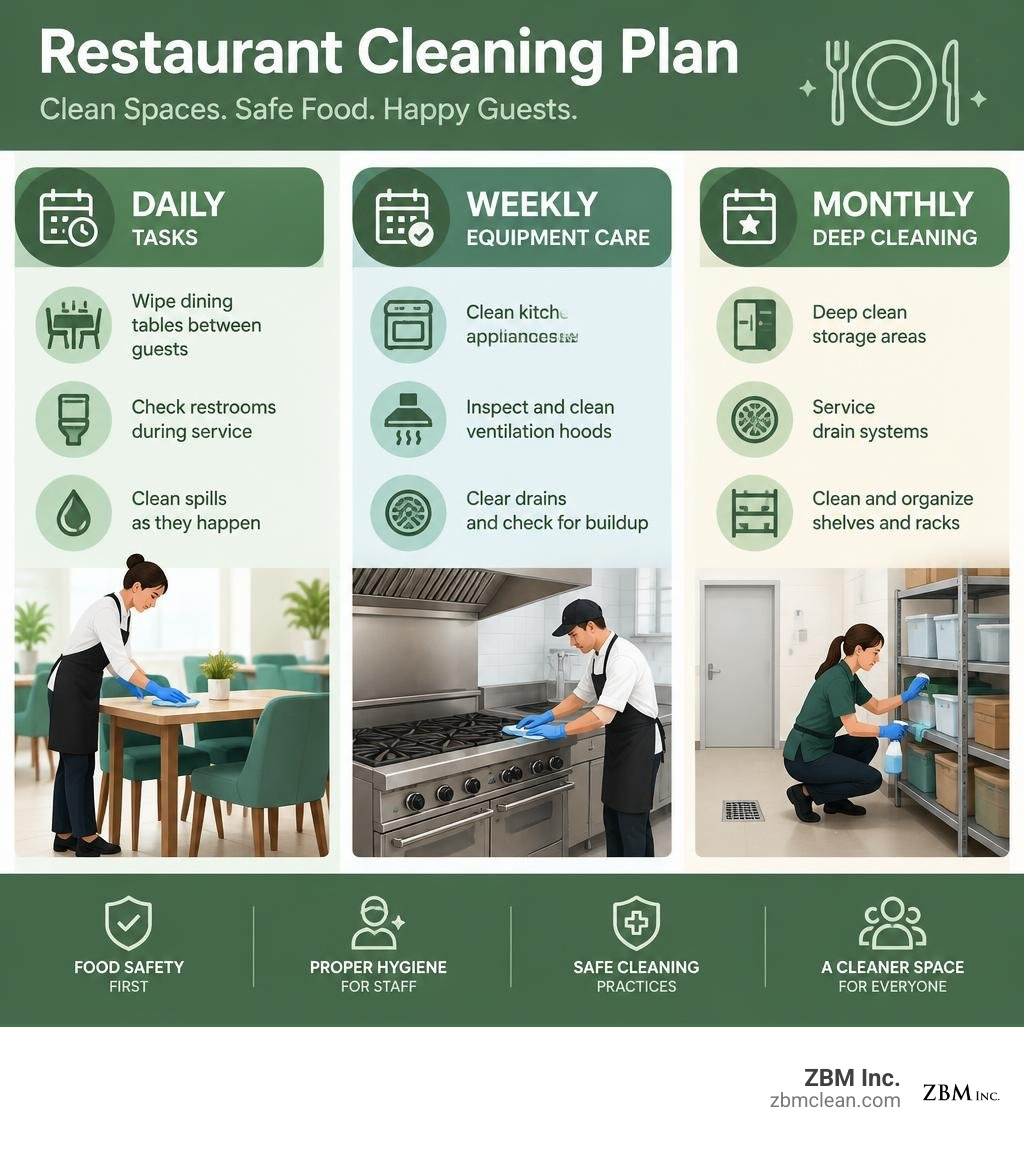
A comprehensive restaurant sanitation program divides responsibilities into manageable tiers. Professional cleaning contractors typically structure their service around these intervals:
- Daily: Mid-service surface wipe-downs, sanitizing prep benches every four hours, dishwashing support, sweeping and mopping, trash removal, and closing line sanitization.
- Weekly: Sanitizing walk-in cooler shelves, deliming dish machines, washing anti-fatigue floor mats, wiping down kitchen splash zones, and cleaning behind mobile equipment.
- Monthly & Beyond: Degreasing exhaust hood filters, sanitizing ice machine bins, clearing walk-in condenser coils, and scheduling professional grease trap pump-outs.
Accountability is vital. Professional cleaning companies use structured logs, designated role ownership, and clear documentation to verify that every task is properly executed across all shifts.
Surface-Specific Care and Professional Janitorial Support
A restaurant houses diverse materials that each require specific chemical treatments. Certified commercial cleaners select the right products and methods for each surface:
- Stainless Steel: Requires specialized non-abrasive degreasers and microfiber cloths to remove oils without scratching or corroding protective finishes.
- Hardwood Furniture: Needs pH-neutral sanitizers that eliminate bacteria without stripping protective wood sealants.
- Quarry Tile & Grout: Kitchen floors trap oils deep within porous grout lines, requiring professional hard floor cleaning rather than standard surface mopping.
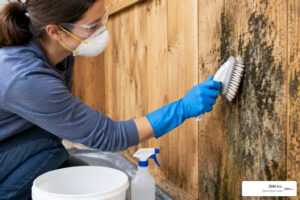
Handling deep restoration, complex mold issues, and heavy grease accumulation in-house is time-consuming and often ineffective without commercial-grade extraction systems. Bringing in certified janitorial professionals ensures proper sanitation, protects your facility’s surfaces, and keeps your dining room spotless for every guest.