Understanding Average Mold Cleanup Cost for a House
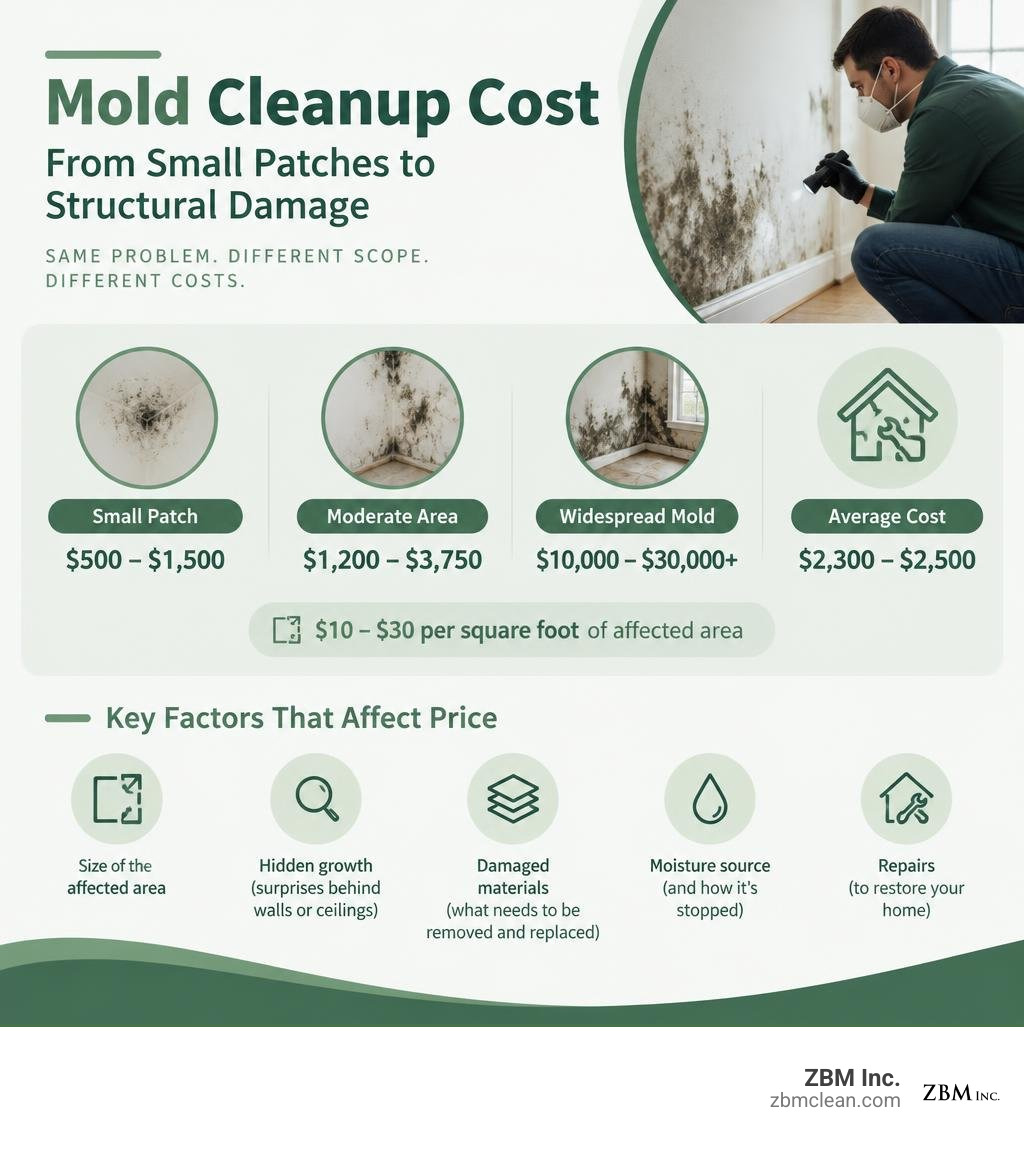
Professional mold cleanup cost typically runs $1,200 to $3,750, with an average near $2,300 to $2,500. Expect roughly $10 to $30 per square foot of affected area. A small, contained job may cost $500 to $1,500, while widespread mold with structural damage can cost $10,000 to $30,000 or more.
The visible patch is only part of the estimate. Hidden growth, damaged materials, and the repair needed to stop the moisture can all raise the final bill. This guide breaks down those costs so you can compare quotes and plan your next step.
I’m Terry Zastrow, owner of ZBM Inc., an IICRC-certified firm with about 30 years of building maintenance and specialized cleanup experience. That background informs how I look at mold cleanup cost: the price needs to account for both the affected area and the conditions that let mold grow.
Simple mold cleanup cost glossary:
Understanding Average Mold Cleanup Cost Across Residential Homes
Across the United States, roughly 47% of homes show signs of mold growth or carry a distinct musty odor. Leaving moisture issues unaddressed can rapidly degrade indoor air quality and harm physical well-being. Damp indoor environments contribute directly to approximately 21% of domestic asthma cases, and the broader healthcare impact of mold-related respiratory illnesses reaches billions of dollars each year.
Beyond health considerations, fungal growth significantly damages property value. Real estate studies show that unmitigated mold can decrease a home’s market value by 20% to 37%, with roughly half of prospective buyers refusing to make an offer on a home with active contamination. Addressing the problem quickly through professional remediation protects both building occupants and equity.
National Breakdown of Mold Cleanup Cost by Square Footage
Remediation pricing generally scales with the square footage of contaminated surface material. Small jobs involve local containment and surface treatment, while extensive projects require heavy demolition, structural drying, and specialized biohazard disposal.
| Contamination Level | Area Size | Typical Price Range | Average Cost | Description and Scope |
|---|---|---|---|---|
| Level 1 (Minor) | Under 10 sq ft | $500 – $1,500 | $850 | Localized surface growth on hard fixtures, minor wall patches. |
| Level 2 (Moderate) | 10 – 100 sq ft | $1,500 – $5,000 | $2,800 | Single room, partial drywall removal, carpet extraction. |
| Level 3 (Extensive) | 100 – 500 sq ft | $5,000 – $12,000 | $7,500 | Multi-room containment, structural framing treatment, subfloors. |
| Level 4 (Severe/Systemic) | 500+ sq ft / Whole Home | $10,000 – $30,000+ | $18,500 | HVAC contamination, whole-house clearance, framing replacement. |
To understand how individual project estimates are calculated from basic square footage rates up to full containment protocols, see our comprehensive mold abatement cost breakdown. For broader national data on housing trends and property impacts, review the RubyHome 2026 mold prevalence and property statistics.
Toxic Black Mold Cleanup Cost Compared to Standard Species
While common molds like Aspergillus, Cladosporium, and Penicillium cost between $10 and $25 per square foot to remove, toxic black mold (Stachybotrys chartarum) typically costs $20 to $30 per square foot—a 25% to 50% price increase.
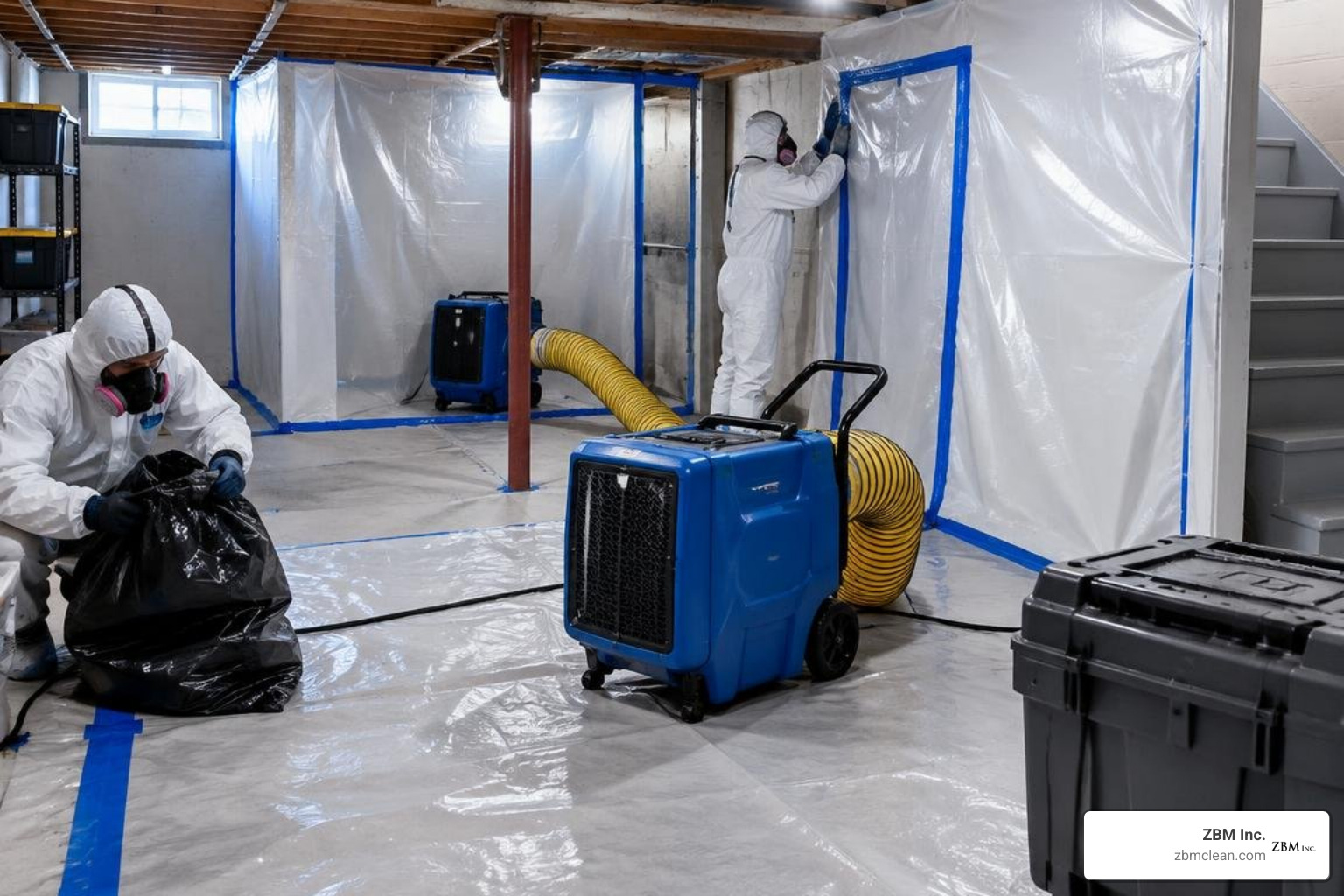
Stachybotrys chartarum produces mycotoxins that present higher exposure hazards for building occupants and cleanup crews. Remediating it requires full personal protective equipment (PPE), heavy-duty polyethylene barriers under negative air pressure, and dedicated biohazard disposal protocols. To review health advisories and safety recommendations for toxic varieties, consult the Wisconsin Department of Health Services mold advisory.
Major Variables That Drive Remediation Expenses by Severity and Location
Labor, equipment runtime, accessibility, and material porosity represent the bulk of remediation invoices. Porous materials like drywall and carpet cannot simply be wiped down; they must be cut out, bagged in airtight containers, and replaced. Non-porous surfaces such as structural timber, concrete, and metal framing can often be saved using commercial antimicrobial washings, wire brushing, or dry-ice blasting.
Mold Removal Pricing by Location: Basements, Attics, and HVAC Systems
Different rooms present unique containment and accessibility challenges. Basements with ground moisture intrusion, high-humidity attics with restricted crawl space, and closed HVAC duct networks all require distinct equipment configurations.
| Location | Typical Remediation Cost Range | Primary Causes | Common Remediation Requirements |
|---|---|---|---|
| Bathroom | $500 – $1,000 | High humidity, poor ventilation, leaking fixtures | Surface cleaning, exhaust fan repair, minor drywall cutting |
| Crawlspace | $500 – $2,000 | High soil moisture, lack of vapor barrier | Ground cleaning, antimicrobial fogging, vapor barrier installation |
| Basement | $500 – $3,000 | Foundation seepage, plumbing leaks, high humidity | HEPA air scrubbing, concrete sanitization, dehumidification |
| Attic | $1,000 – $4,000 | Roof leaks, inadequate soffit venting, condensation | Sheathing treatment, insulation removal and disposal, air sealing |
| Drywall / Wall Cavities | $1,000 – $20,000 | Internal plumbing leaks, flood damage, seepage | Containment zones, selective demolition, structural stud framing prep |
| HVAC System & Ducts | $3,000 – $10,000 | Condensation pan overflow, systemic spore spread | Specialized mechanical duct cleaning, antimicrobial fogging |
| Whole House | $10,000 – $30,000+ | Long-term flooding, widespread severe neglect | Multi-stage negative air, complete strip-out, structural drying |
For detailed guidance on identifying subgrade fungal growth and addressing chronic subterranean dampness, read Basement Mold: How to Identify, Remove, and Prevent It.
Key Cost Drivers: Moisture Repairs, Demolition, and Hidden Growth
A remediation estimate covers fungal removal, but long-term success depends on resolving the underlying moisture source. Common additional expenses include:
- Plumbing Repairs: Fixing leaking supply lines or waste pipes runs between $150 and $1,200.
- Roof and Flashing Repairs: Resolving attic water penetration ranges from $400 to $2,500.
- Basement Waterproofing and Sump Pumps: Installing interior perimeter drains or new sump systems costs $2,000 to $10,000.
- Demolition and Reconstruction: Replacing framing, insulation, and drywall after remediation adds $1,500 to $8,000 depending on room finishes.
Spore colonies frequently hide inside insulated wall assemblies without visible exterior signs. To learn about identifying unseen colonies behind baseboards and paint, see our guide on hidden mold inside drywall.
DIY Limits, Insurance Realities, and Professional Remediation Steps
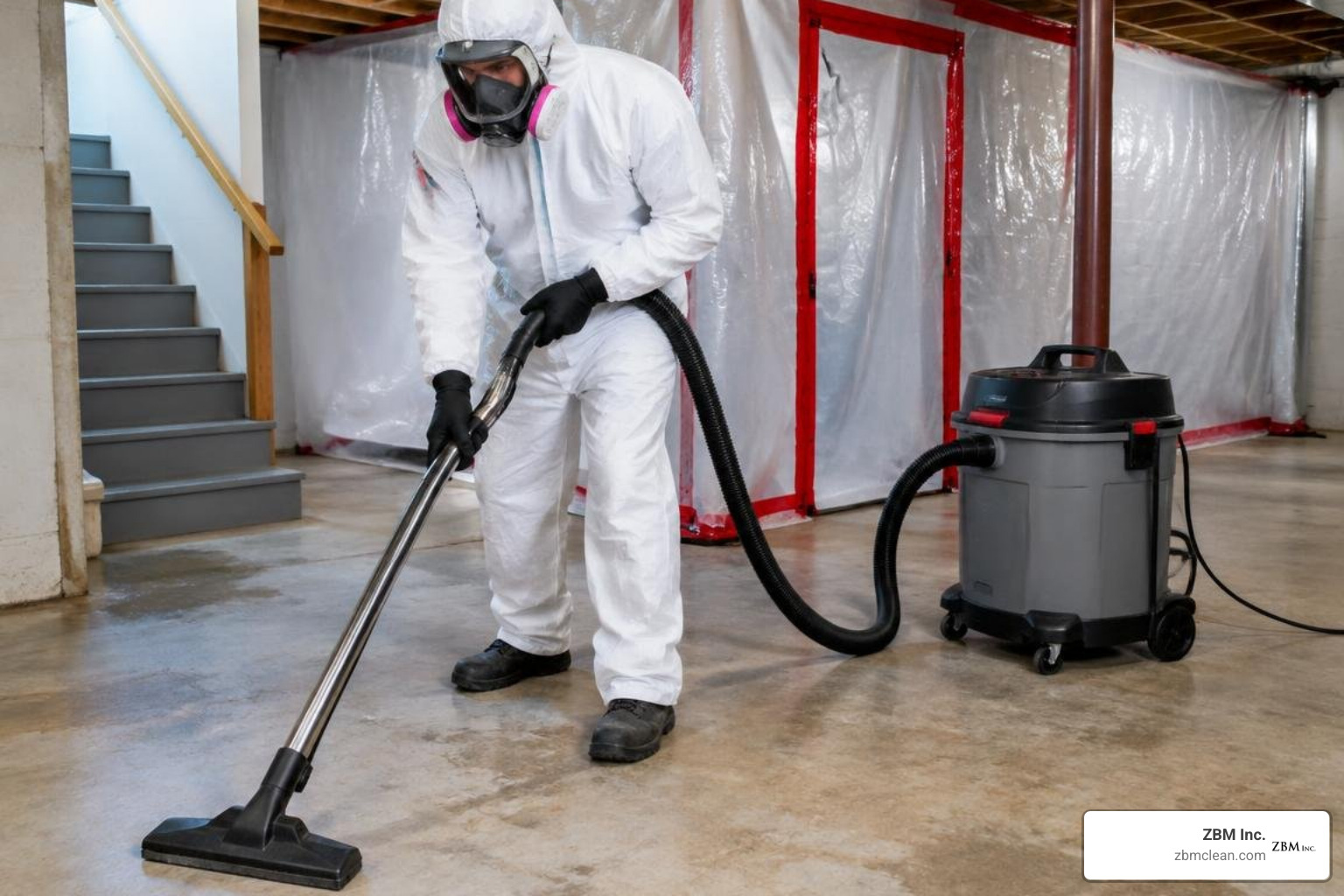
Attempting to treat mold without commercial containment equipment often spreads microscopic spores throughout the building’s ventilation system, transforming a localized patch into a whole-home problem.
When to DIY vs. Hiring Professional Remediation Services
According to federal standards, property owners should only manage minor surface patches that cover less than 10 square feet (about a 3-foot by 3-foot section) on hard, non-porous surfaces. For federal recommendations, refer to the EPA guidance on residential mold remediation.
Attempting larger cleanups without commercial negative-air machines, HEPA air scrubbers, and proper containment barriers is exceptionally time-consuming and often ineffective. Household cleaning chemicals do not penetrate porous materials like drywall or wood framing to eliminate root structures, allowing colonies to regenerate rapidly. Professional teams maintain the certifications, specialized equipment, and containment protocols required to eradicate fungal growth at its source. To understand the long-term benefits of trained remediation crews, discover why professional mold cleaning services are worth every penny.
Insurance Coverage, Extra Expenses, and Obtaining Accurate Estimates
Standard homeowners insurance policies cover mold remediation only when the growth results directly from a “sudden and accidental” covered peril, such as a burst plumbing line or sudden water heater failure. Policies consistently exclude mold caused by deferred maintenance, continuous roof trickles, exterior groundwater flooding, or chronic humidity.
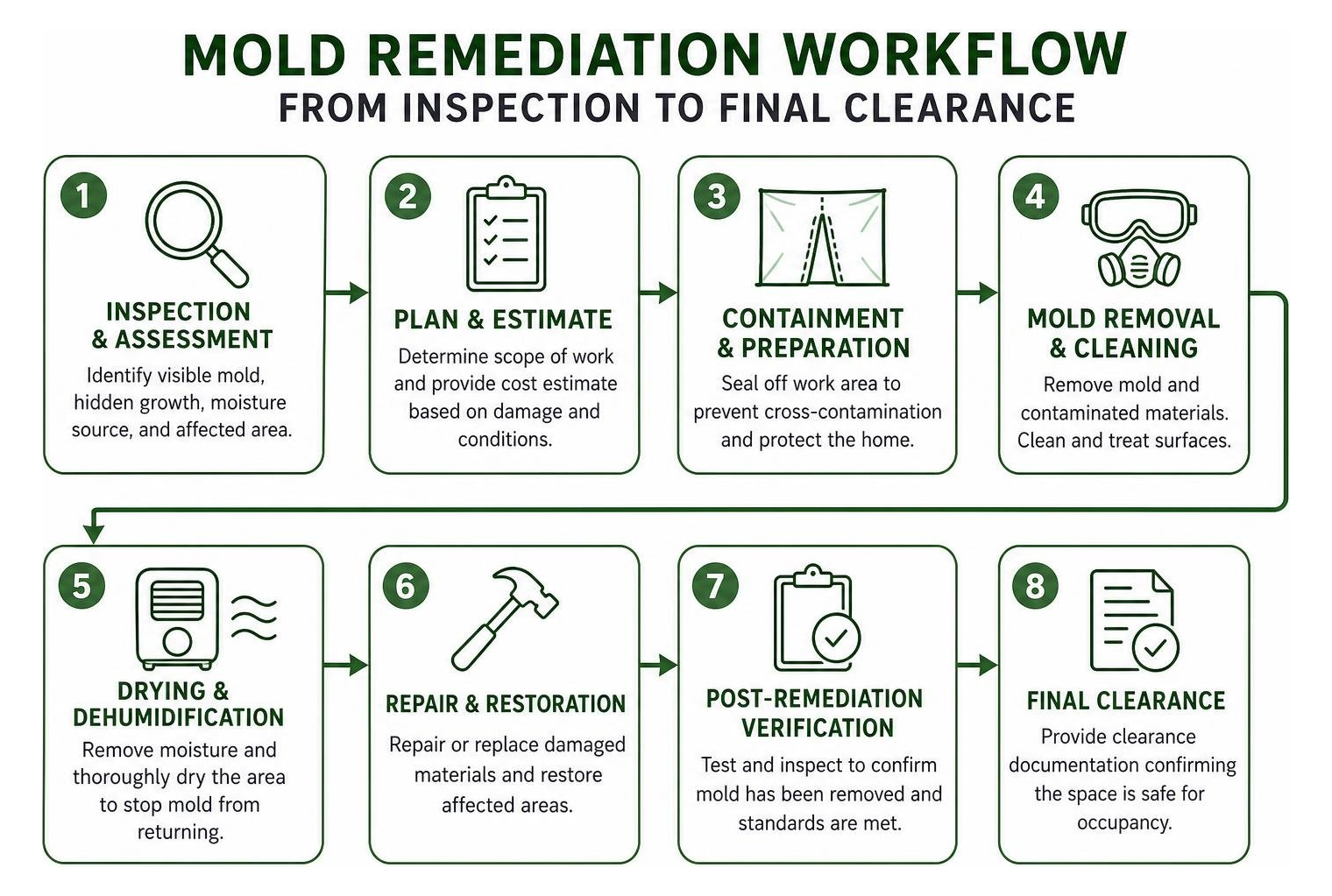
When hiring a cleanup provider, always request a detailed, itemized estimate that separates testing, physical labor, negative air containment, and post-remediation clearance verification. Ensure your contractor holds valid licensing, liability coverage, and industry-standard certifications. If your property has sustained severe microbial contamination requiring medical-grade containment, explore our specialized biohazard cleanup for toxic mold to ensure your living environment is restored safely and thoroughly.
Take Control of Your Indoor Air Quality Today
At ZBM Inc., we are a family-owned, certified, licensed, bonded, and insured team serving Watertown, WI, along with Jefferson County, Dodge County, Southeast Wisconsin, Minocqua, Lake Mills, and the Northwoods. Whether you are dealing with minor moisture issues, emergency disaster recovery, or severe structural contamination, our certified specialists are ready to help. Contact ZBM Inc. today to schedule a thorough professional assessment and protect your home.