Choosing a Mold Resistant Coating for Lasting Moisture Defense
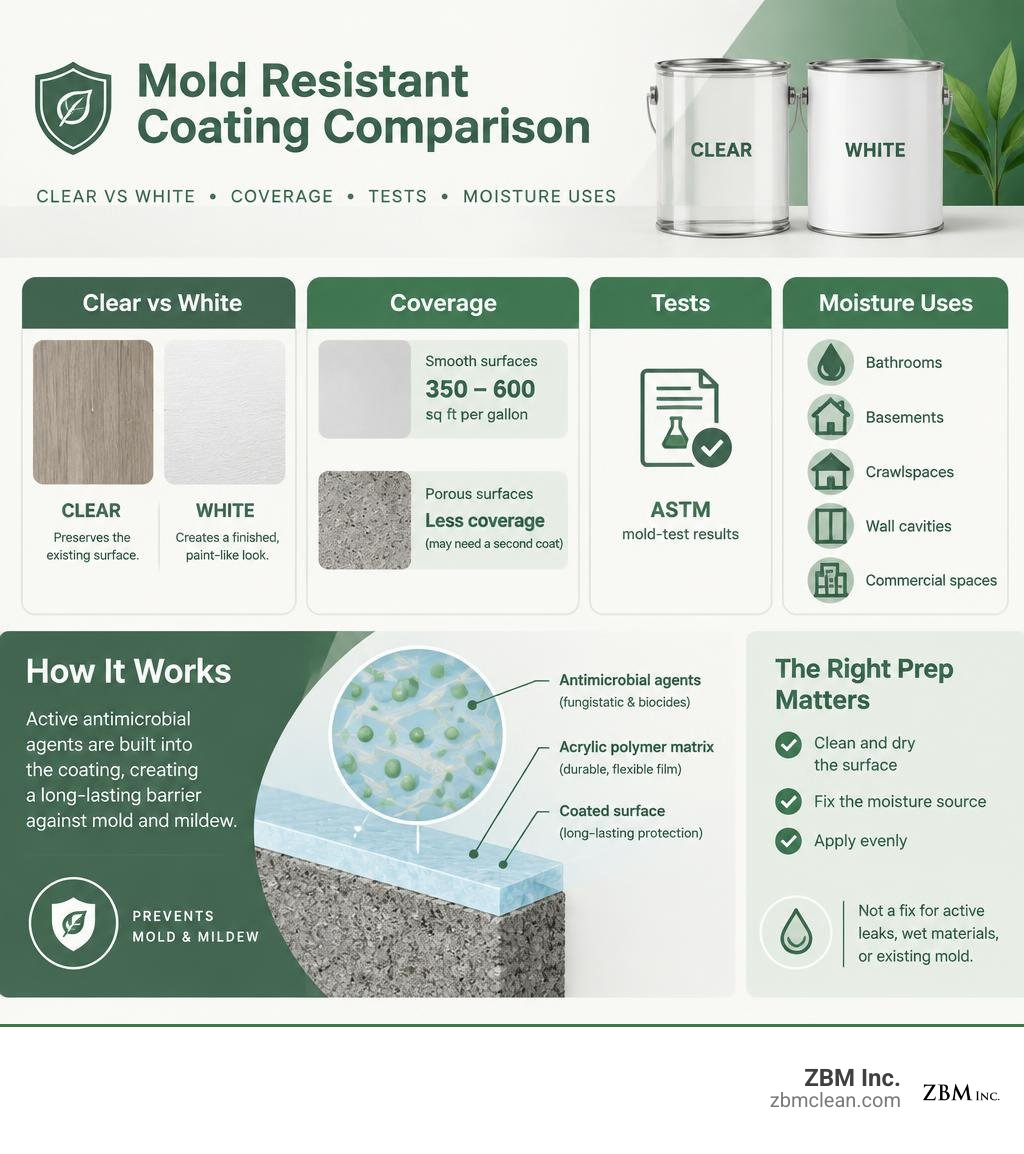
The best mold resistant coating depends on the surface, moisture level, and finish you need. For drywall, framing, concrete, masonry, and other building materials, compare products by their ASTM mold-test results, coverage rate, drying time, warranty, and whether they are clear or tintable white. Clear coatings preserve the existing surface; white coatings create a finished, paint-like look.
Unlike standard paint, these coatings use fungistatic or antimicrobial ingredients to limit mold and mildew growth on the cured coating film. They are a prevention layer, not a fix for active leaks, wet materials, or existing mold contamination. Clean and dry the surface first, correct the moisture source, then apply the coating evenly.
In this roundup, we compare practical options for high-risk areas such as bathrooms, basements, crawlspaces, wall cavities, and commercial spaces. Expect coverage to vary widely: smooth surfaces may cover roughly 350-600 square feet per gallon, while porous concrete, block, and raw wood often need more material and sometimes a second coat.
I am Terry Zastrow, owner of ZBM Inc., an IICRC-certified firm with about 30 years of experience serving public and private facilities. Our field experience with mold remediation and mold resistant coating applications helps inform the preparation and moisture-control priorities covered next.
Understanding How Mold Resistant Coating Works Against Moisture
To choose the right protective barrier for your property, it helps to understand what sets specialized barrier systems apart from traditional decorative paint. Ordinary interior latex paint forms a simple decorative film. While it might temporarily brighten a room, standard paint contains organic additives that can actually serve as a food source for fungal spores when ambient humidity spikes.
In contrast, an effective mold resistant coating incorporates EPA-registered biocides and fungistatic preservatives suspended within a durable acrylic polymer matrix. These active antimicrobial agents remain embedded in the cured film, chemically discouraging fungal hyphae from rooting into the substrate.
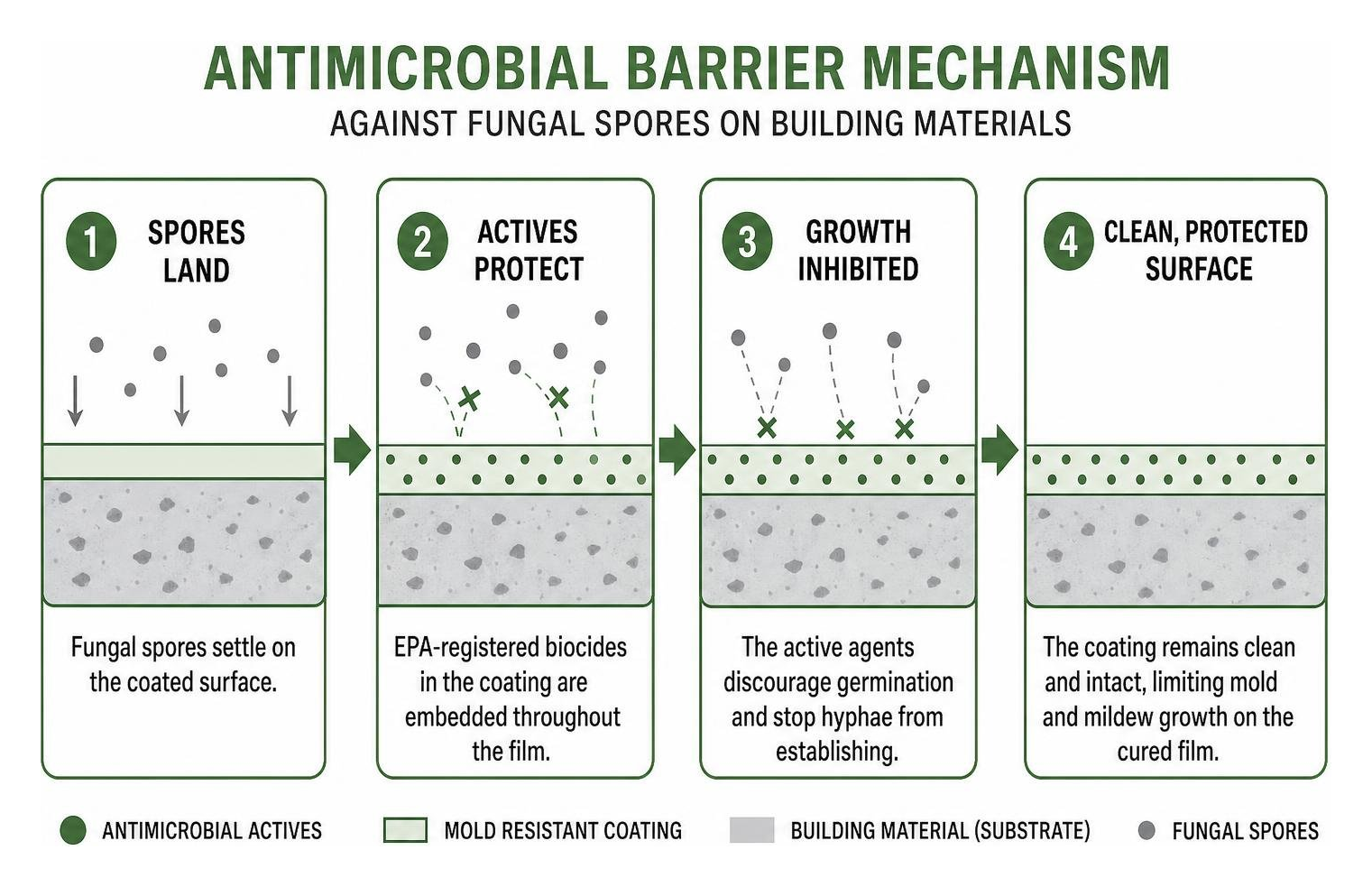
When reviewing professional formulations, technical specifications highlight specific industry testing standards:
- ASTM G-21: Evaluates fungal resistance by exposing the dry film to a cocktail of spore species under high humidity. Top-tier products pass with zero fungal growth.
- ASTM D-3273: Measures resistance to mold growth in an accelerated environmental chamber over a multi-week incubation period, rated on a zero-to-ten defacement scale.
Products like Foster Interior Defense Mold Resistant Coating (40-50) are engineered to pass these rigid laboratory evaluations while providing water vapor permeability (measured in perms) so trapped moisture can escape without blistering the film.
It is critical to distinguish between immediate sanitization and long-term barrier protection. Spraying a surface with an antimicrobial cleaner neutralizes active contamination at a single moment in time. However, disinfectants evaporate and leave behind zero residual defense. Understanding the secret to killing black mold permanently involves combining thorough sanitization with a durable surface barrier that prevents newly arriving airborne spores from colonizing the structure.
Comparing Formulations and Protective Finish Types
Different architectural substrates and moisture conditions require distinct chemical formulations. Choosing between tinted options, transparent films, and deep penetrators directly impacts project durability and final appearance.
Clear vs Tintable White Mold Resistant Coating Types
Coating products generally fall into two visual categories: solid opaque coatings (typically bright white or tintable) and completely transparent sealers.
Tintable white formulations, such as IAQ 6200EZ or RMR White, function as high-build cosmetic coatings that seal porous materials while providing a clean, finished appearance. They accept universal colorants (up to 2 ounces per gallon) to blend into existing decor on walls and ceilings.
Clear formulations, including OmniPro Mold Resistant Coating Clear, preserve natural wood grain and structural stamps. Because a clear coat is invisible once dry, premium commercial products incorporate a fluorescent UV tracer dye. By shining a blacklight across the treated area, inspectors can quickly verify continuous coverage across complex framing without missing hidden corners.
Acrylic Water-Based Formulations vs Deep Penetrating Sealants
Water-based acrylic coatings remain the industry benchmark for indoor structural defense. These low-VOC solutions release minimal odor during application, achieve high breathability, and dry rapidly. High-grade formulas meet MAS Certified Green standards and earn LEED credits for indoor air quality.
Furthermore, leading water-based products are chemically inert once dry, making them safe for installation around delicate CPVC fire sprinklers and industrial plumbing systems without risking chemical stress cracking. In contrast, penetrating silane or siloxane sealants soak deep into raw masonry pores to block hydrostatic water pressure from exterior ground contact.
Key Application Standards: Coverage, Preparation, and Curing
Applying an antimicrobial coating requires careful surface preparation, professional tools, and strict environmental management. Because coatings are a prevention layer rather than a fix for active leaks or contamination, reputable remediation contractors follow documented industry standards before any product is applied.
What Professional Remediation Criteria Should Include
When comparing certified mold remediation and coating providers, look for companies that verify these conditions before application:
- Moisture Source Abatement: The contractor should repair all active plumbing leaks, exterior water intrusion, or roof failures before starting. Coatings applied over waterlogged framing will blister and fail.
- Substrate Decontamination: The provider should thoroughly clean and sanitize the substrate. When addressing heavy fungal colonization on wood framing, the best ways to kill black mold on wood instantly rely on EPA-registered cleaning agents followed by comprehensive HEPA vacuuming.
- Moisture Testing and Acclimation: A qualified crew should verify with a calibrated moisture meter that wood moisture content is below 15% and ambient temperatures sit between 50°F and 90°F.
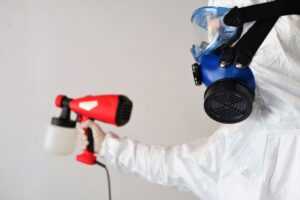
- Application Equipment and Training: Professional crews apply coatings using commercial airless sprayers (operating between 1,800 and 2,400 PSI using .013″ to .019″ reversible tips) to deliver uniform wet film thickness across irregular framing. Secondary detailing in tight quarters is completed with heavy-nap rollers and nylon brushes.
- Curing and Recoat Windows: The contractor should allow initial coats to dry set-to-touch (typically 30 to 60 minutes). If substrate porosity requires a second coat, the manufacturer-specified recoat window of 1 to 4 hours under 50% relative humidity should be maintained.
Attempting to prep and spray large building structures, wall cavities, or crawlspaces without commercial-grade extraction systems, airless spray equipment, and personal protective gear is remarkably difficult and time-consuming. Homeowners who tackle large-scale mold issues on their own frequently struggle to achieve even coverage across tight framing bays, often trapping latent moisture behind improper seals. Partnering with a professional remediation and cleaning team ensures complete containment, verified moisture control, and guaranteed application integrity.
Porous vs Smooth Substrate Coverage Rates
Coverage varies significantly based on substrate density and surface texture. Dense, non-porous materials require substantially less liquid product to achieve the recommended dry film thickness (.8 to 1.5 mils).
On porous concrete blocks or rough-sawn dimensional lumber, the material soaks deep into open capillaries. Premium single-coat formulations like RMR Mold Resistant Coating help reduce labor by 50% and lower overall material costs by more than 23% per square foot compared to multi-layer primer-and-paint systems.
Performance in High-Moisture Environments and Remediation Projects

High-humidity microclimates require targeted moisture management strategies:
- Basements & Foundations: Concrete block walls continuously draw ground moisture via capillary action, making them prime candidates for breathable, mildewcide-rich acrylic coatings.
- Crawlspace Encapsulation: Applying clear fungistatic coatings across subfloors and joists prior to installing vapor barriers prevents condensation-driven decay.
- Attic Framing & Rafters: Seasonal roof temperature swings cause condensation on roof sheathing, which antimicrobial barriers actively defend against.
- HVAC Plenums & Cavities: High air velocity combined with duct humidity can spread airborne spores; treated interiors prevent microbial buildup.
Unchecked humidity frequently drives structural degradation behind finished walls. If you suspect hidden colonies lurking in framing cavities, learning the scary truth about mold hiding inside your walls highlights why physical remediation must precede coating application. When dealing with severe contamination, investing in why professional mold cleaning services are worth every penny ensures all biological hazards are safely eliminated before any protective barrier is sealed in place.
Commercial warranties on these protective barriers vary based on product chemistry and exposure. Standard water-based systems offer 5- to 10-year manufacturer warranties against microbial defacement, while proprietary formulas like Superstratum Endurance Coating or EnviroShield can provide up to 10 years of mold-free assurance in undisturbed interior framing.
Frequently Asked Questions About Mold Resistant Protective Coatings
Is mold resistant coating safe for homes with children and pets?
Yes. Once fully cured, modern water-based acrylic coatings are completely safe for living spaces. Commercial-grade coatings formulated with low or ultra-low VOCs emit minimal odors during curing. As a standard safety precaution, occupants, sensitive individuals, pets, and pregnant women should stay out of the treatment zone during active spraying and until the coating has dried completely (typically 2 to 4 hours with proper airflow).
How long does a mold resistant coating last on interior surfaces?
In undisturbed low-moisture zones such as wall cavities, attic rafters, and sealed crawlspaces, high-performance coatings protect substrates for 10 years or longer. In severe, active-condensation environments like high-traffic commercial showers or humid industrial settings, physical abrasion, chemical washing, and constant moisture may necessitate inspection and reapplication after several years.
Can a mold resistant coating be applied directly over active mold?
No. A mold resistant coating is strictly a preventative barrier, not a standalone eradication chemical. Painting directly over live fungal growth encapsulates active root structures, allowing mycelium to feed on underlying drywall paper or timber cellulose until it bursts through the new paint film. All surfaces must be professionally cleaned, decontaminated with an EPA-registered disinfectant, and dried before applying the coating.
Conclusion
Protecting residential and commercial properties against chronic fungal growth requires a balanced approach: identifying the source of moisture, sanitizing affected materials, and applying a certified antimicrobial barrier. While a mold resistant coating delivers durable long-term protection on framing, concrete, and drywall, achieving lasting results depends on proper substrate preparation and professional equipment.
For complex moisture issues, severe water damage, or hazardous fungal outbreaks, DIY efforts often fall short of reaching hidden spores. As a certified, family-owned provider serving Watertown, Dodge County, Jefferson County, and surrounding Wisconsin communities, ZBM Inc. delivers licensed, bonded, and insured cleaning solutions. Whether your building requires disaster recovery, biohazard cleanup, or the 5 types of toxic mold why you need biohazard cleanup remediation, our certified team has the field experience and commercial tools to protect your property safely.