A Dental Office Cleaning Checklist That Protects Patients and Staff
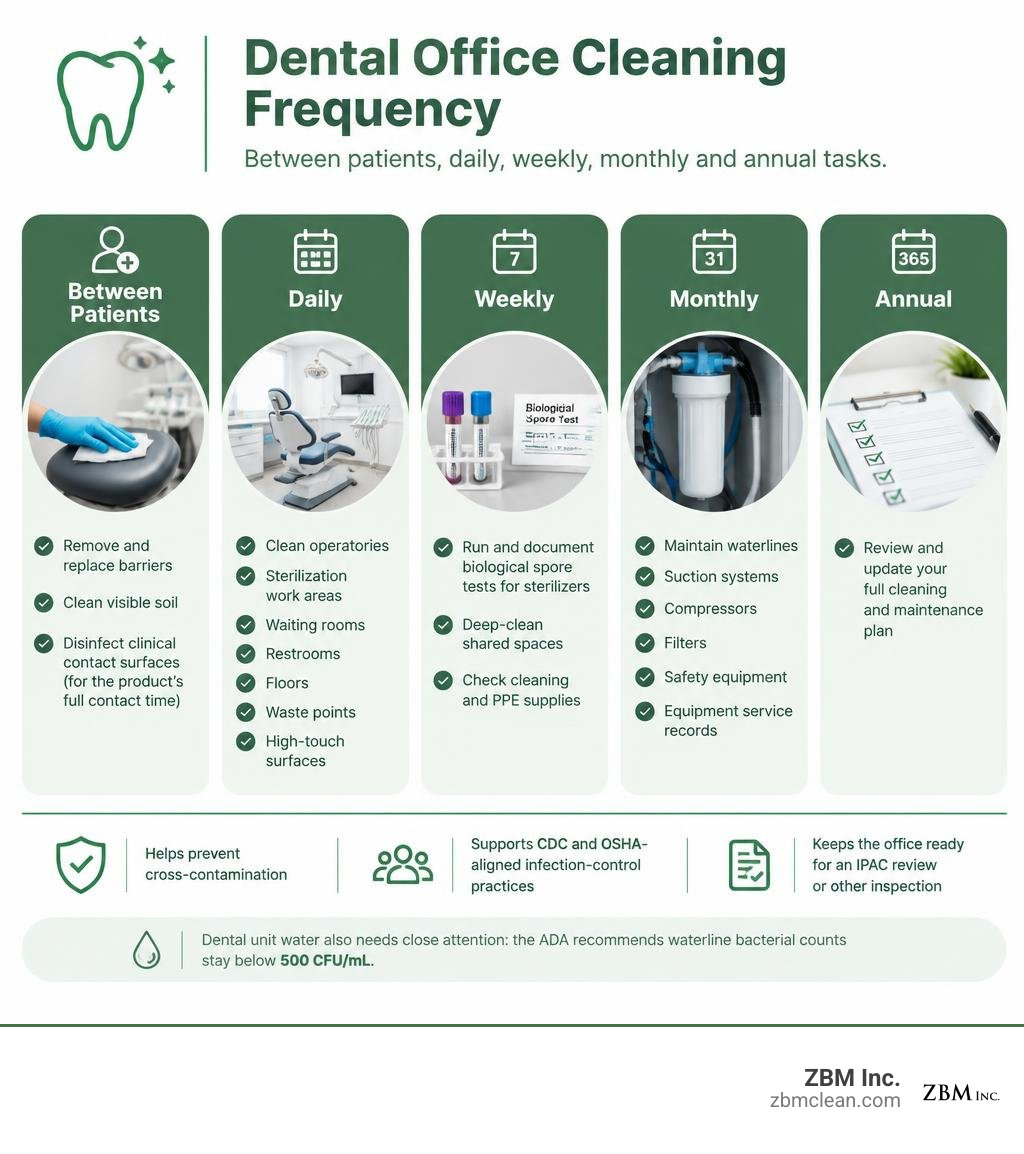
A reliable dental office cleaning checklist organizes work by frequency, assigns ownership, and creates a record that the work happened. For practice owners and office managers, it’s a practical way to evaluate whether a professional cleaning provider is meeting the infection-control standards your patients and staff depend on. Start with these priorities:
- Between every patient: Remove and replace barriers, clean visible soil, then disinfect clinical contact surfaces for the product’s full contact time.
- Every day: Clean operatories, sterilization work areas, waiting rooms, restrooms, floors, waste points, and high-touch surfaces.
- Every week: Run and document biological spore tests for sterilizers, deep-clean shared spaces, and check cleaning and PPE supplies.
- Every month and beyond: Maintain waterlines, suction systems, compressors, filters, safety equipment, and equipment service records.
This routine does more than make a practice look polished. It helps prevent cross-contamination, supports CDC and OSHA-aligned infection-control practices, and keeps the office ready for an IPAC review or other inspection. Dental unit water also needs close attention: the ADA recommends waterline bacterial counts stay below 500 CFU/mL. Meeting that standard consistently requires trained personnel and documented processes.
I am Terry Zastrow, owner of ZBM Inc., a certified cleaning firm with about 30 years of operational experience and extensive OSHA safety training. That background informs this dental office cleaning checklist, beginning with the difference between cleaning, disinfecting, and sterilizing.
Essential dental office cleaning checklist terms:
- office cleaning checklist
- daily cleaning checklist for office
- cleaning roster for office
Understanding Dental Sanitation: Cleaning, Disinfecting, and Sterilizing
Maintaining a safe practice requires knowing what each level of decontamination actually achieves when vetting a professional cleaning service. Attempting to manage clinical decontamination in-house without certified expertise and documented processes can leave hidden bioburden behind, creating serious liability and putting patient safety at risk.
| Level | Definition | Target Pathogens | What to Look For in a Professional Service |
|---|---|---|---|
| Cleaning | Physical removal of organic soil, blood, and debris | None killed directly (reduces bioburden load) | Proper pre-cleaning protocols for sinks, floors, and non-critical surfaces |
| Disinfection | Chemical destruction of most pathogenic microorganisms | Bacteria, viruses, fungi (excluding bacterial spores) | EPA-registered hospital-grade disinfectants with verified dwell times |
| Sterilization | Complete destruction of all microbial life | All microorganisms, including bacterial endospores | Rigorous autoclave monitoring and documentation standards |
Dental environments require strict adherence to a two-step cleaning method for contaminated surfaces: initial bioburden removal followed by an EPA-registered hospital-grade disinfectant left wet for the manufacturer’s specified dwell time—often up to 10 minutes. Because clinical staff are often rushed between appointments, outsourcing environmental sanitation to a certified cleaning company ensures dwell times and chemical protocols are never compromised.
When assessing a provider, confirm they understand the operational differences between key surface categories:
- Clinical Contact Surfaces: High-touch areas near treatment zones that demand intermediate-level hospital disinfectants with tuberculocidal claims.
- Housekeeping Surfaces: Lower-risk areas like corridors, lobby seating, and restrooms that require specialized commercial detergents and sanitizers.
To ensure your facility meets state and federal benchmarks, verify your contractor’s protocols against OSHA and CDC infection control checklist standards. Aligning these requirements with our complete office sanitation checklist and tips for a healthy facility ensures your chosen cleaning team leaves no compliance gaps unaddressed.
The Essential Dental Office Cleaning Checklist by Frequency
Organizing sanitation by frequency prevents equipment degradation and ensures clinical readiness. Handling these demanding environmental requirements internally often leads to staff burnout, inconsistent results, and missed compliance steps—which is why many dental offices partner with an experienced commercial cleaning service that already has structured protocols in place.
What to Expect from Daily Dental Office Cleaning Services
A qualified commercial cleaning team follows rigorous daily routines to keep operatories and common areas sanitized:
- Morning Readiness: Verifying that environmental surfaces and clinical spaces are prepped, sanitized, and dust-free prior to patient arrival.
- Turnover Standards: Ensuring strict multi-step surface disinfection and proper contact times on all non-critical clinical contact points.
- End-of-Day Sanitization: Conducting comprehensive floor care, surface wipe-downs with hospital-grade solutions, and secure disposal of general and biohazard waste.
For practices seeking specialized waste handling, hiring a partner trained in safe and compliant medical waste cleanup in Watertown ensures all environmental regulations are met safely.
Evaluating Weekly Cleaning and Sterilization Testing Protocols
Weekly schedules should focus on deeper sanitation and quality assurance across the facility:
- Sterilization Verification: Monitoring biological spore testing logs and ensuring autoclave maintenance records are fully up to date.
- Deep Environmental Sanitation: Thoroughly cleaning ultrasonic baths, staff lounges, and scrub areas.
- Safety Audits: Inspecting emergency eyewash stations and sanitizing high-touch fixtures.
- Facility Care: Utilizing an established commercial cleaning checklist and tips to ensure shared waiting areas, breakrooms, and restrooms remain spotless.
Monthly, Quarterly, and Annual Maintenance Standards

Long-term preventive sanitation protects expensive capital investments and maintains audit readiness:
- Monthly Standards: Ensuring antimicrobial waterline shock treatments and heterotrophic plate count testing are documented.
- Quarterly Reviews: Checking that vacuum pump filters, amalgam separation systems, and air handling units receive scheduled environmental upkeep.
- Annual Compliance Audits: Reviewing equipment calibrations, exposure control plans, and third-party facility sanitation certifications.
Because maintaining these schedules requires specialized equipment and rigorous documentation, partnering with a certified cleaning company relieves your clinical team of non-clinical burdens while safeguarding compliance.
Zone-by-Zone Environmental Cleaning and Bioburden Management
Preventing cross-contamination between clinical zones and public waiting areas requires disciplined zone management and color-coded microfiber cleaning systems. This level of control is difficult to sustain without trained custodial staff dedicated to the task.
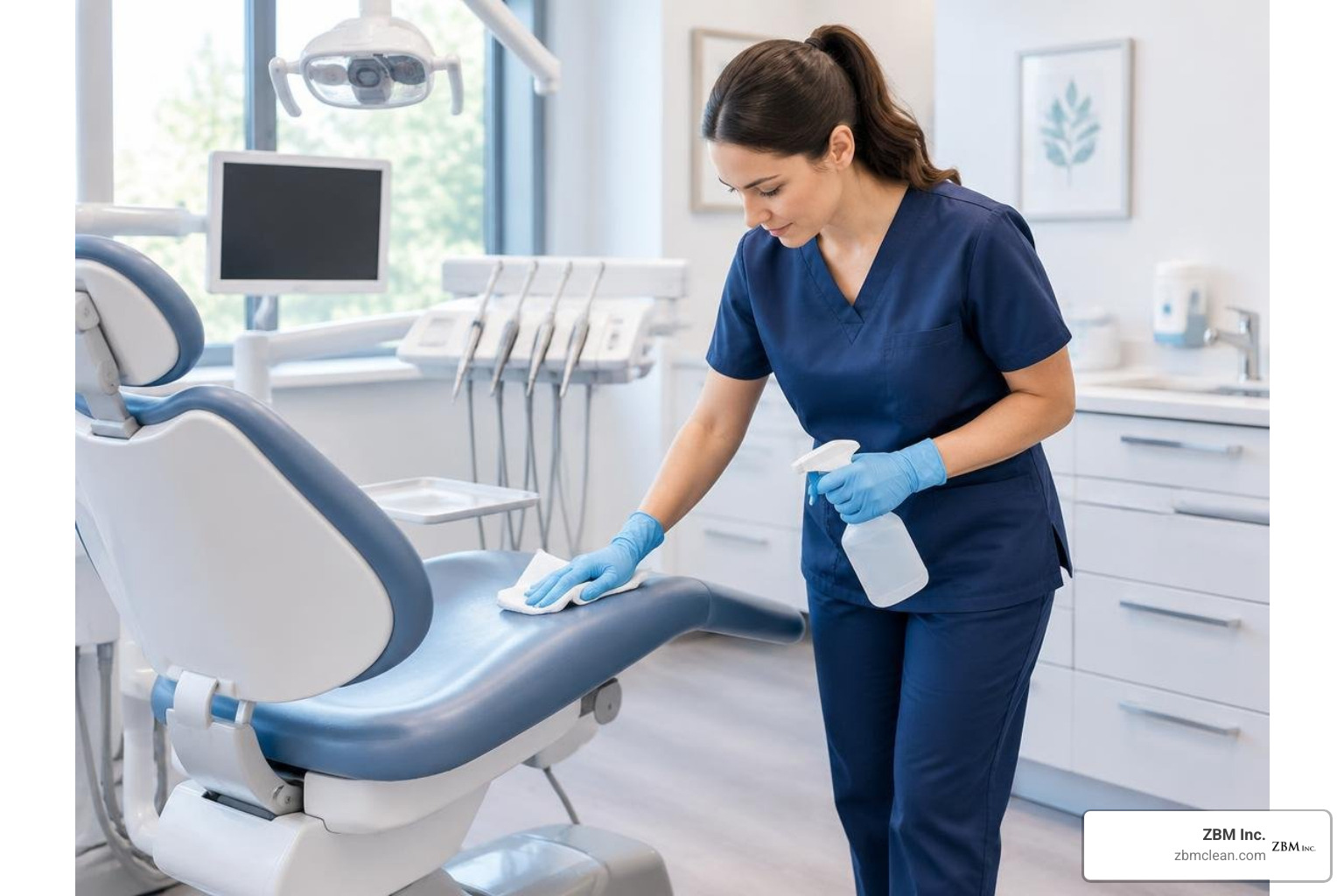
When evaluating a commercial cleaning company, verify that they implement distinct protocols for each area of your facility:
- Operatories: Ensuring dedicated custodial workflows that prevent cross-contamination between treatment suites and public areas.
- Sterilization Bay: Supporting strict separation between contaminated receiving zones and sterile instrument storage.
- Waiting Area & Reception: Maintaining continuous disinfection of check-in counters, digital touchscreens, seating, and children’s areas.
- Restrooms: Implementing hospital-grade disinfection on all touchpoints, fixtures, and partition walls.
A reputable professional cleaning provider adheres closely to IPAC core checklist guidelines, giving practice managers full confidence that both clinical and non-clinical zones meet strict public health standards.
Maintaining Critical Dental Equipment: Waterlines, Suctions, and Autoclaves
Dental facilities invest significant capital into clinical infrastructure, including vacuum units, delivery carts, and water delivery systems. Improper environmental maintenance risks premature equipment failure and patient health concerns, which is why dental practices increasingly rely on certified commercial cleaning teams to support their facility upkeep.
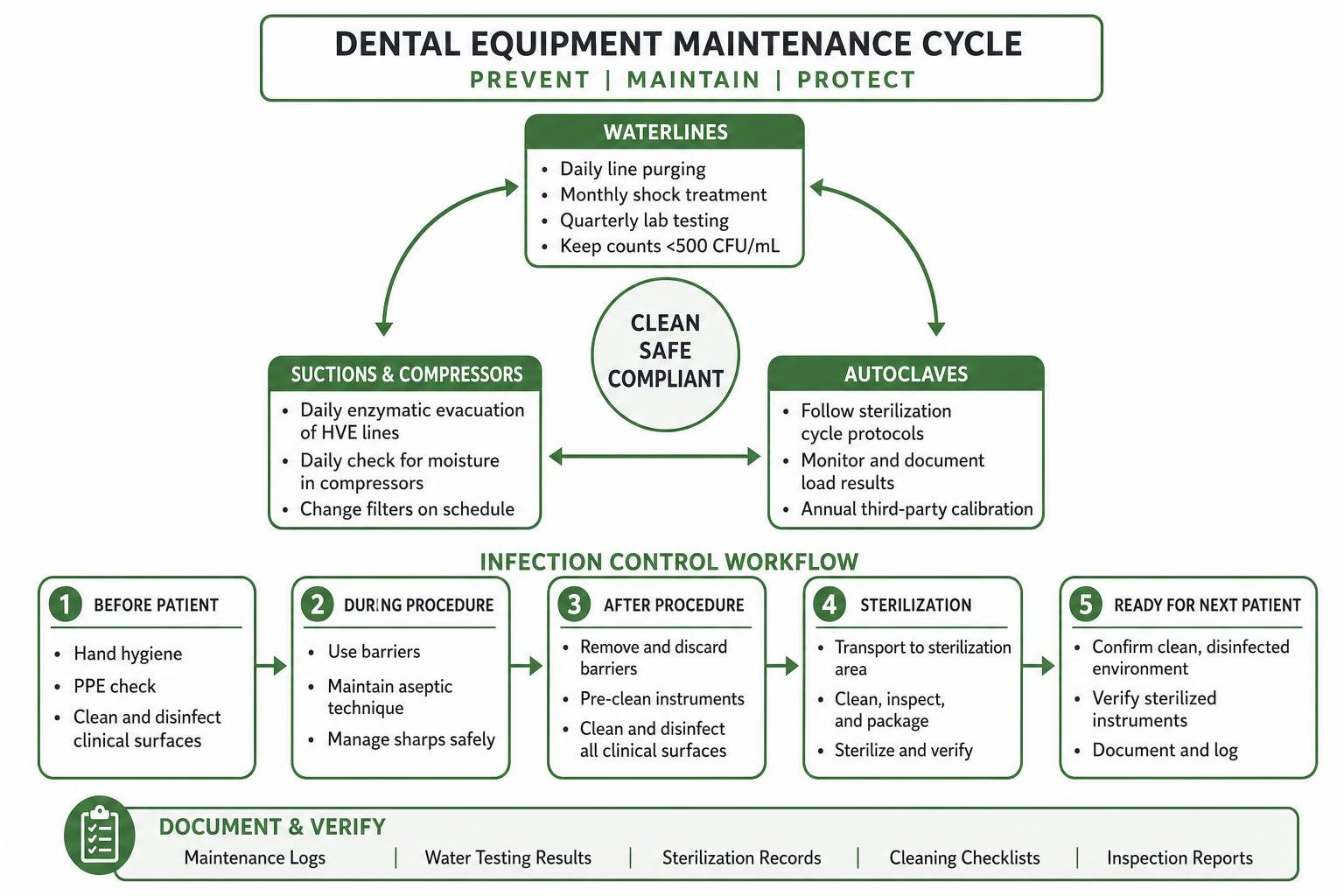
Dental unit waterlines are particularly vulnerable to biofilm growth due to narrow tubing and intermittent water flow. The ADA requires maintaining waterline counts below 500 CFU/mL. Ensuring your facility complies with these standards involves regular purging, shock treatments, and verified testing schedules—tasks best managed through structured commercial cleaning checklists.
Similarly, evacuation lines and compressor rooms require routine environmental checks and non-foaming enzymatic line flushing to prevent microbial accumulation and pneumatic line contamination. Professional cleaning services familiar with detailed dental infection control procedures help protect your high-value equipment while ensuring strict environmental hygiene.
Audit Readiness: Essential Logs, Documentation, and Avoiding Compliance Gaps
During an inspection, unrecorded cleaning is treated as cleaning that never occurred. Practices must maintain structured records:
- Sterilizer Logs: Keep biological spore testing results and physical printout strips on file for at least 3 years.
- Environmental Cleaning Logs: Maintain rolling 12-month records showing daily, weekly, and monthly surface cleaning.
- Safety Data Sheets (SDS): Keep an updated, accessible binder containing GHS-compliant sheets for every chemical on site.
Common compliance failures include unlogged surface disinfections, expired chemical stocks, and missing waterline testing reports. Working with a professional cleaning provider that supplies its own documentation makes it easier to stay audit-ready. Practices looking to close compliance gaps can review what to expect from medical clinic cleaning services and 5 tips to help find the best medical clinic cleaning services to ensure their facility remains fully prepared.
Frequently Asked Questions About Dental Office Cleaning
How long must a dental office keep environmental cleaning and sterilization records?
Environmental cleaning logs should be maintained for a rolling minimum of 12 months. Biological spore testing records, autoclave cycle printouts, and equipment maintenance documents should be retained for at least 3 years to satisfy regulatory audits. A professional cleaning partner should provide documentation that fits these retention requirements.
What is the acceptable bacterial limit for dental unit waterlines?
The ADA and CDC recommend that dental unit waterlines deliver water containing less than 500 CFU/mL of heterotrophic water bacteria, matching EPA drinking water standards. Reaching this benchmark typically requires routine maintenance rather than occasional deep cleaning.
What is the difference between clinical contact surfaces and housekeeping surfaces?
Clinical contact surfaces are items directly touched by contaminated hands or instruments during patient care, including switches, light handles, and trays, and they require EPA-registered intermediate hospital disinfectants. Housekeeping surfaces such as floors, walls, and sinks carry lower cross-contamination risks and can be treated with standard hospital detergents. A qualified cleaning service should be able to identify which surfaces fall into each category and treat them accordingly.
Conclusion
A meticulous sanitation program protects clinical reputations, safeguards patients from cross-contamination, and prevents regulatory disruption. Attempting to manage extensive building sanitization with internal clinical staff often leads to missed areas, increased turnover, and compliance risks—which is why many dental offices choose to work with trained professionals rather than treat cleaning as an add-on duty.
At ZBM Inc., we are certified, licensed, bonded, and insured, delivering specialized sanitation solutions tailored to healthcare and dental facilities across Dodge County, Jefferson County, Watertown, and Southeastern Wisconsin. Let our experienced professionals handle the demanding environmental care your practice deserves—explore our commercial cleaning services today.