Keep Commercial Restrooms Ready With an Hourly Checklist
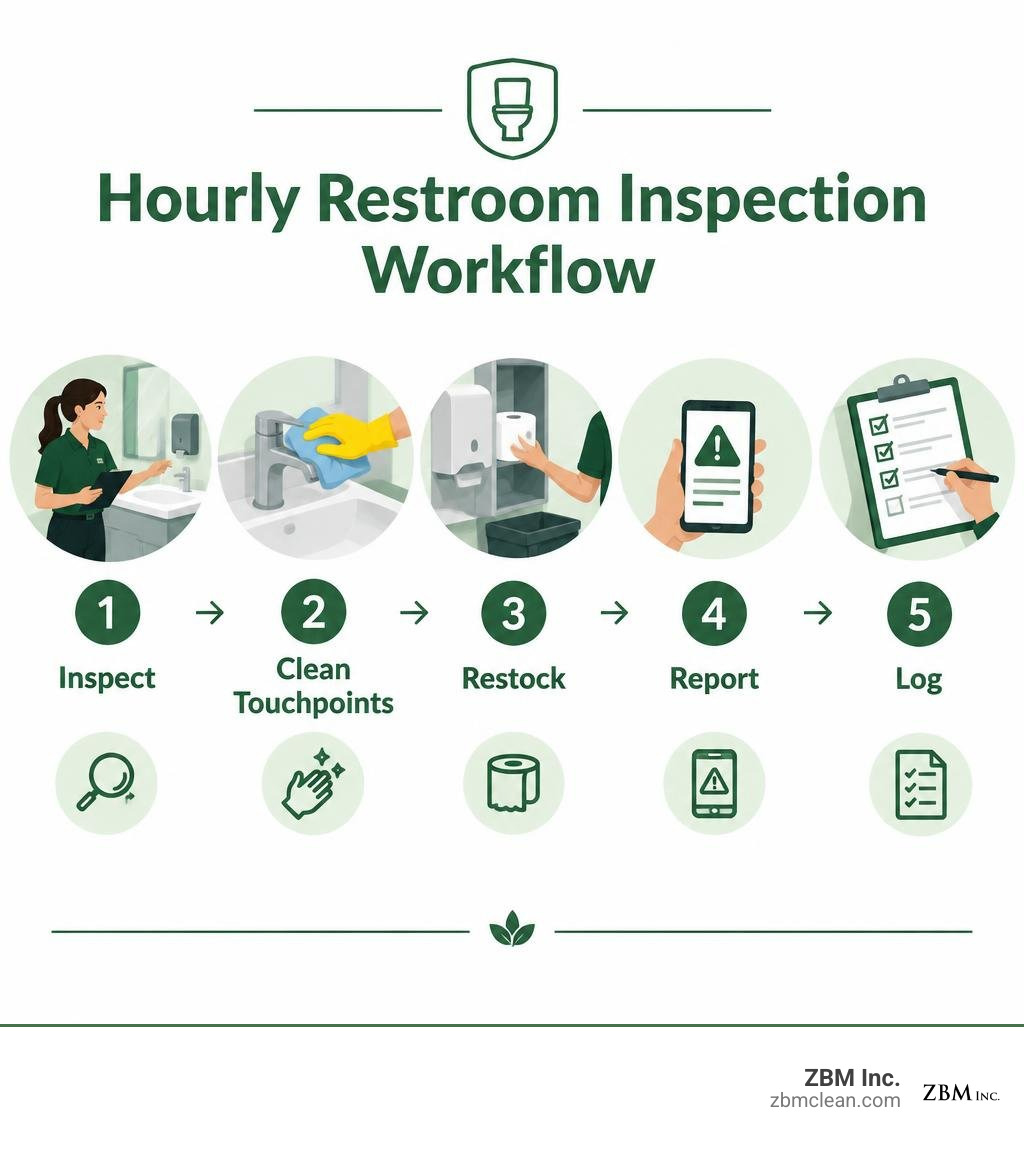
A bathroom hourly checklist is a short, repeatable inspection and touch-up routine for commercial restrooms. Each hour, staff should check supplies, remove trash, sanitize high-touch points, inspect floors for water or debris, and report maintenance problems right away.
For busy facilities, the goal is not a full deep clean every hour. It is to catch small problems before they become complaints, slip hazards, odors, or hygiene concerns. High-traffic restrooms may need hourly checks during peak periods, while lower-use areas can follow a schedule based on traffic, service standards, and past inspection data.
A useful hourly log records:
- Time and staff member completing the check
- Soap, paper towel, toilet paper, and sanitary-bin status
- Trash, floor condition, odors, and visible soil
- High-touch surfaces cleaned or disinfected
- Any leak, clogged fixture, damaged dispenser, or supply shortage requiring follow-up
I am Terry Zastrow, owner of ZBM Inc., a certified building maintenance firm with about 30 years of operational experience serving public and private facilities. Our work with structured cleaning and safety programs informs this practical bathroom hourly checklist approach for consistent, accountable restroom care.
Explore more about bathroom hourly checklist:
- bathroom cleaning checklist
- bathroom hygiene checklist
- bathroom maintenance checklist
Why High-Traffic Facilities Need a Bathroom Hourly Checklist
Managing high-traffic commercial facilities across Southeast Wisconsin requires rigorous oversight to prevent rapid hygiene degradation. Restrooms in airports, busy office complexes, convention centers, and healthcare hubs experience non-stop visitor turnover. Without a structured hourly routine, small messes escalate into serious health code violations, foul odors, and severe customer dissatisfaction within minutes.
Implementing a consistent routine protects facilities in several key areas:
- Mitigating Cross-Contamination Risks: High-contact surfaces harbor bacteria and viruses that spread rapidly across hundreds of daily visitors.
- Preventing Serious Slip-and-Fall Incidents: Water splashing from sinks or tracked-in moisture creates major liability hazards if left unattended.
- Safeguarding Brand Image: Visitors equate public restroom cleanliness directly with the professionalism and overall hygiene standards of your business.
- Enforcing Service Level Agreements (SLAs): Contractual cleaning specifications and regional health guidelines demand verifiable documentation of cleanliness.
- Applying Proven Standards: Leveraging structured ways to keep company restrooms clean and safe ensures your staff maintains hygiene without unnecessary downtime.
Trying to manage high-volume commercial restrooms with in-house staff who lack professional sanitation equipment often leads to rapid staff burnout, missed sanitization steps, and ongoing sanitation complaints. Partnering with a dedicated commercial service provider ensures your restrooms receive consistent, professional attention while your internal teams focus on core operations.
The Core Difference Between Hourly Checks and Deep Cleaning Routines
A common operational error is confusing a rapid hourly sweep with a scheduled deep sanitation routine. While high-traffic public restrooms require hourly attention during peak travel and operational hours, full restorative sanitation follows a different cadence. Trying to perform complex, abrasive cleaning every sixty minutes disrupts facility traffic, wastes cleaning chemicals, and leaves floors dangerously wet.

Hourly sweeps focus on rapid visual audits, touchpoint sanitization, quick consumable replenishment, and immediate hazard containment. In contrast, deep sanitation routines—often performed nightly or weekly—involve extensive chemical dwell times, heavy soil extraction, drain line flushes, and machine scrubbing of tile grout.
Industry-standard restroom inspection protocols clearly distinguish between rapid surface checks and restorative sanitation cycles.
| Feature / Metric | Hourly Restroom Check | Daily / Weekly Deep Clean |
|---|---|---|
| Primary Goal | Maintain hygiene baseline & restock | Remove deep grime, limescale & bio-soil |
| Average Duration | 3 to 7 minutes per restroom | 45 to 90 minutes per restroom |
| Equipment Deployed | Caddy, microfiber cloths, spot mop | Auto-scrubbers, pressure washers, extractors |
| Chemical Action | Quick-acting disinfectant sprays | Extended dwell-time acids, enzymes & degreasers |
| Focus Areas | Mirrors, levers, soap, paper, floor spills | Grout lines, fixture bases, vents, partitions |
| Facility Disruption | Minimal; stalls remain open | High; restroom must be closed to the public |
Attempting to resolve underlying contamination—such as embedded urine salts in porous grout or mold inside ventilation systems—through brief surface wiping simply masks the issue. Complex buildup requires specialized, heavy-duty commercial equipment and certified technicians who understand surface chemistry.
Step-by-Step Hourly Restroom Cleaning Tasks and Workflow
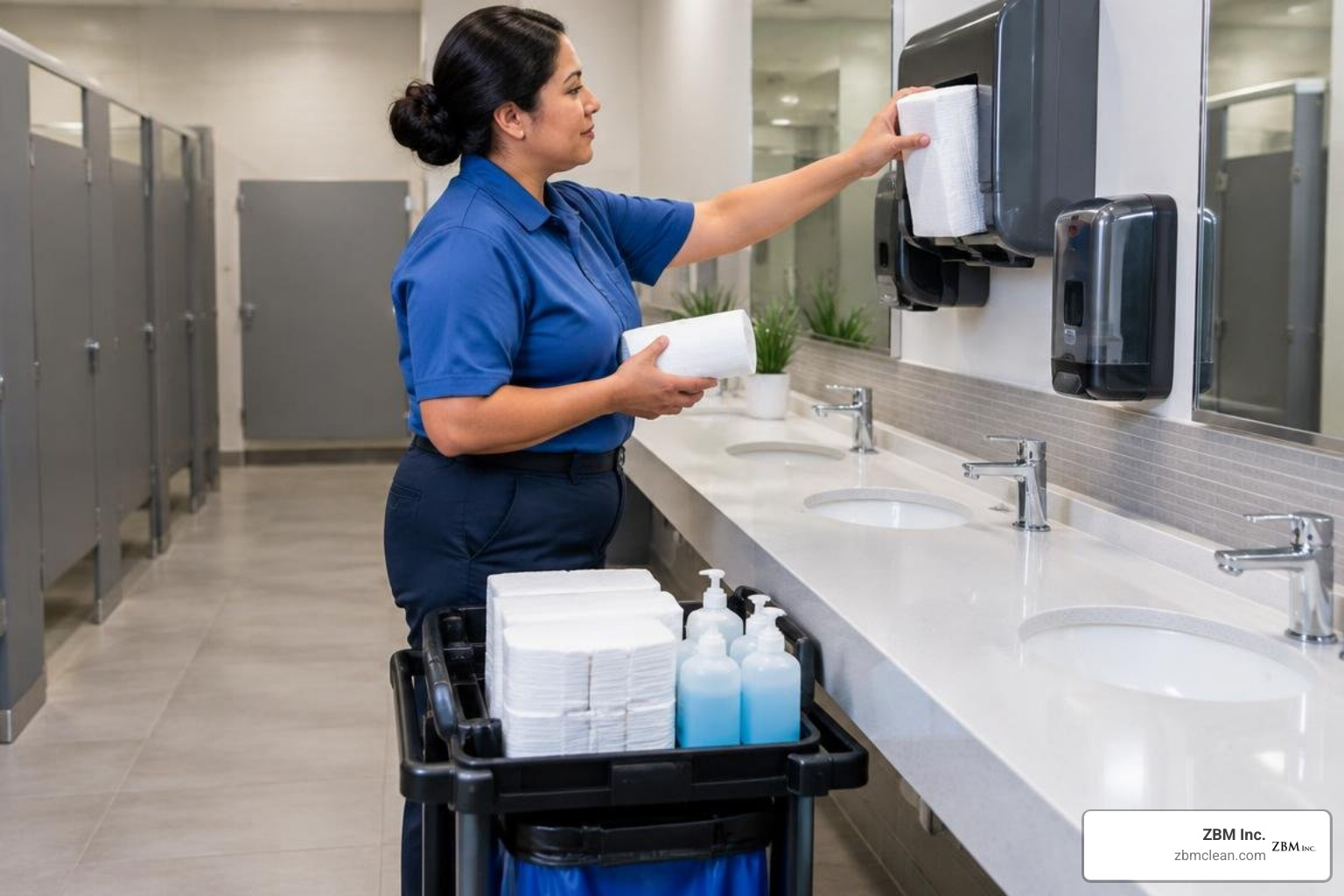
Maintaining a commercial facility requires strict oversight and a structured operational sequence. When evaluating commercial cleaning providers, building managers should verify that the contractor’s staff is thoroughly trained in professional commercial restroom cleaning tips and systematic sanitation workflows.
Attempting to handle hourly restroom upkeep with untrained in-house employees often leads to missed sanitization protocols, cross-contamination, and rapid staff burnout. Professional commercial cleaning services implement rigorous quality standards to ensure restrooms remain immaculate throughout the day:
- Safety Setup and PPE Protocols: Professional technicians deploy high-visibility warning signs and use certified personal protective equipment to maintain facility safety.
- Top-to-Bottom Environmental Audits: Certified staff conduct structural scans for damage, air quality issues, or fixture leaks before beginning maintenance.
- Systematic Touchpoint Disinfection: Commercial cleaners utilize hospital-grade disinfectants with verified dwell times across all high-contact surfaces.
- Proactive Restocking: Trained crews monitor and replenish soap, paper, and sanitary supplies before inventory reaches critically low levels.
- Floor Hazard Mitigation: Dedicated microfiber equipment is used to eliminate standing water and slip hazards without leaving residue.
Attempting DIY sanitation in high-volume restrooms without industrial-grade equipment often spreads contaminants rather than eliminating them. Partnering with an experienced commercial provider ensures complete compliance and pristine facilities.
High-Touch Surface Sanitization on Your Bathroom Hourly Checklist
High-contact fixtures represent the greatest vector for pathogen transmission in commercial properties. Evaluating whether a janitorial contractor enforces a comprehensive restroom sanitation checklist is essential for protecting staff and visitors.
A qualified commercial cleaning team focuses on critical hardware touchpoints:
- Door handles, push plates, kick plates, and entry hardware
- Stall latches, partition edges, and locking mechanisms
- Flush valves on commercial toilets and urinals
- Basin ledges, faucet levers, and temperature controls
- Dispenser push-bars and automated sensor units
- Baby changing tables and safety strap hardware
Wiping these surfaces with consumer-grade products fails to achieve necessary pathogen kill claims. Certified cleaning services deploy EPA-registered broad-spectrum disinfectants specifically formulated for high-traffic environments.
Restocking Consumables and Trash Removal in the Bathroom Hourly Checklist
Supply shortages are a leading source of customer complaints in commercial facilities. Professional commercial cleaning vendors manage consumable inventory and waste disposal seamlessly across every operational shift.
Key service deliverables include:
- Dispenser and Soap Management: Routine checks of bulk soap reservoirs and sealed cartridges to ensure uninterrupted availability.
- Paper Product Rotation: Active monitoring of jumbo-roll toilet tissue dispensers and commercial paper towel units.
- Sanitary Disposal Maintenance: Safe and sanitary replacement of stall receptacle liners to prevent odors and biological contamination.
- Waste Management: Timely emptying of central trash receptacles and exterior surface wipedowns to maintain spotless presentation.
Managing inventory and dispenser hardware in-house can overwhelm facility managers. Outsourcing to an experienced cleaning provider ensures continuous supply reliability.
Floor Safety, Fixture Polish, and Drain Checks
Restroom floors create serious liability risks when water accumulates near washbasins or high-speed dryers. Professional contractors focus on strict safety protocols while avoiding major restroom cleaning mistakes that impact indoor air quality.
- Puddle Elimination and Slip Prevention: Technicians remove standing water immediately using neutral, residue-free commercial cleaning agents.
- Fixture and Mirror Detailing: Lint-free microfiber materials are used to keep mirrors, counters, and chrome fixtures streak-free.
- Drain Maintenance and Trap Monitoring: Regular inspections ensure floor grates are clear and trap seals remain wet to prevent sewer gas intrusion.
- Fixture Function Verification: Technicians verify that commercial fixtures flush properly and report plumbing defects immediately.
Persistent drain odors, severe mineral buildup, and deeply ingrained grout grime cannot be resolved with basic surface wiping. These issues require certified commercial cleaning specialists equipped with industrial extractors, enzyme treatments, and advanced sanitation tools.
Implementing and Tracking Hourly Logs: Digital vs. Paper Forms
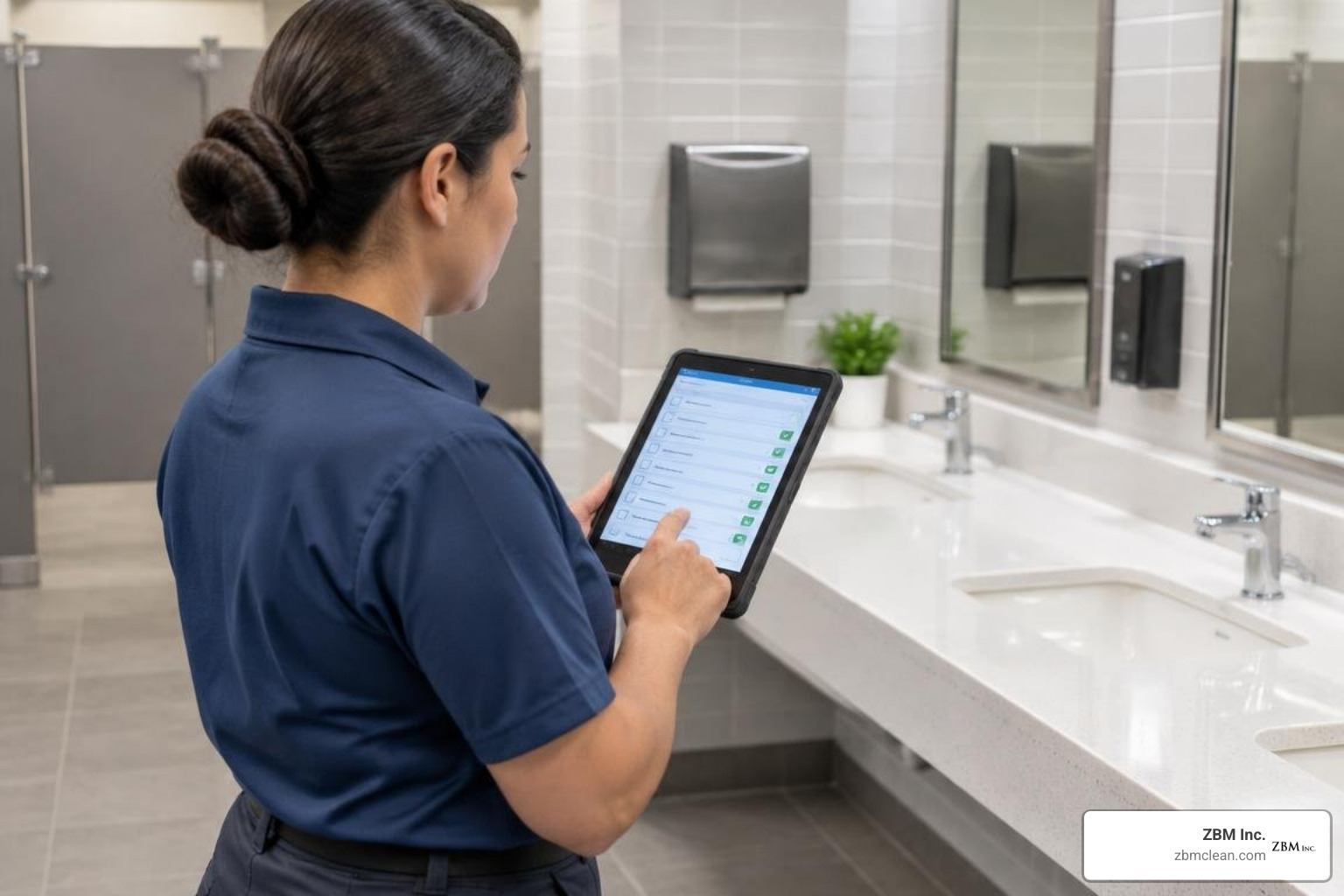
Modern facilities management is shifting away from outdated paper clipboards hung behind restroom doors. While traditional paper sheets provide a simple visual record for visitors, they offer zero real-time accountability, tear easily, and frequently become contaminated with bacteria.
Adopting digital inspection systems and established bathroom cleaning SOP standards provides numerous operational advantages:
- Automated Timestamps and GPS Tracking: Digital logs confirm the exact time and location where staff logged their inspection.
- Photo Evidence Integration: Technicians can capture photos of broken fixtures, vandalism, or completed tasks for management audits.
- Immediate Work-Order Dispatch: Failed inspection items automatically trigger instant maintenance tickets sent to facilities coordinators.
- Data-Driven Scheduling: Facility managers can analyze historical traffic patterns and adjust cleaning frequency based on objective use data.
Managing digital platforms, maintaining automated logs, and training shift workers to execute these protocols requires dedicated managerial oversight. Contracting a licensed, bonded, and certified cleaning service removes this operational burden entirely, giving building owners detailed digital logs and verifiable cleaning quality.
Frequently Asked Questions About Hourly Restroom Maintenance
How long should an hourly bathroom inspection take?
A standard hourly restroom inspection typically takes between 3 and 7 minutes per restroom, depending on the square footage, number of stalls, and current visitor volume. In small office restrooms, a rapid scan, mirror wipe, and consumable check can be completed in under 5 minutes. Larger multi-stall airport or stadium facilities may take 10 to 15 minutes during peak hours to ensure all stalls are restocked and touchpoints are sanitized.
What areas are most commonly missed during hourly sweeps?
The most frequently overlooked areas during routine hourly checks include:
- Undersides of soap dispenser nozzles where dried soap accumulates
- Feminine hygiene disposal units mounted inside stall partitions
- The tops of wall-mounted baby changing tables and privacy partitions
- Baseboards and floor areas directly behind commercial toilet fixtures
- Water splatter on the lower edges of large mirrors
How should maintenance issues or supply shortages be escalated?
When staff identify leaking supply lines, overflowing drains, broken lock latches, or supply stockouts during an hourly check, they should log the issue immediately into a centralized maintenance ticketing system. In urgent situations—such as continuous water leaks or biohazard contamination—the technician must post an “Out of Service” sign at the entrance, close the stall or restroom, and contact the facility maintenance supervisor for immediate dispatch.
Conclusion
A well-structured commercial restroom program safeguards public health, protects your physical property, and ensures every visitor experiences a clean, welcoming environment. However, managing consistent hourly checks, coordinating shift schedules, and maintaining industrial sanitation equipment can strain internal management resources.
ZBM Inc. delivers comprehensive commercial cleaning, facility maintenance, biohazard remediation, and disaster recovery services across Watertown, WI, Southeast Wisconsin, Minocqua, Lake Mills, Dodge County, and Jefferson County. As a family-owned, licensed, bonded, and insured firm, our certified professionals provide the specialized equipment, accountability, and expertise required to keep high-traffic commercial spaces spotless. Building managers looking to upgrade their facility protocols can explore our comprehensive bathroom cleaning checklist resources to evaluate standard service specifications.