How to Clean a Crime Scene Safely
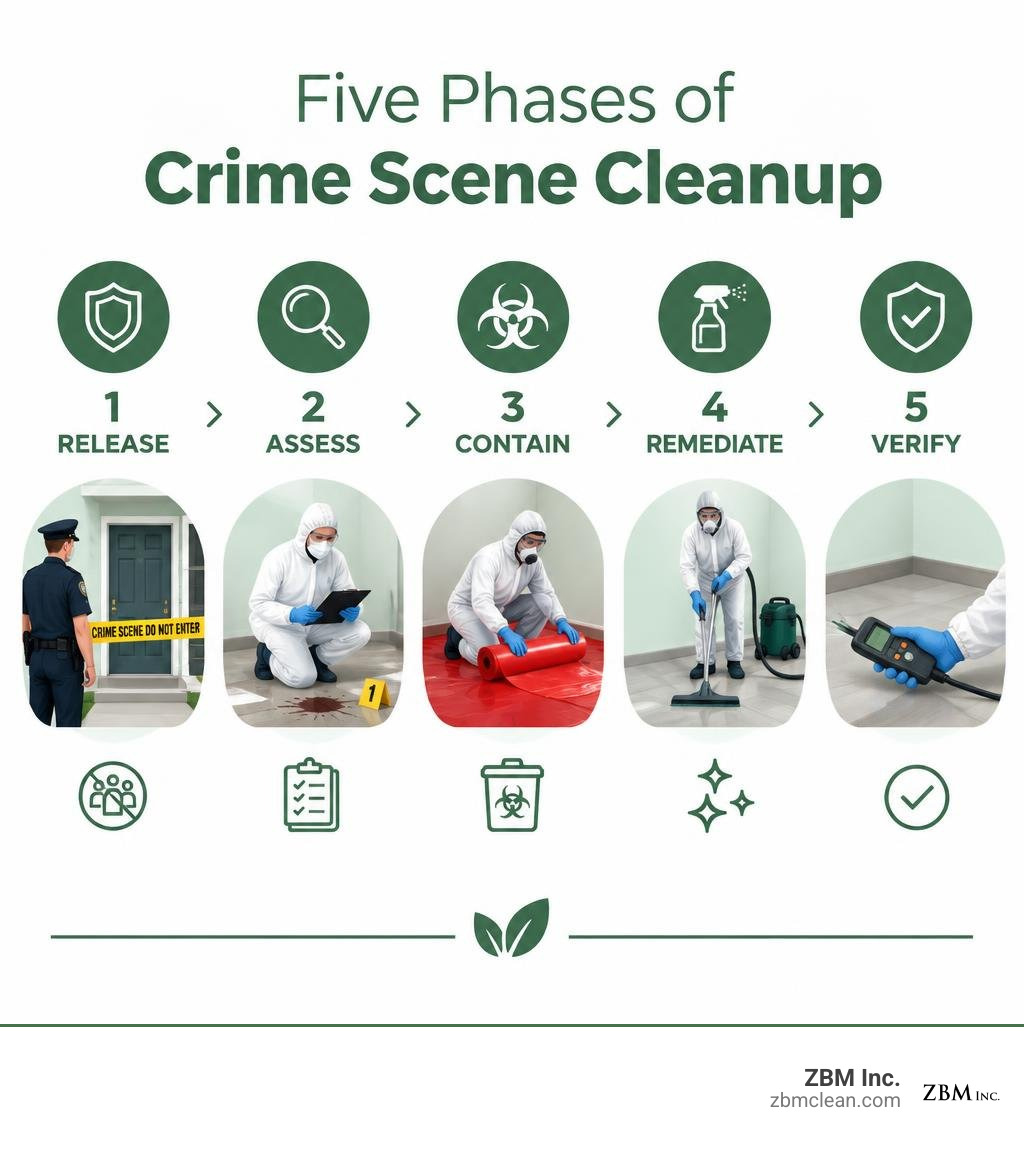
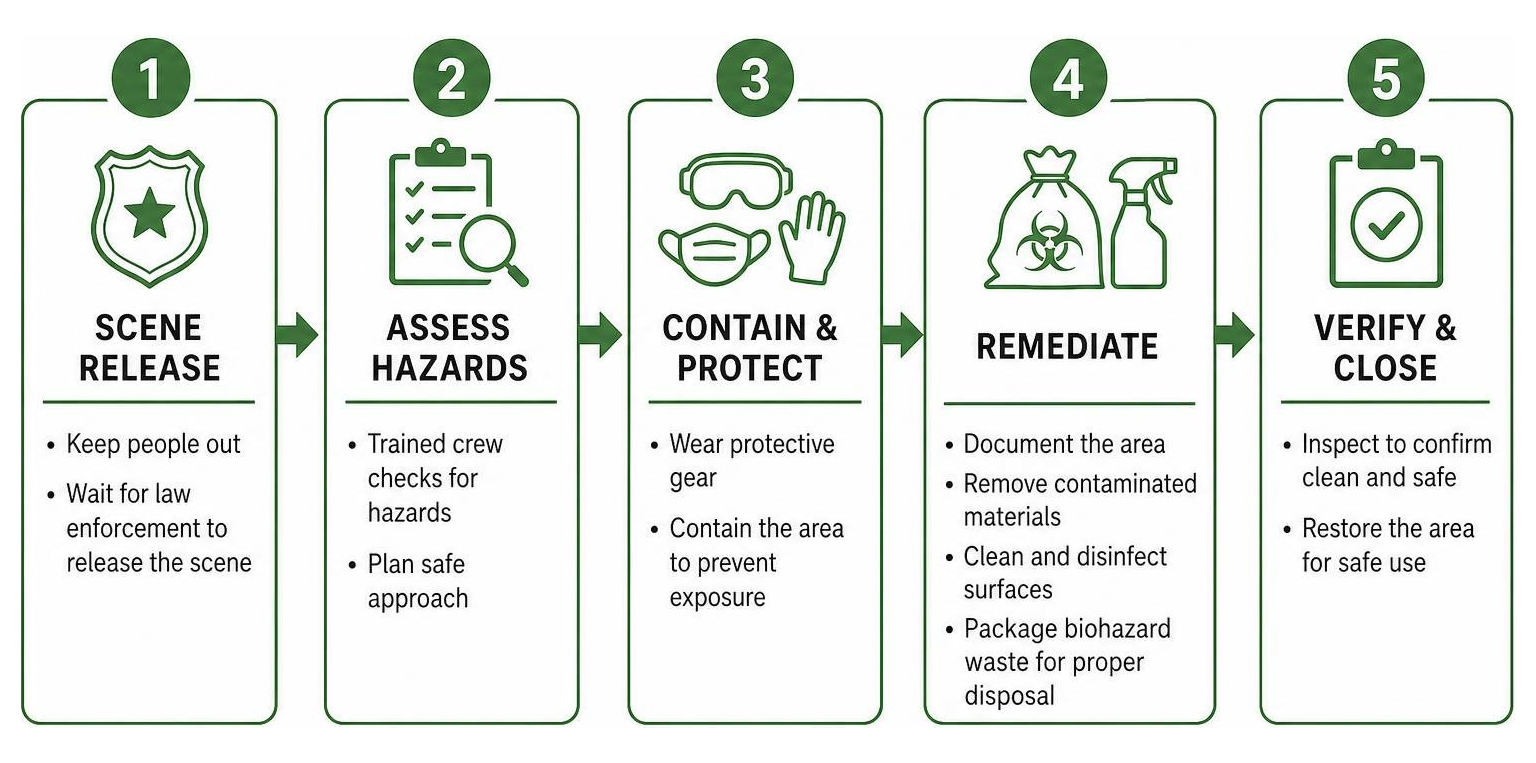
Keep people out and wait for law enforcement to release the scene before cleaning begins. A trained crew then checks for hazards, wears protective gear, documents the area, removes contaminated materials, cleans and disinfects surfaces, and packages biohazard waste for proper disposal. Do not move possible evidence or treat blood-soaked carpet like an ordinary spill.
I’m Terry Zastrow, owner of ZBM Inc., an IICRC-certified firm with about 30 years of experience serving public agencies and private clients. My technician certifications and ongoing safety training shape how to clean a crime scene while protecting people, property, and potential evidence.
How to clean a crime scene terms made easy:
- clean crime scenes
- crime scene cleanup careers training requirements real duties and salary expectations
- crime scene cleaner tips and tricks for true clean mode
Step-by-Step Guide on How to Clean a Crime Scene
Handling the aftermath of a violent incident requires far more than standard janitorial supplies. When blood, bodily fluids, and chemical residues compromise a property, understanding how a professional team navigates the remediation process is essential for safety. Attempting to manage these hazards without specialized training and industrial equipment often leads to incomplete disinfection, structural contamination, and serious health risks.
At ZBM Inc., our family-owned team approaches every site with strict protocols. Whether managing an emergency in Watertown, WI, or responding to scenes across Southeast Wisconsin, we follow a comprehensive system that aligns with our crime scene cleanup complete guide.
Initial Hazard Assessment and Law Enforcement Clearance
Before any biohazard cleaning begins, official protocol dictates that law enforcement must formally process and release the property. Forensic investigators adhere to strict guidelines outlined in the law enforcement investigation guide to ensure that blood spatter documentation, fingerprint dusting, and physical evidence collection remain undisturbed.
Once officers transfer the scene back to the property owner, our certified crew performs an exhaustive site assessment:
- Investigator Clearance Verification: Confirming that all police seals are lifted and no active investigation remains.
- Environmental & Chemical Hazard Detection: Checking for fingerprint powders, tear gas residues, exposed electrical wiring, structural damage, or hidden sharp objects.
- Cross-Contamination Containment: Establishing controlled entry and exit corridors using heavy-duty plastic sheeting and negative air machines to prevent airborne pathogens from spreading to unaffected rooms.
- Scene Access Logs: Maintaining detailed records of every technician entering the hot zone to ensure complete site control.
Attempting to wipe down surfaces or move items prior to this formal assessment can easily spread dangerous biological pathogens throughout the structure or inadvertently disrupt critical legal proceedings.
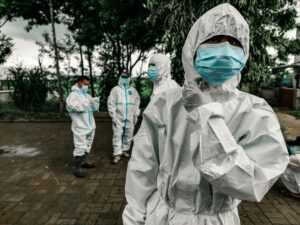
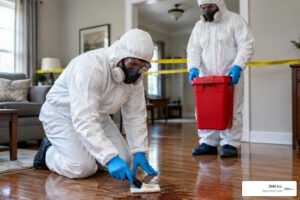
Personal Protective Equipment for How to Clean a Crime Scene Safely
Entering a biohazard environment without medical-grade safety gear exposes individuals to bloodborne pathogens such as Hepatitis B (HBV), Hepatitis C (HCV), and HIV. Professional remediation requires multi-layered barrier systems designed to prevent any direct contact or inhalation of aerosolized contaminants.

Our certified technicians don specialized PPE before crossing the containment perimeter:
- Impermeable Tyvek Suits: Full-body protective coveralls with taped seams to block liquids and microscopic particles.
- Respiratory Protection: Full-face respirators equipped with HEPA and organic vapor filters to neutralize airborne pathogens and noxious odors.
- Double Nitrile Gloves: Puncture-resistant inner and outer gloves taped directly to the suit sleeves.
- Fluid-Resistant Boot Covers: Heavy-duty slip-resistant boot protectors to avoid tracking contaminants out of the work zone.
- Controlled Doffing Protocols: Strict, multi-stage removal procedures where gear is sanitized and discarded inside the biohazard boundary to avoid contaminating clean zones.
Household gloves and simple dust masks provide zero protection against liquid-borne pathogens, making professional intervention vital.
Biohazard Fluid Removal and Porous Material Extraction
Blood and physiological fluids do not remain on the surface; they rapidly penetrate porous building materials, seeping through carpet backing, padding, hardwood floorboards, and into structural subflooring and drywall. Simply scrubbing the surface leaves dangerous pathogens festering underneath, which can cause recurring odors and structural degradation.
During professional after-death cleaning services, our team focuses on deep extraction:
- Controlled Cut-Outs: Contaminated carpeting, padding, baseboards, and drywall are carefully measured, cut out, and removed under negative air pressure.
- Subfloor Treatment: Concrete or wooden subfloors undergo deep biological cleaning, enzymatic breakdown, and specialized sealing to lock out residual moisture.
- ATP Bioluminescence Testing: We use Adenosine Triphosphate (ATP) monitoring devices to measure organic matter at the cellular level, confirming complete biological extraction rather than relying on visual inspection alone.
Hospital-Grade Chemical Disinfection and Odor Neutralization
After removing unsalvageable porous items, all remaining non-porous surfaces must undergo multi-stage sanitization. Typical household disinfectants lack the contact time and chemical potency required to eradicate resilient bloodborne viruses.
| Material Type | Examples | Professional Remediation Protocol |
|---|---|---|
| Non-Porous | Tile, stainless steel, glass, sealed countertops | Multi-stage wiping with broad-spectrum EPA-registered disinfectants; dwell times observed; ATP verification |
| Semi-Porous | Sealed concrete, solid finished wood, vinyl | Enzymatic bio-wash, mechanical scrubbing, antimicrobial application, and specialized clear sealing |
| Porous | Carpet, padding, mattresses, unsealed drywall | Full extraction, containment bagging, physical removal, and biohazard incineration |
Our team relies on proven professional crime scene cleanup methods. We apply hospital-grade, EPA-registered broad-spectrum disinfectants designed to neutralize pathogens on contact.
To eliminate severe decomposition odors and chemical smells, we utilize industrial hydroxyl generators, thermal foggers, and ozone treatments that break down volatile organic compounds (VOCs) at the molecular level without damaging interior finishes.
Regulatory Compliance and Waste Handling in How to Clean a Crime Scene
Every piece of saturated material, disposable PPE, and biohazard fluid is classified as regulated medical waste. Transporting or disposing of biological waste in standard municipal trash bins is illegal and subject to heavy regulatory fines.
State and federal packaging protocols, reinforced by the forensic investigation procedures manual, mandate strict packaging standards:
- Red Biohazard Bags: All extracted biohazard debris is placed in heavy-mil, tear-resistant red bags featuring the universal biohazard symbol.
- Rigid Sharps Containers: Any broken glass, needles, or bone fragments are sealed in puncture-proof sharps boxes.
- DOT-Approved Secondary Containment: Bags are double-sealed inside rigid, leak-proof hazardous waste drums.
- Chain of Custody & Waste Manifests: We provide complete documentation tracking the biohazard material from the property to licensed medical waste incinerators, ensuring total adherence to legal biohazard disposal regulations.
Restoring Safety and Peace of Mind After Trauma
Experiencing a traumatic event on your property is overwhelming. Attempting to clean the aftermath yourself adds emotional trauma to severe biological and chemical risks. Hiring a certified, experienced remediation company ensures the space is returned to a safe, livable condition discreetly and thoroughly.
At ZBM Inc., we serve families and businesses across Jefferson County WI, Dodge County WI, Lake Mills WI, Minocqua WI, and the wider Northwoods WI and Southeastern WI regions. As a licensed, bonded, insured, and certified family-owned business, we handle every detail—from containment and thorough decontamination to coordinating directly with your insurance provider.
If you are facing a severe cleanup situation, reach out to our team for compassionate, professional biohazard and trauma cleanup services to restore your property’s safety and peace of mind.