How Commercial Pressure Washing Services Protect Your Property
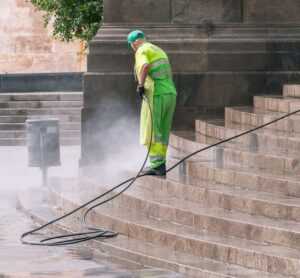
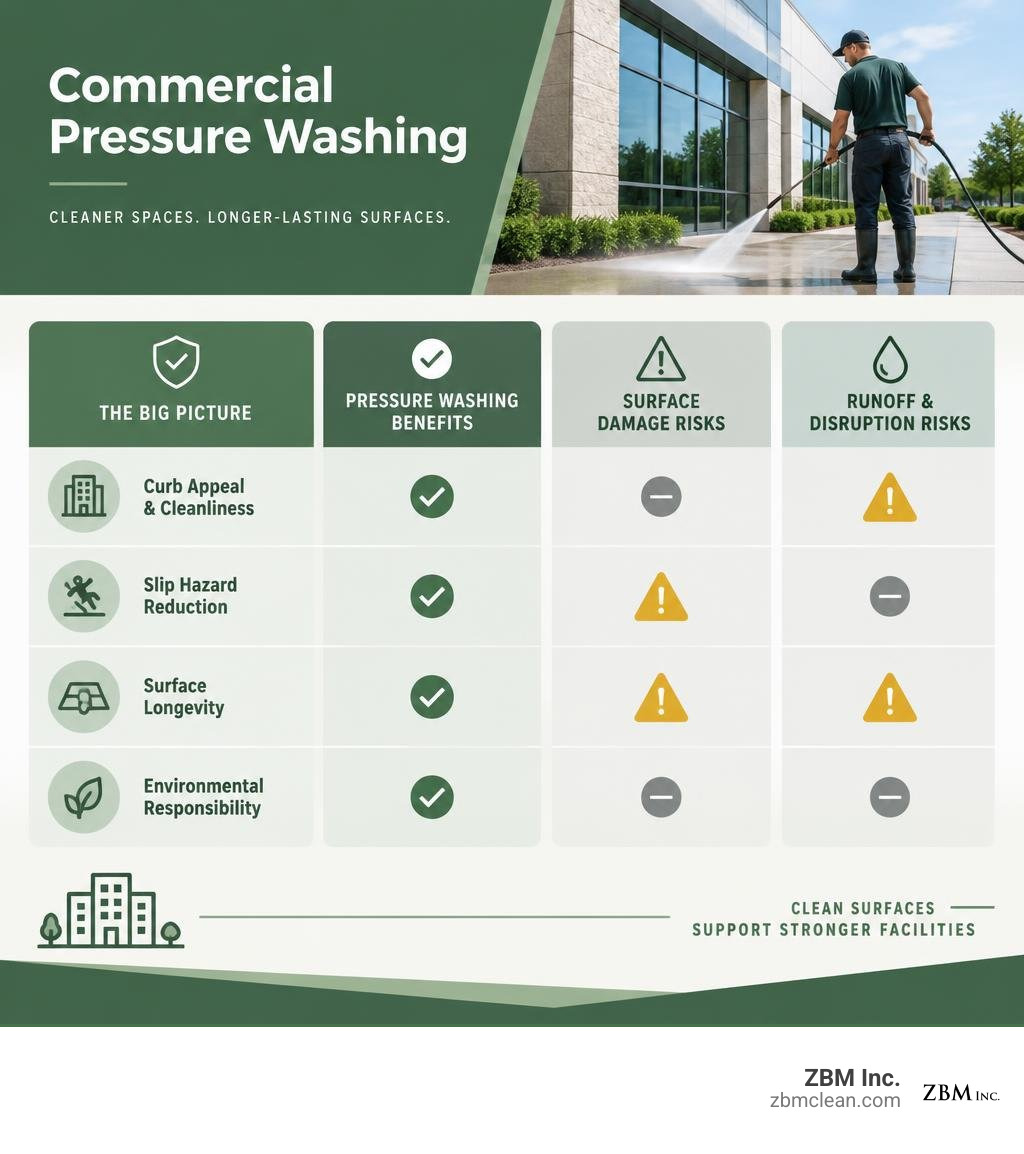
Commercial pressure washing services clean large, high-use areas such as entrances, walkways, parking areas, and building exteriors. For a facility manager, the right service does more than improve curb appeal: it removes grime and buildup that can create slip hazards or wear down surfaces. When comparing providers, ask how they’ll protect each surface, contain wastewater, document insurance, and schedule work around your business hours.
I’m Terry Zastrow, owner of ZBM Inc., an IICRC-certified firm with nearly 30 years of building maintenance experience. My technician certifications and safety training shape how I evaluate commercial pressure washing services for busy facilities.
Commercial pressure washing services basics:
According to the U.S. Environmental Protection Agency, managing stormwater runoff is a key compliance responsibility for commercial properties, and professional washing contractors use containment systems to keep wash water out of storm drains.
The Operational and Financial Value of Commercial Pressure Washing Services

Commercial properties face constant environmental wear. Traffic, industrial fallout, grease, and seasonal temperature swings take a heavy toll on concrete, masonry, and siding. For facility directors overseeing properties across Dodge County, Jefferson County, and Southeast Wisconsin, routine deep cleaning is not merely an aesthetic expense. It is a critical financial strategy that protects structural assets.
Neglecting exterior substrates accelerates deterioration. Pollutants and embedded grit degrade concrete sealers, while moisture trapped behind biological growth weakens building envelopes. Data shows that preventative maintenance is 10 to 20 times cheaper than premature structural repair or full substrate replacement. Furthermore, well-maintained commercial properties command approximately 7% higher rental rates than neglected buildings. Investing in scheduled exterior care preserves leasing value and prevents minor surface grime from turning into major capital restoration expenses.
When managing complex facilities, coordinating exterior upkeep as part of your broader facility exterior cleaning plan ensures that building envelopes, sidewalks, and parking areas receive appropriate care before long-term damage occurs.
Technical Methods in Commercial Pressure Washing Services
Commercial cleaning demands advanced equipment calibrated to specific building materials. Unlike standard consumer washers, industrial units operate across wide ranges of pressure (from 750 PSI up to specialized hydro-jetting levels) and utilize precise water temperature controls.
The primary technical distinction lies between cold water and heated systems:
- Cold Water Systems: Ideal for removing everyday topsoil, dust, loose mud, and light biological film from durable masonry and walkways.
- Hot Water Systems: Essential for industrial degreasing. Commercial burners heat water up to 200°F, breaking down petroleum hydrocarbons, cooking oils, heavy grease, and hardened chewing gum at a molecular level.
| Feature | Cold Water Units | Hot Water Systems (up to 200°F) |
|---|---|---|
| Primary Use Cases | General dirt, loose debris, moss, topsoil | Motor oil, grease, food residue, gum, fuel pads |
| Cleaning Mechanism | Impact pressure and water volume | Thermal emulsification and surfactant action |
| Typical Target Areas | Siding, clean sidewalks, general building wash | Dumpster pads, drive-thrus, loading docks, garages |
| Substrate Safety | Safe for most durable masonry | Requires precise temperature and nozzle management |
Technicians adjust impact force using specialized color-coded nozzles ranging from wide-dispersion fan tips (such as 40° or 65° patterns for chemical rinsing) to narrower angles for targeted applications. For broad horizontal areas like concrete plazas and parking decks, technicians utilize rotary surface cleaners. These enclosed tools feature dual spinning nozzles that clean evenly, eliminate zebra-striping, reduce noise, and prevent dirty splashback onto storefront glass.
Attempting to handle heavy grease, embedded gum, or high-traffic surface restoration in-house with small rental equipment is notoriously time-consuming and often fails to extract deeply penetrated oils. Industrial grease requires sustained heat, high flow rates, and specific surfactant chemistry that standard hardware-store tools cannot deliver.
Mitigating Slip Hazards and Legal Liability
Clean walkways protect your bottom line by preventing workplace and public accidents. According to occupational safety records, approximately 32% of all non-fatal workplace injuries result from slips, trips, and falls. In commercial and industrial settings, grease drips, fuel leaks, algae, and wet slime create hazardous conditions on concrete ramps and entryways.
Proactive decontamination reduces these legal liabilities:
- Oil and Petroleum Remediation: High-traffic drive-thrus and parking spaces accumulate engine oils that become slick when wet. Hot-water extraction lifts these oils before pedestrians track them into lobbies.
- Biological Decontamination: Moisture encourages slick algae and mildew growth on shaded sidewalks and entry ramps.
- Heavy Staining & Corrosion: Addressing difficult mineral deposits, industrial fallout, and rust stain removal on concrete ensures walking surfaces remain safe, visible, and structurally sound.
Documenting routine professional washing establishes a strong record of safety compliance, protecting property owners against negligence claims while maintaining a safe environment for tenants and visitors.
Environmental Compliance and Wastewater Reclamation
Federal and state environmental protection guidelines strictly regulate commercial exterior washing. Letting dirty wash water flow directly into public storm drains violates clean water regulations. Storm sewers carry runoff untreated into local waterways, making the discharge of motor oil, heavy metals, industrial degreasers, and cleaning chemicals illegal.
Professional contractors deploy specialized containment and recovery systems to stay fully compliant:
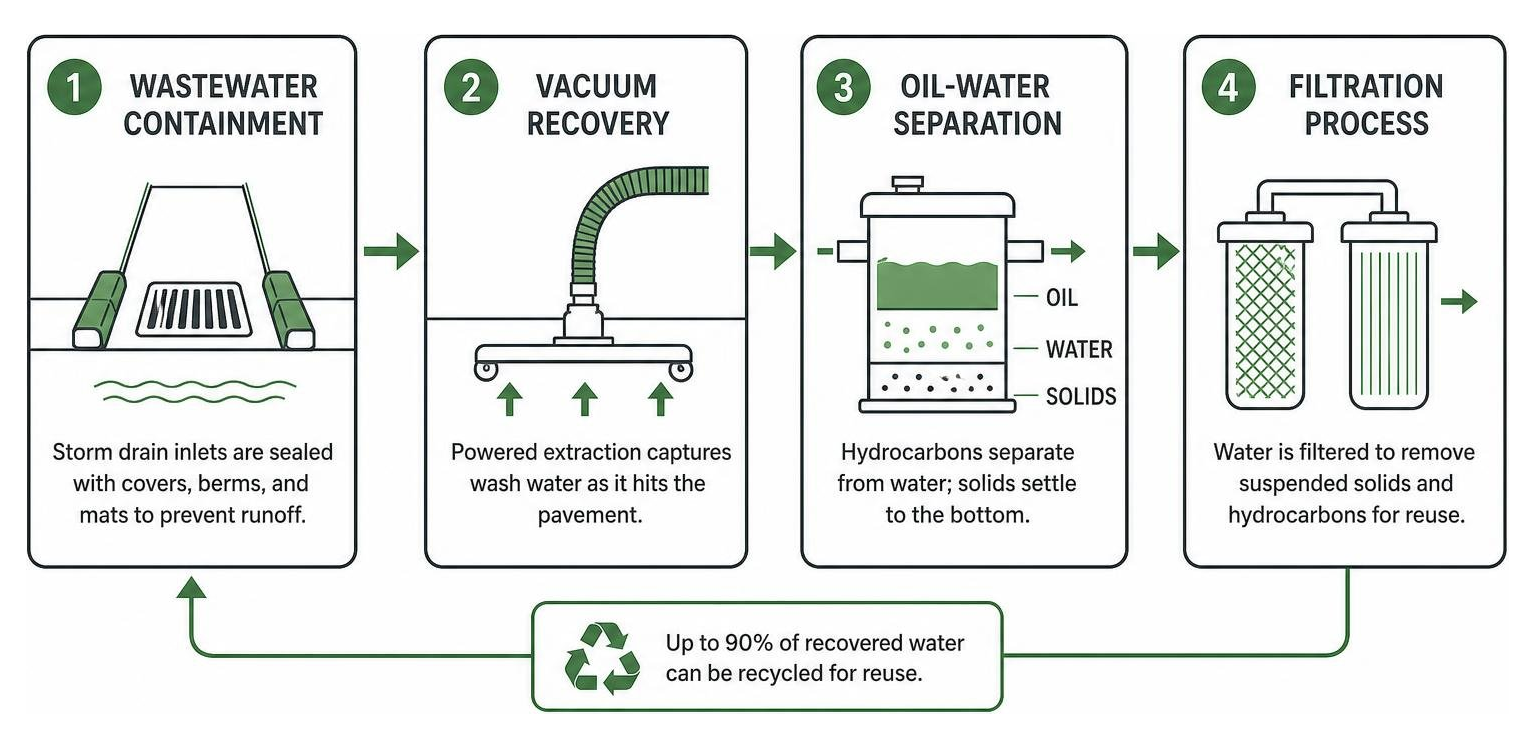
- Drain Isolation: Storm drain inlets are sealed with impermeable covers, weighted berms, and magnetic mats before washing begins.
- Vacuum Recovery Booms: Powered extraction units capture wash water as it hits the pavement, preventing runoff from reaching soil or roadways.
- Filtration and Recycling: Advanced mobile treatment systems filter out suspended solids and hydrocarbons, allowing modern fleets to recycle up to 90% of recovered wash water for reuse.
- Authorized Disposal: Remaining effluent is pumped to designated sanitary sewer access points with municipal approval or hauled away for certified treatment.
Partnering with a certified service provider eliminates the risk of costly environmental violations and ensures your facility meets all municipal water discharge standards.
Executing an Effective Facility Cleaning Strategy

Maintaining high standards across corporate campuses, retail centers, or regional healthcare facilities requires a structured maintenance program rather than reactive spot treatments. Integrating scheduled pressure washing with recurring commercial cleaning keeps your entire facility spotless, from public-facing grounds to interior lobbies.
Contracting scheduled maintenance provides clear operational advantages:
- Priority Off-Hours Scheduling: High-traffic centers benefit from night operations (between 10 PM and 5 AM) that eliminate disruption to customers, tenants, and deliveries.
- Multi-Site Uniformity: Multi-location property managers receive consistent quality, unified reporting, and streamlined billing across all sites.
- Cost Efficiency: Scheduled maintenance agreements typically lower the cost per service by 10% to 20% compared to emergency deep cleans, because lighter surface buildup cleans faster and requires less chemical dwell time.
Surface-Specific Care and Soft Washing Protocols
Different commercial surfaces require tailored pressure and chemical techniques. Applying excessive pressure to delicate substrates can etch masonry, strip paint, blow out window seals, and damage building insulation.
- Architectural Cladding and Metal Panels: Must be cleaned using low-pressure rinse cycles and neutralizing detergents to protect factory coatings from oxidation and scratching.
- Brick and Historical Masonry: High impact pressure easily erodes aged mortar joints and damages the protective outer glaze of brick. Controlled warm water and specialized restoration chemistry lift efflorescence without damaging structural joints.
- Stucco and Exterior Insulation Finish Systems (EIFS): Stucco is soft and porous. High pressure will blow holes straight through synthetic stucco. These surfaces require specialized soft washing.
Soft washing applies biodegradable biocides, surfactants, and water at low pressures (under 500 PSI). The cleaning agents kill algae, lichen, and mildew spores at their roots, allowing technicians to gently rinse the surface clean. Understanding safe siding cleaning techniques protects delicate building envelopes from costly, permanent moisture intrusion.
When building exteriors develop deep mold, mildew, or atmospheric staining, trying to scrub these surfaces with consumer-grade equipment or ladders is both dangerous and ineffective. DIY attempts often leave the underlying biological spores alive, causing mold to bloom back within weeks. Professional application ensures thorough sanitation and protects the building envelope.
Selecting and Scheduling Commercial Pressure Washing Services
Choosing an exterior cleaning partner requires a careful review of their technical capabilities, operational safety standards, and insurance credentials.

When vetting exterior maintenance contractors, verify these essential standards:
- Adequate Insurance Coverage: Commercial contracts require robust protection. Verify that the company holds comprehensive general liability insurance, dedicated umbrella policies, and active workers’ compensation.
- OSHA and Lift Certifications: Technicians working on multi-story facades must hold valid boom lift, aerial platform, and fall protection certifications.
- Strict Noise Management: Commercial pressure washers can generate sound levels between 80 and 95 dB. Crews operating near hospitality venues or mixed-use developments must use sound baffles and plan operational windows that respect local noise ordinances.
- Trained, Certified Staff: Ensure the contractor uses experienced, background-checked technicians who follow formal safety plans and environmental containment procedures.
We are a licensed, bonded, insured, and certified family-owned business based in Watertown, WI. We deliver dependable commercial solutions across Dodge County, Jefferson County, Lake Mills, and Southeastern Wisconsin, as well as seasonal facilities in Minocqua and the Northwoods. Following our complete facility exterior maintenance checklist helps facility managers keep every square foot of their property clean, safe, and code-compliant all year round.