
Why Mold Remediation Services Matter More Than You Think
Mold remediation services are professional processes that go beyond simply wiping away visible mold — they identify the moisture source, contain the spread, and restore the affected area to a safe, clean condition.
Here’s what you need to know at a glance:
| Question | Quick Answer |
|---|---|
| What is mold remediation? | Full removal, containment, cleaning, and moisture correction by certified professionals |
| When do you need it? | After water damage, leaks, flooding, or when mold covers more than 10 sq ft |
| Can you DIY it? | Only for very small, non-porous surfaces — otherwise call a certified team |
| How long does it take? | 1 day for small areas; up to 2 weeks for large or HVAC-involved jobs |
| Does insurance cover it? | Sometimes — depends on the cause and your policy |
| How do you prevent recurrence? | Fix the moisture source and keep indoor humidity below 60% |
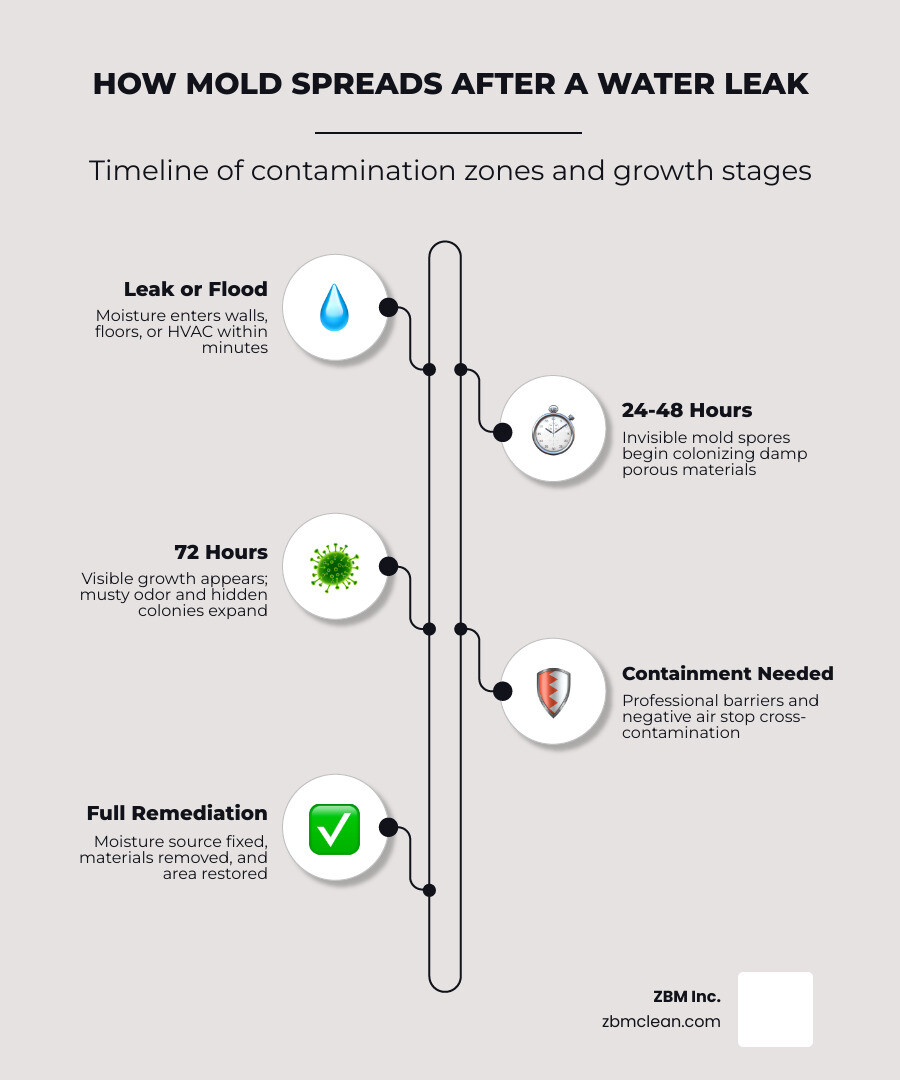
Mold is fast. Very fast. Given enough moisture, it can begin growing within 24 to 48 hours of a leak or flood — and spread significantly within 72 hours. For a busy commercial property manager in Watertown, WI, that window is razor thin.
The problem isn’t always visible, either. Mold hides behind drywall, under flooring, inside HVAC systems, and above ceiling tiles. By the time you smell that musty odor or see dark spots, the damage is often already deeper than it looks.
That’s exactly why a professional response matters.
I’m Terry Zastrow, owner of ZBM Inc., a certified IICRC firm with approximately 30 years of field experience providing mold remediation services to state agencies, municipalities, housing authorities, and private-sector clients across the region. The sections below walk you through everything you need to know — from identifying hidden growth to choosing a qualified contractor.
What Mold Remediation Services Actually Include
At their core, mold remediation services are about more than removing stains or spraying chemicals. A proper job addresses five things:
- Finding the moisture source
- Assessing how far contamination has spread
- Containing the affected area
- Removing damaged materials and cleaning salvageable ones
- Drying and restoring the space to reduce recurrence
Mold can grow on wood, drywall, insulation, carpet, paper, upholstery, and even food if enough moisture is present. That is why the same approach does not work for every surface. Porous materials often need removal. Non-porous or semi-porous surfaces may be cleaned and sanitized if structurally sound.
Mold Remediation vs. Simple Mold Removal
“Mold removal” usually means dealing with what you can see. “Mold remediation” means dealing with why it is there in the first place.
A simple cleanup may scrub a wall and make the room look better for a week. Remediation creates a plan: inspect visible and hidden growth, stop the moisture source, prevent cross-contamination, remove unsalvageable materials, clean the rest, dry the structure, and verify conditions.
That difference matters because mold often comes back when the root cause is ignored. If a wall cavity stays damp, if attic sheathing keeps collecting condensation, or if a basement remains humid, mold gets a second act. And unlike bad sequels in movies, this one damages drywall.
When Professional Mold Remediation Services Are Needed
We recommend professional help when any of these apply:
- Mold covers more than about 10 square feet
- The growth is on porous materials like drywall, insulation, ceiling tile, or carpet
- There was flooding, a plumbing leak, roof leak, or sewage-related water event
- You notice recurring spots after cleaning
- There is a persistent musty odor but no obvious source
- HVAC equipment or ductwork may be contaminated
- The property has high humidity, poor ventilation, or chronic condensation
- Occupants are children, older adults, pets, or people with asthma, allergies, or other sensitivities
- The property is commercial and you need documentation, containment, and minimal disruption
For homes and businesses across Watertown, Lake Mills, Dodge County, Jefferson County, Southeast Wisconsin, Minocqua, and Northwoods WI, fast action matters because significant mold growth can happen in 24 to 72 hours when moisture is present.
DIY Cleanup vs. Calling a Certified Team
There is a narrow lane where DIY may be reasonable: a very small area on a non-porous surface, with no ongoing moisture problem, no HVAC involvement, and no health-sensitive occupants nearby. According to EPA guidelines, if the moldy area is less than about 10 square feet, you can often handle the cleanup yourself.
Outside that lane, DIY often makes things worse.
Common problems include:
- Disturbing spores and spreading them to clean rooms
- Using bleach on porous materials, which does not solve root growth
- Cleaning the surface while hidden mold remains behind it
- Missing wet insulation, subflooring, or framing
- Lacking PPE and containment
- Creating headaches for insurance documentation later
If mold is on drywall, wood trim, carpet, furniture, insulation, or inside a wall cavity, call a certified team. For a deeper look at when abatement is needed, see More info about mold abatement services.
How Professionals Inspect, Contain, and Remove Mold
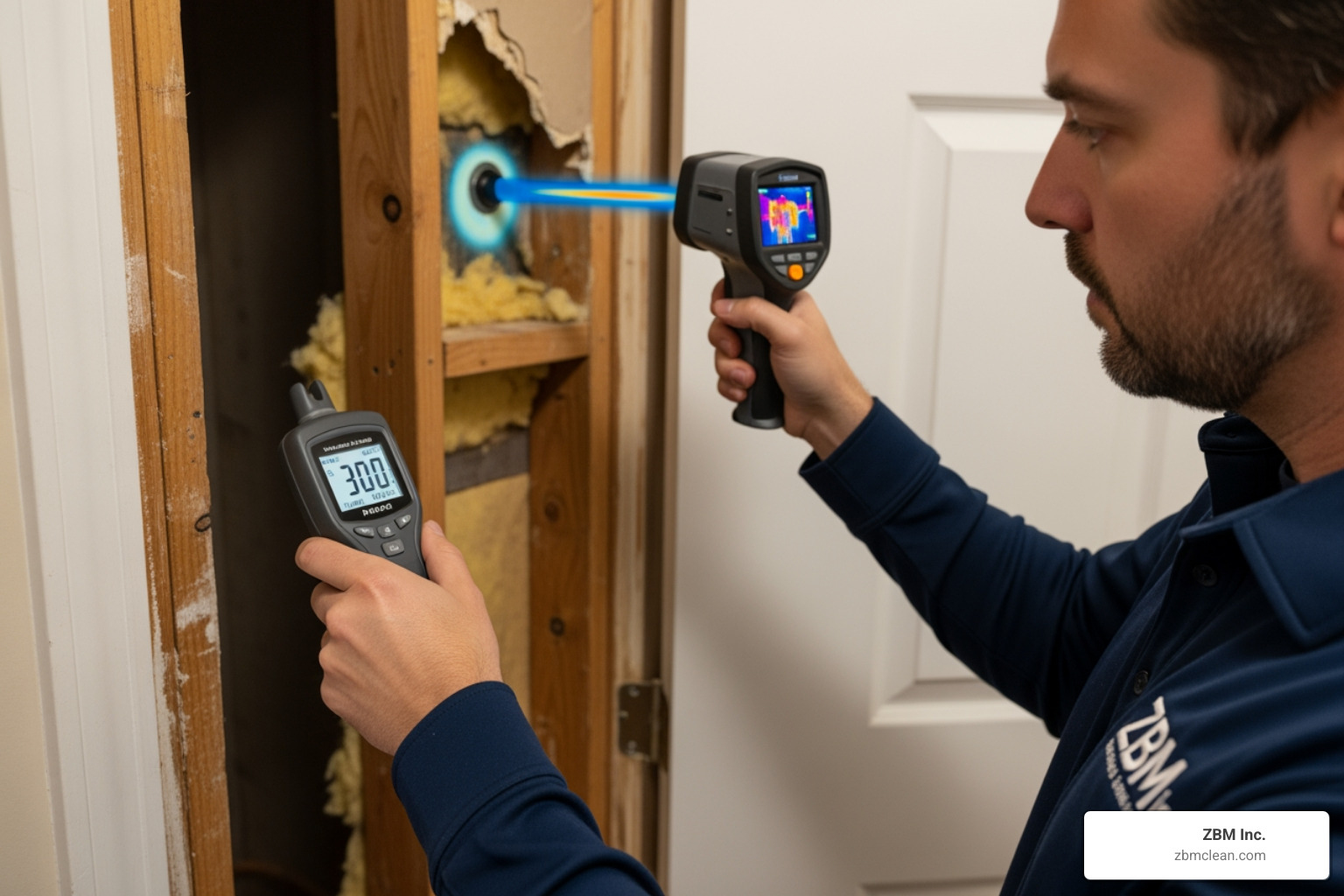
Professional remediation starts with investigation, not guesswork. If we only clean what we see, we risk leaving hidden contamination untouched.
How Mold Remediation Services Assess Hidden Damage
A proper assessment often includes:
- Visual survey of staining, spotting, odors, and water pathways
- Moisture meter readings on walls, ceilings, floors, and trim
- Infrared or thermal imaging to spot temperature differences that suggest trapped moisture
- Humidity measurements in affected and adjacent spaces
- Inspection of wall cavities, attics, crawlspaces, subfloors, and utility penetrations
- Review of leak history, past repairs, flooding, and ventilation issues
This is how we determine the contamination scope. For example, a small stain on a ceiling might trace back to a roof leak that also affected insulation and attic sheathing. A musty office may point to condensation inside HVAC components or above ceiling tiles. In commercial spaces, we also consider how to isolate work zones without disrupting the entire operation.
Containment and Safety Measures That Prevent Spread
Containment is one of the biggest differences between professional remediation and a weekend cleanup project.
Key safety measures often include:
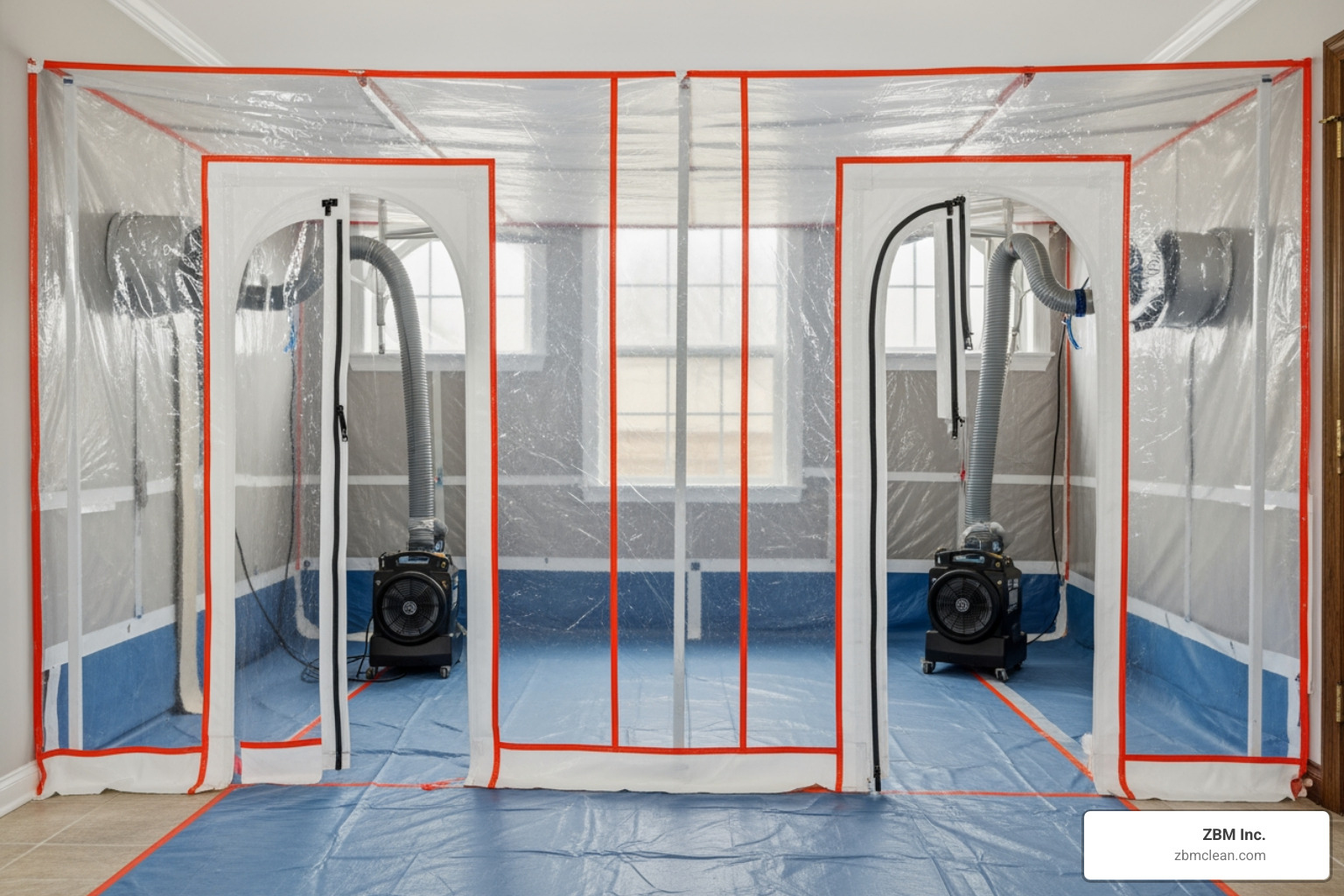
- Poly sheeting barriers to isolate the work area
- Negative air pressure to keep spores from drifting into clean zones
- HEPA-filtered air scrubbers
- HEPA vacuuming for fine particulate capture
- PPE such as gloves, eye protection, and appropriate respirators
- Shutting down HVAC systems that could move spores
- Restricted access for occupants, pets, and staff
Without containment, mold spores can spread during demolition, cleaning, or even by running fans. That is why industry guidance emphasizes not blowing air across contaminated surfaces before proper controls are in place.
The Typical Step-by-Step Remediation Process
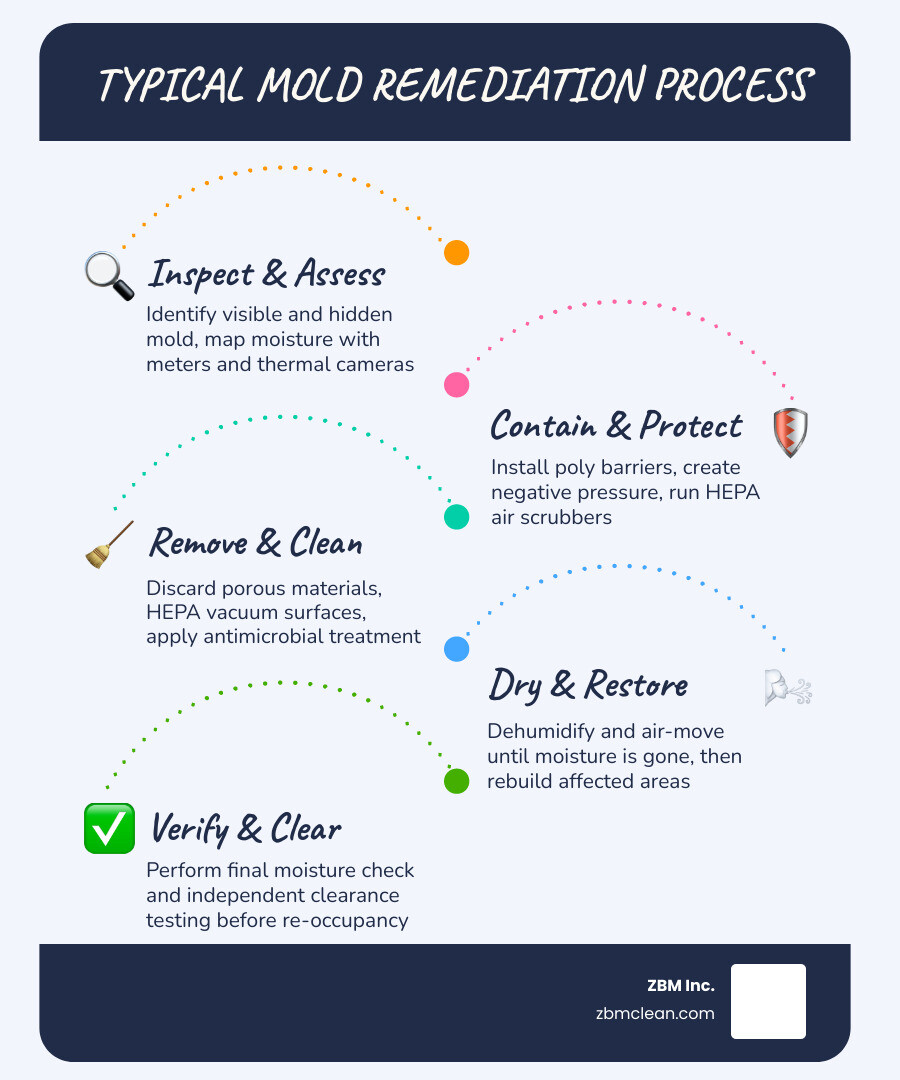
While every project is different, the usual sequence looks like this:
- Inspection and damage assessment
- Moisture source identification and correction
- Containment setup
- HEPA air filtration and negative pressure
- Removal of contaminated porous materials
- Detailed cleaning of remaining structural elements
- HEPA vacuuming and antimicrobial treatment where appropriate
- Structural drying with dehumidification and air movement
- Repairs or restoration of removed materials
- Final verification, and when needed, clearance testing
Here is a simple comparison:
| Task | Simple Mold Removal | Full Mold Remediation |
|---|---|---|
| Cleans visible growth | Yes | Yes |
| Finds moisture source | Usually no | Yes |
| Uses containment | Often no | Yes |
| Protects nearby areas | Limited | Yes |
| Removes damaged porous materials | Sometimes | Yes, when needed |
| Includes structural drying | Rarely | Yes |
| Reduces recurrence risk | Limited | Much better |
| Supports documentation | Limited | Yes |
Timeline, Cost, and Insurance Coverage
These are usually the first three questions property owners ask right after “What is that smell?”
How Long Mold Remediation Services Usually Take
Timelines depend on size, location, material type, moisture conditions, and whether rebuilding is needed.
General ranges:
- Small isolated room: about 1 to 3 days
- Multi-room residential project: about 3 to 7 days
- HVAC-related or large commercial project: about 1 to 2 weeks
- Rebuild phase after demolition: additional time depending on materials and scheduling
Drying can add time, especially after flooding or if framing, subflooring, or insulation stayed wet. Clearance testing, if requested or required, may also extend the process slightly.
Can You Stay in the Home During Remediation?
Sometimes yes, sometimes no.
Occupants can occasionally remain in the property if:
- The affected area is small and well isolated
- Containment and negative air are in place
- HVAC circulation to the work zone is controlled
- There are no highly sensitive occupants
Temporary relocation is often smarter when:
- Mold affects multiple rooms
- The HVAC system is involved
- Demolition is extensive
- Children, pets, older adults, or medically vulnerable occupants are present
- Odor and noise will make the space uncomfortable anyway
For businesses, we often plan phased work to reduce disruption, but there are cases where restricted access or after-hours scheduling makes the most sense.
What Affects the Cost of Mold Remediation?
Cost is driven by scope, not just square footage.
Main factors include:
- Size of the affected area
- How hidden the mold is
- Type of material involved
- Need for drywall removal or insulation replacement
- Crawlspace, attic, or tight-access conditions
- HVAC cleaning or component contamination
- Emergency response timing
- Disposal requirements
- Drying equipment and labor duration
- Post-remediation or lab testing
- Restoration work after removal
A small surface issue costs far less than mold behind walls, in attic insulation, or throughout a ventilation system. That is why accurate pricing usually requires an on-site inspection rather than a guess over the phone.
Does Homeowners Insurance Cover Mold Remediation?
Sometimes, but it depends heavily on the cause.
Coverage is more likely when mold results from a sudden and accidental covered event, such as:
- Burst pipe
- Accidental water discharge
- Certain storm-related water intrusions if covered by the policy
Coverage is less likely when mold stems from:
- Long-term leaks
- Deferred maintenance
- Chronic humidity
- Repeated condensation issues
- Known damage that was not addressed
Policies may also have mold exclusions or special caps. Good documentation helps:
- Photos of damage
- Timeline of the water event
- Moisture readings and inspection notes
- Records of mitigation steps
- Communication with the adjuster
If there is any chance of a claim, do not throw away documentation. Binders are boring, but they can be very useful.
How to Prevent Mold from Coming Back After Cleanup
Successful remediation is only half the job. Prevention is what keeps you from paying for it twice.
Fix the Moisture Problem First
Mold returns when moisture returns. Prevention starts with correcting the source, which may include:
- Plumbing joint or supply line repairs
- Roof leak and flashing repairs
- Foundation drainage improvements
- Sump pump maintenance
- Condensation control on cold surfaces
- Basement waterproofing measures
- Crawlspace vapor barriers
- Window or door sealing issues
- Exterior grading corrections
If the water source stays active, even excellent cleanup will not hold.
Humidity and Ventilation Targets for Long-Term Control
One of the most practical prevention targets is keeping indoor relative humidity below 60%. In many Wisconsin properties, especially during humid summers and shoulder seasons, that takes active management.
Helpful measures include:
- Running bathroom exhaust fans during and after showers
- Venting kitchen moisture outdoors
- Using dehumidifiers in basements and lower levels
- Improving attic airflow and insulation balance
- Sealing and conditioning crawlspaces where appropriate
- Checking for blocked vents or poor air circulation behind stored items
- Monitoring seasonal humidity changes
Dehumidifiers help prevent new mold growth, but they do not remove established mold already inside materials. They are a prevention tool, not a cleanup shortcut.
Cleaning, Monitoring, and Follow-Up After Remediation
After remediation, ongoing maintenance helps catch issues early:
- Schedule moisture checks if the property had a major leak history
- Replace HVAC filters as recommended
- Use HEPA cleaning where fine dust is a concern
- Watch for returning odors or discoloration
- Reinspect known trouble spots after storms or freeze-thaw cycles
- Keep a simple maintenance log for commercial sites or rentals
You can learn more in our guides on environmental mitigation and professional mold remediation experts.
How to Choose the Best Mold Remediation Company Near You
Choosing the right contractor matters just as much as deciding to act.
Credentials and Standards to Look For
Look for a company that can clearly explain its qualifications and process. Good signs include:
- Training aligned with IICRC S520 standards
- Experience with residential and commercial mold projects
- Proper liability insurance and workers compensation coverage
- Bonded and insured status
- Written documentation and photo records
- Moisture testing capability
- Containment and HEPA equipment
- Clear post-remediation criteria
At ZBM Inc., we are licensed, bonded, insured, family-owned, and staffed by certified professionals serving Watertown WI and surrounding communities across Southeast Wisconsin and Northwoods WI.
Questions to Ask Before Hiring Mold Remediation Services
Before hiring anyone, ask:
- What is causing the mold, and how will you confirm it?
- Will you use moisture meters or thermal imaging?
- How will you contain the area?
- Will you use HEPA filtration and negative air?
- What materials must be removed versus cleaned?
- How will you protect unaffected rooms?
- Do you provide written scope, pricing, and timelines?
- Is post-remediation verification available?
- Can you handle restoration after cleanup?
- What should occupants do before work starts?
Clear answers usually signal a more organized contractor.
Red Flags That Signal a Poor Contractor
Be cautious if a company:
- Uses scare tactics instead of evidence
- Promises bleach alone will solve the problem
- Does not test moisture
- Skips containment
- Offers vague pricing with no written scope
- Cannot explain disposal and cleaning steps
- Provides no photos or documentation
- Has no prevention plan after the cleanup
If the whole proposal sounds like “spray and pray,” keep looking.
Local Expertise and Specialized Cleanup Support
Local experience matters because building types, climate patterns, and response logistics vary. In Wisconsin, basements, attics, crawlspaces, ice-dam moisture, and seasonal humidity swings all shape remediation strategy.
At ZBM Inc., we support both residential and commercial clients with broader services that often connect to mold work, including cleaning, disaster recovery, and specialized cleanup. If mold has affected contents and upholstered items, our guide to furniture mold remediation experts may help.
Frequently Asked Questions About Mold Remediation Services
Is black mold more dangerous than other mold?
“Black mold” usually refers to certain dark-colored molds, including Stachybotrys chartarum. Some species are more associated with toxin concerns than others, but many molds can affect indoor air quality and trigger irritation or respiratory symptoms.
The practical rule is simple: do not judge severity by color alone. A professional response should focus on the extent of contamination, moisture conditions, materials affected, and occupant sensitivity. For more context, see our guide to scientific research on toxic mold types.
What should you do before the remediation crew arrives?
Until help gets there:
- Turn off HVAC serving the affected area if possible
- Do not run fans across visible mold
- Restrict access, especially for kids and pets
- Avoid touching or disturbing contaminated materials
- Try to stop the active water source if you can do so safely
- Take photos for your records
- Do not paint, spray bleach, or cover over the mold
The goal is to avoid spreading contamination before containment is set.
Do air tests or clearance tests matter after remediation?
They can. Not every small project requires extensive lab work, but post-remediation verification can be very useful for larger, hidden, commercial, disputed, or health-sensitive situations.
Useful verification methods may include:
- Visual inspection
- Moisture verification
- Surface cleanliness checks
- Independent air or surface sampling when appropriate
- Chain-of-custody documentation for lab samples
The best approach depends on project scope. A dry, visibly clean, properly restored area with corrected moisture conditions is the baseline. Testing adds another layer of confidence when warranted.
Conclusion
Mold does not wait politely, and neither should property owners. Because growth can begin within 24 to 48 hours and spread quickly after a leak, early action protects indoor air quality, building materials, and repair budgets.
The best mold remediation services do not just remove what you can see. They identify the moisture source, contain the spread, clean or remove contaminated materials, dry the structure, and help prevent the problem from returning.
If you are comparing contractors in Watertown, Lake Mills, Dodge County, Jefferson County, Southeast Wisconsin, Minocqua, or Northwoods WI, use this checklist:
- Certified and properly insured
- Uses moisture testing
- Provides containment and HEPA filtration
- Offers clear written scope and pricing
- Addresses the moisture source
- Documents the work
- Explains prevention steps after cleanup
If you want to understand the higher-risk side of contamination, here is more info about toxic mold cleanup. When you need local help, we at ZBM Inc. are here to provide practical, professional support for homes, businesses, and facilities across our Wisconsin service area.