Certified Infectious Disease Cleanup Jefferson Properties Can Trust
For infectious disease cleanup Jefferson property owners can rely on, choose a certified provider that can assess the exposure, isolate affected areas, use the right EPA-registered disinfectant for the suspected pathogen, and document the work. This matters most after a confirmed illness, a sewage event, or contamination in shared spaces such as restrooms, break rooms, clinics, schools, and offices.
Some pathogens can remain a risk long after a room looks clean. C. diff spores may survive on surfaces and in soil for months or years. COVID-19 may persist on surfaces for a week or longer under some conditions. Routine janitorial cleaning may not reach cracks, high-touch surfaces, porous materials, or areas affected by cross-contamination.
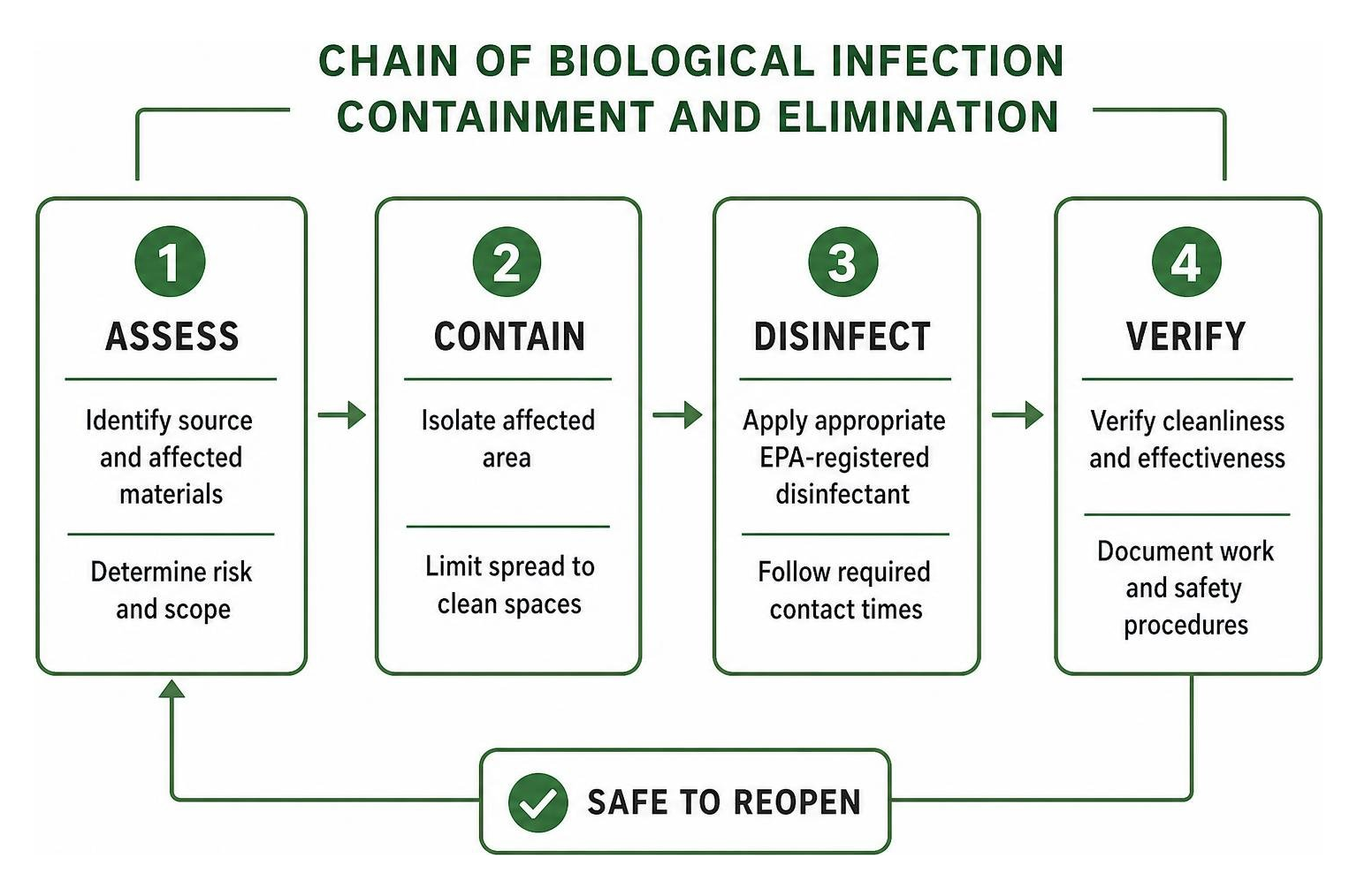
A qualified cleanup team helps commercial property managers and residents make a safer decision fast:
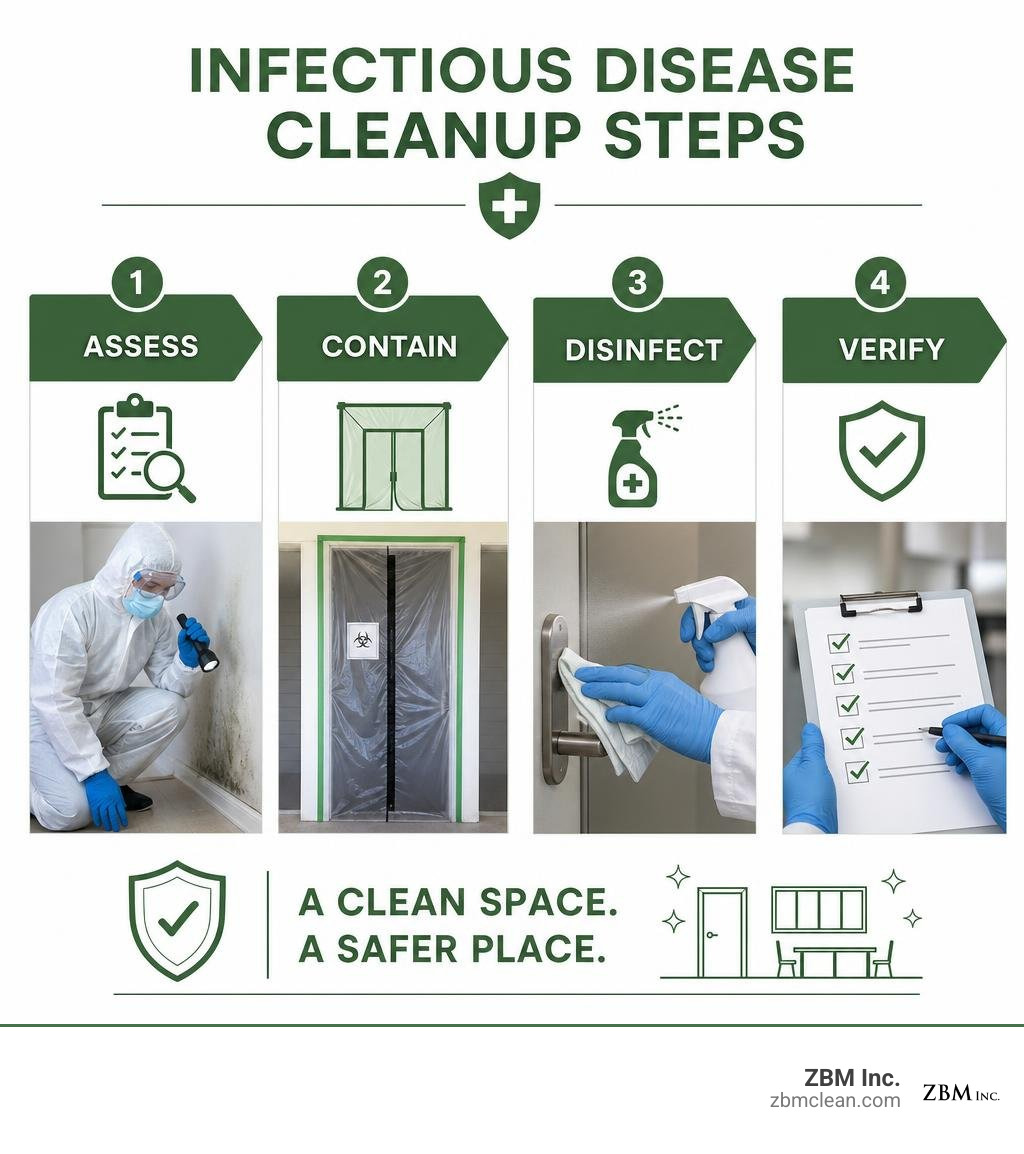
- Identify the likely contamination source and affected materials.
- Contain the area to limit spread to clean spaces.
- Disinfect surfaces using appropriate products and required contact times.
- Use trained staff, PPE, and documented safety procedures before reopening.
I am Terry Zastrow, owner of ZBM Inc., an IICRC-certified firm with approximately 30 years of operational experience serving public agencies, municipalities, housing authorities, and private clients. My certifications and ongoing OSHA, HAZWOPER, and incident-command training support careful, compliant infectious disease cleanup Jefferson facilities can depend on.
Discover more about infectious disease cleanup Jefferson:
Why Professional Infectious Disease Cleanup Jefferson Services Are Essential
When dealing with high-consequence biological contamination, simply wiping down surfaces with household sanitizers leaves spaces vulnerable to cross-contamination and persistent health risks. In public facilities, commercial properties, and residential dwellings, pathogenic microbes do not remain neatly confined to visible touchpoints. They drift through air currents, settle deep into porous structural substrates, and hide within complex physical architecture.
Professional remediation establishes strict pathogen containment perimeters to stop biological threats from migrating into uncontaminated zones. Certified teams follow rigid OSHA safety mandates and align their decontamination procedures directly with Jefferson County communicable disease guidelines. When complex structural biohazards strike, leveraging dedicated disaster restoration services in Dodge and Jefferson County, WI guarantees complete biological neutralization, protecting occupants and limiting regulatory liability.
Pathogen Types Requiring Infectious Disease Cleanup Jefferson Properties Encounter
Modern facilities face diverse biological threats that standard cleaning chemicals cannot resolve:
- Clostridioides difficile (C. diff): An aggressive bacterium causing severe gastrointestinal illness. When exposed to oxygen, C. diff forms dormant, armored endospores that survive for months or years in soil and on non-porous indoor surfaces.
- Novel Coronaviruses (COVID-19 & Variants): Respiratory viral strains capable of lingering on hard surfaces for up to a full week under typical ambient indoor conditions.
- Norovirus: An exceptionally durable non-enveloped virus requiring specialized chemical contact times to deactivate.
- Methicillin-Resistant Staphylococcus Aureus (MRSA): A drug-resistant superbug thriving on shared fitness equipment, locker rooms, and communal touchpoints.
Medical and infectious disease clinical research demonstrates that antibiotic treatments disrupting human gut microbiomes can leave individuals vulnerable to opportunistic C. diff infections for months. In environments where recovering patients or vulnerable individuals reside, microscopic spore deposits left behind by inadequate cleaning pose an immediate health crisis.
Professional Scope for Infectious Disease Cleanup Jefferson Businesses Depend On
Commercial property owners, healthcare clinics, and educational centers face strict legal duties of care. Professional biohazard remediation focuses on eliminating surface-bound, airborne, and bloodborne pathogens from high-traffic environments.
Utilizing certified biohazard clean up Wisconsin specialists ensures commercial facilities meet municipal health requirements, protect employees from preventable occupational hazards, and prevent costly operational shutdowns.
Advanced Electrostatic Disinfection and Pathogen Remediation Technology
Traditional spray-and-wipe methods leave untreated micro-fissures, shadows, and recessed crevices. Professional decontamination teams utilize advanced electrostatic application technology to achieve complete 360-degree surface coverage.
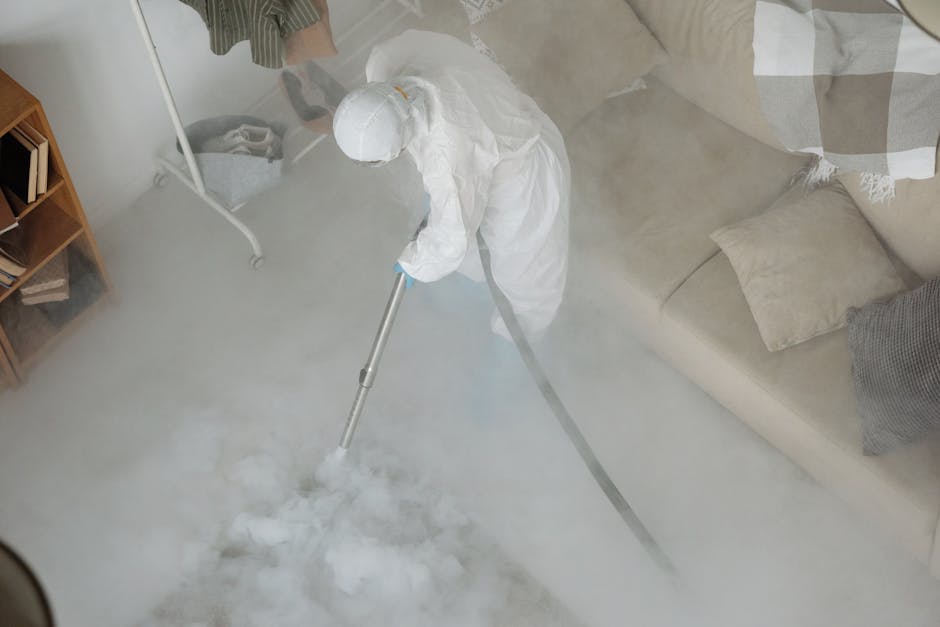
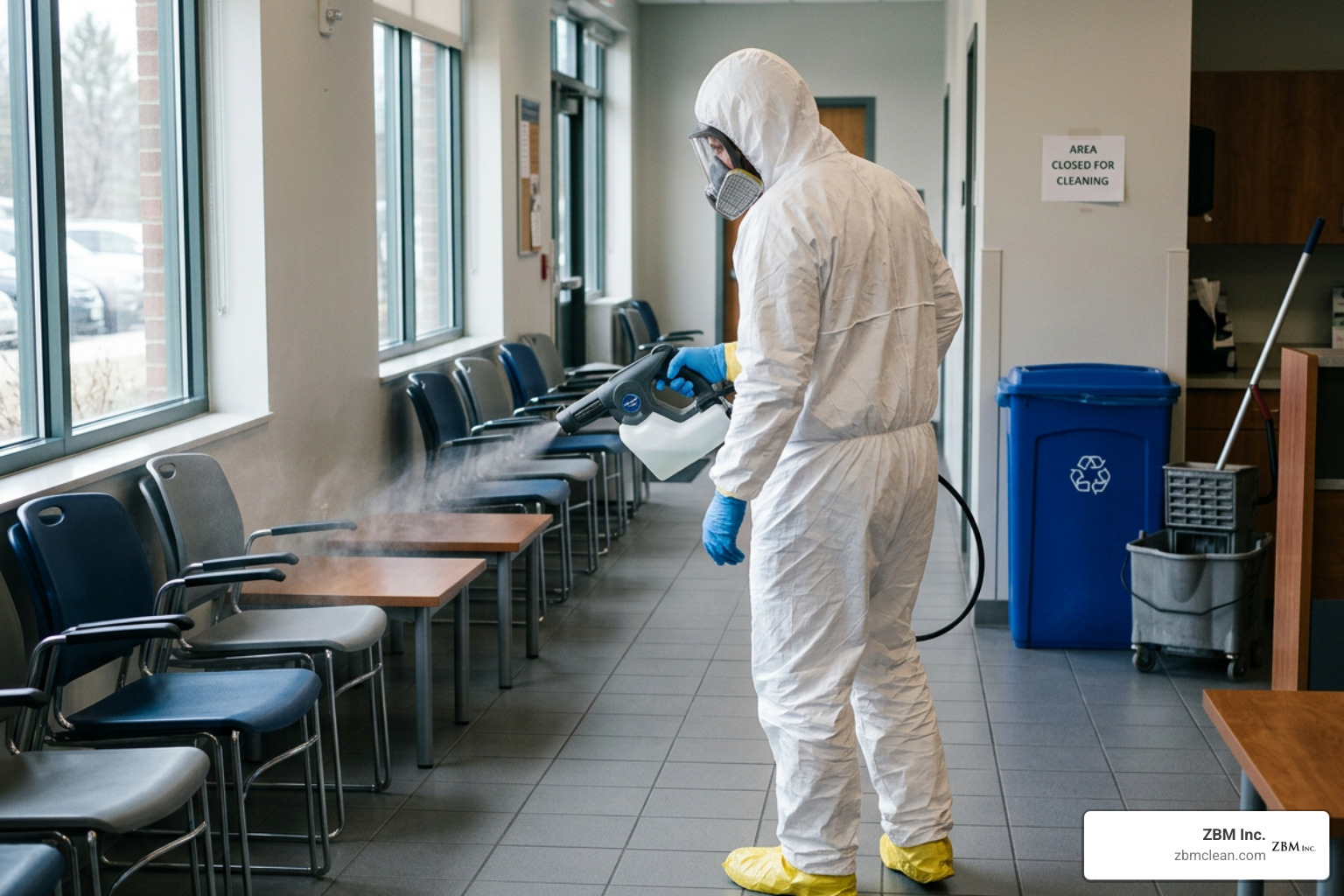
Electrostatic sprayers operate by atomizing EPA-registered, hospital-grade broad-spectrum disinfectant solutions while passing the droplets through an electrode nozzle. This process applies a continuous positive electrical charge to every atomized droplet. Because grounded interior surfaces naturally possess a negative charge, the positively charged chemical mist is magnetically drawn to all surrounding surfaces with a uniform wrapping effect. This ensures complete coverage across underneath edges, structural cracks, and complex geometries that manual wiping cannot reach. For localized property managers, implementing specialized virus disinfection in Watertown, WI provides complete biological deactivation across all architectural surfaces.
Electrostatic Spray Mechanics vs. Traditional Dusting
Standard janitorial dusting techniques are counterproductive during pathogenic outbreaks. Dry dusting agitates dormant biological particles, suspending active viral fragments and bacterial spores into the air to spread throughout the facility.
Wet wiping with standard rags frequently leads to cross-contamination, spreading pathogens from one surface to another if rags are not exchanged constantly. In contrast, electrostatic atomization eliminates manual surface friction, enveloping targets in a controlled microscopic layer of disinfectant that maintains the necessary chemical dwell time to achieve complete microbial eradication.
Ongoing Outbreak Prevention via Scheduled Disinfection Programs
To preserve long-term biosecurity, properties benefit from structured preventative maintenance programs like Regular Electrostatic Disinfection (R.E.D.). Scheduled treatment cycles establish consistent defenses within high-traffic environments, including:
- Healthcare clinics, treatment suites, and outpatient centers
- Daycares, primary schools, and university classrooms
- Corporate offices, call centers, and breakrooms
- Municipal buildings, public safety facilities, and courthouses
Instituting regular preventative disinfection significantly decreases employee absenteeism, protects immunocompromised occupants, and breaks community transmission cycles.
Warning Signs, Contamination Risks, and DIY Limitations
Biological hazards frequently operate below the threshold of human perception. Unlike structural water damage or visible soot, invisible viral loads and microscopic bacterial colonies create extreme transmission risks without obvious visual signs.
Properties with confirmed exposure, persistent stale odors, recurrent unexplained illnesses among occupants, or sewage-borne biohazards require immediate intervention. Reviewing professional guidance on how to disinfect your home after an illness highlights why standard domestic cleaning products fail against virulent pathogens embedded in porous flooring, ventilation returns, and wall cavities.
DIY Cleaning Limits vs. Certified Biohazard Intervention
| Feature / Protocol | Routine Commercial Janitorial | Certified Biohazard Remediation (ZBM Inc.) |
|---|---|---|
| Primary Goal | Aesthetic tidiness & light sanitizing | Complete microbial eradication & biological safety |
| Pathogen Efficacy | Common household bacteria | Spore-forming bacteria (C. diff), MRSA, COVID-19, Norovirus |
| Chemical Arsenal | Off-the-shelf cleaning solutions | EPA List N hospital-grade sporicides & antimicrobials |
| Application Method | Manual cloth & trigger sprayers | Electrostatic 360° atomization & HEPA containment |
| Cross-Contamination Controls | Basic microfiber rotation | Full physical negative-pressure containment barriers |
| Worker Protection | Standard latex gloves | Level C/B personal protective equipment (PPE) & respirators |
| Regulatory Verification | Visual inspection | Clearance documentation & IICRC-aligned validation |
Attempting to resolve extensive pathogenic contamination with standard consumer supplies exposes individuals to aerosolized biological agents and spreads persistent pathogens across adjacent rooms.
High-Risk Transmission Vectors in Residential and Commercial Spaces
Pathogens migrate rapidly across specific architectural and mechanical transmission points, including:
- HVAC air intake grilles, internal duct surfaces, and shared air filters
- Elevator buttons, stairwell handrails, and door hardware
- Shared computer workstations, touchscreens, and point-of-sale systems
- Restroom plumbing fixtures, partitions, and floor drains
- Upholstered seating, communal dining surfaces, and breakroom appliances
The Professional Remediation Process, Cost Factors, and Coverage
Certified remediation teams follow strict, structured protocols to isolate, remediate, and restore biological contamination safely:
- Diagnostic Assessment: Detailed inspection mapping high-risk vectors, identifying underlying contamination sources, and establishing site-specific safety protocols.
- Engineering Controls & Containment: Establishing physical negative-pressure air zones using heavy-duty poly sheeting to prevent pathogen drift into clean building sectors.
- HEPA Air Filtration: Continuous scrubbing of indoor air using commercial HEPA air filtration units rated to capture 99.97% of airborne particulates down to 0.3 microns.
- Biohazard Cleaning & Disinfection: Deep application of EPA-registered sporicidal and virucidal agents via electrostatic delivery and manual contact procedures.
- Clearance Testing & Verification: Post-remediation environmental inspection ensuring the property is sanitized and safe for reoccupancy.
For properties experiencing biological events, our dedicated biohazard cleanup services in Watertown, WI provide certified decontamination across residential and commercial environments.
Decontamination Protocols and Industry Certifications
Professional decontamination requires strict adherence to industry standards. Property owners should verify that remediation contractors maintain up-to-date IICRC (Institute of Inspection, Cleaning and Restoration Certification) credentials, follow OSHA 29 CFR 1910.1030 Bloodborne Pathogens regulations, and apply disinfectants that meet EPA List N criteria.
Understanding exactly what biohazard cleaning services include gives property owners confidence that all hazardous waste handling, transport, and disposal protocols adhere strictly to local environmental and public health laws.
Cost Determinants and Insurance Claims Assistance
The total investment required for comprehensive pathogen decontamination depends on several operational factors:
- Total Contaminated Square Footage: Scope of treated areas and total volume of air space.
- Pathogen Classification: Specific chemical protocols and dwell times required for resilient spores versus enveloped viruses.
- Containment Requirements: Level of physical isolation, negative air machines, and personal protective equipment needed.
- Structural Substrates: Presence of porous carpeting, acoustic ceiling tiles, or specialized equipment requiring clinical cleaning.
In many instances involving commercial bio-recovery or residential exposure, property insurance policies provide coverage. Experienced bio-hazard remediation specialists assist property owners by documenting contamination levels, detailing chemical applications, and coordinating directly with insurance adjusters to simplify the claims process.
Frequently Asked Questions About Pathogen Remediation
How quickly can technicians respond to an outbreak in Jefferson?
Emergency response teams operate 24/7/365 to contain active biological events. Rapid deployment units can mobilize across Jefferson County, Dodge County, Watertown, and Southeast Wisconsin quickly, isolating contaminated zones to prevent secondary spread.
Is infectious disease cleanup covered by commercial or homeowner property insurance?
Most commercial property policies and comprehensive homeowner insurance packages include provisions or endorsements for professional biohazard containment and microbial restoration. Working with a restoration provider that provides direct insurance billing and comprehensive itemized documentation helps streamline claim resolution.
How long can resilient pathogens like C. diff and coronavirus survive on uncleaned surfaces?
While respiratory viruses like COVID-19 can survive on uncleaned, non-porous surfaces for up to a week, spore-forming bacteria such as C. diff produce durable protective shells that remain dormant and viable for months or years. Without targeted, hospital-grade sporicidal decontamination, these resilient spores remain a persistent risk for transmission.
Conclusion
When biological hazards threaten the safety of a home, business, or municipal facility, choosing an experienced, certified restoration team makes all the difference. Certified biohazard specialists combine advanced electrostatic technology, hospital-grade EPA chemistry, and IICRC-compliant containment protocols to eliminate airborne, surface, and spore-forming pathogens.
Do not risk cross-contamination, regulatory fines, or recurring illnesses with standard janitorial services. Contact ZBM Inc. to partner with a trusted, family-owned restoration leader providing certified biohazard mitigation, emergency decontamination, and comprehensive property restoration throughout Jefferson County and Southeastern Wisconsin. For more information on finding certified biohazard specialists, explore our complete guide to crime scene cleanup companies to protect your property and occupants today.