Disaster Mold Recovery Starts With Safe, Fast Drying
Successful disaster mold recovery requires rapid structural assessment, commercial water extraction, and containment to eliminate biohazards and stop fungal spread. Professional remediation teams identify water intrusion sources, remove contaminated porous materials, sanitize affected building framing, and deploy high-capacity dehumidification systems. Due to the severe health risks of Category 3 floodwaters and hidden cavity moisture, partnering with a certified disaster restoration company ensures thorough, compliant structural recovery.
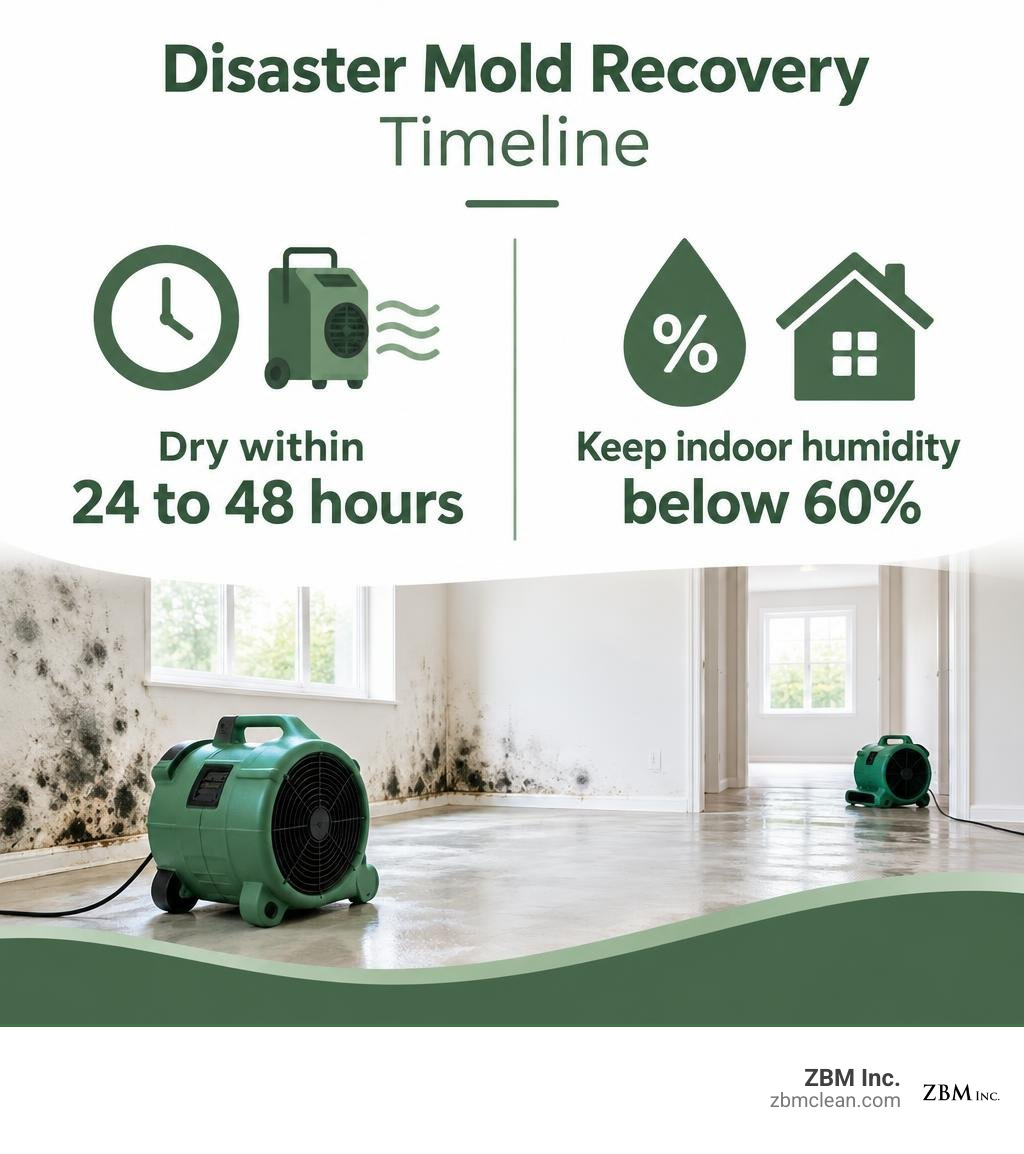
Professional drying must start within 24 to 48 hours, as active mold colonies establish on damp materials within that critical window. Following remediation, maintaining indoor relative humidity below 60%—ideally between 30% and 50%—is essential to prevent secondary outbreaks.
I’m Terry Zastrow, owner of ZBM Inc., an IICRC-certified firm with about 30 years of experience in cleaning and disaster recovery. My technician certifications and FEMA, OSHA, and HAZWOPER training inform our professional standards for disaster mold recovery.
Disaster mold recovery glossary:
Disaster Mold Recovery: Professional Cleanup and Removal Standards
When severe storms or broken riverbanks push water into your living space, the clock starts ticking immediately. Waterlogged building materials become a breeding ground for fungal spores if relative humidity exceeds 70% for several days. Handling this level of structural contamination is exhausting, complex, and hazardous.
Attempting to manage storm recovery on your own often leaves deep moisture trapped inside wall cavities and subfloors. Without specialized industrial extraction gear, containment systems, and commercial moisture meters, hidden moisture quietly fuels secondary fungal blooms that threaten your building’s structural integrity. Certified restoration teams use these tools to locate and eliminate moisture that household methods cannot reach.
Health Risks and Protective Standards for Disaster Mold Recovery
Flooded structures pose severe biological hazards. Beyond general indoor dampness, mold exposure introduces potent mycotoxins. Inhaling these microscopic toxins is estimated to carry 20 to 40 times the toxicity of ingesting them (Johanning et al., 2014). In major recovery studies, such as evaluations of Hurricane Katrina restoration crews, 74% of workers reported health issues, including sinus trouble, transient fevers, and new-onset asthma (Johanning et al., 2014).
Even more concerning are invasive mold infections (IMIs). Research tracking hospitalizations after Hurricane Harvey demonstrated that IMI rates increased significantly, with Aspergillus species driving nearly 40% of cases (Toda et al., 2023). Strikingly, about a quarter of those patients had no previous immune system compromises. Skin contact dermatitis also affects up to 10% of people handling damp, contaminated debris (Johanning et al., 2014).
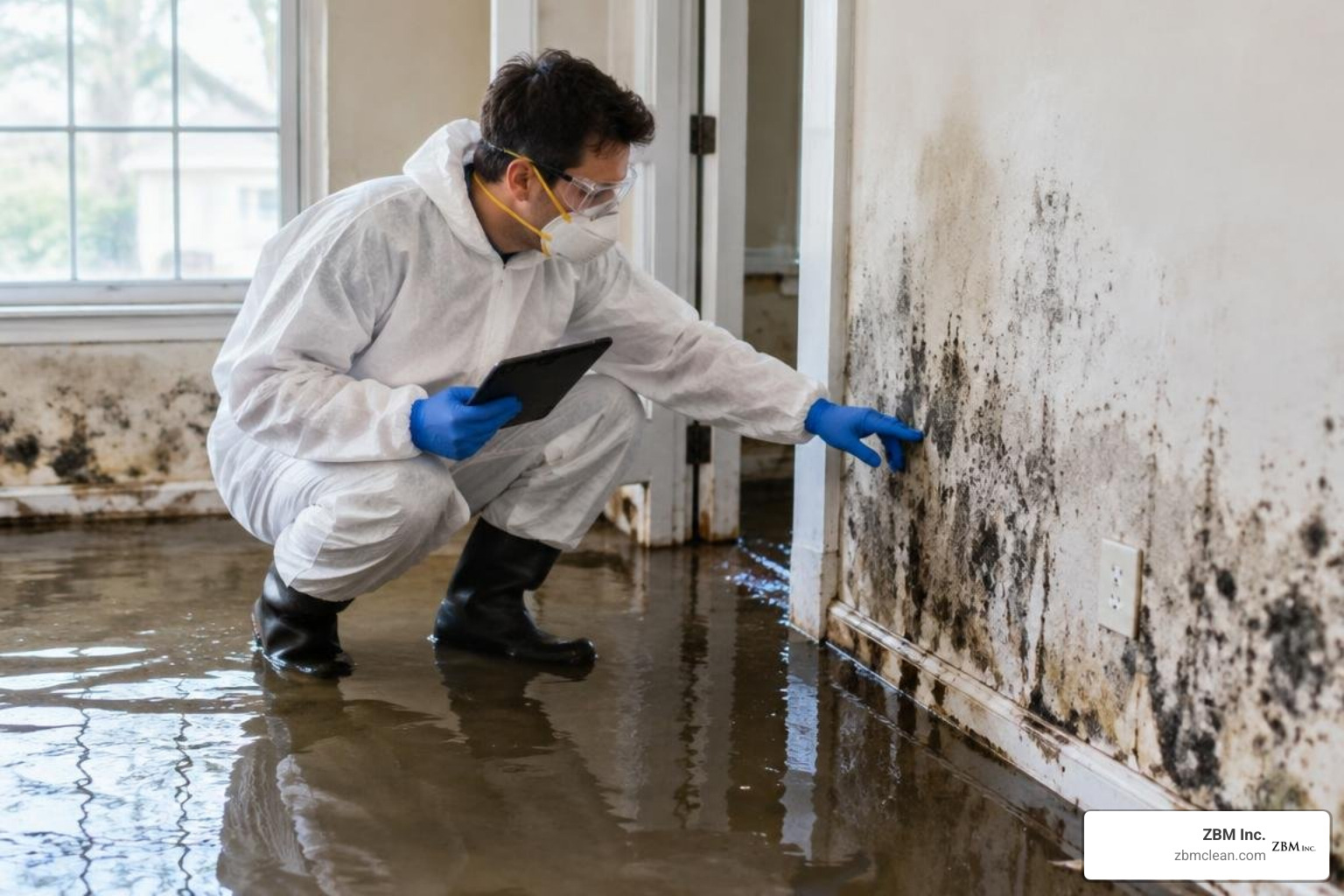
Because of these risks, professional remediation companies follow strict worker protection standards. Certified technicians wear NIOSH-approved respirators, full-body coveralls, and sealed eye protection appropriate to the contamination level. For small affected areas, an N95 mask and heavy gloves may suffice; for medium-scale contamination, half-face P100 respirators and disposable suits are standard; for large-scale projects, full containment with negative air pressure and powered air-purifying respirators (PAPRs) protects workers and prevents cross-contamination.
For further reading on the clinical risks of post-flood exposure, consult the medical findings on invasive mold infections following Hurricane Harvey and broader research on health hazards and worker protection in disaster recovery.
Material Triage: What Certified Teams Discard Versus Restore
Floodwaters frequently bring Category 3 “black water” containing sewage, chemical runoff, and biological contaminants. Knowing what must go versus what can be saved requires strict triage. Porous materials act like sponges, soaking up contaminated moisture deep into their fibers where cleaning agents cannot reliably reach.
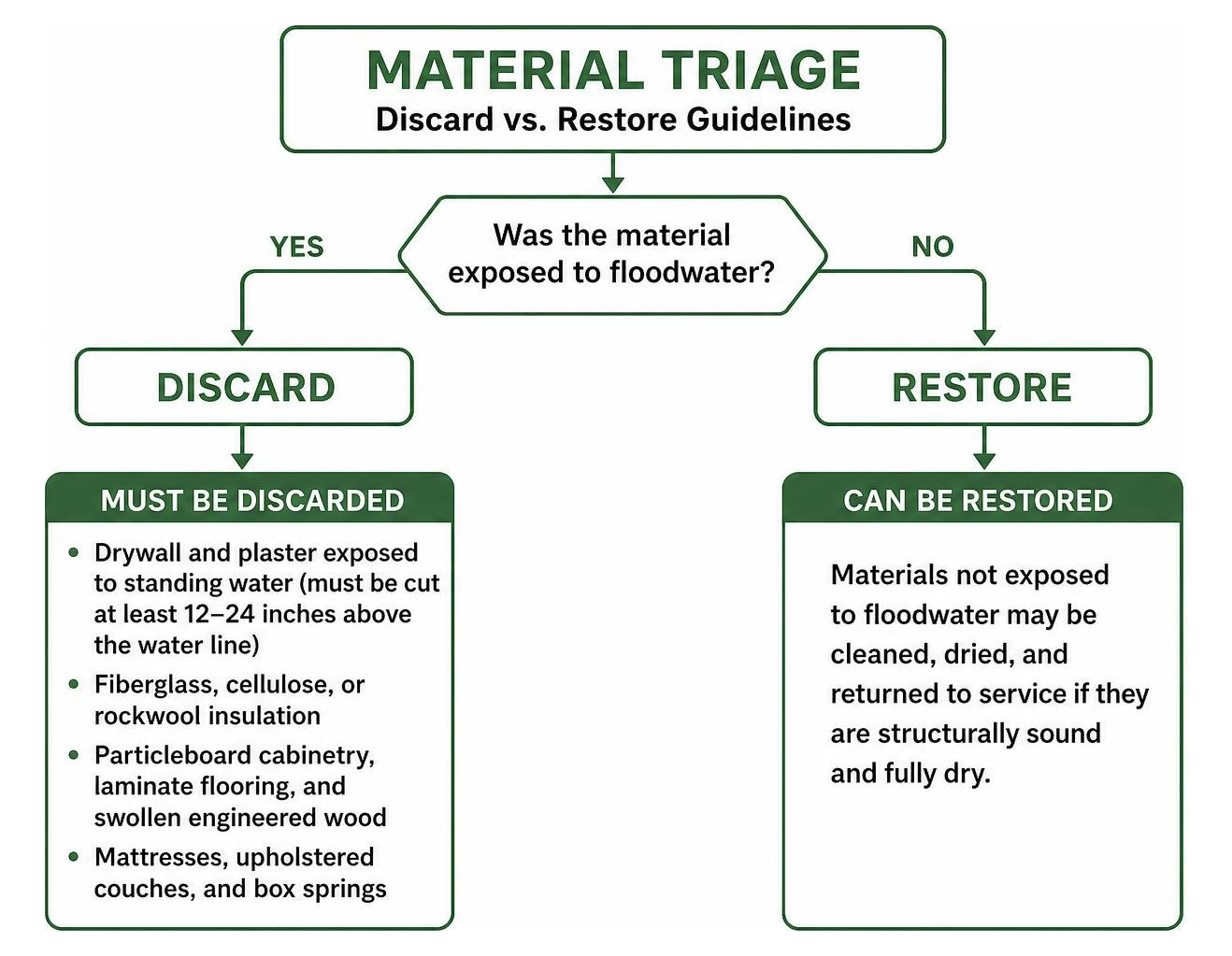
Certified restoration professionals routinely discard porous materials after floodwater contamination, including drywall and plaster exposed to standing water, fiberglass and cellulose insulation, particleboard cabinetry, laminate flooring, mattresses, upholstered furniture, carpet and padding, and exposed medicines or cosmetics. Non-porous items like solid hardwood framing, concrete, glass, and metal can often be restored through thorough washing, antimicrobial sanitization, and controlled dehumidification.
Controlled Extraction and Structural Drying Standards
Pumping out a flooded basement requires careful patience. If standing water is evacuated all at once while the surrounding soil outside remains completely saturated, external hydrostatic pressure can crack or collapse foundation walls. Best practice dictates pumping down water incrementally—roughly one-third of the total depth per day.
Once standing water is removed, achieving a Wood Moisture Equivalent (WME) below 20% within 48 to 72 hours is vital. Standard household box fans cannot generate the static pressure required to pull moisture out of structural framing. Professional teams use high-capacity LGR (low-grain refrigerant) dehumidifiers and high-velocity air movers to pull deep water from building materials. To understand the full scope of property recovery, review what disaster restoration services cover.
Restoring Air Quality and Preventing Post-Flood Regrowth
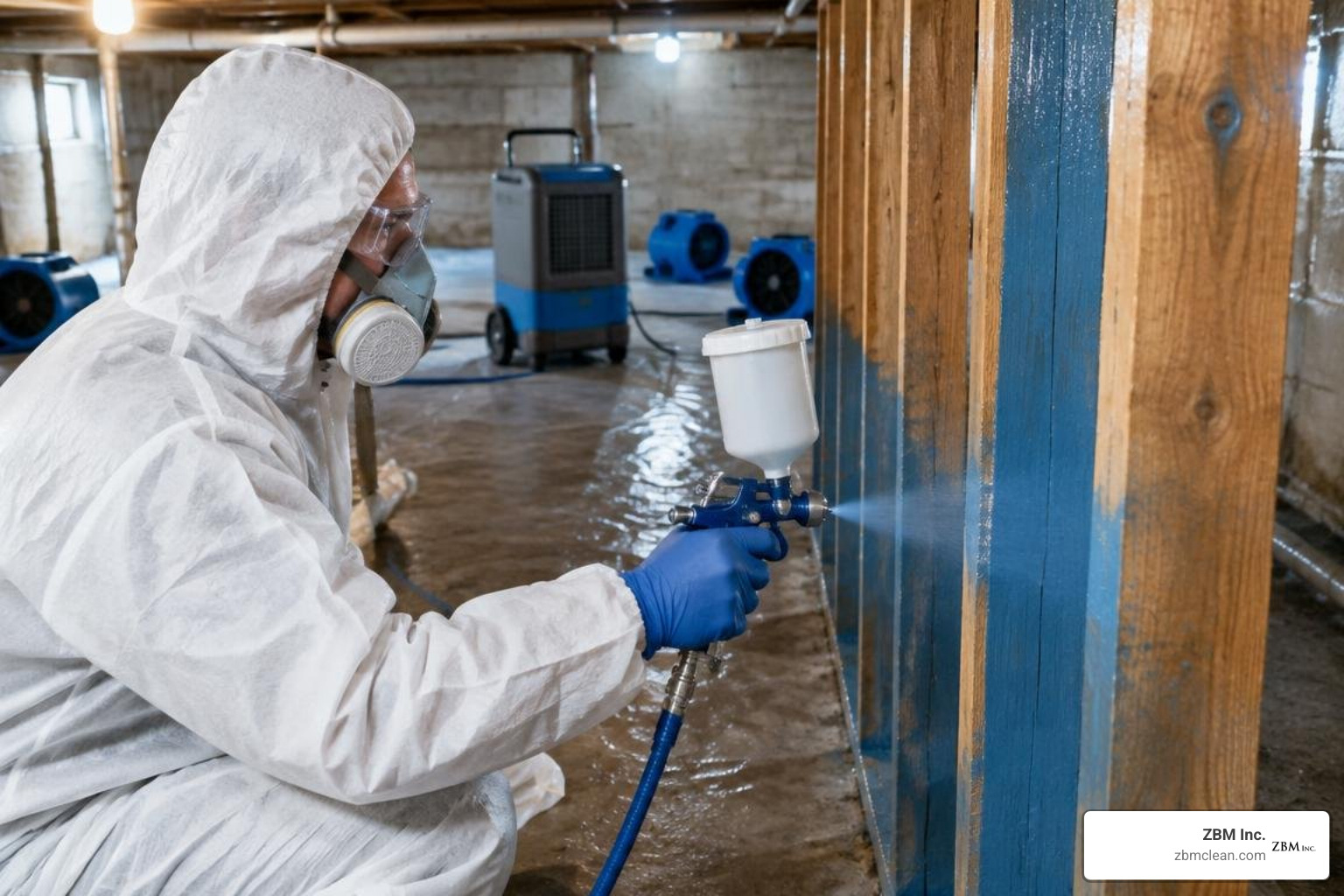
Cleaning up visible grime is only half the battle. Fungal spores easily migrate through hallways and ventilation systems, establishing new colonies in previously dry rooms. Proper containment, negative air pressure, and effective cleaning agents are essential to protect unaffected living spaces.
Professional Standards for Safe Disaster Mold Recovery
A common mistake in post-flood cleanup is dumping household bleach across damp framing. Bleach is largely water-based; while chlorine sits on the surface of porous wood, the water component sinks deeper into the grain, feeding the fungal root system (hyphae). Effective mold remediation relies on physical source removal, which certified professionals accomplish through containment with plastic sheeting and negative air machines fitted with HEPA filtration, mechanical scrubbing of structural framing with detergent-and-water solutions, HEPA-filtered vacuuming to trap microscopic spores, and decontamination of affected ductwork.
For official institutional protocols, see the CDC guidance for reopening facilities after water damage.
Antimicrobial Coatings and Long-Term Humidity Control
Once framing is thoroughly cleaned and tested below 20% moisture content, applying an EPA-registered antimicrobial coating provides an added layer of defense. These commercial sealants bond to wood surfaces to inhibit future fungal germination.
To protect your property over the long run, certified professionals apply high-grade sealant systems—explore top mold-resistant coating options—and recommend keeping indoor relative humidity between 30% and 50% year-round using dedicated basement dehumidifiers. Eliminating hidden moisture reservoirs is equally important; learn more about preventing mold hiding inside walls.
When to Hire Certified Experts for Large-Scale Remediation
If mold contamination covers more than 32 square feet, involves sewage backups, or has penetrated deep into wall cavities, handling the cleanup alone is risky and exhausting. Household cleaning methods rarely solve the root moisture problem, leading to recurring contamination and compromised air quality.
At ZBM Inc., our family-owned team brings licensed, bonded, and insured certified professionals directly to your property in Watertown, WI, Jefferson County, Dodge County, and across Southeastern Wisconsin. We have the heavy-duty extraction units, negative air scrubbers, and industrial drying systems needed to eliminate contamination safely. When dealing with severe fungal outbreaks, take the time to learn about identifying the types of toxic mold that require biohazard cleanup so you can make informed decisions for your property’s safety.
References
Johanning E, Auger P, Morey PR, Yang CS, Olmsted E. “Review of health hazards and prevention measures for response and recovery workers and volunteers after natural disasters, flooding, and water damage: mold and dampness..” Environmental health and preventive medicine, 2014. PMCID PMC3944034. Toda M, Williams S, Jackson BR, Wurster S, Serpa JA, Nigo M, Grimes CZ, Atmar RL, Chiller TM, Ostrosky-Zeichner L, Kontoyiannis DP. “Invasive Mold Infections Following Hurricane Harvey-Houston, Texas..” Open forum infectious diseases, 2023. PMCID PMC10003735.