What Does a Fire Restoration Company Do After a Fire?
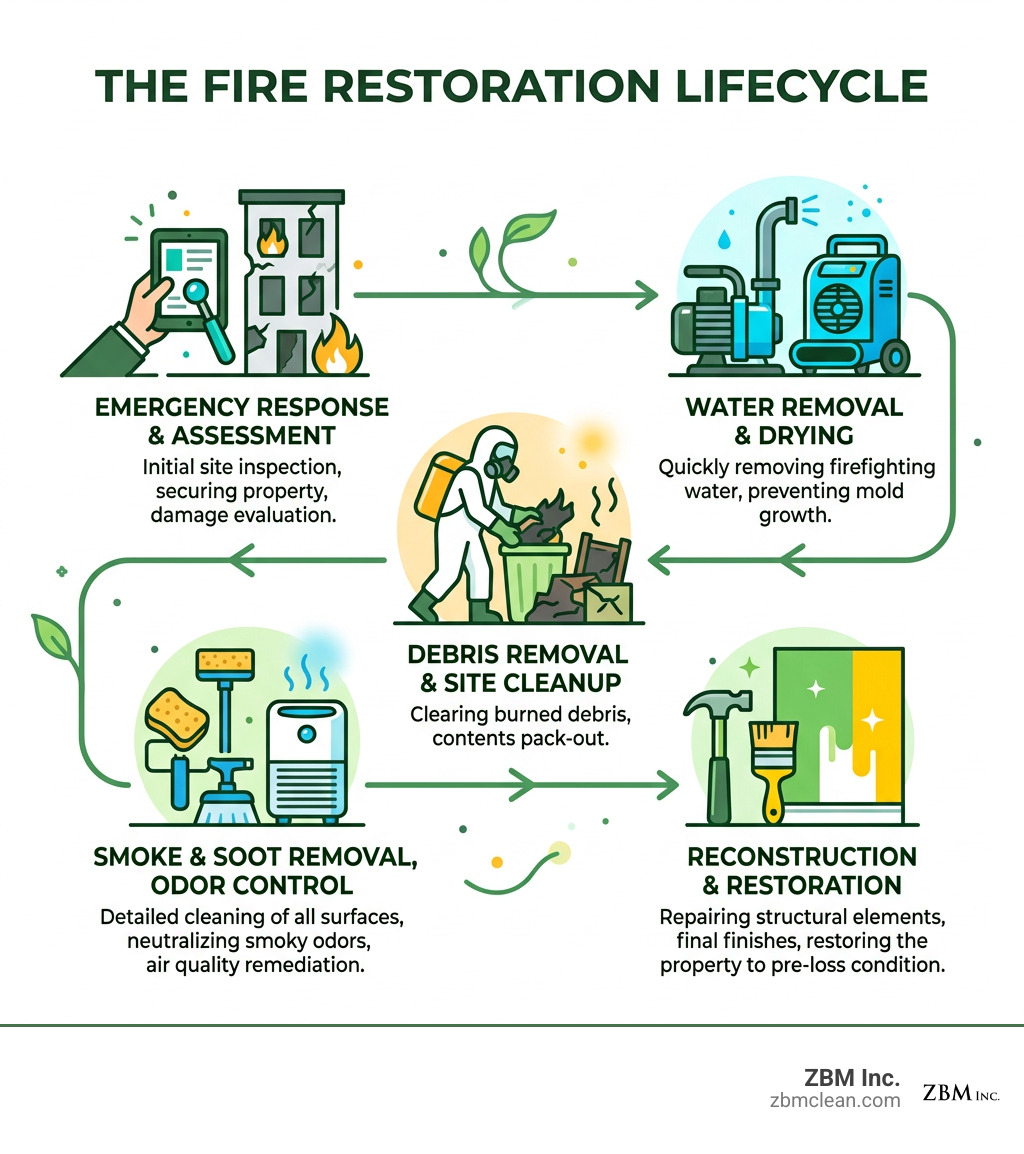
A fire restoration company helps make a damaged property safe, clean, and usable again. In practical terms, what does a fire restoration company do? It assesses the loss, secures exposed areas, removes firefighting water and debris, cleans smoke and soot, controls odors and air-quality risks, documents damage for insurance, and rebuilds affected spaces.
Fast action matters. Fire damage is not limited to burned materials. Smoke can travel through HVAC systems and wall cavities, soot can corrode surfaces, and water used to extinguish the fire can lead to additional damage if it is not dried quickly. U.S. fire losses caused an estimated $23 billion in property damage in 2023, according to the National Fire Protection Association.
For a commercial property manager, the goal is simple: protect people, limit downtime, preserve what can be saved, and create a clear path back to normal operations. A certified restoration team brings the equipment, safety procedures, and documentation needed to manage that work without turning a stressful loss into a longer disruption.
I am Terry Zastrow, owner of ZBM Inc., a certified firm with approximately 30 years of operational experience and extensive safety training. My experience helps explain what does a fire restoration company do and why trained, methodical response is essential after a fire.
Quick what does a fire restoration company do definitions:
Differentiating Fire, Smoke, and Soot Damage
A structure fire never leaves behind just one type of damage. When flames tear through a building, they generate a complex combination of thermal degradation, toxic smoke migration, and corrosive soot deposition. Each requires a distinct technical approach, specialized chemistry, and targeted equipment to neutralize.
Attempting to wipe down surfaces without professional knowledge or commercial-grade equipment can easily cause secondary destruction. Untrained wiping drives acidic particulates deeper into porous building materials, permanently staining walls, clouding glass, and etching expensive metal fixtures. Professional crews evaluate each type of destruction individually before starting work, ensuring proper post-fire property cleanup protocols are executed safely.
| Damage Type | Core Characteristics | Primary Risks | Professional Mitigation Methods |
|---|---|---|---|
| Fire Damage | Direct thermal destruction, charring, structural weakness | Framing failure, roof collapse, unsafe building envelope | Controlled demolition, structural shoring, carpentry rebuild |
| Smoke Infiltration | Airborne microscopic toxins, pervasive vapor penetration | Hidden wall cavity contamination, lingering foul odor | HEPA air scrubbing, thermal fogging, hydroxyl deodorization |
| Soot Deposition | Acidic, oily, or dry chemical particulate settling | Chemical etching, metal tarnishing, appliance corrosion | Dry chemical sponges, specialized degreasers, ultrasonic baths |
Fire Damage and Structural Compromise
Direct thermal heat consumes building components, weakening the load-bearing integrity of wood framing, steel beams, and subflooring. Even when structural framing appears intact on the surface, extreme heat alters the internal strength of timber and delaminates engineered lumber.
Certified technicians inspect framing systems, roof trusses, and foundational elements to separate salvageable materials from those requiring structural demolition and shoring.
Smoke Infiltration and Lingering Odors
Smoke acts as a pressurized aerosol, driving hot, toxic gases into hidden wall cavities, attics, and HVAC ductwork. When synthetic materials like plastics, carpets, and upholstery burn, they release complex hydrocarbons and volatile organic compounds (VOCs).
These microscopic odor molecules bond to porous drywall, ceiling tiles, and concrete subfloors. Lingering odors cannot be resolved by standard air fresheners or surface cleaners; they require specialized thermal fogging and molecular neutralization to eliminate completely.
Soot Deposition and Corrosive Residues
Soot forms when fuels burn incompletely, leaving behind microscopic acidic particles. Depending on the fire’s fuel source, soot falls into distinct categories:
- Dry Soot: Created by fast-burning, high-temperature wood or paper fires; powdery, non-greasy, but easily smeared.
- Oily (Wet) Soot: Produced by low-heat, smoldering synthetic or plastic fires; thick, greasy, highly corrosive, and clings to every surface.
- Protein Soot: Common in kitchen fires where organic matter burns; virtually invisible, discolors varnishes and paints, and leaves an overpowering odor.
Because soot is naturally acidic, leaving it on finishes, plumbing fixtures, appliances, or glass can cause permanent etching within hours to days.
What Does a Fire Restoration Company Do for Damaged Properties?
A professional restoration contractor does not simply sweep up charred debris. We provide comprehensive emergency response, loss mitigation, and total property rehabilitation. The primary goal is stabilizing the structure immediately after first responders release the scene, preventing secondary environmental damage, and salvaging maximum personal and structural assets.
Knowing what to do immediately after a disaster damages your property is essential, but trusting licensed professionals ensures structural recovery meets rigorous safety standards.
Core Mitigation and Cleanup Responsibilities
Our certified crews handle several simultaneous mitigation responsibilities to stabilize the indoor environment:
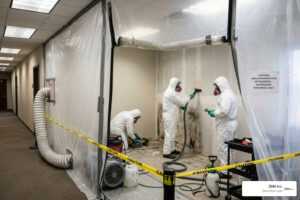
- Hazard Isolation: Setting up physical polyethylene barriers and negative air pressure zones to contain airborne particulates.
- Air Scrubbing: Deploying high-volume industrial HEPA air scrubbers to trap floating soot, carbon dust, and carcinogenic particles.
- Structural Deep Cleaning: Applying specialized alkaline and enzyme detergents to dissolve acidic soot coats without damaging underlying substrates.
- Contents Pack-Out: Cataloging, packaging, and moving salvageable furnishings and valuables to secure off-site climate-controlled facilities for specialized ultrasonic cleaning and ozone treatment.
Exactly What Does a Fire Restoration Company Do During Assessment?
Before removing debris or running machinery, technicians perform a comprehensive site assessment:
- Thermal Imaging & Moisture Mapping: Infrared cameras and non-penetrating moisture meters identify hidden pockets of firefighting water trapped behind walls, under floorboards, and inside ceiling assemblies.
- Structural Integrity Testing: Assessing foundation walls, joists, and rafters for stability.
- Air Quality & Particulate Testing: Measuring particulate concentrations and identifying contamination zones.
- Scope of Work & Line-Item Itemization: Compiling detailed inventories with photographic evidence to establish an actionable restoration and rebuild blueprint.
The Step-by-Step Fire Damage Restoration Process
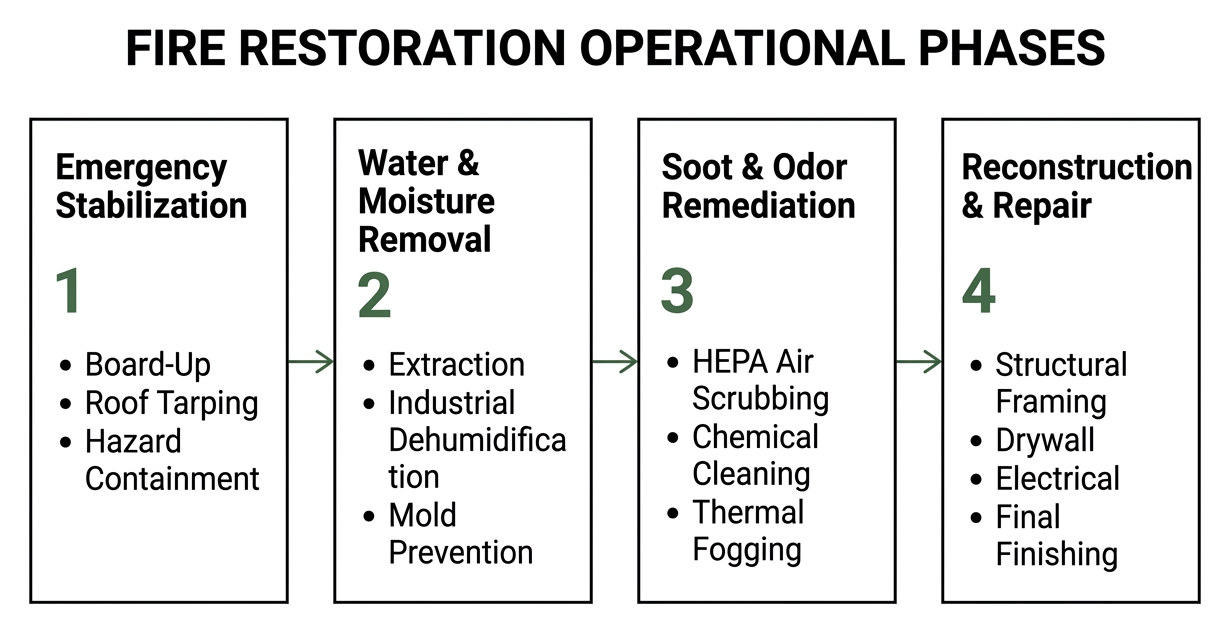
Following established industry standards, such as those set by the Institute of Inspection, Cleaning and Restoration Certification (IICRC), ensures that fire recovery is methodical, safe, and effective. As outlined in our disaster restoration guide 2026, restoration involves multiple synchronized stages.
Emergency Board-Up and Property Security
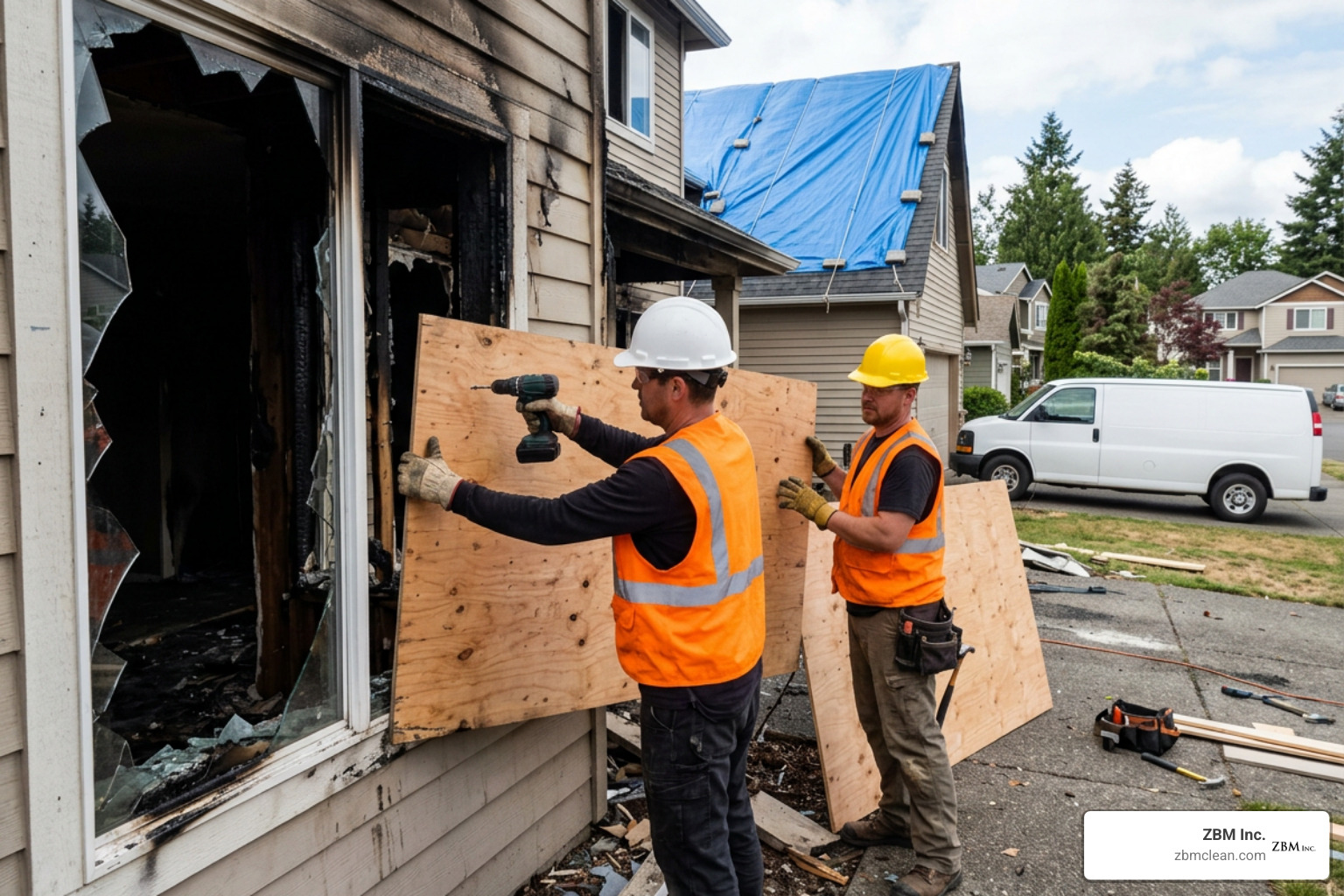
A fire-damaged building is vulnerable to weather intrusion, structural shifts, and unauthorized entry. Within hours of receiving an emergency call, technicians install heavy-duty plywood board-ups over broken windows and compromised entryways.
Crews also secure damaged roof sections with reinforced tarps, install temporary exterior security fencing, and erect structural shoring where load-bearing posts were damaged.
Water Extraction and Rapid Dehumidification
Extinguishing a structural fire requires thousands of gallons of water. If that water remains standing, it quickly turns into an ideal breeding ground for microbial growth. Water extraction must happen right away.
Technicians use industrial truck-mounted extractors and submersible pumps to remove bulk standing water. They set up commercial air movers and desiccant dehumidifiers to pull moisture from deep within structural framing. Utilizing specialized water damage cleaning guide for homeowners methods prevents wood rot and supports necessary stop the spore with professional mold abatement services before fungal colonies can form.
Soot Removal, Surface Cleaning, and Deodorization
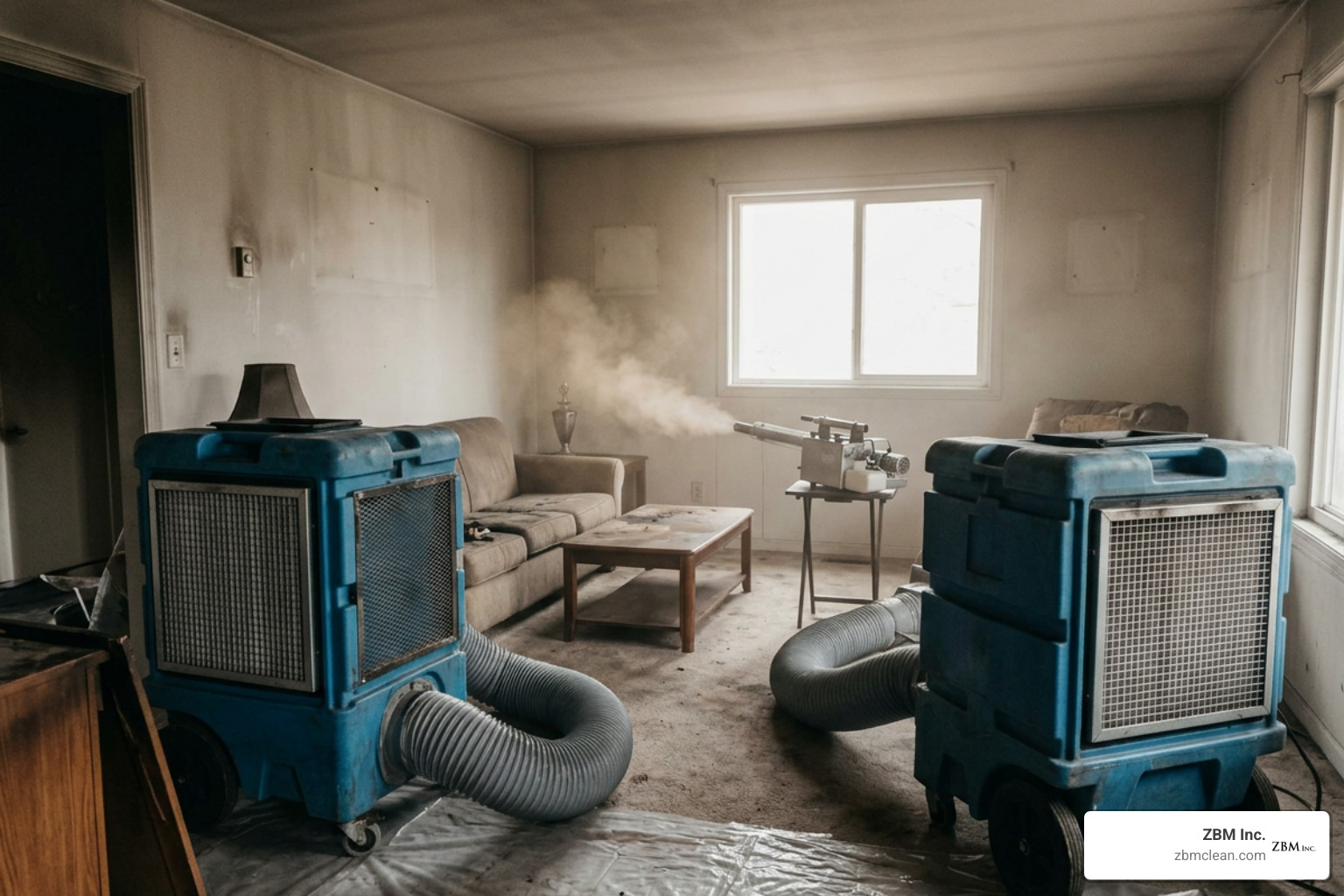
Once the building is dry, the meticulous work of cleaning soot begins. Technicians employ specialized techniques depending on the surface type:
- Dry Chemical Sponges: Specialized vulcanized rubber sponges lift dry soot from porous surfaces, such as drywall, acoustic ceiling tiles, and untreated wood, without using moisture that would set the stain.
- Specialized Detergents & Degreasers: Used on non-porous metals, glazed tiles, and stone to emulsify oily residues.
- Thermal Fogging & Hydroxyl Generators: Foggers disperse solvent-based deodorants in a fine mist that mimics smoke behavior, penetrating microscopic pores to neutralize odor molecules at the chemical level.
- HVAC Duct Sanitization: Sealing and sanitizing all heating and ventilation ductwork to prevent trapped soot from recirculating throughout the building.
Reconstruction and Full Property Rebuild
Once decontamination, soot cleaning, and odor neutralization are complete, the property transitions to structural reconstruction. This phase involves repairing damaged subflooring, rebuilding structural wall studs, installing new insulation and drywall, rewiring electrical circuits, and completing finish carpentry. Understanding how disaster recovery services help you rebuild and restore ensures property owners know what is required to return a home or commercial facility to pre-loss condition.
Timelines, Safety Protocols, and Insurance Support
Managing the aftermath of a fire involves balancing technical cleanup, occupant safety, and detailed insurance documentation. Professional restoration companies serve as the central coordinator across all three areas.
Site Safety and Hazardous Materials Containment
Burned buildings present serious safety hazards. Restoration technicians adhere to strict safety protocols:
- Personal Protective Equipment (PPE): Technicians wear full-body Tyvek suits, heavy work gloves, puncture-resistant boots, and full-face respirators equipped with P100/OV (organic vapor) particulate cartridges.
- Hazard Containment: In older structures, high heat can disturb hazardous materials like lead paint and asbestos insulation. Crews isolate affected areas using heavy plastic sheeting and run negative air machines to protect clean zones.
- Utility and Air Monitoring: Technicians verify the safety of gas and electrical feeds and continuously monitor indoor air quality for carbon monoxide and volatile compounds.
What Does a Fire Restoration Company Do to Manage Insurance Claims?
Navigating property insurance claims after a fire can feel overwhelming. Certified restoration providers handle the technical administrative requirements to simplify the process for property owners:
- Xactimate Estimating: Creating accurate estimates using Xactimate, the pricing software standard accepted by insurance adjusters across North America.
- Detailed Photo Documentation: Capturing date-stamped, high-resolution photographs of structural issues, soot lines, and damaged contents prior to mitigation.
- Comprehensive Line-Item Inventories: Compiling complete itemized lists of salvageable versus non-salvageable structural materials and personal property.
- Direct Adjuster Coordination: Meeting on-site with insurance adjusters to review physical damage, explain required remediation steps, and resolve questions directly.
Restoration Duration and Cost Factors
Restoration timelines and project costs depend heavily on the severity of the loss. A minor localized kitchen fire with limited smoke may be mitigated and repaired in 1 to 2 weeks. A severe fire with extensive structural damage, heavy water saturation, and widespread smoke infiltration can take anywhere from a few months to over six months for full reconstruction.
Key cost and timeline factors include:
- Total square footage and volume of affected spaces.
- Amount of water used during firefighting operations.
- The chemical nature of the soot (synthetic oily residues require more labor than dry wood soot).
- Permitting requirements for electrical, plumbing, and structural repairs.
- The volume of contents requiring off-site pack-out, cleaning, and storage.
Frequently Asked Questions About Fire Restoration
How soon should fire restoration begin after the blaze is extinguished?
Mitigation should begin within 24 to 48 hours after fire authorities declare the structure safe to enter. Delaying response allows standing water to soak into structural framing, fostering rapid mold growth. Acidic soot will also cause irreversible corrosion, etching metal fixtures, glass surfaces, and painted finishes beyond repair.
Can personal belongings and furniture be saved after a fire?
Yes, many personal belongings can be preserved using professional restoration methods. Hard-surface items, electronics, solid wood furniture, and valuable heirlooms are often cleaned using ultrasonic immersion baths, dry chemical sponges, and controlled ozone chambers. Soft goods, such as clothing, draperies, and bedding, can be laundered using specialized hydraulic wash systems designed to remove embedded smoke particles.
Can I stay in my home during the fire restoration process?
In most cases, remaining in the home during active restoration is not recommended and may not be permitted by safety officials. Air quality can be hazardous due to suspended fine particulates, toxic VOCs, and chemical residues.
Additionally, electricity, water, or gas services are often temporarily disconnected for safety. Most commercial and homeowner insurance policies include Loss of Use or Additional Living Expense (ALE) coverage, which helps cover temporary accommodations while certified teams complete the cleanup.
Conclusion
A structural fire brings sudden stress, safety risks, and operational disruption. Knowing the full scope of what certified professionals do—from emergency board-ups and water extraction to soot decontamination and complete reconstruction—helps property owners take confident steps forward.
Professional cleanup requires specialized skills, commercial-grade equipment, and rigorous safety protocols. Attempting to manage soot, structural damage, or standing water without certified assistance can lead to permanent surface damage, unresolved structural issues, and lingering health risks.
At ZBM Inc., our certified, licensed, bonded, and insured team brings decades of field experience to commercial and residential properties across Dodge County, Jefferson County, Watertown, and Southeastern Wisconsin. When disaster strikes, our team is ready to respond with prompt, methodical care. If your property has sustained fire, smoke, or water damage, turn to our team for reliable disaster restoration services in Dodge and Jefferson County to secure your building, protect your health, and restore your space safely.