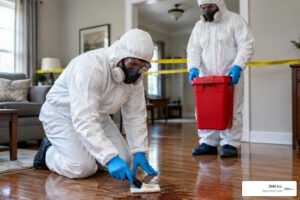
Find a Reliable Damage Restoration Company Near You
When you need damage restoration near me, choose a company that can respond quickly, verify the damage with proper equipment, and show current restoration certifications and insurance. Ask whether the team handles your type of loss – water, fire, mold, storm, or biohazard damage – and whether it can help document the loss for your insurance claim.
Fast action matters. Mold may begin growing within 24 to 48 hours after water exposure, while standing water, smoke residue, and storm damage can create larger and more costly problems if left untreated. A qualified restoration team helps protect people, limit secondary damage, and move your property toward safe use again.
I am Terry Zastrow, owner of ZBM Inc., with decades of field experience supporting public agencies, municipalities, housing providers, and private clients. Our IICRC-certified team brings restoration training, OSHA safety knowledge, and practical expertise to help clients evaluating damage restoration near me make informed decisions.
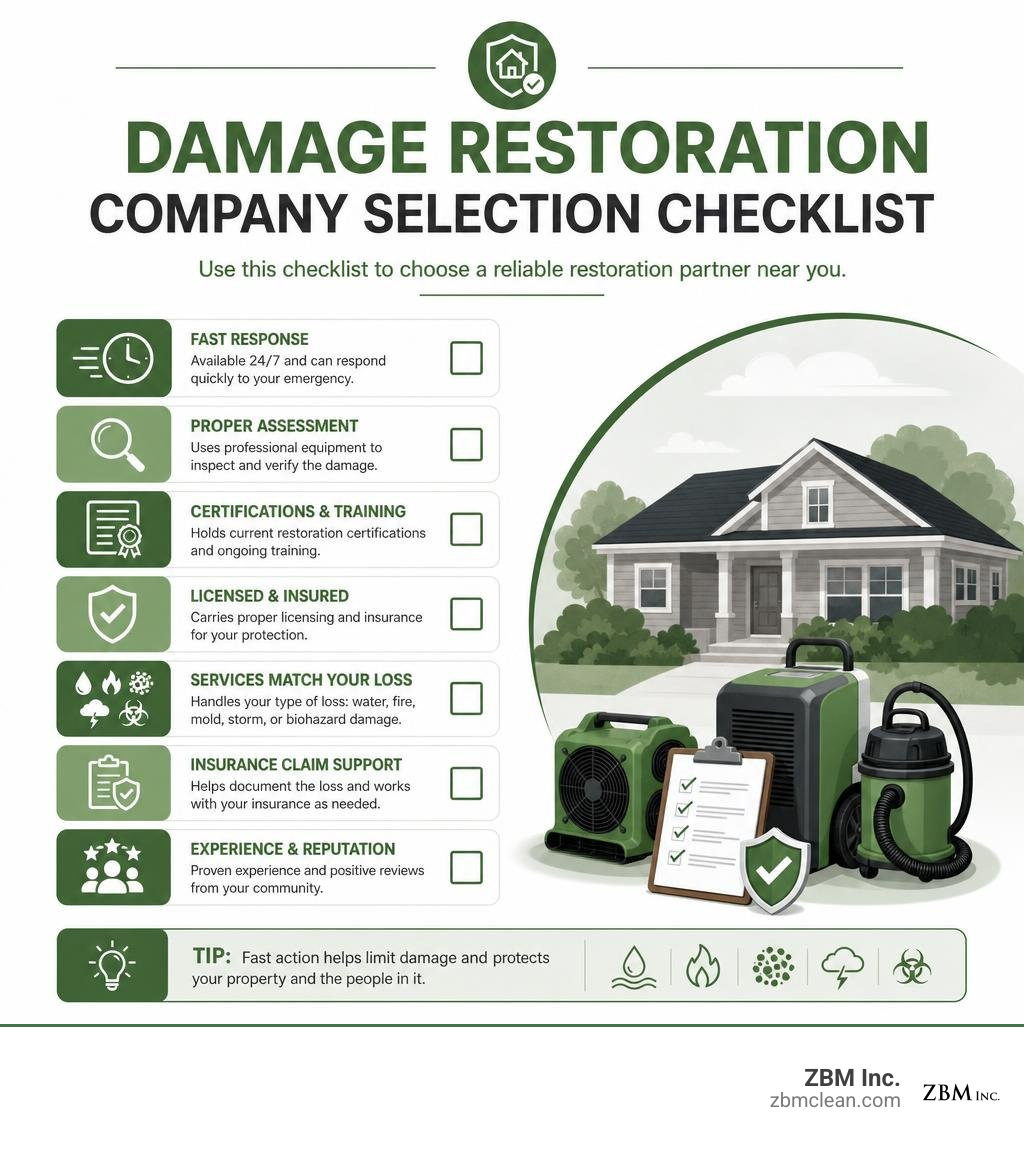
Damage restoration near me vocab explained:
- disaster restoration near me
- flood cleanup companies near me
- water damage restoration companies near me
Understanding Property Restoration Services and What They Cover
Disaster strikes when you least expect it. Whether a burst pipe floods a finished basement in Lake Mills, WI, or severe storms sweep across Southeastern WI, property damage requires specialized technical solutions. General cleaning simply does not address deep moisture or hazardous airborne particulates. Understanding what do disaster restoration services cover helps you choose the right contractor to protect your investment.
Comprehensive mitigation spans several core categories:
- Water Mitigation and Extraction: Water damage represents the second most frequently filed property insurance claim across the United States, with 1 in 50 homeowners experiencing a claim each year. Technicians use thermal imaging and industrial extractors to remove standing water, dry building materials, and stop deterioration before it spreads.
- Fire and Smoke Damage Cleanup: Fire restoration costs typically range from $3,000 to $28,000 depending on the square footage affected. Beyond structural charred materials, acidic soot spreads through ductwork and settles behind walls. Professionals apply thermal fogging, hydroxyl generators, and specialized chemical sponges for thorough smoke deodorization.
- Mold Remediation: Mold spores germinate rapidly in moist environments. Certified contractors establish negative air pressure containment chambers with HEPA filtration to safely clean and remove microbial growth without contaminating unaffected living areas.
- Storm and Wind Damage Recovery: Severe seasonal weather causes roof punctures, tree impacts, and siding failures. Full-service companies provide structural stabilization, board-up, tarping, and debris clearing.
- Biohazard and Hoarding Cleanup: Incidents involving biological hazards, sewage backups, or severe hoarding require specialized personal protective equipment (PPE), hospital-grade disinfectants, and strict adherence to OSHA bloodborne pathogen standards.
- Content Salvage and Structural Repairs: Reputable firms pack out, inventory, clean, and restore salvageable personal property while undertaking structural carpentry to return your building to pre-loss condition.
Recognizing why disaster restoration is important ensures you prioritize hiring certified professionals who address both visible damage and hidden structural threats.
Key Factors When Searching for Damage Restoration Near Me
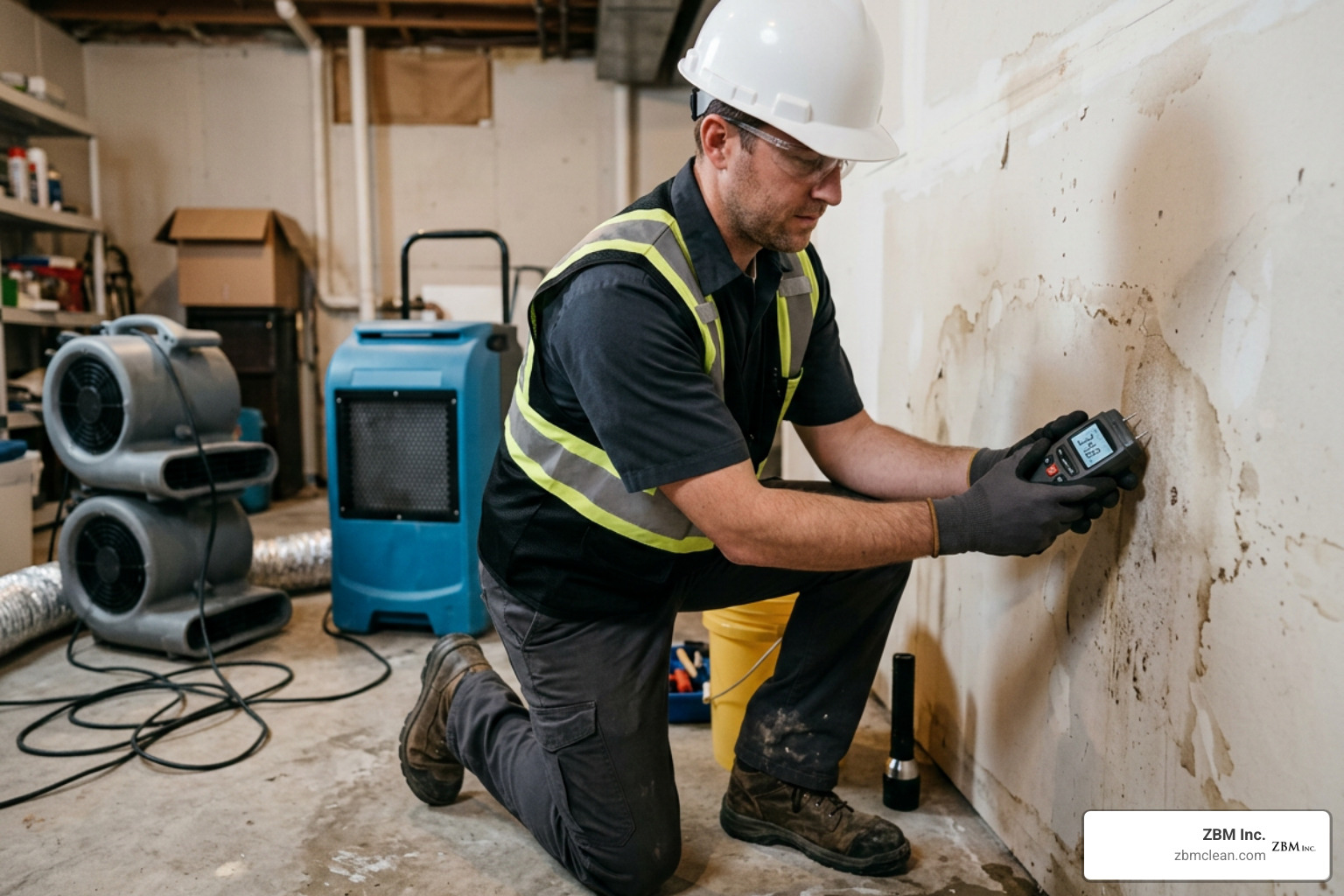
Selecting an emergency contractor in the middle of a crisis feels overwhelming. However, choosing the wrong provider leads to delayed timelines, substandard drying, and denied insurance claims. Focus on firms with established local roots across Dodge County WI, Jefferson County WI, and Watertown WI.
| Selection Criteria | Certified Restoration Specialist | General Remodeling Contractor |
|---|---|---|
| Response Time | 24/7/365 immediate emergency dispatch | Standard business hours |
| Moisture Diagnostics | Thermal imaging, pinless meters, hygrometers | Visual inspection only |
| Industry Certifications | IICRC Certified (WRT, FSRT, AMRT) | State general contractor license |
| Drying Equipment | Commercial LGR dehumidifiers & air movers | Residential fans and shop vacuums |
| Insurance Knowledge | Uses industry-standard Xactimate estimating | Uses generic custom invoices |
| Cross-Contamination Control | HEPA negative air containment setups | Minimal or no containment |
Evaluating Credentials and Experience for Damage Restoration Near Me
Verifying professional credentials protects your home from uncertified operators. Start by checking for Institute of Inspection, Cleaning and Restoration Certification (IICRC) credentials. The IICRC sets rigorous scientific benchmarks for water damage restoration (WRT), fire and smoke restoration (FSRT), and applied microbial remediation (AMRT).
Legitimate companies maintain comprehensive general liability insurance, pollution liability coverage, and worker’s compensation. As a family-owned, licensed, and bonded provider, our technicians adhere to strict safety protocols on every site. For additional insights on choosing reputable professionals, consult the homeowner’s guide to vetting disaster clean up companies.
Emergency Availability and Response Times for Damage Restoration Near Me
When building materials soak up water, every passing hour accelerates secondary damage. Wood frames warp, drywall disintegrates, and microbial growth starts within 24 to 48 hours. Research shows approximately 93% of all water damage claims could be avoided or minimized through rapid, professional intervention.
A dependable restoration partner provides true 24/7 emergency dispatch. Local staging ensures specialized industrial drying equipment reaches your doorstep immediately. Reviewing how emergency disaster recovery after damage strikes is structured helps you hold emergency contractors accountable to strict response standards.
The Step-by-Step Restoration Process and What to Expect
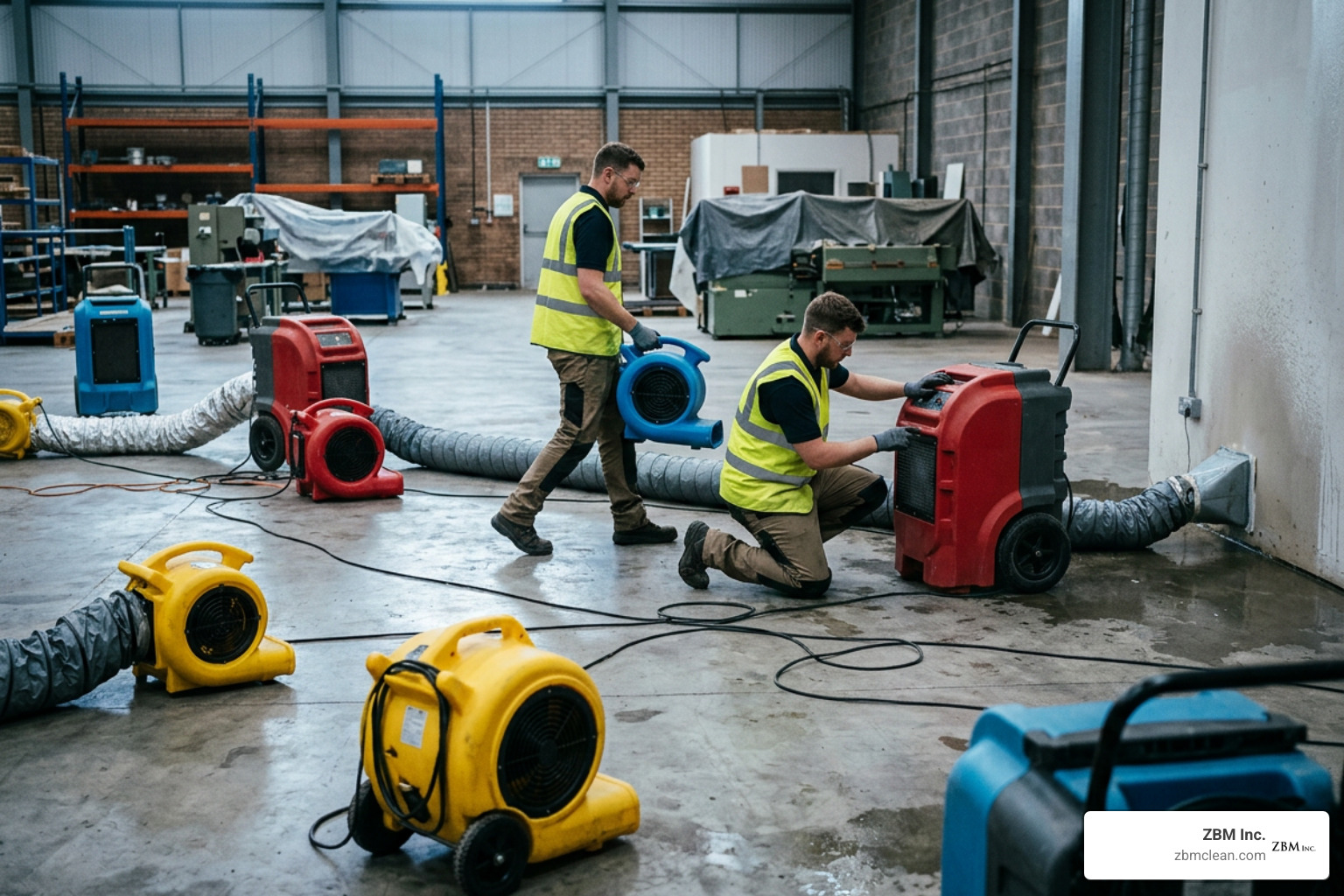
Professional restoration follows an engineered, scientific standard of care to remediate structural elements safely.
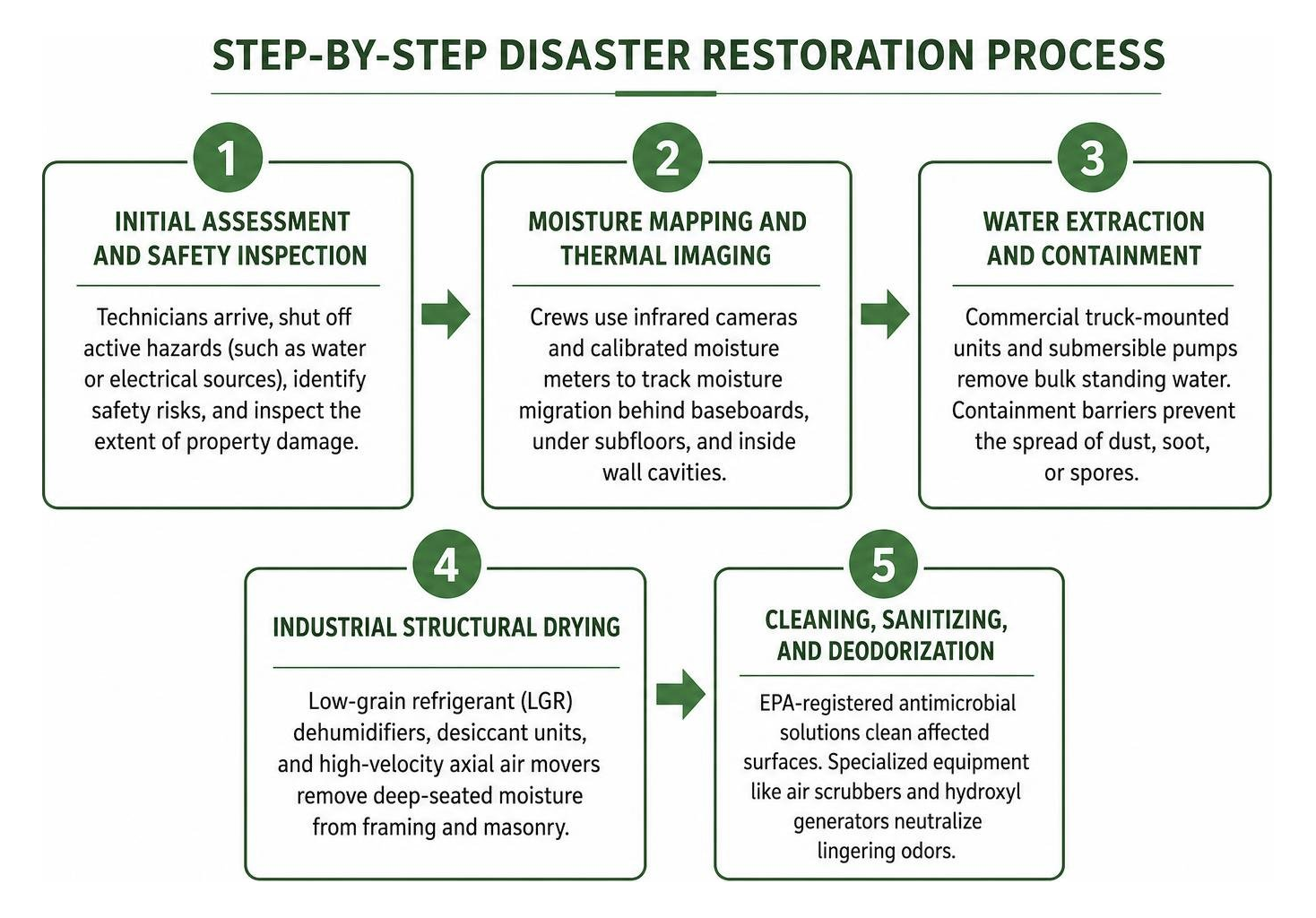
- Initial Assessment and Safety Inspection: Technicians arrive, shut off active hazards (such as water or electrical sources), identify safety risks, and inspect the extent of property damage.
- Moisture Mapping and Thermal Imaging: Crews use infrared cameras and calibrated moisture meters to track moisture migration behind baseboards, under subfloors, and inside wall cavities.
- Water Extraction and Containment: Commercial truck-mounted units and submersible pumps remove bulk standing water. Containment barriers prevent the spread of dust, soot, or spores.
- Industrial Structural Drying: Low-grain refrigerant (LGR) dehumidifiers, desiccant units, and high-velocity axial air movers remove deep-seated moisture from framing and masonry.
- Cleaning, Sanitizing, and Deodorization: EPA-registered antimicrobial solutions clean affected surfaces. Specialized equipment like air scrubbers and hydroxyl generators neutralize lingering odors.
- Reconstruction and Final Rebuild: Damaged drywall, flooring, trim, and cabinetry are repaired or rebuilt, returning the property to pre-loss condition. Discovering how disaster recovery services help you rebuild and restore demonstrates the value of hiring a single, comprehensive contractor from cleanup to reconstruction.
Managing Costs, Insurance Claims, and Mistakes to Avoid
The average cost of residential water restoration ranges between $1,200 and $5,000, with severe structural flooding exceeding $10,000. Navigating these costs requires understanding your insurance policy and working with a restoration contractor who documents evidence clearly for adjusters.
Avoid these common pitfalls when hiring an emergency contractor:
- Delaying the Initial Call: Postponing emergency mitigation turns clean Category 1 water into hazardous Category 3 blackwater within days, drastically raising restoration costs.
- Hiring Uncertified Handymen: General contractors often lack commercial drying equipment, leaving moisture trapped inside wall cavities where mold can thrive undetected.
- Accepting Vague Estimates: Choose contractors who use Xactimate, the standardized pricing software trusted by major insurance carriers, to avoid disputed line items.
- Failing to Document Personal Property: Discarding damaged belongings before photographically cataloging them leads to denied insurance claims.
For deeper insights on screening regional contractors, review the ultimate guide to finding water damage restoration companies near me and learn key vetting factors from flood cleanup companies near me: what to look for before you hire.
Frequently Asked Questions About Disaster Restoration
How quickly should I call a restoration service after property damage?
Contact a professional restoration service immediately. The first 24 to 48 hours represent the critical window to prevent mold growth, stop structural rot, and limit total repair costs. Reviewing what to do immediately after a disaster damages your property outlines how rapid professional staging saves irreplaceable belongings.
Does homeowners insurance cover professional damage restoration?
Most standard homeowners insurance policies cover sudden and accidental property damage, such as burst plumbing pipes, storm-related roof breaches, and sudden fires. Gradual damage resulting from deferred maintenance or unresolved leaks is generally excluded. Professional restoration companies work alongside your insurance adjuster, submitting detailed moisture logs, itemized estimates, and photos to streamline claim approval.
What steps can I take to prevent further damage before help arrives?
While awaiting the arrival of your emergency restoration crew, prioritize safety. If safe to do so, shut off the main water supply valve, turn off electricity to impacted areas at the breaker box, and move lightweight valuables away from standing water. Avoid running residential vacuum cleaners over wet surfaces or entering rooms with sagging ceilings. Explore practical safety tips in home water damage restoration tips.
Conclusion
Finding the right emergency restoration company makes all the difference when protecting your home or commercial facility from lasting structural damage. When disaster strikes, prioritize partnering with a certified, licensed, bonded, and insured team equipped with the industrial tools and scientific training required to dry, sanitize, and restore your property correctly the first time. For property owners across Watertown WI, Dodge County WI, Jefferson County WI, Lake Mills WI, and the surrounding communities, ZBM Inc. delivers 24/7 support backed by decades of trusted field experience. Contact our dedicated team today for prompt, professional disaster restoration services in Dodge & Jefferson County, WI.