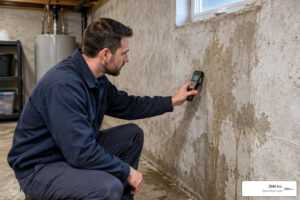
How to Choose a Mold Prevention Service Before Moisture Becomes Mold
Start with the moisture source. When choosing a mold prevention service, ask how the provider will check for leaks, condensation, and high humidity. Look for a clear plan to address those problems and follow up. Cleaning a stain alone will not stop mold from returning if the area stays damp.
Mold spores are a normal part of indoor air. The goal is to keep them from growing. In Watertown, that means paying attention to damp basements, plumbing leaks, and condensation during cold weather.
I’m Terry Zastrow, owner of IICRC-certified ZBM Inc. Our building maintenance and disaster recovery experience shapes this guide to choosing a mold prevention service.
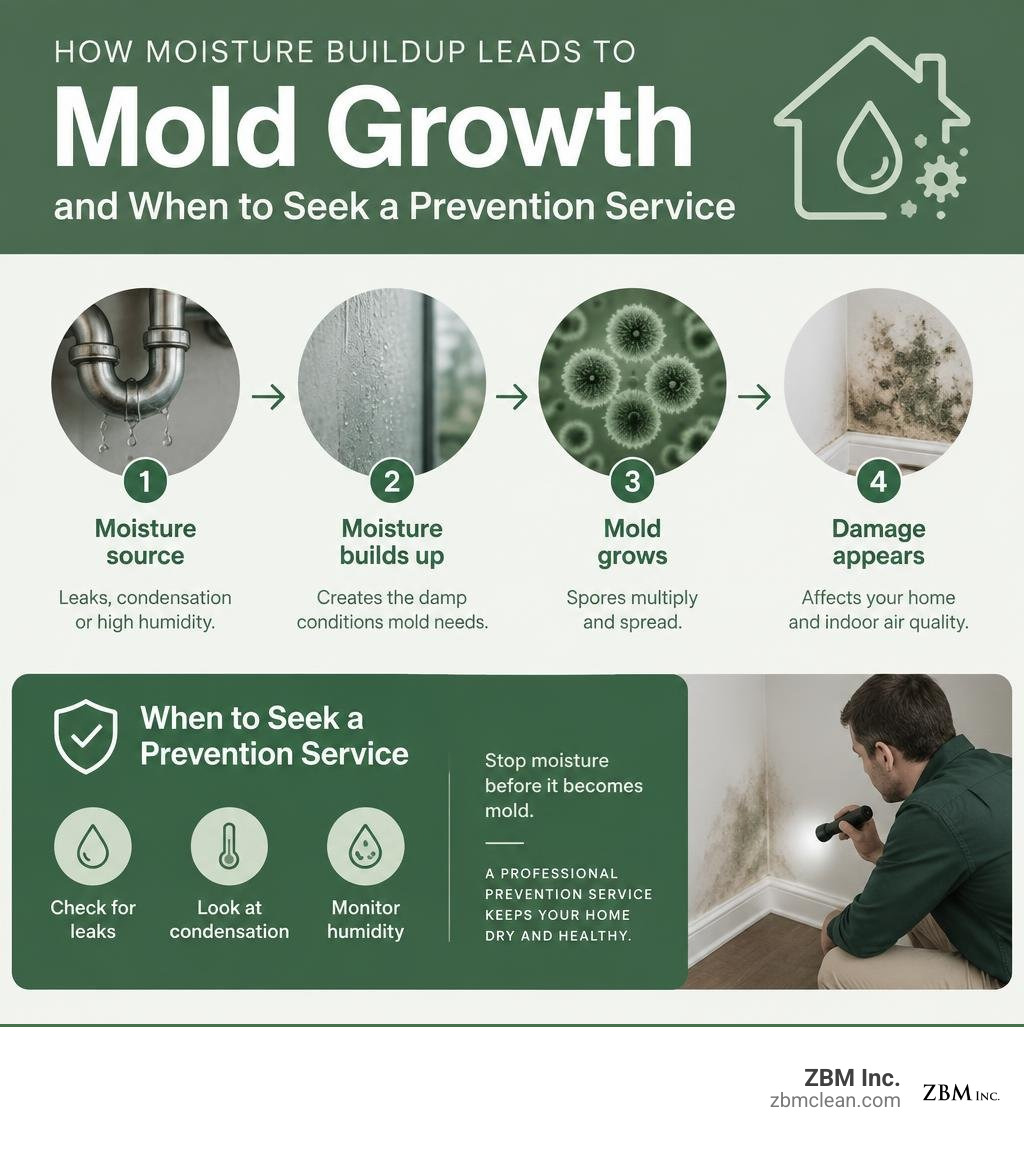
Must-know mold prevention service terms:
Why Scheduling a Professional Mold Prevention Service Protects Your Home
Moisture issues rarely announce themselves with a trumpet flare. Instead, they creep in quietly—seeping through porous foundation concrete, lingering in unconditioned attics, or condensing behind baseboards during humid summer months and frigid winter freeze-thaw cycles. Left unchecked, unmanaged moisture triggers rapid spore colonization, structural wood decay, and compromised indoor air quality.
Maintaining proper relative humidity and balanced ventilation protects the structural integrity of your property. When building materials such as drywall backing, subflooring, and wooden framing absorb ambient moisture, they provide the exact organic food source dormant fungal spores need to thrive.
According to Wisconsin Department of Health Services indoor air quality guidance, completely eliminating all airborne mold spores from any home is impossible because spores naturally travel through outdoor and indoor air. However, controlling ambient moisture halts active colonization in its tracks. Proactive moisture management significantly cuts down on airborne irritants, protects respiratory wellness, helps prevent chronic allergies, and preserves resale value across Dodge County and Jefferson County.
What to Expect During a Professional Mold Prevention Service
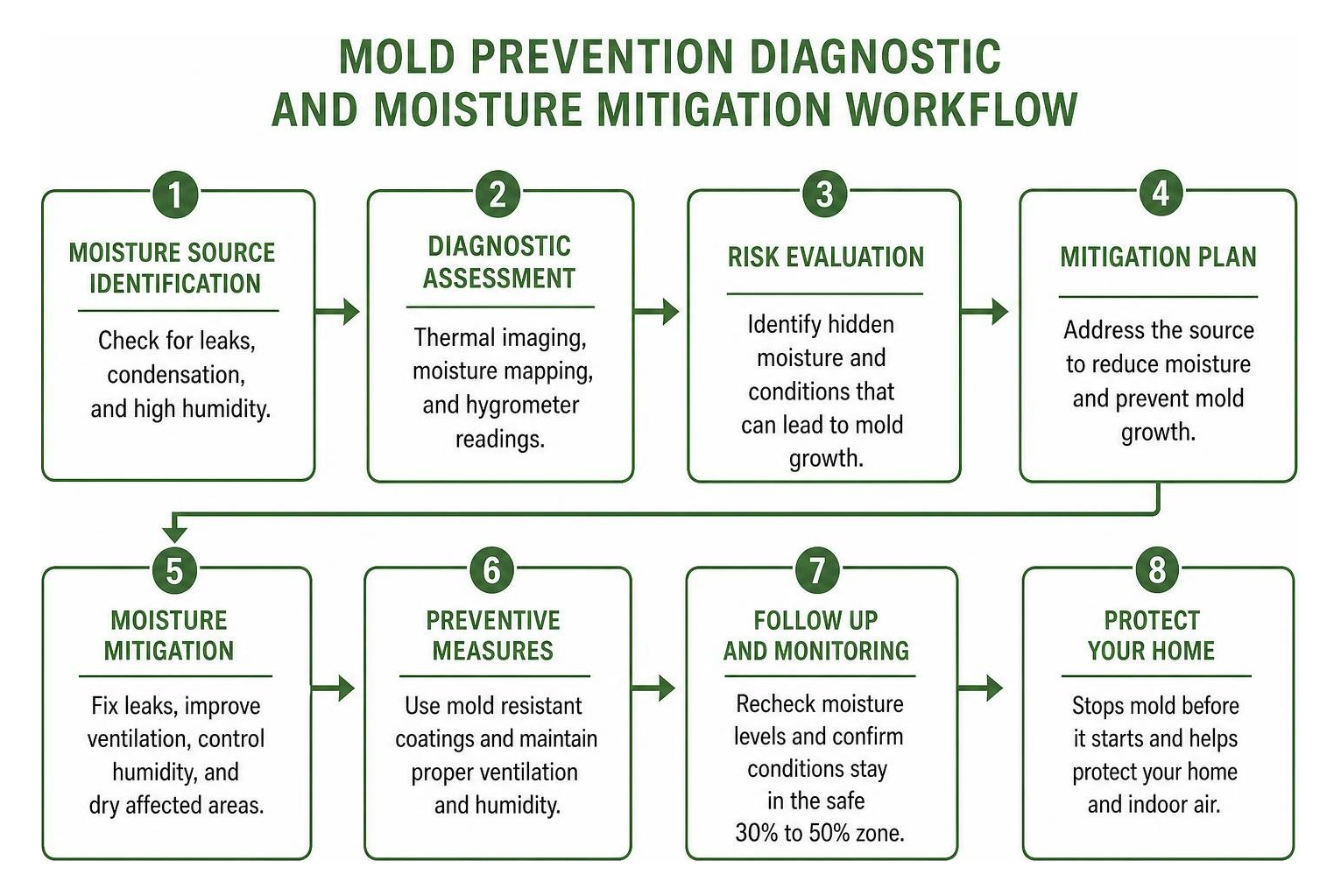
When our certified team arrives at your property, we do not simply glance around and make assumptions. A professional preventative service uses advanced diagnostics and scientific moisture mapping to identify structural risks before visible growth occurs.
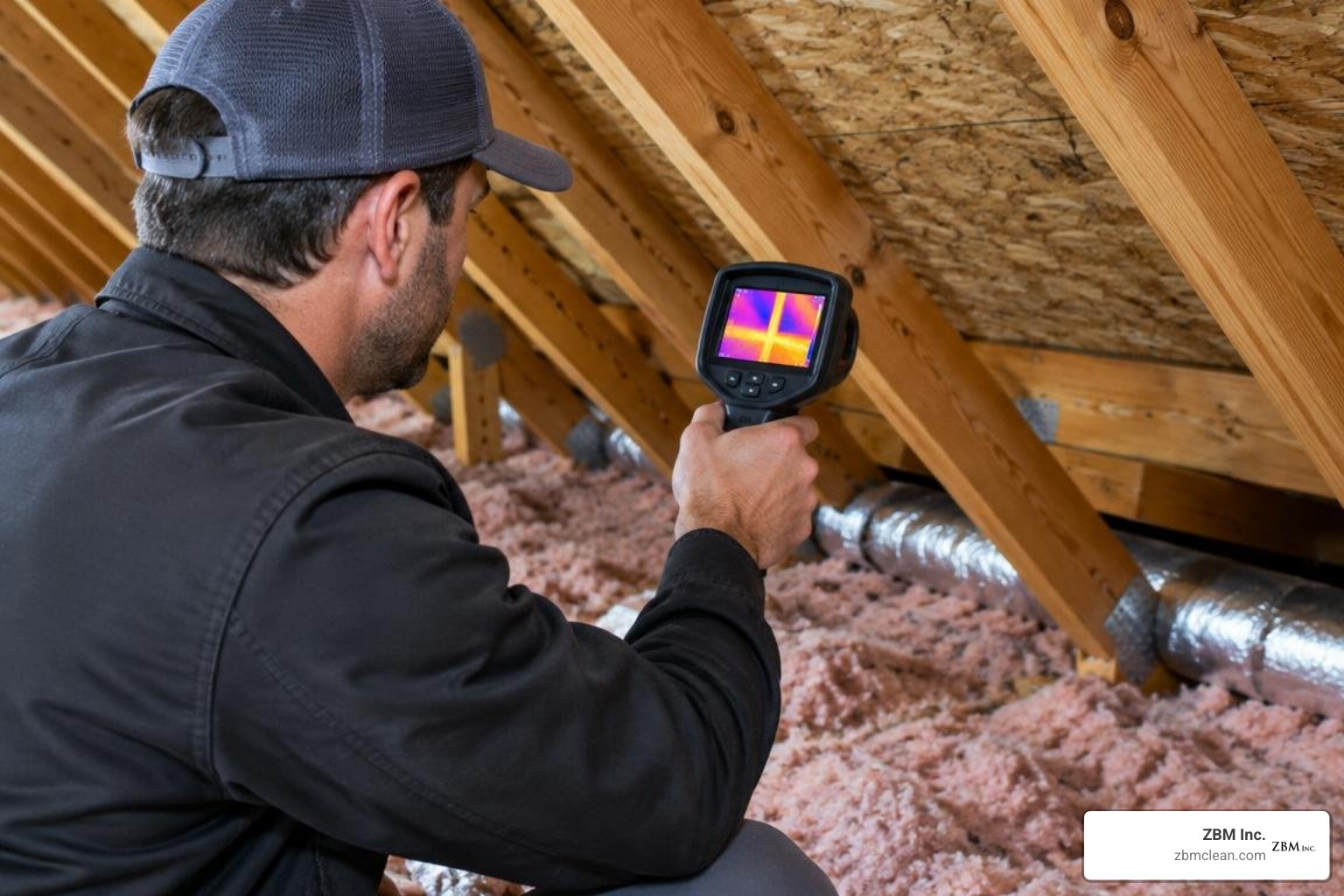
During a thorough service appointment, property owners can expect:
- Thermal Infrared Imaging: Pinpointing hidden temperature differentials behind walls and beneath flooring that signal trapped pockets of moisture without damaging drywall.
- Moisture Mapping & Hygrometer Readings: Measuring moisture content inside wooden framing and tracking indoor relative humidity levels to ensure air remains in the safe 30% to 50% zone.
- Ventilation and Air Exchange Assessments: Evaluating bathroom exhaust flow, attic baffle clearance, and fresh air intake to eliminate stagnant, humid microclimates.
- Surface Barrier Treatments: Applying specialized antimicrobial surface barrier treatments to vulnerable framing and subflooring to stop spores from taking root.
Key Vulnerable Areas Requiring Moisture Management and Antimicrobial Barriers
Certain architectural zones carry a much higher risk of moisture buildup due to poor air circulation, proximity to soil, or plumbing fixtures:
- Basement Foundations and Crawlspaces: High hydrostatic pressure pushes groundwater vapor through porous concrete slabs and stone foundations, turning sub-grade rooms into humidity traps.
- Attic Sheathing and Rafters: Inadequate roof ventilation traps rising indoor heat and moisture in winter, leading to heavy condensation along roof sheathing.
- Plumbing Chases and Wall Cavities: Slow, hidden drips from dishwashers, supply lines, or shower pans create persistent, hidden moisture inside wall cavities.
- HVAC Ducts and Air Handlers: Condensation pans and uninsulated duct runs can harbor moisture, risking spore distribution throughout the entire building if neglected.
Why DIY Moisture Control Falls Short Compared to Professional Defense
Tackling moisture control or mold prevention alone often turns into an exhausting, time-consuming cycle of trial and error. Standard household cleaners and surface wiping only address what is visible on the surface. They do not penetrate dense framing lumber or reach the dark recesses of structural wall cavities where dampness lingers.
Attempting to treat these spaces with consumer spray bottles or standard domestic dehumidifiers frequently leaves the underlying moisture problem completely unresolved. Without commercial diagnostic tools, it is easy to miss elevated moisture hidden inches behind finished trim.
| Feature / Capability | Standard DIY Effort | Professional Moisture Defense Service |
|---|---|---|
| Diagnostic Depth | Visual surface inspection only | Thermal imaging, moisture meters, and air mapping |
| Treatment Reach | Accessible exterior surfaces | Deep structural cavities, framing, and crawlspaces |
| Coating Durability | Temporary surface sprays | Commercial-grade, EPA-registered antimicrobial barriers |
| Equipment Power | Standard household dehumidifiers | Industrial air movers, HEPA scrubbers, and high-capacity drying units |
| Long-Term Protection | High risk of recurring dampness | Documented moisture management and verified structural drying |
Relying on certified professionals ensures the moisture source is accurately mapped, structural cavities are completely stabilized, and durable protective barriers are installed correctly the first time.
How to Choose and Implement the Right Moisture Defense Solutions
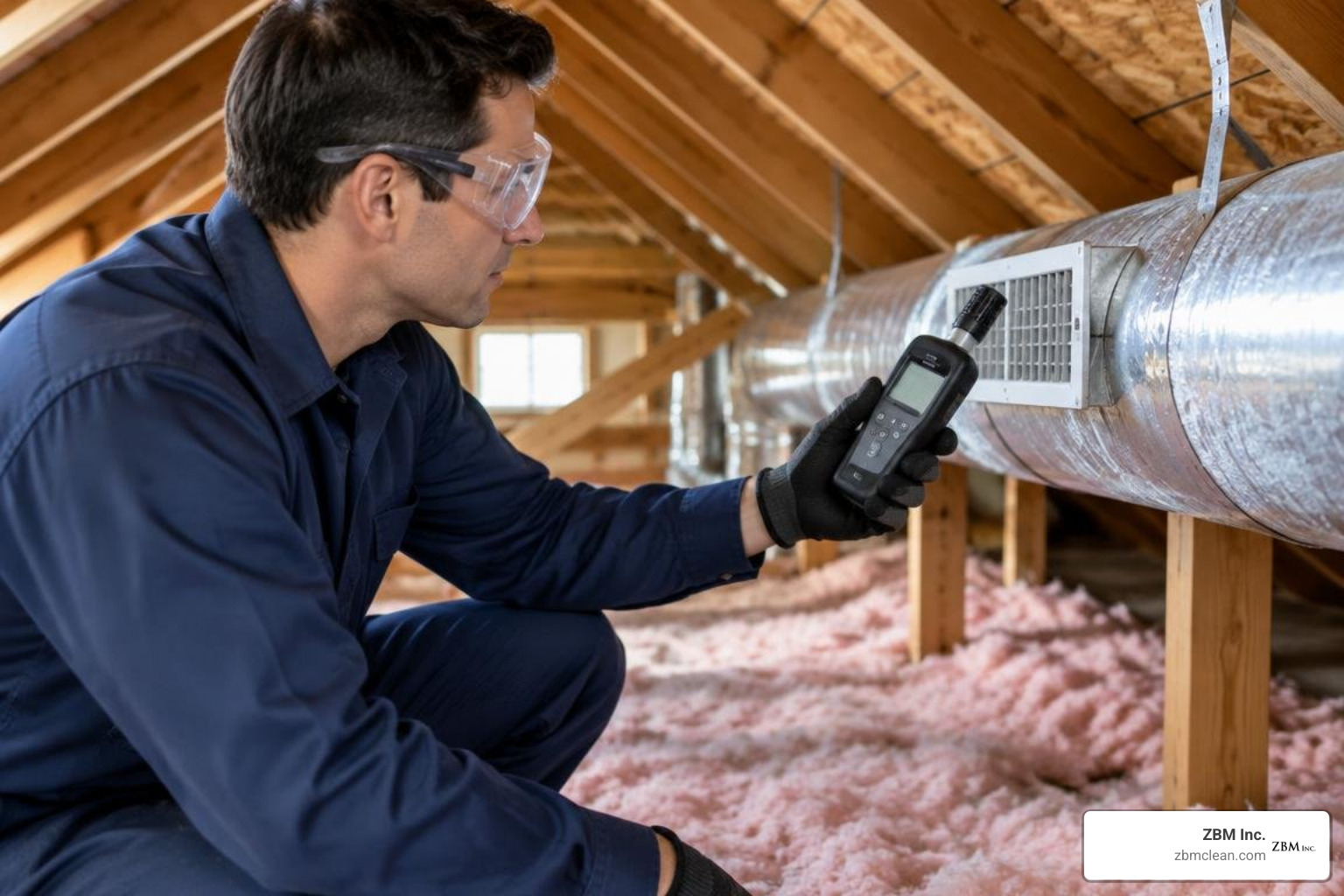
Selecting an effective moisture defense plan requires matching your property’s layout with regional climate challenges. In Southeastern Wisconsin, our properties endure heavy spring rains, humid summers, and deep winter freezes. Each season introduces unique moisture loads that challenge building envelopes.
Selecting a long-term defense strategy involves more than just a quick surface clean; it requires a structured approach to environmental moisture mitigation and, when needed, comprehensive mold removal and repair to ensure building materials remain dry and structurally sound year-round.
How a Specialized Mold Prevention Service Differs from Remediation
It is vital to understand the difference between proactive prevention and reactive remediation. While both maintain healthy indoor air, they serve distinct stages of property care.
When active fungal growth exceeds roughly a 10-square-foot patch (about 3 feet by 3 feet), standard guidelines call for hiring professional mold abatement experts. Remediation involves strict physical containment, HEPA air filtration, material removal, and independent clearance testing to return indoor spore counts to normal baseline levels.
In contrast, scheduling a mold prevention service before extensive colonization occurs avoids the invasive demolition, containment barriers, and significant costs associated with full-scale emergency remediation.
Essential Criteria for Selecting a Qualified Moisture Control Specialist
When choosing a partner to protect your home or commercial facility, look for proven credentials, specialized field equipment, and regional expertise:
- Industry Certifications: Verify that the company holds credentials from recognized industry bodies, such as the IICRC (Institute of Inspection, Cleaning and Restoration Certification), ensuring technicians follow strict scientific protocols.
- Comprehensive Licensing & Insurance: Ensure the company is fully licensed, bonded, and insured to protect your property during structural moisture mitigation.
- Industrial-Grade Equipment: Look for teams equipped with calibrated moisture meters, infrared thermal cameras, HEPA-filtered air scrubbers, and EPA-registered antimicrobial sealants.
- Local Climate Experience: Choose a company with deep familiarity with Southeastern Wisconsin building architectures, high groundwater tables, and seasonal weather patterns from Watertown and Lake Mills to Minocqua and the Northwoods.
- Full-Spectrum Cleaning Expertise: Companies with experience in complex environments—such as disaster recovery, biohazard cleanup, and managing the 5 types of toxic mold that require biohazard cleanup—bring an advanced level of precision and safety to every residential moisture project.
At ZBM Inc., our family-owned, certified team delivers comprehensive commercial and residential cleaning, disaster recovery, and moisture defense across Watertown, Dodge County, Jefferson County, and surrounding communities. Stopping moisture at the source today protects your property, preserves your investment, and keeps your indoor air clean and healthy for years to come.