Why Every Facility Manager Needs a Bathroom Maintenance Log
A bathroom maintenance log is a structured record used to track cleaning tasks, supply restocking, inspections, and any issues found in a commercial or public restroom — completed by staff after each cleaning visit.
Here’s what a bathroom maintenance log typically includes:
| Field | What to Record |
|---|---|
| Date & Time | When the cleaning or inspection occurred |
| Staff Initials | Who completed the tasks |
| Tasks Completed | Trash, toilets, sinks, floors, supplies, etc. |
| Supplies Restocked | Soap, paper towels, toilet paper |
| Issues Found | Broken fixtures, leaks, odors, vandalism |
| Supervisor Sign-Off | Verification that work meets standards |
If you just need a quick-start checklist to post in your restroom, print one, laminate it, and have staff initial it after every visit. That’s the core of what a maintenance log does.
Now, here’s why this matters more than most facility managers realize.
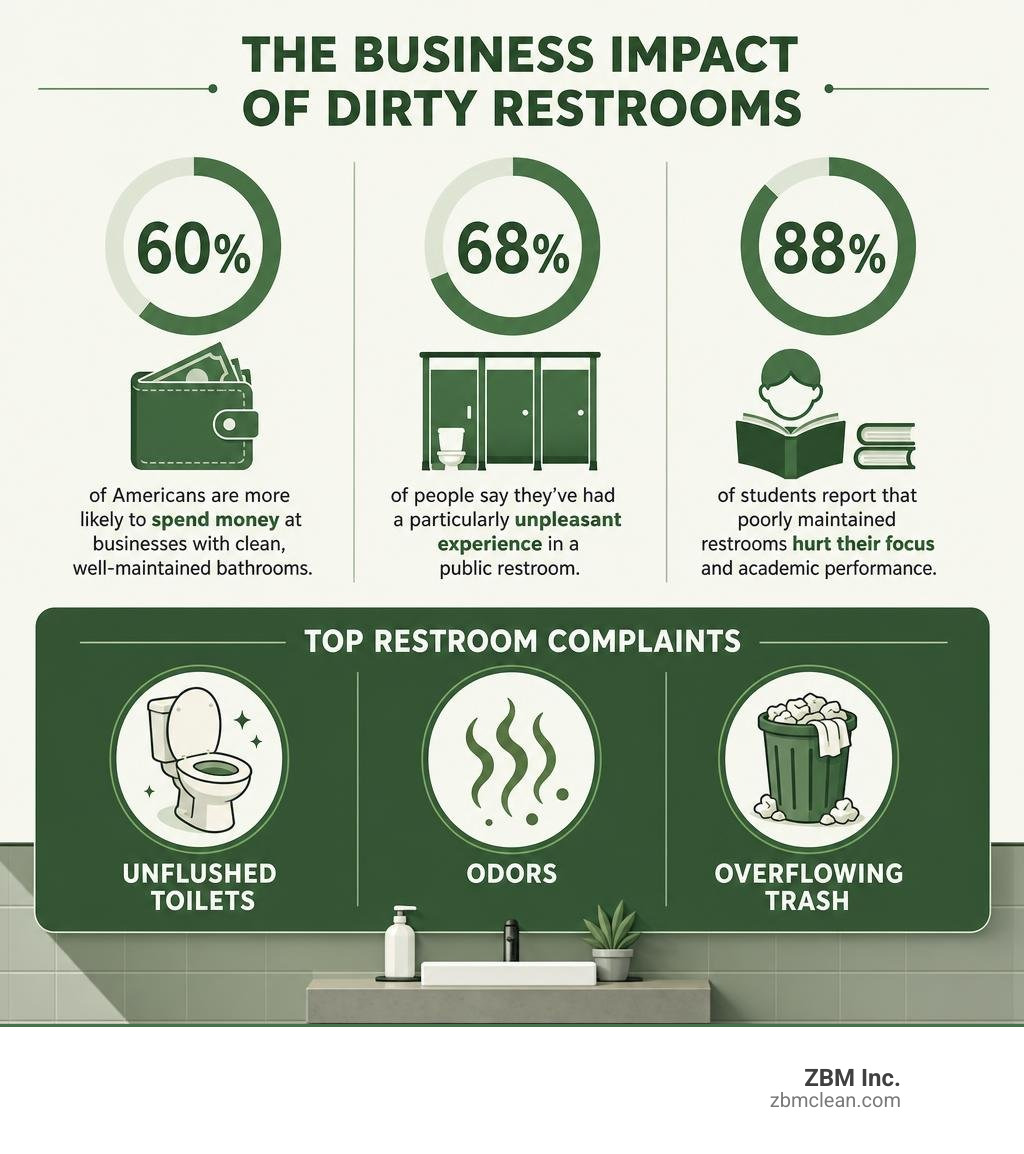
A full 68% of people say they’ve had a particularly unpleasant experience in a public restroom. And according to survey data, 60% of Americans are more likely to spend money at businesses with clean, well-maintained bathrooms. That’s not a small detail — that’s revenue walking out the door over an unflushed toilet or an empty soap dispenser.
For schools, the stakes are just as real. 88% of students report that poorly maintained restrooms hurt their focus and academic performance.
A bathroom that looks fine at 8 a.m. can become a problem by 10 a.m. Without a log, nobody knows when it was last checked — or who’s responsible.
I’m Terry Zastrow, owner of ZBM, Inc., a certified cleaning firm with approximately 30 years of experience maintaining commercial and institutional facilities across Wisconsin — including developing consistent bathroom maintenance log systems for state agencies, municipalities, and private-sector clients. In the sections below, I’ll walk you through everything you need to build and use a maintenance log system that actually works.
Relevant articles related to bathroom maintenance log:
What is a Bathroom Maintenance Log and Why Does Your Facility Need One?
A bathroom maintenance log is more than just a piece of paper on a clipboard hanging behind a door. It is a systematic tool that bridges the gap between daily operations and high-level quality control. When properly implemented, it acts as a central hub for hygiene tracking, staff accountability, and facility maintenance.
Without a structured tracking system, cleaning tasks are easily forgotten, and communication between shifts breaks down. A formal log establishes clear expectations, ensuring that no touchpoint is neglected. It also provides business owners and facility managers with a historical record of maintenance, which is invaluable during health inspections or safety audits. For more operational insights, explore our 5 ways to keep company restrooms clean and safe.
The Business and Academic Impact of Restroom Hygiene
The cleanliness of your restrooms directly impacts your bottom line and organizational reputation. Consider these realities:
- Customer Retention and Spending: Because 60% of consumers are likely to spend more at businesses with well-maintained bathrooms, hygiene is a direct driver of customer loyalty. Conversely, a single unpleasant experience can cause a customer to leave a negative online review and never return.
- Student Success: In educational environments, the impact is academic. When 88% of students report that dirty, poorly stocked, or foul-smelling restrooms negatively impact their concentration and academic success, restroom hygiene becomes a student welfare issue. Insufficient soap and paper towels also discourage proper handwashing, leading to increased absenteeism from spreading illnesses.
- Brand Reputation: Your restroom is a reflection of your overall standards. Whether you run a retail store in Lake Mills, WI, or manage a corporate office in Watertown, WI, visitors associate the cleanliness of your bathroom with the quality of your products or services.
Ensuring Regulatory Compliance with a Bathroom Maintenance Log
A physical or digital log is your primary line of defense when it comes to regulatory compliance and legal protection:
- Health Codes: Local health departments in Jefferson County and Dodge County require public facilities to maintain sanitary conditions. A documented log proves to inspectors that you are actively monitoring and cleaning your restrooms.
- OSHA Standards: The Occupational Safety and Health Administration (OSHA) mandates that employers provide clean, sanitary, and safe restrooms for workers. Keeping records of chemical usage and sanitation tasks ensures compliance.
- Liability Protection: Slip-and-fall incidents are a major risk in commercial restrooms. If a visitor slips on a wet floor, having a logged record showing that the restroom was inspected, dry, and marked with caution signs at specific times can protect your business from costly, fraudulent liability claims.
- Record Retention: Keeping your logs archived for at least one to three years creates a reliable paper trail that can be referenced during safety audits or insurance evaluations.
Essential Tasks to Track in Your Bathroom Maintenance Log
To keep your restrooms consistently clean, your bathroom maintenance log must categorize tasks by frequency. This ensures that daily high-traffic needs are met while long-term deep-cleaning tasks are not overlooked.
Daily Cleaning and Restocking Checklist
Daily maintenance is focused on high-touch disinfection, odor control, and keeping essential supplies stocked. For a comprehensive, step-by-step breakdown of daily cleaning, refer to Your complete 20-step company restroom cleaning checklist.
To simplify your daily workflow, you can download a Free Printable Restroom Cleaning Log – GHR net .
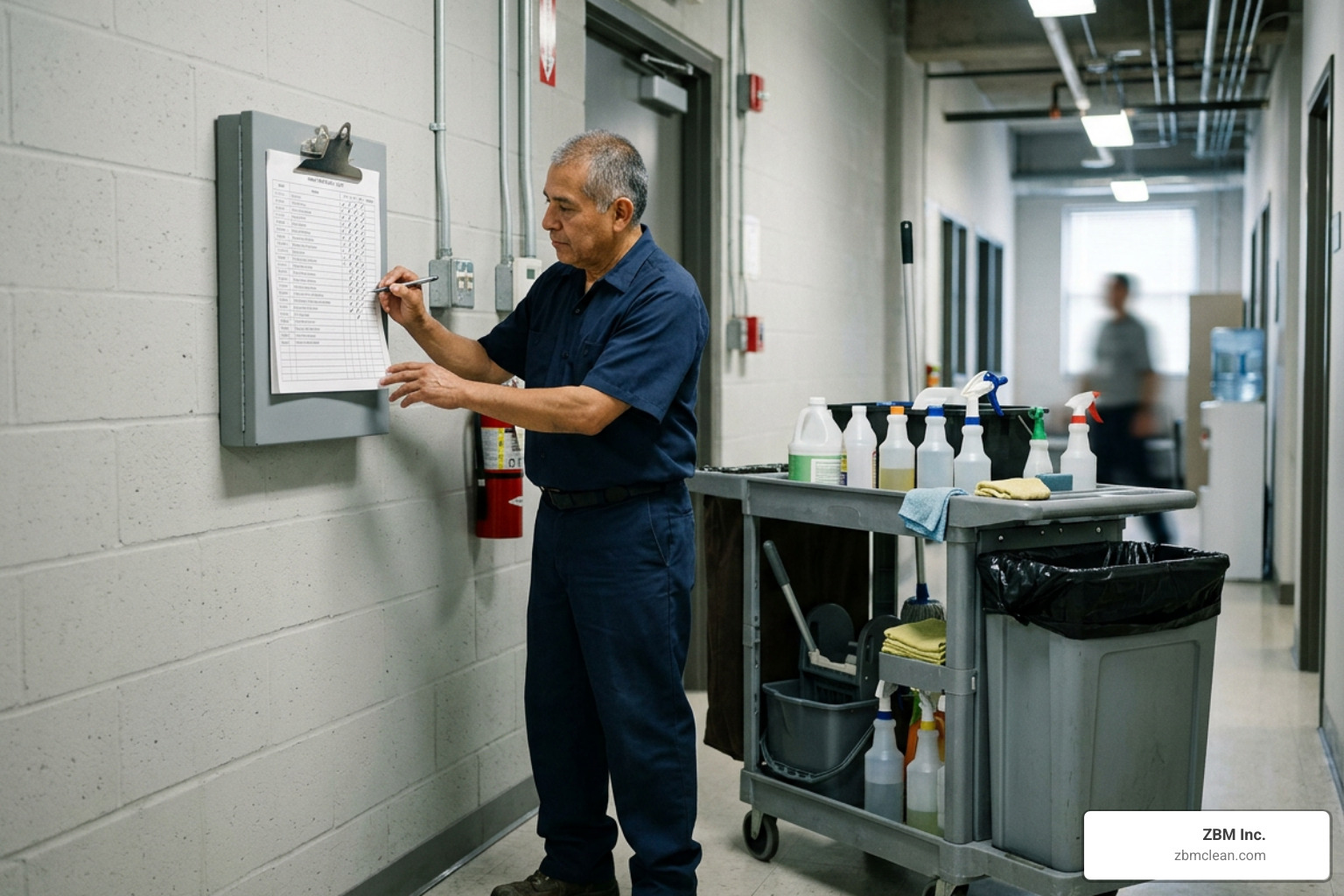
Your daily checklist should require staff to initial and time-stamp the following tasks:
- Empty Trash and Replace Liners: Overflowing trash cans are a top complaint. Empty them at least once daily, or more often during peak hours.
- Restock Supplies: Ensure soap dispensers, paper towel holders, toilet paper rolls, and feminine hygiene products are fully stocked.
- Disinfect High-Touch Surfaces: Wipe down door handles, faucet levers, flush valves, stall latches, and hand dryers with an EPA-registered disinfectant.
- Scrub Sinks and Countertops: Remove soap scum, water spots, and debris from the vanity area.
- Clean Toilets and Urinals: Apply toilet bowl cleaner, let it sit to dissolve grime, scrub thoroughly, and wipe down the exterior housing and flush handles.
- Sweep and Mop Floors: Sweep up loose debris and mop the floor using a clean mop head and a commercial-grade floor cleaner, working from the back of the restroom toward the exit.
Weekly Inspections and Deep-Cleaning Protocols
Weekly tasks focus on areas that do not require daily attention but will quickly deteriorate if ignored. Keeping these tasks logged prevents long-term grime build-up and structural damage. You can cross-reference these tasks with our Restroom sanitation checklist.
Key weekly tasks include:
- Grout and Tile Scrubbing: Dirt and moisture settle into floor grout lines, causing dark stains and foul odors. Use a specialized grout brush and cleaner to lift embedded dirt.
- Dusting and Vent Cleaning: Dust HVAC vents, exhaust fans, door frames, and light fixtures to maintain proper ventilation and air quality.
- Drain Maintenance: Pour water down floor drains to keep the P-traps full, preventing sewer gases from escaping into the restroom.
- Hardware Upkeep: Inspect stall doors, hinges, locks, and wall hooks. Tighten any loose screws and replace broken hardware immediately to prevent vandalism and ensure privacy.
- Plumbing Inspections: Check under sinks for slow leaks and inspect flush valves for proper water pressure. For tracking major plumbing repairs alongside your cleaning schedule, you can utilize a Plumbing Maintenance Log Template (Free) | Real Estate Ledger .
How to Structure and Implement Your Bathroom Maintenance Log System
An effective log system must be easy for your custodial staff to use and simple for supervisors to audit. If the system is too complicated, compliance will drop, and the logs will be filled out inaccurately.

Choosing Between Paper and Digital Formats for Your Bathroom Maintenance Log
Deciding how to host your log depends on your facility’s size, budget, and tech-savviness. Both paper and digital systems have distinct advantages:
| Format | Pros | Cons | Best For |
|---|---|---|---|
| Paper Clipboards | • Zero setup cost • Instantly accessible to staff • Highly visible to visitors | • Can get damaged or wet • Easy to lose historical records • Hard to track real-time compliance | • Small retail shops • Single-facility offices • Low-traffic restrooms |
| Digital Tracking | • Real-time alerts for missed cleans • Secure cloud storage • Easy data analysis and auditing | • Requires hardware (tablets/phones) • Staff training required • Initial software setup costs | • Schools and universities • Large corporate offices • Multi-location businesses |
If you prefer a digital spreadsheet format that you can print or manage on a tablet, download this Bathroom Log Template or use the Efficient Bathroom Log Management For Improved Hygiene And Maintenance Excel Template And Google Sheets File For Free Download – Slidesdocs to streamline your record-keeping.
Best Practices for Staff Accountability and Quality Control
Simply hanging a log on the wall does not guarantee a clean bathroom. You must build a culture of accountability around your cleaning program:
- Mandatory Supervisor Sign-offs: A supervisor should physically inspect the restroom at the end of each shift and sign off on the log to verify that the work meets your company’s standards.
- Avoid Common Pitfalls: Ensure your team is trained to avoid Big restroom cleaning mistakes, such as using the same rag on the toilet and the sink, or failing to let disinfectants dwell on surfaces long enough to kill germs.
- Implement Color-Coded Cleaning Tools: Use a strict color-coded system to prevent cross-contamination. For example, use red microfiber cloths and mop heads exclusively for toilets and urinals, yellow for sinks and counters, and blue for mirrors and glass.
- Perform Regular Performance Reviews: Use the logged data to track staff efficiency and thoroughness, addressing any recurring issues or skipped tasks during team reviews.
Frequently Asked Questions About Bathroom Maintenance
To help you optimize your cleaning schedule, we have compiled a quick-reference guide and answers to the most common restroom maintenance questions.
Task Frequency Comparison Table
| Daily Tasks | Weekly Tasks | Monthly / Quarterly Tasks |
|---|---|---|
| • Empty trash cans | • Deep-scrub floor grout | • Deep-clean exhaust vents |
| • Restock paper and soap | • Dust light fixtures and vents | • Inspect plumbing supply lines |
| • Disinfect high-touch surfaces | • Clean baseboards and stall walls | • Clean and clear floor drains |
| • Scrub toilets and urinals | • Polish chrome fixtures and mirrors | • Inspect stall partition hardware |
| • Sweep and damp-mop floors | • Inspect plumbing for slow leaks | • Machine-scrub tile floors |
How often should public or school restrooms be cleaned and inspected?
Restrooms in high-traffic public areas or schools should be thoroughly cleaned at least once per day. However, they should be inspected and touch-up cleaned on an hourly or bi-hourly schedule depending on usage volume.
For example, a school restroom in Jefferson County, WI, will experience heavy traffic between class periods and should be checked for trash, spills, and empty dispensers after every major break. Documenting these frequent checks on your hourly log is essential for keeping up with rapid supply depletion.
What are the most common restroom issues a log helps prevent?
Implementing a consistent tracking system directly prevents the top complaints that lead visitors to label a restroom as “dirty.” These include:
- Unflushed Toilets and Urinals: Regular inspections catch malfunctioning auto-flush sensors or manual flush valves early.
- Foul Odors: Daily cleaning combined with weekly drain flushings keeps sewer gases and bacteria from creating persistent smells.
- Empty Soap and Paper Dispensers: Scheduled restocking checks ensure visitors never run out of hygiene essentials.
- Overflowing Trash Cans: Routine waste removal keeps trash from spilling onto the floors.
- Water Around Sinks: Wiping down countertops during regular checks prevents water from pooling and breeding bacteria.
What tools and safety measures should be tracked alongside cleaning tasks?
Your maintenance log should also track the use of proper safety equipment and protocols:
- Wet Floor Signs: Staff must log that caution signs were placed at the entrance before mopping and left in place until the floors were completely dry.
- Personal Protective Equipment (PPE): Ensure staff are wearing appropriate gloves, eye protection, and aprons when handling chemical concentrates.
- Chemical Dilution and SDS Sheets: Log that chemicals are mixed according to manufacturer instructions and confirm that Safety Data Sheets (SDS) are accessible in the janitorial closet.
- Ventilation Checks: Ensure exhaust fans are running during cleaning to protect staff from inhaling chemical fumes.
Conclusion
A well-implemented bathroom maintenance log is the backbone of any successful facility management program. It ensures consistent hygiene standards, protects your business from liability, keeps your staff accountable, and directly supports customer retention and student success.
If managing daily cleaning schedules, supply inventories, and deep-cleaning protocols is taking too much time away from your core operations, we can help. At ZBM Inc., we provide fully licensed, bonded, insured, and certified professional cleaning services tailored to your facility’s unique needs. Based in Watertown, WI, our family-owned business proudly serves commercial and residential clients throughout Dodge County, Jefferson County, Lake Mills, Southeast Wisconsin, and the Northwoods (Minocqua).
Let our team of certified professionals handle your facility’s maintenance so you can focus on running your business. Explore our comprehensive bathroom cleaning checklists or contact us today to set up a customized cleaning program for your property.