Why a Bathroom Cleaning Checklist Is the Smartest Habit You Can Build
A solid bathroom cleaning checklist is the difference between a bathroom that stays consistently clean and one that only gets attention when guests are coming over. Before diving into the full guide, here’s a quick snapshot of what an effective bathroom cleaning routine looks like:
Bathroom Cleaning Checklist at a Glance:
| Frequency | Key Tasks |
|---|---|
| Daily | Wipe counters, hang towels, squeegee shower walls |
| Weekly | Scrub toilet, clean sink, mop floor, polish mirror |
| Monthly | Scrub grout, wash shower curtain, organize cabinets |
| Seasonal | Clean exhaust fan, descale showerhead, recaulk if needed |
Bathrooms are high-traffic, high-moisture spaces. That combination creates the perfect environment for bacteria, mold, and grime to build up fast — especially in commercial or multi-person settings.
The good news? You don’t need fancy products or hours of free time. A simple, structured routine handles most of the work before buildup ever becomes a real problem.
That’s exactly what this guide covers: the right tools, the right order, and the right frequency — so cleaning feels less like a chore and more like a system.
I’m Terry Zastrow, owner of ZBM Inc., a certified cleaning firm with nearly 30 years of experience maintaining bathrooms across commercial, municipal, and residential properties — and developing an effective bathroom cleaning checklist is one of the most practical skills we’ve refined over that time. Whether you’re managing a single office restroom or a multi-unit facility, the principles in this guide apply directly to keeping your spaces clean, safe, and inspection-ready.
Essential Supplies for Your Bathroom Cleaning Checklist
A good checklist starts with the right caddy. We do not need a chemistry lab under the sink. We need a small set of reliable tools that clean well, limit cross-contamination, and make the job faster.
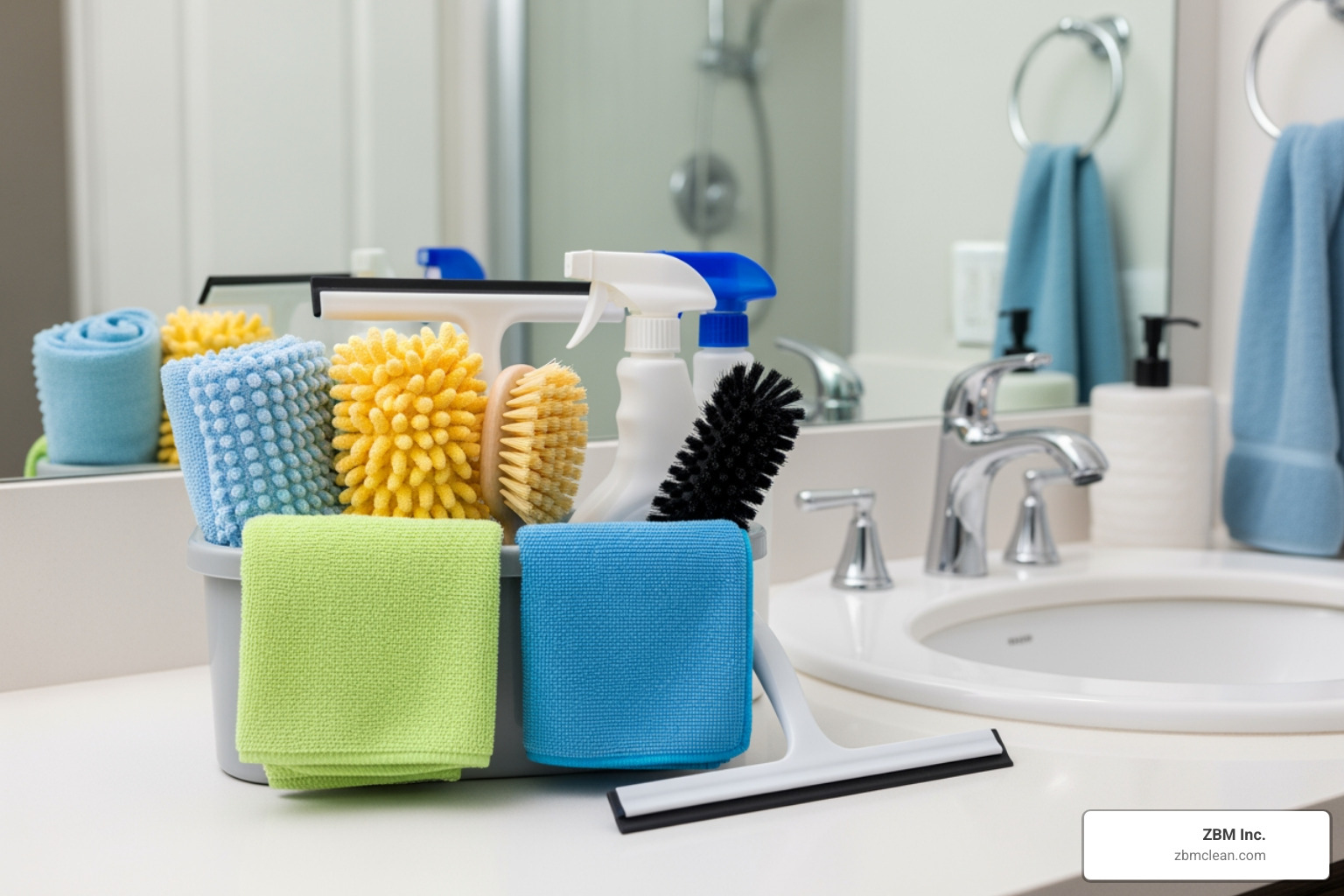
Our recommended basics for a home or small office bathroom are:
- Microfiber cloths
- Color-coded cloths if possible
- Glass cleaner or a streak-free mirror cleaner
- Toilet bowl cleaner
- Disinfecting bathroom cleaner
- Non-abrasive sponge or scrub pad
- Grout brush or old toothbrush for tight areas
- Toilet brush
- Rubber gloves
- Small trash bags
- Squeegee for shower walls and glass
- Mop or flat microfiber mop
- Vacuum or handheld vacuum for hair and dust
- pH-neutral cleaner for delicate surfaces
- Baking soda and white vinegar for select DIY tasks
Color-coding is especially helpful. For example:
- Red cloth: toilet area only
- Blue cloth: mirrors and glass
- Green cloth: sink and counters
- Yellow cloth: fixtures and handles
That simple system helps prevent spreading toilet germs to the faucet you touch after washing your hands. For more fundamentals, our guide on How to clean a bathroom is a strong companion resource.
If you want to compare your setup with a broader household list, this outside guide is also useful: The Ultimate Bathroom Cleaning Checklist.
Professional Tools for Home Use
A few pro-level tools are worth owning because they save time, not because they look impressive.
The best upgrades are:
- Telescopic duster for vents, lights, and high corners
- Detail brush for grout lines and faucet bases
- Handheld steamer for stubborn buildup on tile and around tracks
- Small crevice vacuum attachment for baseboards and corners
- Separate brushes for toilet and non-toilet surfaces
We strongly recommend keeping toilet tools completely separate from sink and shower tools. That is one of the easiest ways to improve sanitation without adding work.
If you want a more professional approach to tool selection and routines, see our practical tips here: Bathroom cleaning services tips.
Safety and Ventilation
Bathrooms are small spaces, so chemical safety matters more than people think.
Our non-negotiables:
- Open a window if you have one
- Turn on the exhaust fan
- Wear gloves
- Read dwell-time directions on disinfectants
- Never mix bleach with vinegar or other cleaners
- Store products away from children and pets
One of the most common mistakes we see is using too many products at once. More spray does not equal more clean. It usually equals more fumes, more residue, and more rinsing. This step-by-step guide reinforces that same safety-first mindset: The Ultimate Step-by-Step Bathroom Cleaning Guide + Printable Checklist.
The Top-to-Bottom Strategy for Maximum Efficiency
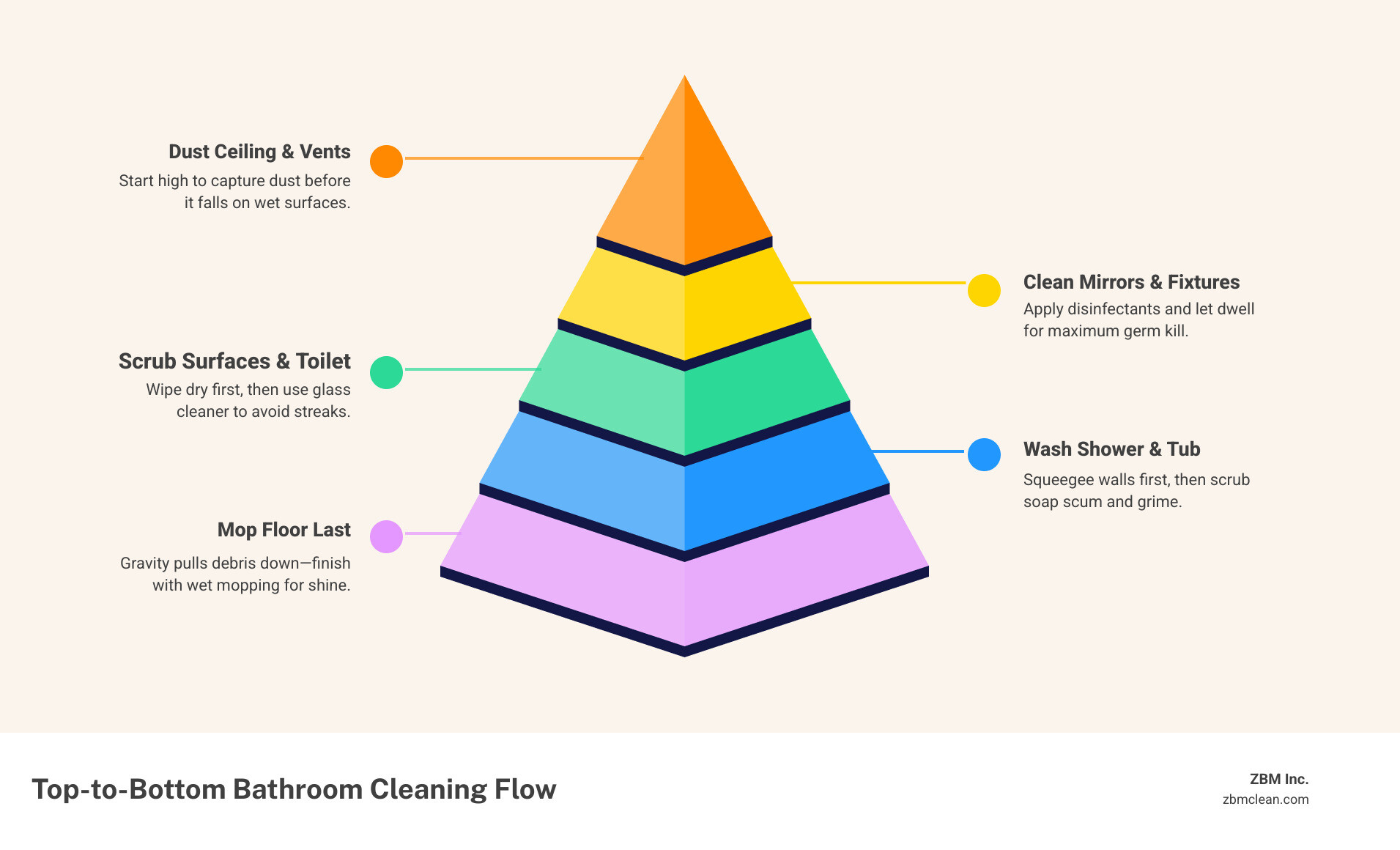
The smartest order is simple: clean from top to bottom and from least dirty to most dirty.
Why? Gravity. Dust and drips fall downward. If you clean the floor first and then dust the vent, congratulations, you have created yourself a second floor job.
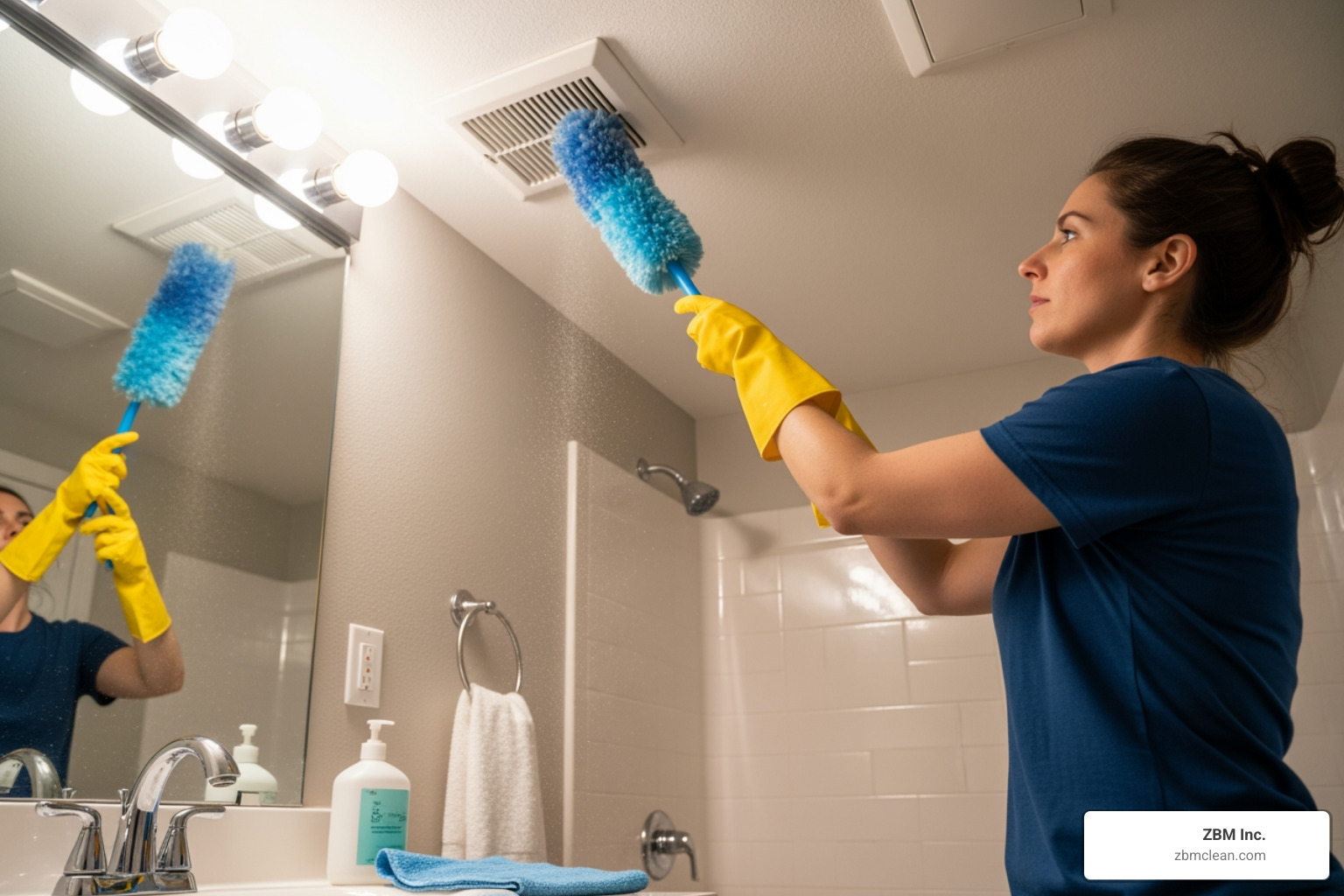
Our preferred sequence looks like this:
- Declutter counters, tub edges, and floor
- Remove trash, rugs, and used towels
- Dust vents, lights, corners, and upper surfaces
- Apply cleaners so they can sit
- Vacuum hair and dry debris
- Wipe mirrors and fixtures
- Clean sink and counters
- Clean shower and tub
- Clean and disinfect toilet
- Mop floor last
This gravity-based method is echoed in many effective household cleaning routines, including The Complete Bathroom Cleaning Checklist. We also cover the same logic in Dont let your bathroom go down the drain with this checklist.
Pre-Treating Surfaces
One of the easiest time-saving tricks is to let chemistry do some of the work.
Before you start wiping, pre-treat these areas:
- Toilet bowl: apply bowl cleaner under the rim
- Shower walls and tub: spray cleaner on soap scum areas
- Sink basin: apply bathroom cleaner
- Hard water spots: apply vinegar-based solution where safe
Then walk away for a few minutes and clean another area.
This is called dwell time, and it matters. Many cleaners need several minutes to loosen residue or disinfect properly. People often spray and instantly wipe, which gives the product no real chance to work. That leads to extra scrubbing and mediocre results. For a similar idea, see Ultimate Bathroom Cleaning Checklist for Easy Cleaning.
Vacuuming Before Scrubbing
It sounds backward until you try it: vacuum first.
A quick pass with a handheld vacuum removes:
- Hair around the toilet base
- Dust on baseboards
- Debris behind the door
- Dry powder near vents
- Dirt in floor corners
That keeps loose grit from turning into muddy streaks when you start wiping. In bathrooms with a lot of hair, this one habit can make the whole process feel much less annoying. We talk more about this practical move in The ultimate bathroom cleaning checklist.
Frequency Matters: Daily, Weekly, and Monthly Routines
Consistency beats marathon cleaning sessions every time. A short daily reset prevents a weekend disaster.
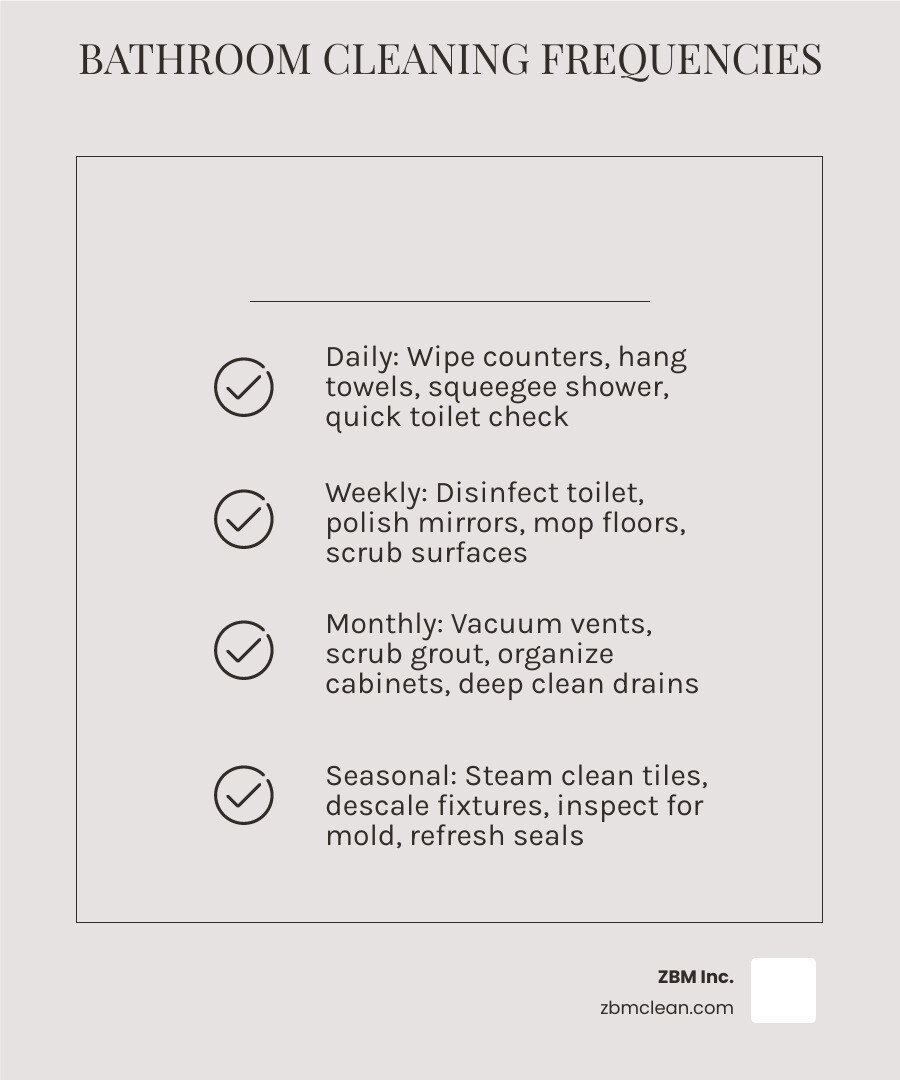
Here is the easiest printable-style format for most homes and small businesses:
| Frequency | Time | Main Goal | Tasks |
|---|---|---|---|
| Daily | 1-5 min | Prevent buildup | Wipe counter, hang towels, quick toilet check, squeegee shower |
| Weekly | 15-30 min | Sanitize and refresh | Clean toilet, sink, mirror, tub/shower, mop floor |
| Monthly | 30-45 min | Deep detail work | Scrub grout, wash liner, wipe cabinets, clean drains |
| Seasonal | 45-60 min | Restore and inspect | Clean vent, descale showerhead, check caulk, declutter storage |
That kind of simple structure is what makes a bathroom cleaning checklist actually usable.
Daily Bathroom Cleaning Checklist
Daily tasks should be tiny. If the checklist takes too long, people stop using it.
Our recommended daily list:
- Put items back where they belong
- Wipe toothpaste and water spots from counters
- Wipe faucet and sink rim
- Hang towels so they dry fully
- Squeegee shower walls or glass
- Empty trash if full
- Check toilet paper and soap levels
These small resets help prevent soap scum, water marks, mildew, and that mysterious fuzz that gathers behind the toilet like it pays rent.
For commercial settings, sanitation checks matter even more. Our Restroom sanitation checklist is helpful if you are managing shared or workplace restrooms.
Weekly Bathroom Cleaning Checklist
Weekly cleaning is where most of the real sanitation happens.
Use this checklist once a week:
- Empty trash and replace liner
- Dust vents, ledges, and baseboards
- Clean mirrors with a lint-free cloth
- Scrub sink basin and faucet base
- Disinfect handles, switches, and touchpoints
- Clean shower walls, tub, and doors
- Clean and disinfect the toilet inside and out
- Vacuum and mop the floor
- Replace hand towels and bath mats
A good weekly routine stays focused on the five essential zones:
- Sink and countertops
- Toilet
- Shower and tub
- Mirrors and fixtures
- Floors
That framework works because it is realistic. It is also why simple weekly routines often outperform giant one-day deep cleans. For a minimalist approach to weekly upkeep, Bathroom Cleaning Checklist – Clean Mama aligns well with this strategy.
Monthly and Seasonal Deep Cleaning
Deep cleaning tasks do not need to happen every Saturday. They just need a schedule.
Monthly tasks:
- Scrub grout and tile lines
- Wash shower curtain and liner
- Wipe cabinet fronts and drawer pulls
- Clean drains
- Wash rugs and mats
- Organize under-sink storage
- Clean trash can inside and out
Seasonal tasks, about every 3 to 6 months:
- Vacuum and wash exhaust fan cover
- Dust light fixtures
- Soak showerhead to remove mineral buildup
- Inspect and replace worn caulk if needed
- Check for leaks, mildew, or soft spots
- Purge expired products and medications as appropriate
Many sources suggest fan cleaning every six months, and that is a smart rule in humid bathrooms. For a focused reset, see our Quick bathroom spring cleaning checklist.
Natural DIY Solutions for Common Bathroom Grime
Natural options can work very well for maintenance cleaning and mineral buildup, though they are not always the fastest choice for full disinfection.
Useful DIY solutions include:
- White vinegar for mineral scale and hard water
- Baking soda paste for gentle scrubbing
- Dish soap plus warm water for soap scum
- Lemon juice for light hard water spotting and freshening
- Hydrogen peroxide for some stain and odor tasks
Important: natural does not mean mix-anything-together. We still avoid combining products carelessly.
Soap scum often responds well to:
- 1 part dish soap
- 1 part white vinegar, warmed slightly
Spray it on shower doors or tile, let it sit, then scrub with a non-scratch sponge.
Hard water stains may need:
- Vinegar soak
- Repeated applications
- A specialty remover if buildup is severe
If you are dealing with years of buildup, cracked caulk, or neglected surfaces, a DIY reset may need to become a restoration project. That is where our guide on Restoring the most important room in the house can help.
For another natural-cleaning perspective, see The Ultimate Bathroom Cleaning Checklist – Puracy.
Descaling Showerheads and Faucets
Showerheads and faucets collect mineral deposits slowly, then all at once seem to spray in every direction except the one you want.
To descale a showerhead:
- Fill a bag with white vinegar
- Secure it around the showerhead
- Let it soak for a few hours
- Remove the bag
- Scrub nozzles with a toothbrush
- Run hot water through it
For faucet aerators, remove and soak if possible. If not, use a vinegar-soaked cloth wrapped around the fixture.
This is one of the best seasonal tasks because it improves water flow and appearance at the same time. We discuss recovery from heavier bathroom buildup in Bringing your bathroom back from the brink.
Refreshing Drains and Grout
Drains and grout are small trouble spots that create big “why does this bathroom still feel dirty?” energy.
For drains:
- Remove visible hair first
- Flush with hot water
- Use an enzymatic drain cleaner for routine maintenance
- For light odor control, use baking soda followed by vinegar, then flush after it settles
For grout:
- Make a baking soda paste
- Apply to grout lines
- Mist lightly with vinegar if appropriate for the surface
- Scrub with a grout brush
- Rinse well
If grout is deeply stained, crumbling, or moldy beneath the surface, cleaning may not be enough. Repair or replacement may be needed.
A frequency-based checklist like Bathroom Cleaning Checklist – Molly Maid also places drains and grout in the periodic deep-clean category, which we agree with.
Avoiding Common Mistakes and Maintaining Results
The biggest bathroom cleaning mistakes are usually not dramatic. They are little habits that quietly make everything harder.
Avoid these common errors:
- Cleaning floor first instead of last
- Using one cloth for every surface
- Not letting disinfectants dwell
- Mixing chemicals
- Forgetting high-touch spots like switches and handles
- Leaving wet towels bunched up
- Skipping exhaust fan cleaning
- Using abrasive scrubbers on delicate finishes
- Overloading counters with products
Cross-contamination is a major issue. Toilet germs should never hitchhike to the sink area on the same cloth or sponge. We cover more avoidable errors in Big restroom cleaning mistakes.
To maintain results, use this simple rule:
- Daily reset
- Weekly sanitize
- Monthly detail
- Seasonal inspect
That schedule keeps bathrooms from slipping into “we should really do something about this” territory.
If you manage a shared space, our 5 tips for keeping your company restrooms clean adds helpful maintenance ideas.
Involving the Family
A family bathroom stays cleaner when everyone has a job, even if that job is just not leaving wet socks on the floor like a calling card.
Kid-friendly bathroom tasks can include:
- Hanging towels
- Putting toiletries back
- Wiping the counter with a safe cleaner
- Emptying the trash
- Checking toilet paper supply
- Squeegeeing shower walls
- Sweeping the floor
For kids, the best checklist is short, visual, and specific. Instead of “clean bathroom,” say:
- Put 5 things away
- Wipe sink
- Hang towels
- Check floor
- Empty trash
That makes the task clearer and less overwhelming. If you are handling larger shared facilities, our Commercial restroom cleaning tips can help you build stronger routines and accountability.
When to Call the Professionals
Sometimes a bathroom needs maintenance. Sometimes it needs rescue.
Call professionals if you have:
- Persistent mold or mildew that returns quickly
- Heavy hard water scaling that will not lift
- Sewage backup or biohazard concerns
- Strong odors with no clear source
- Post-renovation dust and debris
- Hoarding conditions or extreme neglect
- Water damage around flooring, drywall, or cabinets
At ZBM Inc., we provide full-service commercial and residential cleaning in Watertown, Dodge County, Jefferson County, Lake Mills, Southeast Wisconsin, and surrounding service areas. We are licensed, bonded, insured, family-owned, and our certified professionals handle the jobs that go beyond a basic checklist.
If you are comparing service options for a larger restroom need, read How to choose the right restroom cleaning business.
Frequently Asked Questions about Bathroom Cleaning
What is the most sanitary way to clean a toilet brush?
Rinse the brush in clean toilet water after scrubbing, then spray it with disinfectant or hydrogen peroxide. Let it drip dry by trapping the handle under the toilet seat over the bowl before storing it. Keep the holder clean too. Most importantly, never use that brush anywhere else.
How do I remove stubborn hard water stains from glass doors?
Start with a vinegar and dish soap solution and let it sit before scrubbing with a non-scratch pad. For heavier mineral deposits, repeat the process or use a bathroom-safe hard water remover. After cleaning, squeegee the glass daily to stop the stains from coming right back.
How often should I replace my shower curtain liner?
A good rule is every 6 months, or sooner if it stays stained, smells musty, or has tears. In between replacements, wash or wipe it monthly to reduce mildew and soap residue.
Conclusion
A practical bathroom cleaning checklist is less about perfection and more about rhythm. When you use the right tools, clean in the right order, and break tasks into daily, weekly, monthly, and seasonal routines, bathrooms stay cleaner with less effort.
At ZBM Inc., we have spent decades helping homes and facilities in Watertown, WI and across Southeast Wisconsin stay sanitary, presentable, and easier to maintain. As a licensed, bonded, insured, family-owned company, we believe good cleaning systems should be simple enough to follow and strong enough to work.
If you want more bathroom-specific guidance, browse Your complete 20-step company restroom cleaning checklist.