Understanding Biohazard Cleanup and Key Incident Types
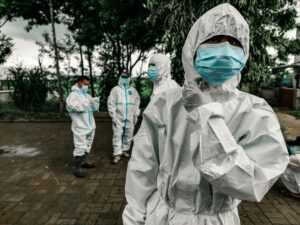
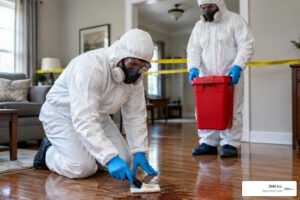
When biological materials contaminate a space, standard domestic cleaning tools and household chemicals are far from sufficient. Biohazard cleanup (often referred to in the industry as CTS Decon, or Crime and Trauma Scene Decontamination) involves the specialized cleaning, sanitization, and deodorization of areas contaminated by potentially infectious substances.
Several specific crisis scenarios require professional intervention:
- Crime Scenes and Violent Traumas: Homicides, aggravated assaults, and violent incidents leave behind blood, tissue, and biological matter that present severe health risks.
- Unattended Deaths and Suicides: When an individual passes away and remains undiscovered for days or weeks, natural biological decomposition occurs. Bodily fluids penetrate deep into structural elements, creating severe airborne pathogens and intense odors.
- Sewage Backups and Human Waste: Raw sewage contains hazardous bacteria, parasites, and viruses that require immediate containment and industrial-grade neutralizers. You can learn more about these risks in our breakdown of human waste cleanup hazards.
- Severe Hoarding Situations: Extreme clutter often conceals animal or human waste, decomposing food, pest infestations, and toxic mold. Review these 5 critical reasons biohazard remediation becomes necessary and discover common situations that require specialized services.
- Industrial and Mass Trauma Accidents: Workplace injuries involving machinery or structural failures require swift, compliant decontamination to safely restore facility operations.
Differentiating Professional Remediation from Janitorial Services
It is crucial to recognize that biohazard remediation is entirely distinct from daily commercial janitorial work or residential maid services.
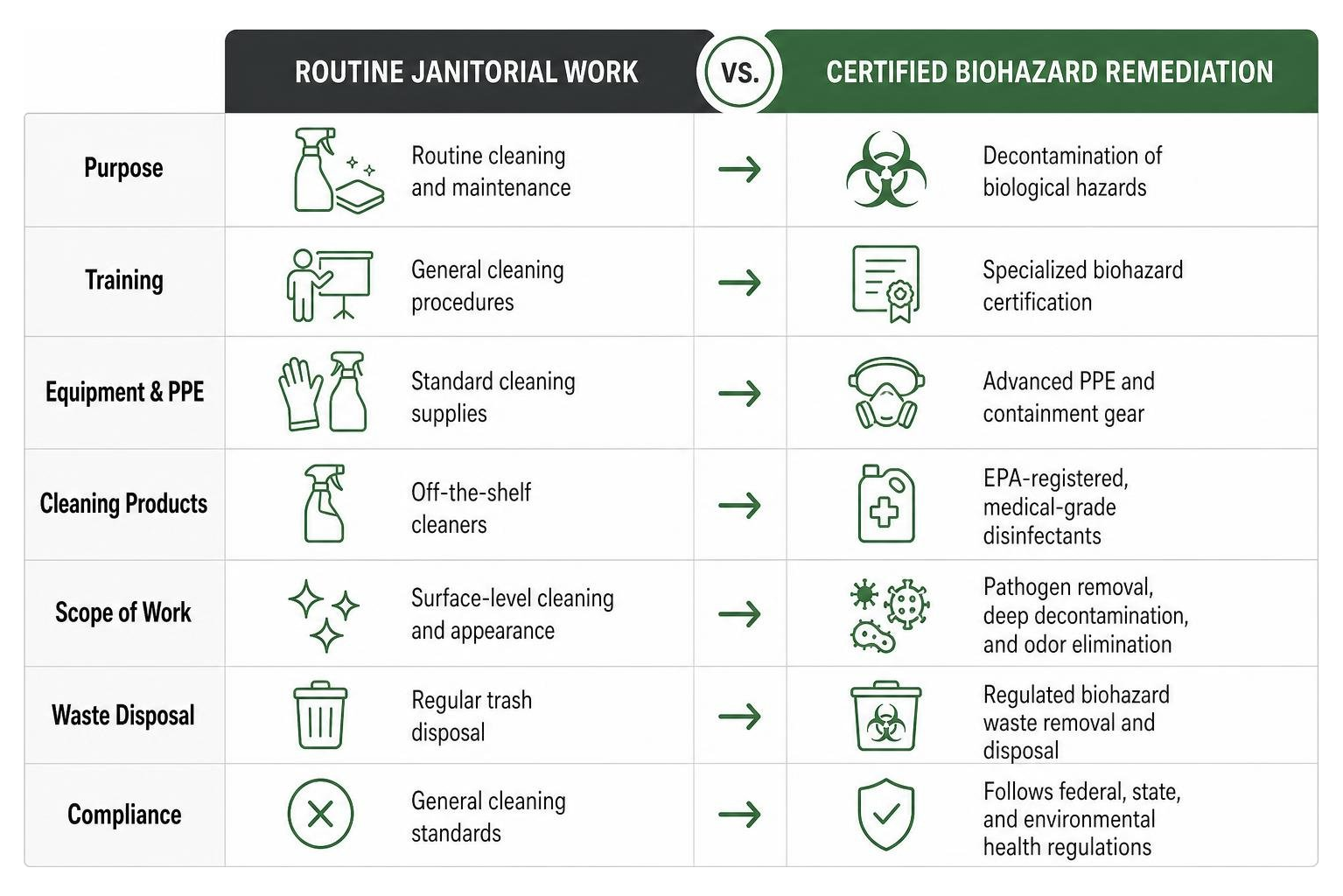
Standard janitorial teams are trained for routine surface maintenance using off-the-shelf cleaners. They lack the legal authority, personal protective equipment (PPE), containment technology, and medical waste disposal permits needed to handle biological hazards.
Professional biohazard technicians use medical-grade, EPA-registered disinfectants and specialized equipment such as ozone generators and hydroxyl machines to eliminate bacteria, viruses, and odors at the molecular level. Furthermore, biohazard companies possess the legal right and specialized protocols required to remove, transport, and dispose of biohazardous materials in strict accordance with federal, state, and environmental health laws. Discover more about the advantages of hiring trained biohazard professionals over standard cleaning services.
Health Risks of Improper Biological Decontamination
Attempting to clean biological spills without professional training poses extreme health risks. Human blood and bodily fluids can harbor deadly bloodborne pathogens, including:
- Hepatitis B Virus (HBV): A persistent virus capable of surviving in dried blood on indoor surfaces for up to seven days.
- Hepatitis C Virus (HCV): A dangerous liver pathogen transmitted through micro-exposure to infected biological fluid.
- Human Immunodeficiency Virus (HIV): The virus responsible for AIDS, requiring careful containment to prevent direct exposure.
Under federal regulations established by the Occupational Safety and Health Administration (OSHA), all human blood and biological materials must be treated under Universal Precautions—meaning technicians assume every sample carries infectious diseases. Improper cleaning can easily spread pathogens through HVAC ductwork, saturate unseen subfloors, and leave property owners exposed to severe legal liabilities and long-term illness.
Essential Steps to Take Before Calling a Cleanup Team
When faced with a traumatic event or biological disaster on your property, taking the correct immediate steps ensures safety and prevents legal complications down the line. Read our guide on 5 initial steps to take before managing biohazard damage to safeguard everyone involved.
Immediate Actions Following a Crime Scene or Unattended Death
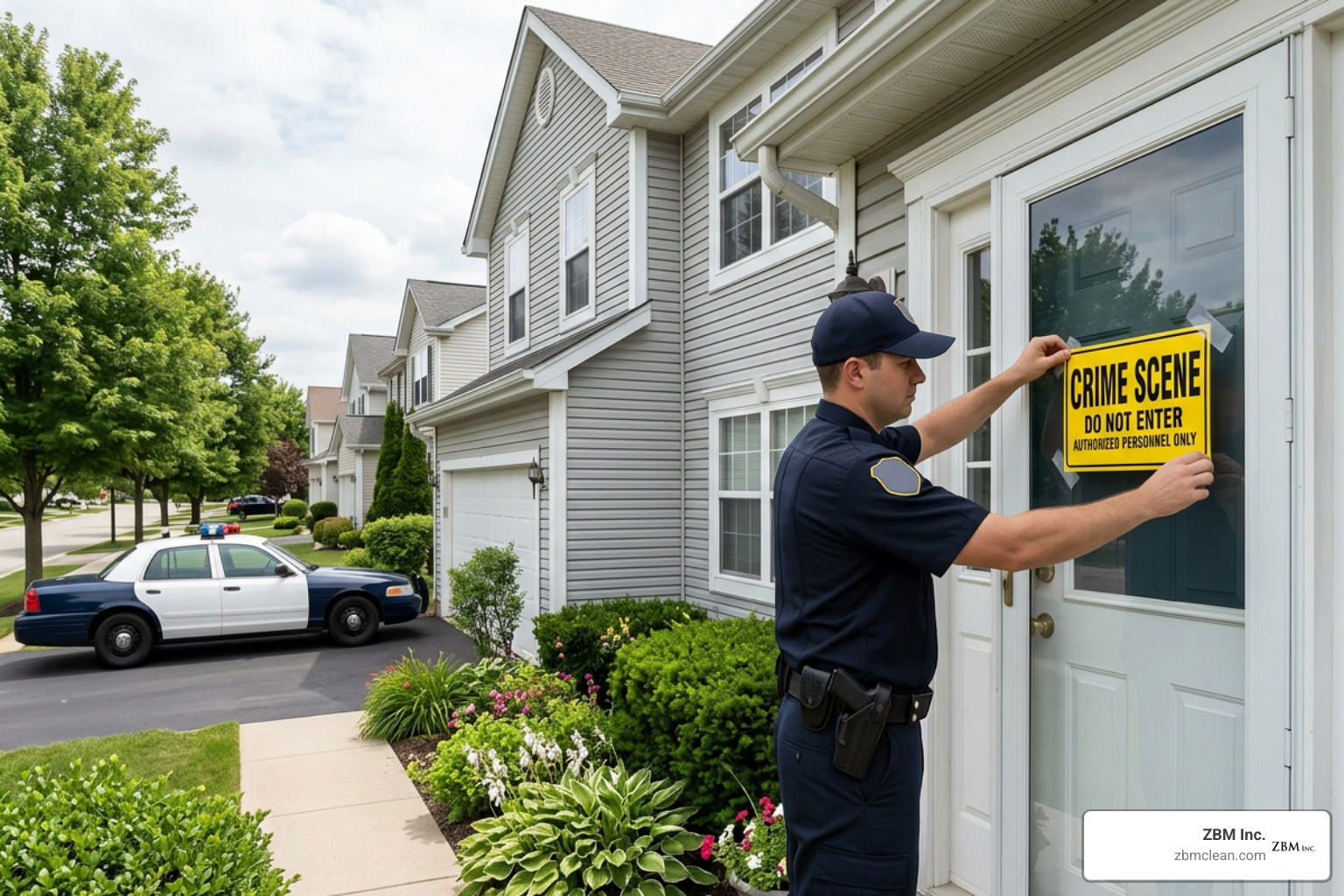
If an incident involves a crime, sudden loss of life, or medical emergency, follow this emergency protocol before calling a cleanup team:
- Notify Emergency Services Immediately: Dial 911 so local police, paramedics, and the coroner or county medical examiner can respond.
- Evacuate and Lock Down the Area: Restrict access to the impacted area immediately. Keep family members, employees, tenants, and pets well clear of the scene to avoid physical contamination or emotional distress.
- Wait for Official Release: Biohazard remediation technicians cannot begin work on a crime scene or unattended death until law enforcement and the medical examiner complete their investigation and officially release the scene to the property owner.
- Do Not Attempt DIY Cleaning: Never try to wipe up blood, apply household bleach, or throw contaminated items into regular trash bins. Bleach can react dangerously with bodily fluids, while improper disposal of medical waste violates state and federal environmental laws.
For property owners in our local service areas, we outline specific steps for handling crisis situations in Dodge County.
How to Evaluate Professional Biohazard Cleanup Companies

When searching for rapid biohazard response, selecting a fully credentialed firm is essential. Avoid choosing a company solely based on how quickly they show up in an internet search; take a moment to evaluate their credentials and capabilities. Consult our comprehensive biohazard cleanup buyer’s guide and review key factors to consider before hiring a remediation company.
Key Certifications and Regulatory Compliance for Emergency Biohazard Cleanup
A reputable company operating in Southeastern Wisconsin must comply with rigorous federal, state, and industry standards:
- OSHA Bloodborne Pathogens Standard (29 CFR 1910.1030): Mandates comprehensive exposure control plans, employee vaccinations, personal protective equipment (PPE), and safety protocols.
- OSHA HAZWOPER (29 CFR 1910.120): Governs safety procedures for personnel operating at hazardous waste scenes and emergency response operations.
- ANSI/IICRC S540 Standard: The recognized industry benchmark for Trauma and Crime Scene Cleanup standardizing scene evaluation, safety protocols, and field methodologies.
- ABRA (American Bio Recovery Association): Provides rigorous third-party certification standards for technicians handling biological remediation.
- State Regulations: While federal rules set baseline safety standards, certain states require specialized licensing. Across Wisconsin (including Jefferson County, Dodge County, and surrounding regions), remediation firms must strictly follow Wisconsin Department of Natural Resources (DNR) and Department of Health Services standards for medical waste transport and disposal.
To dive deeper into standard industry requirements, check out our resource on biohazard cleaning certification standards.
The Emergency Biohazard Cleanup Remediation Process
Understanding the remediation workflow helps alleviate stress during a crisis. Here is the step-by-step sequence a certified team follows:
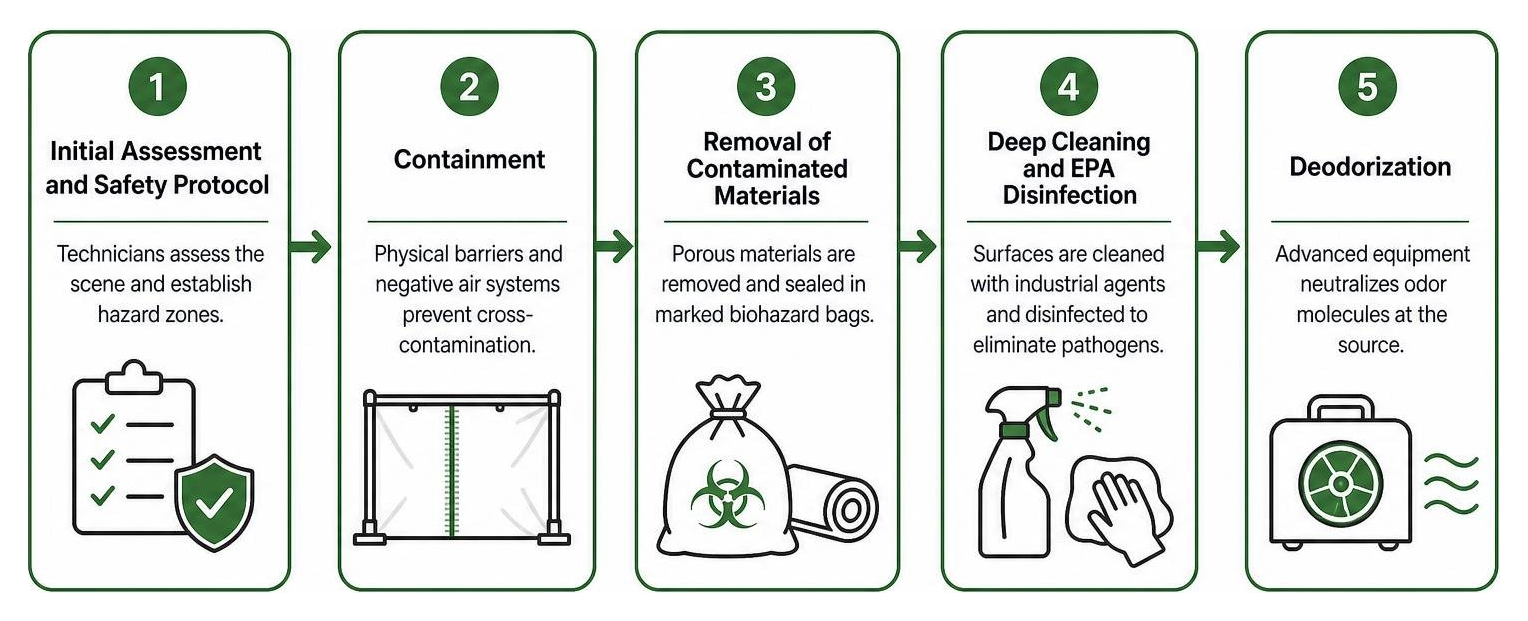
- Initial Assessment and Safety Protocol: Certified technicians arrive in discreet, specialized vehicles, assess structural damage, and establish hazard zones.
- Containment: The team erects physical plastic barriers and negative air pressure systems to prevent cross-contamination into unaffected rooms or ventilation systems.
- Removal of Contaminated Materials: Unsalvageable porous items—such as saturated drywall, carpet padding, subflooring, or upholstery—are safely removed and sealed in marked biohazard bags.
- Deep Cleaning and EPA Disinfection: Industrial-strength cleaning agents wipe down non-porous surfaces. High-grade disinfectants eradicate biological pathogens on contact.
- Deodorization: Molecular neutralizers, ozone generators, or hydroxyl technology break down lingering odor molecules rather than masking them.
- Verification Testing: Techs use quantifiable verification methods, such as ATP (Adenosine Triphosphate) fluorescence testing, to ensure surfaces are clean at a cellular level.
- Regulated Medical Waste Disposal: Collected biohazard waste is transported via licensed hazardous waste haulers to permitted disposal facilities.
Read our detailed guides on what to expect during biohazard cleanup and what standard services include for additional details.
Biohazard Remediation Costs, Insurance, and Common Misconceptions
One of the biggest concerns for property owners during a crisis is the cost. Fortunately, in the vast majority of cases, homeowners, property, or commercial insurance covers the cost of biohazard cleanup.
| Expense Category | Covered by Property Insurance? | Notes / Requirements |
|---|---|---|
| Trauma Scene & Unattended Death Cleanup | Yes (Typically covered under standard policies) | Subject to policy deductible; covers remediation and structural restoration |
| Sewage & Biological Backup | Yes (With sewer/drain backup endorsement) | Often requires specific policy add-ons or endorsements |
| Vandalism / Crime Scene Remediation | Yes | Requires official police report and incident report number |
| Out-of-Pocket Direct Costs | Varies | Applies primarily to policy deductibles or uninsured properties |
Property owners are frequently relieved to discover that certified biohazard cleanup companies work directly with insurance adjusters. They handle photo documentation, file itemized claims using industry-standard pricing, and bill insurance carriers directly to minimize out-of-pocket expenses. Explore how biohazard teams support property owners during sudden crises.
Clearing Up Common Misconceptions
- Myth: “The police or medical examiner cleans up the crime scene.” Fact: Law enforcement officers, crime scene investigators, and medical examiners collect evidence and remove body remains. They do not clean, sanitize, or restore the property. The responsibility for hiring a certified cleanup company falls entirely on the property owner.
- Myth: “Standard bleach wipes make blood spills safe.” Fact: Bleach does not penetrate porous subfloors, wood, or drywall where blood frequently pool. Unseen biological matter under surface flooring can harbor active viruses for days and produce unbearable decomposition odors weeks later.
Frequently Asked Questions about Emergency Biohazard Remediation
How fast can emergency biohazard teams respond to a property?
Reputable emergency remediation providers maintain 24/7/365 availability. Response teams dispatch quickly to reach residential or commercial properties across Watertown, Lake Mills, Dodge County, and the broader Southeastern Wisconsin area within a few hours.
Does homeowners insurance cover biohazard cleanup services?
Yes, standard homeowners and commercial property policies generally cover biohazard decontamination resulting from covered perils, suicides, homicides, accidents, or unattended deaths. Remediation contractors frequently bill insurance companies directly.
Do police or medical examiners clean up crime and trauma scenes?
No. First responders and public officials are responsible solely for emergency medical care, criminal investigations, and evidence gathering. Once they clear the scene, the property owner is responsible for contacting a professional biohazard remediation company.
Conclusion
When unexpected trauma, violent incidents, or biohazard contamination impact your home or business, taking fast action with the right professionals is essential for safety, emotional peace of mind, and proper property restoration.
At ZBM Inc., we bring nearly three decades of dedicated service, compassionate care, and technical expertise to every situation. As a family-owned, licensed, bonded, and fully insured firm based in Watertown, WI, we serve commercial and residential clients throughout Dodge County, Jefferson County, Minocqua, the Northwoods, and all of Southeastern Wisconsin. Our certified technicians hold IICRC, OSHA, HAZWOPER, and FEMA Incident Command qualifications, ensuring your property is restored safely, discreetly, and in full compliance with all environmental laws.
If you are facing a crisis, do not tackle the biological hazards alone. Learn about our local service areas including biohazard clean up across Wisconsin, our specific work in Watertown, WI, and our services across Dodge County.
When you need rapid, reliable, and compassionate assistance, visit our main site at ZBM Inc. Professional Biohazard Cleanup Services to reach our 24/7 response team immediately.