When Storms Hit Hard: Comparing the Best Natural Disaster Cleanup Companies in the USA
Natural disaster cleanup companies are specialized firms that respond to hurricanes, floods, fires, tornadoes, and other catastrophic events to restore damaged properties.
When choosing a provider, property managers typically look for these key capabilities:
- Full-Scale Restoration: The ability to handle everything from initial water extraction to final reconstruction.
- Environmental & Hazmat Expertise: Specialized teams for chemical spills or biohazard situations.
- Government & Large-Scale Contracting: Experience managing massive debris removal for municipalities.
- Rapid Heavy Equipment Deployment: Access to cranes, grinders, and specialized rail equipment.
- Volunteer Coordination: Support for community-led relief efforts during widespread crises.
When a disaster hits your commercial property, the clock starts immediately. Every hour of delay means more water soaking into walls, more mold risk, more revenue lost. Choosing the right company before disaster strikes is one of the smartest moves a property manager can make.
I’m Terry Zastrow, founder of ZBM Inc., a certified cleaning and maintenance company serving Wisconsin since 1988 — and our work with biohazard cleanup and property restoration has given us a front-row seat to what separates great natural disaster cleanup companies from the rest. That experience shapes everything in this guide.
Essential Services Offered by Natural Disaster Cleanup Companies
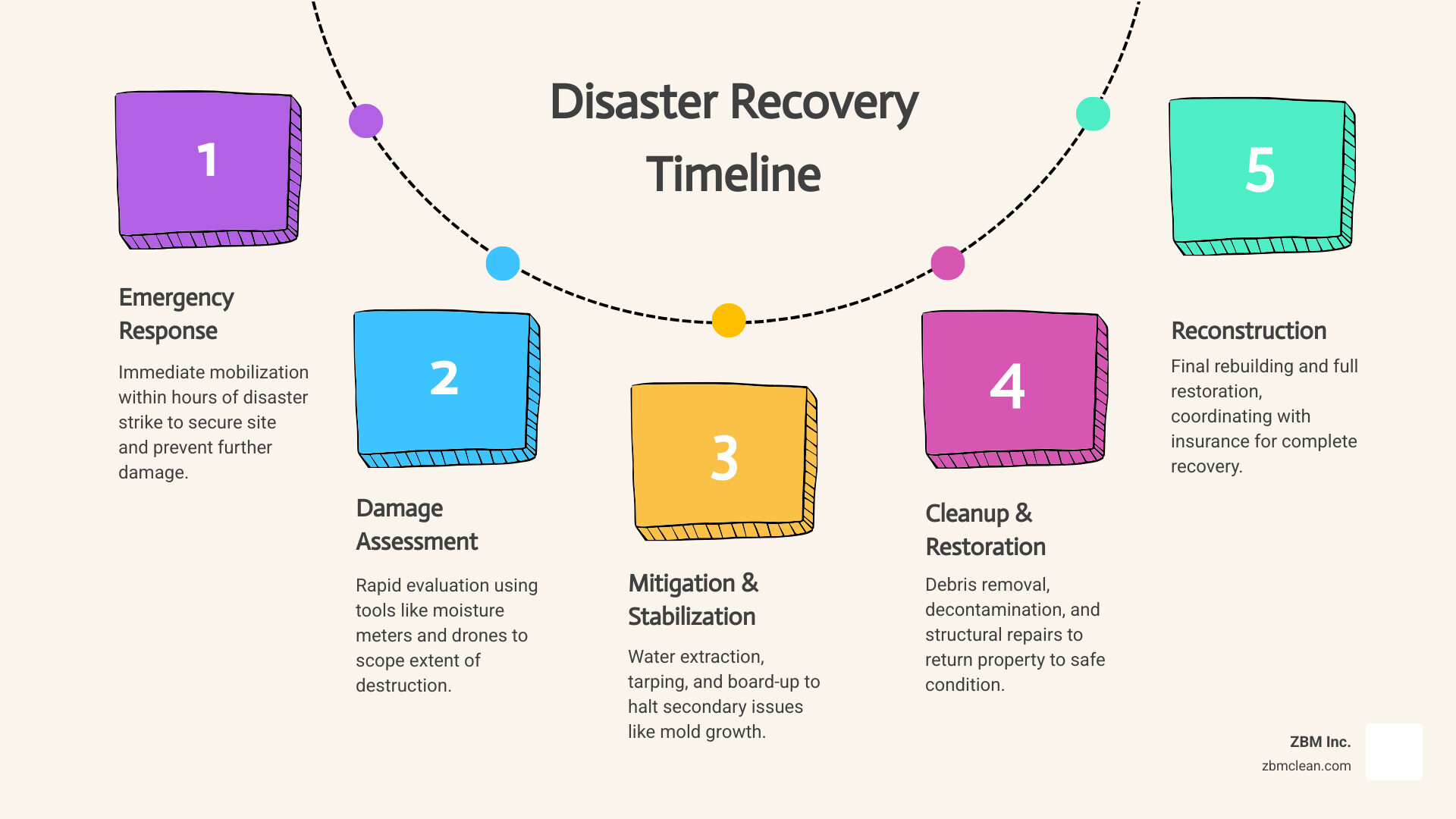
When the sky clears after a major storm, the scene on the ground can be overwhelming. Leading natural disaster cleanup companies don’t just show up with a few mops; they bring a military-grade level of organization and a massive suite of services designed to stabilize a property. From Watertown to Minocqua, we’ve seen how these services make the difference between a total loss and a successful rebuild.
Typical offerings include:
- Debris Management: Removing downed trees, twisted metal, and destroyed building materials so adjusters and crews can actually reach the site.
- Water Mitigation: Extracting standing water and using industrial-grade drying equipment to prevent structural rot.
- Fire & Smoke Restoration: Cleaning soot, removing charred remains, and neutralizing the pervasive smell of smoke.
- Environmental Remediation: Handling hazardous leaks, oil spills, and chemical exposures that often follow industrial accidents or floods.
- Reconstruction: Once the site is clean and dry, these companies often act as general contractors to rebuild the structure.
To understand the full scope of what these professionals handle, it helps to look at what restoration services cover in a standard recovery contract.

Specialized Environmental Remediation
Disasters often stir up more than just water and wind. Floods can bring in “Category 3” black water—sewage and chemicals—while older buildings in Southeastern WI may have asbestos or lead disturbed by structural damage. Natural disaster cleanup companies must be equipped for mold abatement and biohazard cleanup to ensure the building is safe for human occupancy.
For business owners, commercial disaster recovery involves more than just cleaning; it requires a deep understanding of hazardous waste disposal and regulatory compliance to avoid massive fines and health liabilities.
Large-Scale Debris Management
In the wake of a tornado or hurricane, debris management is a Herculean task. Experienced recovery teams utilize an inventory of thousands of timber mats to protect the soil while heavy grinders and feller-bunchers clear massive amounts of vegetation. This isn’t just about aesthetics; why disaster restoration is important often comes down to safety—removing “hangers” (broken branches) and unstable structural elements before they cause further injury.
| Feature | Residential Recovery | Commercial Recovery |
|---|---|---|
| Primary Goal | Family safety & comfort | Business continuity & revenue |
| Scale | Single-family structure | Multi-unit or large square footage |
| Equipment | Portable extractors, air movers | Desiccant dehumidifiers, cranes |
| Documentation | Standard insurance forms | FEMA & complex loss-of-income logs |
Rapid Deployment and 24/7 Emergency Response
Disasters don’t stick to a 9-to-5 schedule. If a pipe bursts or a roof fails in Lake Mills at 2:00 AM on a Sunday, you need a company that answers the phone. The industry standard for top-tier natural disaster cleanup companies is a 24/7 emergency hotline and the capability for rapid deployment.
Leading companies pride themselves on deploying within one hour of a call. They may even maintain corporate aviation resources to fly crews across the country if local resources are overwhelmed. Others utilize hundreds of locations across North America to ensure they are never too far from a crisis. This level of emergency disaster recovery is what keeps a local disaster from becoming a permanent business closure.
Why Speed Matters for Natural Disaster Cleanup Companies
In our experience in Watertown and the surrounding Dodge County, the first 24 to 48 hours are the “Golden Hours” of restoration. If you can get drying equipment on-site immediately, you can often save hardwood floors, drywall, and expensive electronics.
Wait too long, and mold begins to colonize within 48 to 72 hours. Statistics from leaders in the field show that companies achieving a 90% response time of less than 1 hour significantly reduce the total cost of the claim by preventing secondary damage.
The Role of Volunteer-Based Organizations
While commercial giants handle the heavy lifting for businesses and insured homeowners, volunteer-led organizations play a vital role. Powered by dedicated teams (often including veterans), they provide hundreds of thousands of volunteer hours annually. They focus on community impact—clearing paths for first responders and helping vulnerable survivors who might not have the means to hire a private firm. Their work often runs alongside commercial efforts, providing the grit and heart needed in the most devastated communities.
Specialized Equipment and Technical Expertise
You can’t fight a flood with a shop vac. Natural disaster cleanup companies invest millions in specialized technology to handle the scale of catastrophic events.
High-end equipment used by these “heavy hitters” includes:
- Hi-Rail Vacuum Trucks: Specialized for rail-side disasters to suck up spilled commodities or liquids.
- Drones (UAS): Used for real-time property surveillance and damage assessment in areas too dangerous for humans to enter.
- Timber Mats: Thousands of massive mats used to create temporary roads for heavy machinery over soft, flooded ground.
- Mobile Command Centers: Fully equipped trailers that serve as a “brain” for the operation, with satellite communications and food services for crews.
Advanced Drying and Decontamination Technology
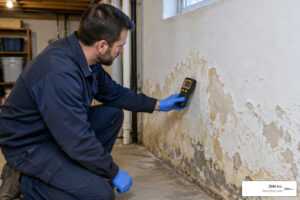
In the Northwoods or Lake Mills, moisture is the enemy. Professional companies use desiccant dehumidifiers that can pull moisture out of the air even in freezing temperatures. They also use moisture mapping—infrared cameras that “see” water hidden behind walls—to ensure nothing is missed.
Proprietary systems like D3 Clean™ combine disinfection, decontamination, and disposal into one workflow. This level of water damage cleaning ensures that when we say a building is dry, it is dry to the bone, preventing the “musty basement” smell that haunts poorly executed jobs.
Certifications and Compliance in Disaster Recovery
In the chaos of a disaster, many “storm chasers” appear—unlicensed individuals looking to make a quick buck. This is why checking for certifications is non-negotiable.
The gold standard in our industry is the IICRC Certification (Institute of Inspection, Cleaning and Restoration Certification). A company with IICRC-certified technicians has proven they follow scientifically backed methods for drying and cleaning. Additionally, looking for BBB accreditation and WMBE (Women and Minority Business Enterprise) certifications can help you vet the stability and ethics of the firm.
Evaluating National vs. Local Natural Disaster Cleanup Companies
There is a tug-of-war between hiring a massive national chain and a local specialist. National companies have a “family of companies” they can pull from—some can scale from 50 full-time staff to over 1,000 employees during a major event.
However, local companies in places like Jefferson County WI or Watertown WI offer the benefits of hiring professionals who actually know the local building codes and weather patterns. The best approach is often a local firm with a national network, giving you the personal touch of a neighbor with the “big guns” of a national resource pool.
Insurance Coordination and Documentation
One of the most exhausting parts of a disaster is the paperwork. Natural disaster cleanup companies that have been established for decades have deep experience with FEMA documentation and insurance reimbursement.
They use specialized software to log every piece of equipment and every hour of labor, ensuring you have the proof needed for a successful claim. Knowing what to do immediately after disaster strikes includes taking your own photos, but having a professional crew that documents the “mitigation” process is what truly protects your wallet.
Frequently Asked Questions about Disaster Recovery
How quickly do natural disaster cleanup companies respond?
Most leading companies offer a 24/7 hotline and aim to have a crew on-site within 1 to 4 hours, depending on your location and the scale of the disaster. National leaders often have “rapid deployment” teams that can mobilize within 60 minutes of the initial call.
What certifications should I look for in a restoration provider?
At a minimum, ensure they are IICRC certified. For commercial work, look for OSHA compliance, licensed general contractor status, and environmental certifications (like RCRA training) if hazardous materials are involved. Being bonded and insured is a baseline requirement.
Do these companies work directly with my insurance provider?
Yes, most established natural disaster cleanup companies prefer to work directly with your insurance adjuster. They provide the line-item estimates and photo documentation the insurance company requires, which can significantly speed up the payout and rebuilding process.
Conclusion
When the unthinkable happens, you don’t want to be scrolling through a search engine for the first time. Whether you are managing an office building in Watertown WI or a home in the Northwoods, having a plan in place is the only way to ensure peace of mind.
At ZBM Inc., we’ve spent decades as a family-owned, licensed, and insured team helping our neighbors in Southeast Wisconsin through their toughest days. We believe in the power of professional, certified experts who treat your property like their own. From biohazard cleanup to full-scale disaster recovery, we are here to help you rebuild.
Don’t wait for the next storm to find your partner in recovery. Contact ZBM Inc. for Disaster Recovery Services today and let’s get a plan in place before you need it.