Why Hazardous Waste Cleanup Matters for Your Property and Community
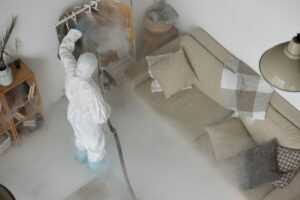
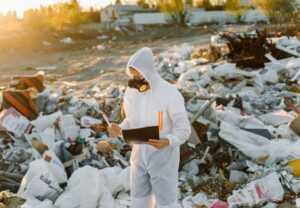
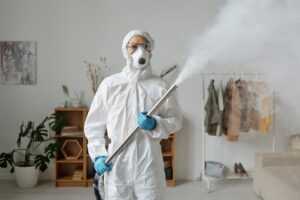
Hazardous waste cleanup is the process of identifying, containing, and safely removing dangerous materials — such as toxic chemicals, flammable liquids, and corrosive substances — from properties, soil, groundwater, and air to protect human health and the environment.
Quick answers:
- What is it? Removing or neutralizing dangerous substances that can harm people, wildlife, and water supplies
- Who regulates it? The EPA and state agencies under federal law (RCRA and Superfund/CERCLA)
- Who does it apply to? Homeowners, businesses, property managers, and industrial facilities
- How do you start? Contact a certified cleanup professional or your local environmental agency
- Where to dispose of hazardous materials locally? County Clean Sweep programs, licensed transporters, or certified remediation firms like ZBM Inc.
Hazardous waste isn’t just an industrial problem. It shows up in office buildings, rental properties, storage units, and even ordinary households — in the form of old paint cans, motor oil, cleaning chemicals, and more. When these materials aren’t handled correctly, they can contaminate soil and drinking water, harm building occupants, and create serious legal liability for property owners.
The scale of the problem is significant. The EPA currently oversees nearly 4,000 hazardous waste cleanups across the country — many at sites with risks comparable to the most contaminated Superfund locations in the nation. Cleanups can span decades and cost hundreds of millions of dollars, as seen at sites like the San Jacinto River Waste Pits in Texas, where cost estimates more than doubled from roughly $105 million in 2017 to as much as $262 million by 2025.
For commercial property managers in Wisconsin, the day-to-day reality is more immediate: a leaking drum in a storage area, a tenant who left behind unknown chemicals, or a maintenance room with unlabeled containers. These situations require fast, informed action — and the right certified partner.
I’m Terry Zastrow, owner of ZBM Inc., a certified IICRC firm with approximately 30 years of experience providing hazardous waste cleanup and biohazard remediation services to state and county agencies, municipalities, and commercial property clients across Wisconsin. Our team undergoes annual HAZWOPER training and recertification to ensure every job meets OSHA and EPA compliance standards.
Hazardous waste cleanup terms to learn:
- hazardous waste and spill cleanup walmart question 18
- walmart hazardous waste & spill cleanup question 17
Understanding Hazardous Waste and the Regulatory Framework
To understand how hazardous waste cleanup works, we must first look at how the law defines these dangerous materials. The primary federal law governing hazardous waste from “cradle to grave” is the Resource Conservation and Recovery Act (RCRA), specifically Subtitle C.
Under RCRA Subtitle C, a material is classified as hazardous if it exhibits one or more of the following four physical or chemical characteristics:
- Ignitability: Liquids with a flashpoint below 140°F (60°C), non-liquids capable of causing fire through friction or absorption of moisture, or ignitable compressed gases.
- Corrosivity: Aqueous wastes with a pH less than or equal to 2, or greater than or equal to 12.5, capable of corroding steel.
- Reactivity: Materials that are normally unstable, react violently with water, generate toxic gases, or are capable of detonation or explosion under normal conditions.
- Toxicity: Wastes that release harmful concentrations of specific toxins (such as heavy metals or organic pesticides) when tested using the Toxicity Characteristic Leaching Procedure (TCLP).
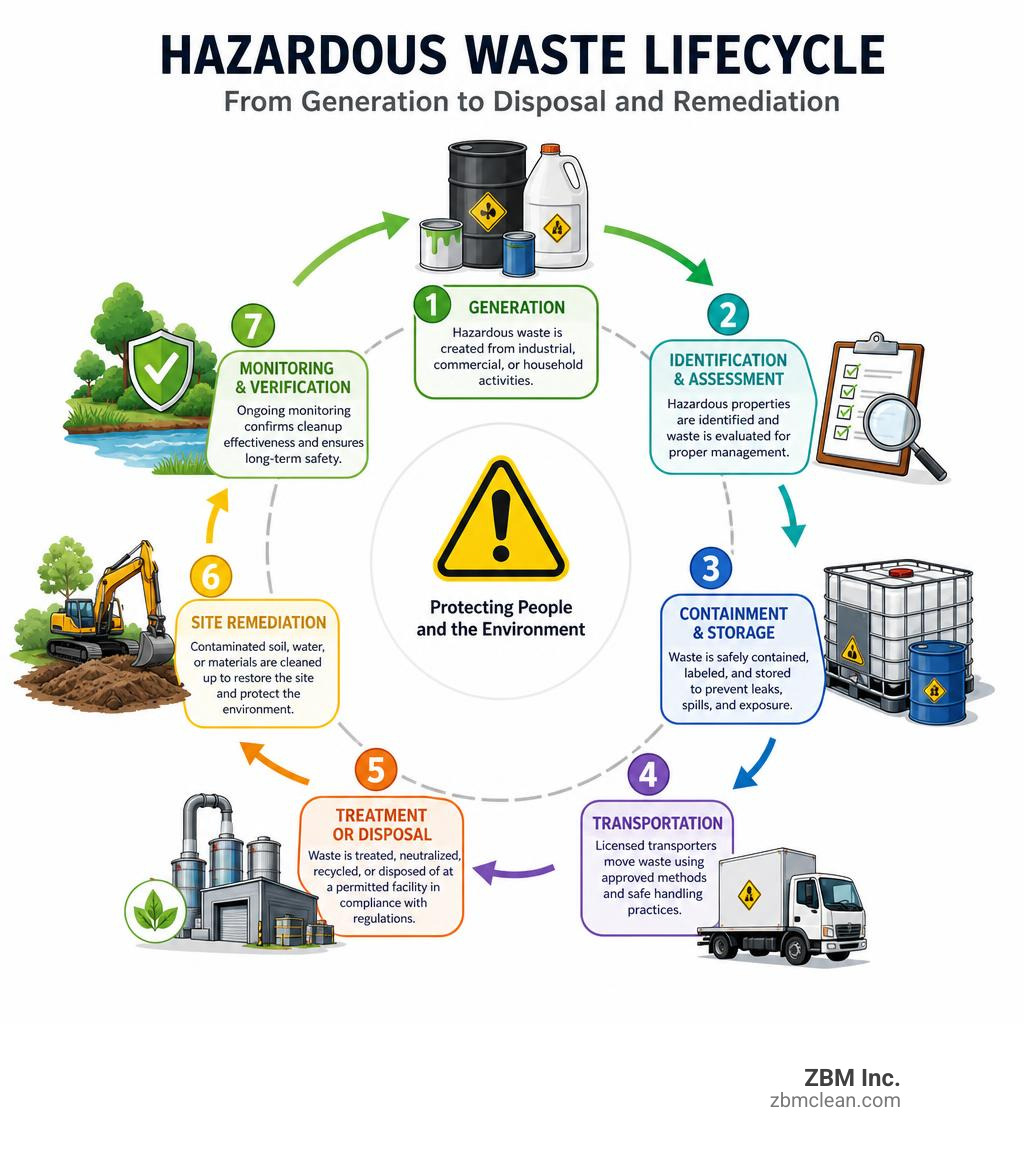
To maintain strict oversight, the EPA utilizes an EPA ID tracking system. Generators, transporters, and Treatment, Storage, and Disposal Facilities (TSDFs) must obtain unique EPA ID numbers and document every shipment of hazardous waste using a standardized hazardous waste manifest. This ensures that the waste is tracked from the exact moment it is generated until its final destruction or disposal.
The regulations governing hazardous waste differ dramatically depending on whether the generator is a private household or a commercial business.
| Regulatory Dimension | Household Waste | Business Waste (RCRA Subtitle C) |
|---|---|---|
| Primary Oversight | Local municipalities & County programs | EPA & State Departments of Natural Resources |
| Tracking Requirements | None (exempt from federal tracking) | Mandatory EPA ID & Hazardous Waste Manifests |
| Disposal Outlets | Household Hazardous Waste (HHW) facilities | Certified TSDFs via licensed hazardous waste transporters |
| Quantity Limits | Generally unrestricted (but limited by local site rules) | Highly regulated based on generator status (VSQG, SQG, LQG) |
| Financial Liability | Minimal to none under federal superfund laws | Strict joint, several, and retroactive liability |
What Triggers a Hazardous Waste Cleanup?
In a perfect world, all hazardous materials would move smoothly from generation to disposal without incident. In the real world, cleanups are triggered by specific regulatory events.
The most common trigger is an unauthorized contaminant release, such as an industrial spill, a leaking underground storage tank, or illegal dumping. Cleanups are also triggered during the closure of a Treatment, Storage, and Disposal Facility (TSDF) or when a facility applies for or modifies its RCRA permit, requiring a thorough investigation of historical operations.
Government agencies like the EPA and state departments (such as the Wisconsin Department of Natural Resources) identify these issues through routine inspections, self-reporting mandates, and citizen complaints. If a facility is found to have leaked hazardous constituents into the soil, groundwater, surface water, or air, regulators will issue enforcement actions. These actions legally compel the responsible party to execute a formal cleanup under the RCRA Corrective Action program (rebranded in late 2024 as the Hazardous Waste Cleanup Program).
For property owners dealing with biological hazards, sewage backups, or chemical spills, understanding the crossover between chemical waste and biohazards is vital. You can learn more about how these biological contaminants are categorized and treated by reading our comprehensive guide on Understanding Biohazardous Waste.
The Step-by-Step Remediation Process
When a hazardous waste cleanup is triggered, we don’t just roll up with shovels and start digging. The remediation process is highly structured, scientific, and deliberate. It follows a series of distinct phases to ensure the cleanup is both safe and permanent.
- Initial Site Assessment: This is the investigative phase (often called a RCRA Facility Assessment). Investigators review historical records, conduct visual inspections, and identify potential release points or exposure pathways to determine if a release has occurred.
- Site Characterization: If a release is confirmed, a comprehensive investigation (RCRA Facility Investigation) begins. Technicians sample soil, install groundwater monitoring wells, and test ambient air to map the exact vertical and horizontal boundaries of the contamination plume.
- Interim Actions: Contamination doesn’t always wait for a final plan. If a spill is actively spreading toward a municipal water well or a nearby river, we implement immediate interim actions. This can include installing containment boom lines, pumping out free-phase liquids, or placing temporary caps over contaminated soil.
- Evaluation of Remedial Alternatives: Through a Corrective Measures Study (CMS), engineers evaluate different cleanup technologies. They weigh factors like long-term effectiveness, safety, community impact, feasibility, and cost to select the best path forward.
- Remedy Implementation: Once regulators approve the final plan, construction begins. This is where the physical work happens — whether it involves large-scale soil excavation, groundwater pump-and-treat system installation, or chemical stabilization.
- Long-Term Care: Many cleanups require years of ongoing maintenance, groundwater monitoring, and facility inspections to prove that the remedy remains protective of human health.
Engineering and Institutional Controls in Hazardous Waste Cleanup
Sometimes, removing 100% of every contaminant molecule from a site is physically impossible or would cause more ecological damage than leaving it in place. In these cases, cleanups rely on a combination of engineering and institutional controls to keep the public safe.
Engineering controls are physical barriers designed to contain contamination. Common examples include:
- Capping: Placing engineered layers of clay, synthetic membranes, and clean soil over contaminated areas to prevent rainwater from soaking through and spreading toxins into the groundwater.
- Vertical Barrier Walls: Constructing deep slurry or steel sheet-pile walls underground to divert groundwater flow away from buried waste.
Institutional controls are non-engineering administrative or legal measures that limit human exposure by guiding behavior. These run with the land and notify future owners of the site’s history. They include:
- Deed Restrictions: Legal covenants that prohibit residential development, schools, or daycare facilities on a remediated industrial property.
- Groundwater Use Restrictions: Rules that ban the drilling of drinking water wells within a contaminated plume area.
- Technical Impracticability (TI) Zones: Areas where groundwater restoration is deemed technically impossible within a reasonable timeframe (sometimes taking thousands of years) due to complex geological conditions or the presence of dense non-aqueous phase liquids (NAPLs).
A prime example of this phased approach and the use of complex controls is detailed in the Casmalia Resources Superfund Site Profile, where a massive 252-acre commercial landfill was managed using engineered caps, liquid extraction trenches, and environmental covenants.
Case Studies in Large-Scale Hazardous Waste Cleanup
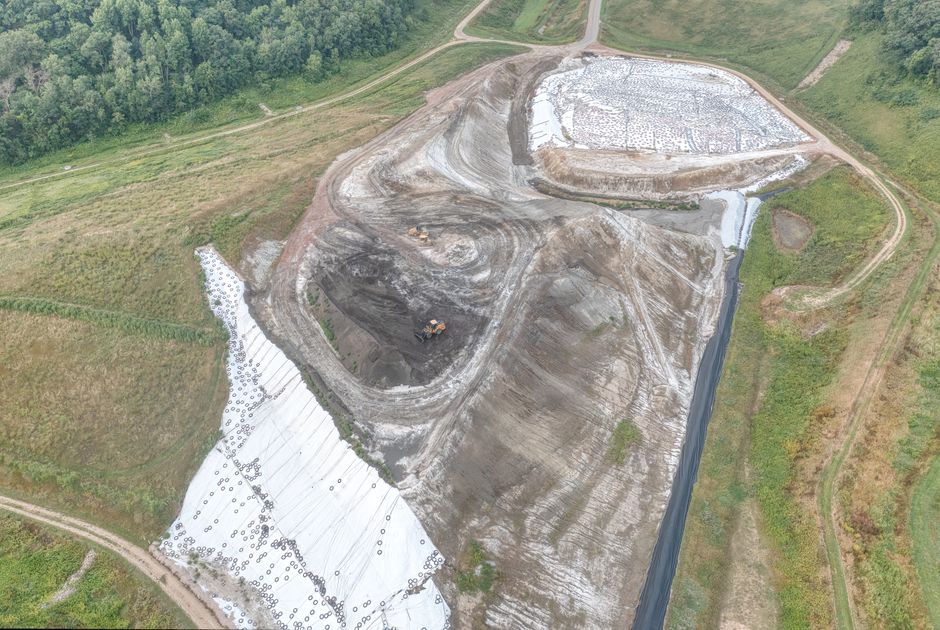
When contamination is so severe that state resources are overwhelmed, sites are managed under the Comprehensive Environmental Response, Compensation, and Liability Act (CERCLA), commonly known as Superfund.
These sites are placed on the National Priorities List (NPL) and undergo highly complex, multi-decade cleanups. Let’s look at two notable examples that illustrate the immense timelines, costs, and community impacts of these projects.
Lipari Landfill and Alcyon Lake Revitalization
Located in New Jersey, the Lipari Landfill was once ranked as the number one most hazardous site on the EPA’s National Priorities List. From 1958 to 1971, the site accepted millions of gallons of household, municipal, and industrial liquid wastes, which quickly seeped into the local groundwater and contaminated nearby Alcyon Lake, forcing its closure for all recreational activities.
The cleanup of the Lipari Landfill and Alcyon Lake was a monumental, four-decade effort. The remedy required:
- Installing a slurry wall containment system to isolate the landfill core.
- Operating a comprehensive groundwater pump-and-treat system.
- Executing soil vapor extraction to remove harmful organic compounds.
- Dredging contaminated sediments from Alcyon Lake and its tributaries.
In 2024, the EPA officially celebrated the successful cleanup and formally removed the Lipari Landfill from the National Priorities List. Today, the site has been revitalized into a beautiful community asset featuring baseball fields, soccer fields, walking trails, and a fully reopened Alcyon Lake for boating and fishing. According to economic studies highlighted in the EPA Removes Lipari Landfill from Superfund List announcement, these revitalized parklands now generate approximately $101,000 annually in direct use value for the local community, proving that long-term remediation can successfully restore both the environment and local economies.
San Jacinto River Waste Pits Cost Escalation
On the other end of the spectrum is the San Jacinto River Waste Pits (SJRWP) Superfund Site in Harris County, Texas, which demonstrates the financial and engineering volatility of active cleanups.
Built in the mid-1960s, these impoundments were used to dispose of highly toxic pulp and paper mill waste containing dangerous levels of dioxins and furans. Over time, subsidence and shifting river currents partially submerged the waste pits, exposing them to the elements.
To stabilize the site temporarily, an armored cap was installed in 2011. However, hurricanes and tropical storms repeatedly threatened the cap’s integrity, leading the EPA to select a permanent remedy: the excavation and off-site disposal of approximately 212,000 cubic yards of dioxin-contaminated material.
As detailed by the SJRWP | US EPA profile, the estimated cost of this remedy has escalated dramatically. The initial 2017 estimate for the Northern Impoundments remedy was approximately $105.5 million. By 2025, due to inflation, engineering complexities, and the need for advanced cofferdams to prevent river contamination during excavation, the revised cost estimate surged to between $210.8 million and $262.3 million. This case study highlights why early containment and precise engineering are critical to preventing runaway remediation costs.
Household Hazardous Waste (HHW) vs. Commercial Disposal
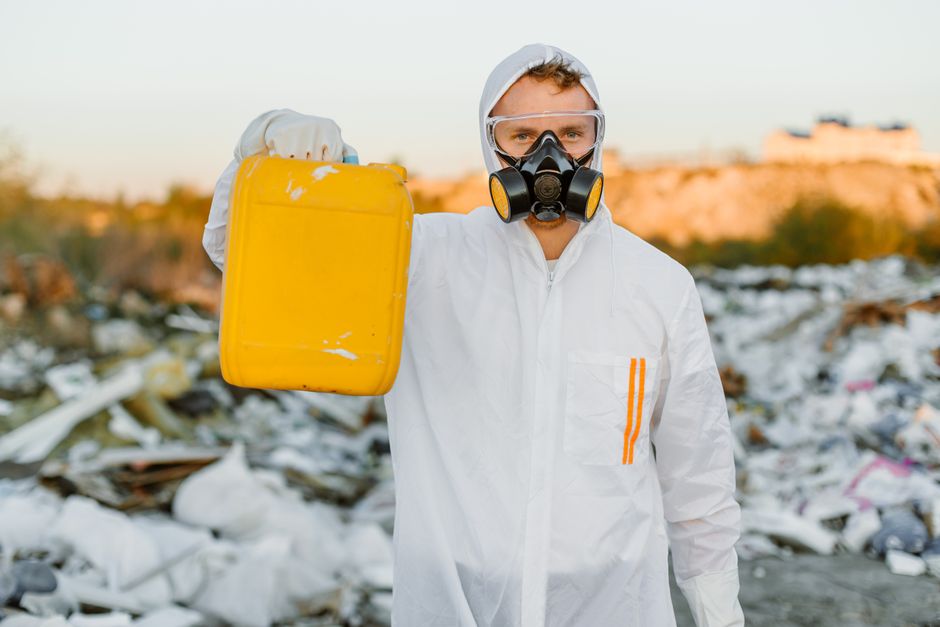
For everyday citizens and local business owners, hazardous waste management happens on a much smaller scale. However, the disposal pathways for households and businesses are entirely separate.
For businesses, hazardous waste cannot simply be thrown in the dumpster or taken to a local landfill. Commercial operations must partner with licensed waste management firms to choose from several specialized disposal methods:
- Fuel Blending: High-BTU liquid, sludge, or solid organic wastes are blended together and used as an alternative fuel source for industrial cement kilns, recycling the energy content of the waste.
- Incineration: High-temperature thermal destruction (often processing over 65,000 tons of waste per year at specialized facilities) breaks down complex organic toxins into harmless ash and gases.
- Wastewater Treatment: Chemical precipitation, neutralization, and biological treatment systems neutralize aqueous hazardous wastes before discharging clean water.
- Universal Waste Programs: Streamlined regulations allow businesses to easily recycle common items like batteries, pesticides, mercury-containing thermostats, and fluorescent lamps.
For households, the primary outlet is the local Household Hazardous Waste (HHW) collection facility or community “Clean Sweep” events. These programs keep toxic chemicals out of local municipal landfills, where they could easily breach standard liners and contaminate local aquifers.
Wisconsin Clean Sweep Programs and Local Resources
If you live or operate a business in our Southeastern Wisconsin or Northwoods service areas, you have access to excellent local hazardous waste collection resources. Many of these programs are funded in part by the state to encourage safe disposal.
- Dodge County: The county hosts scheduled Clean Sweep events for agricultural, household, and business wastes. For details on how to handle household chemical emergencies or local cleanups, see our guide on Dodge County Biohazard Removal and What to Expect and visit the official Dodge County Clean Sweep Program page.
- Jefferson County: Jefferson County provides seasonal Clean Sweep drop-off events for residents, farms, and qualifying small businesses (VSQGs). You can find upcoming dates, locations, and registration requirements directly at Jefferson County Clean Sweep Events.
- Milwaukee County: The Milwaukee Metropolitan Sewerage District (MMSD) operates permanent household hazardous waste mobile and regional collection sites.
- Oneida County & Northwoods: For our clients up north near Minocqua, Oneida County operates a solid waste department that coordinates hazardous waste collection programs.
- Rock County: Rock County conducts annual Clean Sweep events to help residents dispose of chemicals safely.
- Northwest Wisconsin: The Northwest Cleansweep Program provides hazardous waste collection services across several northern counties.
Frequently Asked Questions about Hazardous Waste
What items are typically prohibited at household hazardous waste facilities?
While HHW facilities accept a wide variety of household chemicals, paints, and automotive fluids, they typically prohibit:
- Asbestos material (requires specialized abatement contractors).
- Commercial and industrial waste (unless the facility has a dedicated small business program).
- Infectious or biological medical waste (except for properly contained sharps/needles at select locations).
- Radioactive materials (including older ionization smoke detectors).
- Explosives and ammunition (which must be handled by local law enforcement or bomb squads).
- Large appliances and electronics (which are usually routed to separate scrap metal or e-waste recycling programs).
How do Superfund cleanups differ from RCRA corrective actions?
The primary difference lies in the operational status of the site and the regulatory trigger:
- RCRA Corrective Actions apply to active, operating industrial facilities that treat, store, or dispose of hazardous waste. The facility owner or operator is actively involved and typically funds the cleanup directly under a RCRA permit or order.
- Superfund (CERCLA) Cleanups generally target abandoned, historical, or bankrupt sites where no viable owner can be found, or where the contamination is so severe that it requires federal funding and intervention. Superfund cleanups are managed under the National Priorities List (NPL).
How should residents safely prepare and transport hazardous materials?
When taking your chemicals to a local Clean Sweep event, follow these safety protocols:
- Keep items in their original containers with labels intact. If a container is leaking, place it inside a clean, leak-proof plastic bucket or bin.
- Never mix different chemicals together. Mixing chlorine bleach with ammonia or acids can release deadly gases.
- Pack items upright in cardboard boxes to prevent them from tipping over in your vehicle. Do not place chemicals in loose plastic bags.
- Transport items in your trunk or the bed of a truck, away from the passenger cabin, to avoid breathing in any fumes.
- Bring proof of residency (such as a driver’s license or utility bill), as these local programs are funded by county taxpayers.
Conclusion
Whether you are dealing with a historic commercial chemical spill, managing a rental property with abandoned materials, or simply cleaning out your family garage in Watertown, proper hazardous waste cleanup is essential to keeping our Wisconsin communities safe, healthy, and legally compliant.
At ZBM Inc., we are proud to be Southeastern Wisconsin’s trusted, family-owned cleaning and restoration partner. Fully licensed, bonded, and insured, our team of certified professionals brings decades of hands-on expertise to every project. We specialize in biohazard cleanup, hoarding remediation, and commercial specialty cleaning, ensuring that your property is restored to a safe, pristine condition.
If you have questions about a cleanup on your property or need a professional, certified team to handle a challenging situation, we are here to help. Contact us today at ZBM Inc. to speak with our experts and schedule an assessment.