When Property Damage Strikes, the Right Help Makes All the Difference
Cleaning & restoration services cover a wide range of professional solutions — from emergency water extraction and fire damage repair to routine carpet cleaning and mold remediation. Here’s a quick overview of what these services include:
| Service Type | What It Covers |
|---|---|
| Water Damage Restoration | Extraction, structural drying, mold prevention |
| Fire & Smoke Damage | Soot removal, odor elimination, structural repair |
| Mold Remediation | Containment, removal, air quality testing |
| Biohazard Cleanup | Sewage backups, trauma scenes, antiviral sanitation |
| Specialty Cleaning | Carpets, air ducts, upholstery, dryer vents |
| Contents Restoration | Pack-out, climate-controlled storage, document recovery |
Whether you manage a single office or an entire property portfolio, damage rarely waits for a convenient moment. A burst pipe, a sewage backup, or hidden mold can shut down operations, drive away tenants, and rack up costs fast — especially when the response is slow or the wrong team shows up.
The difference between a manageable setback and a catastrophic loss often comes down to how quickly and how professionally you respond.
I’m Terry Zastrow, owner of ZBM Inc. — an IICRC-certified firm with approximately 30 years of hands-on experience delivering cleaning & restoration services to commercial properties, municipalities, housing authorities, and private clients across Wisconsin. In the sections below, I’ll walk you through everything you need to know to protect your property and make the right call when it matters most.
Understanding Emergency Cleaning & Restoration Services
When a disaster strikes your property, the clock starts ticking immediately. Water migrates into dry drywall, smoke residues begin to permanently etch glass and metal, and mold spores find the moisture they need to germinate. This is where professional disaster recovery and rapid response become your property’s absolute best line of defense.

Types of Emergency Disasters and Rapid Response Times
Disaster recovery isn’t a service you can schedule for next Tuesday. When dealing with water damage, fire damage, or severe storm damage, a rapid response is critical. Water damage worsens every single hour it is left untreated, leading to structural rot and secondary mold growth.
Our team operates on a 24/7/365 emergency dispatch system because we know that arriving on-site quickly is the only way to minimize your losses. During a water emergency, getting a certified team on-site rapidly to extract standing water stops the damage from spreading deeper into your building’s structural bones. To understand why immediate action is so vital, read our guide on Emergency Disaster Recovery After Damage Strikes.
National Franchises vs. Local Family-Owned Cleaning & Restoration Services
When looking for cleaning & restoration services, property owners often face a choice: do you call a massive national franchise network, or do you trust a local, family-owned restoration company?
While large national chains have recognizable names, they often route your emergency through national call centers, leaving you dealing with rotating managers who do not know your community. In contrast, a local, family-owned team like ZBM Inc. offers direct communication with the owners, personalized care, and deep community trust. We treat our clients like neighbors because you are our neighbors.
Whether you are seeking regional assistance in Southeast Wisconsin or the Northwoods, choosing a dedicated local team guarantees that your property gets the personalized, compassionate attention it deserves. For a deeper look at the industry landscape, see our breakdown of Restoration Companies In Usa The Heavy Hitters Of Storm Recovery.
How to Vet Professional Cleaning & Restoration Services
You should never hire a restoration company blindly. The industry standard certifying body is the Institute of Inspection Cleaning and Restoration Certification (IICRC). When vetting providers, ensure their technicians are certified to IICRC standards — specifically the IICRC S500, which is the recognized global benchmark for professional water damage restoration.
A professional team should always be licensed, bonded, and insured. They must be willing to walk you through their plan of attack, use advanced structural drying equipment, and provide clear documentation. For a step-by-step checklist on how to verify a company’s credentials, refer to The Homeowners Guide To Vetting Disaster Clean Up Companies.
The Step-by-Step Water Damage Restoration Process
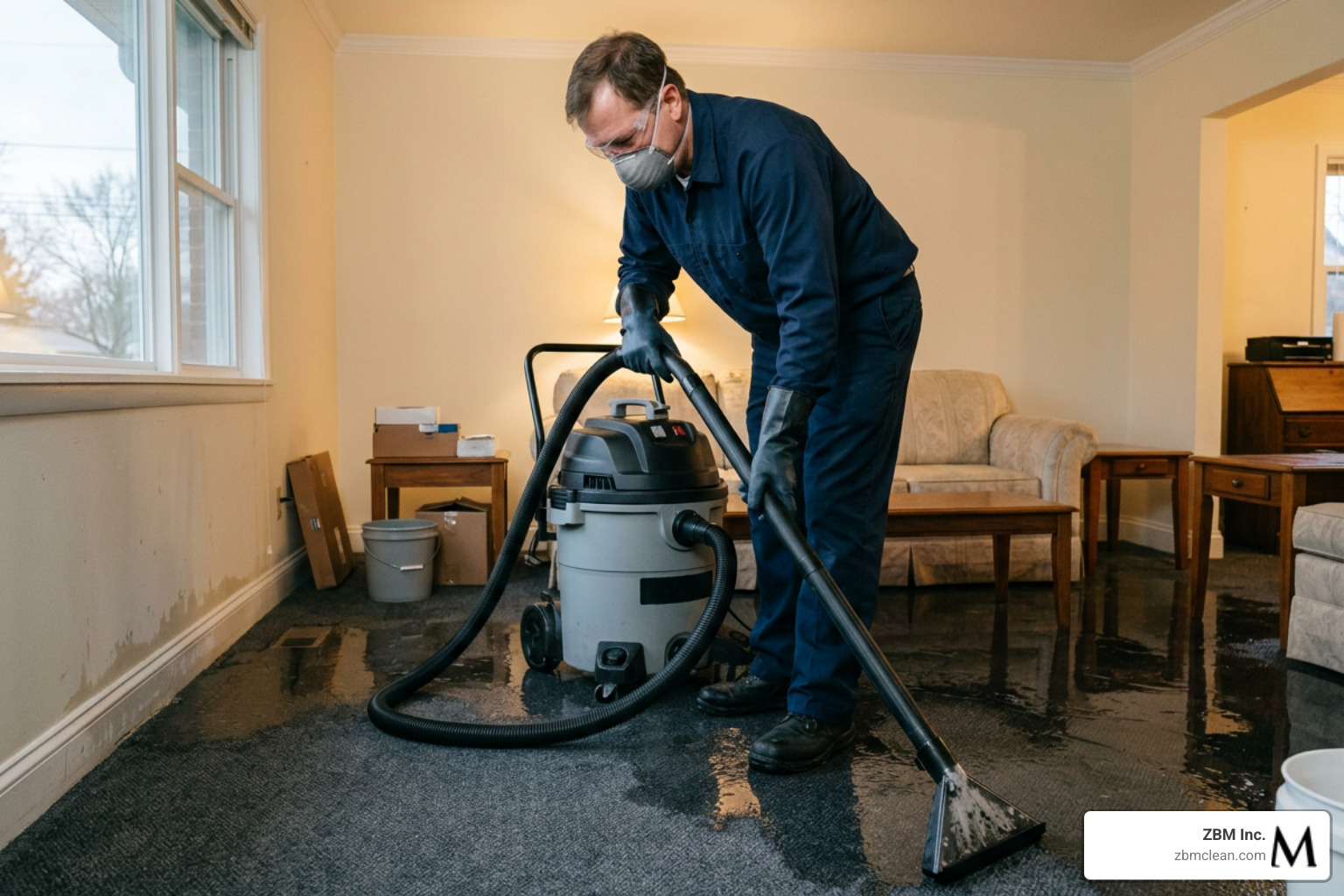
Water damage is deceptive. While a flooded floor is obvious, the water that wicked up behind your baseboards and into your structural framing is invisible to the naked eye. Safely drying a building requires a scientific, step-by-step approach.
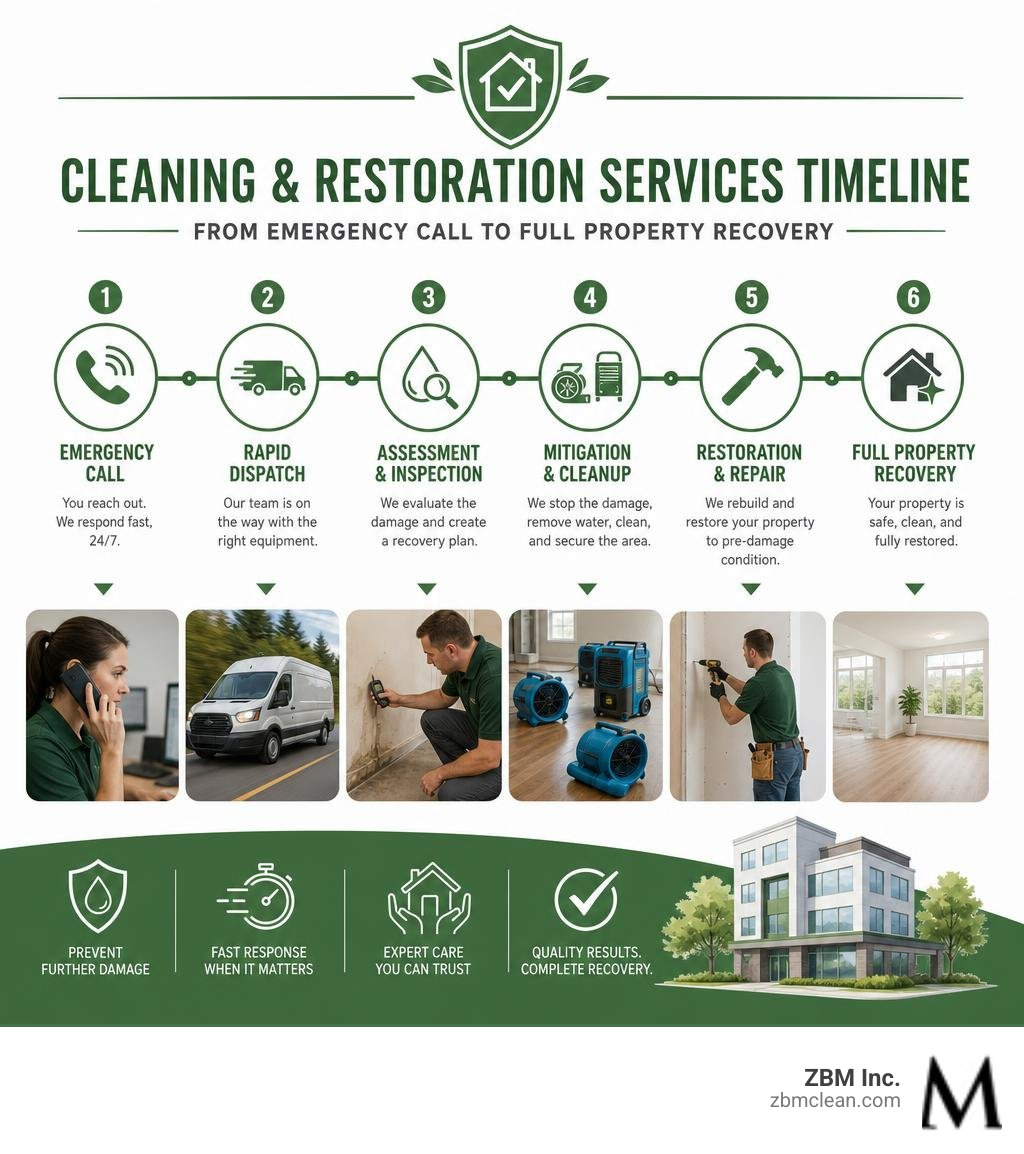
From Emergency Call to Structural Drying
Once our emergency dispatch team arrives on-site, the restoration process follows a strict, proven sequence to ensure no moisture is left behind:
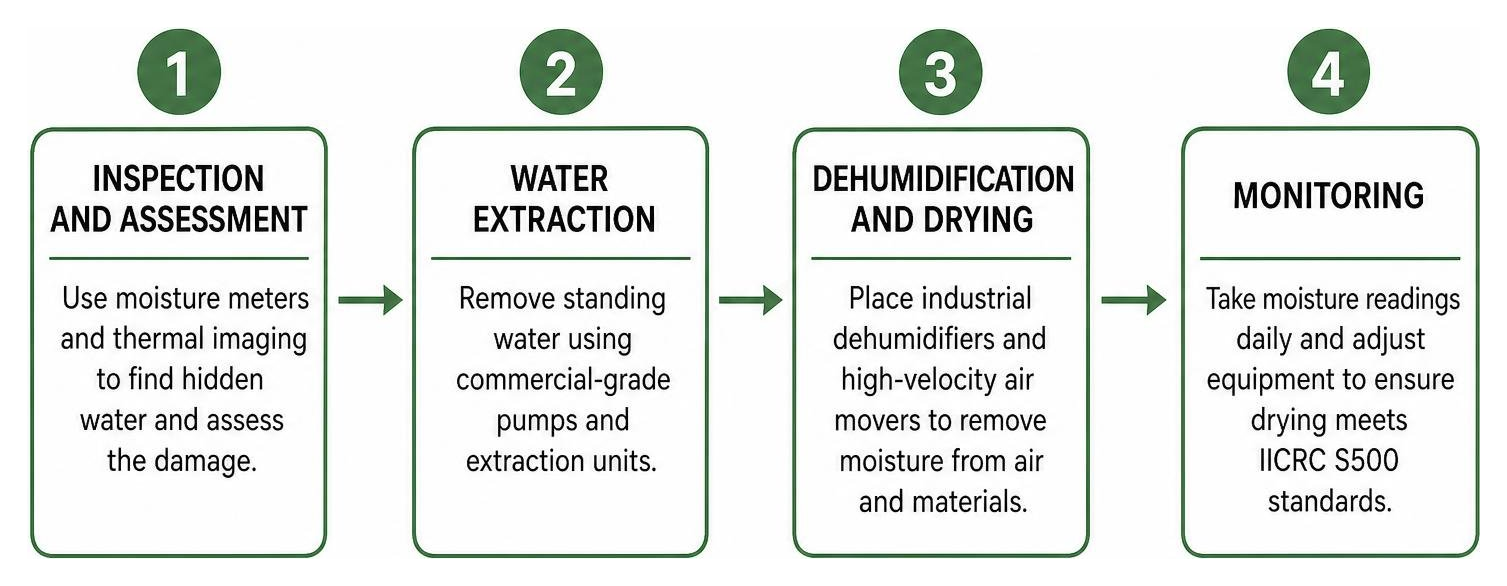
- Inspection and Assessment: We don’t just look at the wet carpet. We use specialized moisture meters and thermal imaging cameras to locate hidden water trapped behind walls, under cabinetry, and beneath flooring.
- Water Extraction: Using commercial-grade truck-mounted pumps and portable extraction units, we remove the bulk of the standing water.
- Dehumidification and Drying: We place heavy-duty LGR (Low Grain Refrigerant) dehumidifiers and high-velocity air movers to pull moisture out of the air and structural materials.
- Monitoring: We return daily to take moisture readings, adjusting our equipment to ensure the property is drying to the precise standards of the IICRC S500.
For a comprehensive breakdown of this recovery process, explore our Disaster Restoration Guide 2026.
Navigating Insurance Claims and Direct Billing
Dealing with property damage is stressful enough without having to translate insurance jargon. Professional restoration companies ease this burden by working directly with your insurance provider.
We document everything. From the initial thermal imaging scans to a digital inventory of affected materials, we compile a comprehensive proof-of-loss package. This level of detail ensures your claim is processed smoothly, and we can often bill your insurance company directly so you don’t have to pay out-of-pocket for emergency mitigation. Learn more about how these services protect your bottom line in our article on How Disaster Recovery Services Help You Rebuild And Restore.
Mold Remediation vs. Mold Removal: Key Differences
It is a common misconception that mold can simply be sprayed with bleach and wiped away. To truly protect your property and health, you must understand the difference between mold removal and mold remediation.
When is Professional Mold Intervention Necessary
“Mold removal” is a bit of a misnomer because mold spores exist naturally everywhere in the air. “Mold remediation,” however, is a comprehensive process that addresses the root moisture source, contains the affected area, cleanses the air, and treats surfaces to prevent recurrence.
Professional intervention is absolutely necessary when mold covers an area larger than 10 square feet, or when it is caused by contaminated water (like sewage). Professional remediators use physical containment barriers and negative air pressure machines equipped with HEPA filters to prevent mold spores from spreading to unaffected areas of your building during cleanup. Discover why professional intervention is so critical by reading Why Disaster Restoration Is Important.
Hidden Health Risks of Mold and Sewage Backups
Ignoring a damp smell, a slow leak, or a minor sewage backup can have severe consequences. Toxic black mold (Stachybotrys chartarum) and raw sewage carry dangerous pathogens, mycotoxins, and biohazards.
Exposure to these contaminants can cause severe respiratory issues, allergic reactions, and long-term illness. Standard household cleaning products cannot sanitize these biohazards safely. To protect your family or employees from these invisible threats, read Why You Need A Professional Disaster Cleaner After The Unthinkable Happens.
What to Do Immediately After a Disaster Strikes
What you do in the first 60 minutes after a pipe bursts or a fire is extinguished can save thousands of dollars in structural repairs. However, safety must always come first.
Immediate Steps for Water and Flood Damage
If you walk into your basement and find it flooded, take these immediate actions if it is safe to do so:
- Shut Off the Water: Locate and close your main water shut-off valve to stop the flooding at its source.
- Turn Off the Power: If the water has reached electrical outlets or appliances, shut off the electricity at the main breaker panel. Never walk through standing water to reach the breaker box.
- Document the Damage: Take photos and videos of the standing water and affected belongings for your insurance claim.
- Call the Professionals: Contact our emergency team immediately.
For a detailed safety checklist, read What To Do Immediately After A Disaster Damages Your Property.
Immediate Steps Following a Property Fire
Once the fire department clears your property and deems it structurally safe to enter, proceed with extreme caution:
- Avoid Breathing Soot: Do not walk through the property unnecessarily. Soot particles are highly abrasive and toxic if inhaled.
- Do Not Clean Drywall or Wood: Attempting to wipe soot off walls with household cleaners can permanently smear the oils into the paint.
- Keep Air Circulation Low: Do not turn on your HVAC system, as this will spread soot and smoke odors throughout the entire building.
- Call for Emergency Board-Up: Protect your open property from vandalism and weather.
For more immediate fire recovery tips, see What To Do Immediately After A Disaster Damages Your Property 2.
Essential Specialty Cleaning and Property Maintenance
Professional restoration companies do more than just respond to emergencies. We also provide specialized, routine cleaning services that improve your indoor air quality and protect your property from future disasters.
Beyond Disasters: Carpet, Upholstery, and Air Duct Cleaning
Over time, carpets, furniture fabrics, and air ducts accumulate dust, pet dander, mold spores, and allergens. Routine deep cleaning using industrial hot water extraction removes up to 99% of these embedded allergens.
Additionally, professional dryer vent cleaning is a vital fire prevention service. Clogged dryer vents are one of the leading causes of residential fires in the United States. Keeping them clear keeps your utility bills low and your property safe. For a full list of what these maintenance services entail, explore What Do Disaster Restoration Services Cover.
Proactive Maintenance to Prevent Costly Property Disasters
The best way to handle a property disaster is to prevent it from happening in the first place. Simple, proactive maintenance tasks can save you from a major headache down the road:
- Sump Pump Maintenance: Test your sump pump regularly, especially before the spring thaw or heavy rainstorms. Consider installing a battery-powered backup pump.
- Inspect Appliance Hoses: Check washing machine and dishwasher hoses for cracks or bulges every year.
- Schedule Roof and Gutter Inspections: Keep your gutters clear of debris so water drains away from your foundation rather than pooling against it.
For localized advice on safeguarding your Wisconsin property, check out From Sump Pumps To Soot Navigating Watertown Property Restoration.
Frequently Asked Questions About Property Recovery
Can my personal belongings be saved after a fire or flood?
Yes, in many cases they can. Through specialized contents restoration and pack-out services, we carefully inventory, pack, and transport your items to a secure, climate-controlled facility. Using advanced techniques like document freeze-drying and specialized textile cleaning, we can often restore items assumed to be ruined back to pre-loss condition.
How quickly does mold start to grow after water damage?
Mold spores can germinate and begin to colonize within 24 to 48 hours of moisture exposure. This rapid spread is why immediate water extraction and structural drying are so critical to preventing a secondary mold outbreak.
What is involved in commercial disaster recovery?
Commercial disaster recovery focuses heavily on business continuity. It involves pre-loss planning, securing temporary power, structural stabilization, and working in phases to minimize your business downtime. To see how we help businesses recover, read What Is Involved In Commercial Disaster Recovery.
Conclusion
When your property is threatened by water, fire, mold, or biohazards, you don’t just need a cleaning crew — you need certified professionals who understand the science of building restoration.
ZBM Inc. is a licensed, bonded, insured, and family-owned company staffed with IICRC-certified professionals based in Watertown, WI. We proudly serve Dodge County, Jefferson County, Lake Mills, the Northwoods, and all of Southeast Wisconsin. Whether you are dealing with an active emergency or looking to schedule routine commercial maintenance, we are here to help you restore your property and your peace of mind.
If you need professional restoration or cleaning services, contact our local team today at Disaster Restoration Services Dodge Jefferson County Wi.