What Is a Building Facilities Inspection Checklist PDF (And Why It Matters)
A building facilities inspection checklist PDF is a structured document used to systematically evaluate the condition, safety, and compliance of a building’s systems and spaces. Here’s what a standard one covers:
| Category | Examples |
|---|---|
| Mechanical & HVAC | Filters, thermostats, ductwork, boilers |
| Electrical | Panel clearance, GFCI outlets, wiring condition |
| Fire Safety | Extinguishers, exit signs, sprinkler clearance |
| Plumbing | Leaks, drains, water temperature |
| Building Interior | Floors, ceilings, doors, restrooms |
| Building Exterior | Roof, parking lot, drainage, signage |
| Environmental | Mold, odors, air quality, water damage |
| ADA Compliance | Accessible restrooms, ramps, door widths |
Without a checklist, it’s easy to miss critical items — and the consequences range from costly emergency repairs to regulatory fines, safety incidents, and even shutdowns.
Maintaining a well-functioning facility requires vigilance, organization, and consistency. For commercial property managers, an undetected hazard isn’t just a maintenance problem — it’s a liability.
I’m Terry Zastrow, owner of ZBM Inc., a certified building maintenance firm with approximately 30 years of experience serving state agencies, municipalities, housing authorities, and private-sector clients across Wisconsin — including hands-on work with building facilities inspection checklist PDF standards and compliance protocols. In the sections ahead, I’ll walk you through everything you need to build, use, and act on an effective facility inspection checklist.
Why You Need a Building Facilities Inspection Checklist PDF
In our decades of experience serving Dodge County and Jefferson County, we’ve seen it all—from pristine offices to mechanical rooms that look like they haven’t been touched since the 1970s. The difference almost always comes down to having a plan. A building facilities inspection checklist pdf isn’t just a piece of paper; it’s your roadmap to property longevity and safety.
Protecting Property Value and Reducing Liability
Your building is likely one of your largest assets. Inconsistent maintenance is a fast track to regulatory non-compliance, which can trigger penalties or even total shutdowns. By using a formal Building Maintenance Checklist Wisconsin approach, we ensure that small issues—like a tiny leak in a Lake Mills warehouse—don’t turn into a structural disaster.
Furthermore, unnoticed safety hazards lead to accidents and injuries. If someone trips over a loose carpet tile that wasn’t documented, you’re looking at a liability nightmare. A checklist provides a “paper trail” showing you exercised due diligence in maintaining a safe environment.
Regulatory Compliance and Safety
Whether you’re managing a multifamily unit in Watertown or a commercial hub in Southeast Wisconsin, you’re subject to local and federal codes. This includes HUD standards, OSHA requirements, and the Uniform Physical Condition Standards Inspection Checklist (often referred to as UPCS). These standards help identify “Life Threatening” (LT) vs. “Non-Life Threatening” (NLT) deficiencies.
Preventive Maintenance vs. Emergency Repairs
We always tell our clients: you can pay a little now or a lot later. Investing in 7 Essential Fall Building Maintenance Services That Pay Off helps you catch issues before the Wisconsin winter hits. A comprehensive Facility Inspection Checklist Form PDF allows you to track repair history, so you know exactly when a boiler was last serviced or when the roof was last inspected for weather damage.
Core Categories of a Comprehensive Building Facilities Inspection Checklist PDF
When we perform Building Maintenance Services Wisconsin, we don’t just wander around looking for dust. We break the facility down into core categories. This ensures that every nut, bolt, and light switch is accounted for.
Mechanical and HVAC Systems
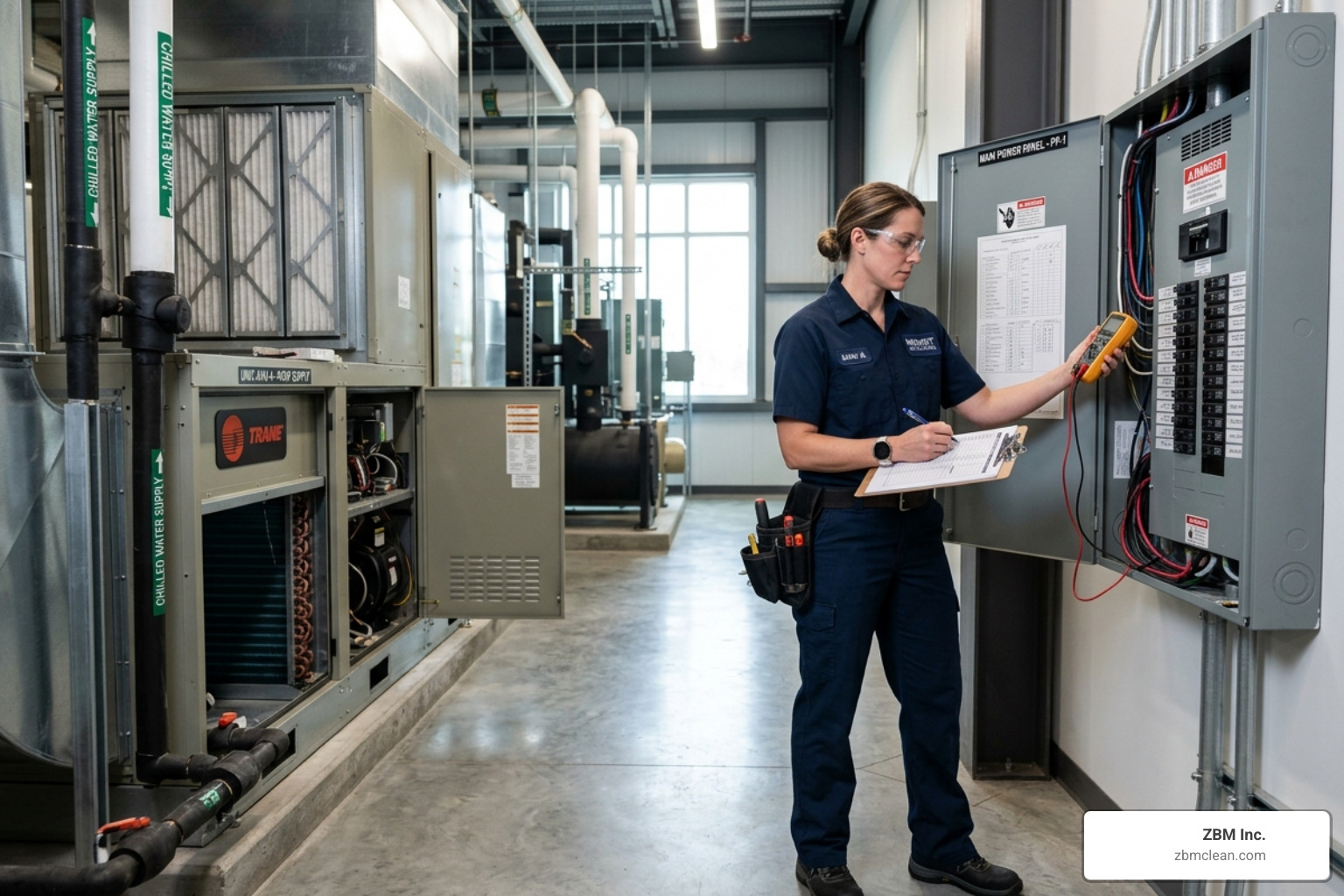
Your HVAC system is the lungs of your building. If it’s not working, everyone is miserable—and in the Northwoods, if the heat goes out in January, you have a crisis.
- Filter Replacement: Are filters clean? Clogged filters force the system to work harder, wasting energy and shortening the unit’s life.
- Thermostats: Are they calibrated and functioning?
- Ductwork: Check for leaks or excessive dust buildup.
- Boilers and Furnaces: These require professional eyes to ensure there are no cracks or carbon monoxide risks. We recommend following Spring Facility Maintenance Tips to prep for the changing seasons.
Electrical and Life Safety Standards
Electrical issues are a leading cause of facility fires. According to industry safety standards, there are non-negotiable rules we must follow:
- 36-Inch Clearance: Electrical panels must have at least 36 inches of clear space in front of them. No storage is allowed in electrical or mechanical rooms!
- GFCI Testing: Ground Fault Circuit Interrupters should be tested monthly, especially near water sources like breakrooms or restrooms.
- Sprinkler Clearance: There must be at least an 18-inch vertical clearance below all sprinkler heads. If you stack boxes too high, the water can’t spread effectively during a fire.
- Fire Extinguishers: These must be inspected monthly (visual check) and serviced annually by a pro.
For those of us in the Badger State, checking the [PDF] Inspection Checklist For Typical One – DSPS – Wisconsin.gov is a great way to ensure you’re meeting local dwelling and commercial codes.
Plumbing and Interior/Exterior Integrity
We also look at the “envelope” of the building. This includes a Complete Facility Exterior Maintenance Checklist covering the roof, parking lot, and drainage. Inside, we check for:
- Interior Finishes: Are there missing ceiling tiles? (Fun fact: missing tiles allow smoke to bypass fire detectors!)
- ADA Compliance: Ensure restrooms have proper grab bars and that door widths accommodate wheelchairs.
- Plumbing: Check for leaks under every sink. In child-accessible areas, ensure water temperature does not exceed 100 degrees to prevent scales.
Best Practices for Using a Building Facilities Inspection Checklist PDF
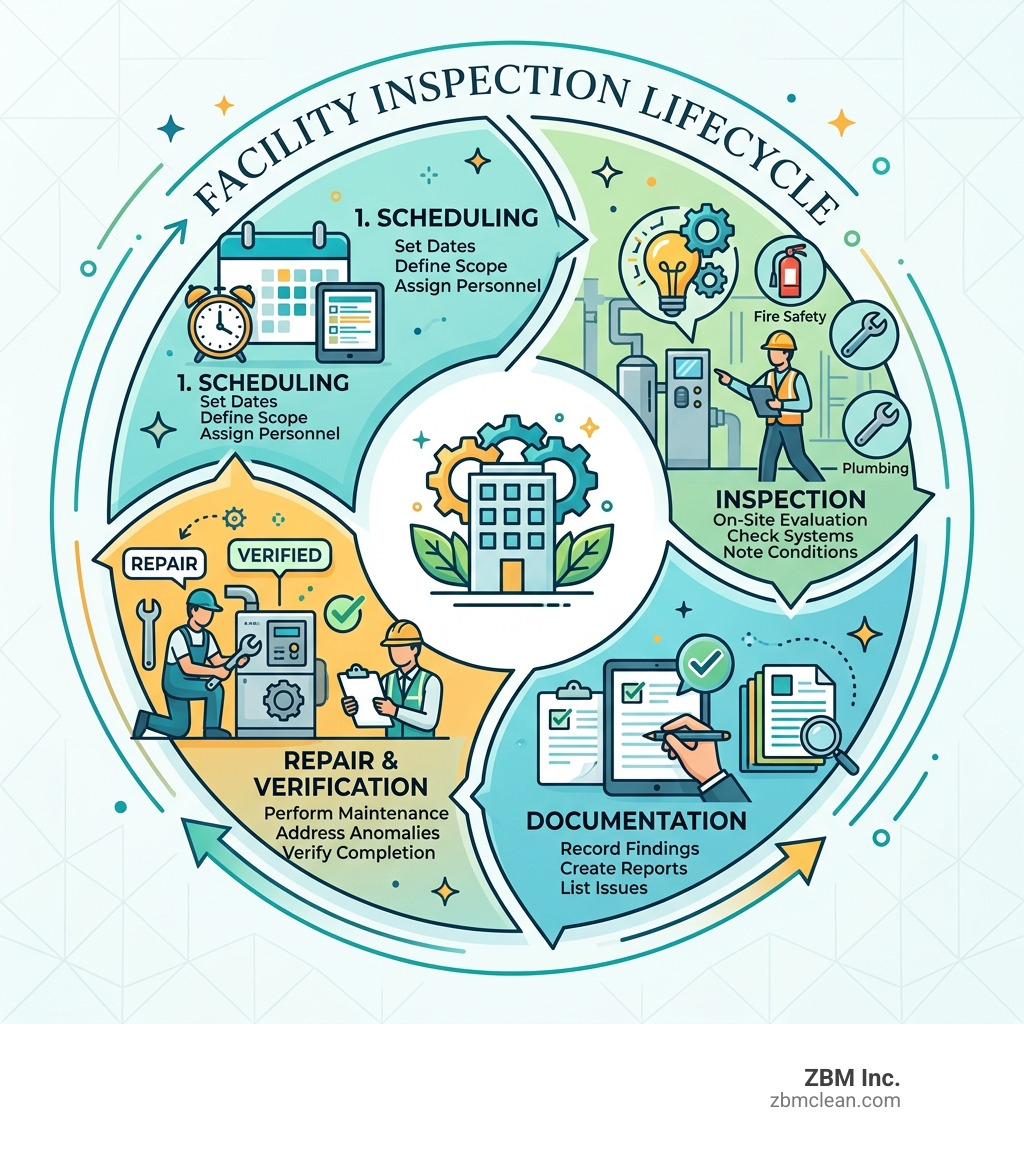
A checklist is only as good as the person using it. To get the most out of your building facilities inspection checklist pdf, you need a system for documentation and follow-up.
Documentation Standards
“If it isn’t written down, it didn’t happen.” This is the mantra of facility management. We recommend:
- Photo Evidence: Take pictures of every deficiency. It’s much easier to show a repair technician a photo of a frayed wire than to describe it.
- Repair Logs: Keep a running log of what was fixed, when, and by whom.
- Prioritization: Use a “Level 1, 2, 3” system. Level 3 issues (like a blocked fire exit) need immediate attention, while Level 1 (a scuffed wall) can wait.
Paper vs. Digital
While many still prefer a physical building facilities inspection checklist pdf, digital tools can streamline the process.
| Feature | Paper Checklists | Digital Platforms |
|---|---|---|
| Speed | Slower; requires manual data entry | Faster; instant sync |
| Photos | Must be printed/attached separately | Integrated directly into the report |
| Tracking | Hard to track trends over time | Automated analytics and alerts |
| Storage | Physical filing cabinets | Secure cloud storage |
| Accountability | Signatures can be forged | Time-stamped entries and GPS logs |
Regardless of the medium, make sure your team is trained. Knowing how to spot a “daisy-chained” power strip (a major fire hazard!) is just as important as knowing how to check a box. We often suggest reviewing Spring Facility Maintenance: Key Building Areas to Check to keep your team’s skills sharp.
Frequency and Scheduling of Inspections
How often should you be walking the halls? It depends on what you’re checking.
- Monthly: Visual audits of fire extinguishers, exit signs, and general housekeeping.
- Quarterly: Many state agencies, like those in Georgia (as a benchmark), require quarterly inspections to document repairs. We suggest this for any high-traffic commercial building in Southeastern WI.
- Seasonally: Use Summer Building Maintenance Tips That Get the Job Done or Summer Facility Maintenance guides to handle tasks like HVAC coil cleaning or parking lot striping.
- Annually: Full building systems, fire alarm testing by certified specialists, and roof inspections.
Identifying Common Deficiencies and Hazards
In our time providing Building Maintenance Services Wisconsin, we see the same “usual suspects” over and over again:
- Tripping Hazards: Loose rugs or cords running across walkways.
- Blocked Egress: Storing boxes in front of fire doors.
- Electrical Daisy-Chaining: Plugging one power strip into another. This is a huge “no-no” for fire safety!
- Water Intrusion: Mold indicators like musty odors or stained ceiling tiles. Addressing this early is key to Improve Office Health with Building Cleaning and Maintenance Services.
- Pest Activity: Droppings or nesting materials in storage areas.
Frequently Asked Questions about Building Facilities Inspections
How often should a facility inspection be conducted?
Frequency varies by the system you are inspecting. Fire extinguishers require a visual check every month. Many state-leased properties require a formal quarterly inspection. For the building as a whole, an annual deep-dive into every system—from the roof to the foundation—is the industry standard.
What are the most common fire safety violations found?
The “Big Three” are:
- Blocked Exits: Items stored in hallways or in front of emergency doors.
- Sprinkler Obstructions: Storage within 18 inches of a sprinkler head.
- Electrical Panel Access: Failing to maintain the 36-inch clearance required by code.
Where can I find a free building facilities inspection checklist pdf?
You don’t have to reinvent the wheel! Excellent free resources are available from:
- HUD: The Uniform Physical Condition Standards Inspection Checklist is the gold standard for housing.
- State Governments: Check out the [PDF] Inspection Checklist For Typical One – DSPS – Wisconsin.gov for Wisconsin-specific dwelling codes.
- Universities: Many educational institutions provide public safety checklists for offices and labs.
Conclusion
Proactive oversight is the only way to ensure your facility remains safe, compliant, and efficient. By using a building facilities inspection checklist pdf, you move away from “reactive” maintenance (fixing things when they break) and toward “proactive” management (preventing things from breaking in the first place).
At ZBM Inc., we pride ourselves on helping our neighbors in Watertown, Lake Mills, and across Southeastern Wisconsin maintain professional standards. Whether you need help with a Company Shut Down Maintenance: How to Maximize Plant Down Time project or ongoing Building Maintenance Services Wisconsin, our family-owned team is here to help.
A clean and well-maintained building isn’t just a point of pride—it’s a safer, more productive environment for everyone who walks through your doors. Stay safe, stay organized, and keep those checklists handy!