Why Mold Licensing Matters Before Anyone Touches Your Building
Hiring a licensed mold remediation contractor is one of the most important decisions you can make when mold appears in a commercial or residential property. Get it wrong, and you could face spreading contamination, denied insurance claims, or costly do-overs.
Here’s what you need to know right away:
| Question | Quick Answer |
|---|---|
| What is a licensed mold remediation contractor? | A professional legally authorized to remove, clean, and treat mold-contaminated materials in a building |
| Do all states require licensing? | No — states like Texas and Florida require it; others like Maryland and Wisconsin do not mandate it |
| What certifications should they hold? | Look for IICRC, MICRO CMRC, ACAC, or state-issued credentials |
| Why does licensing matter? | It ensures proper training, insurance, and consumer protection |
| How do you verify a contractor’s license? | Check your state’s licensing board or online license search portal |
Mold doesn’t wait. It can begin growing within 24 to 48 hours of a moisture event — and once it spreads inside walls, ceilings, or HVAC systems, the cleanup becomes significantly more complex and expensive. For busy commercial property managers, an untreated mold problem can quickly escalate from a maintenance issue into a liability crisis.
The challenge is that not every contractor who shows up with a spray bottle and a respirator is actually qualified — or legally permitted — to do the work. Licensing rules vary dramatically from state to state, and the consequences of hiring the wrong person can be serious.
I’m Terry Zastrow, owner of ZBM, Inc., a firm certified by the Institute of Inspection, Cleaning and Restoration Certification (IICRC) with approximately 30 years of experience serving state agencies, municipalities, and private-sector clients — including work that demands full compliance with mold remediation standards. That background gives me a grounded, practical perspective on what it actually takes to qualify as a licensed mold remediation contractor and what property managers should demand before work begins.
Licensed mold remediation contractor word roundup:
Why You Must Hire a Licensed Mold Remediation Contractor

When you discover a patch of dark, fuzzy growth in your property, your first instinct might be to grab a bucket of bleach and start scrubbing. However, mold is a biological hazard that requires specialized handling. Simply spraying chemicals on visible mold does not solve the underlying problem, and it often makes things worse.
Hiring a licensed mold remediation contractor ensures that the team entering your building is trained in containment, safe physical removal, and proper disposal of mold-contaminated materials. This protects your health, preserves your property value, and keeps you compliant with local building standards. If you want to dive deeper into how mold behaves when it is left untreated, read about The Scary Truth About Mold Hiding Inside Your Walls.
What is a Licensed Mold Remediation Contractor?
A licensed mold remediation contractor is a professional who has met specific state-mandated training, experience, and insurance requirements to legally perform mold cleanup. Unlike general handymen, these specialists understand the science of mold growth, moisture dynamics, and building engineering.
Their primary role is the physical removal and cleaning of mold-contaminated building materials, rather than just masking the issue with biocides. They must operate under strict regulatory compliance to ensure that structural integrity is maintained and that the indoor air quality is restored to safe levels. For homeowners and commercial property managers in our region, checking the official Tips for Hiring a Mold Remediation Contractor can provide a solid framework for choosing a qualified professional.
The Risks of Hiring Unlicensed Contractors
Hiring an unlicensed or uncertified contractor to handle a mold outbreak is a recipe for disaster. Here are the primary risks you face:
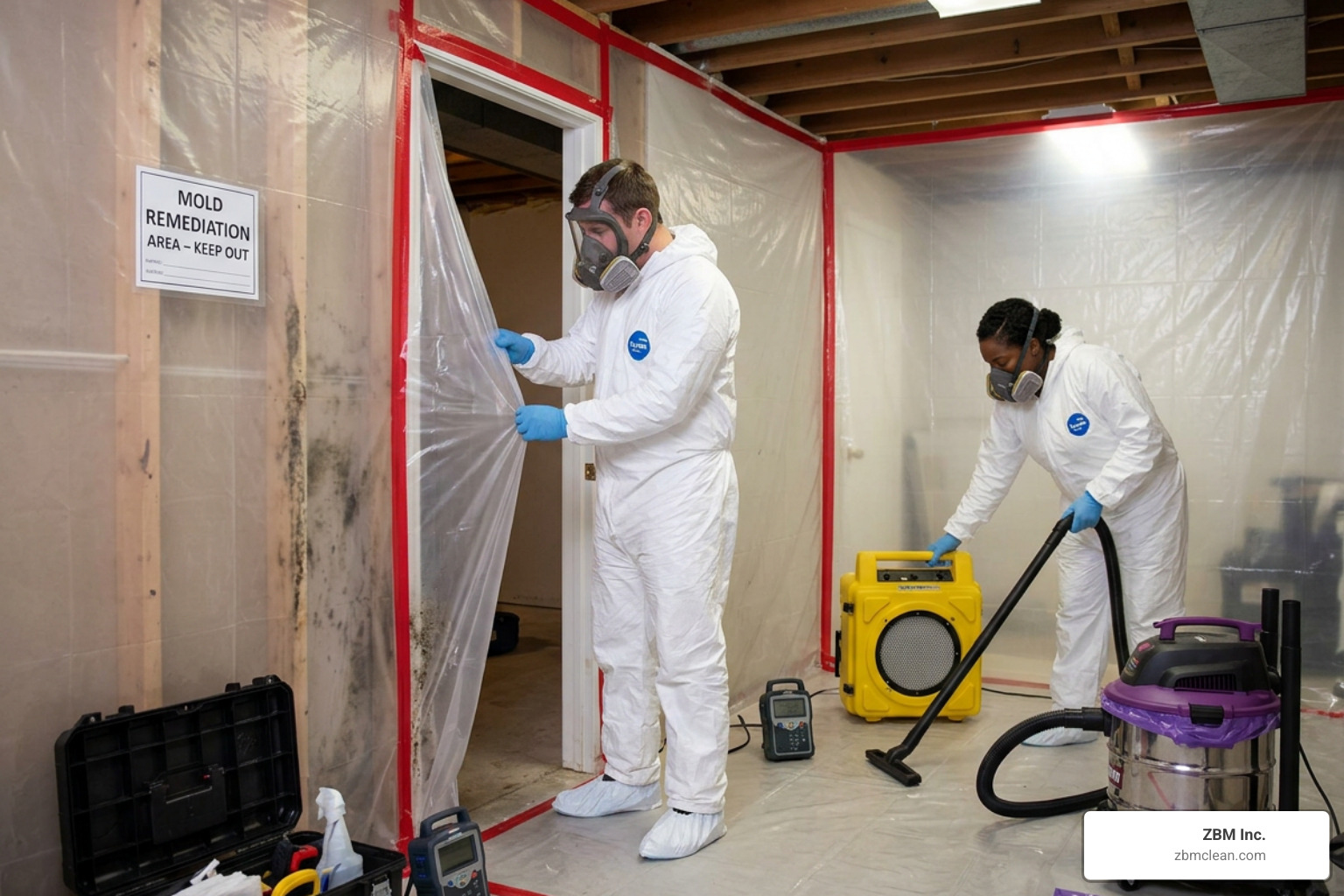
- Cross-Contamination: Without professional containment barriers and negative air pressure systems, mold spores will become airborne during the cleanup process. These spores will travel through your HVAC system and contaminate previously unaffected areas of your property.
- Improper Containment: Unlicensed workers often fail to set up proper critical barriers, leading to widespread exposure of toxic mold spores to the building’s occupants.
- Insurance Denial: Most commercial and residential insurance carriers will flatly reject a property damage claim if the remediation work was performed by an unlicensed entity.
- Fraud and Scams: Unlicensed contractors frequently use scare tactics to inflate their prices or perform substandard work that fails clearance testing, leaving you with the same mold problem and a empty wallet.
State-by-State Mold Licensing Regulations
Mold licensing is not regulated at the federal level. Instead, individual states determine their own rules, leading to a patchwork of regulations across the country. Understanding these differences is essential if you manage properties in multiple regions or want to verify what is legally required in your home state.
| State | Licensing Required? | Oversight Agency | Key Training & Fee Requirements |
|---|---|---|---|
| Texas | Yes | Texas Department of Licensing and Regulation (TDLR) | 40 hours of training, state exam, $450 annual fee |
| Florida | Yes | Department of Business and Professional Regulation (DBPR) | State exam, documented experience, separation of assessor/remediator |
| Maryland | No (Proposed) | Voluntary/Local Guidelines | Recommended $500k general liability & $250k professional liability insurance |
| Wisconsin | No | Voluntary Certification / DHS Guidelines | Focus on IICRC standards, voluntary state registry recommendations |
Texas Mold Licensing Rules
Texas has some of the strictest mold regulations in the nation under the Texas Mold Assessment and Remediation Rules (TARR). In Texas, anyone performing mold assessments or mold remediation must be licensed or registered with the state, unless they qualify for a specific exemption.
The state maintains a strict division of labor:
- Mold Assessment Consultant: Inspects the property, takes air and surface samples, and writes the mold remediation protocol.
- Mold Remediation Contractor: Executes the cleanup work according to the consultant’s protocol and supervises the mold remediation workers.
To obtain a Mold Remediation Contractor license in Texas, an applicant must complete 40 hours of approved training, pass a rigorous state exam, meet experience requirements, and pay a $450 annual licensing fee. This ensures a high level of consumer protection and technical competence across the state.
Florida Mold Licensing Rules
Florida’s warm, humid climate makes it a hotbed for mold growth. To protect consumers, the Florida Department of Business and Professional Regulation (DBPR) strictly regulates the industry.
Florida law prohibits a single company from performing both the mold assessment (testing) and the mold remediation (cleanup) on the same project if the affected area is larger than 10 square feet. This rule prevents a clear conflict of interest where a contractor might exaggerate a mold problem to secure a lucrative remediation contract. For more details on Florida’s regulatory environment, you can visit the Florida Department of Business and Professional Regulation.
Maryland and Wisconsin Guidelines
Unlike Texas and Florida, states like Maryland and Wisconsin do not currently mandate a state-specific license to perform mold remediation.
In Maryland, while there is no active licensing department, the state recommends that contractors follow voluntary industry standards and carry a minimum of $500,000 in general liability insurance and $250,000 in professional liability insurance to protect consumers.
In our home state of Wisconsin, the Wisconsin Department of Health Services Mold Resources provides comprehensive guidelines for property owners. Because Wisconsin does not issue state mold licenses, the burden of verification falls on the consumer.
For property owners in Southeast Wisconsin — including Dodge County, Jefferson County, Watertown, Lake Mills, and up north in Minocqua and the Northwoods — the gold standard is hiring a contractor who holds elite voluntary certifications. At ZBM Inc., we align our work with these rigorous national standards to provide the safest, most effective cleanup possible for our local communities.
Industry Certifications and Training Standards
In states without formal licensing boards, professional certifications are the most reliable way to identify a qualified contractor. These certifications prove that a contractor has undergone rigorous training, passed standardized exams, and committed to continuing education to stay current with industry best practices in 2026. If you want to understand how these certifications translate to real-world safety, read about how we Stop the Spore With Professional Mold Abatement Services.
IICRC Mold Remediation Specialist (MRS)
The Institute of Inspection, Cleaning and Restoration Certification (IICRC) is the premier standard-setting body for the cleaning and restoration industry. The IICRC Mold Remediation Specialist (MRS) certification is a highly respected credential that validates a professional’s competency in mold remediation.
Key facts about the MRS certification:
- Experience-Based: Unlike entry-level classes, the MRS certification requires a minimum of one (1) year of verifiable mold remediation field experience before an applicant can even sit for the exam.
- Rigorous Testing: The examination consists of 100 scored multiple-choice questions, offered only in US English using Imperial Measurements.
- Standard Compliance: It tests deep knowledge of the IICRC S520 Standard for Professional Mold Remediation, which covers worker safety, containment setup, and structural cleaning protocols.
MICRO Certified Mold Remediation Contractor (CMRC)
Another widely recognized industry credential is the MICRO Certified Mold Remediation Contractor (CMRC) designation. This course is designed to train professionals in the practical, hands-on aspects of safe mold removal.
Key facts about the CMRC certification:
- Course Duration: The training program is approximately 15 hours in duration, covering 17 detailed sessions.
- Continuing Education: Completing this course qualifies professionals for 14 hours of continuing education credits (CECs) with the IICRC and 20 hours with the ACAC (American Council for Accredited Certification).
- Comprehensive Curriculum: The course covers structural remediation, HVAC systems, contents cleaning, and the proper use of personal protective equipment (PPE).
What Services Should a Licensed Professional Provide?
When you hire a certified professional, you should expect a comprehensive, multi-step process designed to solve your mold problem permanently. A qualified contractor does not simply spray chemicals and walk away. To learn more about what to expect during a professional mold project, consult our guide on Everything You Need to Know About Professional Mold Remediation Experts.
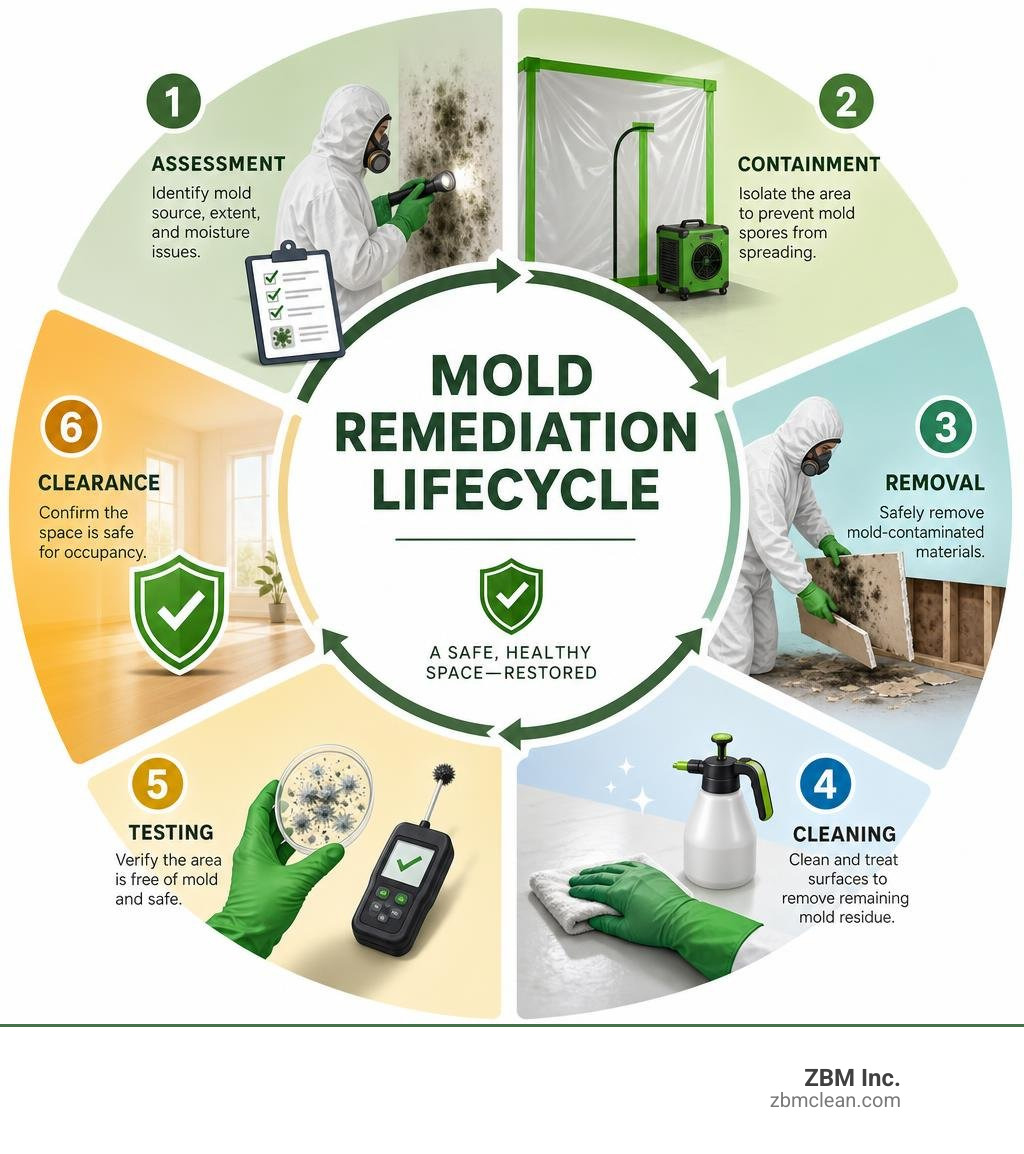
A professional mold remediation protocol typically includes:
- Source Identification: Locating and fixing the moisture intrusion that caused the mold in the first place (e.g., roof leaks, plumbing issues, high humidity).
- Containment Barriers: Constructing heavy-duty plastic barriers to isolate the work zone from the rest of the building.
- Negative Air Pressure: Deploying HEPA-filtered negative air machines to pull contaminated air out of the work area, preventing spores from escaping.
- Physical Removal: Discarding porous materials (like wet drywall and carpet) that cannot be salvaged, and deeply cleaning non-porous surfaces.
- HEPA Vacuuming: Vacuuming all surfaces with specialized HEPA-rated equipment to capture microscopic mold spores.
- Clearance Testing: Working with an independent, third-party industrial hygienist to verify that the mold spore counts inside the containment zone are back to normal, safe outdoor levels.
How to Verify a Licensed Mold Remediation Contractor
Before you sign a contract or allow workers into your property, take these steps to verify their credentials:
- Request Proof of Certification: Ask to see active certificates from the IICRC, MICRO, or ACAC.
- Verify Insurance Coverage: Ensure the contractor carries both general liability insurance and specialized professional liability (errors and omissions) insurance that specifically covers mold and pollution.
- Check Local Registrations: In states that require licensing, use the state’s online database to ensure their license is active and free of disciplinary actions.
- Read Local Reviews: Look for established, family-owned businesses with a proven track record in your immediate area. For property owners in our region, checking the Top 5 Mold Remediation Services Near You can help you identify trusted local experts.
Frequently Asked Questions About Mold Licensing
Do all states require a mold remediation license?
No. Only a handful of states — including Texas, Florida, Louisiana, and New York — have formal, state-mandated mold remediation licensing laws. In other states, like Wisconsin and Maryland, the industry relies on voluntary national certifications (like the IICRC or MICRO) to maintain high standards of safety and consumer protection.
Can a mold tester also perform the remediation work?
In states with strict licensing laws (like Florida and Texas), a single contractor is legally prohibited from performing both the assessment/testing and the actual cleanup on the same project. This separation of duties prevents a conflict of interest. Even in states without these laws, it is highly recommended to hire an independent, third-party professional to perform your pre- and post-remediation testing to ensure unbiased results.
What insurance should a mold contractor carry?
A professional mold contractor should carry general liability insurance (ideally at least $500,000) and professional liability/pollution occurrence insurance (at least $250,000). Standard general liability policies often contain “mold exclusions,” meaning that if a contractor accidentally spreads mold throughout your building, your property damage will not be covered unless they have a specialized pollution rider.
Conclusion
When mold invades your property, taking shortcuts with unlicensed workers can lead to severe structural damage, health risks, and financial loss. Ensuring that you work with a highly trained, certified team is the only way to guarantee the job is done safely and permanently.
At ZBM Inc., we are proud to be a family-owned, fully licensed, bonded, and insured cleaning and restoration provider based in Watertown, WI. Serving Dodge County, Jefferson County, Lake Mills, Southeast Wisconsin, and up into Minocqua and the Northwoods, our certified professionals bring approximately 30 years of experience to every project. We handle everything from routine commercial cleaning to complex biohazard cleanup, disaster recovery, and mold abatement.
Don’t let mold compromise your indoor air quality or your peace of mind. Protect your home from toxic mold today by reaching out to our expert team for a professional consultation.