Why Toxic Mold Cleanup Can’t Wait
Toxic mold cleanup is a time-sensitive process that requires the right safety gear, the correct removal methods, and — in many cases — a certified professional.
Here’s what you need to know upfront:
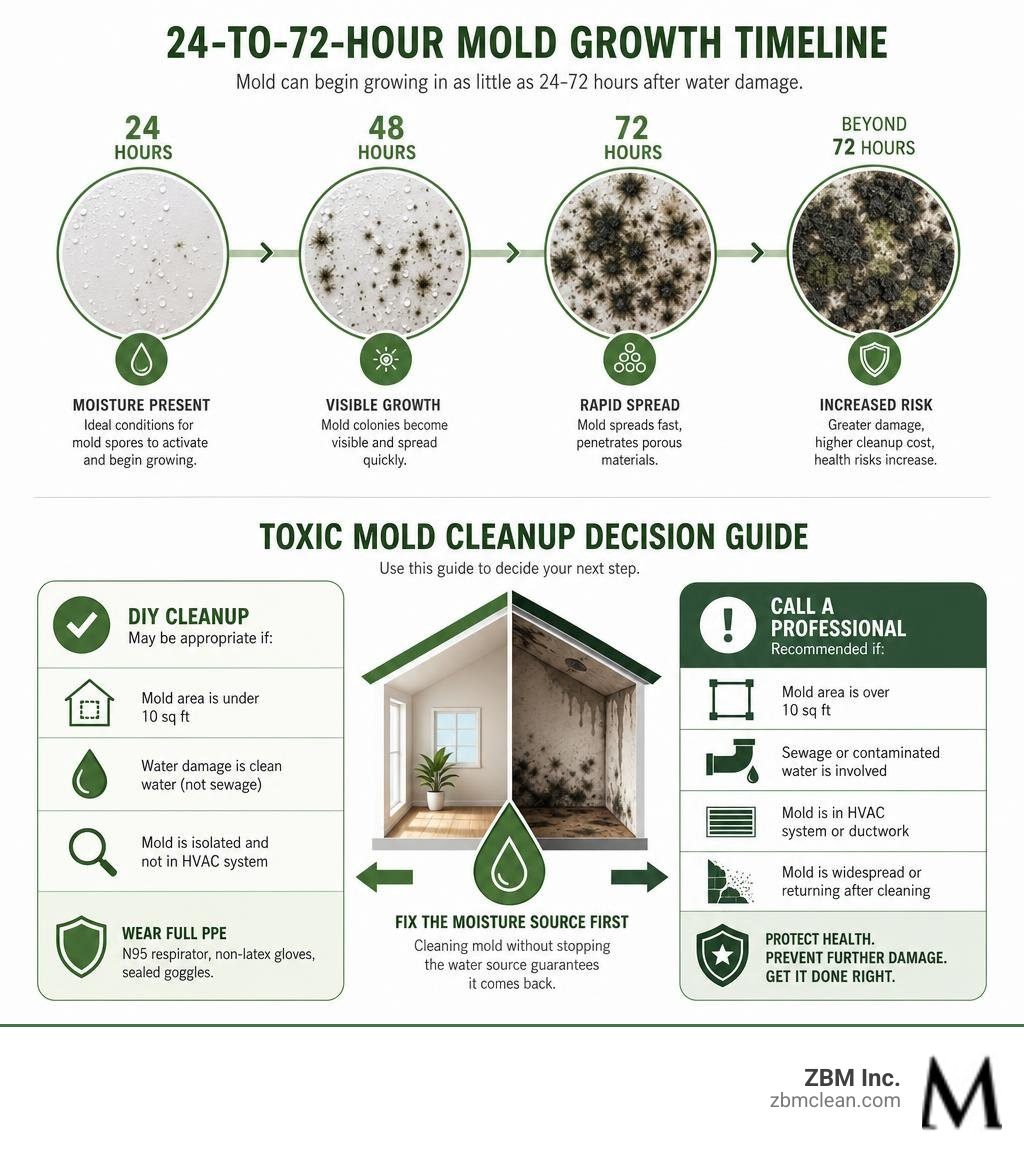
- Act within 24–48 hours. Mold can begin growing in as little as 24–72 hours after water damage.
- Small areas (under 10 sq ft) can often be DIY. Larger areas, sewage-related damage, or HVAC contamination require professional remediation.
- Wear full PPE. At minimum: an N95 respirator, non-latex gloves, and sealed goggles.
- Fix the moisture source first. Cleaning mold without stopping the water source guarantees it comes back.
- Porous materials often need to go. Drywall, carpet, and ceiling tiles wet for over 48 hours typically need to be removed and replaced — not cleaned.
- Do not run your HVAC. If mold contamination is suspected, running your system spreads spores throughout the building.
- Never paint or caulk over mold. It doesn’t stop growth — it just hides the problem.
Mold damages everything it touches. The longer it grows, the worse the damage — and the higher the cleanup cost. For commercial property managers especially, a small leak ignored today can become a major remediation project by next week.
I’m Terry Zastrow, owner of ZBM, Inc., a certified IICRC firm with approximately 30 years of experience in toxic mold cleanup and restoration services for commercial, municipal, and private-sector clients. In this guide, I’ll walk you through exactly what toxic mold is, how to handle it safely, and when to call in professionals.
Essential toxic mold cleanup terms:
- furniture mold remediation experts
- professional mold remediation experts
- what kills black mold on wood
Understanding and Identifying Toxic Mold
Before we roll up our sleeves and grab the wire brushes, we need to understand what we are dealing with. Mold isn’t just an unsightly stain on the wall; it is a living, reproducing organism. In nature, mold plays a vital role in breaking down organic matter. Indoors, however, it is an unwelcome guest that actively digests your property and threatens your health.
When we talk about “toxic mold,” we are generally referring to mold species that produce chemical byproducts called mycotoxins. The most infamous of these is Stachybotrys chartarum, commonly known as toxic black mold. However, there are several other dangerous varieties that can invade local properties. Knowing how to identify these species and understanding their biology is the first step toward reclaiming your indoor air quality.
To dive deeper into the specific species that might be lurking in your walls, you can read our detailed breakdown on The 5 Types of Toxic Mold: Why You Need Biohazard Cleanup. Additionally, local health organizations, such as the City of Milwaukee, provide excellent public resources on how indoor air quality affects residents, which you can explore through the Mold and Your Health – City of Milwaukee page.
Toxic Mold vs. Regular Mold
Is all mold created equal? Not quite. While all molds can trigger basic allergic reactions under the right conditions, toxic molds are uniquely hazardous because of their mycotoxin production.
Regular mold, often referred to as cosmetic mold or mildew, typically grows on the surface of damp materials. Mildew is a surface fungus that is usually grey or white and powdery. It is easily wiped away with household cleaners and rarely structural.
Toxic mold, on the other hand, penetrates deep into porous building materials. It establishes a root-like system (mycelium) that anchors it inside wood, drywall, and plaster. These molds reproduce by releasing millions of microscopic fungal spores into the air. If these spores land on a damp organic surface, they can germinate and establish a new colony in as little as 24 to 48 hours.
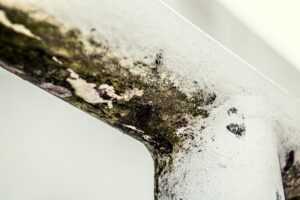
Toxic molds also present wide color variations. Do not assume a mold is harmless just because it isn’t pitch black. Toxic species can appear in shades of dark green, grey, brown, yellow, and even bright red.
| Characteristic | Mildew (Regular Mold) | Toxic Mold |
|---|---|---|
| Growth Depth | Surface level only | Penetrates deep into materials (roots) |
| Color | Typically white, grey, or light yellow | Black, dark green, brown, red, or grey |
| Texture | Powdery or fluffy | Slimy, wet, or velvety |
| Mycotoxins | Generally none | Produces harmful mycotoxins |
| Odors | Mildly musty | Strong, pungent, earthy, or rotting smell |
| Removal Method | Simple surface wipe with detergent | Requires deep remediation or material disposal |
Health Risks of Toxic Mold Exposure
Breathing in mycotoxins and fungal spores is not a minor inconvenience. For many individuals, exposure to toxic mold can lead to severe and chronic health issues. When mold spores are inhaled, they irritate the mucous membranes of the nose, throat, and lungs.
For individuals with pre-existing respiratory conditions, the effects are immediate. Toxic mold can trigger severe asthma attacks and worsen chronic obstructive pulmonary disease (COPD). However, the risks go far beyond basic allergies. Prolonged exposure to toxic mold has been linked to:
- Chronic fatigue and systemic weakness.
- Neurological symptoms, including brain fog, memory loss, and headaches.
- Severe respiratory infections, particularly in immunocompromised individuals or those undergoing cancer treatments.
- Skin and eye irritation, including burning rashes and red, watery eyes.
The state health authorities take these risks very seriously. For detailed medical guidance and resources on how mold affects your body, consult the Mold | Wisconsin Department of Health Services portal.
How to Identify Toxic Mold in Your Home
How do you know if you have a toxic mold problem? Sometimes, the signs are glaringly obvious. Other times, mold plays a sneaky game of hide-and-seek.
The most common indicator of a mold problem is a persistent, musty odor. If a room smells like a damp forest floor or a wet cardboard box, mold is likely growing nearby. Another major red flag is visible staining or discoloration on walls, ceilings, and baseboards.
However, because mold thrives in dark, humid environments, it often grows out of sight. It loves the drywall backing inside wall cavities, the underside of carpets, and areas around condensation-heavy pipes. If you have experienced roof leaks, plumbing failures, or standing water in your basement, you should assume mold is growing behind the scenes.
Keep an eye out for bubbling paint, warped baseboards, or water stains on your ceiling. These are clear indicators of moisture intrusion, which is the ultimate invitation for toxic mold to move in and start colonizing.
DIY vs. Professional Mold Remediation
Once you have identified a mold problem, the big question is: Can I clean this myself, or do I need to call in the professionals?
This is where many property owners make costly mistakes. Attempting to clean a massive toxic mold infestation with a bucket of bleach and a sponge can actually make the problem worse. When disturbed, mold colonies release billions of spores into the air as a survival mechanism. Without proper containment, you will simply spread the contamination to every room in your house.
To make an informed decision, you must evaluate the size of the affected area, the source of the water damage, and the health status of the building’s occupants. For a comprehensive look at what to look for when choosing a contractor, check out The Ultimate Guide to Finding a Trustworthy Black Mold Removal Company. You should also review the official Mold Clean Up Guidelines and Recommendations | Mold | CDC to understand national safety thresholds.
When to Hire Professionals for Toxic Mold Cleanup
As a general rule of thumb established by the EPA, if the moldy area is less than 10 square feet (roughly a 3-foot by 3-foot patch), a healthy homeowner can typically handle the cleanup themselves. However, you should immediately hire professionals for toxic mold cleanup if any of the following conditions apply:
- The area exceeds 10 square feet. Large-scale contamination requires advanced containment and air filtration equipment.
- The water damage was caused by sewage or contaminated water. Floodwaters and sewage backups carry dangerous pathogens, viruses, and bacteria. This is a biohazard situation that requires specialized sanitization.
- The HVAC system is contaminated. If you suspect mold is growing inside your heating and cooling ducts, do not run the system. Cleaning ducts requires specialized commercial equipment to prevent whole-house contamination.
- Vulnerable individuals live in the home. If anyone in your household suffers from asthma, COPD, severe allergies, or has a compromised immune system, they should not participate in or be present during the cleanup.
If you find yourself facing any of these scenarios, it is time to look into Stop the Spore with Professional Mold Abatement Services. For commercial properties and schools, the protocols are even stricter; you can read the official guidelines in the Mold Remediaiton in Schools and Commercial Buildings EPA 402-K-01-001, September 2008.
Mold Removal vs. Mold Remediation
Many people use the terms “mold removal” and “mold remediation” interchangeably, but they are actually quite different concepts in the restoration industry.
Mold removal is exactly what it sounds like: the physical act of wiping or scrubbing mold off a surface. It is a surface-level fix. If you simply wipe away visible mold without addressing why it grew in the first place, it will return within days.
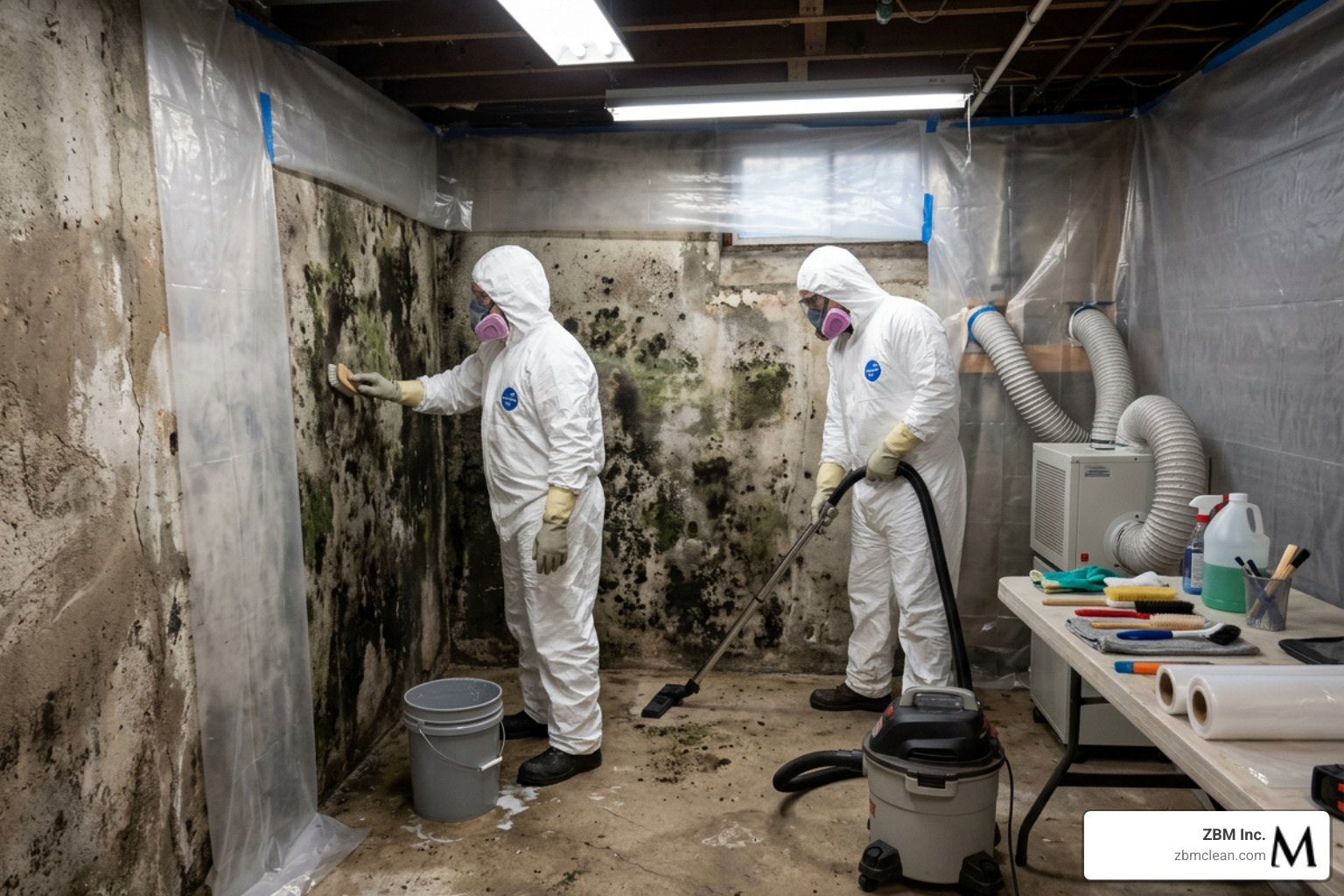
Mold remediation, on the other hand, is a comprehensive process. It involves:
- Identifying and fixing the original moisture source.
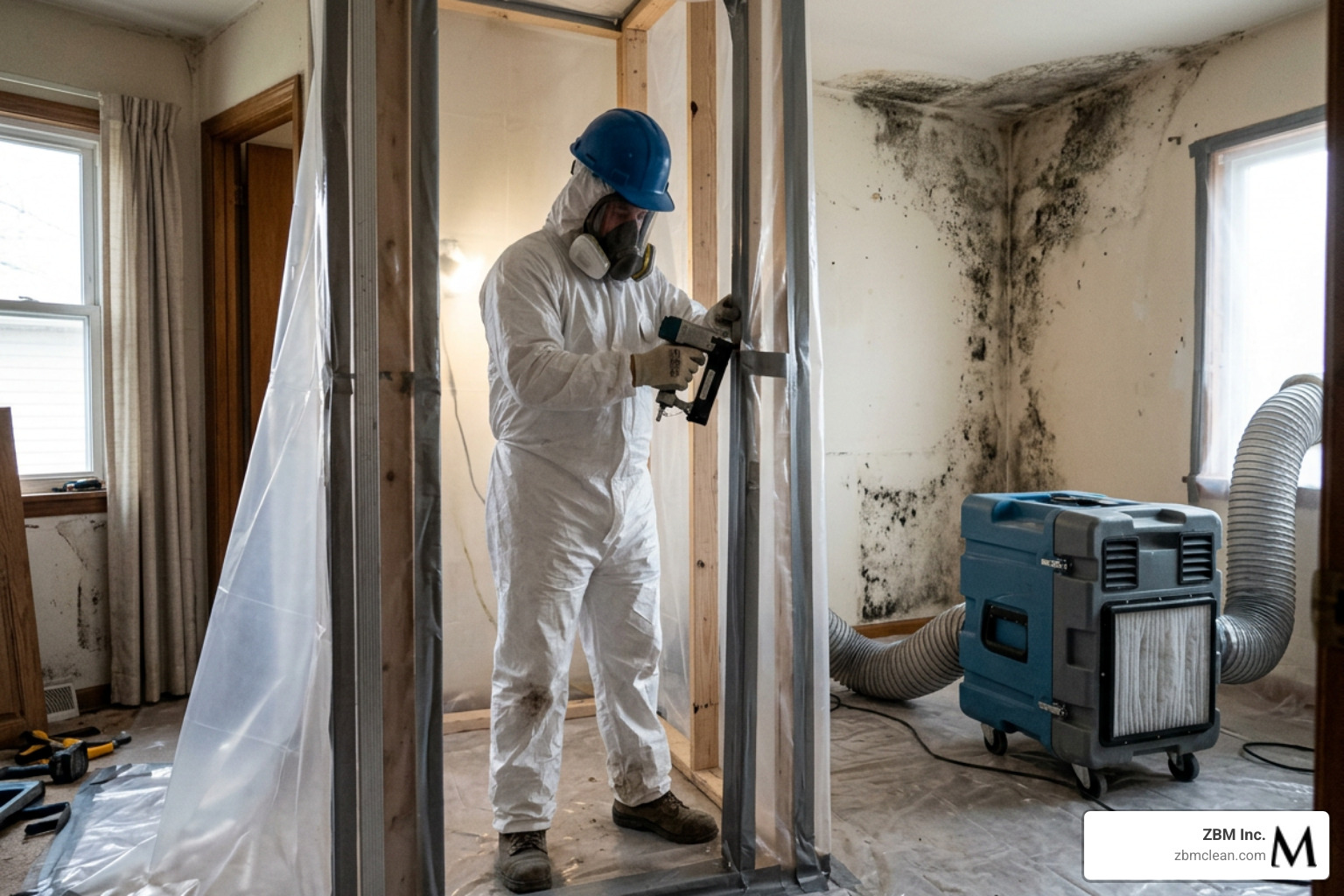
- Isolating the contaminated area using containment barriers.
- Cleaning the air using HEPA air scrubbers to capture airborne spores.
- Removing contaminated porous materials.
- Cleaning and treating structural elements with professional-grade fungicides.
- Verifying that the indoor environment has returned to a safe, normal state.
Professional remediation standards are strictly defined by the IICRC S520 Standard and Reference Guide for Professional Mold Remediation. This standard shifts the focus away from simply measuring visible mold and instead defines contamination by “Conditions” (Condition 1 is normal, Condition 2 is settled spores, and Condition 3 is active growth). Remediation aims to return the entire space to a healthy Condition 1 environment.
The Step-by-Step Toxic Mold Cleanup Process
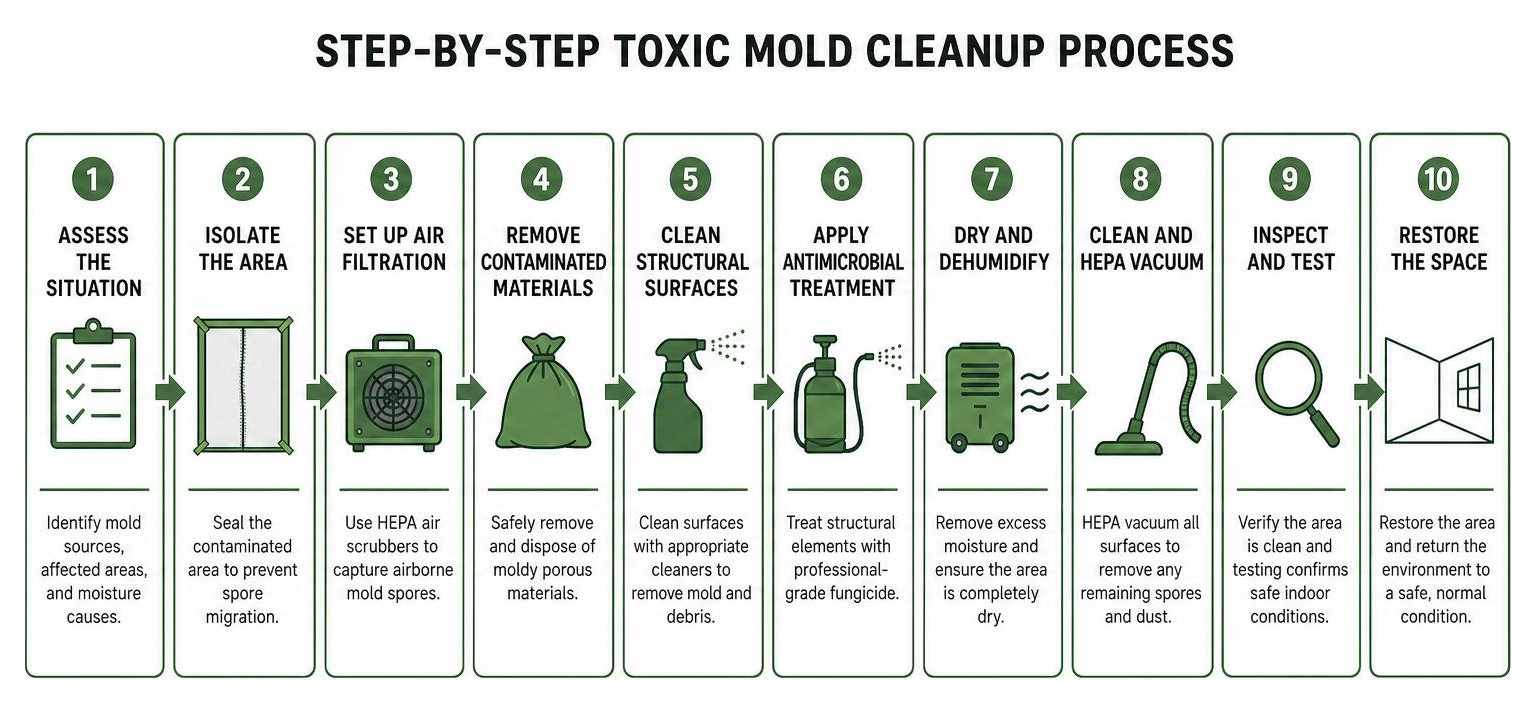
If you have assessed the situation and determined that the mold issue is small enough to tackle yourself, you must follow a highly structured, safety-first protocol. Cutting corners during toxic mold cleanup will only lead to cross-contamination and future headaches.
To help you visualize the workflow, we have laid out the professional sequence below. Before starting, make sure you understand The Secret to Killing Black Mold Permanently and consult the detailed Mold Remediation Guide for safe structural drying.
Essential Safety Gear for Toxic Mold Cleanup
Do not even think about starting your cleanup without the proper personal protective equipment (PPE). When you begin disturbing mold, millions of toxic spores will fill the air.
As of July 2026, safety standards require the following gear for anyone performing mold remediation:
- Respirator: At a bare minimum, wear a NIOSH-approved N95 respirator. For larger projects or heavy contamination, a half-face or full-face respirator with P100 filters is highly recommended to block microscopic mycotoxins.
- Goggles: Use fully sealed safety goggles without ventilation holes. Standard safety glasses will not protect your eyes from airborne spores.
- Gloves: Wear long, forearm-length gloves. Heavy-duty nitrile, vinyl, or rubber gloves work best. Avoid latex, which can allow some chemicals to penetrate.
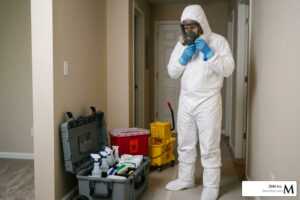
- Protective Suit: Wear a disposable full-body suit (such as a Tyvek suit) with a hood and booties. This prevents spores from hitching a ride on your clothes and spreading to clean areas of your home.
For a complete breakdown of worker safety protocols during environmental cleanups, review the official Mold Hazards during Disaster Cleanup sheet published by OSHA.
Handling Porous vs. Non-Porous Materials
Different materials react to water and mold in different ways. How you treat an item depends entirely on whether it is porous, semi-porous, or non-porous.
- Porous Materials (Drywall, carpet, ceiling tiles, insulation): These materials act like sponges. Mold roots grow deep into their fibers, making complete cleaning virtually impossible. If these materials have been wet for more than 48 hours, they must be removed, sealed in plastic bags, and discarded.
- Semi-Porous Materials (Wood framing, concrete): Mold can grow on and slightly into these surfaces. For wood framing, you must scrub the surface thoroughly with wire brushes in multiple directions to tear out the mold roots. Afterward, apply an EPA-registered fungicide. To learn more about this, read about The Best Ways to Kill Black Mold on Wood Instantly.
- Non-Porous Materials (Metal, glass, hard plastics, sealed tile): Mold cannot penetrate these materials. They can be safely cleaned and salvaged by scrubbing them with a simple detergent solution and drying them completely.
For detailed instructions on salvaging personal belongings and household goods after a water disaster, refer to the Homeowner’s and Renter’s Guide to Mold Cleanup After Disasters.
Frequently Asked Questions About Mold Remediation
Remediating mold can raise a lot of questions, especially regarding safety, waste disposal, and preventing future outbreaks. Understanding the nature of the waste you are dealing with is crucial; for more context, you can read our guide on Biohazard Cleanup Understanding Biohazardous Waste.
How do I prevent mold from returning after cleanup?
The absolute secret to preventing mold from returning is simple: control the moisture. Mold cannot grow without water. If you clean the mold but leave a leaky pipe or high humidity unaddressed, the mold will return.
To keep your home mold-free:
- Maintain indoor relative humidity below 60% (ideally between 30% and 50%) using dehumidifiers and air conditioners.
- Repair any plumbing leaks, roof leaks, or foundation cracks immediately.
- Ensure proper air circulation throughout your home, especially in high-moisture areas like kitchens, bathrooms, and attics.
- Dry any wet materials or water spills within 24 to 48 hours.
What documentation and verification steps should be taken after mold remediation?
How do you know when the remediation job is actually done? You shouldn’t just rely on a visual check. Professional verification involves several steps to ensure the environment is truly safe.
First, perform a thorough visual inspection. There should be no visible mold, mold stains, or musty odors remaining in the work zone. Second, check the moisture levels of the structural wood framing using a moisture meter; the wood must be dried to below 17% moisture (ideally 12% to 15%) before you rebuild or hang new drywall.
Finally, post-remediation verification (PRV) testing should be conducted by an independent Indoor Environmental Professional (IEP). This involves taking air and surface samples to verify that the indoor spore count is lower than or equal to the outdoor baseline. For more details on what to expect during this phase, read our article on Biohazard Cleanup Services: What to Expect.
How quickly does mold grow after water damage?
Mold is incredibly fast. Under ideal conditions (warm temperatures, high humidity, and an organic food source like drywall or wood), mold spores can germinate and begin to colonize in as little as 24 to 48 hours.
If standing water from a plumbing leak or flood is left unaddressed for more than two days, you should assume that mold growth has already begun. This is why rapid structural drying and immediate water extraction are absolutely critical to preventing a minor water leak from turning into a massive toxic mold remediation project.
Conclusion
Dealing with a toxic mold infestation can be overwhelming, stressful, and hazardous to your health. While small surface issues can occasionally be tackled as a DIY project, extensive mold growth, hidden contamination, and water damage from sewage or flooding require certified professional intervention.
At ZBM, Inc., we are a licensed, bonded, insured, and family-owned cleaning and restoration company. Based in Watertown, WI, our certified professionals provide full-service residential and commercial cleaning, biohazard cleanup, disaster recovery, and mold remediation. We proudly serve our local communities across:
- Dodge County, WI
- Jefferson County, WI
- Watertown, WI
- Lake Mills, WI
- Southeast Wisconsin
- Minocqua, WI & the Northwoods region
If you are dealing with a mold problem and want to ensure your property is restored to a safe, healthy condition, do not wait for the damage to spread. Learn more about our safety protocols by reading Biohazard Remediation: Ensuring Safety After Contamination, or review our guide on The 5 Types of Toxic Mold: Why You Need Biohazard Cleanup.
Contact us at ZBM, Inc. today to speak with our certified specialists and schedule an assessment. Let us help you breathe easy again!