
When Mold Strikes: What Every Property Owner Needs to Know First
Hiring a trusted mold damage restoration company is one of the most important decisions you can make after discovering mold in your building. Here’s what you need to know right away:
Quick Answer: What Does a Mold Damage Restoration Company Do?
| Step | What Happens |
|---|---|
| 1. Inspection | Technicians assess visible and hidden mold, moisture levels, and air quality |
| 2. Containment | Affected areas are sealed off to prevent spores from spreading |
| 3. Air Filtration | HEPA-filtered negative air pressure systems remove airborne spores |
| 4. Removal | Mold-damaged materials are physically removed and disposed of safely |
| 5. Sanitization | Surfaces are treated with EPA-approved antimicrobials |
| 6. Restoration | Property is returned to its pre-damage condition |
When should you call a professional?
- You see visible mold covering more than 10 square feet
- You notice a persistent musty or damp-basement odor
- You or your occupants have unexplained respiratory symptoms
- You’ve had recent water damage, a leak, or flooding
- Mold may be inside walls, ceilings, or your HVAC system
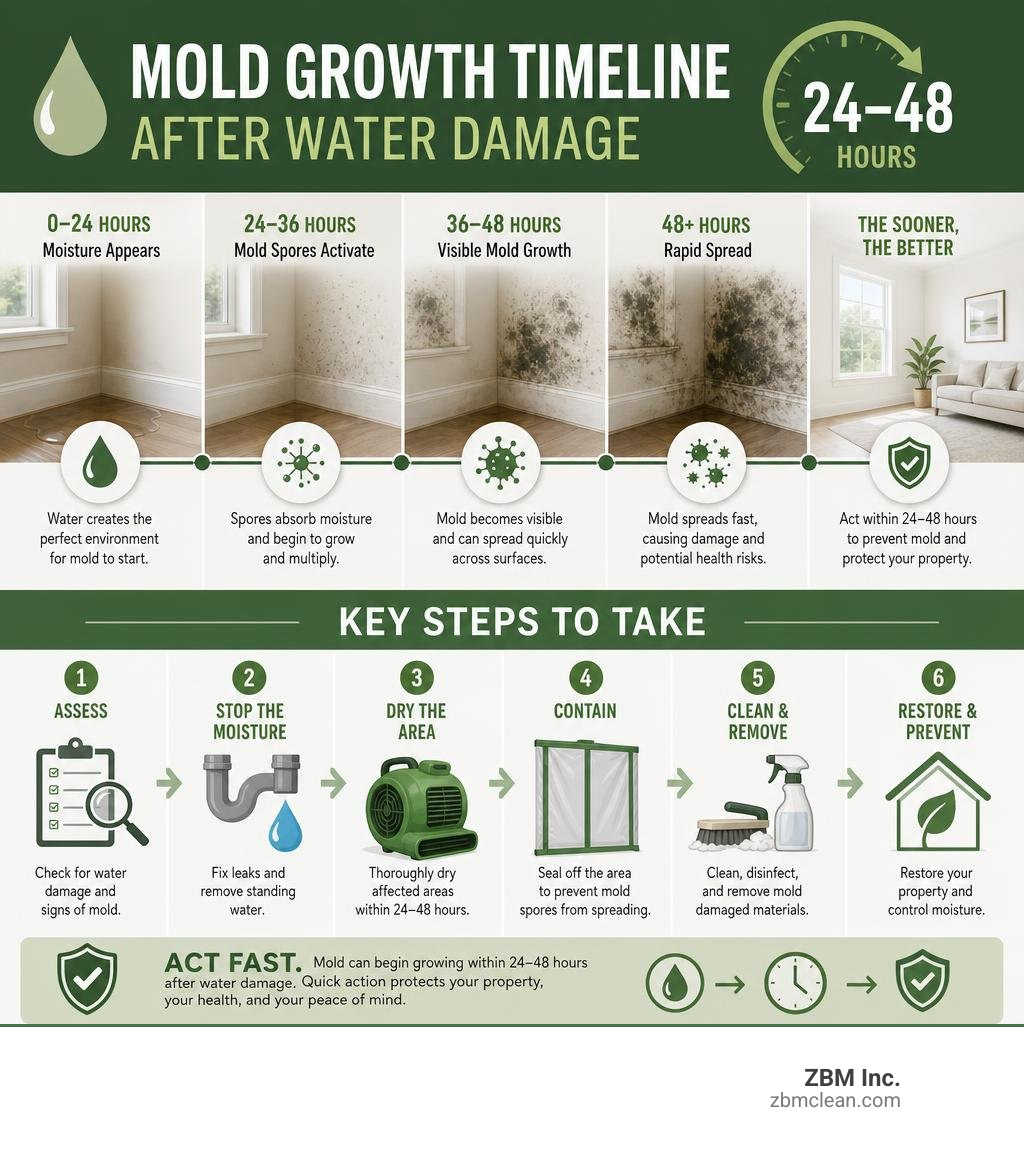
Mold doesn’t wait. It can begin growing within just 24 to 48 hours after water intrudes into a building. For commercial property managers, that window is tight — especially when you have tenants, staff, or clients depending on a safe indoor environment.
This guide walks you through everything: causes, health risks, the remediation process, what certifications to look for, insurance coverage, and how to prevent mold from coming back.
I’m Terry Zastrow, owner of ZBM, Inc., a certified firm with approximately 30 years of experience providing mold damage restoration and specialty cleaning services to commercial clients, housing authorities, and municipalities across Wisconsin. The sections that follow draw directly on that field experience to help you make a confident, informed decision.
Understanding Mold: Causes, Timelines, and Health Risks
To effectively deal with mold, we must first understand how it gains a foothold in our properties. Mold is not an invader from outer space; it is a natural fungus that exists everywhere in the outdoor environment. However, when mold spores find their way indoors and meet a consistent moisture source, they settle, feed, and multiply rapidly.
The primary driver of indoor mold growth is moisture. This moisture can stem from several common residential and commercial issues:
- Sudden water damage from broken plumbing, frozen pipes, or heavy storms.
- Slow, hidden leaks behind drywall, under flooring, or in roofing systems.
- High relative humidity (above 60%) caused by poor ventilation, steam from kitchens or bathrooms, or damp basements.
- Condensation on cold surfaces like windows, metal pipes, or concrete walls.
When water intrudes into a building, the clock starts ticking immediately. Because organic building materials like wood, drywall paper, and carpet backing are excellent food sources, mold spores can germinate and begin to colonize within 24 to 48 hours. This makes rapid water extraction and structural drying absolutely critical.
If moisture is left unaddressed, mold will spread deep into your property’s structure. For an in-depth look at how mold behaves when it is out of sight, read about The Scary Truth About Mold Hiding Inside Your Walls.
When dealing with mold, understanding the specific strain is also helpful, as some molds carry higher biohazard risks than others. For a breakdown of the most hazardous varieties, consult our guide on The 5 Types of Toxic Mold: Why You Need Biohazard Cleanup. To understand the basic standards of mold cleanup as defined by federal authorities, you can also review the EPA Mold Cleanup Guide.
Why You Need a Fast-Acting Mold Damage Restoration Company
When moisture is introduced to a building, every hour counts. Waiting even a few days to address a leak or flood can turn a simple water extraction job into a massive, expensive mold remediation project.
A professional mold damage restoration company specializes in rapid response. By deploying high-capacity dehumidifiers, air movers, and moisture-mapping technology immediately after water damage occurs, professionals can dry out the structure before mold spores have the chance to colonize.
If mold has already begun to grow, quick containment is vital. When untrained individuals attempt to clean mold without containment, they often end up releasing millions of microscopic spores into the air. These airborne spores drift through hallways, enter HVAC ducts, and settle in other rooms, starting new colonies wherever they land. Working with a fast-acting team prevents this widespread contamination. To learn more about how professionals stop mold from taking over your property, check out our resource on how to Stop the Spore with Professional Mold Abatement Services.
The Health Hazards of Untreated Black Mold
Living or working in a mold-contaminated environment is more than just an aesthetic issue or an annoyance caused by musty odors. Untreated mold—particularly toxic black mold (Stachybotrys chartarum)—poses real health risks to building occupants.
As mold grows, it releases spores, fragments, and microbial volatile organic compounds (MVOCs) into the air. Some toxic mold species also produce invisible, odorless chemical compounds called mycotoxins. These particles can be inhaled, absorbed through the skin, or ingested, leading to a variety of health issues:
- Allergic Reactions: Sneezing, runny or stuffy nose, red and watery eyes, skin rashes, and throat irritation.
- Respiratory Issues: Chronic coughing, wheezing, shortness of breath, and severe asthma flare-ups.
- Mold Toxicity & Sensitization: For individuals with compromised immune systems, Chronic Inflammatory Response Syndrome (CIRS), or Mast Cell Activation Syndrome (MCAS), mycotoxin exposure can lead to severe fatigue, headaches, joint pain, neurological issues, and persistent sinus infections.
Because surface-level cleaning does not address the underlying spores or the mycotoxins embedded in porous materials, specialized remediation is necessary. For a deeper look at how to eliminate these hazards for good, read The Secret to Killing Black Mold Permanently.
What to Look For in a Professional Mold Damage Restoration Company
When searching for a mold damage restoration company to protect your home or business, it is easy to get overwhelmed by options. However, mold remediation is a highly technical science that requires specific training, specialized equipment, and strict adherence to safety standards.
Here are the key credentials and standards you should look for when choosing a service provider:
- IICRC Certification: The Institute of Inspection, Cleaning and Restoration Certification (IICRC) sets the gold standard for the restoration industry. A reputable company should have technicians certified in Water Damage Restoration (WRT) and Applied Microbial Remediation (AMRT), adhering strictly to the ANSI/IICRC S520 Standard for Professional Mold Remediation.
- EPA Guidelines: The company must follow EPA-approved protocols for containment, disposal, and the use of registered, non-toxic antimicrobials.
- Licensing and Insurance: Ensure the company carries comprehensive general liability insurance, workers’ compensation, and specialized pollution liability (mold) insurance. Without this, you could be held liable for accidental damage or injuries during the project.
- Transparent Documentation: A trustworthy company will provide clear, written estimates, moisture-mapping logs, containment plans, and post-remediation verification protocols.
Understanding these requirements will protect you from hiring underqualified contractors. To learn more about the rules governing these services, read our guide on Mold Remediation Licensing: What You Need to Know Before You Spray. If you are currently searching for qualified professionals in your area, you can also browse the Top 5 Mold Remediation Services Near You.
Certified Mold Damage Restoration Company vs. DIY and General Contractors
It can be tempting to handle a small mold patch yourself or hire a neighborhood handyman to scrape it off. However, there are massive differences between a certified mold damage restoration company, a general contractor, and a DIY approach.
Without specialized training and equipment, DIYers and general contractors often make mold problems worse by failing to establish proper containment or using incorrect cleaning agents (like bleach) that do not kill mold roots.
| Feature / Protocol | DIY Approach | General Contractor | Certified Restoration Company (ZBM Inc.) |
|---|---|---|---|
| Safety Containment | None (spores spread freely) | Plastic sheeting taped to walls | Strict physical containment with negative air pressure |
| Air Filtration | Standard home HVAC or fans | None or basic shop-vacs | HEPA-filtered air scrubbers and negative air machines |
| Moisture Detection | Visual inspection only | Basic pin moisture meters | Thermal imaging, moisture mapping, and hygrometers |
| Porous Material Treatment | Spraying surface bleach | Ripping out drywalls dry (spreads dust) | Careful damp-removal under containment, HEPA vacuuming |
| Sanitization | Consumer-grade cleaners | Household disinfectants | EPA-registered, botanical, and professional-grade antimicrobials |
| Post-Remediation Testing | None | Visual check only | Independent third-party air/surface clearance testing |
The Step-by-Step Professional Mold Remediation Process
When we enter a property to perform professional mold remediation, we follow a highly structured, scientific protocol to ensure the mold is removed safely and permanently. Here is exactly what happens during a professional cleanup:
Step 1: Detailed Inspection and Moisture Mapping
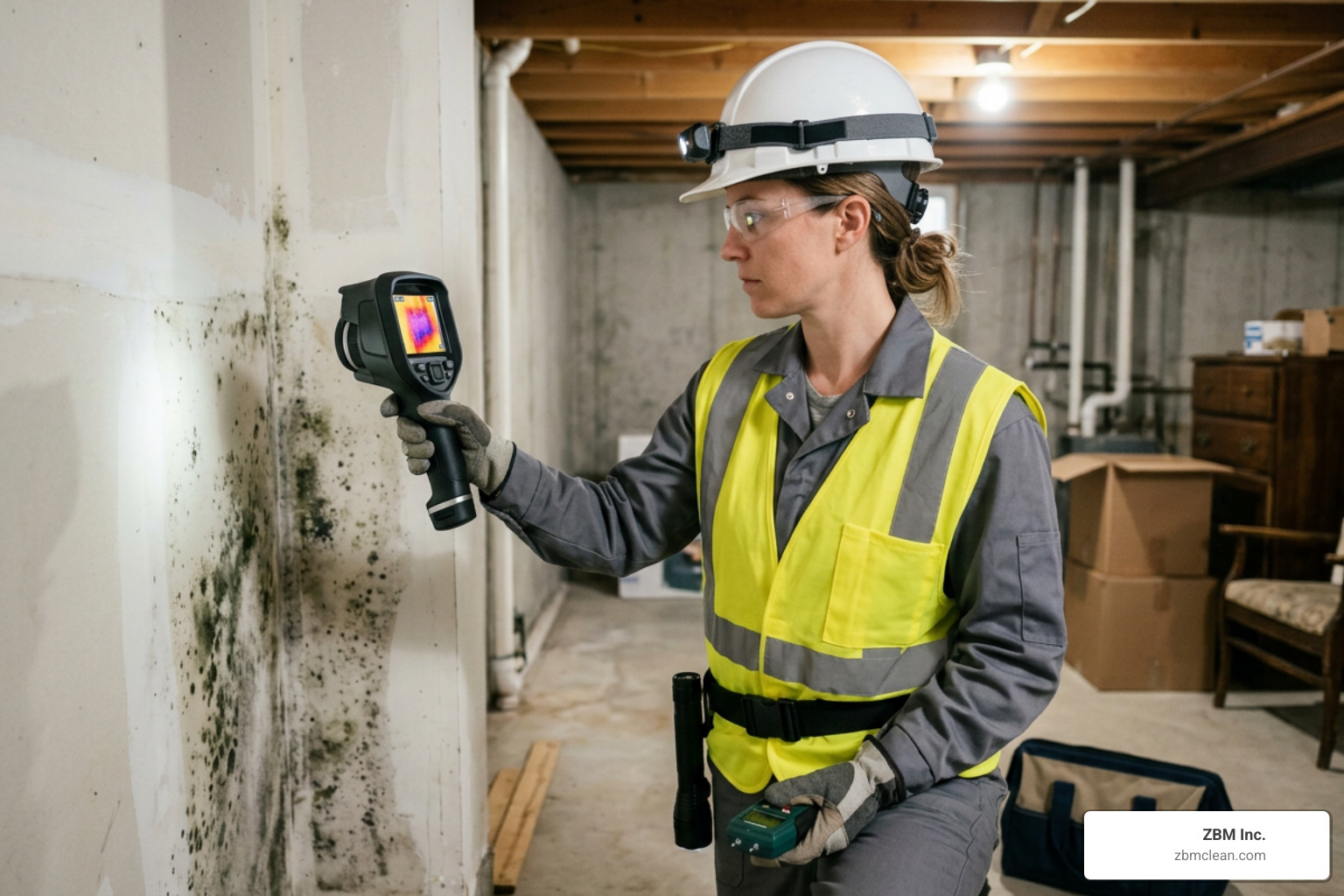
Before touching any mold, we must find the source of the moisture. Using infrared thermal imaging cameras and moisture meters, we locate hidden water leaks behind walls, under floors, and above ceilings. This allows us to map out the exact boundaries of the damage.
Step 2: Containment Setup
To prevent invisible spores from spreading to clean areas of your property, we build physical containment barriers using heavy-duty plastic sheeting. We seal off doorways, windows, vents, and HVAC registers.

Step 3: Establishing Negative Air Pressure
Within the containment zone, we set up industrial air scrubbers equipped with HEPA filters. By venting the scrubbed air outside, we create “negative air pressure.” This ensures that whenever someone enters or exits the containment area, air is pulled in rather than pushed out, keeping spores completely isolated.
Step 4: HEPA Vacuuming and Controlled Removal
With containment secure, we begin removing mold-contaminated materials. Non-porous surfaces (like metal, glass, and sealed concrete) can be thoroughly cleaned and sanitized. However, deeply infested porous materials (like drywall, carpet padding, and ceiling tiles) cannot be salvaged and must be carefully bagged, sealed, and disposed of. We use specialized HEPA vacuums to capture fine mold dust and spores from all surfaces.
Step 5: Sanitization and Drying
Once the mold is physically removed, we treat all remaining structural framing and surfaces with professional-grade, EPA-registered antimicrobial solutions. If the building materials are still damp, we set up commercial dehumidifiers and air movers. We monitor the drying process daily until we reach the target Equilibrium Moisture Content (EMC).
Step 6: Post-Remediation Verification (PRV)
Before we tear down our containment barriers, we highly recommend having an independent, third-party indoor environmental professional (IEP) conduct air and surface sampling. This ensures that the indoor mold spore count has returned to normal, safe levels.
How Long Does Professional Mold Remediation Take?
The timeline for a mold remediation project depends heavily on the size of the affected area, the extent of the water damage, and whether structural repairs are needed.
- Small Residential Jobs (under 10 sq. ft.): These are often completed in just 1 to 3 days, as they require minimal containment and demolition.
- Standard Residential or Commercial Projects: Typically take between 3 to 5 days. This allows ample time for setting up containment, removing damaged drywall, running air scrubbers, and thoroughly drying the structure.
- Large-Scale Commercial or Severe Water Damage Cases: Can take anywhere from a week to several weeks, especially if extensive plumbing repairs, drying plans, and structural rebuilds are required.
To better understand how these timelines and the scale of damage impact your overall budget, take a look at our detailed Mold Abatement Cost Guide: From Square Foot Rates to Full Remediation.
Insurance Coverage and Preventing Future Mold Growth
One of the most common questions property owners ask is: “Is mold remediation covered by my homeowners or commercial property insurance?”
The short answer is: It depends on the cause of the moisture.
Insurance policies generally cover mold remediation if the mold is a direct result of a covered peril that occurred suddenly and accidentally. For example:
- A sudden pipe burst in a laundry room.
- A water heater failure that floods a basement.
- A fire department using water to put out a localized fire.
However, insurance carriers will typically deny mold claims if the mold is caused by:
- Neglect or lack of maintenance: A slow, dripping pipe under a sink that went ignored for months.
- High humidity: Poor ventilation in an attic or crawl space.
- Sewer backups or regional flooding: These usually require separate, specialized flood insurance or sewer backup riders.
To ensure your claim has the best chance of approval, it is critical to document everything. Take clear photos of the water source, the visible mold, and the surrounding damage. Maintain detailed logs of moisture readings and keep all professional reports, remediation plans, and invoices provided by your restoration team.
Specialized belongings and furniture also require unique handling during a claim. For detailed advice on salvageable items, read The Ultimate Guide to Hiring Furniture Mold Remediation Experts.
Essential Preventive Measures for Property Owners
Once your property has been successfully remediated, the last thing you want is for the mold to return. Prevention is entirely about controlling indoor moisture and humidity.
By integrating these essential preventive habits into your property maintenance routine, you can keep your indoor air clean and mold-free:
- Maintain Low Humidity: Keep indoor relative humidity below 60% (ideally between 30% and 50%) year-round. Use dehumidifiers in basements, crawl spaces, and poorly ventilated areas.
- Improve Ventilation: Run exhaust fans in bathrooms and kitchens during use, and keep them running for at least 20 minutes afterward. Ensure clothes dryers vent directly to the outdoors.
- Inspect Regularly: Check your roof, windows, foundation, and plumbing fixtures for signs of leaks or condensation at least twice a year.
- Dry Water Spills Immediately: If a spill, leak, or minor flood occurs, clean and dry the area completely within 24 to 48 hours.
- Keep Gutters Clean: Ensure your gutters and downspouts are clear of debris so rainwater is channeled away from your building’s foundation.
Frequently Asked Questions about Mold Remediation
Can I use bleach to kill black mold permanently?
No, and we strongly advise against it. Bleach is primarily made of water and chlorine. When applied to porous materials like drywall or wood, the chlorine evaporates quickly on the surface, while the water sinks deep into the material. This actually feeds the mold’s root system (mycelium) and can cause the colony to retreat deeper, release more spores, and return even stronger a few weeks later.
How do I know if my mold damage requires professional remediation?
According to EPA guidelines, if the visible mold covers an area larger than 10 square feet (roughly a 3×3 foot patch), professional remediation is highly recommended. You should also hire a professional if the mold is inside your HVAC system, hidden behind walls, accompanied by persistent musty odors, or if any occupants suffer from asthma, allergies, or mold sensitivities.
What documentation do I need for a mold insurance claim?
To file a successful claim, you will need:
- Photographic evidence of the initial water damage and subsequent mold growth.
- A professional moisture-mapping report identifying the water source.
- A detailed, written remediation plan from an IICRC-certified specialist.
- Itemized invoices and post-remediation verification (PRV) clearance certificates.
Conclusion
Discovering mold in your residential or commercial property can be stressful, but acting quickly and hiring a certified mold damage restoration company is the best way to protect your building’s structural integrity and your occupants’ health.
As a family-owned, licensed, bonded, and insured business based in Watertown, WI, ZBM, Inc. brings approximately 30 years of hands-on experience to every project. We are proud to serve our neighbors across Southeast Wisconsin, including Dodge County, Jefferson County, Lake Mills, and as far north as Minocqua and the Northwoods.
No matter where you are located, choosing a certified team that prioritizes containment, negative air pressure, and proper drying is key to resolving your mold issues permanently. To learn more about how certified specialists protect your property, read our ultimate resource: Everything You Need to Know About Professional Mold Remediation Experts.
If you suspect mold in your Wisconsin home or business, don’t wait for the spores to spread. Contact ZBM, Inc. today to restore your property to a safe, clean, and healthy condition.