What Kills Black Mold on Wood — and Why It Matters for Your Property
What kills black mold on wood most effectively comes down to a few proven solutions. Here’s a quick answer:
| Solution | Effectiveness on Wood | Notes |
|---|---|---|
| Distilled white vinegar | Best overall | Kills ~80% of mold fungi, penetrates deep into wood grain |
| Hydrogen peroxide (3-12%) | Very effective | Kills spores, safe for porous surfaces |
| Borax solution | Good follow-up | Leaves alkaline residue that inhibits regrowth |
| Baking soda paste | Mild option | Best for light surface mold |
| Bleach | Not recommended | Cannot penetrate porous wood, high water content may feed mold roots |
Black mold is one of the most destructive forces in any building. In fact, mold destroys more wood globally each year than all fires and termites combined.
For commercial property managers, that’s not a statistic to ignore. A slow leak under a utility sink or poor airflow in a storage room can turn a minor moisture problem into a serious structural and health issue — fast.
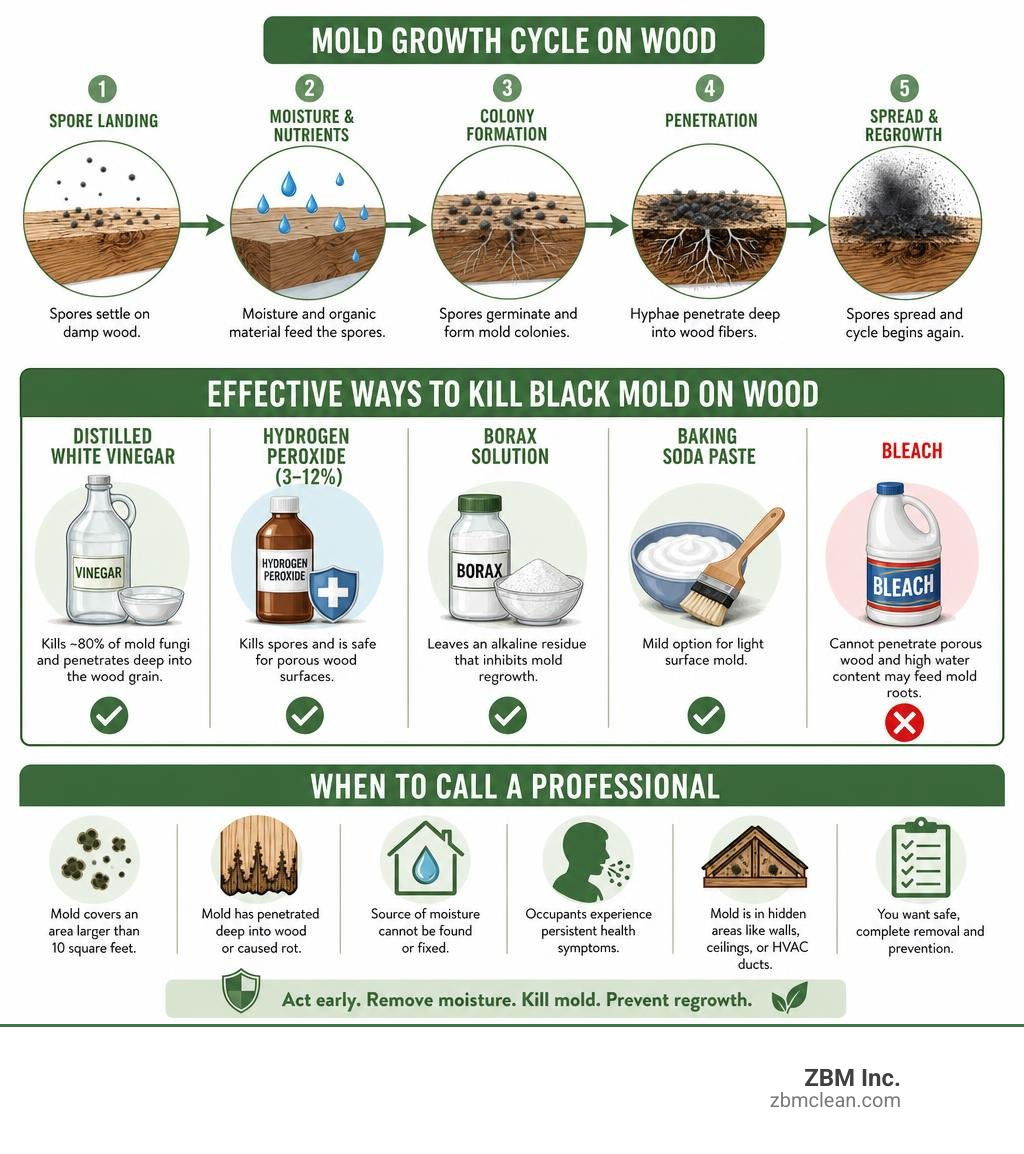
Stachybotrys chartarum, the fungus commonly called black mold, thrives on the cellulose in wood. It doesn’t need much — just a damp surface, some organic material, and relative humidity above 80%. Once it takes hold, it sends root-like structures called hyphae deep into wood fibers, making it far harder to remove than mold on tile or glass.
The good news is that most cases can be handled safely with the right approach. But knowing which solution to use — and when to call in a certified professional — makes all the difference.
I’m Terry Zastrow, owner of ZBM Inc., a certified IICRC firm with approximately 30 years of experience helping property managers and municipalities tackle exactly this kind of problem, including knowing what kills black mold on wood safely and completely. In the sections below, I’ll walk you through everything you need to know — from identification to removal to long-term prevention.
Learn more about what kills black mold on wood:
- furniture mold remediation experts
- professional mold remediation experts
- what kills black mold permanently
Understanding Black Mold on Wood: Identification, Health Risks, and Structural Threats

To beat the enemy, we have to understand how it operates. Wood is essentially a giant, delicious buffet for mold. Because wood is highly porous and made of cellulose, it provides the perfect organic food source for fungal spores.
All mold needs to throw a party on your wooden joists or floorboards is moisture. Specifically, mold growth requires high humidity—generally above 80 percent—to establish a colony. However, once those mold spores are established, they are incredibly resilient. During dry periods, they don’t just disappear; they go dormant, waiting patiently for the next leak or humid summer day to start growing again.
When mold feeds on wood, it secretes enzymes that break down the organic cellulose fibers. Over time, this process leads to wood decay and rot, compromising the structural integrity of your property. If left unchecked, load-bearing beams can become soft, spongy, and eventually fail.
Beyond structural threats, black mold presents severe health risks. As the colony grows, it releases Microbial Volatile Organic Compounds (MVOCs) and toxic mycotoxins into the air. Breathing in these microscopic spores can trigger respiratory issues, chronic coughing, severe asthma attacks, and skin rashes.
To understand how dangerous hidden colonies can be to your indoor air quality, check out our guide on The Scary Truth About Mold Hiding Inside Your Walls. For a deeper look into the biology of these organisms, you can also explore the scientific research on wood-destroying fungi.
How to Identify Black Mold on Wooden Surfaces
Spotting black mold early can save you thousands of dollars in structural repairs. Here is how to identify it on your wooden surfaces:
- The Smell (MVOCs): Long before you see it, you will likely smell it. Active mold releases a persistent, earthy, musty odor. If a room smells like a damp cave, mold is hiding nearby.
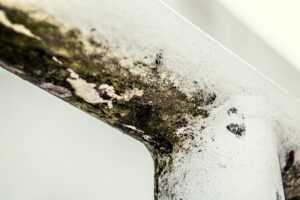
- The Visuals and Texture: Active black mold colonies often look like dark green or black slime. If the water source has been removed, the mold dries out and takes on a powdery, dusty gray or soot-like appearance.
- The Screwdriver Test: Unsure if your wood is just stained or actively rotting? Take a flathead screwdriver and gently press it into the dark area. If the wood is firm, it is likely just surface mold or a cosmetic stain. If the screwdriver sinks easily into the wood, you are dealing with advanced wood rot and structural decay.
What Kills Black Mold on Wood? The Most Effective Cleaning Solutions
When homeowners discover mold, their first instinct is often to grab the strongest chemical on the shelf: chlorine bleach. However, when it comes to porous materials like wood, bleach is actually one of the worst choices you can make.
Chlorine bleach is highly effective on non-porous surfaces like tile or glass, but its chemical structure prevents it from penetrating porous wood. The chlorine evaporates quickly on the surface, while the remaining 90% water content sinks deep into the wood fibers. This water actually feeds the mold’s root system (the hyphae), leading to faster, more aggressive regrowth a few weeks later. Furthermore, bleach degrades wood fibers, leaving the surface rough and structurally weakened.
To permanently eradicate the colony without destroying your property, we need solutions that penetrate deep beneath the surface. You can read more about this in our article on The Secret to Killing Black Mold Permanently.
Why Distilled White Vinegar is What Kills Black Mold on Wood Best
If you want to know what kills black mold on wood safely and naturally, look no further than your kitchen pantry. Distilled white vinegar is highly acidic (usually containing 5% to 6% acetic acid), which allows it to break down the structure of mold.
Studies show that white vinegar kills roughly 80 percent of mold species, including Stachybotrys chartarum. Unlike bleach, vinegar penetrates deep into the porous grain of the wood to neutralize the mold’s root system.
To use this method effectively:
- Spray undiluted white vinegar directly onto the moldy wood.
- Let it sit for at least one hour to allow the acid to sink deep into the fibers.
- Scrub the area with a soft-bristle brush.
- Wipe the residue clean and let the wood dry completely.
To prevent future growth, follow up by wiping the wood with a borax solution (one cup of borax dissolved in a gallon of warm water). Borax raises the pH of the wood, leaving an alkaline residue that acts as a natural shield against returning spores.
Commercial Alternatives: What Kills Black Mold on Wood Instantly
If you prefer commercial or stronger chemical alternatives, several household products offer excellent results:
- Hydrogen Peroxide (3% to 12%): This is a fantastic, non-toxic alternative to bleach. It is an antifungal and antibacterial agent that bubbles as it lifts mold spores out of the wood’s pores.
- Isopropyl Alcohol (Rubbing Alcohol): Mixing equal parts rubbing alcohol and white vinegar creates a fast-evaporating disinfectant that dries out mold colonies instantly.
- Borate-Based Sealants: For long-term protection, professional-grade borate sealants penetrate the wood and prevent fungal growth permanently.
For a complete breakdown of wood restoration techniques, refer to the How to Get Rid of Mold on Wood & Restore Wood Rot (2026 Guide).
Why Painting Over Mold is a Critical Mistake
It can be tempting to buy a can of heavy-duty paint, slap it over the black splotches on your wooden walls, and call it a day. Do not do this.
Painting over mold is a purely cosmetic cover-up that traps moisture inside the wood. The mold will continue to eat the wood fibers beneath the paint. Eventually, the growing colony will cause the paint to bubble, crack, and peel away, releasing millions of concentrated spores into your indoor air.
Always kill and physically remove the mold first. Once the wood is completely dry (ideally below 15% moisture content), you can safely apply a specialized mold-resistant primer and paint.
Step-by-Step Guide: How to Safely Remove Black Mold from Wood
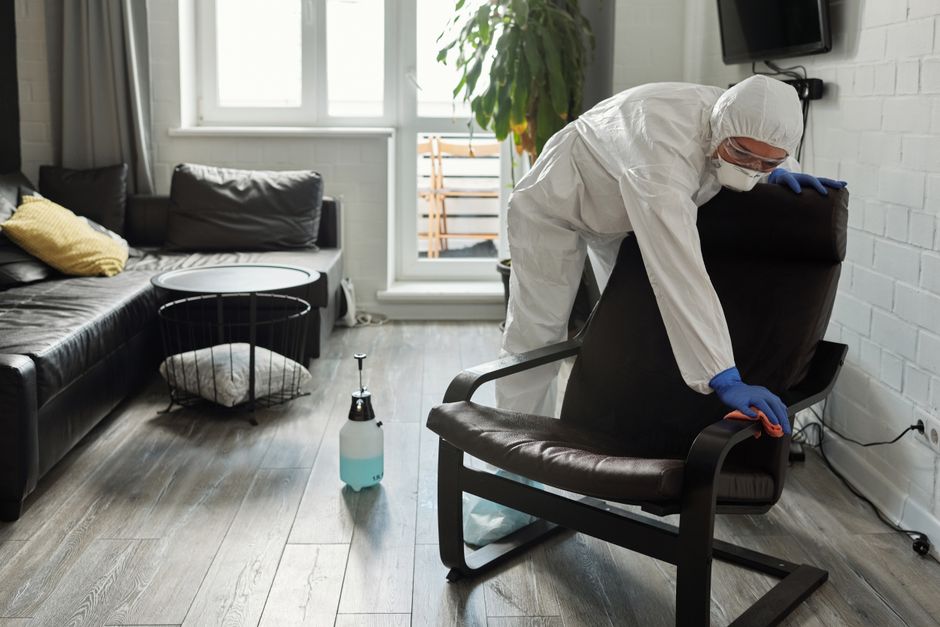
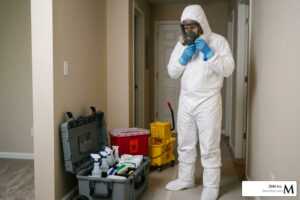
Before you begin scrubbing, you must protect yourself. Cleaning mold releases millions of microscopic spores into the air, which can easily be inhaled or settle on your skin.
Always wear proper Personal Protective Equipment (PPE):
- An N95 or P100 respirator mask to protect your lungs.
- Safety goggles (without vents) to keep spores out of your eyes.
- Long rubber or nitrile gloves.
- Disposable protective clothing or clothes you can wash immediately in hot water.
If you are working indoors, isolate the area. Close doors, seal off HVAC vents with plastic sheeting, and set up a fan blowing out an open window to create negative air pressure. This keeps airborne spores from traveling to other parts of your property.
The HEPA Sandwich Technique for Safe DIY Removal
To remove mold without spreading it, professional remediators use a structured protocol called the “HEPA Sandwich” technique. This method focuses on physical removal rather than just spraying chemicals. You can read more about this approach from the experts at the Remove Mold from Wood Without Bleach | HEPA Filters Los Angeles.
Here is how to perform it step-by-step:
- Initial HEPA Vacuuming: Use a vacuum equipped with a true HEPA filter to thoroughly vacuum the dry wood surface. This captures loose spores, dust, and debris before you introduce any liquids.
- Apply the Killing Agent: Spray your chosen solution (undiluted white vinegar or 3% hydrogen peroxide) generously onto the wood. Let it sit for 60 minutes to penetrate the wood grain.
- Agitation: Scrub the wood gently with a stiff nylon brush. Work along the direction of the wood grain to loosen the mold roots without damaging the wood fibers.
- The Wipe Down: Wipe away the loosened mold and moisture using damp microfiber cloths. Fold the cloths frequently to use clean sides, and immediately toss them into a heavy-duty trash bag.
- Final HEPA Vacuuming: Allow the wood to dry completely (use fans or a dehumidifier if necessary). Once dry, run your HEPA vacuum over the surface one last time to capture any residual spores that were dislodged during scrubbing.
When to Call a Professional and How to Prevent Future Mold Growth
While small DIY projects are manageable, some mold infestations require commercial-grade equipment and specialized training.
We recommend following the EPA’s 10-square-foot rule. If the moldy area covers more than 10 square feet (roughly a 3-by-3-foot patch), or if the mold has found its way into your HVAC system, it is time to call in the professionals. Attempting to clean large areas without professional containment can contaminate your entire property.
If you suspect hidden mold behind drywall or under floorboards, read our guide on Everything You Need to Know About Professional Mold Remediation Experts.
Once the mold is gone, keeping it gone requires strict moisture control:
- Maintain Indoor Humidity: Keep your building’s relative humidity between 30% and 50% using commercial dehumidifiers.
- Improve Ventilation: Use exhaust fans in kitchens, bathrooms, and utility closets. Ensure your attic and crawl spaces have adequate airflow.
- Fix Leaks Immediately: Even a tiny pipe drip can trigger a massive mold outbreak if left unaddressed.
To protect your property from future spores, learn about our long-term prevention strategies at Stop the Spore with Professional Mold Abatement Services.
Professional Mold Remediation Costs and Licensing
Professional mold remediation costs vary widely depending on the size of the infestation and the accessibility of the wood. A localized attic or crawl space cleanup typically ranges from $1,500 to $5,000, while extensive structural repairs can run higher.
When hiring a team, always ensure they are fully licensed, certified, and insured. For more information on what to look for, check out our guide on Mold Remediation Licensing: What You Need to Know Before You Spray.
Frequently Asked Questions About Mold on Wood
Does bleach permanently kill mold on wood?
No. Bleach only provides surface disinfection. Because bleach is mostly water, the chlorine evaporates on the surface while the water sinks into the porous wood, feeding the mold’s deep root system and causing rapid regrowth.
Can moldy wood be saved and reused?
Yes, in most cases, provided the wood passes the screwdriver test. If the wood is still structurally sound, it can be cleaned using the HEPA sandwich technique and dried down to a safe threshold (less than 15% moisture content) for reuse.
Does sunlight kill black mold on wood?
Yes. The ultraviolet (UV) rays in natural sunlight are highly effective at killing surface mold and drying out the wood. If you have moldy outdoor furniture, moving it into direct sunlight for a few days will help neutralize the colony.
Conclusion
Finding black mold on your wooden structures can be stressful, but with the right tools and techniques, it is entirely manageable. The key to success is using solutions like distilled white vinegar that penetrate deep into the wood grain, rather than surface-level quick fixes like bleach.
If you are dealing with a large-scale infestation, hidden mold, or simply want the peace of mind that comes with certified expertise, we are here to help. ZBM Inc. is a licensed, bonded, insured, and family-owned cleaning and restoration company. Our certified professionals serve Watertown, WI, and the surrounding communities across Dodge County, Jefferson County, Lake Mills, and Southeast Wisconsin.
Schedule a professional biohazard and mold cleanup with ZBM Inc. today, and let us help you restore your property to a safe, healthy environment.