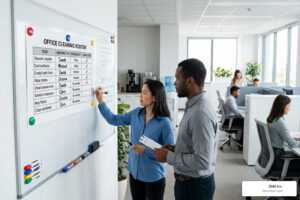
Why Every Office Needs a Cleaning Roster Right Now
A cleaning roster for office spaces is one of the simplest tools you can put in place to keep your workplace healthy, professional, and running smoothly. Here’s a quick overview of what it covers and why it matters:
What is an office cleaning roster?
| Element | What It Means |
|---|---|
| What it is | A scheduled plan assigning specific cleaning tasks to specific people at set times |
| What it covers | Daily, weekly, and monthly tasks across all office zones |
| Who uses it | Facility managers, in-house staff, or contracted cleaning teams |
| Key benefit | Reduces germ buildup, missed tasks, and employee sick days |
The numbers behind office cleanliness are hard to ignore. 94% of workers say they feel more productive in a clean workspace. The average office desk harbors 400 times more bacteria than a toilet seat. And flu viruses can survive on hard surfaces for up to 48 hours — meaning a missed cleaning cycle isn’t just an aesthetic problem. It’s a health risk.
Yet many offices run on nothing more than a vague agreement that “someone will take care of it.” Without a structured roster, the same high-touch spots — keyboards, microwave handles, door knobs — get skipped over and over again.
A well-built cleaning roster changes that. It turns good intentions into consistent action.
I’m Terry Zastrow, owner of ZBM, Inc., a certified IICRC firm with approximately 30 years of experience developing and executing cleaning rosters for office environments across state agencies, municipalities, and private-sector clients in Wisconsin. In that time, I’ve seen how a structured cleaning roster is the difference between a workspace that looks clean and one that truly is clean.
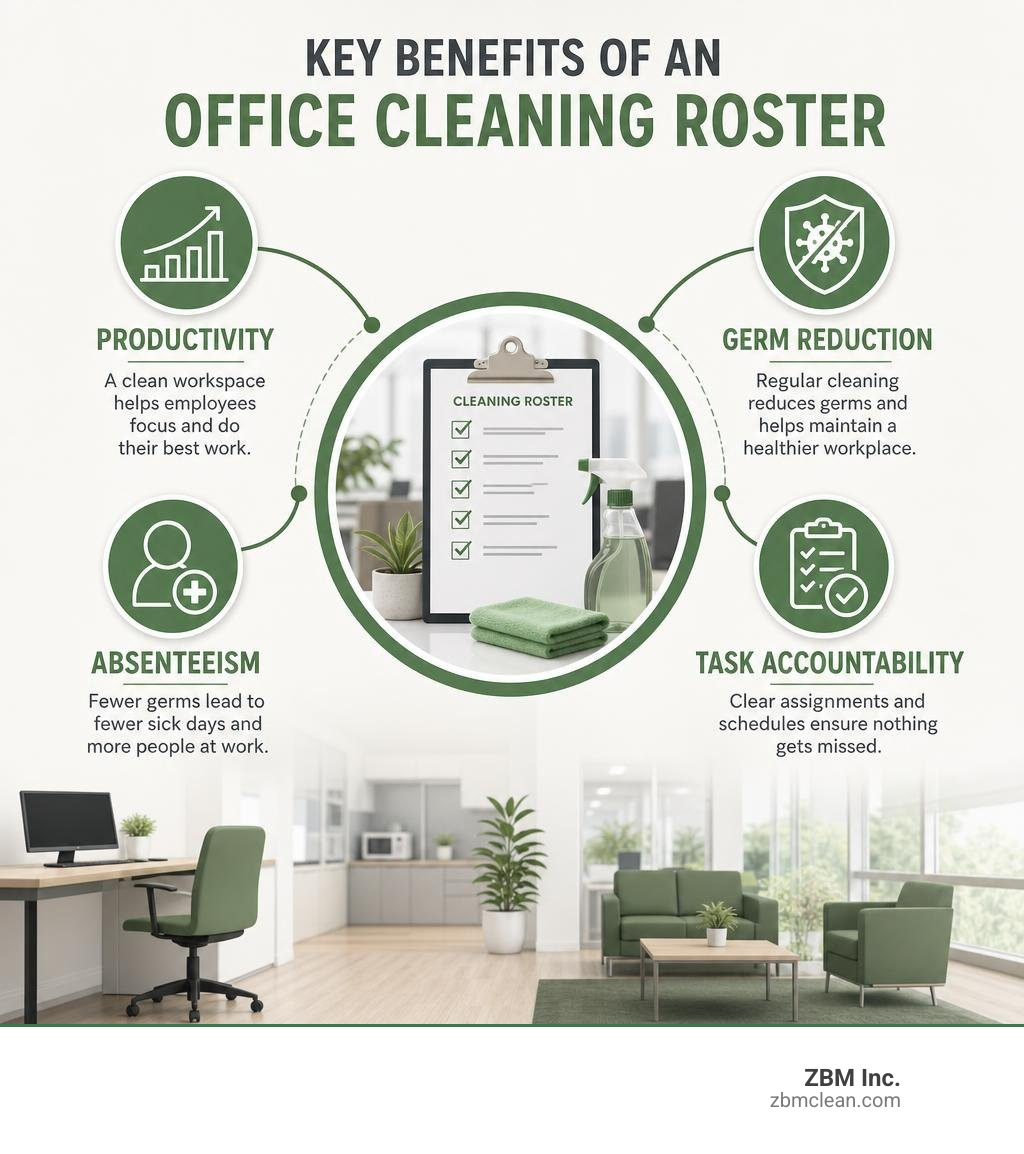
Quick cleaning roster for office definitions:
Why You Need a Dedicated Cleaning Roster for Office Environments
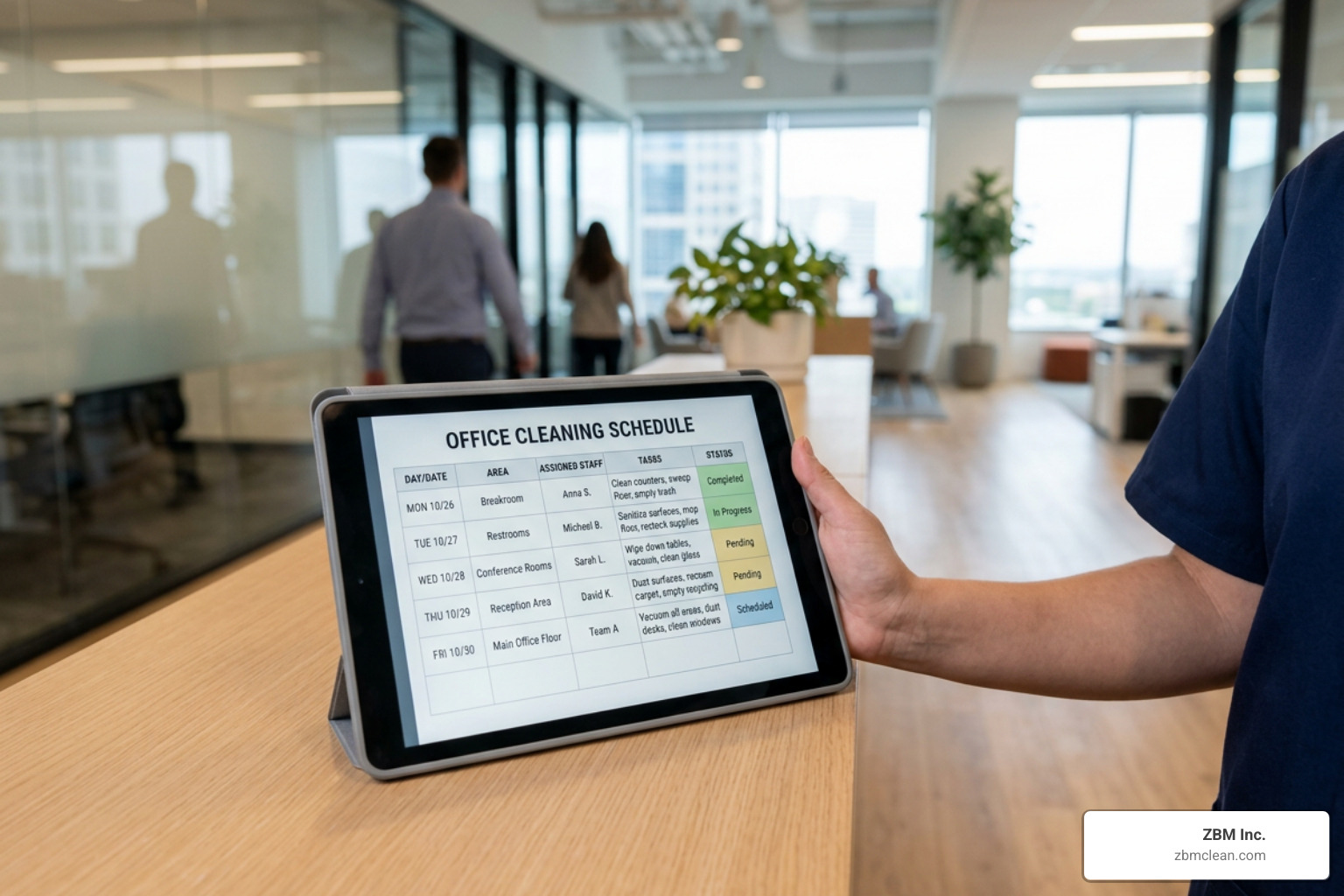
Many people confuse a cleaning checklist with a cleaning roster for office environments. While a checklist simply lists the tasks that need to get done, a roster is an operational schedule. It answers the crucial questions of who, when, and how often.
Without a clear roster, a checklist is just a piece of paper taped to a wall. It lacks accountability. When everyone is responsible for cleaning, no one is. This leads to what we call “checklist drift,” where less pleasant tasks (like emptying the bottom of the break room trash can or cleaning behind the copier) are ignored indefinitely.
Implementing a structured roster in June 2026 is more critical than ever. Modern workspaces are dynamic, often supporting hybrid work models and shared “hot desks.” When you establish a formal roster, you lock in task ownership. Every employee or professional cleaner knows exactly what zone they are responsible for, what the standard of cleanliness is, and when the work must be completed.
The data strongly supports this structured approach. Standardized checklists and rosters reduce cleaning inconsistencies by 35% and correlate directly with 12% fewer employee absenteeism days. When you eliminate ambiguity, you eliminate missed tasks. To build a solid foundation for your workplace, read our Office Cleaning Checklist Complete Guide 2026.
Designing Your Cleaning Roster for Office Zones and Frequencies
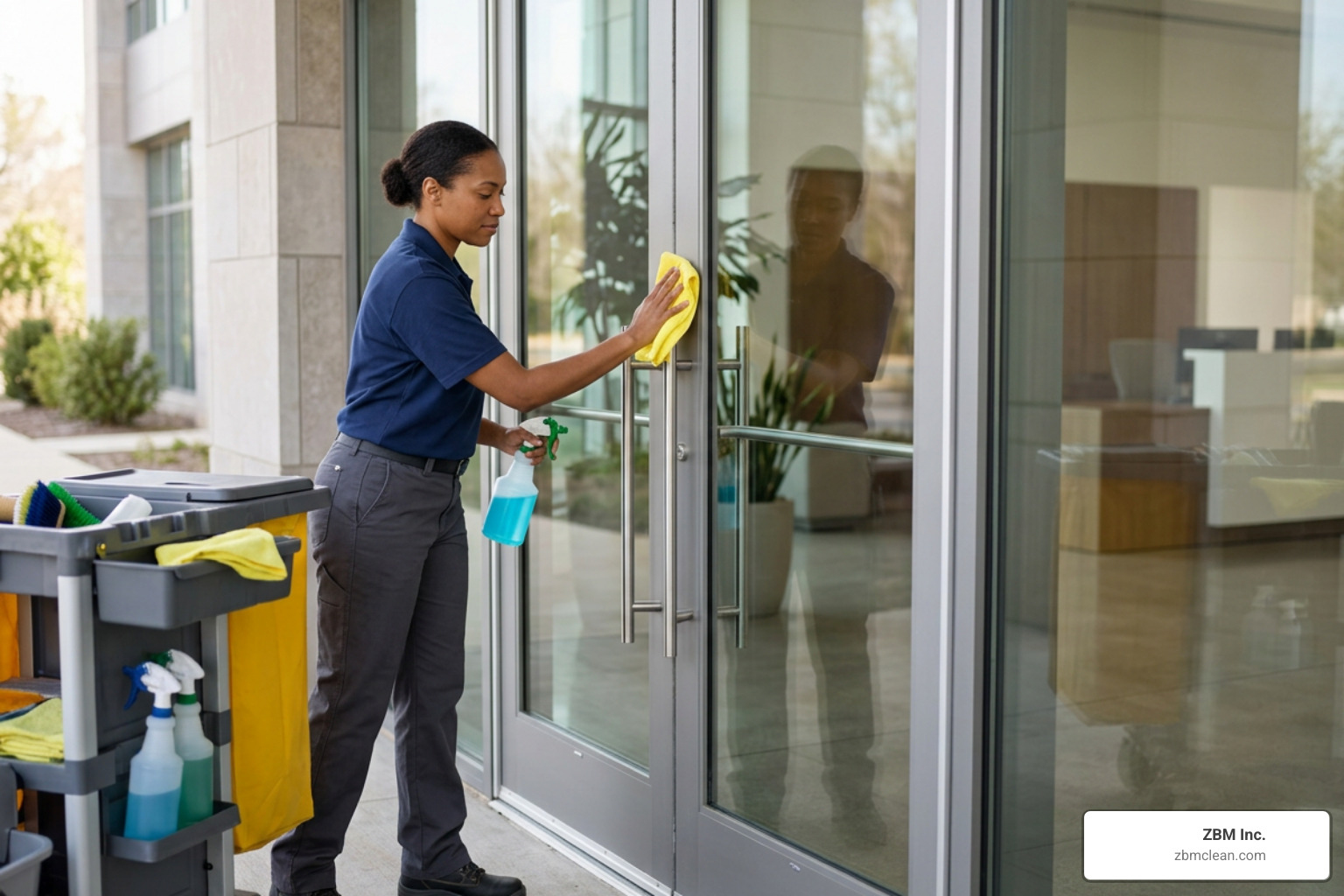
To build an effective cleaning roster for office settings, you cannot treat the entire building as a single, uniform space. Instead, you must map your office into specific zones. Zone mapping allows you to allocate cleaning resources where they are needed most, rather than wasting time on low-traffic areas.
Your roster should be dictated by foot traffic and usage patterns. For example, a reception area that welcomes dozens of visitors daily requires a much higher frequency of attention than a back-office storage room. In June 2026, hybrid offices must be treated as variable-use environments. If your team only comes in on Tuesdays and Thursdays, your cleaning roster must flex to provide deeper sanitization on those high-occupancy days.
Here is a quick reference table to help you determine cleaning frequencies based on office traffic:
| Office Zone | Low Traffic (2-3 visits/week) | Medium Traffic (3-5 visits/week) | High Traffic / Hybrid (Daily + Day Porter) |
|---|---|---|---|
| Reception & Lobby | Dusting, weekly vacuuming | Daily trash empty, spot vacuuming | Daily disinfection, glass cleaning, mat care |
| Workstations & Desks | Weekly wipe-down, trash empty | Bi-weekly deep clean, daily trash | Daily high-touch disinfection, weekly desk detail |
| Break Rooms & Kitchens | Daily trash, weekly fridge check | Daily disinfection, weekly appliance deep clean | Multiple daily checks, daily sink/counter sanitization |
| Restrooms & Wet Zones | Daily sanitizing, supply restock | Daily deep clean, midday touch-ups | Scheduled multi-point disinfection daily |
To get a head start on organizing these zones, you can download a Free Office Cleaning Roster Template to Edit Online to customize for your specific layout.
Designing a Custom Cleaning Roster for Office Workstations
An office desk can look perfectly tidy while harboring a microscopic jungle. Studies show the average office desk is home to 400 times more bacteria than a toilet seat. Keyboards, computer mice, desk phones, and touchscreens are prime germ hotspots.
Daily disinfection of these high-touch points is a non-negotiable step that prevents up to 90% of surface pathogens. When designing your roster, make sure to specify how personal workspaces are handled. Are employees expected to wipe down their own keyboards, or is a professional team handling it? Clear boundaries prevent confusion. For a step-by-step breakdown of how to manage daily desk hygiene, consult Your Daily Office Housekeeping Guide And Excel Template.
Managing High-Traffic Zones in Your Cleaning Roster for Office Restrooms and Kitchens
Restrooms and kitchens are “wet zones” that pose the highest risk for bacterial growth and cross-contamination. In the break room, shared appliances are touched constantly. Faucet handles, microwave door handles, and refrigerator doors are notorious for spreading cold and flu viruses.
Your cleaning roster for office break rooms must include daily sanitizing of all counters, sinks, and appliance handles. It should also schedule a mandatory weekly refrigerator clean-out to prevent spoiled food from creating odors and health hazards. For a deep-dive checklist specifically for your culinary zones, check out Your Office Kitchen Deep Clean Checklist.
Overlooked Areas to Include in Your Cleaning Roster for Office Environments
When drafting a roster, it is easy to focus on what is right in front of you. However, some of the dirtiest areas are completely overlooked. For instance, did you know that over 420,000 different types of bacteria live on the average shoe? Those pathogens are ground directly into your carpets and hard floors every single day.
Furthermore, fabric office chairs act like giant filters, accumulating dust mites, skin cells, and allergens. Contracts that specify weekly edge damp mopping and monthly baseboard cleaning improve facility audit scores by 28%.
Make sure your daily cleaning roster includes these essential tasks:
- Emptying all trash and recycling receptacles and replacing liners.
- Sweeping, vacuuming, and damp-mopping entryways and high-traffic corridors.
- Disinfecting all high-touch points (light switches, door handles, push plates, elevator buttons).
- Cleaning and restocking restrooms (soap, paper towels, toilet tissue).
- Wiping down communal kitchen counters, tables, and sinks.
To ensure your team is not skipping the hard-to-see spots, review our guide on 5 Key Areas Usually Forgotten When Sanitizing The Office as well as our master list of 20 Office Cleaning Tasks That Dont Get Done.
Best Practices for Implementing and Auditing Your Roster
Once your cleaning roster for office use is designed, the next challenge is execution. Historically, facility managers relied on paper checklists clipped to the back of restroom doors. However, paper-based templates often lead to 25% to 30% task non-compliance because they lack real-time tracking and accountability.
A 2025 IFMA survey revealed that 68% of facility professionals have transitioned to digital platforms and Computerized Maintenance Management Systems (CMMS) for scheduling. Digital tools send automatic reminders, track completion timestamps, and create clear audit trails.
To maintain high standards, facility managers must regularly audit the cleaning roster’s effectiveness. Rather than performing random, unstructured walk-throughs, focus on specific “tell areas.” These are consistent inspection points — such as the top of door frames, the base of the restroom faucets, or the edges of the carpet under desks — that immediately reveal whether the cleaning crew is being thorough. For proper sanitizing protocols during your audits, read The Dos And Donts Of Office Disinfection.
Frequently Asked Questions About Office Cleaning
How do you adapt a cleaning roster for a hybrid office?
In a hybrid office, occupancy fluctuates daily. Instead of cleaning every desk every night, transition to a variable-use schedule. Use building access data or hot-desking software to identify which workspaces were actually used during the day. Focus daily deep-cleaning resources on those active zones, while placing vacant areas on a weekly dusting rotation. This keeps your cleaning budget efficient without sacrificing hygiene.
What is the difference between cleaning, sanitizing, and disinfecting?
These three terms are often used interchangeably, but they require different products and dwell times:
- Cleaning physically removes dirt, dust, and organic matter from surfaces using soap and water. It does not necessarily kill germs, but it reduces their numbers.
- Sanitizing reduces the number of bacteria on a surface to safe public health levels.
- Disinfecting uses chemicals to kill 99.9% of pathogens and viruses on hard surfaces. Disinfectants require a specific “dwell time” (remaining visibly wet on the surface for several minutes) to be effective.
Should we manage our office cleaning roster in-house or outsource it?
Managing an in-house cleaning roster requires hiring, training, purchasing equipment, and supervising staff. For many businesses in Southeastern WI, outsourcing to a professional service is far more cost-effective. Professional cleaners bring specialized training, commercial-grade equipment, and strict quality control standards. To see if this route is right for your business, learn about the Benefits Of Hiring A Consistent Professional Office Cleaner.
Conclusion
Creating a cleaning roster for office environments is an investment in your company’s health, productivity, and professional image. Whether you manage a small local firm or a large corporate headquarters, consistency is the key to maintaining a safe workspace.
At ZBM Inc., we have spent decades perfecting commercial cleaning routines. Based in Watertown, WI, we are a licensed, bonded, insured, and family-owned business. Our certified professionals proudly serve businesses across Dodge County, Jefferson County, Lake Mills, and throughout Southeast Wisconsin. From daily office upkeep to specialized sanitization, we deliver the consistent quality your team deserves.
If you are building your cleaning strategy, read our 10 Office Cleaning Holiday Resolutions and check out these Office Cleaning Services 10 Useful Office Cleaning Tips From The Pros.
Ready to leave the roster management to the experts? Schedule Professional Commercial Cleaning Services with ZBM Inc. today and let us keep your Wisconsin workspace truly sparkly.