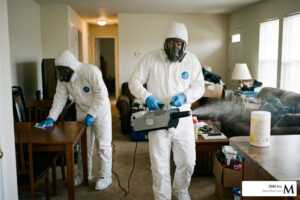
The High-Paying Jobs No One Wants — And Why That’s Your Opportunity
Jobs that no one wants are some of the best-kept secrets in the labor market. They pay well above average. They have almost no competition. And in 2026, demand for workers willing to do them is growing fast.
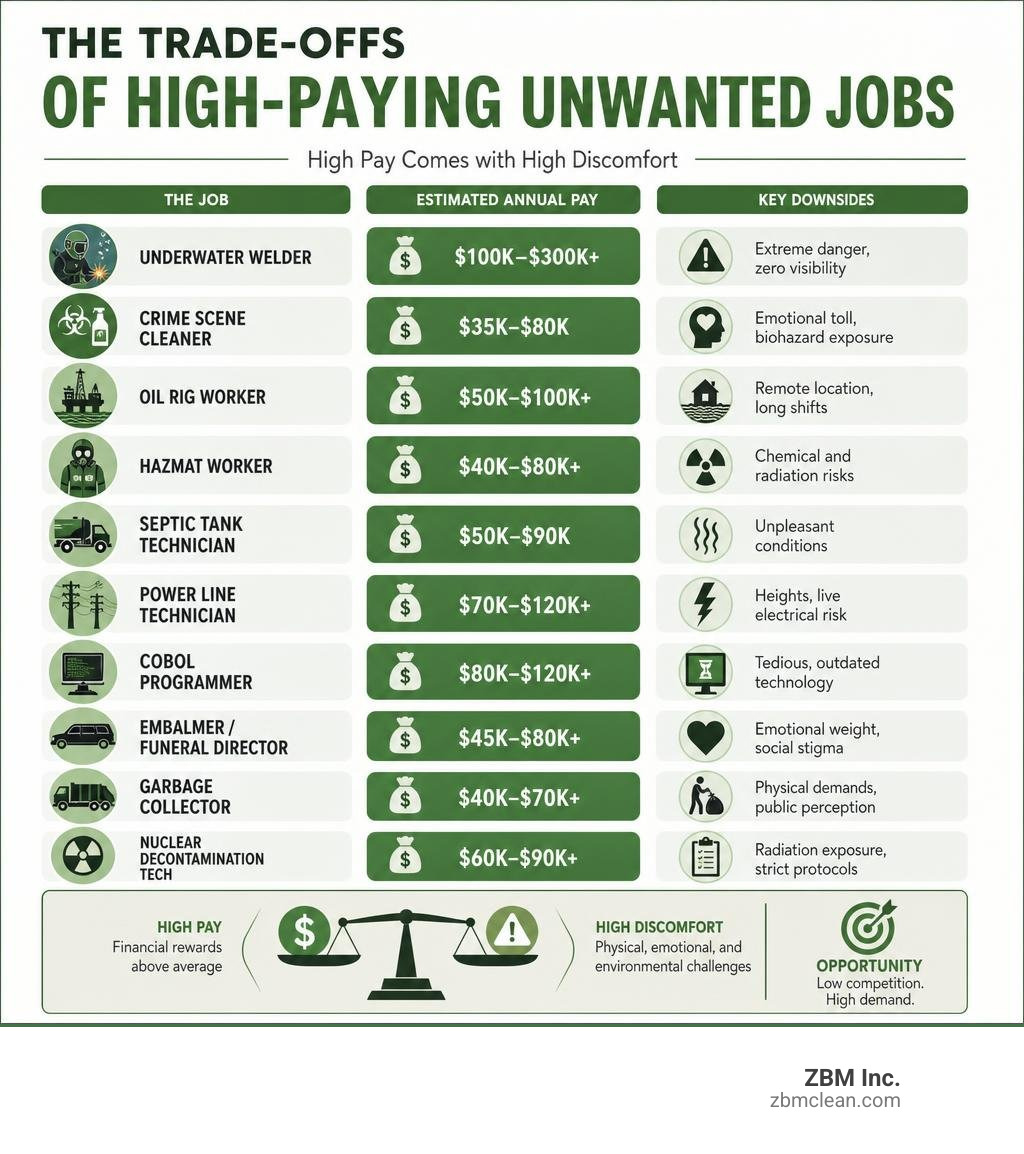
Here’s a quick look at the top high-paying careers most people actively avoid:
| Job | Estimated Annual Pay | Why People Avoid It |
|---|---|---|
| Underwater Welder | $100K–$300K+ | Extreme danger, zero visibility |
| Crime Scene Cleaner | $35K–$80K | Emotional toll, biohazard exposure |
| Oil Rig Worker | $50K–$100K+ | Remote location, long shifts |
| Hazmat Worker | $40K–$80K+ | Chemical and radiation risks |
| Septic Tank Technician | $50K–$90K | Unpleasant conditions |
| Power Line Technician | $70K–$120K+ | Heights, live electrical risk |
| COBOL Programmer | $80K–$120K+ | Tedious, outdated technology |
| Embalmer / Funeral Director | $45K–$80K+ | Emotional weight, social stigma |
| Garbage Collector | $40K–$70K+ | Physical demands, public perception |
| Nuclear Decontamination Tech | $60K–$90K+ | Radiation exposure, strict protocols |
The pattern is clear: high pay often follows high discomfort. When most people say no, wages go up.
This isn’t just a theory. A recent economic analysis noted that interest in traditionally undesirable jobs — like traffic flagging and waste management — is rising sharply. One Atlanta traffic flagging company saw weekly job inquiries jump from fewer than 10 to 80. Labor market data tells a similar story nationwide.
The jobs on this list aren’t glamorous. Some are physically grueling. Some are emotionally draining. Some require working in conditions most people would never consider. But for workers who are willing? The financial rewards are real — and the competition is nearly nonexistent.
I’m Terry Zastrow, owner of ZBM, Inc., a certified cleaning and restoration firm with nearly 30 years of hands-on experience in some of the most demanding jobs that no one wants — including biohazard remediation, disaster recovery, and hazardous material cleanup. That experience gives me a ground-level view of what these careers actually look like day to day, and what it takes to succeed in them.
Simple jobs that no one wants glossary:
Why High-Paying Jobs That No One Wants Are Gaining Popularity
We are living through a fascinating economic shift in June 2026. For years, the traditional career advice was simple: get a four-year degree, find a comfortable office job, and climb the corporate ladder. But as office spaces face layoffs and generative AI threatens to automate many entry-level white-collar roles, job seekers are looking at the labor market with fresh eyes.
The reality of 2026 is that the most secure, high-paying opportunities are often found in fields that require physical presence, specialized manual skills, and a willingness to handle conditions that make others squeamish. Economists studying these trends point to key indicators like the Job Openings and Labor Turnover Survey (JOLTS) and the U-4 unemployment rate (which includes discouraged workers). When standard job markets tighten, the appeal of secure, high-paying, manual-labor-adjacent roles sky-rockets. According to The Jobs No One Wants Are More Popular, economic slowdowns naturally drive people toward recession-proof, essential services.
Furthermore, there is a growing realization that these roles offer incredible stability. While software algorithms can write marketing copy or analyze spreadsheets, no robot can pump a septic tank, repair a downed power line in a storm, or clean a commercial facility after a major disaster.
Beyond the financial security, workers are discovering the psychological benefits of these careers. In our industry, we see this firsthand. By exploring The Hidden Benefits of Commercial Cleaning Jobs, you quickly learn that these roles offer high autonomy, structured and predictable hours, active physical movement that keeps you fit, and a profound sense of daily accomplishment that sitting in front of a screen simply cannot replicate.
To put this in perspective, let’s look at how the compensation for these highly secure, “undesirable” careers compares to more socially coveted, but increasingly unstable, office-bound roles:
| “Desirable” Career (Average Pay) | “Undesirable” Career (Average Pay) | The Difference Maker |
|---|---|---|
| Graphic Designer (~$55,000) | Septic Tank Technician ($50,000 – $90,000) | Zero AI replacement risk, immediate local demand |
| Entry-Level Marketing Coordinator (~$48,000) | Power Line Technician ($70,000 – $120,000+) | Paid apprenticeships, strong union backing |
| Administrative Assistant (~$45,000) | Commercial/Biohazard Cleaner ($40,000 – $80,000) | High overtime potential, rapid career progression |
The Top High-Paying Careers with Zero Competition
If you are willing to step outside the comfort zone of a traditional cubicle, you will find a world of high-paying careers where employers are practically begging for applicants. These positions require unique, niche skill sets, but they reward courage and dedication with impressive financial compensation.
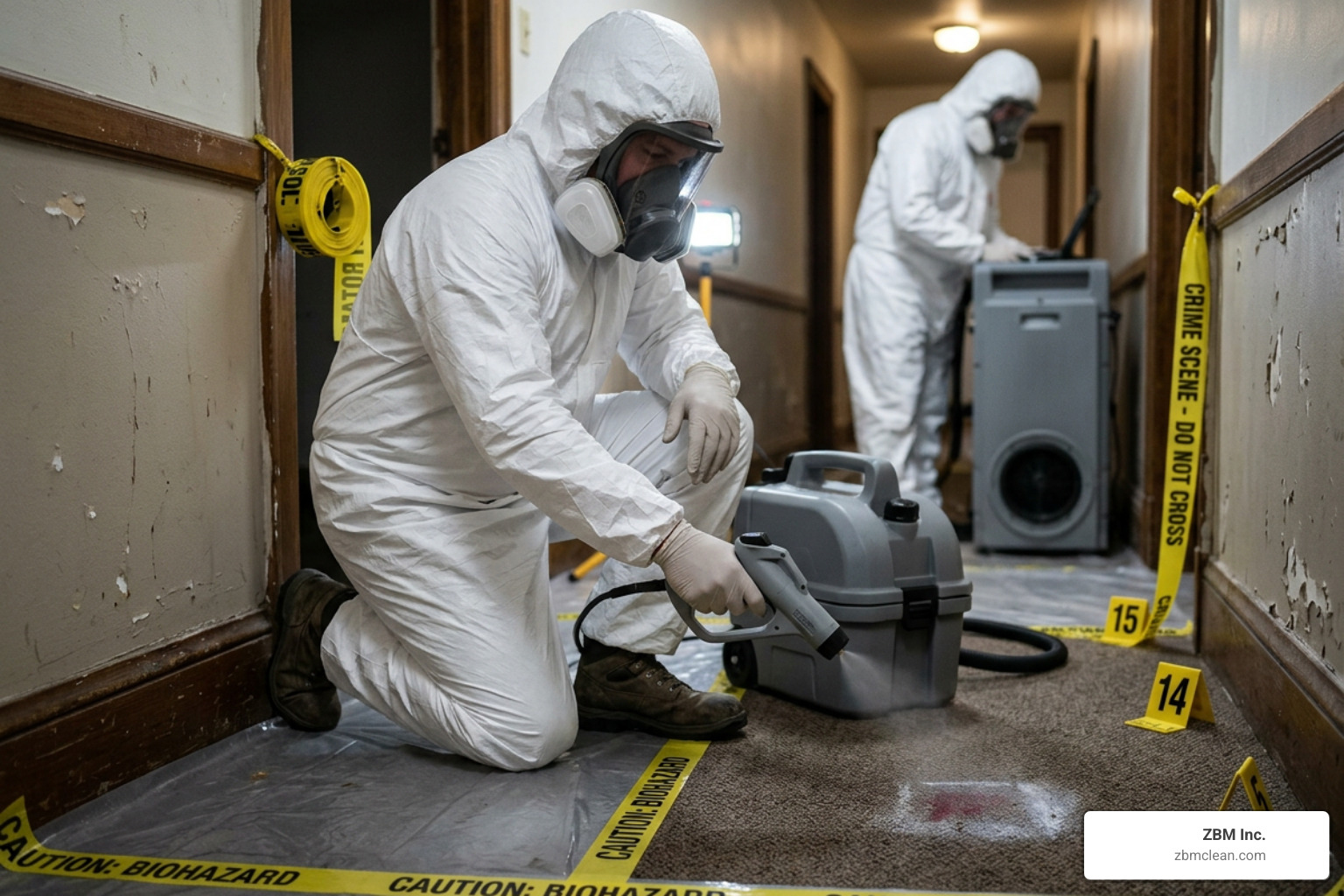
Crime Scene Cleanup: One of the High-Paying Jobs That No One Wants
When tragedy strikes, a highly specialized group of professionals steps in to restore safety and order. Crime scene cleanup — more formally known as biohazard remediation — is a career that demands equal parts technical precision and deep human empathy.
This job involves cleaning up after accidents, unattended deaths, hoarding situations, and violent crimes. Because technicians deal directly with bloodborne pathogens, chemical residues, and biological hazards, they must adhere to incredibly strict OSHA standards. It requires wearing full-body personal protective equipment (PPE), including respirators, for hours at a time.
But the physical challenge is only half the story; the emotional weight of helping families on their worst days requires immense mental resilience. For those who can handle this environment, the rewards are both financial and personal. If you’ve ever wondered Is Crime Scene Cleanup a Good Career or a Grave Mistake, the answer lies in your personal boundaries. It is a highly respected, deeply essential profession where you can make a visible difference in your community while earning an excellent living.
When it comes to compensation, specialized training pays off. You can learn more about the financial outlook by reviewing Crime Scene Cleaner Pay What You Can Expect to Earn. Certified technicians often earn between $25 and $40 per hour, with substantial overtime opportunities.
If this path sounds like the right fit for your skills, understanding What It Takes to Become a Crime Scene Cleanup Professional is your first step. It requires specialized training, background checks, and a strong stomach, but it offers a direct entry point into a career path with zero risk of automation.
Underwater Welding: The Dangerous Reality of Jobs That No One Wants
If you want to talk about high-risk, high-reward jobs that no one wants, underwater welding sits at the very top of the list. These professionals work on offshore oil rigs, deep-sea pipelines, and massive ship hulls, combining the skills of commercial diving with structural welding.
The working conditions are extreme. Underwater welders frequently operate in complete darkness, freezing water temperatures, and highly pressurized environments using specialized “saturated diving” techniques. The physical dangers are real, ranging from decompression sickness (the “bends”) to lethal electrical shocks and underwater explosions.
Because of these extreme risks, the barrier to entry is high. You cannot simply apply; you must complete 6 to 12 months of intensive commercial diving school followed by specialized underwater welding certifications. However, the financial payoff is massive. As highlighted in Dirty Jobs – High Pay, No Degree, Zero Ai Risk, top-tier saturated divers working offshore can easily clear $100,000 to over $300,000 per year, working on highly flexible seasonal contracts that allow them to take months off at a time.
Specialized Niche Roles: From COBOL Programmers to Nuclear Technicians
The world of high-paying, low-competition careers stretches across many other industries, from legacy technology to industrial energy. Many of these jobs are overlooked because they seem dry, outdated, or intimidating, yet they face severe labor shortages as older generations retire.
Consider these fascinating, highly lucrative niche careers:
- COBOL Programmer: COBOL is a programming language developed in the mid-20th century. While modern developers focus on Python or JavaScript, the backbone of the global financial system and military logistics still runs on COBOL. Because fewer young programmers learn this tedious language, those who do can command rates upwards of $100 to $150 per hour as consultants to major banks.
- Nuclear Decontamination Technician: These workers are responsible for cleaning up radioactive materials, maintaining cooling pipes, and monitoring radiation levels at nuclear facilities. It is a highly regulated field where technicians often work in specialized suits. Because of strict safety laws, they can only work until they reach their annual radiation exposure limit, often resulting in six months of work for a full year’s high salary.
- Elevator Installer and Repairer: Keeping the world moving vertically is incredibly lucrative. These technicians work in tight shafts, handle heavy machinery, and deal with complex electrical systems. The median wage sits near $99,000 per year, requiring only an apprenticeship rather than a college degree.
To explore more hidden career gems, check out Discover 14 High-Paying Jobs Lacking Spotlight. You will find that some of the most lucrative paths in the modern economy are simply those that don’t get talked about in high school guidance offices.
It is worth noting that some of these traditional fields are experiencing shifting labor demands. For instance, the U.S. Bureau of Labor Statistics projects a few slight declines in specific sectors from 2023 to 2033:
- A 6% decline in employment for petroleum engineers.
- A 4% decline in employment for elevator and escalator installers and repairers.
- A 3% decline in employment for mining and geological engineers.
- A 2% decline in employment for locomotive engineers and nuclear technicians.
While these percentages indicate a slight consolidation of roles due to efficiency and changing energy landscapes, the sheer lack of young, qualified applicants entering these fields means that the individual job seeker who obtains these certifications will still face virtually zero competition for high-paying openings.
Historically, society has always rewarded those willing to handle its most challenging tasks. In medieval times, the “gong farmers” who cleaned out castle cesspits at night were paid up to ten times more than standard laborers, allowing them to build generational wealth on what others considered filth. You can read about this fascinating history in The Medieval Gong Farmer: The Worst Job in History | History Uncovered. The lesson remains the same in 2026: if you are willing to do what others won’t, the market will reward you handsomely.
How to Break Into High-Paying Unconventional Careers
Transitioning into an unconventional career doesn’t require reinventing the wheel, but it does require a strategic approach. Many job seekers make the mistake of assuming they need to spend four years and tens of thousands of dollars on a new degree. In reality, most high-paying “unwanted” jobs value hands-on certifications, physical capability, and transferable skills over formal academics.
If you are looking to make a pivot, avoid the common pitfalls. Watching resources like The 3 Biggest Mistakes Job Seekers Make Right Now can help you understand how to stand out in a competitive hiring environment. One of the biggest errors is failing to translate your past experience. For example, if you have worked in construction, agricultural labor, or military service, you already possess the stamina, safety awareness, and work ethic required for heavy industrial roles.
For those interested in entering the biohazard or professional cleanup field, the path is straightforward but highly regulated. Reading How to Break Into the Biohazard Business A Guide to Requirements will give you a clear checklist. You will need to complete OSHA Bloodborne Pathogen training, obtain specialized hazardous waste handling certifications, and demonstrate a high level of emotional maturity and attention to detail.
Frequently Asked Questions about Undesirable Careers
What makes a high-paying job undesirable?
High-paying jobs are typically avoided due to a combination of physical discomfort, geographic isolation, emotional stress, or societal stigma. For example, oil rig workers endure 12-hour shifts in remote offshore locations, while crime scene cleaners deal with biohazards and emotional trauma. Employers must offer high wages to compensate for these challenging conditions and attract reliable workers.
Are dirty jobs safe from AI automation?
Yes, they are among the most secure jobs in the modern economy. Generative AI excels at processing digital data, writing code, and analyzing text, but it cannot physically interact with the real world. Tasks that require complex manual dexterity, real-time physical problem-solving, and human empathy — such as repairing a broken water main, cleaning up a biohazard site, or restoring a hoarded home — are completely safe from automation.
How do employers attract workers to these roles?
Because demand for these services is constant but the pool of willing applicants is small, employers use highly competitive incentives. In addition to premium hourly wages and salary packages, companies frequently offer robust health benefits, paid on-the-job training, sign-on bonuses, rapid opportunities for advancement, and highly flexible schedules (such as working compressed workweeks or seasonal rotational shifts).
Conclusion
At ZBM Inc., we believe that every essential job carries immense dignity. Whether we are performing routine office cleaning, restoring a home after a devastating fire, or handling a complex biohazard remediation site, our certified professionals play a vital role in keeping our communities safe, healthy, and functional.
If you are looking for a career path in Southeastern Wisconsin that offers excellent pay, stable hours, and a supportive, family-owned working environment, we would love to hear from you. We are proud to serve our local neighborhoods across Dodge County WI, Jefferson County WI, Watertown WI, Lake Mills WI, and up into the Northwoods WI and Minocqua WI regions.
Ready to build a career with real security and great compensation? Explore our current Cleaning Services Job Openings and learn more about Cleaning Jobs in Wisconsin. If you need certified assistance with a challenging cleanup, explore our professional crime scene cleanup services in Wisconsin to see how our family-owned team can support you.