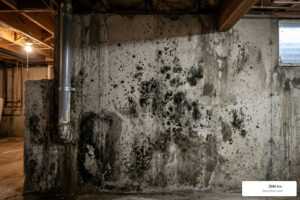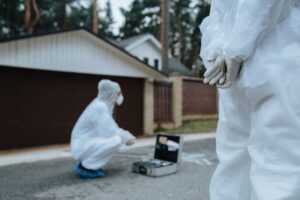
What California Requires for Crime Scene Cleanup Certification in 2026
If you need a fast answer, here is what crime scene cleanup certification in California requires:
Quick Answer: California Crime Scene Cleanup Licensing Requirements
| Requirement | Details |
|---|---|
| State registration | Must register as a Trauma Scene Waste Management Practitioner with the California Department of Public Health (CDPH) |
| Who must register | Any person or company commercially removing human blood, body fluids, or associated residues from injury, illness, or death scenes |
| Key supporting document | Proof of a contractual relationship with a registered medical waste transporter or permitted disposal facility |
| Federal training baseline | OSHA bloodborne pathogen training (29 CFR 1910.1030), respiratory protection, and hazard communication |
| Recommended industry certification | IICRC Trauma and Crime Scene Technician (TCST), based on the ANSI/IICRC S540 standard |
| Governing law | Chapter 9.5 of California’s Medical Waste Management Act |
California has one of the most specific regulatory frameworks in the country for biohazard and trauma scene work. Unlike many states where OSHA training alone is enough to get started, California requires commercial cleanup operators to meet a separate public health registration standard — one that most generic online certification courses do not address or fulfill on their own.
This matters whether you are a property manager vetting a cleanup vendor after an incident, or a business owner trying to build a compliant operation from the ground up. Getting the wrong information early can mean operating illegally or hiring a company that is not properly authorized under California law.
I’m Terry Zastrow, owner of ZBM, Inc. — an IICRC-certified firm based in Watertown, Wisconsin. With approximately 30 years of experience delivering specialized cleanup services to government agencies, municipalities, and commercial clients throughout Southeastern Wisconsin and the Northwoods, our team maintains a deep expertise in the rigorous standards that define our industry nationwide, including the specific requirements for crime scene cleanup certification in California.
What “crime scene cleanup certification california” really means
When people search for crime scene cleanup certification california, they usually mean, “What do I need to legally clean trauma scenes for pay in California?”
That is the right question. The tricky part is that California does not mainly use the casual phrase “crime scene cleanup certification.” It uses a much more specific legal framework tied to trauma scene waste, medical waste handling, and public health oversight.
The legal term California uses instead of a generic certification
The formal term California uses is Trauma Scene Waste Management Practitioner. This registration is overseen by the California Department of Public Health, and the state explains the program on its Trauma Scene Waste Management Practitioners – CDPH – CA.gov page.
In plain English, if you are commercially removing human blood, body fluids, or related contaminated residues from a scene involving serious injury, illness, or death, California expects you to register under this system. The legal basis comes from Chapter 9.5 of the Medical Waste Management Act.
So, the short version is this:
- “Crime scene cleanup certification” is the common search term
- “Trauma Scene Waste Management Practitioner registration” is the California legal term
- A training certificate alone is not the same thing as state registration
That distinction matters a lot.
Who needs to register and who may be exempt
Generally, registration applies to people or companies performing this work as a commercial activity. That includes businesses cleaning:
- Homicide scenes
- Suicide scenes
- Unattended death sites
- Serious injury scenes
- Industrial accident scenes
- Vehicles contaminated with blood or other potentially infectious materials
In many cases, a property owner handling their own property is treated differently from a company offering cleanup services to the public for compensation. Employees also do not usually hold a separate company registration just because they work for a registered firm, but the business itself must operate lawfully and train staff properly.
The key dividing line is usually commercial removal of trauma scene waste, not whether the scene happened in a house, warehouse, vehicle, or other location. California’s rules focus on the activity and the waste stream, not the dramatic soundtrack in the background.
What activities trigger regulation in California
The regulated activity is broader than many people assume. It is not just mopping visible blood. It can include:
- Removing contaminated porous materials
- Handling sharps or broken contaminated items
- Packaging trauma scene waste for transport
- Cleaning and decontaminating affected structural areas
- Vehicle biohazard cleanup
- Cleanup after workplace accidents involving blood or body fluids
The practical takeaway: if your company is removing blood, body fluids, or associated residues after serious human trauma, you should assume California’s registration and medical waste rules are in play.

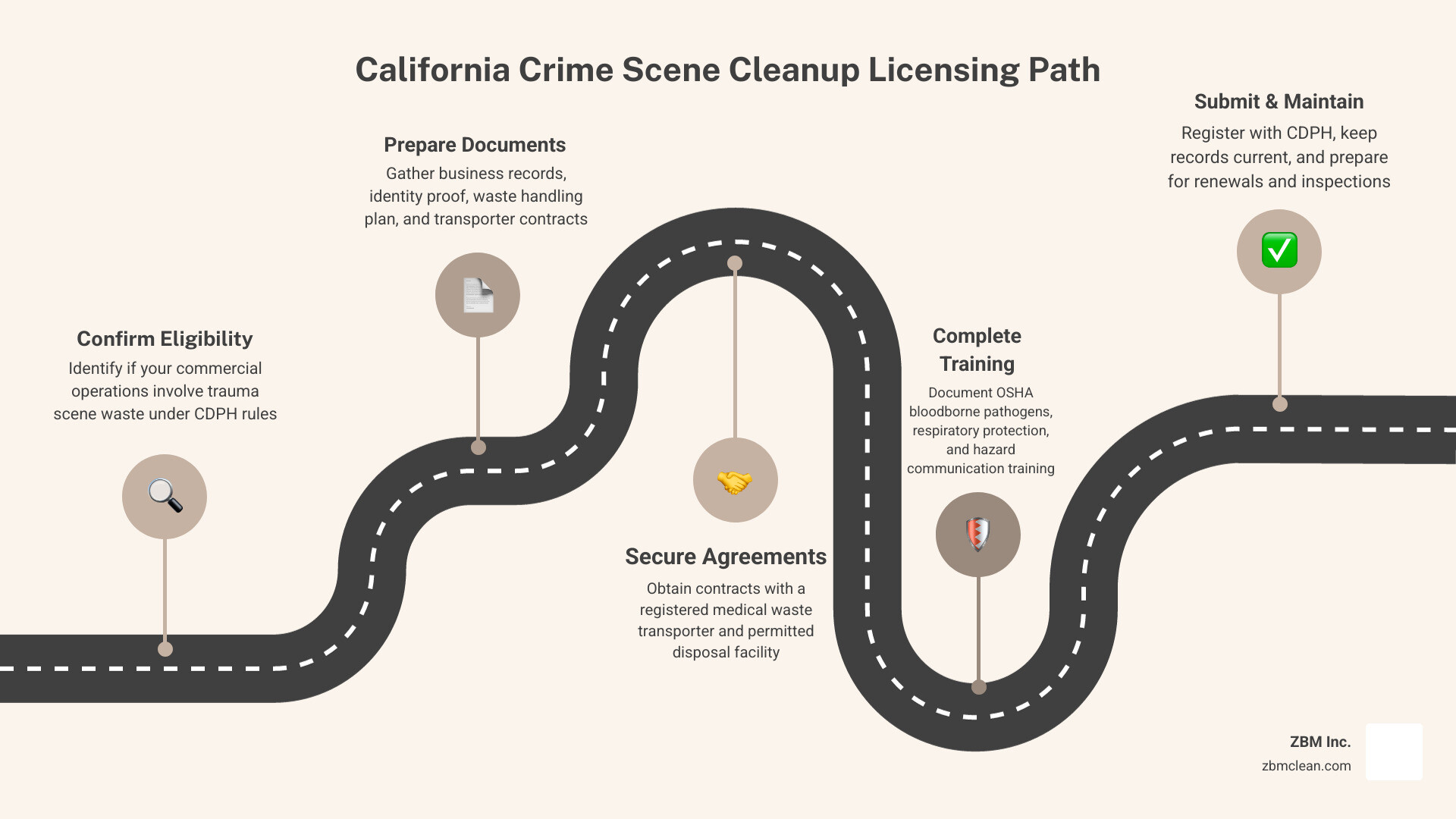
Eligibility and application requirements for California registration
The application side of crime scene cleanup certification california is really about proving that your business can lawfully manage trauma scene waste from pickup through disposal.
Required documents to become a registered practitioner
While applicants should always verify current forms and instructions directly with CDPH, California generally expects supporting documentation that shows who you are, what your business does, and how the waste will be handled.
That usually includes:
- Proof of identity for the applicant or responsible party
- Business formation records
- Business contact information and service details
- Description of trauma scene waste activities
- Waste handling procedures
- Proof of a contractual relationship with a compliant downstream vendor
That last item is especially important. The research is clear that a trauma scene waste management practitioner must provide proof of a contractual relationship with either:
- A registered medical waste transporter, or
- A permitted medical waste facility
This is one of the biggest compliance checkpoints in California. You are not just promising to dispose of waste properly. You are documenting, in advance, how that will happen.
The transporter and disposal agreements California expects to see
Think of these agreements as your waste chain-of-custody backbone.
| Agreement type | What it shows | Why it matters |
|---|---|---|
| Transporter contract | A registered medical waste transporter will move the waste lawfully | Confirms you are not improvising disposal logistics |
| Disposal facility contract | A permitted facility will accept the waste | Confirms there is a lawful endpoint for final treatment or disposal |
In practice, companies should make sure their agreements address:
- Waste acceptance terms
- Pickup process or transfer process
- Manifest or receipt procedures
- Service area coverage
- Emergency or after-hours arrangements
- Record retention expectations
If a startup skips this step, California may view the application as incomplete or the operation as noncompliant. This is one of those “boring paperwork” items that becomes very exciting during an inspection.
How to keep your registration accurate after approval
Approval is not the finish line. It is the start of an ongoing compliance system.
Companies should keep registration records current by updating:
- Business address changes
- Ownership or entity changes
- Contact information
- Transporter or disposal partner changes
- Operational scope changes
They should also maintain inspection-ready files, including:
- Registration documents
- Vendor contracts
- Employee training records
- Waste shipment records
- Incident and exposure documentation
Good recordkeeping is not glamorous, but it is often what separates a professional operation from a future headache.
Training that supports legal operation in California
California registration handles the public health side. Training handles the competency and worker safety side. You need both.
What California requires by law versus what training is strongly recommended
There is no universal national crime scene cleanup license. That is why so many people get confused.
What is legally required depends on the topic:
- California public health registration for commercial trauma scene waste work
- OSHA-required worker safety training for employees exposed to hazards
- Employer-specific written safety programs and procedures
At a minimum, employers dealing with blood and other potentially infectious materials should document training in:
- Bloodborne pathogens
- Personal protective equipment
- Respiratory protection
- Hazard communication
- Exposure control procedures
- Decontamination and waste handling
This is also a good place to review broader background on biohazard cleanup services and how certification fits into real-world work.
Why TCST training is valuable even though it is not the California license
The Trauma and Crime Scene Technician (TCST) – IICRC certification is not the California state registration, but it is still highly valuable.
Why? Because TCST is built around the ANSI/IICRC S540 standard and focuses on the actual work technicians perform, including:
- Assessing trauma and biohazard scenes
- Cleaning and decontaminating surfaces
- Handling blood and body fluid contamination
- Working across structures, contents, vehicles, and equipment
- Applying consistent procedures regardless of scene type
The IICRC notes that there are no prerequisites for TCST, which makes it accessible for new technicians and useful for established firms wanting a common standard.
So if we had to summarize it simply:
- California registration = legal authority layer
- TCST = technical skills and industry standard layer
The best operators understand both.
Other core training areas companies should document
Beyond TCST, companies should keep records showing they train for day-to-day hazards and regulatory duties, such as:
- Bloodborne pathogen compliance under 29 CFR 1910.1030
- Respiratory protection under 29 CFR 1910.134
- Hazard communication and SDS access
- Fit testing when respirators are required
- Sharps handling and exposure response
- PPE donning and doffing
- Employee medical and exposure records where required
For a deeper overview, see our guide on biohazard cleaning certification.

California regulation vs federal OSHA: what businesses often misunderstand
This is probably the most common point of confusion in the entire crime scene cleanup certification california topic.
Federal OSHA rules focus on worker protection
Federal OSHA rules are mainly about keeping workers safe.
For trauma and crime scene cleanup, the big standards often include:
- Bloodborne Pathogens: 29 CFR 1910.1030
- Respiratory Protection: 29 CFR 1910.134
- Hazard Communication
- PPE requirements
- Exposure control planning
These rules govern topics like:
- Employee training
- Vaccination and exposure response policies where applicable
- Safe work practices
- Respirator use
- Labeling and hazard communication
In short, OSHA asks, “Are your employees protected?”
California adds a separate public health registration layer
California adds another question: “Is your company authorized and set up to manage trauma scene waste lawfully?”
That is where CDPH registration comes in. California’s public health rules focus on:
- Practitioner registration
- Trauma scene waste management
- Relationships with transporters or permitted facilities
- Disposal compliance and traceability
So, OSHA and California registration are not duplicates. They solve different compliance problems.
Why passing a course alone does not make a company legal in California
A course certificate can show training. It does not automatically create a legal business operation in California.
A company can complete an online class and still be missing:
- CDPH practitioner registration
- Waste vendor agreements
- Written safety procedures
- Exposure control documentation
- Insurance and business documentation
- Operational recordkeeping systems
That is why “I took a course” and “I can legally offer trauma scene cleanup in California” are not the same statement.
Transportation, disposal, and day-to-day compliance in the field
A compliant company needs a clean system for waste from the moment it is generated until the moment it reaches a lawful destination.
How to package and move trauma scene waste correctly
Field teams should have clear procedures for segregation and packaging, including:
- Red bag waste for appropriate contaminated soft waste
- Approved sharps containers for needles, blades, or sharp contaminated items
- Leak-resistant primary containers
- Secondary containment when needed
- Proper labeling
- Vehicle controls to prevent spills or cross-contamination
The exact packaging method depends on the waste type and the applicable rules, but the overall goal is always the same: contain, identify, and protect.
Working with registered transporters and permitted facilities
Unless the company is separately authorized to transport and process waste itself, the practical startup path is usually to work with compliant vendors.
That means verifying:
- The transporter is properly registered
- The receiving facility is permitted
- Pickup schedules match your service model
- Manifests or receipts are issued and retained
- Emergency jobs have a disposal pathway too
A weak vendor relationship can sink an otherwise solid operation. If your disposal plan is “we’ll figure it out later,” California would like a word.
Field documentation that protects the company and the client
Documentation is where compliance becomes provable.
Essential records often include:
- Hazard assessments
- Scope-of-work notes
- Before and after photos
- Employee training logs
- PPE and respirator records
- Waste shipment manifests or receipts
- Incident reports
- Exposure reports
- Vendor contracts
- Registration records
These records protect the company, support insurance questions, and help demonstrate that cleanup was performed professionally and defensibly.
Benefits and challenges of getting fully compliant in California
California compliance is not effortless, but there are real benefits to doing it right.
The biggest benefits of proper registration and training
When companies complete the registration and training path properly, they gain:
- Better legal footing
- Greater client trust
- Stronger employee protection
- More credible insurance and contract positioning
- A more defensible operation if questions arise later
- Improved public health outcomes
For clients and property managers, proper compliance can also mean greater confidence that the company understands trauma waste, not just surface cleaning.
Related reading:
- What It Takes to Become a Crime Scene Cleanup Professional
- Safety First: Why Professional Crime Scene Cleanup is Essential
- What Do Crime Scene Cleanup Companies Do
Common challenges new companies face
The biggest hurdles are usually not technical mopping skills. They are administrative and operational.
Common challenges include:
- Understanding the California-specific legal terminology
- Gathering complete paperwork
- Securing waste vendor contracts
- Paying for training and PPE programs
- Maintaining records for inspections
- Tracking renewals and updates
- Building 24/7 response capability
For rural or wide-coverage operators, vendor availability and transport logistics may also be harder to coordinate.
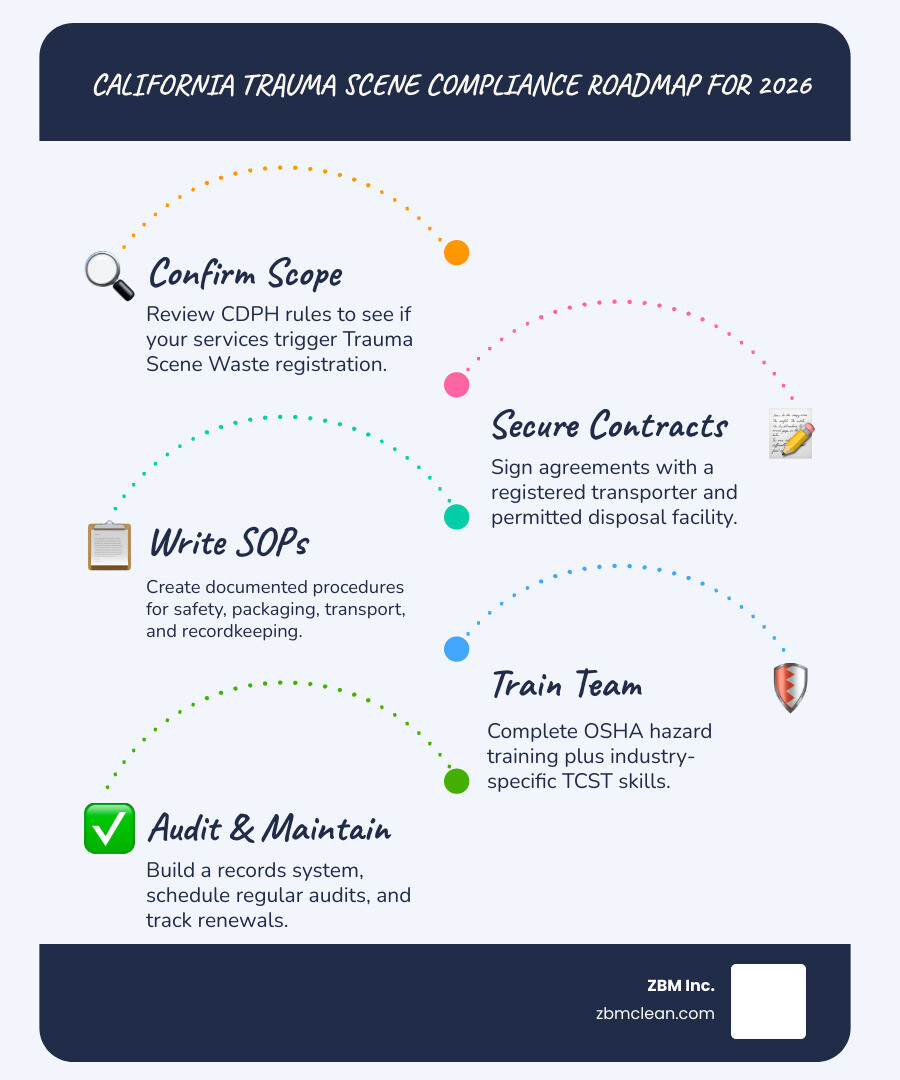
How to build a practical compliance roadmap for 2026
A practical roadmap for 2026 looks like this:
- Confirm whether your services fall within California’s trauma scene waste rules.
- Review the CDPH practitioner registration requirements.
- Secure a contract with a registered transporter or permitted disposal facility.
- Build written SOPs for scene safety, cleanup, packaging, transport, and documentation.
- Train technicians in OSHA-required hazard topics.
- Add industry-specific training such as TCST.
- Create a recordkeeping system for manifests, training, incidents, and updates.
- Audit the program regularly and fix gaps before they become problems.
Frequently Asked Questions about crime scene cleanup certification california
Is there a single California crime scene cleanup license for every technician?
Not exactly. California’s key legal requirement is the Trauma Scene Waste Management Practitioner registration for the business or person performing covered commercial activity. Individual technicians also need employer-provided safety training and competency, but a course certificate by itself is not the full legal answer.
Can a company operate with OSHA training only and no California registration?
If the company is commercially removing human blood, body fluids, or related residues from scenes of serious injury, illness, or death in California, OSHA training alone is not enough. California adds a separate public health registration requirement. Operating without it can mean the business is not lawfully set up for that work.
Do you need your own waste hauling permit to start?
Not always. The research indicates that a practitioner must provide proof of a contractual relationship with either a registered transporter or a permitted medical waste facility. For many companies, the practical path is to partner with compliant waste vendors rather than trying to build a full transport infrastructure on day one.
Conclusion
If you are trying to understand crime scene cleanup certification california, the most important takeaway is simple: California expects more than a training certificate. It expects a legally registered operation, a documented waste pathway, and real worker-safety compliance.
That is good for the public, good for workers, and good for clients who need to know the job will be handled correctly when circumstances are already difficult enough.
At ZBM Inc., we believe specialized cleanup should always be approached with technical care, regulatory discipline, and plain human compassion. Whether we are serving our local communities in Dodge County, Jefferson County, and Lake Mills, or providing industry insights on national standards, our commitment to excellence remains the same. If you want to learn more about what professional trauma and biohazard response looks like in practice in our service area, visit our crime scene cleanup service Wisconsin page.