How to Choose COVID-19 Disinfecting Services for Your Facility
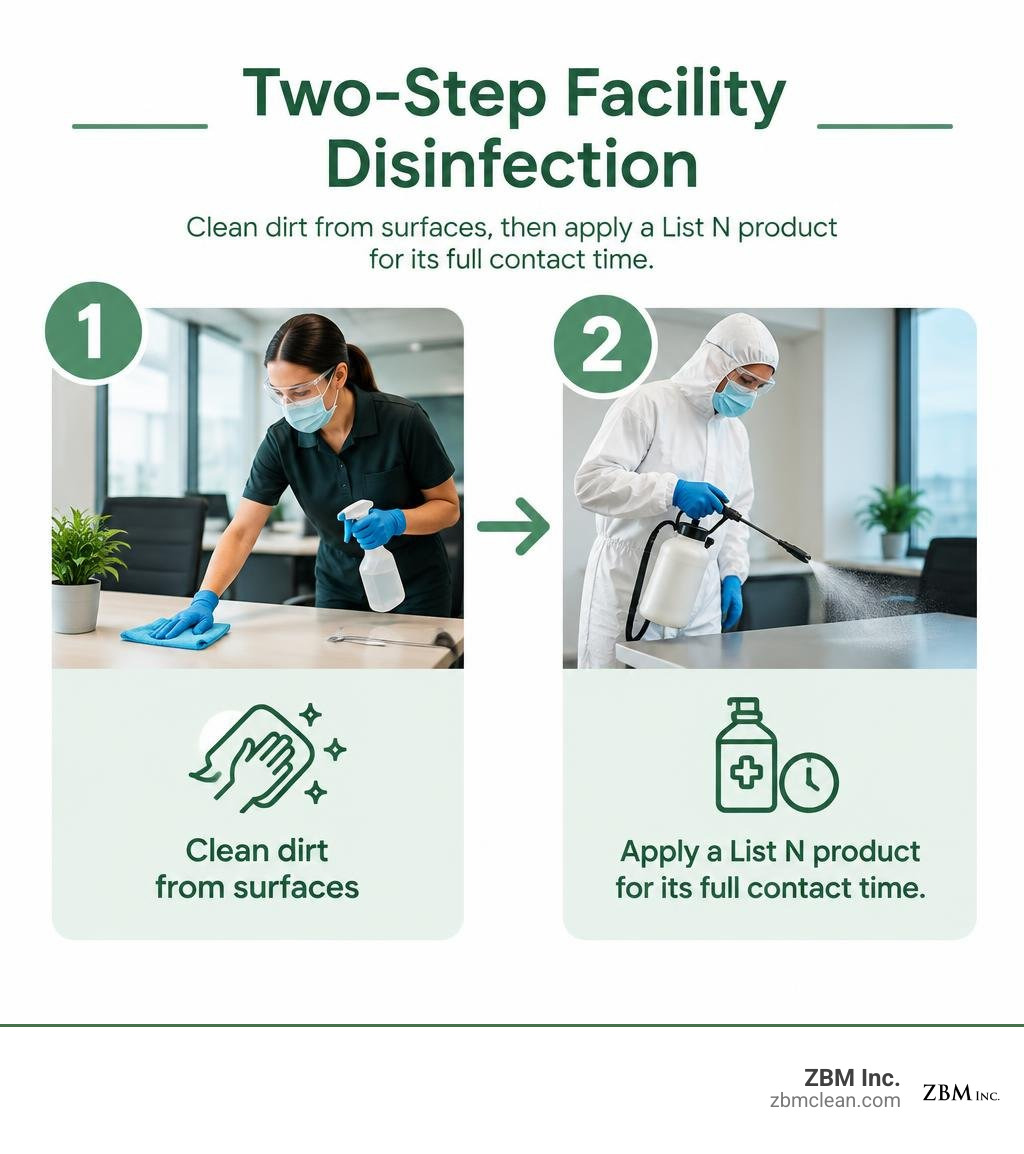
Need COVID-19 disinfecting services after a confirmed case? Ask the provider to identify affected areas, clean dirt from surfaces, and then use an EPA List N disinfectant according to its label. Confirm that the crew will focus on shared touchpoints, use appropriate protective gear, and keep surfaces wet for the required contact time. Ask for a clear plan and a record of the work before reopening the area.
Disinfection can reduce germs on surfaces, but it cannot replace good ventilation, hand hygiene, or steps that keep sick people away from the workplace.
I’m Terry Zastrow, owner of ZBM Inc., an IICRC-certified firm with about 30 years of experience serving public and private facilities. My technician certifications and our team’s ongoing safety training shape how we approach covid 19 disinfecting services, starting with the difference between cleaning and disinfecting.
Covid 19 disinfecting services vocab to learn:
Why Commercial Facilities Need Professional COVID 19 Disinfecting Services
When viral pathogens enter a busy commercial property, a simple wipe-down with grocery store cleaner will not stop transmission chains. Workplace health and safety in 2026 demands verified microbial control to prevent costly operational downtime, reduce liability, and protect employees and patrons. Attempting to handle facility-wide pathogen decontamination in-house is exhausting, takes critical hours away from your core business, and often fails because off-the-shelf supplies lack medical-grade potency. Professional covid 19 disinfecting services bring specialized industrial equipment, hospital-grade chemistries, and systematic containment strategies that completely reset indoor health standards across commercial spaces.
Standard Cleaning vs Professional COVID 19 Disinfecting Services
Many property managers confuse everyday janitorial tidying with pathogen decontamination. Routine cleaning uses detergents to lift visible soil, dust, and grime mechanically. While clean surfaces are vital, simple wiping does not deactivate resilient viral particles like SARS-CoV-2. Certified disinfection involves applying EPA-registered antimicrobial agents calibrated to achieve a 99.9% or higher log kill rate within specified wet contact dwell times.
Without understanding chemical contact times, in-house staff often wipe solutions off too quickly, leaving pathogens alive. Partnering with trained specialists for comprehensive office cleaning and disinfection ensures proper dwell times and prevents cross-contamination across work areas.
| Service Element | Routine Custodial Cleaning | Professional COVID-19 Disinfection |
|---|---|---|
| Primary Goal | Remove visible dirt, debris, and surface dust | Inactivate viral pathogens and eliminate microbial loads |
| Chemical Standard | General detergents and standard soap solutions | Hospital-grade, EPA List N registered disinfectants |
| Contact Dwell Time | Immediate wiping; no contact dwell tracking | Strict 1 to 10 minute active wet dwell time monitoring |
| Application Method | Microfiber cloths, mops, and general dusters | Hydro-electrostatic sprayers, thermal foggers, deep wipe |
| Verification | Visual cleanliness inspection | Log kill verification and standardized hygiene compliance |
EPA List N Disinfectants and Advanced Delivery Technologies
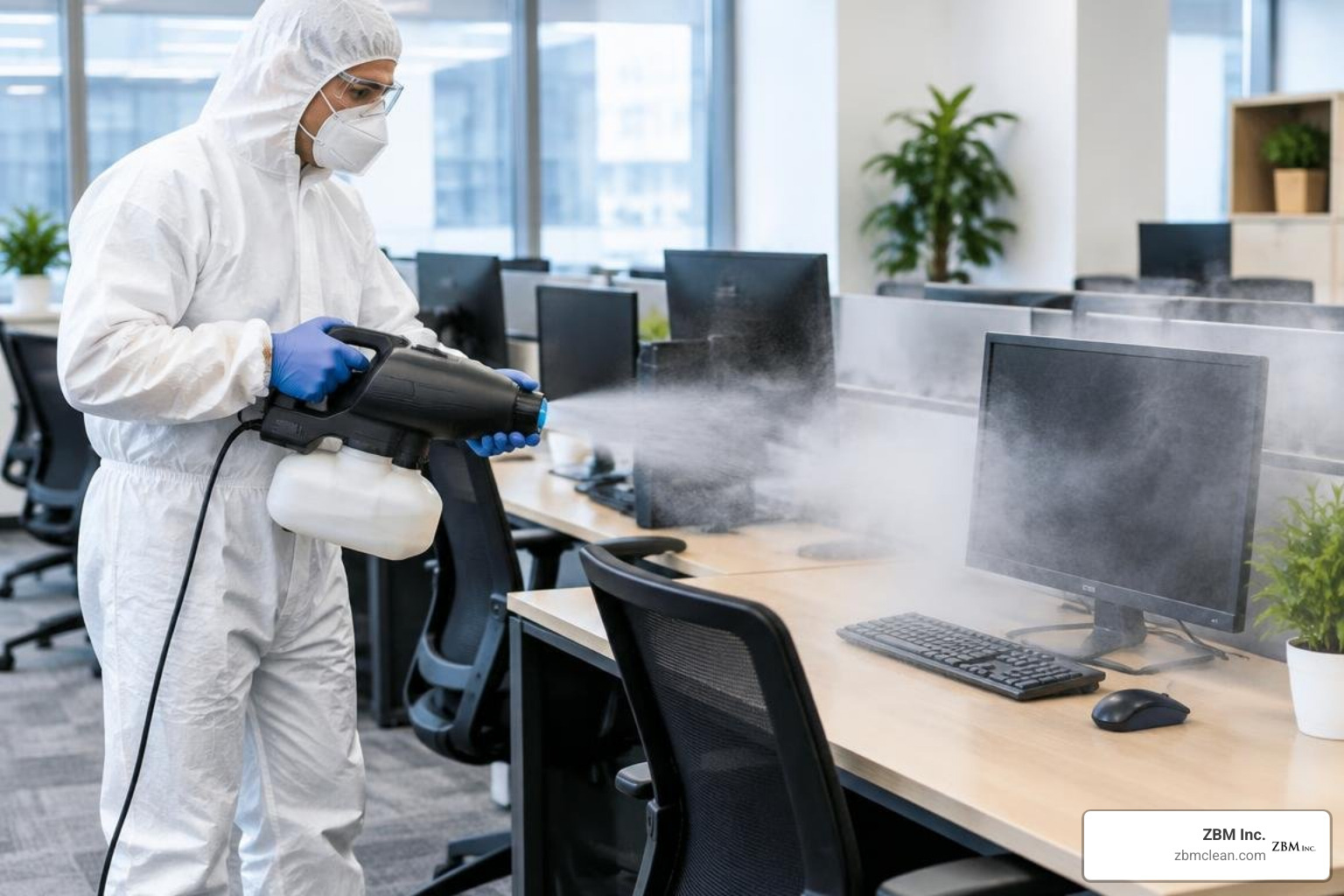
A core requirement for effective pathogen eradication is the use of products certified under EPA List N. These antimicrobial agents are laboratory-proven to destroy the structural proteins and lipid envelopes of SARS-CoV-2. Beyond chemistries, professional delivery technology ensures complete treatment. Humans can only reach so far with a cloth, and hand-wiping frequently misses hidden undersides, chair mechanisms, and recessed structural points.
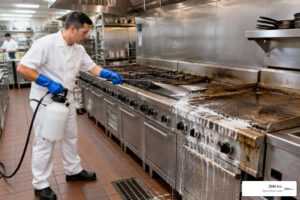
Certified teams deploy electrostatic spray technology. These units impart a positive electrical charge to atomized disinfectant droplets, forcing the mist to wrap around negatively charged commercial surfaces with full 360-degree coverage. When combined with advanced thermal fogging and supplemental UV-C sanitization for high-risk contact zones, modern facility disinfection techniques provide unmatched surface coverage. For organizations tracking public wellness trends, reviewing local healthcare disease updates provides helpful context on why medical-grade delivery methods remain necessary during seasonal outbreaks.
Essential PPE and High-Touch Area Protocols for Commercial Spaces
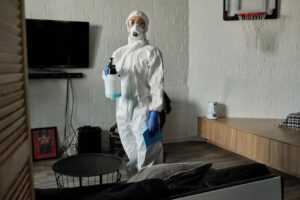
Disinfecting hazardous biological materials demands comprehensive safety gear. Professional technicians wear full personal protective equipment (PPE), including full-face elastomeric or powered air-purifying respirators, heavy-gauge nitrile gloves, and fluid-resistant protective suits. This equipment protects technicians from chemical vapors and airborne particles while preventing the transfer of pathogens outside the treatment zone during equipment demobilization.
Commercial properties contain hundreds of high-touch surfaces that require targeted mapping. Disinfection specialists prioritize:
- Entryway hardware, push plates, and door knobs
- Light switches, thermostat controls, and elevator call buttons
- Shared office electronics, including multi-function printers, touchscreens, keyboards, and mice
- Breakroom appliances, water coolers, and cabinet pulls
- Restroom fixtures, flush valves, and partition latches
Following proven commercial facility cleaning tips helps facility managers identify complex architectural touchpoints that standard custodial programs overlook.
How to Execute and Schedule Effective Disinfection Protocols
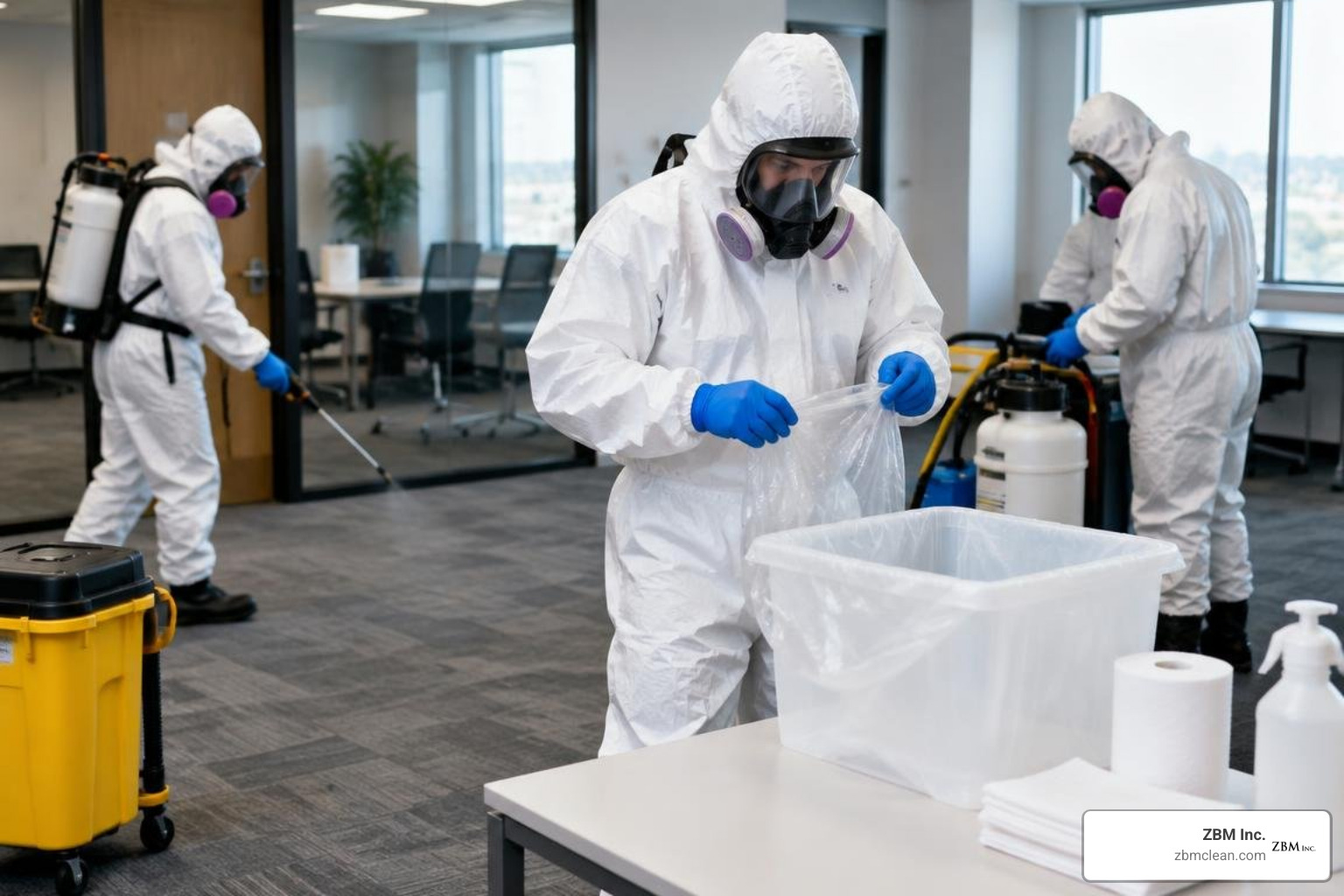
Managing an active viral threat requires organized containment. Attempting to manage an exposure event without trained hazardous material remediation can spread contamination into ventilation trunks and neighboring suites. Certified professionals isolate contaminated rooms, establish negative air pressure or ventilation flushes where needed, and systematically decontaminate the area.

Step-by-Step Response After a Confirmed Exposure Case
When an employee or visitor receives a positive COVID-19 diagnosis, rapid response prevents widespread operational shutdowns:
- Space Isolation and Air Circulation: Close off all physical spaces frequented by the infected individual. Increase outside air circulation by adjusting HVAC dampeners or opening exterior windows when feasible.
- Professional Emergency Dispatch: Contact a 24/7 emergency disinfection team rather than assigning untrained internal staff to clean hazardous areas.
- Biohazard Removal and Initial Cleaning: Technicians remove organic matter and perform deep surface dusting to clear away soils that shield pathogens from chemical contact.
- List N Chemical Application: Technicians apply EPA-registered formulations through electrostatic application or direct contact saturation, maintaining full wet dwell times.
- Clearance and Reopening: The area is ventilated, waste materials are sealed according to biohazard protocols, and a completed service report is delivered for facility records.
Relying on certified infectious disease cleanup ensures that every square foot meets occupational safety requirements. During peak transmission seasons, facilities must secure dependable contractor access early, as highlighted in historical regional commercial supply updates when demand surges.
Determining Service Frequency for COVID 19 Disinfecting Services
Service frequency depends on foot traffic, occupant density, and the vulnerability of the population you serve:
- Daily Disinfection: Recommended for high-density environments like fitness centers, medical clinics, daycares, and busy retail centers with continuous public turnover.
- Weekly or Bi-Weekly Treatments: Ideal for standard corporate offices, manufacturing plants, and municipal offices where regular staff mix with occasional visitors.
- Monthly Deep-Clean Cycles: Well-suited for lower-density administrative facilities seeking preventative protection against seasonal biological threats.
Reviewing structured office disinfection best practices helps leadership select a schedule that matches facility occupancy and budgetary goals.
Choosing Certified Disinfection Partners and Maintaining Facility Hygiene
Selecting the right commercial partner requires verifying real credentials. Property owners should partner with licensed, bonded, and insured companies whose technicians hold formal IICRC certifications in microbial control and biohazard remediation. Trustworthy providers adhere to OSHA hazard communication standards and supply clear safety data sheets (SDS) for all utilized disinfectants.
Professional surface decontamination works best alongside proactive facility measures, such as touchless hand-sanitizing stations, improved air filtration, and flexible sick-leave policies. At ZBM Inc., our certified specialists deliver comprehensive biohazard remediation, routine custodial care, and emergency response across Watertown, Dodge County, Jefferson County, Lake Mills, Southeastern Wisconsin, and the Northwoods around Minocqua.
Ready to protect your facility from unexpected disruptions? Connect with ZBM Inc. to schedule our expert commercial and residential cleaning services and safeguard your work environment today.