When You Need Homicide Scene Cleaning in Jefferson County, Act Fast
Homicide scene cleaning in Jefferson County is a specialized biohazard remediation service that removes blood, bodily fluids, and other biological contaminants left behind after a violent death — restoring the property to a safe, livable condition.
If you need immediate help, here is what to know right now:
| Question | Quick Answer |
|---|---|
| Who handles homicide cleanup? | Licensed biohazard remediation professionals — not law enforcement |
| When can cleanup begin? | After police release the scene |
| Is it covered by insurance? | Often yes — homeowners or commercial property insurance may apply |
| How fast can crews respond? | Reputable companies offer 24/7 emergency response |
| Can families do it themselves? | No — blood and bodily fluids carry serious infectious disease risks |
A homicide scene is not like any other mess. Blood and biological material can soak into flooring, drywall, and subfloors within hours. The longer it sits, the greater the health risk — and the greater the damage to the property itself. Pathogens like HIV, Hepatitis C, and C. difficile can survive on surfaces long after the scene looks dry. This is not work for a standard cleaning crew or a grieving family member.
For commercial property managers in Jefferson County, the stakes are especially high. A delayed or improper cleanup can mean extended liability, regulatory violations, and a property that stays out of service far longer than necessary.
I’m Terry Zastrow, owner of ZBM Inc., a certified IICRC firm with nearly 30 years of experience providing biohazard and crime scene remediation services — including homicide scene cleaning in Jefferson County and across Wisconsin — to state agencies, municipalities, housing authorities, and private property owners. Our team holds master technician certifications and completes annual HAZWOPER training to ensure every job meets the highest safety standards. In the sections below, we’ll walk you through everything you need to know to handle this situation the right way.
Understanding Homicide Scene Cleaning Jefferson
Homicide scene cleaning is the professional removal of biological contamination after a violent death. In practical terms, that can include blood, tissue, bodily fluids, contaminated porous materials, trace residues, and odors. It may also involve demolition of affected materials such as carpet, pad, drywall, insulation, trim, or subfloor when contamination has penetrated below the visible surface.
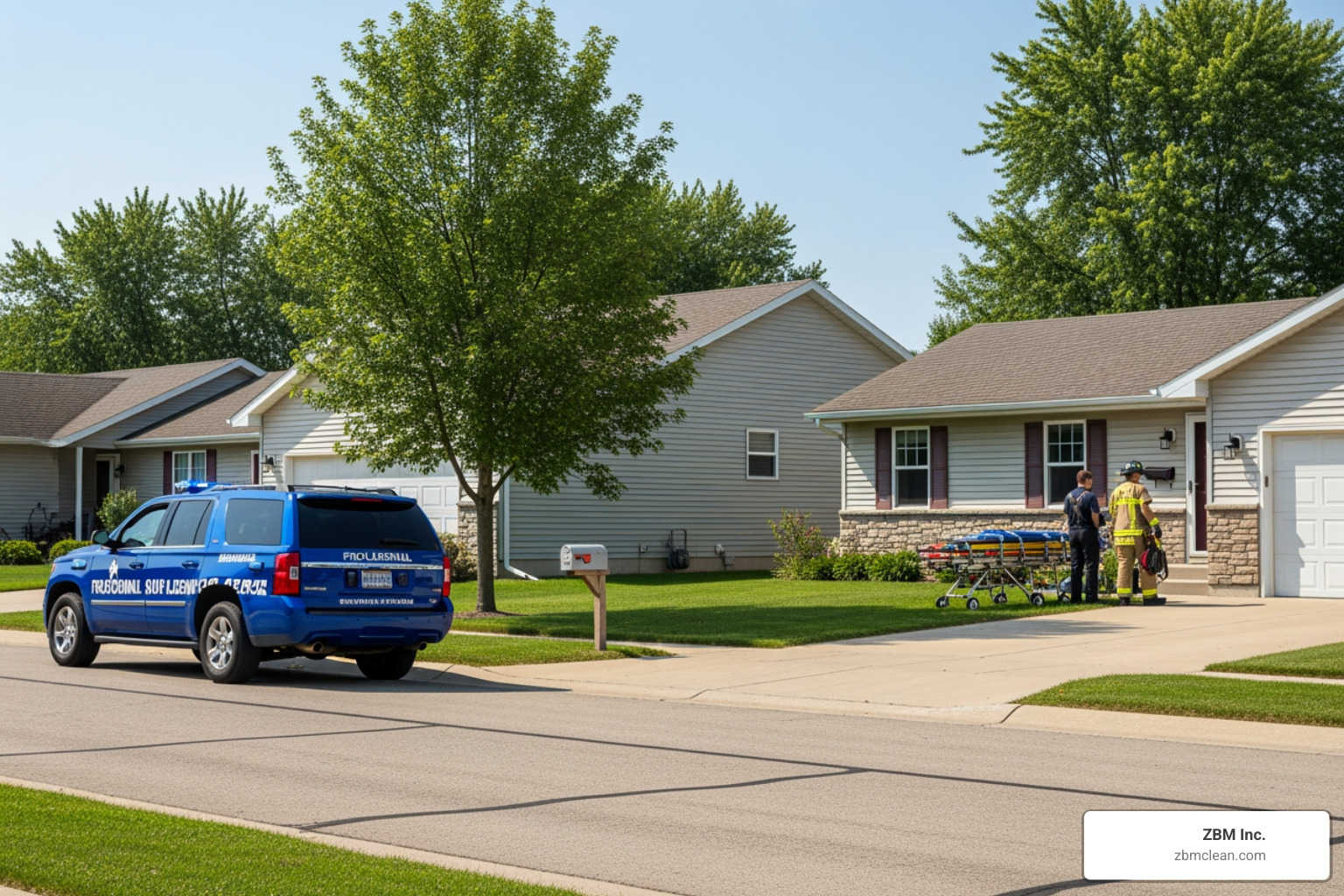
This work is necessary in Jefferson County because once law enforcement finishes the investigation, the responsibility for making the property safe usually shifts back to the owner, family, landlord, business, or estate representative. Police collect evidence. They do not sanitize the site for occupancy.
A proper cleanup is about more than appearance. A room can look “clean enough” and still be unsafe. Dried blood is still a biohazard. Odors can signal hidden contamination. Fluids can travel farther than most people expect, including beneath baseboards, into seams, under flooring, and sometimes into lower levels. That is one reason families often turn to professionals rather than trying to manage the scene themselves.
If you are comparing providers, our guides on crime scene cleanup services in Wisconsin and the benefits of hiring a crime scene cleanup company explain what to expect in more detail. Jefferson County properties need rapid, compliant biohazard remediation from trained crews, not ordinary janitorial service.
Legal and Regulatory Requirements in Wisconsin
Wisconsin homicide cleanup is not a casual wipe-down with bleach and paper towels. Reputable companies should follow a framework of safety and waste-handling requirements, including:
- OSHA bloodborne pathogen rules
- OSHA PPE and respiratory protection requirements where applicable
- Hazard communication standards
- Proper containment and cross-contamination controls
- Applicable EPA guidance for disinfectant use and cleanup practices
- Wisconsin and local requirements for transportation and disposal of regulated waste
In plain English: workers must assume blood and bodily fluids are potentially infectious and use universal precautions at all times. That means treating every scene as hazardous, even when the source person’s medical history is unknown.
The scene also cannot be cleaned until it has been released by the investigating agency. Evidence preservation matters. Entering too early, moving items, or cleaning before release can interfere with the investigation and create legal problems nobody wants. For a general reference on workplace bloodborne pathogen rules, see OSHA’s Bloodborne Pathogens standard.
We cover the safety side of this in Safety First: Why Professional Crime Scene Cleanup Is Essential. The short version is simple: this work requires trained technicians, proper PPE, approved processes, and documented disposal of contaminated waste.
The Importance of Rapid Response
Fast response is not just convenient. It helps limit:
- Further absorption into porous materials
- Odor development
- Microbial growth
- Cross-contamination to adjacent rooms
- Property downtime for homes, rentals, and businesses
Many trauma cleanup providers in the industry answer calls 24/7 because these events do not happen on a tidy schedule. Once a scene is released, a prompt response can reduce how much material must be removed and shorten the restoration timeline. That can make a real difference for family members, landlords, and managers trying to regain safe access to the property.
Rapid response also supports emotional recovery. A family should not have to keep revisiting the scene for days while deciding who will clean it. That burden is heavy enough already.
For more on urgent, compassionate cleanup throughout Wisconsin, see Restoring Harmony: ZBM Clean and Compassionate Crime Scene Cleanup in Wisconsin.
Health Risks and Safety Protocols in Biohazard Remediation
The biggest reason not to attempt DIY homicide cleanup is health risk. Blood and bodily fluids may contain pathogens, and you cannot identify risk by sight or smell. If only dangerous germs wore name tags, this would be a much easier industry.

Potential hazards can include:
- Bloodborne pathogens such as Hepatitis B, Hepatitis C, and HIV
- Bacteria from bodily fluids and decomposition
- C. difficile, which research notes can survive outside the body for extended periods
- Sharps or hidden broken materials
- Chemical residues from fingerprint powders, pepper spray, or scene processing materials
- Airborne particles created during disturbance of dried contamination
Industry guidance often follows universal precautions, meaning technicians act as if every scene could contain serious infectious material. That approach is the safest for workers, occupants, and anyone entering the property later.
Professional remediation also protects people who were never at the scene during the event itself. Children, tenants, maintenance staff, buyers, and cleaning workers can all be exposed later if a homicide scene is not correctly decontaminated.
If you want a plain-language overview of why specialist training matters, visit Why Professionals Excel in Crime Scene Restoration.
Personal Protective Equipment (PPE) and Containment
A reputable homicide cleanup company should use PPE based on the actual hazard assessment. That may include:
- Full-body protective suits
- Cut-resistant and chemical-resistant gloves
- Boot covers or dedicated protective footwear
- Eye and face protection
- Respiratory protection when aerosol, odor, or chemical exposure is possible
You may hear terms like “Level B” in discussions of higher-risk protective setups. The exact configuration depends on the conditions present, but the principle stays the same: protect the technician and prevent contamination from leaving the work zone.
Containment is equally important. Good crews isolate the affected area with barriers and controlled entry points to prevent spread into hallways, HVAC pathways, adjoining rooms, or unaffected parts of the building. This is especially important in apartments, hotels, offices, and multi-unit housing.
A careful company will also have procedures for:
- Donning and doffing PPE safely
- Segregating waste
- Cleaning and decontaminating tools
- Preventing tracking contamination out of the scene
- Documenting waste transport and disposal
Our article on what to look for in a crime scene cleanup company can help you evaluate whether a provider is prepared for this level of work.
Specialized Disinfection and Deodorization
After removal of visible contamination and affected materials, the next phase is disinfection and odor treatment. This usually involves:
- Cleaning gross contamination first
- Applying medical-grade or EPA-appropriate disinfectants according to label dwell times
- Re-cleaning as needed
- Treating hidden odor sources
- Verifying that the area is safe and ready for restoration
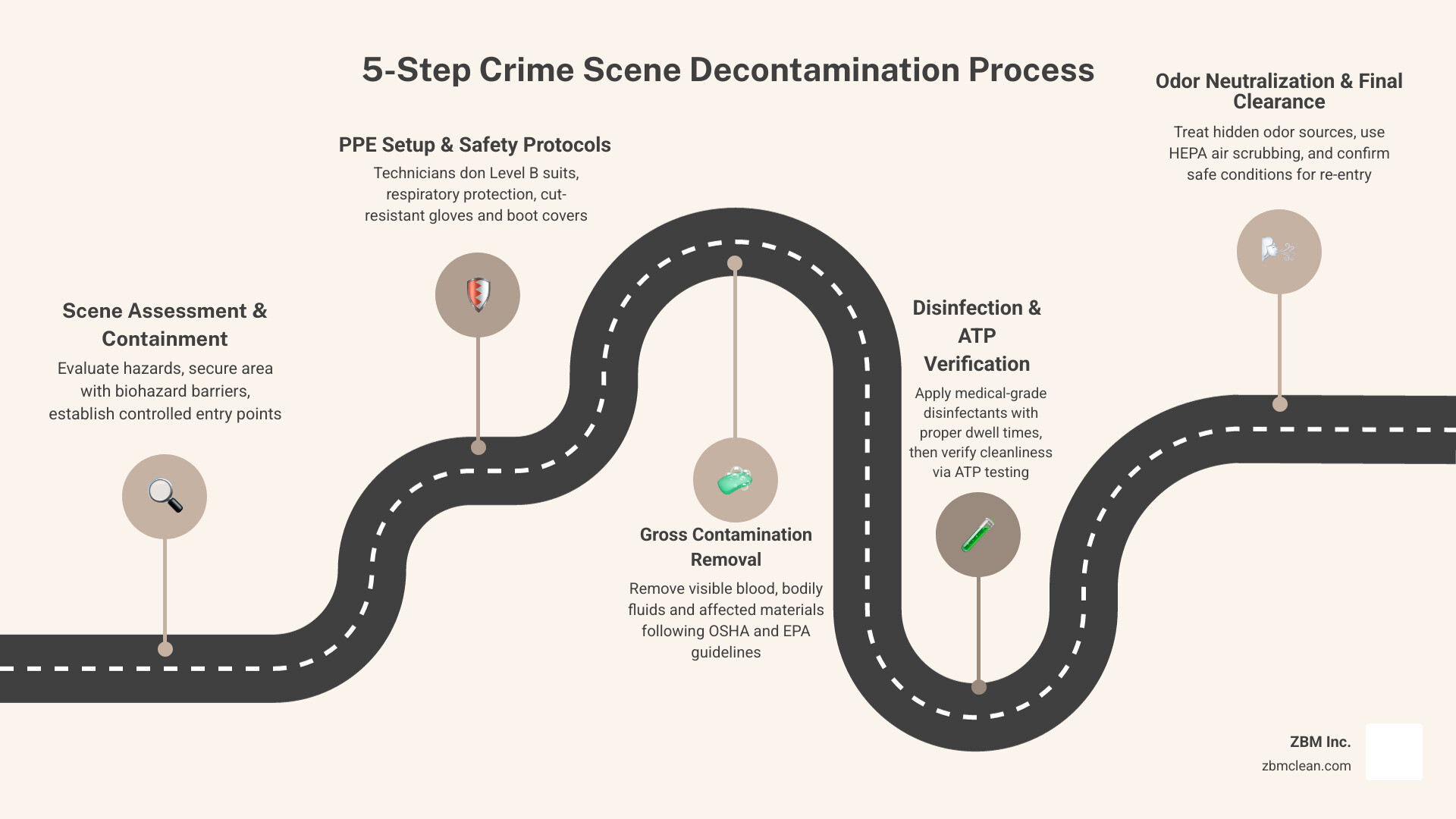
A key point many people miss: disinfection is not the same as deodorization. If contamination remains under flooring or behind walls, fragrance products will not solve the problem. They only create the world’s worst version of “clean linen over tragedy.”
Depending on the scene, odor control may include targeted neutralization, HEPA air scrubbing, filtration, and removal of contaminated porous materials. Some companies also use testing methods such as ATP monitoring as one tool in broader cleaning verification, though the exact approach depends on the type of contamination and surface involved.
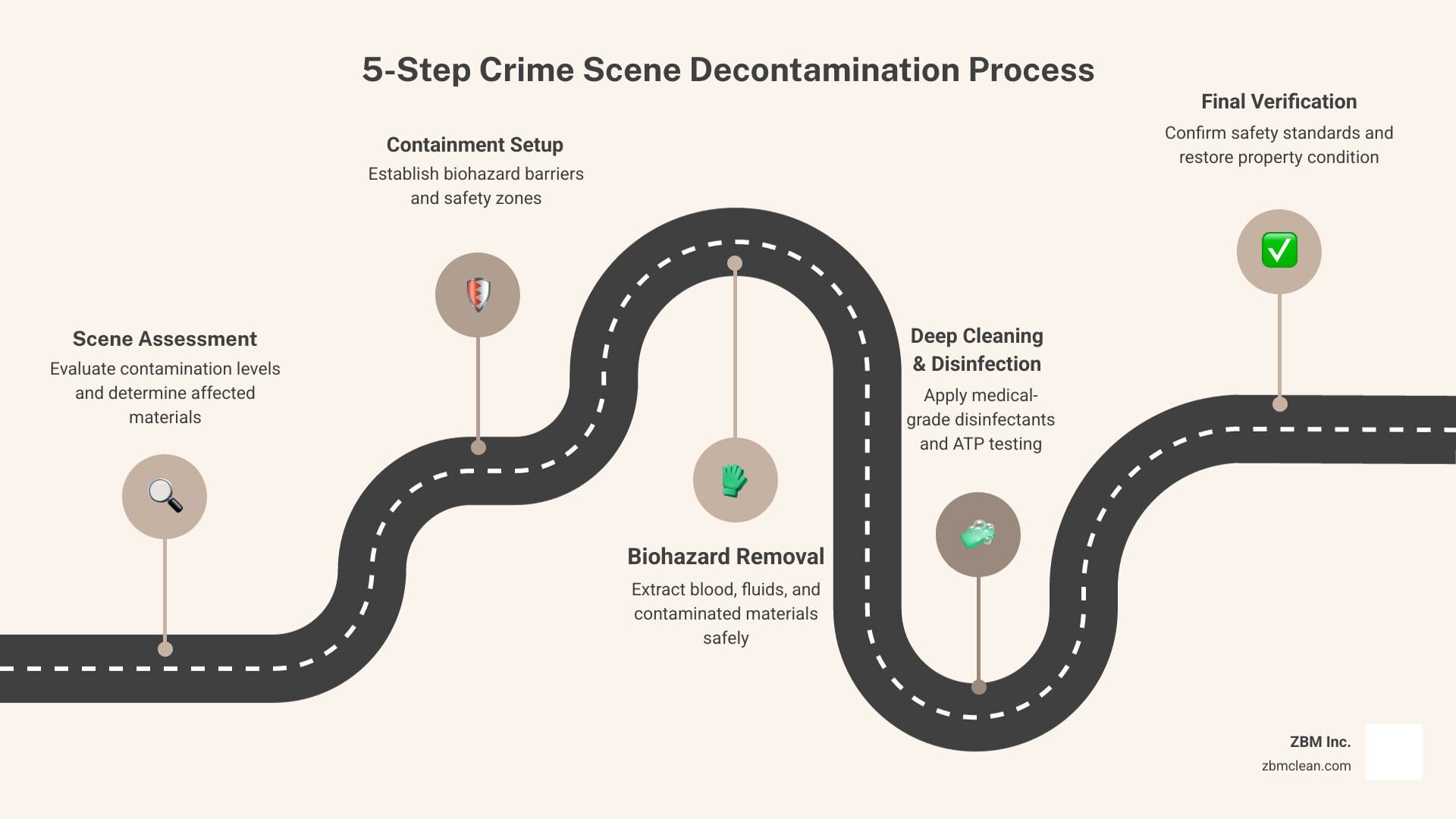
For a step-by-step look at the process, see What Happens During a Crime Scene Cleanup.
The Professional Process: Restoring Safety and Peace of Mind
Most families and property owners want to know, “What happens next?” A professional homicide cleanup process in Jefferson County generally follows these stages:
- Initial call and situation review
- Coordination around scene release
- On-site assessment and safety plan
- Containment of affected areas
- Removal of contaminated materials
- Detailed cleaning and disinfection
- Deodorization and verification
- Proper biohazard waste disposal
- Documentation for the client and, if needed, insurance
A trustworthy team will explain what can be cleaned, what must be removed, what the likely timeline is, and whether reconstruction may be needed afterward. They should also communicate clearly about access restrictions and next steps. In situations like this, nobody wants vague answers or mystery invoices.
You can learn more in What Do Crime Scene Cleanup Companies Do.
Homicide Scene Cleaning Jefferson Protocols
For homicide scene cleaning Jefferson properties, protocols begin with one non-negotiable rule: preserve evidence. Cleanup starts only after the scene is officially released. Once work begins, the team documents affected areas and uses a methodical approach to avoid disturbing items unnecessarily.
Professional protocols may include:
- Working from clean zones toward contaminated zones
- Photographing and documenting affected materials for records
- Removing blood, tissue, and impacted porous materials
- Addressing scene-processing residues such as fingerprint dust or chemicals where present
- Inspecting hidden migration paths of fluids
- Disinfecting structural surfaces
- Packaging waste in approved biohazard containers for lawful disposal
Some homicide scenes require light demolition. If blood has penetrated flooring systems or wall cavities, simply scrubbing the top layer is not enough. Drywall, carpet pad, tack strip, trim, insulation, or subfloor sections may need removal to eliminate risk and odor fully.
When choosing a company, prioritize training, transparency, and real biohazard experience. Our guide on how to choose the best crime scene cleanup companies can help.
Compassionate Handling of Personal Property
One of the hardest parts of homicide cleanup is not technical. It is human.
Families may worry about wedding rings, wallets, keys, photo albums, legal papers, military items, or other sentimental belongings. Professional crews should not treat the contents of a home like debris just because the situation is painful. Good technicians look carefully for valuables and clearly separate salvageable items from contaminated items.
That often means:
- Identifying and setting aside documents and valuables
- Asking the family or representative for instructions before disposal
- Photographing or inventorying sensitive items when appropriate
- Using discreet vehicles and low-profile service when possible
- Communicating with empathy, not clinical coldness
Compassion matters because people remember how they were treated in these moments. They may forget the brand of disinfectant used, but they will remember whether the crew acted with dignity and respect.
For more on selecting a careful provider, read Crime Scene Cleanup Company.
Responsibility, Insurance, and Victim Compensation in Jefferson County
After the immediate shock fades, practical questions show up fast: Who arranges cleanup? Who pays? Can insurance help?
In most cases, responsibility falls to the party with control of the property, such as:
- The homeowner
- A surviving family member or legal representative
- A landlord or property manager
- A business owner
- An estate executor or administrator
Law enforcement agencies generally do not pay for post-investigation sanitation of private property.
Here is a simple comparison:
| Situation | Common first payer | Notes |
|---|---|---|
| Owner-occupied home | Homeowners insurance or owner | Coverage depends on policy language and deductible |
| Rental property | Landlord/property owner insurance or owner | Lease terms may affect practical handling, but biohazard safety comes first |
| Commercial property | Commercial insurance or business owner | Business interruption concerns may also matter |
| Estate property | Estate funds, insurance, or family coordination | Executor may arrange services |
| Uninsured loss | Out-of-pocket, possible assistance programs | Documentation becomes especially important |
Our article on 8 benefits of hiring a crime scene cleanup company explains why professional documentation and proper procedures can reduce complications later.
Navigating Homeowners Insurance Claims
Homeowners insurance often covers sudden, accidental, or traumatic damage cleanup, but every policy is different. Some include biohazard remediation under property damage or special cleanup provisions. Others may limit coverage or exclude certain related costs.
A professional cleanup company can often help by providing:
- A clear scope of work
- Photos and documentation of affected areas
- Line-item estimates
- Communication that helps the adjuster understand why removal of materials was necessary
- In some cases, direct billing or coordination with the carrier
Important note: coverage depends on the specific policy, endorsements, deductibles, and claim facts. No honest company should promise universal coverage before the claim is reviewed.
For more help understanding what quality service looks like during a claim, see Why Our Crime Scene Cleanup Services Are Your Best Choice.
Wisconsin Victim Compensation Programs
Some families may also ask whether victim compensation can help. In Wisconsin, victims of violent crime or eligible family members may have access to state victim compensation or related assistance programs for certain expenses. Eligibility rules apply, and not every cleanup cost is automatically covered.
These programs may be worth exploring when:
- Insurance is unavailable or insufficient
- A family faces financial hardship after a homicide
- The victim’s relatives need support services in addition to cleanup
Victim assistance resources may also connect families with:
- Crisis counseling
- Advocacy services
- Referrals for legal or practical support
- Help understanding documentation requirements
For additional educational resources, browse our Crime Scene Cleanup category.
Frequently Asked Questions about Homicide Scene Cleaning Jefferson
When families search for homicide scene cleaning Jefferson, they usually need direct answers quickly. Here are the most common ones.
Who is responsible for arranging homicide scene cleaning Jefferson?
Usually, the person or entity responsible for the property arranges service. That may be a homeowner, landlord, family member, estate representative, business owner, or property manager. If multiple relatives are involved, it helps to identify one decision-maker so approvals, insurance communication, and access can be handled efficiently.
For a broader overview, see Your Complete Guide to Crime Scene Cleanup Companies.
How long does the cleanup process typically take?
Many homicide cleanup jobs can be completed in 24 to 48 hours once the scene is released, but there is no one-size-fits-all timeline. Factors that affect duration include:
- Size of the affected area
- Amount of blood or biological contamination
- Whether fluids penetrated structural materials
- Presence of odor or decomposition
- Need for demolition of flooring or drywall
- Insurance approvals or access limitations
A small, contained area may move faster. A scene with hidden contamination below finished surfaces may take longer and may require follow-on repair work.
Does homeowners insurance cover the cost of biohazard cleanup?
Often, yes, but not always. Many policies provide some path to coverage for trauma-related cleanup, especially when the event caused direct property contamination. Deductibles, exclusions, limits, and endorsements all matter. The best next step is to notify the carrier promptly and work with a cleanup company that can provide proper documentation.
What training and certifications should a reputable company have?
Look for a company that is licensed, bonded, and insured, with technicians trained in biohazard remediation, bloodborne pathogen safety, PPE use, and regulated waste handling. Experience with structural cleaning matters too, because many scenes require more than surface treatment. At ZBM Inc., we are family-owned, certified, and based in Watertown, serving Jefferson County and surrounding Wisconsin communities.
Why is professional cleanup safer than a general cleaning service?
General cleaners are not typically equipped for bloodborne pathogen hazards, scene containment, regulated waste disposal, or hidden contamination in structural materials. Professional biohazard technicians use universal precautions, specialized equipment, and compliant disposal methods. That protects both health and liability.
What should families expect during the process?
You should expect respectful communication, a walkthrough or assessment, explanation of what can be saved, a clear scope of work, careful handling of valuables, and discreet service. The best teams balance technical skill with empathy. This is one job where “good enough” is definitely not good enough.
Conclusion
When a violent death affects a home, apartment, business, or public-facing property, the next steps matter. Homicide scene cleaning Jefferson properties requires technical skill, legal awareness, proper PPE, regulated disposal, and genuine compassion for the people left behind.
At ZBM Inc., we provide professional biohazard remediation for Jefferson County and surrounding Wisconsin communities from our Watertown base. We are licensed, bonded, insured, family-owned, and staffed by certified professionals who understand both the safety requirements and the human side of this work.
If you need help now, learn more about our Crime Scene Cleanup Service Wisconsin. For additional reading, you can also review What to Look for in a Crime Scene Cleanup Company and Crime Scene Cleanup Companies: How to Choose the Right One.
In a situation like this, speed, discretion, and proper remediation are not luxuries. They are the standard.