Find Reliable Water Damage Restoration Services Near You Fast
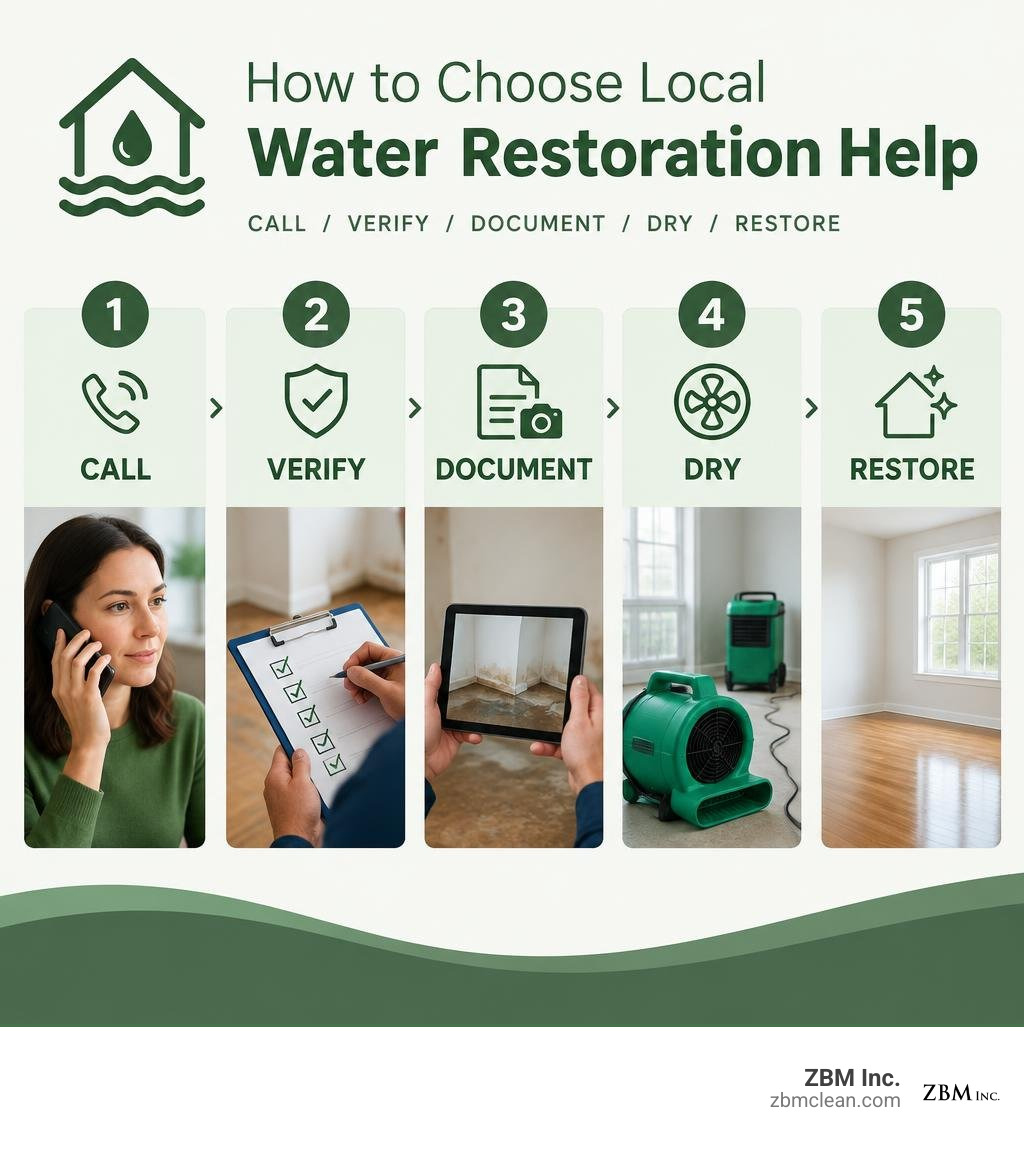
For fast help with water damage restoration services near me, contact a certified local restoration provider as soon as it is safe to do so. Ask whether they offer emergency response, water extraction, moisture testing, structural drying, cleaning, and documentation for an insurance claim.
Before hiring, confirm that the provider:
- Handles your type of loss, from a clean pipe leak to a sewage backup
- Has appropriate insurance and recognized restoration training or certification
- Can explain the scope of work, drying plan, and expected timeline
- Provides clear estimates and moisture records for your property manager or insurer
Water spreads farther than it first appears. A leaking pipe, failed appliance, roof leak, backed-up drain, or stormwater intrusion can soak drywall, flooring, insulation, and subfloors. Fast extraction and controlled drying can limit damage, reduce disruption, and help prevent mold growth. For contaminated water or sewage, do not attempt cleanup without qualified specialists and proper protective measures. The IICRC sets widely recognized standards for professional water damage restoration, and certified firms follow those protocols to help protect your property.
I am Terry Zastrow, owner of ZBM Inc., a certified firm with about 30 years of operational experience supporting public and private clients with specialized cleaning and restoration needs. Our training, safety programs, and technician certifications inform this guide to choosing water damage restoration services near me with confidence.
Water damage restoration services near me terminology:
How to Choose Water Damage Restoration Services Near Me
When indoor flooding strikes, finding an experienced, dependable cleanup team is your top priority. Water continues to migrate through porous building materials every minute it sits, turning minor puddles into extensive structural problems. Reviewing the ultimate guide to finding water damage restoration companies near me can help narrow down your local options, but you should also understand the essential criteria that set high-caliber professionals apart.
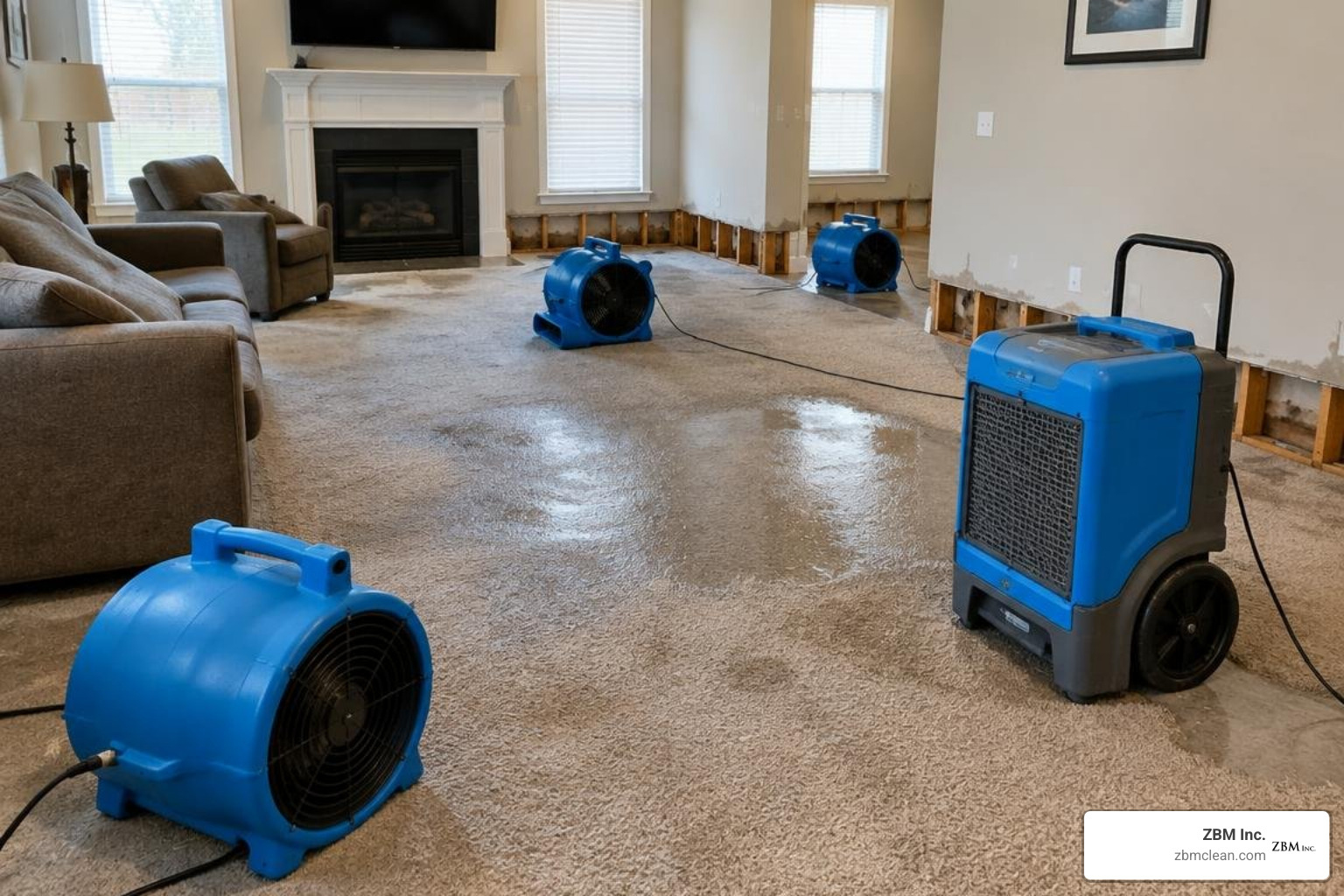
Attempting to resolve extensive water intrusion with consumer shop vacuums or small household fans is exhausting, time-consuming, and rarely successful. Hidden moisture remains trapped inside wall cavities and beneath floorboards, creating ideal breeding grounds for microbial growth. Hiring an expert ensures the job is done right the first time.
Evaluating Emergency Response Times and Industry Credentials
In any water crisis, time is your most precious asset. A reliable contractor should provide around-the-clock emergency dispatch across our service communities, including Dodge County, Jefferson County, Watertown, Lake Mills, and Southeastern Wisconsin.
When screening providers, confirm the following credentials:
- Industry Certification: Confirm that the restoration company maintains active certifications in water damage restoration, applied structural drying, and microbial remediation. ZBM Inc. is fully certified to handle complex structural losses.
- Licensing, Bonding, and Insurance: Ensure the company carries comprehensive general liability and workers’ compensation coverage to protect your property and finances.
- Rapid Arrival Windows: The best professionals arrive promptly to initiate extraction and stabilize indoor humidity levels before secondary damage spreads.
- Proven Community Standing: Look for established regional providers with verifiable local reputations rather than unvetted, out-of-area transient contractors.
Reviewing how to choose a reliable disaster restoration company near me gives you extra peace of mind when comparing local estimates and operational standards.
Vetting Residential and Commercial Mitigation Capabilities
Restoration needs vary dramatically between a flooded residential basement and a commercial facility with thousands of square feet of saturated carpeting. When managing rental properties or commercial buildings, you need a contractor with heavy-duty extraction trucks, commercial desiccant dehumidifiers, and the personnel to scale up quickly.
For business owners and facility supervisors, understanding specialized commercial water damage restoration tips can help minimize operational downtime. Similarly, homeowners benefit from reviewing home water damage restoration tips to prepare their space before our technicians arrive on site.
Step-by-Step Emergency Water Extraction and Recovery
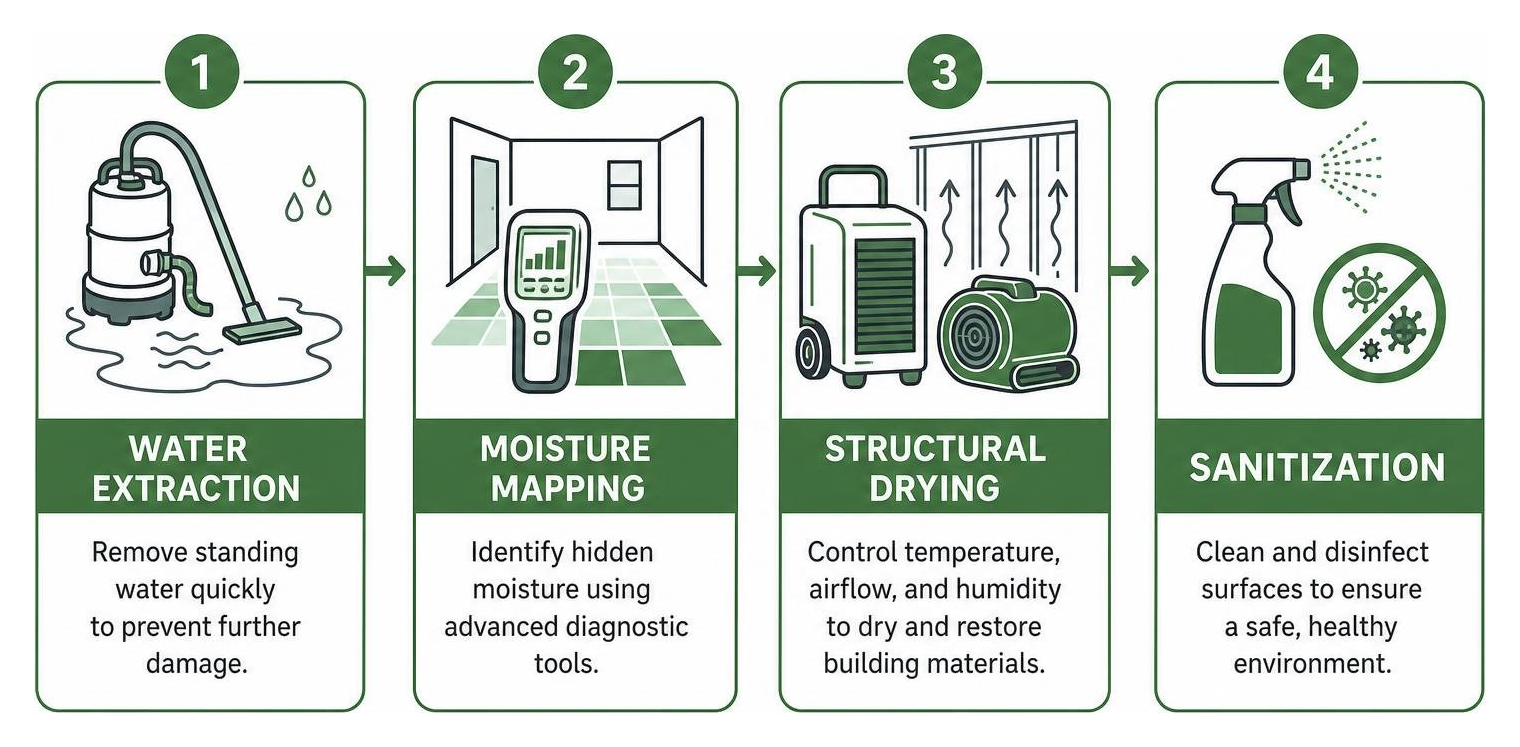
Professional mitigation follows a rigorous scientific methodology known as psychrometrics (the science of drying). Certified technicians do not merely wipe up standing water; they control temperature, air circulation, and humidity to draw moisture out of deeply embedded materials. Knowing what to do immediately after a disaster damages your property sets the stage for a smooth cleanup process.
Inspection, Assessment, and Moisture Mapping
The recovery process begins with a comprehensive physical assessment. Water travels along the path of least resistance, often pooling behind baseboards, beneath tiles, and inside crawl spaces far from the original source.
Technicians utilize advanced diagnostic tools to evaluate the building:
- Thermal Imaging Cameras: Infrared cameras reveal temperature variations caused by hidden evaporation inside ceilings and behind drywall.
- Non-Invasive Moisture Meters: Electronic pinless meters measure moisture levels in hardwood flooring and plaster without damaging surfaces.
- Penetrating Probes: Pin meters measure exact saturation percentages inside structural wall studs and subflooring.
- Relative Humidity Sensors: Thermo-hygrometers track ambient air conditions to calculate precise dehumidification requirements.
Understanding the 5 steps to cleaning up the water from your home helps property owners follow along as our crew maps out every pocket of hidden moisture.
Water Extraction and High-Powered Dehumidification
Once the assessment is complete, the physical extraction begins. Removing water in liquid form is hundreds of times faster and more energy-efficient than removing it solely through evaporation. Certified teams deploy high-volume submersible pumps for deep standing water and powerful truck-mounted extraction units for carpets and padding.
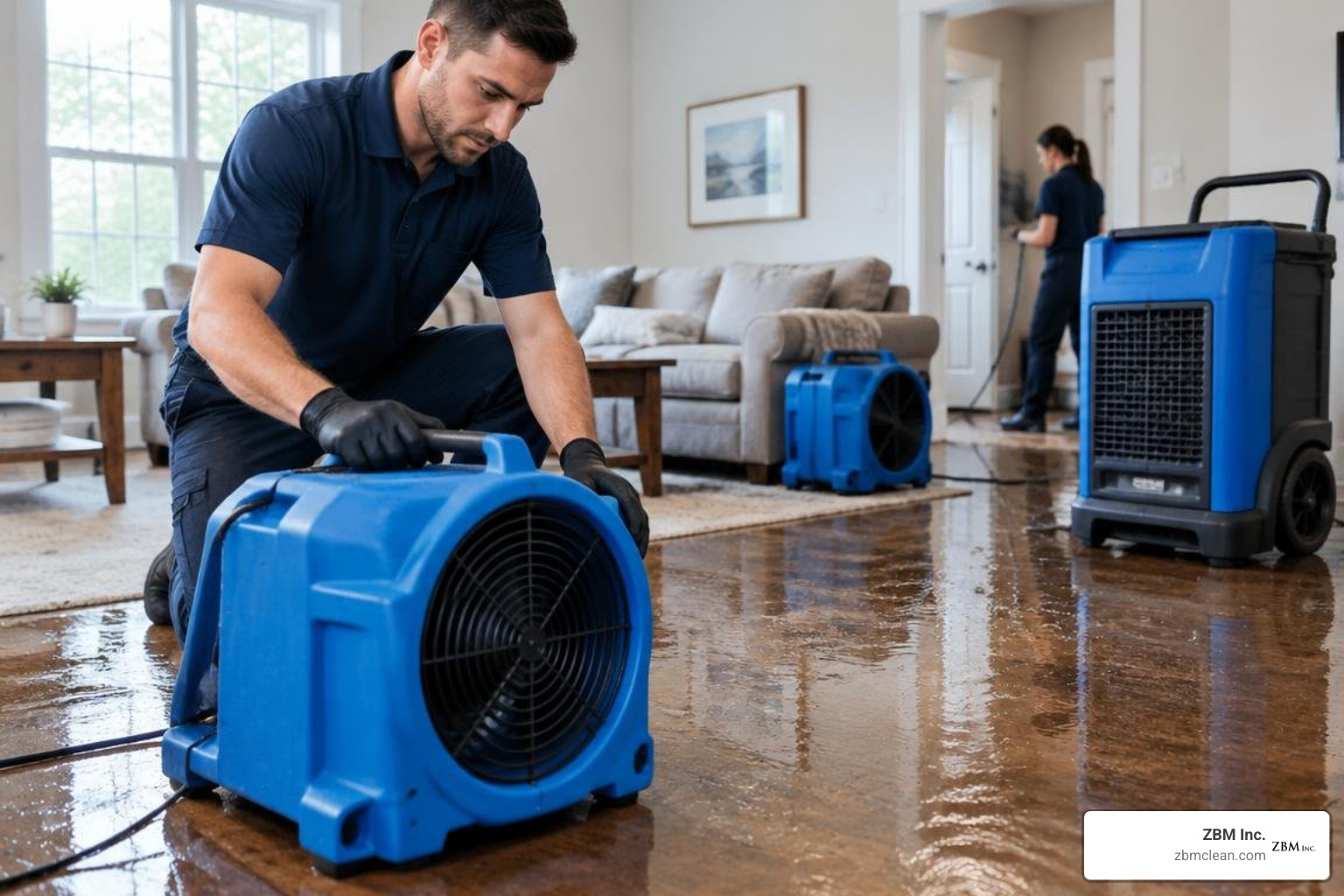
After bulk water removal, industrial air movers and Low-Grain Refrigerant (LGR) dehumidifiers are positioned strategically. Air movers drive moisture out of structural elements into the surrounding air, while dehumidifiers condense and pump that water out of the building. Taking proactive measures, such as learning ways to protect your home’s floors from water, helps safeguard expensive hardwoods from cupping and crowning during unexpected emergencies.
Sanitization, Deodorization, and Mold Prevention
The final phase of structural mitigation focuses on hygiene and air quality. Saturated materials quickly develop unpleasant odors due to bacterial activity. Restoration crews apply EPA-registered antimicrobial solutions to inhibit fungal and bacterial growth on structural framing.
Commercial HEPA air scrubbers run continuously to filter airborne particulates, fungal spores, and lingering odors. Technicians maintain daily drying logs to confirm that all building materials have returned to their normal, dry baseline standards before equipment is removed. Discovering how professional cleaning restoration services save your property illustrates why professional chemical treatment and industrial filtration are vital for maintaining a healthy indoor environment.
Understanding Water Damage Categories and Hidden Hazards
The IICRC defines three distinct categories of water damage based on the level of contamination present at the source. Knowing the type of water involved dictates the required safety gear, extraction techniques, and salvageability of affected items.
| Water Category | Water Source Examples | Contamination Level | Required Response Protocol |
|---|---|---|---|
| Category 1: Clean Water | Broken supply lines, sink overflows, melting snow | Non-hazardous at the source | Rapid extraction and drying; materials can usually be saved if handled quickly. |
| Category 2: Grey Water | Dishwasher discharge, washing machine overflows, sump pump failures | Moderate chemical or biological contaminants | Antimicrobial treatment; saturated carpet padding and porous insulation often require removal. |
| Category 3: Black Water | Sewage backups, river/lake flooding, standing groundwater | Highly hazardous; contains pathogens and toxins | Strict containment, full PPE, disposal of all porous materials, and intensive biohazard sanitation. |
When plumbing fails during cold Wisconsin winters, reviewing 6 tips for cleaning up after a burst pipe can help you quickly address Category 1 supply leaks before standing water degrades into a hazardous Category 2 or 3 situation.
Identifying Signs of Hidden Water Damage and Mold Growth
Water damage is not always as obvious as a burst pipe. Slow, hidden leaks inside walls or subfloors can persist for weeks unnoticed. Homeowners and commercial property managers should watch for these classic warning signs:
- Persistent Musty Odors: An earthy, damp smell that lingers even after surface cleaning indicates active mold colonization behind walls or beneath flooring.
- Visible Surface Distortions: Peeling wallpaper, bubbling paint, warped baseboards, and sagging drywall indicate chronic saturation.
- Discoloration and Staining: Yellowish-brown rings on ceilings or dark patches along floor perimeters signal active or recurring moisture intrusion.
- Unexplained Spikes in Utility Bills: A sudden, unexpected increase in your water bill often points to a hidden pipe leak behind structural framing.
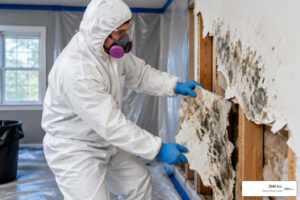
Handling mold and hidden saturation yourself is rarely effective. Surface scrubbing with household bleach leaves deep root systems intact within porous drywall and wood framing, allowing colonies to rebound quickly. Professional containment and negative air pressure systems are essential for thorough remediation.
Managing Contaminated Water and Sewage Backups
Category 3 black water incidents—such as municipal sewer backups or toilet overflows containing fecal matter—pose immediate health hazards. Attempting to clean raw sewage without commercial personal protective equipment (PPE), heavy-duty extraction tools, and hospital-grade biocides puts occupants at risk of serious gastrointestinal and respiratory illnesses.
In these hazardous environments, certified teams follow strict biohazard containment protocols. Saturated drywall, insulation, and carpet are carefully removed and bagged to prevent cross-contamination. After thorough sanitization, structural surfaces are verified pathogen-free before rebuilding begins. Professional emergency disaster recovery after damage strikes ensures all hazardous waste is safely extracted, sanitized, and legally disposed of.
Navigating Insurance Claims for Property Water Mitigation
Filing a property water claim can be overwhelming when you are already dealing with property loss. Fortunately, working with an experienced restoration contractor simplifies the insurance claims process substantially.
To streamline your claim:
- Document Before Discarding: Take detailed photographs and video of all damaged structural areas and personal property before items are removed.
- Maintain Moisture Records: Insurers require scientific proof that structural drying was necessary and executed according to industry guidelines. Professional contractors maintain daily psychrometric logs detailing equipment placement and moisture level drops.
- Coordinate with Adjusters: An established local restoration provider will work directly with your insurance adjuster, providing industry-standard estimating data to avoid out-of-pocket claim discrepancies.
- Understand Policy Limits: Check whether your policy covers sudden and accidental discharge, sewer backup endorsements, or overland flood damage. Reviewing flood cleanup companies near me: what to look for before you hire will help you prepare the necessary paperwork for your adjuster.
Frequently Asked Questions About Local Water Restoration
How quickly should I book water damage restoration services near me?
You should secure professional water damage services within the first 24 to 48 hours of discovery. Mold spores can begin colonizing damp drywall, carpeting, and wood framing within 24 to 48 hours in warm, humid environments. Immediate extraction stops moisture from migrating deeper into the building envelope, preserving structural integrity and keeping restoration costs significantly lower.
What factors determine the cost of water damage restoration services near me?
Restoration costs depend primarily on four core variables:
- Total Affected Area: The square footage of saturated flooring, drywall, and framing.
- Water Contamination Category: Category 1 clean water cleanup requires fewer biohazard safety measures and less structural demolition than Category 3 sewage intrusions.
- Drying Duration: The number of commercial air movers and LGR dehumidifiers deployed and how many days they must run to reach baseline dry standards.
- Reconstruction Requirements: Whether repairs are limited to drying and sanitization or require drywall replacement, subfloor repair, and new flooring installation.
Does homeowners insurance cover sudden burst pipes and basement flooding?
Standard homeowners insurance policies typically cover sudden and accidental water discharges, such as a ruptured supply line, an appliance failure, or an unexpected pipe freeze. However, standard policies generally exclude gradual leaks that occurred over months due to poor maintenance, external overland flooding from heavy rains, and municipal sewer backups unless you have added specific flood insurance riders or sewer backup endorsements.
Conclusion
When water breaches your home or business, every hour matters. Delaying professional mitigation increases the risk of structural weakening, secondary mold growth, and costly interior reconstruction. While handling the cleanup yourself might seem like a way to save money, consumer-grade tools simply cannot draw deeply trapped moisture out of subflooring, wall cavities, and framing. Partnering with certified, family-owned professionals ensures the job is done thoroughly, safely, and efficiently.
At ZBM Inc., we bring decades of hands-on expertise, certified technicians, and top-tier extraction equipment to every emergency. Whether you are dealing with a burst pipe in Watertown, a flooded commercial warehouse in Jefferson County, or an unexpected basement backup in Minocqua or Northwoods WI, our team is standing by to protect your property. For immediate emergency response, comprehensive moisture mapping, and complete peace of mind, explore our trusted disaster restoration services in Dodge and Jefferson County, WI today.