A Practical Routine for Cleaning Restaurants at Night
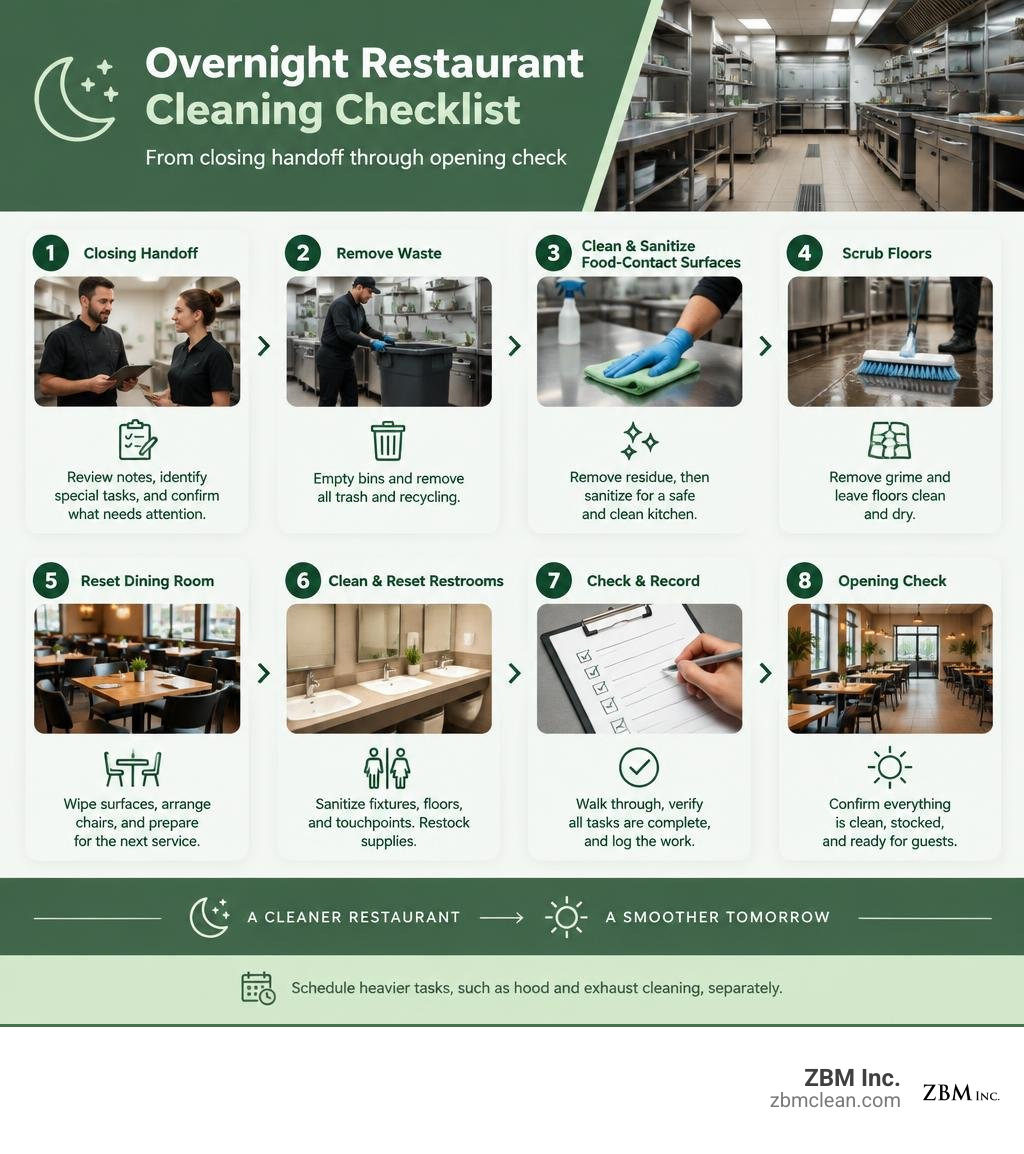
For cleaning restaurants at night, begin after food prep ends. Remove waste, clean and sanitize food-contact surfaces, scrub floors, reset the dining room and restrooms, then check and record the work before opening. Schedule heavier tasks, such as hood and exhaust cleaning, separately.
This routine keeps disruptive work away from guests and gives floors time to dry before the next shift.
I’m Terry Zastrow, owner of certified ZBM Inc., a Wisconsin cleaning company with nearly 30 years of operational history. My technician and master technician training informs the practical approach to cleaning restaurants at night in this guide.
Cleaning restaurants at night helpful reading:
Why Cleaning Restaurants at Night Outperforms Daytime Maintenance
Operating a busy dining establishment requires seamless coordination. Attempting to scrub heavy grease, polish floors, or sanitize dining areas while serving meals disrupts the guest experience and introduces safety risks. Nighttime sanitation gives dedicated crews the uninterrupted time needed to restore every square foot of the building.
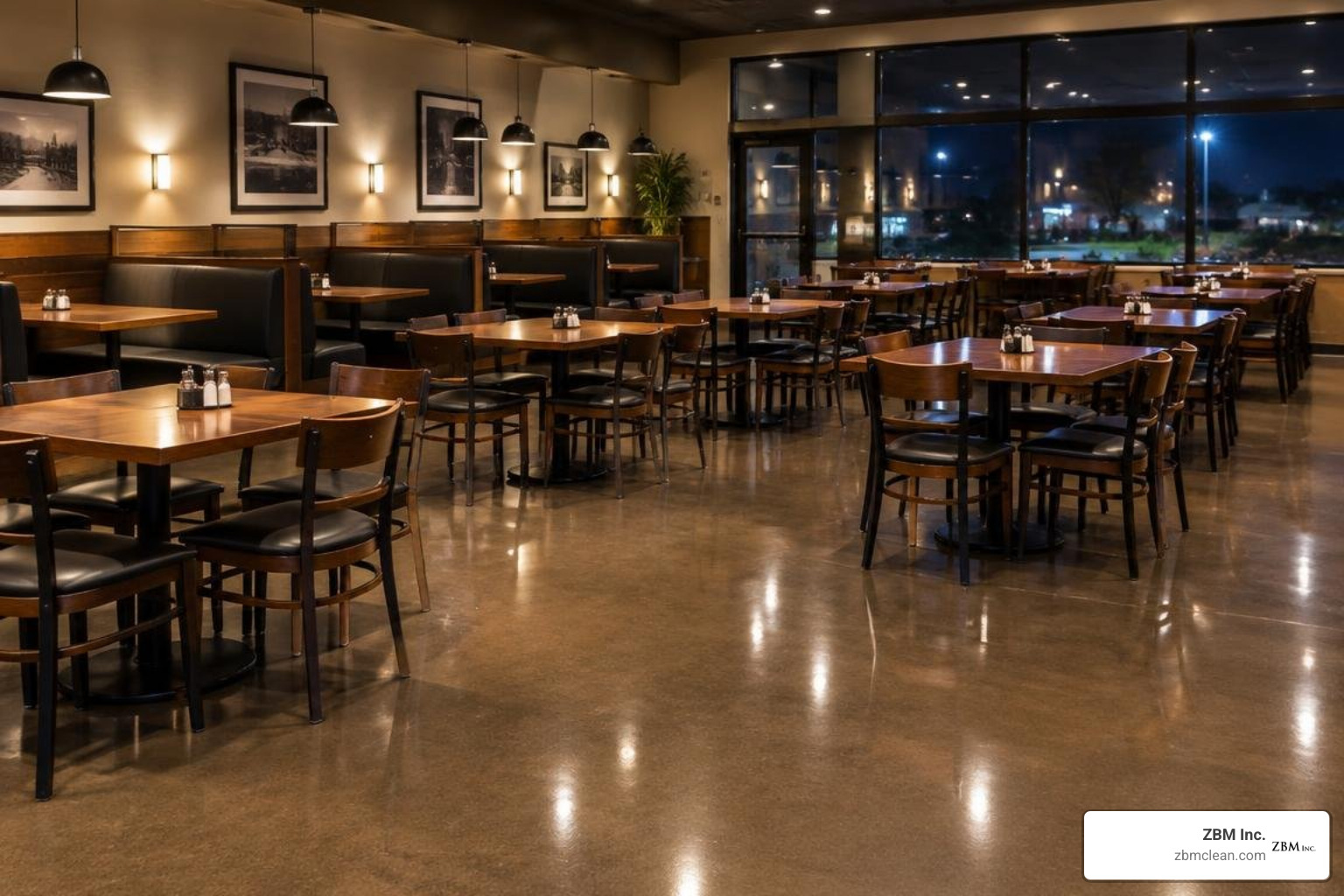
When dining rooms are vacant, professional cleaners can move heavy furniture, operate auto-scrubbers, and let specialized sanitizers dwell for the necessary contact time without exposing patrons to harsh chemical odors or wet floors. Attempting to manage thorough facility hygiene during business hours often leads to incomplete surface sanitation and hazardous slip-and-fall conditions.
Partnering with a trusted provider for commercial cleaning ensures that your dining room, kitchen, and service stations are impeccably sanitized, dry, and fully prepped before your morning staff arrives.
Health Code Compliance, HACCP, and Fire Safety
A single critical health code violation can lead to sudden fines or force a restaurant to shut its doors for days. Most health inspections cite grease buildup, improper surface sanitation, and evidence of pests as top infractions. Nightly sanitation tackles these risks by systematically eliminating food debris, degreasing vulnerable areas, and maintaining critical Hazard Analysis Critical Control Point (HACCP) touchpoints.
Kitchen exhaust systems and cooking lines carry significant fire risks if neglected. Standard fire safety protocols, including NFPA 96, emphasize maintaining exhaust systems and cooking equipment free of excessive grease. Having a reliable commercial kitchen cleaning schedule executed by professionals prevents grease accumulation behind cooking lines and near open flames, protecting your business, employees, and building from dangerous fire hazards.
Enhancing Guest Experience and Eliminating Staff Burnout
Guest perception begins the moment a customer steps through your doors. Clean entryways, grease-free floors, and fresh-smelling dining rooms build trust. Conversely, a single bad review complaining about dirty tables or unpleasant restroom odors can cause long-term reputational damage and drive potential diners away.
Relying on kitchen cooks and front-of-house servers to mop floors and scour drains after a grueling 10-hour shift often leads to high turnover and rushed, substandard cleaning. Staff members are exhausted at midnight, which increases the likelihood of cross-contamination and missed grease traps. Handing after-hours duties over to professional cleaning specialists eliminates staff burnout, curbs overtime payroll costs, and ensures your team arrives refreshed for morning meal prep.
Step-by-Step Protocols for After-Hours Dining and Kitchen Sanitization
Professional nightly sanitation relies on structured execution to ensure total hygiene across front-of-house and back-of-house zones.
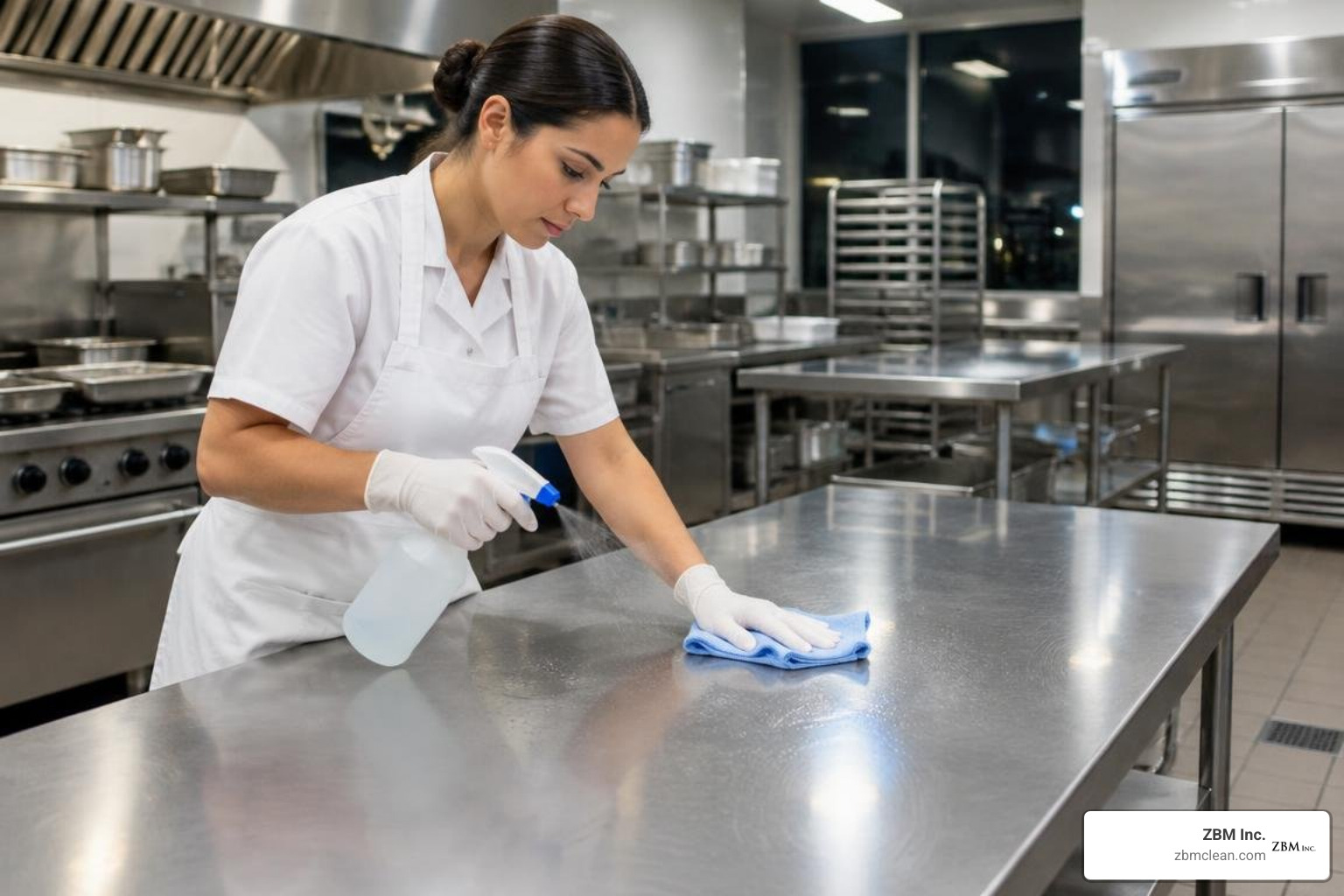
Attempting to tackle complex restaurant sanitization without specialized equipment is inefficient and often fails to eliminate deeply embedded grease or biological contaminants. Reviewing professional methods for restaurant cleaning shows how systematic processes ensure compliance with modern food safety benchmarks, including standards outlined in the FDA Food Code 2026.
Front-of-House Reset and Restroom Sanitization Standards
The dining room and bar areas require meticulous care to create a pristine first impression. Night shift crews systematically sanitize tabletops, wipe down booths, polish bar rails, clean entryway glass, and empty all front-of-house trash receptacles.
Restroom cleanliness directly influences your online reputation. Our crews deliver targeted commercial restroom cleaning by sanitizing fixtures, scrubbing partition walls, wiping mirrors, and restocking soap and paper supplies. Dining room hard surfaces receive high-grade commercial floor cleaning to strip away sticky beverage residue and restore slip resistance.
Back-of-House Line Protocols and Cleaning Restaurants at Night
Kitchen lines endure intense heat, grease splatter, and heavy food traffic throughout service. Behind the cook line, grease frequently collects along wall joints, under heavy equipment, and around floor drains, creating severe pest and fire risks.
Night sanitation crews focus on degreasing prep stations, exterior equipment shells, walk-in cooler shelving, and floor drains. To prevent cross-contamination and health violations, verifying the hygiene behind the cook line requires professional-grade degreasers and mechanical scrubbing that typical in-house closing routines cannot match.
Workflow Logistics, Access Control, and Cleaning Restaurants at Night
A smooth after-hours cleaning program requires clear security protocols and strict scheduling. Night crews operate within set time windows—typically starting after the kitchen closes and finishing well before the morning opening team arrives.
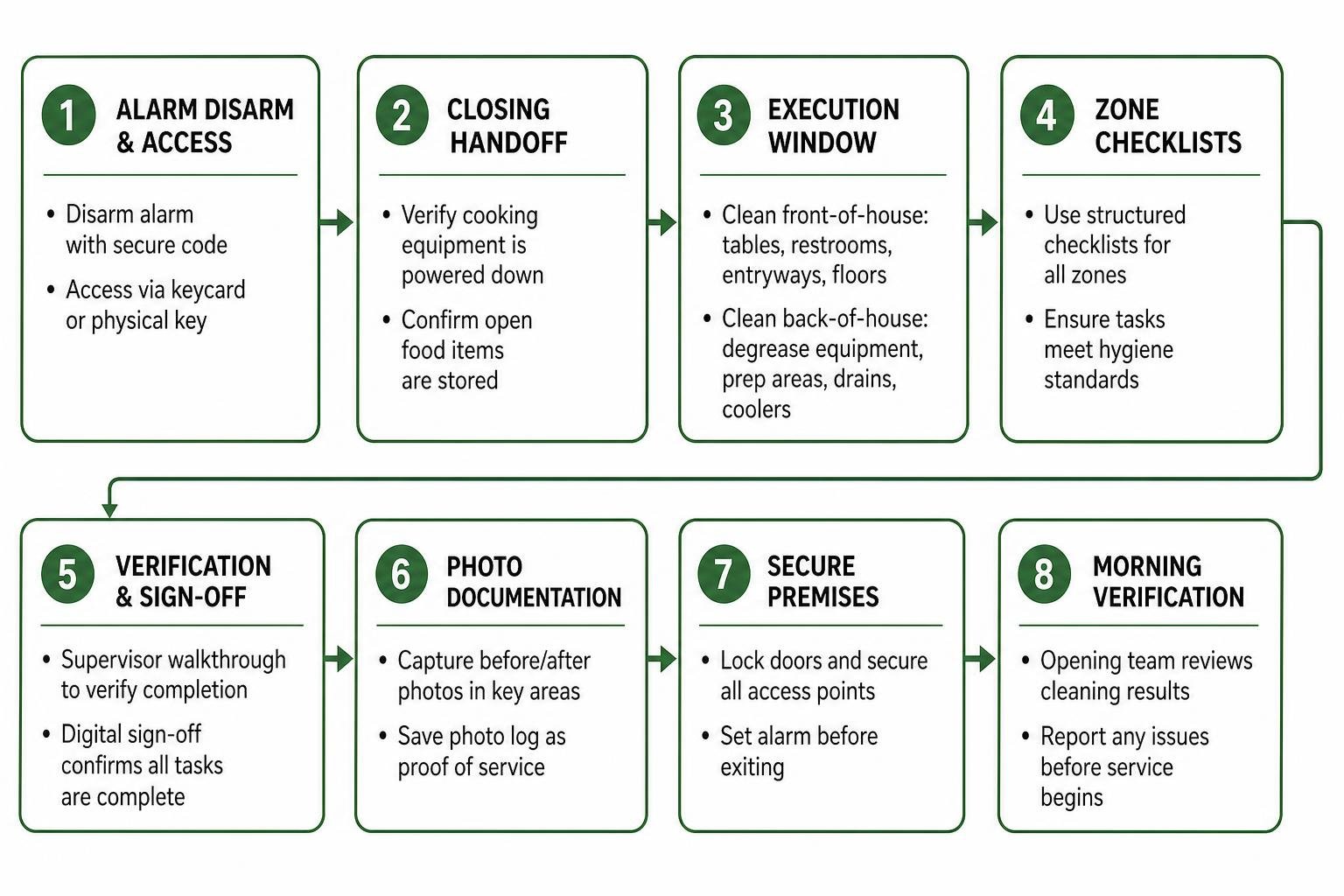
Key logistics include:
- Access Protocols: Coordination of secure alarm disarm codes, keycards, and physical key management.
- Closing Handoff: Quick verification that kitchen staff have powered down cooking equipment and stored open food items.
- Execution Window: Efficient completion of all designated zones without interfering with deliveries.
- Verification and Sign-Off: Documented walkthroughs and digital photo logs confirming task completion before securing the premises.
Nightly Maintenance vs. Periodic Deep Facility Cleaning
Understanding the difference between nightly janitorial maintenance and periodic deep restorative cleaning helps operators budget effectively and maintain sanitary conditions year-round.
| Cleaning Scope | Nightly Janitorial Maintenance | Periodic Deep Kitchen Cleaning |
|---|---|---|
| Primary Focus | Daily soil removal, surface sanitization, and trash disposal | Restorative grease extraction, heavy equipment descaling |
| Dining Area | Table wiping, vacuuming, hard floor mopping, glass cleaning | Carpet hot-water extraction, upholstery deep-cleaning |
| Restrooms | Daily disinfection of fixtures, mopping, supply restocking | Deep tile and grout acid washing, full wall sanitation |
| Kitchen Areas | Sweeping/mopping floors, exterior wipe-downs, drain clearing | Pulling equipment from walls, deep degreasing, detailing walk-ins |
| Floor Care | Nightly sweeping and slip-resistant mopping | Machine scrubbing, chemical stripping, and waxing |
| Frequency | 5 to 7 nights per week | Monthly, quarterly, or semi-annually |
Attempting to handle periodic deep tasks using basic in-house tools is difficult, physically demanding, and often leaves stubborn grease and biofilm untouched behind appliances. Choosing certified, insured professionals ensures that both daily maintenance and heavy restorative projects meet the highest sanitary standards.
For dining establishments across Watertown, Lake Mills, and the greater Dodge and Jefferson County regions, partner with ZBM Inc. for commercial cleaning services in Dodge and Jefferson County, WI to keep your facility spotless, code-compliant, and ready for every guest.