Bathroom Deep Clean Checklist: Start at the Top, Finish at the Floor
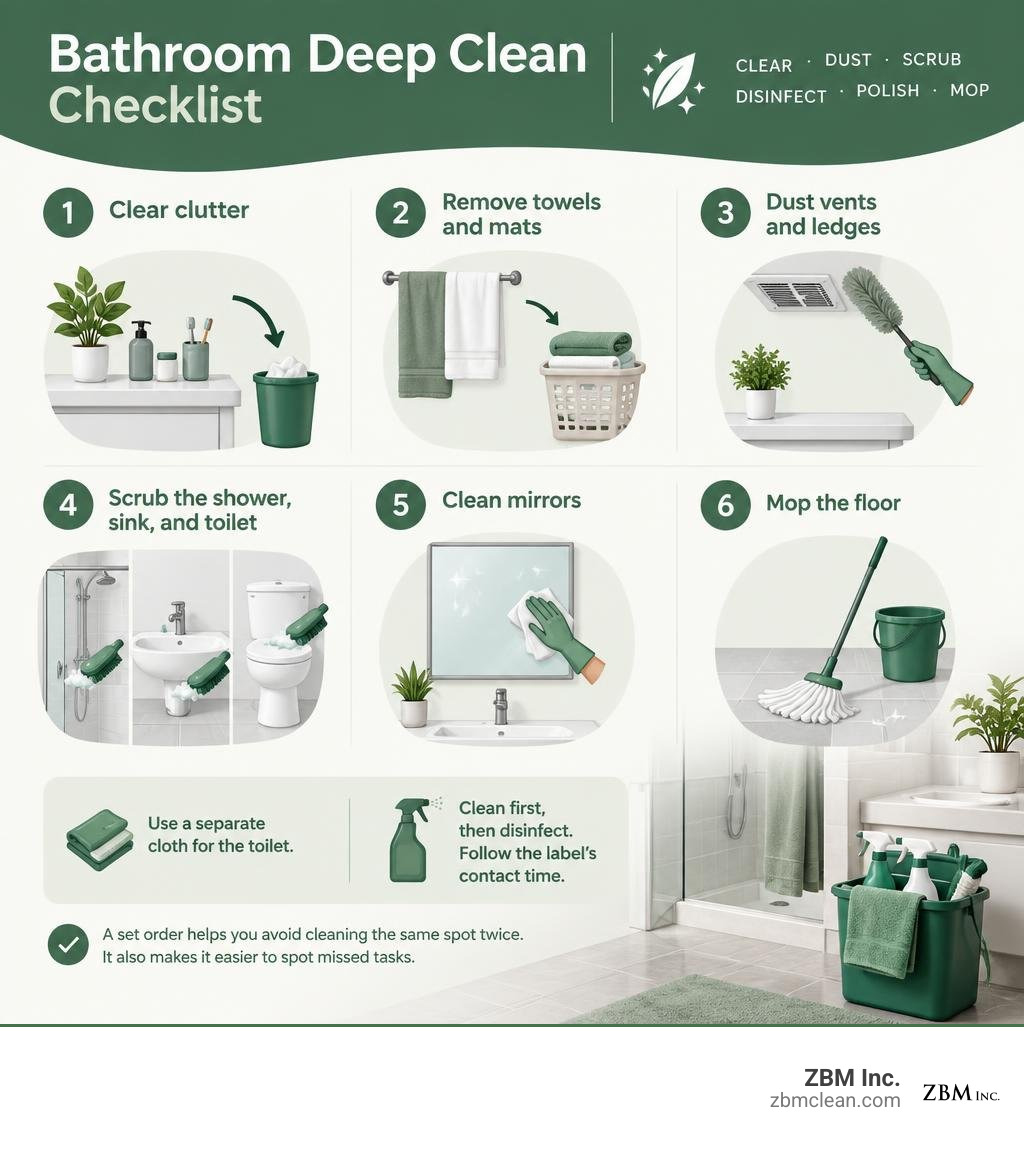
A professional bathroom deep clean checklist follows a set order: clear clutter, remove towels and mats, dust vents and ledges, scrub the shower, sink, and toilet, then clean mirrors and mop the floor. Certified technicians use a separate cloth for the toilet and follow disinfectant label contact times to ensure surfaces are properly sanitized.
A set order helps cleaning crews avoid cleaning the same spot twice. In a busy office restroom, it also makes it easier to spot missed tasks, such as empty soap dispensers or dirty door handles.
I’m Terry Zastrow, owner of ZBM Inc., an IICRC-certified cleaning firm with about 30 years of experience serving public agencies and private clients. This bathroom deep clean checklist reflects the professional standards we apply to make a thorough clean easier to verify.
Bathroom deep clean checklist vocab to learn:
- bathroom cleaning checklist
- bathroom maintenance checklist
- bathroom sanitation checklist
The Comprehensive Bathroom Deep Clean Checklist by Zone
Maintaining proper bathroom sanitation requires an understanding of chemical contact times, air quality management, and cross-contamination prevention. Tackling an intensive bathroom scrub on your own often turns into an exhausting, multi-hour ordeal. Without commercial-grade extraction systems, HEPA filtration vacuums, and hospital-grade sanitizers, scrubbing high-traffic restrooms rarely removes deeply embedded pathogens or stubborn mineral scale.
According to commercial hygiene studies, 68% of people report having a particularly unpleasant experience in poorly maintained public restrooms. Furthermore, 90% of individuals cite unflushed toilets, 89% point to foul odors, and 88% highlight overflowing trash cans as defining factors of a dirty space. Proper deep cleaning addresses these core sanitation points by targeting bacterial reservoirs that surface wiping completely misses.
Essential Supplies and Prep for a Professional Bathroom Deep Clean
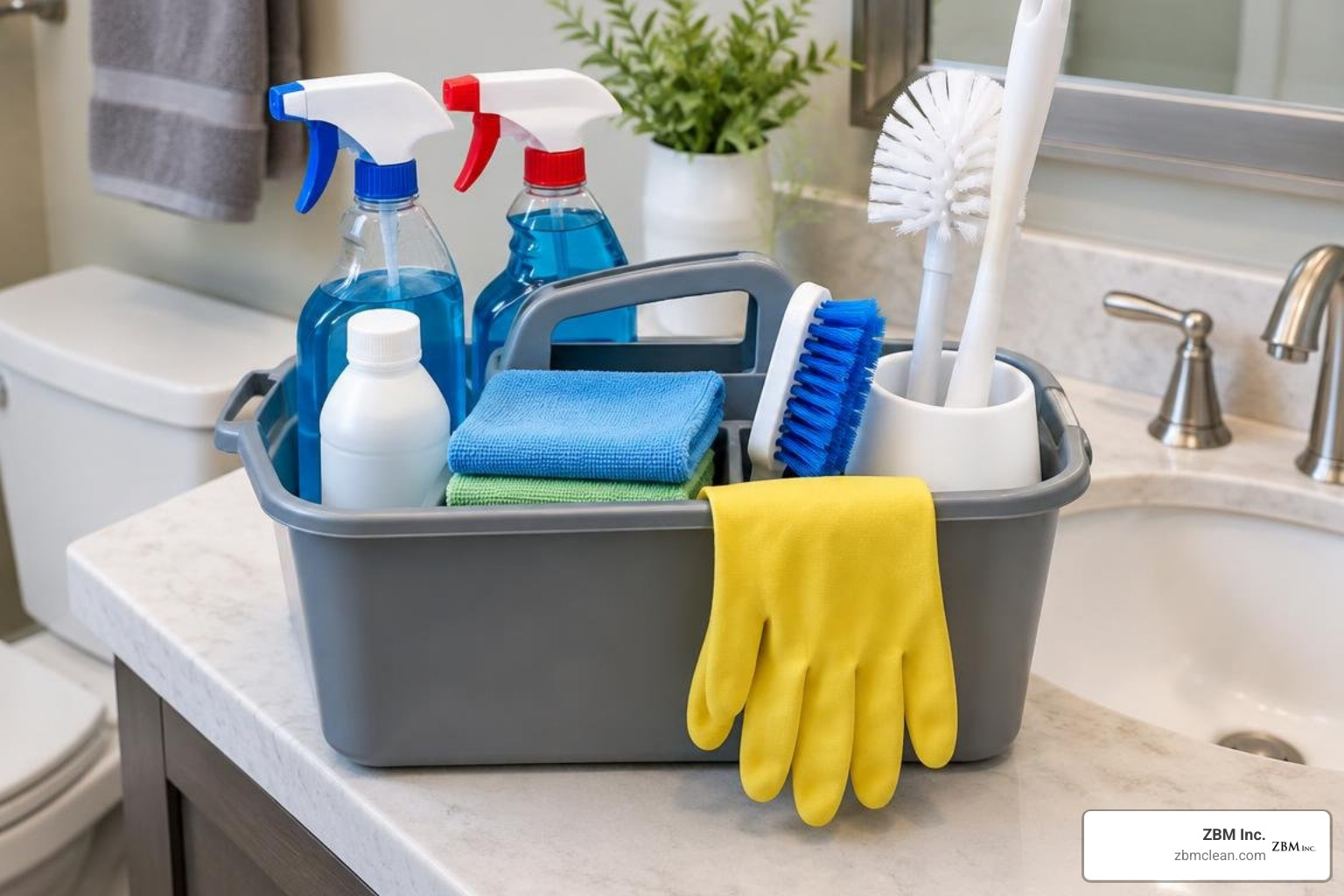
Preparing a bathroom for an exhaustive clean requires careful staging. Professional teams begin by removing floor mats, clearing vanities, and inspecting every fixture for physical damage or mineral buildup. Managing this inventory of microfiber tools, pH-neutral cleaners, and heavy-duty degreasers can quickly become overwhelming for property managers and homeowners alike.
Rather than purchasing dozens of specialized chemicals and risking damage to delicate fixtures, many property owners find success by hiring certified specialists. If your facility has suffered from prolonged neglect, bringing your bathroom back from the brink requires industrial equipment to restore sanitary baselines. You can reference this printable bathroom cleaning guide to understand the sheer volume of supplies, safety gear, and time commitments required for such an undertaking.
How Professionals Address Toilets, Showers, and Sinks
Toilets, shower enclosures, and vanities harbor complex biological soils, body oils, and heavy mineral deposits. A comprehensive professional service addresses these fixtures in a strict technical sequence:
- Toilet Bowl Descaling and Disinfection: Technicians treat porcelain surfaces with targeted descaling solutions to eliminate uric acid crystals, sub-rim bacteria, and stubborn hard-water rings.
- Showerhead and Fixture Mineral Extraction: Aerators and showerheads collect heavy limescale, which reduces water pressure and fosters biofilm growth inside the nozzles.
- Soap Scum and Glass Enclosure Restoration: Heavy buildup on shower glass and surround panels requires specific emulsifiers to lift scum without scratching tempered surfaces.
- Vanity, Basin, and Drain Sanitation: Sinks collect trapped toothpaste, cosmetic residue, and hair within the pop-up assemblies, requiring deep drain sanitation and tap polishing.
- Mirror and Reflective Surface Polishing: Glass cleaners remove water splashes and aerosolized residues without leaving cloudy streaks.
Attempting to scrub these zones by hand without commercial equipment is physically demanding and often leaves stubborn stains untouched. Following our ditch the grime with effective sanitation protocols ensures every fixture meets clinical hygiene standards. Understanding how to clean a bathroom thoroughly highlights why commercial tools achieve results far beyond ordinary residential scrub brushes.
Conquering Tile, Grout, Exhaust Fans, and Hard-to-Reach Areas
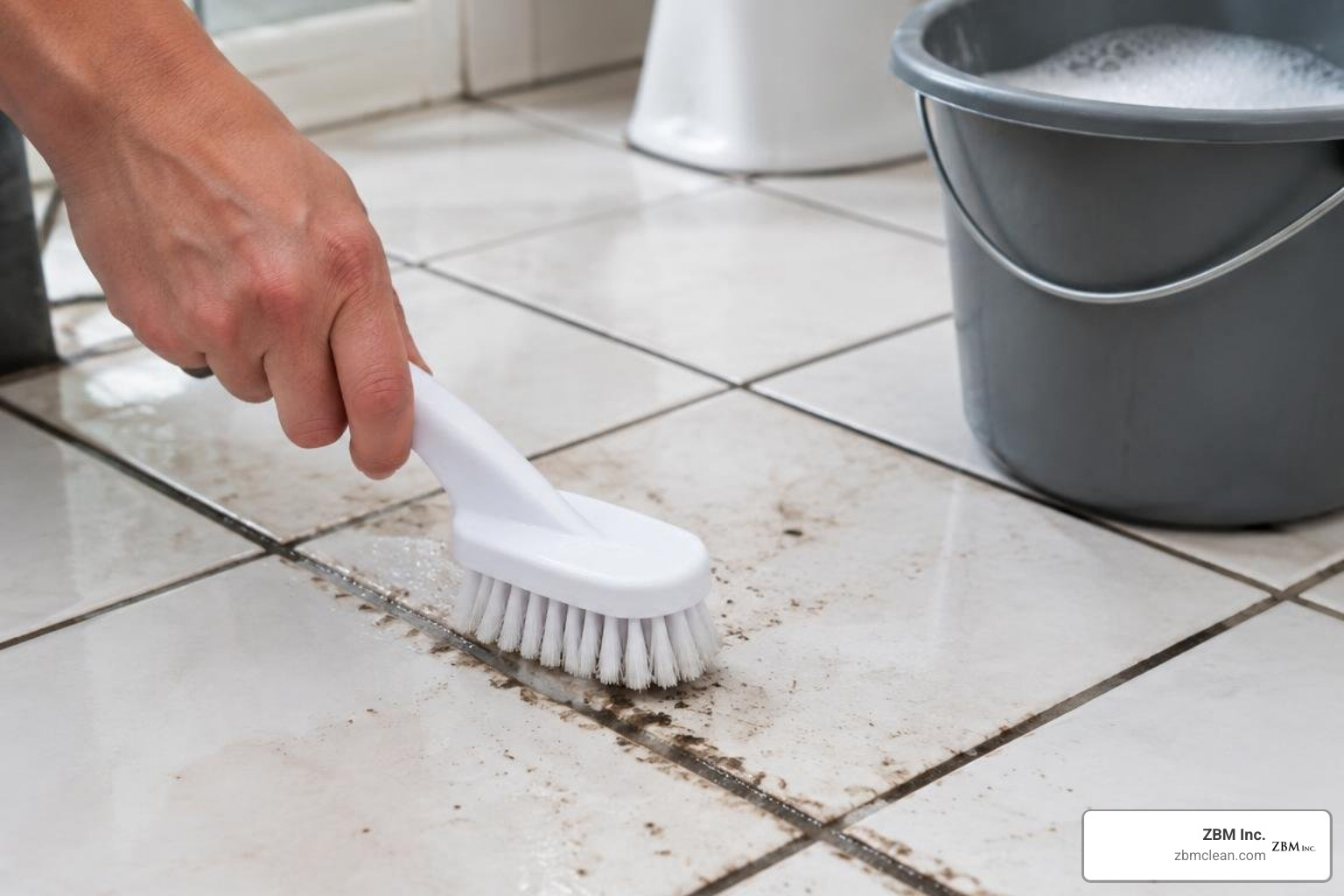
Grout lines are exceptionally porous, meaning they absorb moisture, dirty mop water, and bacteria deep beneath the surface. Surface mopping often worsens the issue by pushing soil deeper into the grout channels.
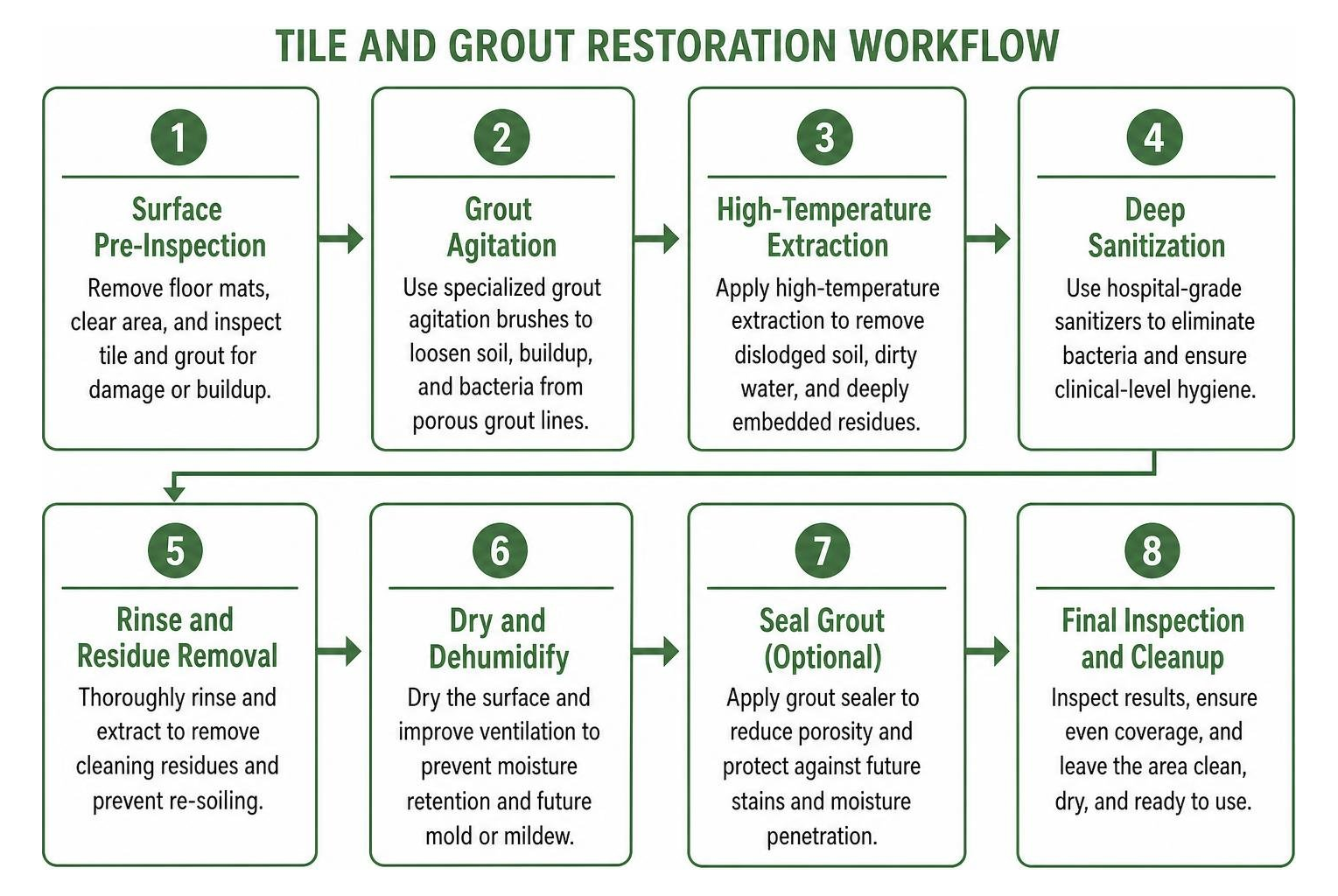
Overhead exhaust fans, light diffusers, and baseboards collect sticky airborne dust that traps bathroom moisture. When ventilation fans become clogged, humidity spikes, drastically accelerating mildew development across ceilings and baseboards. Restoring these challenging zones requires specialized grout agitation brushes, high-temperature extraction tools, and micro-filtration equipment. Reviewing a spring cleaning bathroom edition reveals how much manual labor is involved in detail cleaning. For serious structural staining or persistent odors, restoring the most important room in the house is best left to trained, insured technicians with proper extraction tools.
Routine Maintenance, Safety Protocols, and When to Call the Pros
Keeping restrooms pristine demands continuous attention to indoor air quality, bacterial loads, and surface wear. A systematic maintenance program protects commercial assets and ensures residential spaces remain healthy.
Daily, Weekly, and Monthly Maintenance Schedules
Establishing structured service intervals ensures critical sanitation benchmarks are met without letting buildup accumulate. The table below outlines how professional cleaning teams organize tasks across routine maintenance cycles:
| Cleaning Frequency | Focus Areas & Maintenance Tasks | Operational Objective |
|---|---|---|
| Daily Upkeep | Squeegee glass, wipe sink basins, empty waste bins, restock paper and soap dispensers | Prevent surface moisture accumulation and control high-touch cross-contamination |
| Weekly Sanitization | Disinfect toilets inside and out, sanitize partition handles, clean mirrors, wash bath linens | Eliminate emerging bacterial colonies and remove visible surface soils |
| Monthly Deep Service | Descale showerheads, deep-scrub tile grout, wash exhaust vent grates, sanitize trash cans | Remove embedded mineral scale, restore airflow, and eradicate hidden odors |
Adhering to an ultimate bathroom cleaning checklist helps facility managers track maintenance records and verify task completion across multi-stall environments.
Chemical Safety, Eco-Friendly Alternatives, and Common Mistakes to Avoid
Chemical safety is essential during intensive sanitation projects. Mixing incompatible agents—such as bleach and ammonia-based glass cleaners—creates hazardous chloramine gas that causes severe respiratory distress. Furthermore, applying highly acidic descalers to unsealed natural stone (such as marble or travertine) causes permanent etching and surface degradation.
Common mistakes in restroom care include:
- Failing to allow adequate dwell time for disinfectants to kill pathogens.
- Using a single cloth across multiple fixtures, spreading toilet bacteria to sink handles.
- Neglecting hidden areas behind toilets and beneath partition brackets.
- Over-saturating drywall and baseboards with harsh bleach solutions.
Reviewing big restroom cleaning mistakes demonstrates how improper cleaning products can damage expensive fixtures. While gentle alternatives like baking soda and diluted plant-based detergents help with mild surface dusting, significant microbial contamination, mold growth, or stubborn hard-water scaling requires industrial-grade chemistry applied under strict safety guidelines.
Commercial Restroom Compliance vs. Residential Bathroom Care
Commercial restroom management carries legal, operational, and financial consequences that extend far beyond residential cleaning. Research indicates that 60% of Americans say they are likely to spend more at businesses that provide clean, well-maintained restrooms. Conversely, dirty restrooms drive away patrons and risk code violations from municipal health inspectors.
Public facilities require strict compliance with sanitation regulations, infection control standards, and chemical safety documentation. High-traffic commercial restrooms experience rapid soil loading, necessitating hospital-grade germicides, touchless fixture servicing, and documented supervisor audits.
Attempting to handle heavy commercial sanitization or severe residential buildup without proper training can expose staff to biohazardous materials and result in property damage. ZBM Inc. is a family-owned, licensed, bonded, and insured cleaning company staffed by certified professionals. Operating from Watertown, WI, we provide full-service commercial and residential cleaning across Dodge County, Jefferson County, Southeast Wisconsin, Lake Mills, and the Northwoods (including Minocqua). Whether you manage a busy public facility or need specialized deep cleaning for a residential property, we provide complete disinfection, disaster recovery, and biohazard services.
For full maintenance guides and operational resources, explore our complete bathroom cleaning checklist resources to keep your facilities operating at peak sanitary performance.